
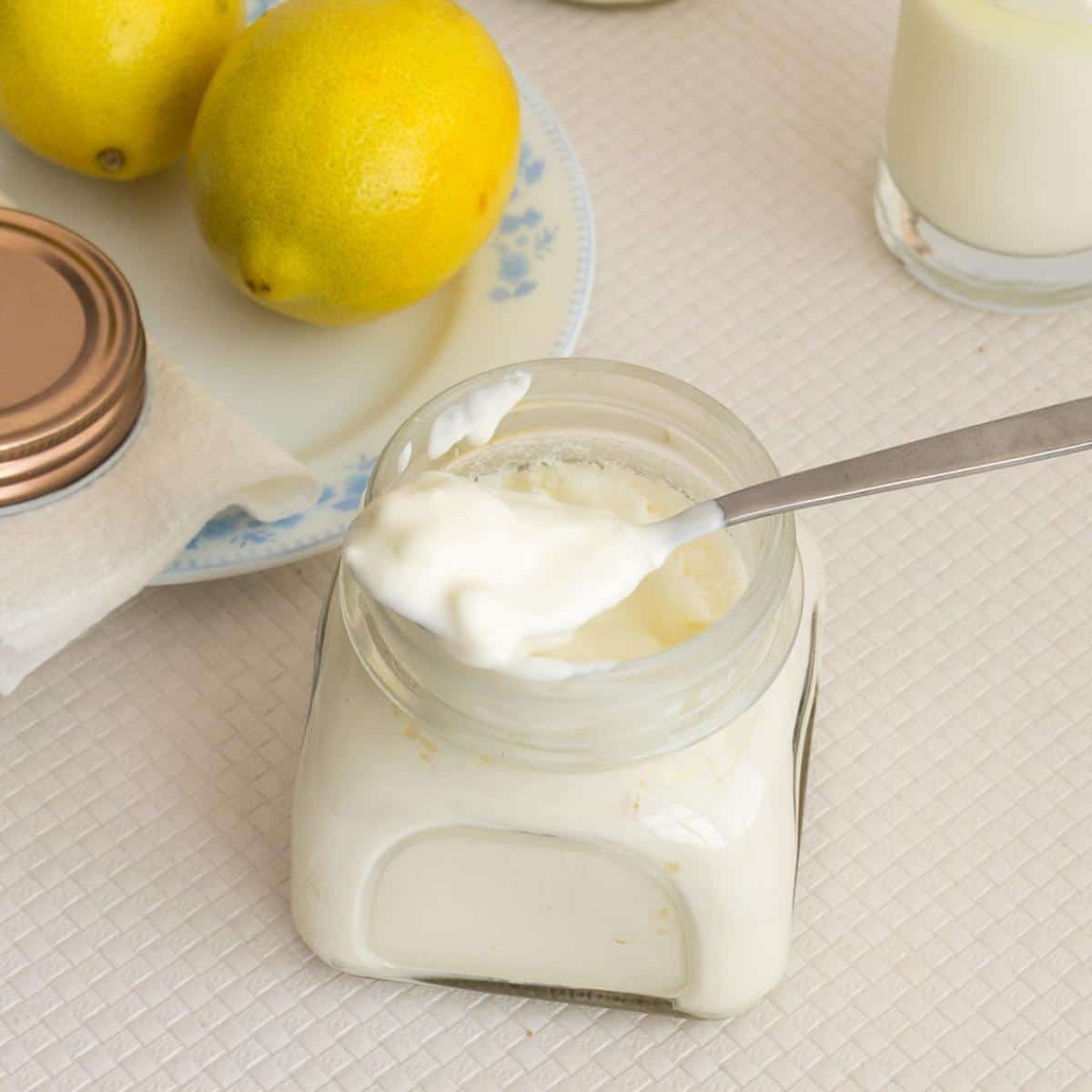


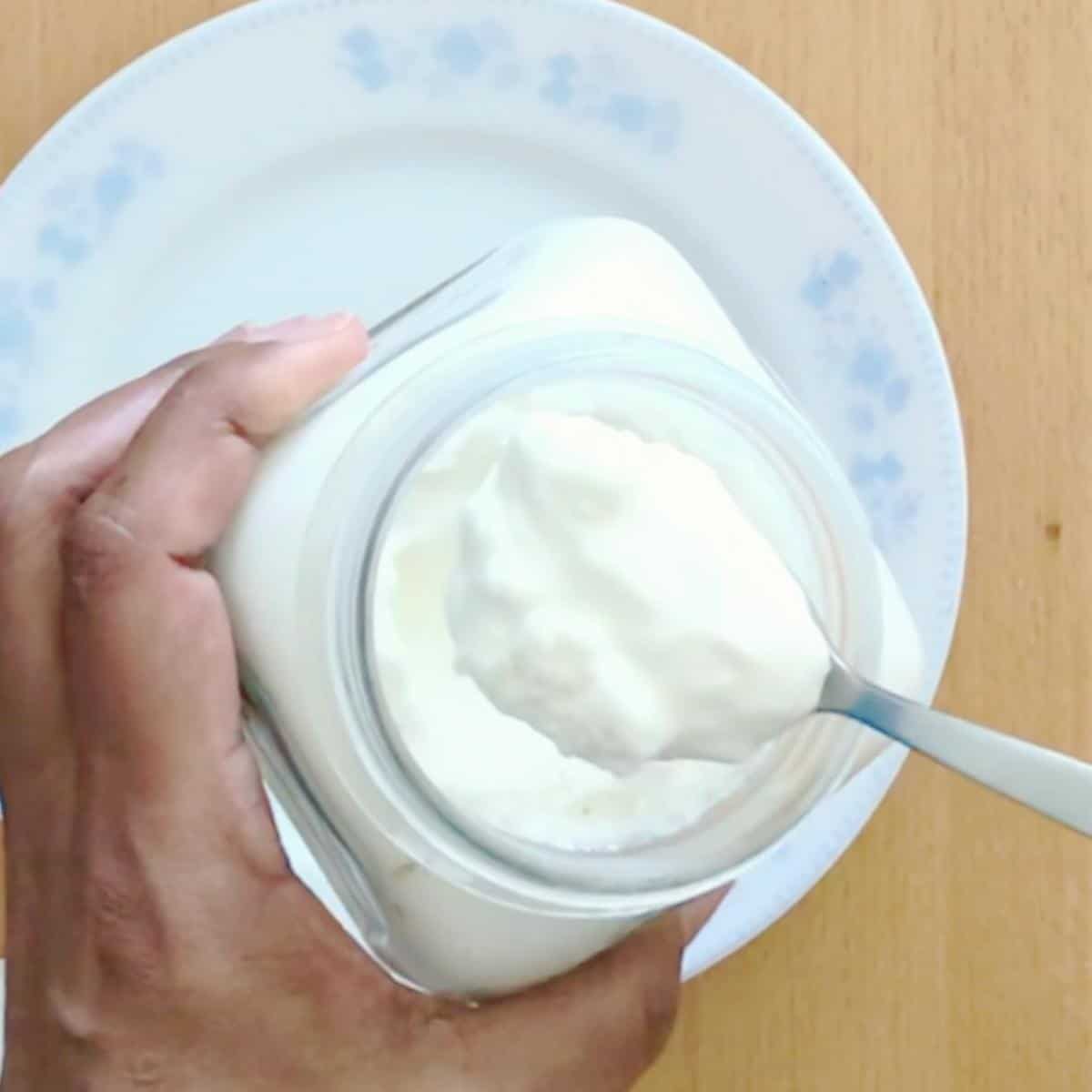
Have you ever wondered how to make sour cream at home? All you need is heavy cream and lemon juice or vinegar. It takes just 5 minutes to prepare, then simply leave it at room temperature until thick and creamy.
Back when I was a kid, store-bought sour cream wasn’t an option—my mom had to make it from scratch. No quick grocery runs, no last-minute swaps. If she needed sour cream for a cake, it had to be planned ahead of time. That was just how things were.
The funny thing is, for her, making these things—sour cream, yogurt, condensed milk, even evaporated milk—wasn’t a big deal. It was just another part of life, another step in the process. She never saw it as extra work; it was just what she did.
When I was running my cake decorating business, sour cream was an ingredient I used constantly to keep cakes moist and tender. Buying it over and over again quickly became expensive, especially when testing recipes or baking in larger quantities. Making sour cream at home was simply more practical—it was affordable, easy to scale, and always reliable. Once I saw how consistently it worked in cakes, it became part of my regular baking routine and something I still rely on today.
What is sour cream and how does it taste?
Sour cream is a thick, creamy dairy product with a mild tangy flavor. Traditional sour cream is made with bacterial cultures, but you can also make a simple homemade version by combining heavy cream with lemon juice or white vinegar and allowing it to rest until thickened.
Taste: Rich, creamy, and mildly tangy.
Texture: Smooth and spoonable, thicker than heavy cream but softer than cream cheese.
When and why do we use sour cream in baking?
Sour cream adds moisture, richness, and tenderness to baked goods. Its acidity also works with baking soda to help cakes and quick breads rise.
- Keeps cakes moist without making them greasy.
- Adds richness and creates a tender crumb.
- Balances sweetness with a subtle tang.
- Helps activate baking soda for better rise.
- Creates a softer, finer cake texture.
Sour cream works especially well in chocolate cakes, cupcakes, sheet cakes, coffee cakes, pound cakes, bundt cakes, muffins, quick breads, cheesecakes and creamy fillings.
Why you’ll love this sour cream recipe
- Just 2 ingredients – all you need is heavy cream and lemon juice or vinegar.
- 5 minutes of prep – mix everything together and let it rest.
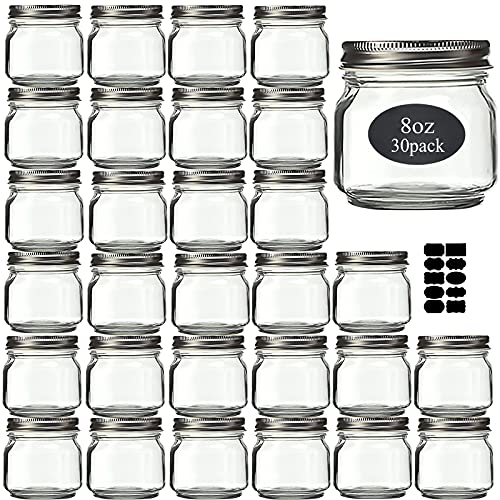
- No special equipment – a clean glass jar is all you need.
- Thick and creamy – perfect for baking, cooking, sauces, and dips.
- Easy to make ahead – prepare it the day before and refrigerate until needed.
Ingredients & Substitutes
- Heavy cream – Use heavy or whipping cream for the richest flavor and thickest consistency. Higher-fat cream gives the best results.
- Lemon juice – Adds acidity and tang and helps the cream thicken as it rests. Fresh lemon juice works best.
- White vinegar – You can use white vinegar instead of lemon juice.

Step-by-step: How to make sour cream at home
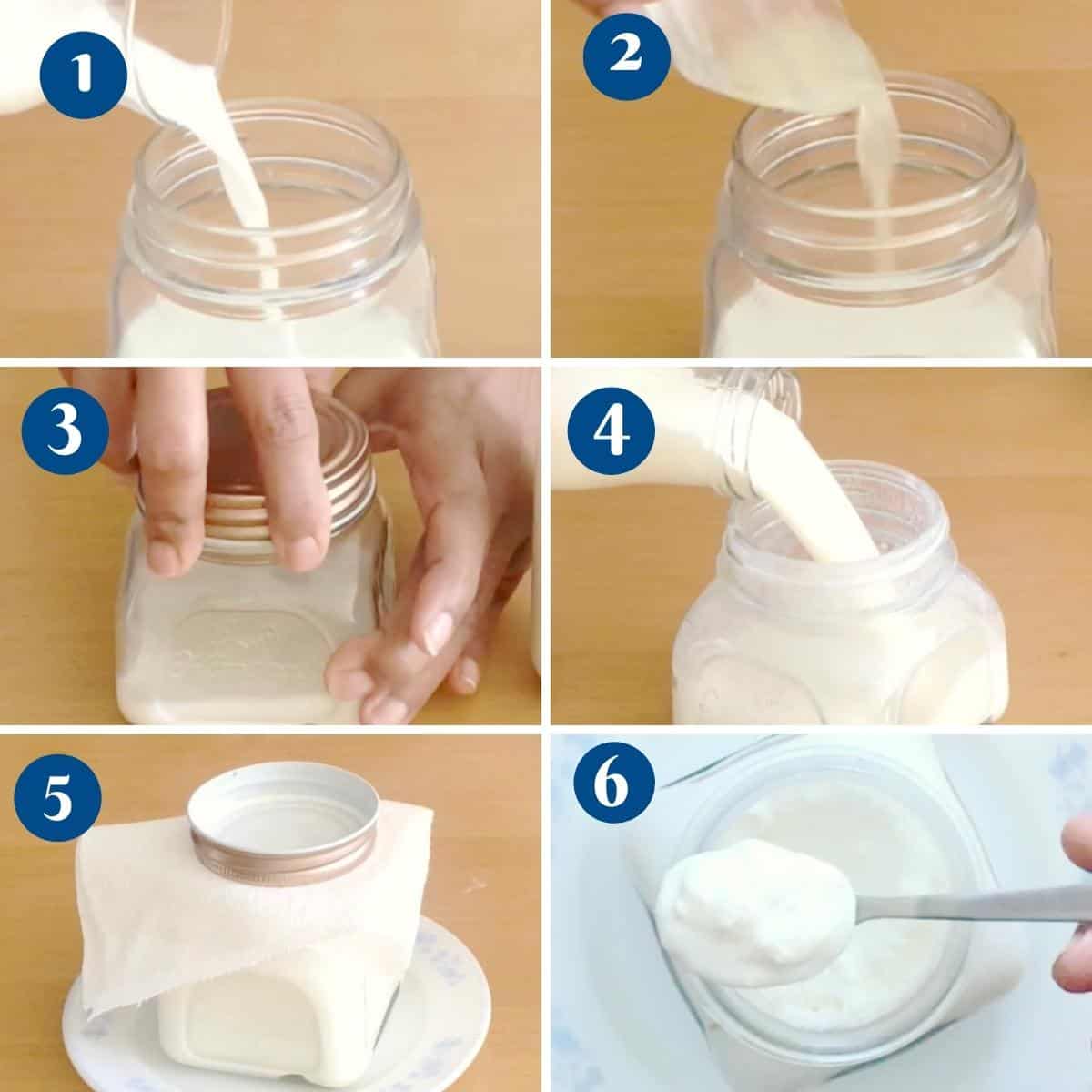
- Add the cream – Pour the heavy cream into a clean glass jar.
- Add the acid – Stir in the lemon juice or white vinegar until well combined.
- Cover loosely – Cover the jar with a paper towel or cheesecloth and secure it with a rubber band. Do not seal the jar.
- Let it rest – Leave at room temperature for 12–24 hours, or until the cream has thickened and developed a lightly tangy flavor.
- Chill – Stir well, cover, and refrigerate for at least 3 hours before using. The sour cream will thicken further as it chills.
Can I make sour cream with buttermilk or yogurt?
Yes. Another method is to add 1–2 tablespoons of cultured buttermilk, plain yogurt with live cultures, or sour cream to one cup of heavy cream. These contain live cultures and can be used to make traditionally cultured sour cream.
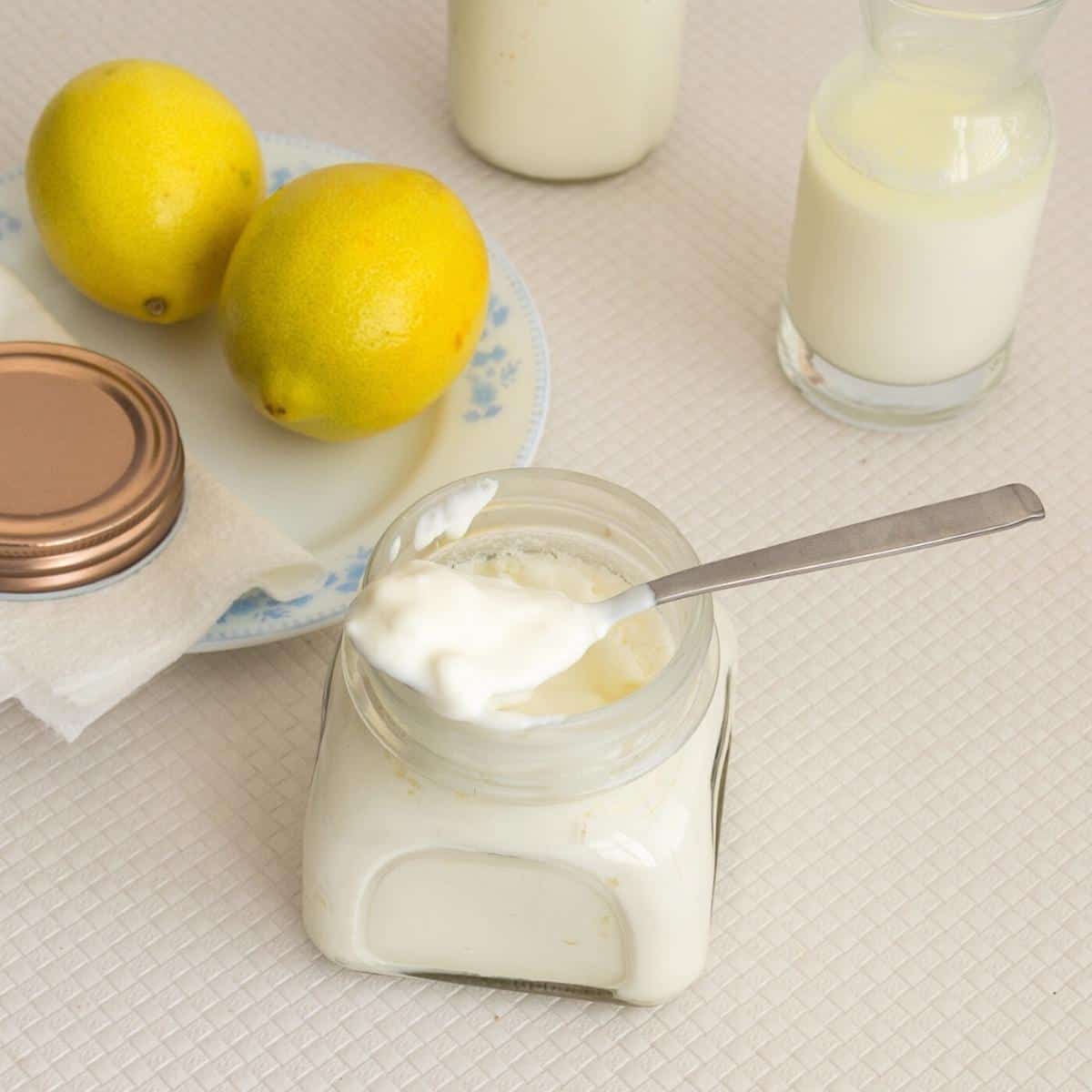
What is a good substitute for sour cream?
- Greek Yogurt: Greek yogurt is thicker and tangier than regular yogurt, making it a good substitute for SC in many recipes. Use plain Greek yogurt for the best results.
- Buttermilk: Buttermilk can be used as a substitute for SC in baking. Use the same amount of buttermilk as you would SC in the recipe.
- Plain Yogurt: Plain yogurt can also be used as a substitute for sour cream. Use the same amount of plain yogurt as you would SC in the recipe.
- Evaporated milk: For sauces, you can use evaporated milk (unsweetened). Combine one cup of evaporated milk with 1 tablespoon of lemon juice or white vinegar. Wait five minutes for it to thicken before you use it.
How to Make Sour Cream At Home 2 Ingredients
Ingredients
- 240 ml (1 cup) Heavy cream room temperature
- 1 tbsp Lemon juice or vinegar
Instructions
- Combine – Pour the heavy cream into a clean glass jar. Add the lemon juice or white vinegar and stir well to combine.240 ml Heavy cream, 1 tbsp Lemon juice or vinegar
- Cover – Cover the jar loosely with a paper towel or cheesecloth and secure it with a rubber band. Do not seal the jar with an airtight lid.
- Rest – Leave at room temperature, around 70–75°F (21–24°C), for 12–24 hours, or until the cream has thickened and developed a lightly tangy flavor.
- Chill – Stir well, cover the jar, and refrigerate for at least 3 hours before using. It will thicken further as it chills.
Video
Notes
- Use heavy or whipping cream for the best consistency.
- Lower-fat cream will not thicken as well.
- Fresh lemon juice or white vinegar can be used. The flavor will be slightly different, but both work.
- A warmer room will help the mixture thicken faster; a cooler kitchen may require closer to 24 hours.
- The sour cream will continue to firm up as it chills, so don’t judge the final consistency while it’s still at room temperature.
- Always use a clean jar and clean utensils when working with dairy.
- Store homemade sour cream covered in the refrigerator and use within about 1 week.
Equipment
Made this recipe?
I’d love to see how yours turned out! Share a photo on Instagram and tag @veenaazmanov_kitchen or use #veenaazmanovkitchen. And don’t forget to leave a rating and review!
Tips for success
- Warm-ish room helps. If your kitchen is cool, it will take longer.
- Use non–ultra-pasteurized cream when possible. Ultra-pasteurized can thicken more slowly.
- Don’t seal the jar while it cultures. Loosely covered is the trick.
- Want it thicker? Let it culture longer, then chill overnight.
- Keep it clean. Clean jar + clean spoon every time (dairy doesn’t forgive chaos).
recipes with sour cream
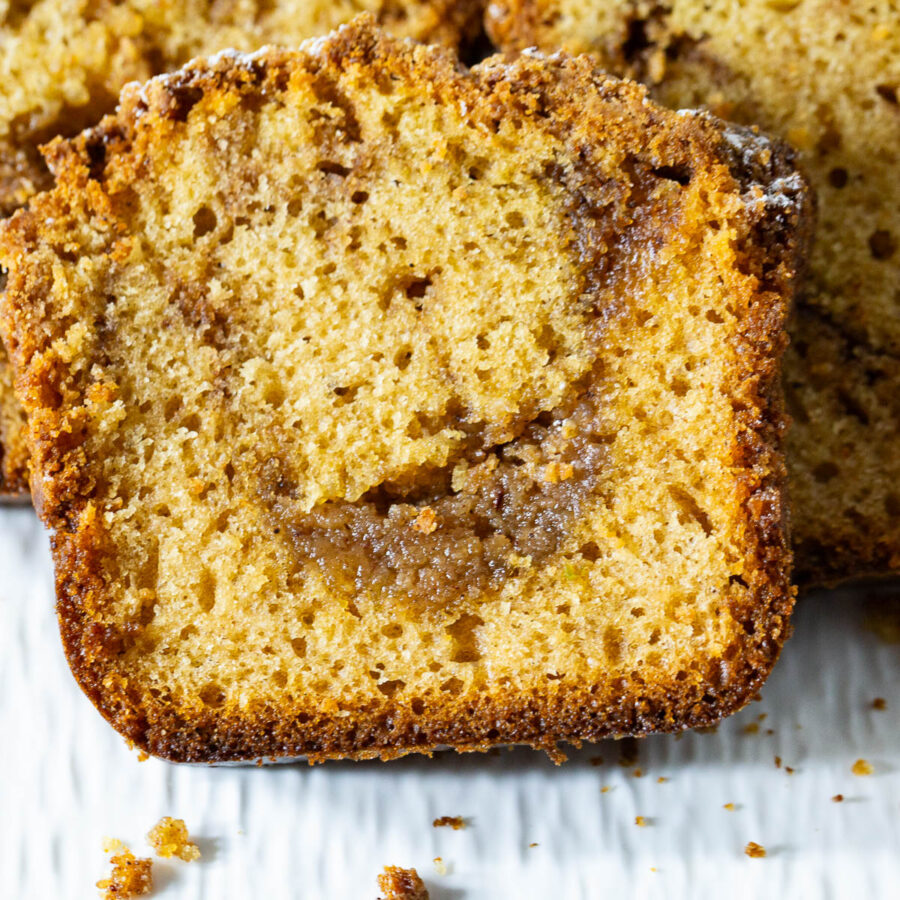
- Sour Cream Coffee Cake Recipe
- Moist and Tender Vanilla Sour Cream Cupcakes
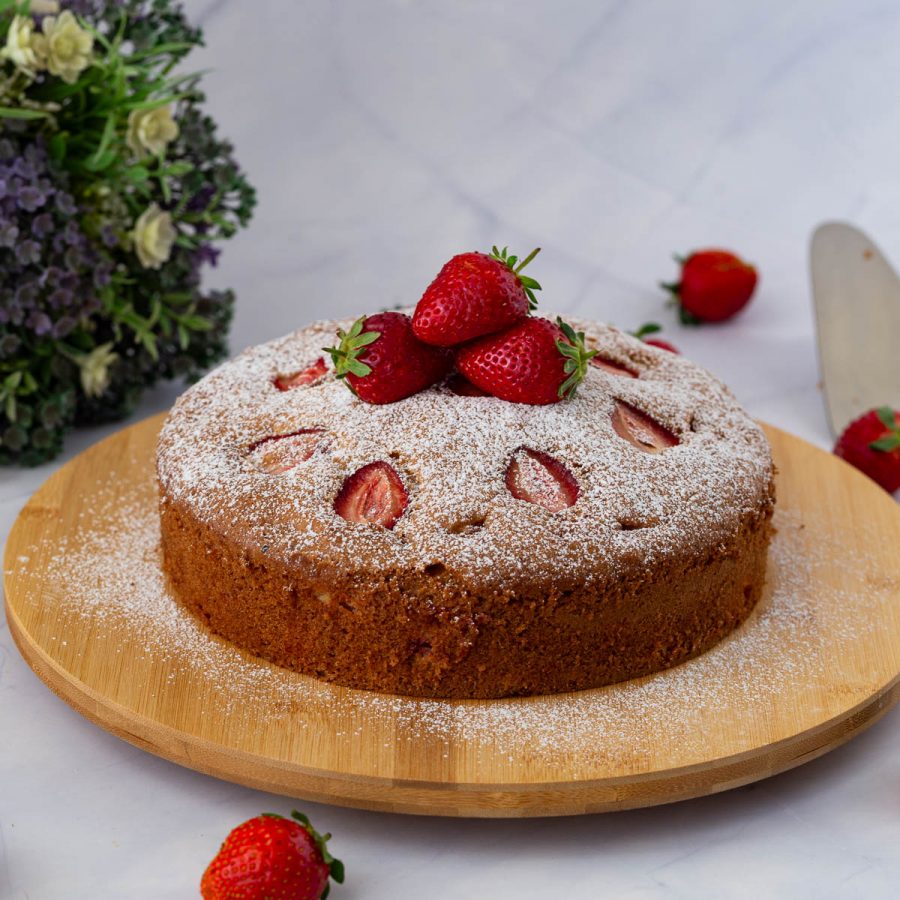
- One Bowl Sour Cream Strawberry Cake
- How to Make Sour Cream At Home (2 Ingredients)
- No Churn Vanilla Ice Cream Recipe
- Homemade Cheesecake Recipe


Troubleshooting Homemade Sour Cream
| Problem | Possible Cause | Solution |
|---|---|---|
| Not thickening | Room temperature is too low or cream is ultra-pasteurized | Move the jar to a warmer spot (around 70°F / 21°C). Use heavy cream that is not ultra-pasteurized when possible. |
| Unpleasant smell | Contamination or expired cream | Always use clean, sanitized jars and utensils. Discard and start again with fresh cream if it smells off. |
| Too thin | Not cultured long enough | Let the sour cream ferment longer, checking every few hours until it reaches the desired thickness. |
| Not tangy enough | Fermentation time too short | Allow it to sit longer at room temperature to develop more tang and flavor. |
more DIY basic recipes
- How to Make Yogurt or Greek Yogurt
- Evaporated Milk Recipe (2 Methods)
- Homemade Condensed Milk (2 Ways)
- Homemade Dulce De Leche (2 methods)
- How to Brown Butter
- Homemade Pie Crust Recipe: (Pâte Brisée)



Frequently asked questions
Store it in a clean, airtight container in the refrigerator and use it within about one week. Discard it if you notice mold, discoloration, or an unpleasant smell.
Combine heavy cream with lemon juice or white vinegar, cover loosely, and leave it at room temperature for 12–24 hours until thickened. Stir well, then refrigerate for at least 3 hours before using.
It usually takes 12–24 hours at room temperature. A warmer kitchen may thicken it faster, while a cooler room can take longer. It will also become thicker after chilling in the refrigerator.
Yes. White vinegar can be used instead of lemon juice. Both provide the acidity needed for this homemade method, although lemon juice gives it a slightly fresher flavor.
The room may be too cool, or the cream may need more time. Use heavy or whipping cream and leave it at room temperature for up to 24 hours. Remember that it will thicken further once refrigerated.
Yes. Greek yogurt can be used as a cultured starter by adding 1–2 tablespoons of plain Greek yogurt with live cultures to one cup of heavy cream. This is an alternative to the lemon juice or vinegar method used in this recipe.
Yes—especially for cakes, coffee cakes, muffins, and cheesecakes. It behaves like store-bought.
To make dairy-free or vegan sour cream use thickened coconut cream. Place the can of coconut cream in the fridge for a few hours. Once chilled scoop the top most thick cream. Add a tablespoon of lemon juice and leave for 10 minutes. This is then ready to use in any recipe that calls for SC.
Not for true sour cream. Milk is too low in fat and can turn thin or split. Use heavy cream for the right texture.
Yogurt or buttermilk usually gives the thickest, most “authentic” cultured texture.
It’s more like a quick homemade sour cream substitute—still creamy and tangy, and it works beautifully in baking.
more DIY recipes
- Homemade Caramel Sauce or Creamy Caramel Filling
- Homemade Butterscotch Sauce
- Homemade Whipped Cream – 4 Methods
- or How to Make Stabilized Whipped Cream (5 Methods)
- How to make Buttermilk for Baking



Don’t lose this recipe! Save it for Later!
📌 Save this Recipe for later on Pinterest so you can easily find it again.
⭐ Add Veena Azmanov Kitchen to your Google Preferred Sources.
It helps Google show you more of our recipes.
📧 Subscribe for new recipes delivered to your inbox.
🎥 Follow us for more recipes

Hi, I’m Veena
I’m the recipe developer, baker, and food photographer behind Veena Azmanov Kitchen.
I’ve spent years developing and testing recipes, from everyday meals and homemade breads to cakes and desserts.
I share the practical tips and little details I’ve learned along the way so you can get great results in your own kitchen.










I agree, the lemon has a better appeal (appeel?) ? than vinegar ?. Easy recipe with nothing special for stock. Great flavor. Be nice to publish the temperatures with instructions, but I eventually figured out a steady-state plan, and it’s nice to have. I’m done with store bought sour cream. ?
Veena, Have you made “sour cream” with full-fat coconut milk? I’m asking because my family can eat butter, but not milk or cream, and there are so many recipes that call for sour cream. I have tried non-dairy sour creams before and they are not tasty. Thank you!
Jenn, when baking yogurt is a great substitute for sour cream and non-dairy yogurts are easily available these days. I have used one made with soy milk, and the cake was good.
My favorite is coconut cream. I keep the can of coconut in the fridge overnight then scoop out the thick part of the coconut cream
I know a common vegan sour cream is cashew cream – cashews are soaked in water overnight then blended with lemon juice or vinegar. I have not tried this so not sure how it tastes.
I hope this helps
Hi,
Is thick cream same as heavy cream?
Thanks
Yes, some times heavy cream is referred to as thick cream or double cream. It is best to check the percentage. 32 and above works best for sour cream.
Lemon juice plus Greek yogurt and cream. My sour cream needs to be thick! Thank you.
Thank you, Garnett
Hi Veena, I have tried to make the recipe twice and neither turned out. I am so disappointed. The first time I did not heat the milk and I don’t think I left it in a warm enough spot. So, the second time, I tried the “fail proof” method. I heated the milk and cream separately and then brought down to about 110 degrees then I followed the rest of the recipe. Was I supposed to only heat the cream? For the second attempt, I put the jar in the oven and left the oven light on as I usually do for yogurt but that time again, the cream did not separate and it did not smell like sour cream. Actually, Neither of my attempts separated cream from whey as you describe. The frist one smelled sour but was liquid so I let it sit in a slightly heated oven (about 100 degrees for 5 mins-then off) for 2 additional hours. Then I added to the fridge, and the next day it had no smell at all. We tried it and there is a sweetness to the flavor, no sour. The second batch smelled like bad milk the day after it was put in the fridge. Should I hold the boil for a certain period of time? Could I use cream and milk around 90-100 degrees? I am concerned my milk and cream were too warm the second time at 110 degrees. Any advice would be appreciated. Thank you!
Hey Ida. I’m so sorry you did not succeed. It really is a very simple recipe as you can see in my video on the post.
I make it exactly as shown almost every week. If I dont’ use it for baking it gets eaten like yogurt.
When it is just done it is not very sour but it does develop flavor and sourness as it continues to mature in the fridge. The longer you leave it out the more mature the bacteria /sour.
In summer I leave it on the countertop as shown in the video.
But, in winter, I heat the oven at 50 C – for 5 minutes. Then turn it off and place the jar in there.
I usually leave it overnight and place it in the fridge when I wake up in the morning.
Also, there should be no smell when you just make it. It does have a sour smell when it get too mature.
The milk does not need to be too warm. Just warm similar to how we use for making bread with yeast. Closer to room temperature.
In summer my sour cream becomes in about 8 hours – in winter it can take up to 12 hours but there are people who say it can take up to 24 hours. Personally, I have never had to leave it that long.
I hope this helps. Please feel free to ask again.
Hi Veena! I tried out the sour cream. I used fresh cream with 34% fat. I reside in a very humid place which is convenient for me to make fermented batters and homemade yoghurt. The mixture sat at room temperature for 12 hours and then I refrigerated the same overnight. When I tasted it I didnt find it much sour. It just tasted like the fresh cream. Yes, it did set with liquid at the bottom of the jar. Is it possible to add a sour yoghurt starter in place of lemon juice? How can I flavour it?
Thank you!
Mary, sounds like it needed a little longer maturing outside. Though 12 hours is a long time. Yes, you can use yogurt as well.
Was the milk cool than 110 F, if yes, then the first few hours would slow the process as the milk comes to the right temperature.
I like to bring my milk to a boil. Then let it cool down to 110 F at room temperature.
Divine!! Best sour cream ever! Heated milk and cream together to 108F added lemon juice and put in my turned off gas oven around 18 hours? I checked after 12 and wasn’t quit there yet! I want to mention make sure you are using REAL 100% LEMON JUICE! Unfortunately many of these bottled so called lemon juices are from concentrate and they may not work as well! I know bc I’ve done it! Lol You could try doubling the amount if thats all you have! The better the milk and cream you use the better your sour cream will be! I had cream top whole milk and a lightly pasteurized heavy cream from a local dairy.
The 24 hours are up for mine but it’s not sour not even barely still sweet cream taste!! What to do? Please help!!
Let it take a little longer Chandra. It usually does not take this long. Did you make sure the cream was not more than warm when you started? I have given some troubleshooting tips in the post – please read them and I hope something works. Thanks
I am in the USA. The only thing I have access to is store bought milk and cream. Will this still make sour cream? Do i need to have a starter culture or something?
Just as I explained in the post you need milk and lemon juice then heavy cream. If you read the post I have explained in detail everything.
When I brew my kombucha I put it on a seed warming mat. Would that same place work for your sour cream recipe? I am excited to try your method. My other 2 failed. But I am determined to keep trying! Thanks for posting!
Hey Debbie. It just needs a slightly warm place not heated. Don’t know about a seed warming mat but I think it will work. I highly recommend heating the milk to boiling then bringing it back to warm temperature before you add the culter and store it.
Hi Veena, will your recipes for sour cream work with lactose free milk? Thank you!
Hey Karen – I have not tried it but I think it should work as long as it has active live bacteria in there. I would recommend trying a small batch and experimenting. Sorry could not be of much help.
This sour cream recipe is fantastic! I made a couple of others before finding this one and yours is by far the best of the three. I will check put your other recipes and share this one with my friends
Thank you?
Than you Miffy. Happy to know that this recipe worked well for you. I hope you enjoy the other recipes too and thank you for sharing.
Hi, your recipes ard writing method are awesome!! Thanks for sharing. Can you also please share some recipe links where this sour cream is used.
Thank you Divya – Happy to hear you like my blog and writing methods. Thanks
At the end of the post I have given you the link to my cake recipes and cheesecake recipes that often use sour cream. Thanks