






French macarons have a reputation for being difficult, but once you understand the few details that really matter, they become much easier to master. This basic French macaron recipe walks you through the process step by step, with 20 practical tips for getting smooth shells, well-developed feet, and the delicate crisp-chewy texture a good macaron should have.
The recipe uses a simple, uncolored almond-meringue batter, so the shells bake to their natural pale ivory color. More importantly, I’ll show you what to look for at every stage—from whipping the meringue and getting the macaronage right to piping, resting, and baking the shells.
Macarons were one of those recipes I had to learn by doing. When I first started making them, following the recipe wasn’t always enough. Two batches made with exactly the same ingredients could turn out completely differently because of something as small as how long I mixed the batter, whether the shells had rested enough, or how my oven was behaving that day.
Over the years, and especially during my years as a cake decorator, I made macarons again and again in different flavors and colors. What made the biggest difference wasn’t finding another recipe—it was learning to recognize what the mixture should look and feel like at each stage.
That’s why I’ve kept this guide focused on the details that actually matter. These are the 20 tips I use alongside my basic French macaron recipe, and once you understand them, you can use the same techniques for almost any macaron flavor.
Tools You’ll Need
You don’t need a lot of special equipment to make French macarons, but a few tools make the process much more consistent.
- Parchment paper or silicone macaron mat – Either works; use whichever gives you the most consistent results in your oven.
- Digital kitchen scale – Accuracy matters with macarons, so I strongly recommend weighing the ingredients in grams.
- Electric or stand mixer – For whipping the egg whites into a stable, stiff meringue.
- Fine-mesh sieve – Helps remove lumps and larger pieces of almond flour for smoother shells.
- Silicone spatula – Essential for folding the dry ingredients into the meringue and controlling the macaronage.
- Piping bag with a round tip – A plain round tip helps you pipe evenly sized, round macaron shells.
- Baking sheets – Use flat, sturdy baking sheets that don’t warp in the oven.

Ingredients and Substitutions
- Almond flour – Use finely ground, blanched almond flour for smooth macaron shells. Avoid coarse almond meal, which can give the shells a rough, uneven surface.
- Powdered sugar – Combined with the almond flour to form the dry mixture and contributes to the smooth texture and structure of the shells.
- Egg whites – The foundation of the meringue and what gives macarons their structure and lift. Room-temperature egg whites whip well, but proper meringue technique matters more than their exact temperature.
- Granulated sugar – Gradually whipped into the egg whites to stabilize the meringue and create smooth, glossy shells.
- Cream of tartar – Helps stabilize the egg whites as they whip. If you don’t have it, a small amount of lemon juice can be used instead.
- Salt – Just a small amount balances the sweetness.
- Vanilla – Adds a subtle flavor to these basic macaron shells. You can leave it out if you want completely neutral shells.
- Food coloring: I leave these basic French macarons naturally colored so you can concentrate on learning the technique. Once you’ve mastered the basic recipe, gel food coloring can be added for colored macarons.
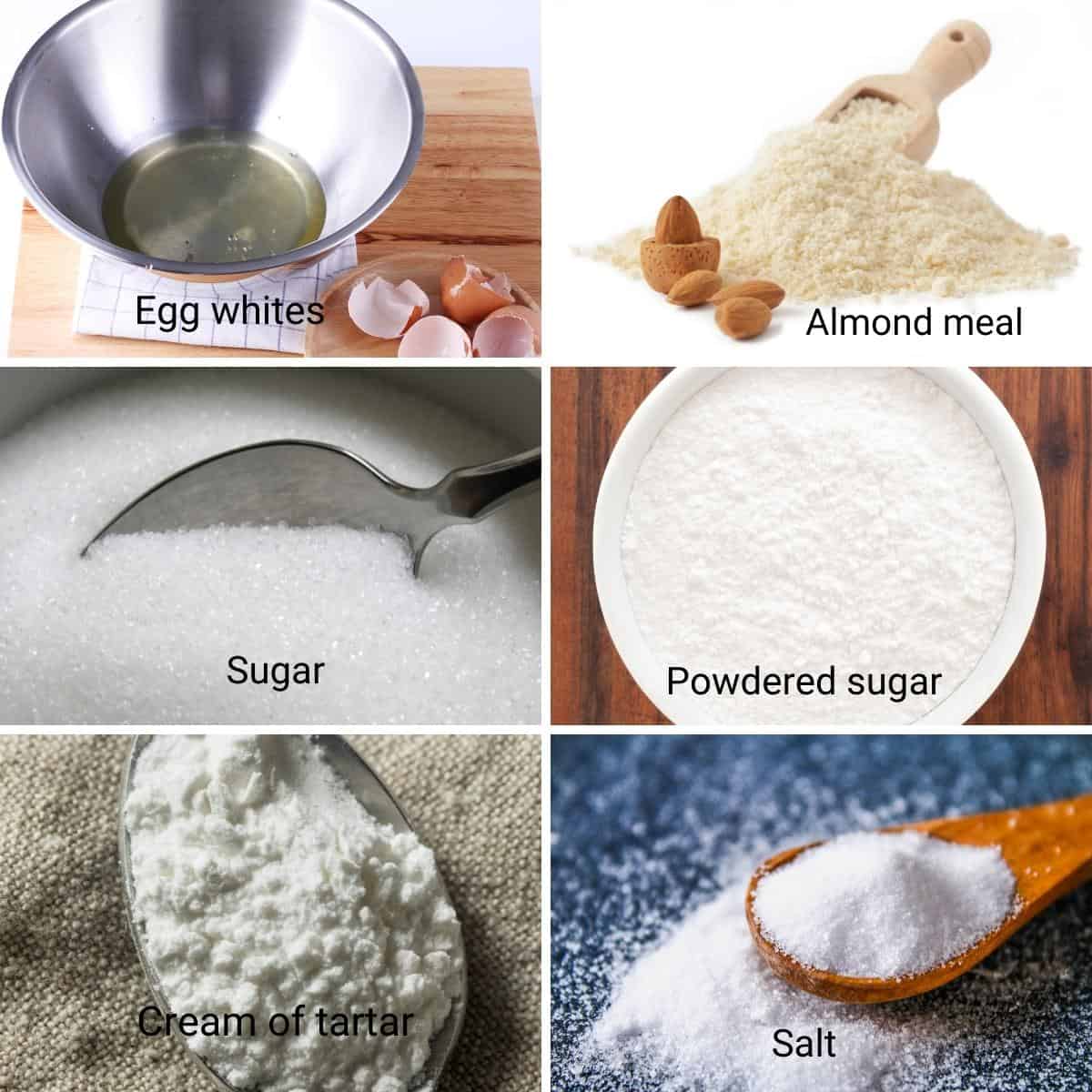
French macarons are made with just a few ingredients, but the technique matters at every stage. Follow the recipe in order and use these 20 tips to understand what to look for as you work.
How to Make French Macarons – 20 Tips for Success
Prepare the Ingredients and Baking Sheets
Line your baking sheets with parchment paper or silicone mats. If you are new to piping macarons, place a macaron template underneath the parchment so the shells are all approximately the same size.
Tip 1: Weigh everything in grams.
Macarons are not the best recipe for measuring cups. Small differences in the amount of egg whites, almond flour, or sugar can noticeably change the batter, so use a digital kitchen scale for consistent results.
Tip 2: Use finely ground almond flour.
Your almond flour should be fine, dry, and preferably made from blanched almonds. Coarse or oily almond flour can leave you with rough shells and can affect how the batter behaves.
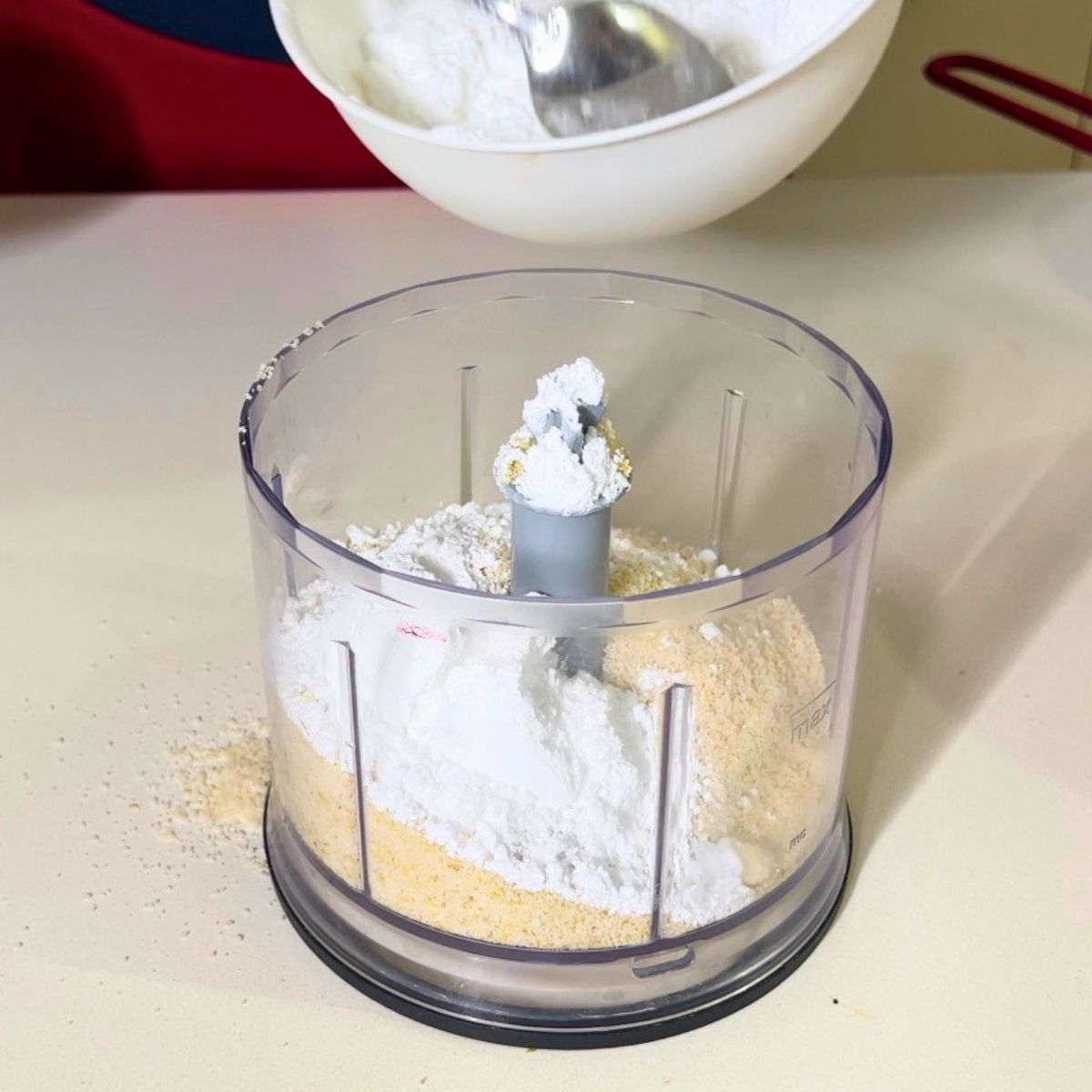
Tip 3: Start with clean, grease-free equipment.
Before making the meringue, make sure the mixing bowl and whisk are completely clean and dry. Even a small amount of fat or egg yolk can interfere with the egg whites whipping properly.
Sift the Dry Ingredients
Sift the almond flour and powdered sugar together into a bowl. Remove any large pieces that will not pass easily through the sieve rather than forcing them through.
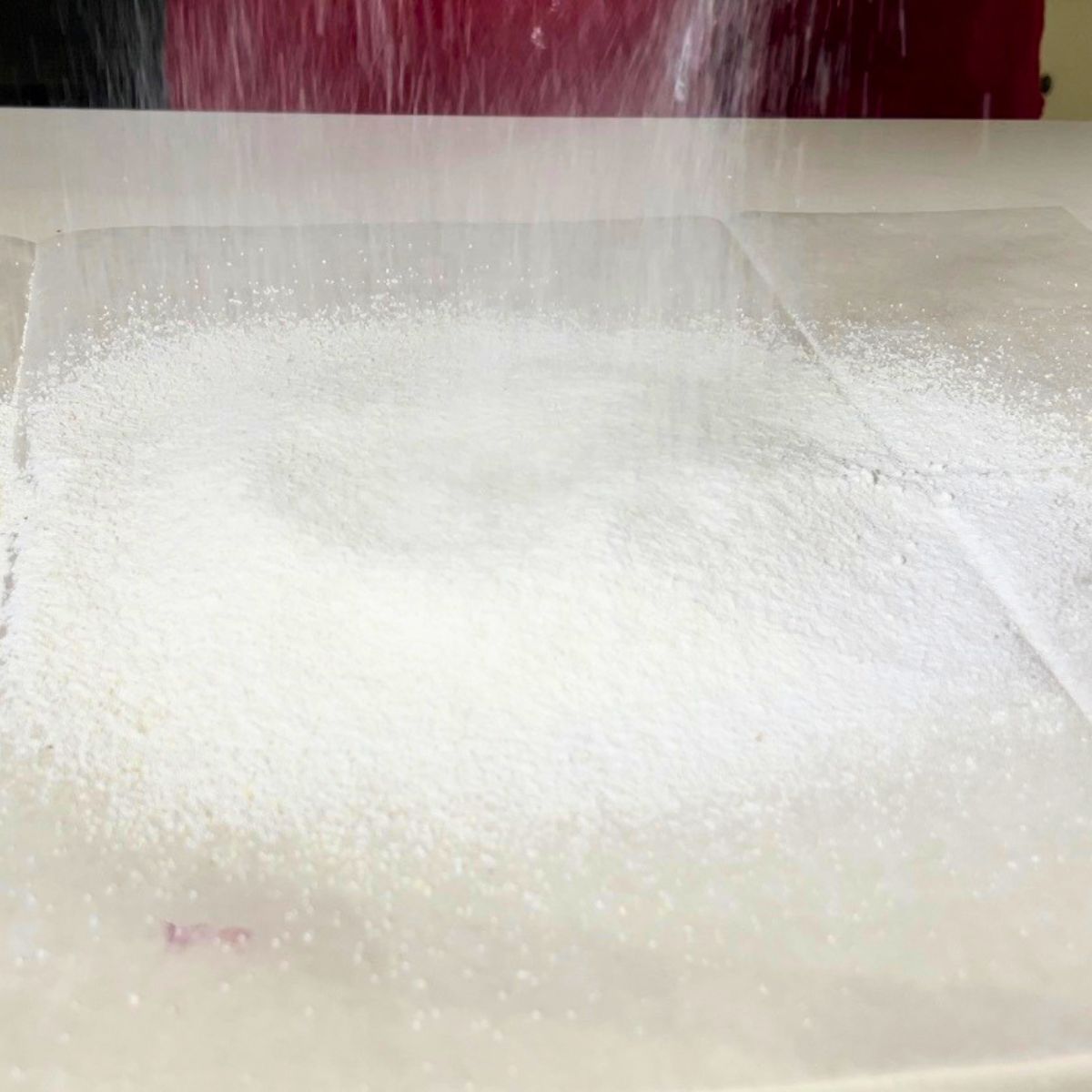
Tip 4: Don’t skip the sifting.
Sifting breaks up lumps and removes coarse almond pieces, giving you a finer mixture and helping produce smoother macaron shells.
Make the Meringue
Place the egg whites in a clean mixing bowl and begin whipping on low to medium speed. Once they become foamy, gradually add the granulated sugar while continuing to whip. Add the cream of tartar, if using, and continue beating until you have a stiff, glossy meringue.
Tip 5: Prepare your egg whites ahead when possible.
You can separate the eggs in advance and refrigerate the whites, then bring them to room temperature before making the macarons. This also makes it easier to weigh the exact amount you need.
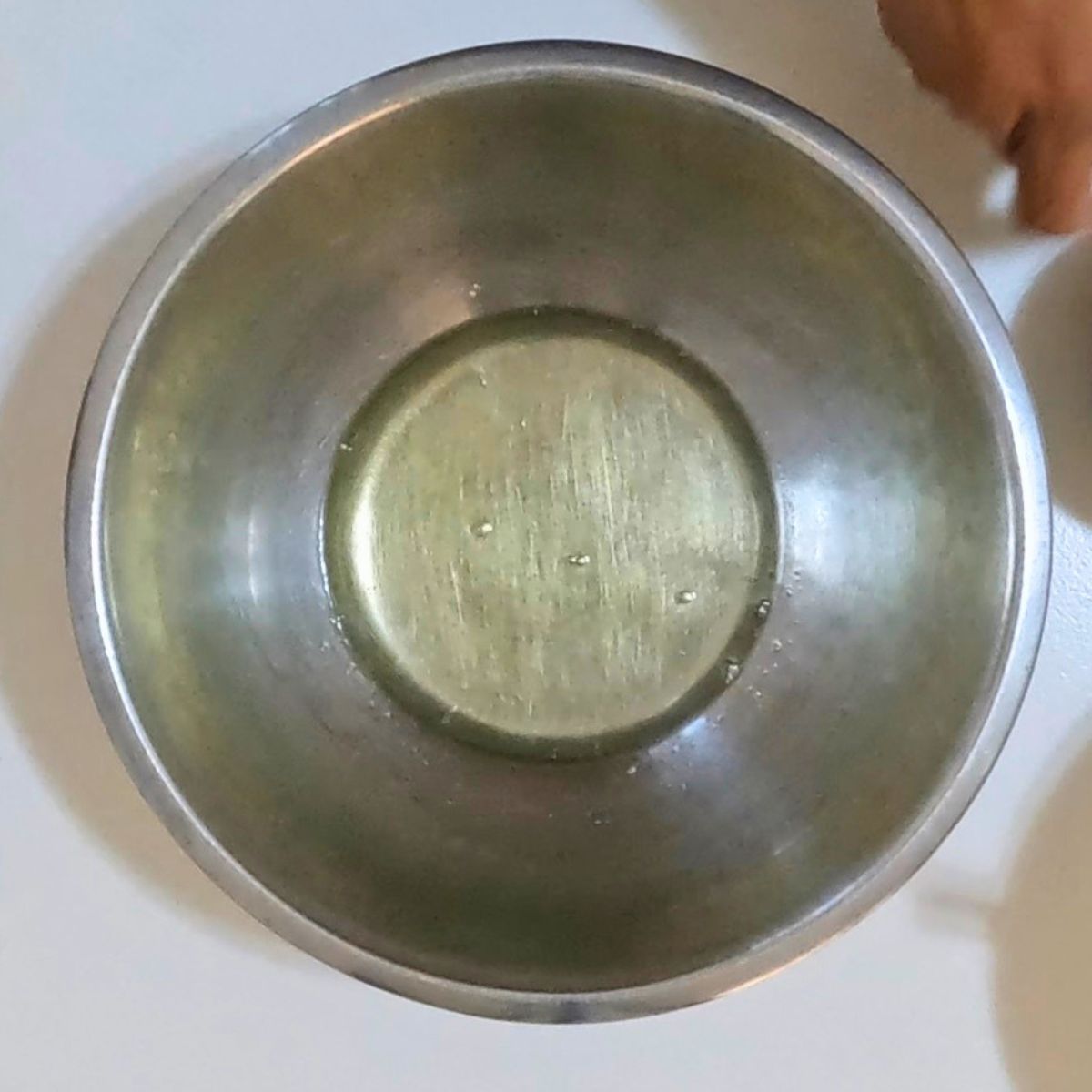
Tip 6: Start whipping slowly.
Beginning at a lower speed creates smaller, more even air bubbles and helps build a more stable meringue. Increase the speed gradually rather than immediately whipping at full speed.
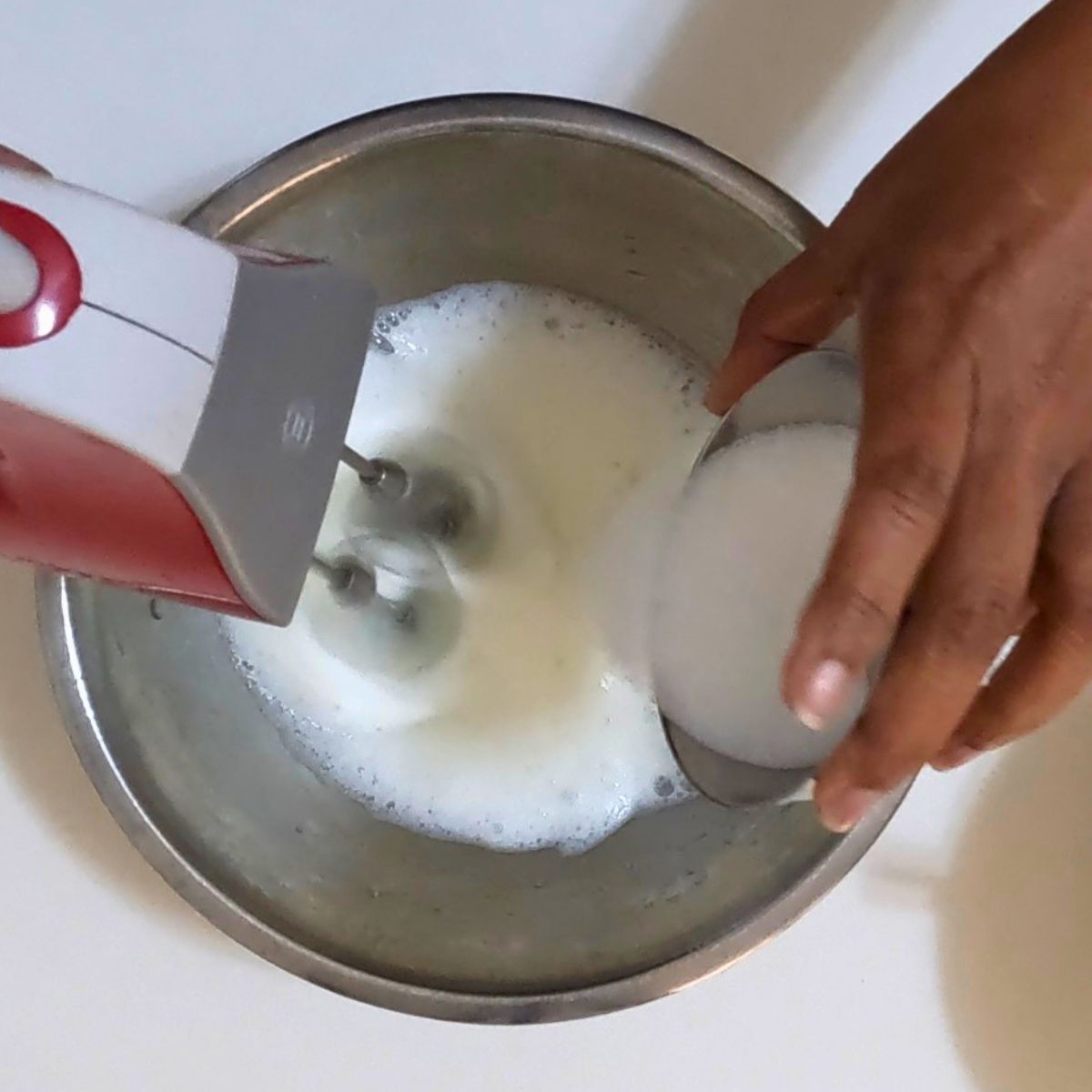
Tip 7: Add the sugar gradually.
Once the whites are foamy, add the granulated sugar a little at a time rather than dumping it in all at once. This gives the sugar time to dissolve while the meringue builds structure.
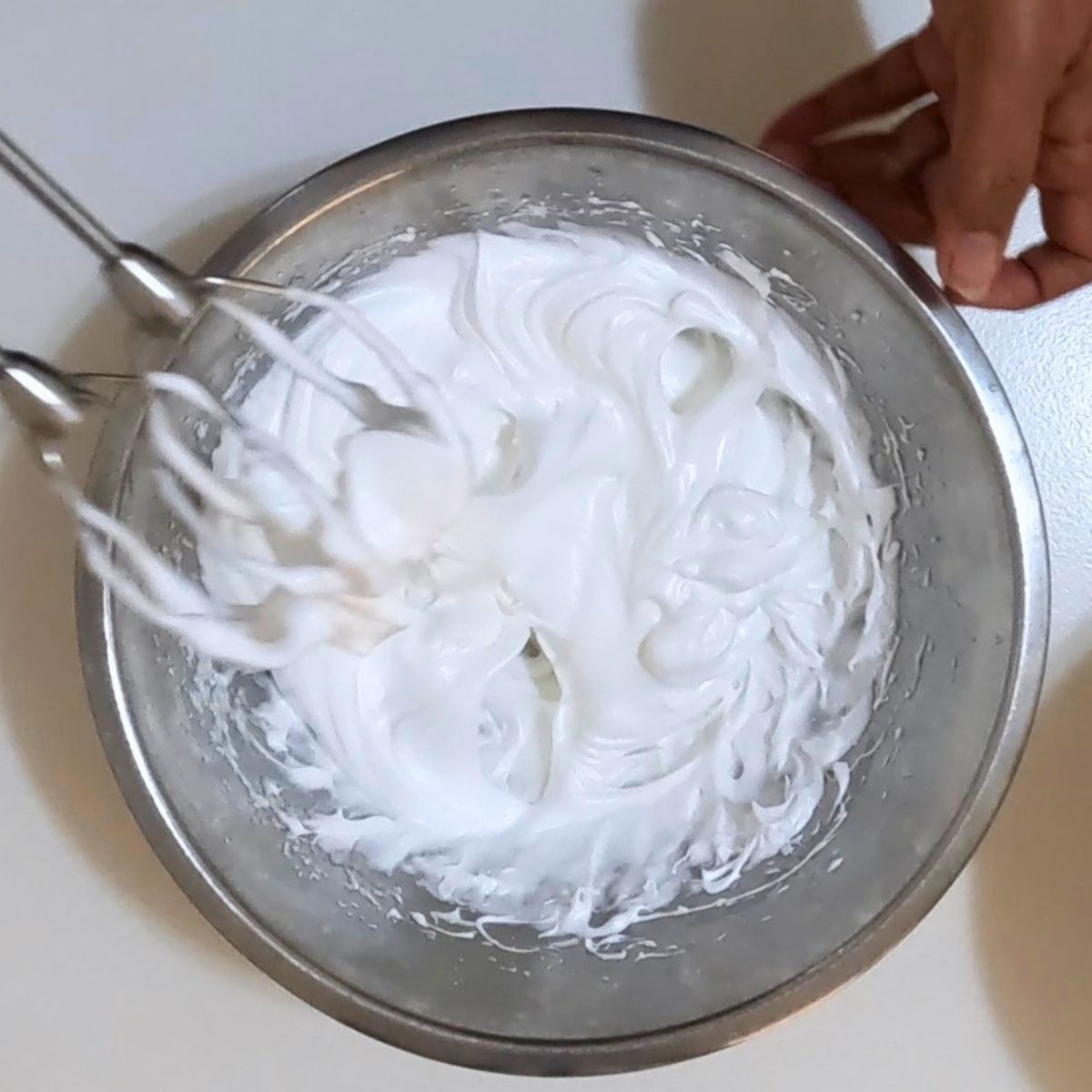
Tip 8: Learn what stiff peaks really look like.
The finished meringue should be thick, smooth, and glossy. When you lift the whisk, the peak should stand upright rather than bending over. Stop once you reach this stage.
Fold the Dry Ingredients into the Meringue
Add the sifted almond flour and powdered sugar to the meringue and begin folding with a silicone spatula. Fold from the outside of the bowl toward the center, occasionally pressing the batter against the side of the bowl to remove some of the air.
This stage is called macaronage, and it is one of the most important parts of making macarons.
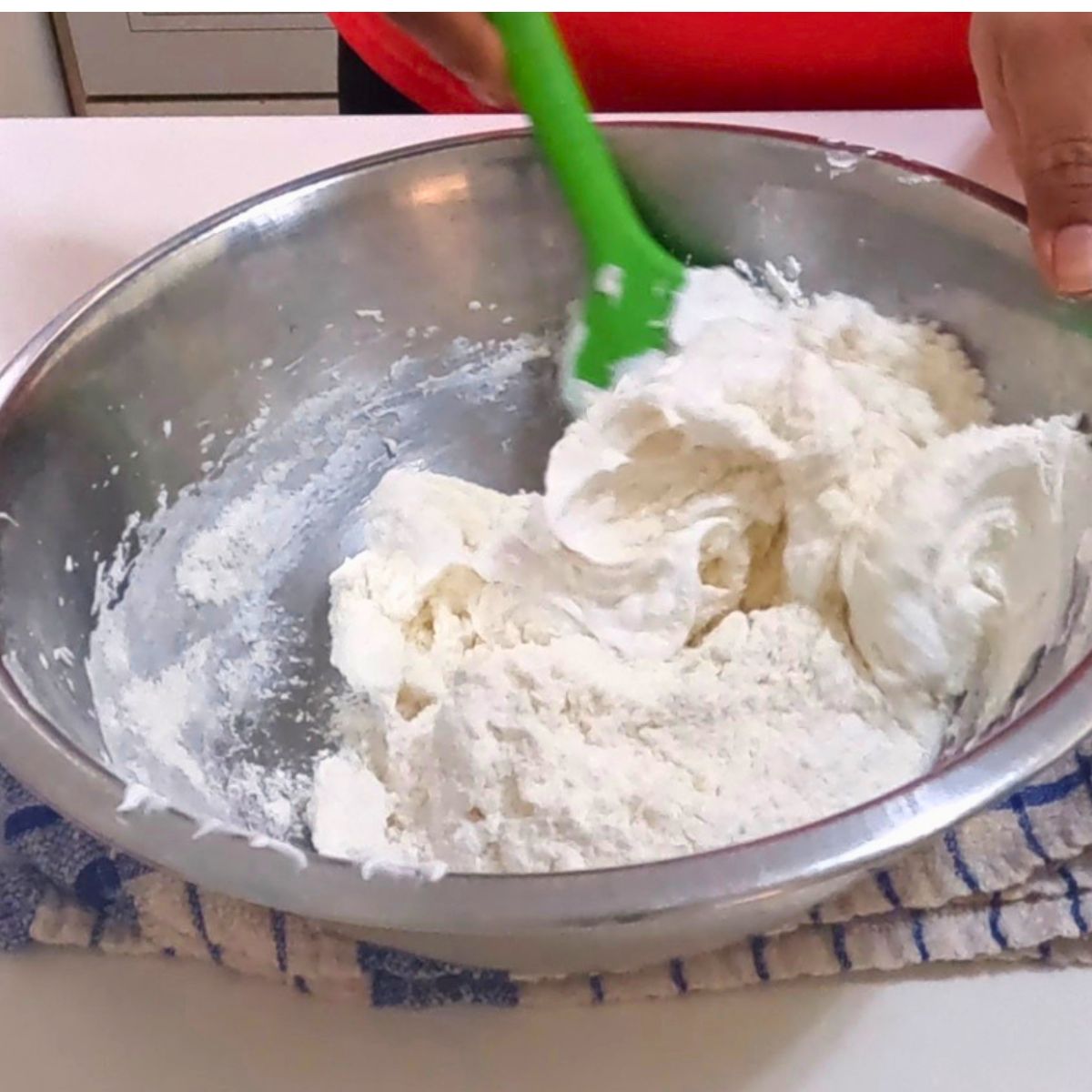
Tip 9: Fold gently at first.
At the beginning, concentrate on incorporating all the dry ingredients without knocking all the air out of the meringue. Once no dry pockets remain, you can begin working the batter more deliberately.
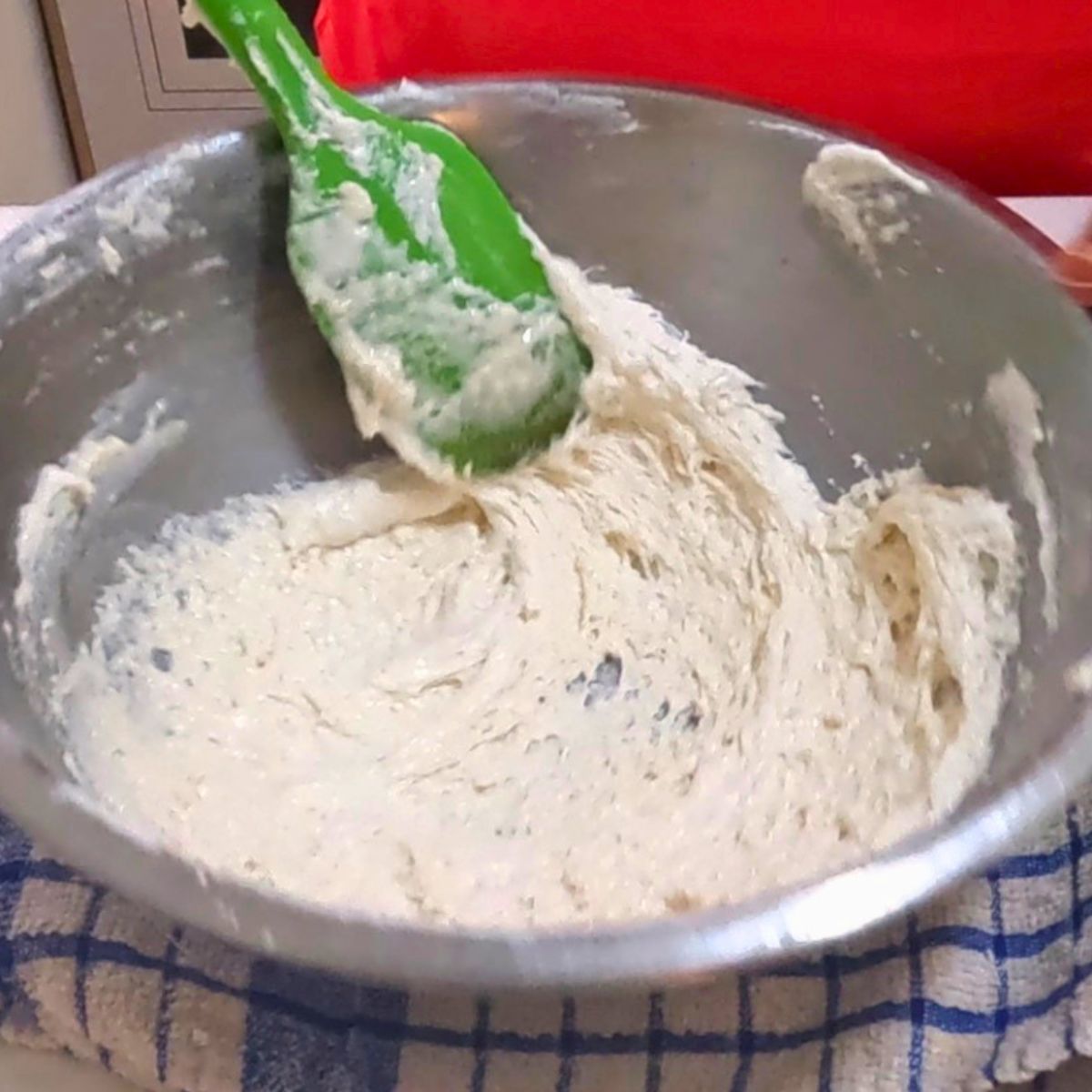
Tip 10: Don’t undermix the batter.
Undermixed macaron batter stays stiff and holds ridges instead of settling into a smooth shell. Continue folding until the batter becomes smooth, glossy, and begins to flow.
Tip 11: Don’t overmix either.
Once macaron batter becomes too thin, you cannot put the air back into it. Overmixed batter spreads quickly after piping and can produce flat macarons with little or no feet.
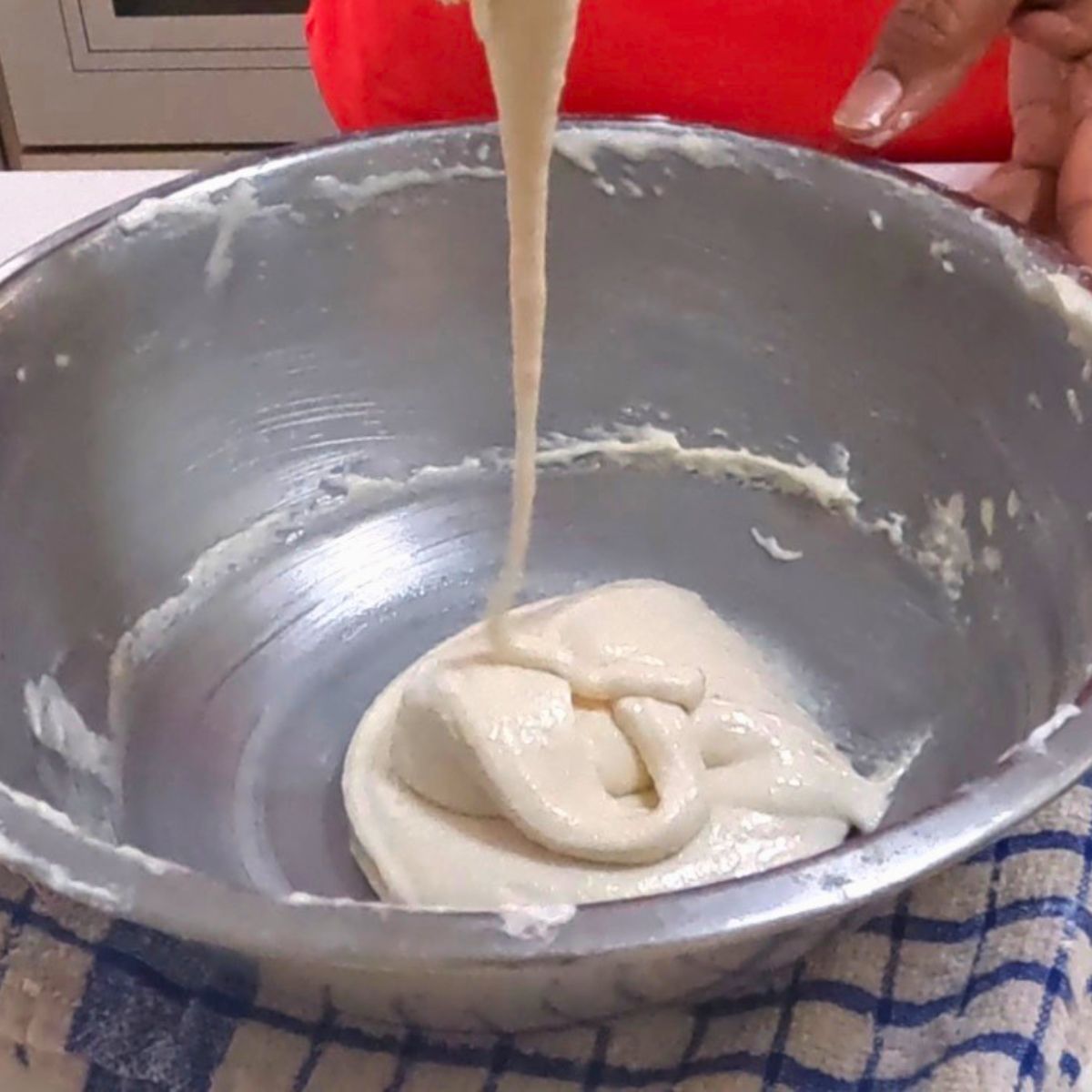
Tip 12: Watch the batter, not the number of folds.
There is no magic number of turns for macaronage. Lift some batter with your spatula. It should fall back into the bowl in a thick, continuous ribbon and slowly blend back into itself. Stop as soon as you reach that smooth, flowing consistency.
Pipe the Macaron Shells
Transfer the batter to a piping bag fitted with a plain round tip. Pipe evenly sized rounds onto the prepared baking sheets, leaving a little space between them.
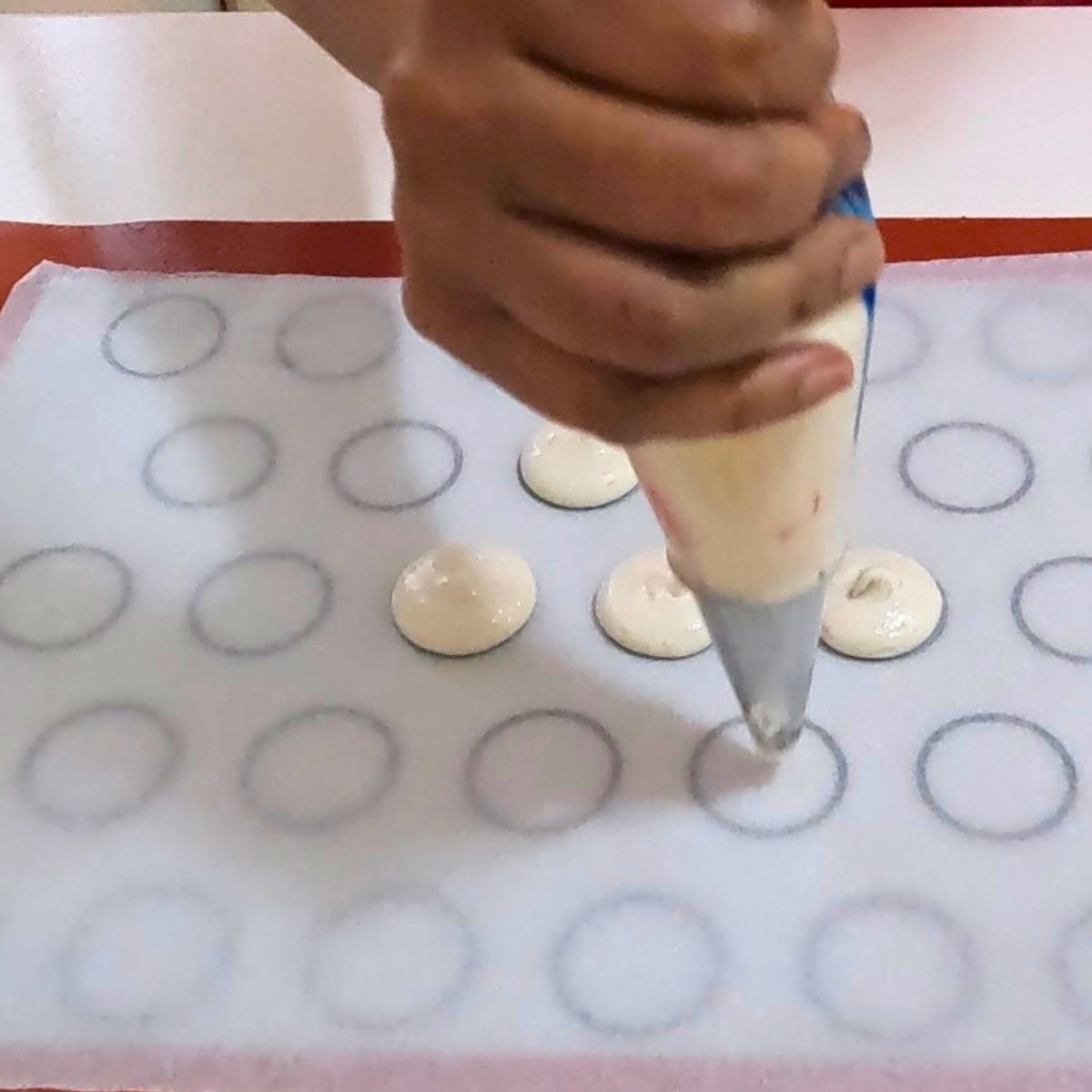
Tip 13: Hold the piping bag straight.
Hold the piping bag at about a 90-degree angle to the baking sheet and pipe straight down. Piping at an angle can create uneven shells and lopsided feet.
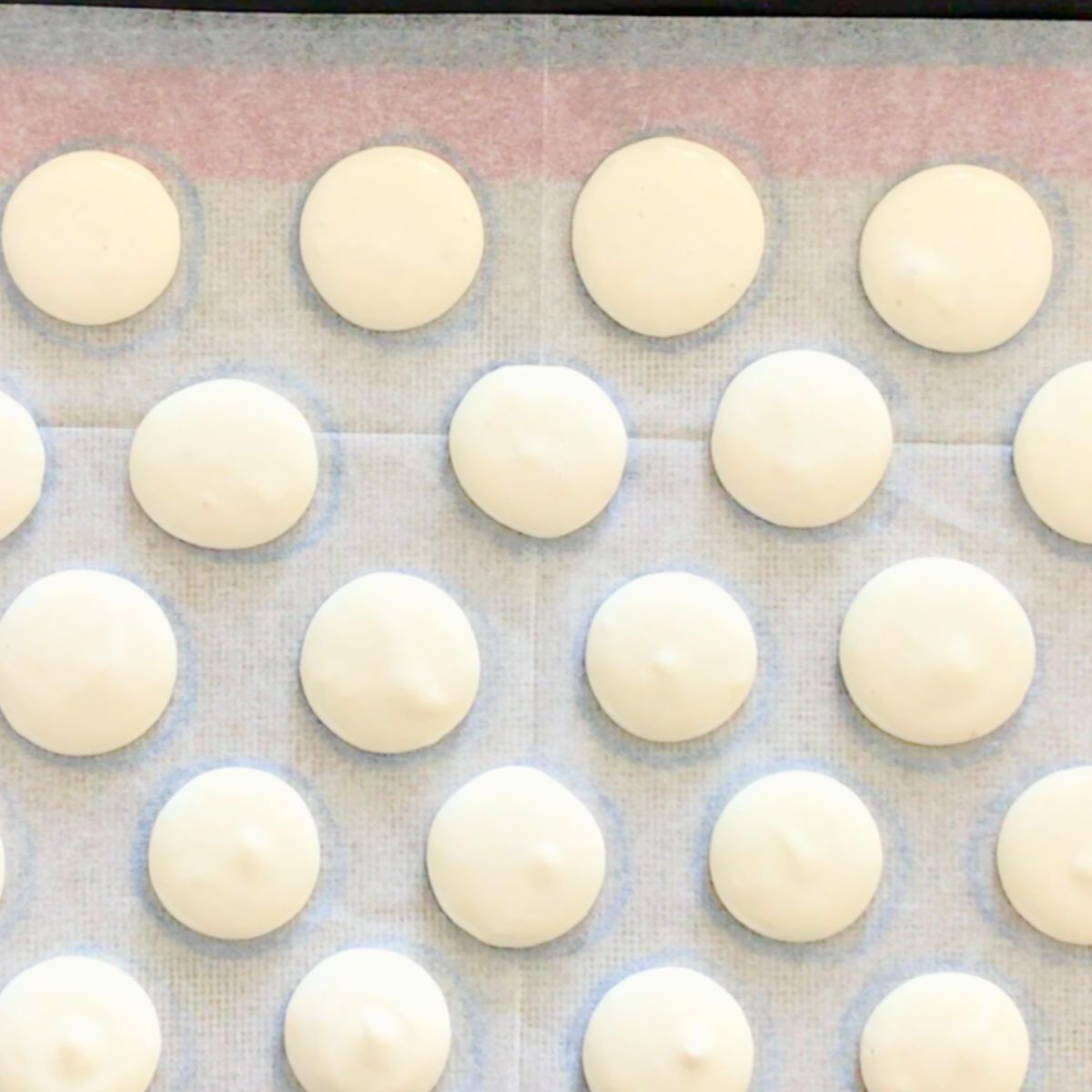
Tip 14: Use a template when you’re learning.
Evenly sized shells bake at the same rate and are much easier to pair when filling. Slide a printed template under the parchment paper and remove it before baking.
Remove Air Bubbles
Once all the macarons are piped, firmly tap the baking sheet several times against the counter.
Tip 15: Tap the trays and look for hidden bubbles.
Tapping brings trapped air bubbles to the surface. Pop any remaining visible bubbles with a toothpick before the shells begin to dry. Large trapped bubbles can contribute to cracked or hollow shells.
Rest the Macarons
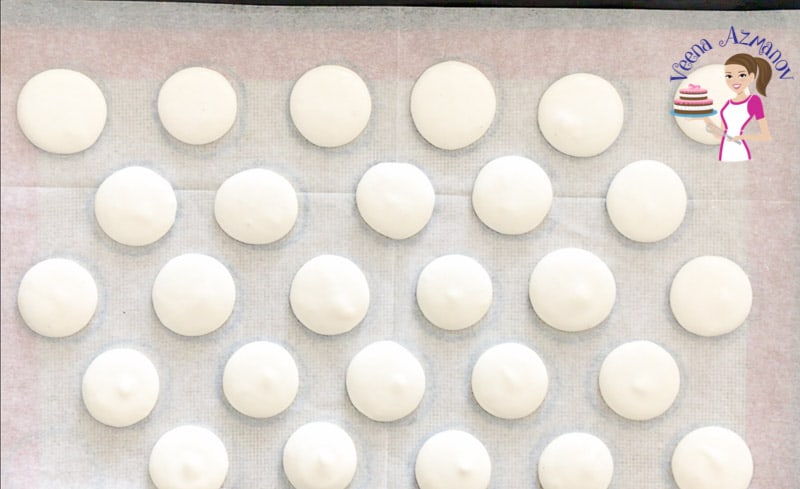
Leave the piped macarons at room temperature until the tops develop a skin. Depending on the room temperature and humidity, this may take around 30 minutes to 1 hour.
Tip 16: Don’t judge resting by the clock alone.
The shells are ready when the surface looks matte and you can gently touch the top without batter sticking to your fingertip. On humid days this can take longer.
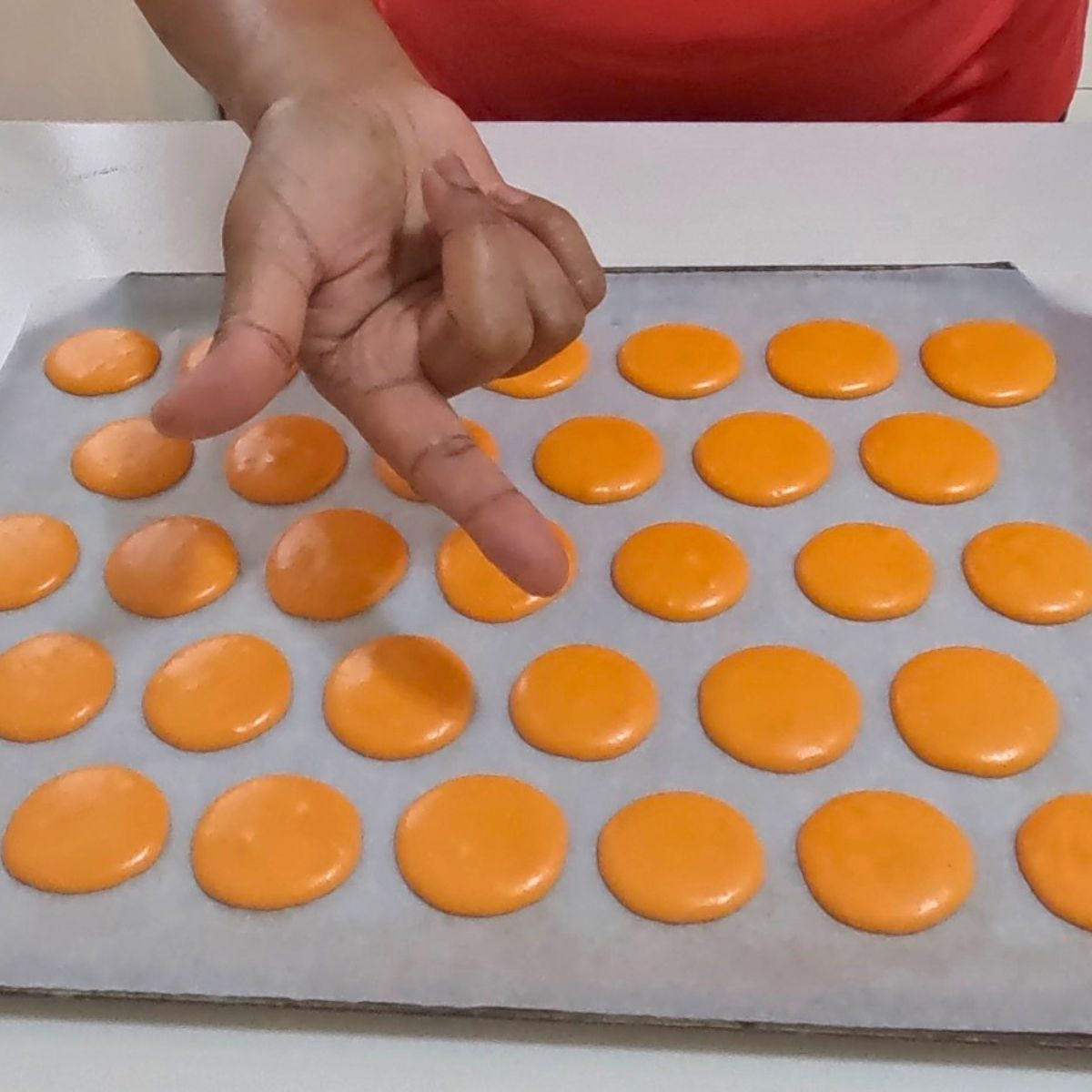
Tip 17: Resting helps create those macaron feet.
The dried surface helps contain the expanding batter as it bakes, encouraging it to rise from underneath and form the characteristic ruffled feet around the base.
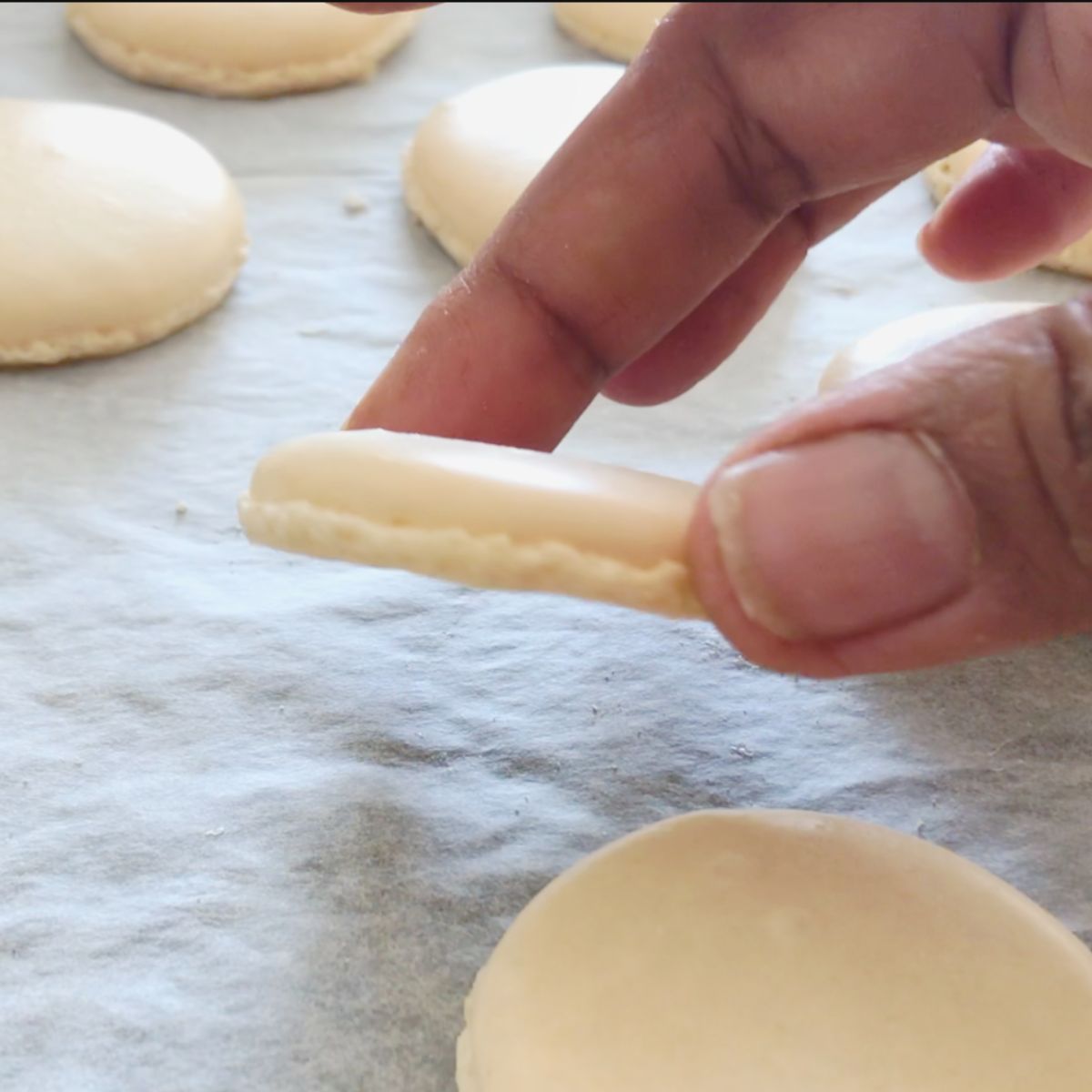
Bake the Macarons
Preheat the oven fully before baking. Bake the shells at 300°F (150°C) for about 15 to 18 minutes, or until they are set.
Tip 18: Know your oven.
Oven temperature can make or break macarons. Too much heat can cause excessive browning, cracking, or feet that spread outward. If your oven has strong bottom heat, baking on a double tray can help buffer the shells from direct heat.
Tip 19: Check the shells for doneness, not just the timer.
Gently touch the top of a shell. If it moves or wiggles independently of the feet, give the macarons a little more time. Properly baked shells should feel set and should not wobble on their base.
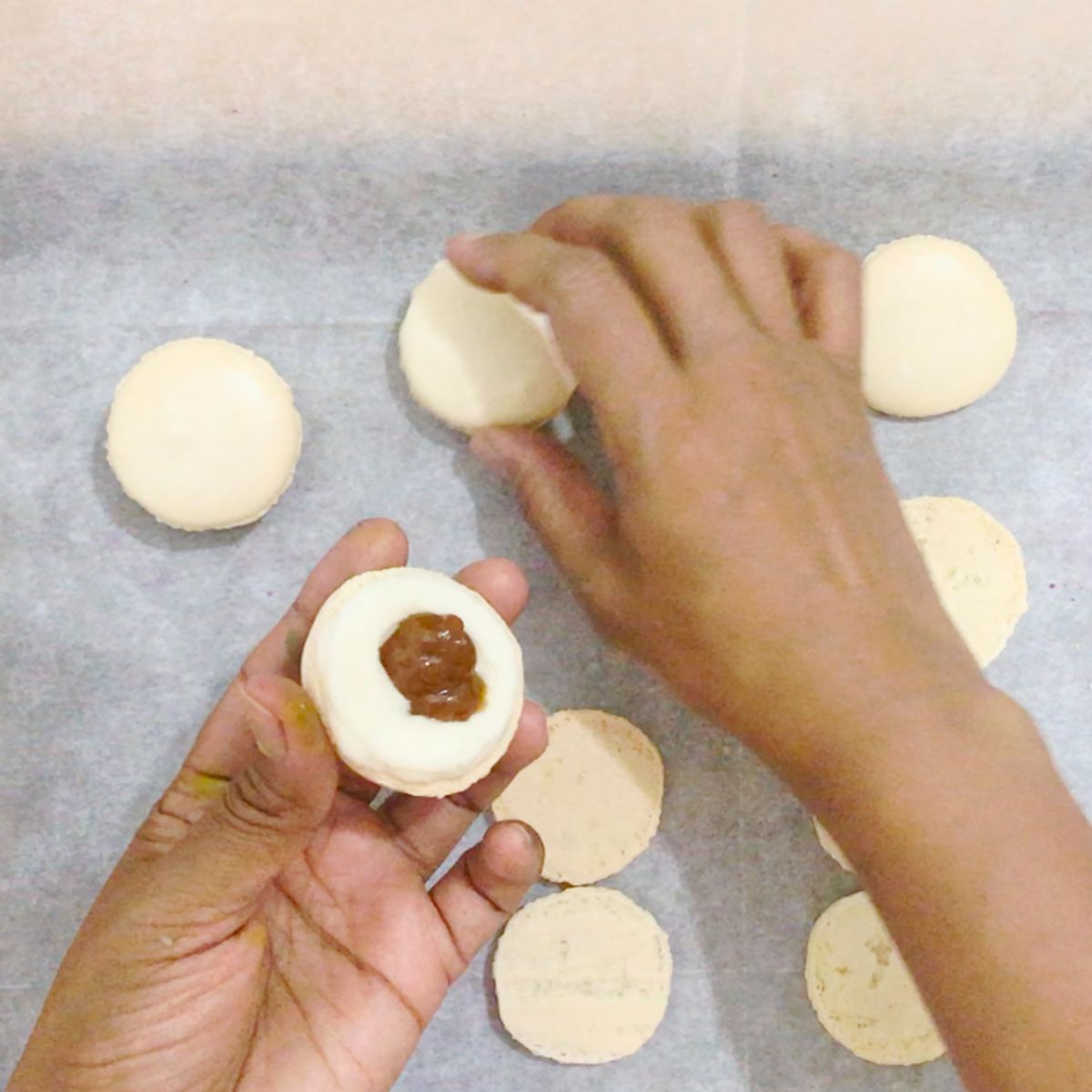
Cool, Fill, and Mature
Remove the tray from the oven and let the macarons cool completely before lifting them from the parchment or silicone mat. Pair similar-sized shells and fill with buttercream, ganache, fruit curd, caramel, or another filling of your choice.
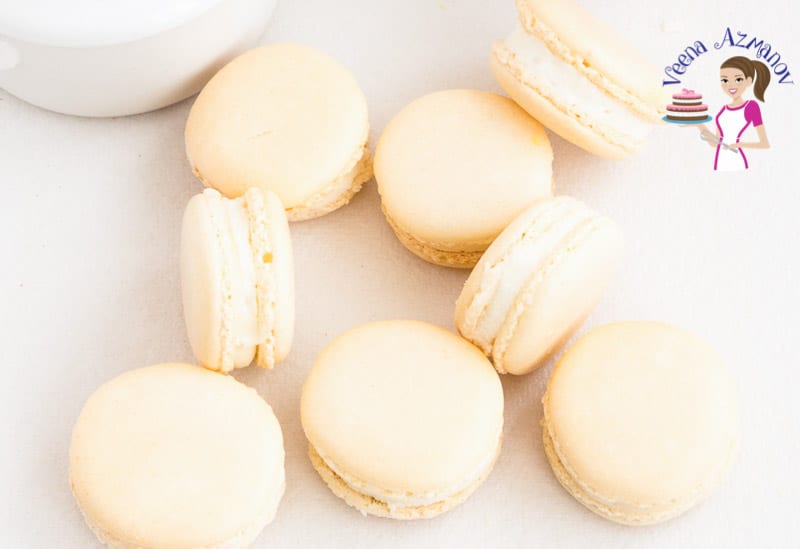
Tip 20: Let filled macarons mature before serving.
Freshly assembled macarons are often crisper than they will be later. Refrigerating the filled macarons in an airtight container allows some moisture from the filling to move into the shell, creating that characteristic delicate exterior with a softer, slightly chewy center. Bring the macarons closer to room temperature before serving for the best texture and flavor.

20 Tips to Perfect Macarons with Macaron Recipe
Ingredients
Macarons
- 100 g (3 large) Egg white
- 35 g (2½ tbsp) Granulated Sugar fine grain
- 200 g (1⅔ cup) Powdered sugar (confectioners sugar, icing sugar)
- 120 g (1 cup) Almond meal
- ⅛ tsp Cream of tartar
- ¼ tsp Vanilla extract
Filling and frosting
- 2 cups (470 ml) buttercream, ganache, or similar
- ½ cup (120 ml) Jams or fruits curds or other filling of choice
Instructions
- Prepare the baking sheets: Line baking sheets with parchment paper or silicone mats. If using a macaron template, place it underneath the parchment paper to help pipe evenly sized shells.
- Prepare the dry ingredients: Sift the powdered sugar and almond flour together into a bowl. Discard any large pieces that don't easily pass through the sieve and set the mixture aside.200 g Powdered sugar, 120 g Almond meal
- Whip the egg whites: In a clean, dry, grease-free bowl, beat the egg whites with the cream of tartar on low to medium speed until foamy.100 g Egg white, ⅛ tsp Cream of tartar
- Add the sugar: Gradually add the granulated sugar while continuing to beat the egg whites. Increase the speed gradually and whip until the meringue is smooth and glossy and holds stiff peaks. Add the vanilla and mix briefly to combine.35 g Granulated Sugar, ¼ tsp Vanilla extract
- Macaronage: Add the sifted almond flour and powdered sugar mixture to the meringue. Begin folding gently with a silicone spatula until the dry ingredients are incorporated. Continue folding, occasionally pressing the batter against the side of the bowl to remove some of the air. Stop when the batter is smooth and glossy and falls from the spatula in a thick, continuous ribbon that slowly blends back into itself.
- Pipe the macarons: Transfer the batter to a piping bag fitted with a plain round tip. Holding the piping bag straight at a 90-degree angle, pipe evenly sized rounds onto the prepared baking sheets, spacing them about 1 inch apart.
- Remove air bubbles: Firmly tap the baking sheets several times on the counter to release trapped air. Pop any remaining visible bubbles with a toothpick.
- Rest and preheat: Let the piped macarons rest at room temperature until a skin forms on the surface, usually about 30 minutes to 1 hour. The shells are ready when the surface looks matte and you can gently touch the top without batter sticking to your fingertip. Meanwhile, preheat the oven to 300°F (150°C).
- Bake: Bake for about 15 to 18 minutes, or until the shells are set. To check, gently touch the top of a macaron; it should not wobble separately from its feet. Remove from the oven and cool completely on the baking sheet before removing the shells.
- Fill: Pair similar-sized shells and sandwich them with your choice of buttercream, ganache, jam, or fruit curd.2 cups buttercream, ganache, or similar, ½ cup Jams or fruits curds or other filling of choice
- Mature and store: Place the filled macarons in an airtight container in the refrigerator. For the best texture, allow them time to mature before serving. Store refrigerated for up to 5 days and bring them closer to room temperature before serving.
Video
Notes
- Measure by weight: For the most consistent macarons, weigh all ingredients in grams rather than using volume measurements.
- Meringue: Whip the egg whites until the meringue is glossy and holds stiff peaks.
- Macaronage: Fold until the batter falls from the spatula in a thick, continuous ribbon and slowly settles back into itself. Avoid overmixing.
- Resting: Let the piped shells rest until the tops are dry to the touch and batter does not stick to your fingertip. Humidity can increase the resting time.
- Baking: Oven temperatures vary, so use the baking time as a guide. The shells are done when the tops feel set and do not wobble separately from the feet.
- Cooling: Let the shells cool completely before removing them from the parchment or silicone mat.
- Maturing: Filled macarons improve after resting in an airtight container in the refrigerator. Bring them closer to room temperature before serving.
- Color: These basic French macarons are intentionally left uncolored, so the shells will have their natural pale ivory/beige color.

Made this recipe?
I’d love to see how yours turned out! Share a photo on Instagram and tag @veenaazmanov_kitchen or use #veenaazmanovkitchen. And don’t forget to leave a rating and review!
Easy Macaron recipes
- Vanilla macarons – white or cream shells with vanilla bean buttercream and Vanilla pastry cream filling.
- Blueberry macarons – Blue shells with blueberry filling and Swiss Meringue buttercream
- Raspberry macarons – Red shells with raspberry filling and French Buttercream
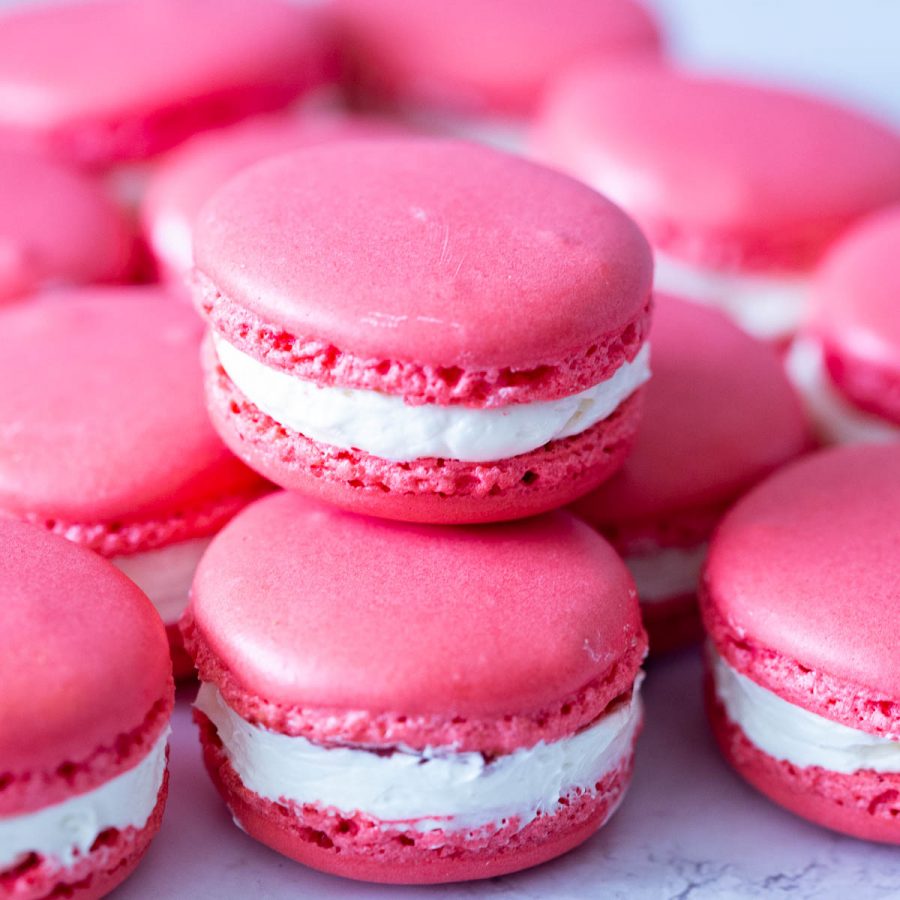
- Strawbery macarons – Pink shells with strawberry filling or strawberry jam with Italian merinuge buttercream


Macaron Troubleshooting
Even when you follow the recipe carefully, macarons can behave differently depending on the meringue, macaronage, humidity, and your oven. Here are the most common problems and what to check.
| Problem | What May Have Gone Wrong | What to Do Next Time |
|---|---|---|
| Macarons didn’t rise or have no feet | Weak meringue, overmixed batter, shells not rested enough, or oven temperature too low. | Whip the meringue to stiff peaks, stop folding when the batter flows slowly in ribbons, let the shells form a skin, and check your oven temperature. |
| Macarons aren’t drying | High humidity can significantly slow skin formation. The batter may also be too wet from excess liquid or coloring. | Give the shells more time in humid weather and avoid adding liquid flavorings or too much food coloring to the batter. |
| Macarons cracked on top | The shells may not have rested enough, trapped air may remain in the batter, or the oven may be too hot. | Rest until a dry skin forms, tap the trays and pop visible bubbles, and check the oven temperature. |
| Macarons deflated after baking | The shells may be underbaked or the meringue may not have been stable enough. | Whip the meringue to proper stiff peaks and bake until the shells are completely set before removing them from the oven. |
| Macaron batter is runny | The batter was most likely overmixed during macaronage. | Unfortunately, you can’t reliably thicken overmixed macaron batter. Next time, stop folding sooner and check the consistency frequently as you approach the ribbon stage. |
| Macarons spread after piping | The batter was overmixed or too wet. | Stop macaronage sooner. The batter should flow slowly from the spatula rather than pour or immediately spread flat. |
| Macarons are hollow | Hollow shells can result from an unstable meringue, incorrect macaronage, or underbaking. | Make sure the meringue reaches stiff peaks, watch the batter consistency carefully, and bake until the shells are completely set. |
| Macarons burst or explode | Trapped air, insufficient resting, or excessive oven heat can cause pressure to break through the shell. | Tap the trays well, pop air bubbles, allow a proper skin to form, and check that your oven isn’t running too hot. |
| Macarons have nipples or pointed tops | The batter was undermixed and didn’t have enough time to settle after piping. | Continue macaronage slightly longer. Properly mixed batter should slowly settle into a smooth surface after piping. |
| Macarons are lopsided | The piping bag may have been held at an angle, or uneven oven heat or strong airflow may push the shells to one side. | Pipe straight down at 90 degrees and check your oven for hot spots or excessive airflow. |
| Macarons stick to the parchment or silicone mat | The shells are usually underbaked or haven’t cooled completely. | Bake a little longer if necessary and let the shells cool completely before trying to remove them. |
| Macarons brown or lose their pale color | The oven may be too hot or the shells may be receiving too much direct heat. | Check the oven temperature and reduce it slightly if necessary. A second baking sheet can also help protect the shells from strong bottom heat. |
| Macaron feet spread outward | The oven may be too hot, the batter may be slightly overmixed, or the shells may not have rested sufficiently. | Check your oven temperature, stop macaronage a little sooner, and make sure the shells have developed a skin before baking. |
Frequently asked questions
The key is consistency at every stage: a stable meringue, properly mixed macaron batter, evenly piped shells, adequate resting, and the correct oven temperature. There isn’t one secret trick. Learning what the meringue and batter should look like is far more useful than relying only on mixing times or a specific number of folds.
For this recipe, I bake the macarons at 300°F (150°C). Every oven behaves differently, however, so an oven thermometer is useful. If the shells brown, crack, or develop overly large or spreading feet, the oven may be running hotter than the temperature displayed.
Yes, if you notice immediately that the shells are underbaked, return them to the oven for another minute or two. If they have already cooled completely, rebaking usually won’t restore the texture properly. Check for doneness before removing the tray by gently touching a shell—it should feel set and shouldn’t wobble on its feet.
A good French macaron should have a delicate, slightly crisp outer shell with a soft, slightly chewy interior. After the macarons are filled and allowed to mature in the refrigerator, moisture from the filling softens the inside while the exterior remains delicate.
yes, when baked the macarons should have ‘feet’. Feet is that bottom-frilled ruffled look. When you touch the top will be hard but still firm and not move around. If it’s still moving it’s not baked enough put it back in the oven. Check at 2-minute intervals.
Both work. Parchment heats quickly and often releases properly baked shells easily, while silicone mats provide a flat, reusable surface and can make piping uniform shells easier. Baking time can vary slightly between the two, so use whichever gives you the most consistent results in your oven.
Yes. Macarons are actually an excellent make-ahead dessert because filled macarons benefit from resting in the refrigerator before serving. Store them in an airtight container in the refrigerator and bring them closer to room temperature before serving.
Yes. Filled macarons can be frozen in an airtight container, depending on the filling used. You can also freeze unfilled shells. Thaw them in the refrigerator before bringing them to room temperature, and keep the container closed while they thaw to help prevent condensation from forming on the shells.
You can fill macarons with a simple buttercream or explore different fillings and frosting. For example, my favorite is gourmet buttercream recipes like French, Swiss, or German. They are rich and less sweet than classic American buttercream. I also like adding fruit fillings and curds in the middle of the frosting. This is a great way to take your macarons to the next level. And here you will find 30 plus buttercream frosting recipes.
more macaron recipes
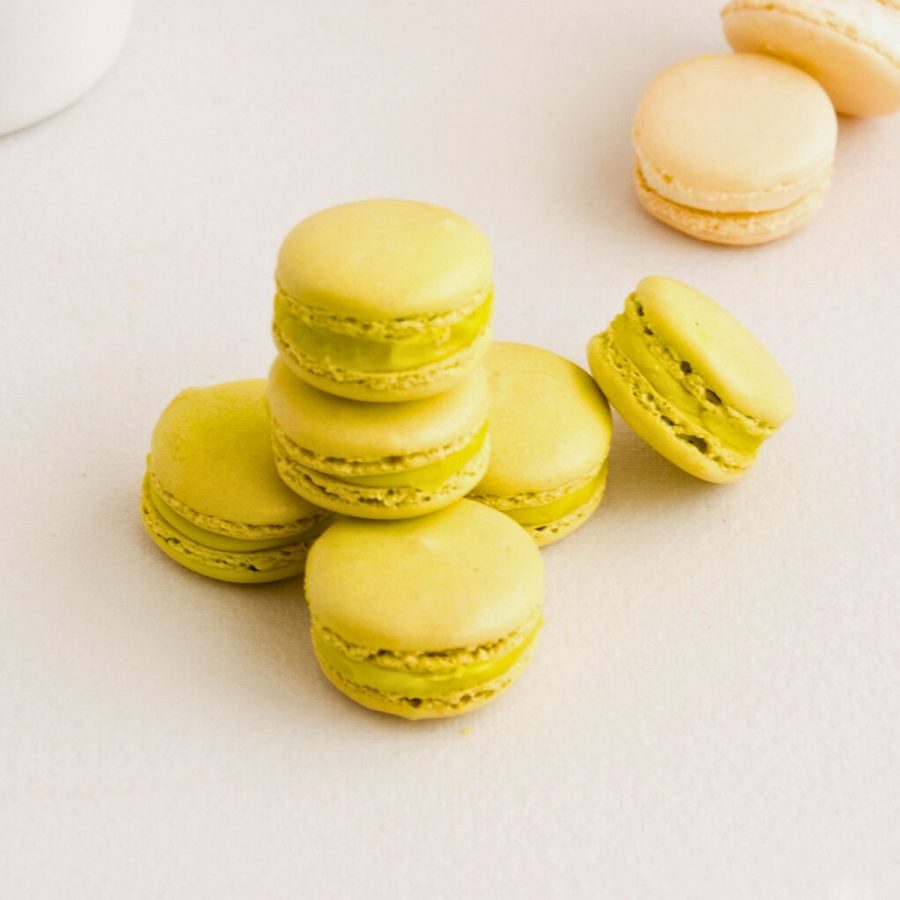
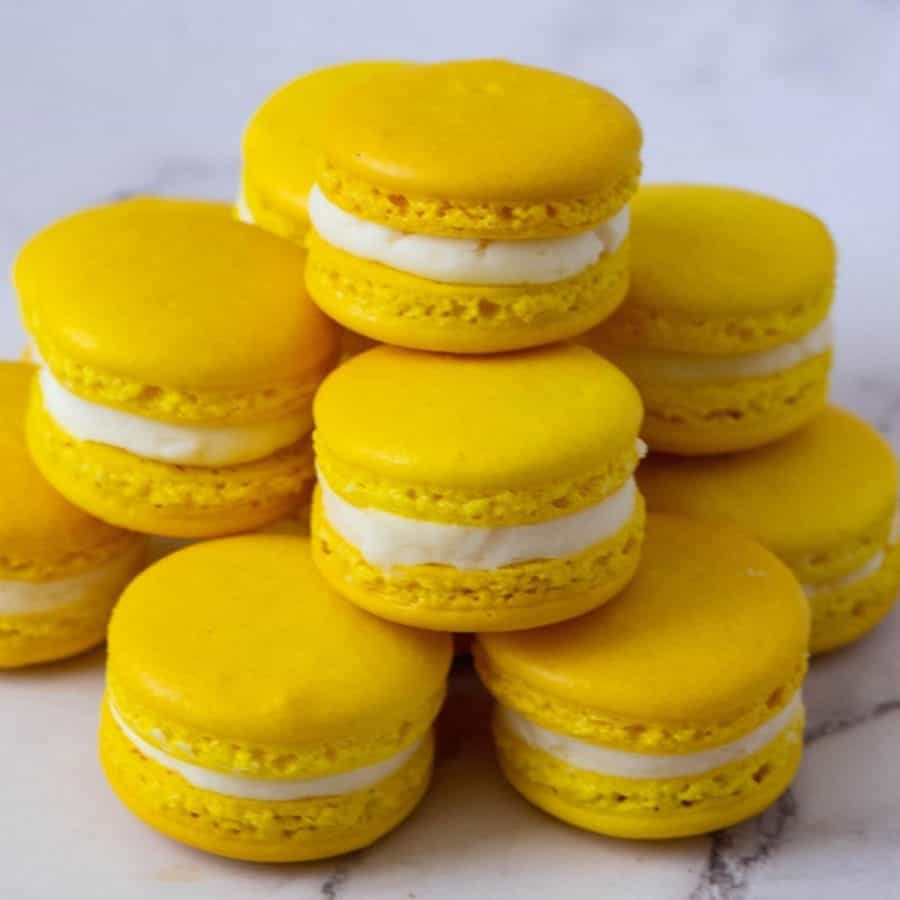
- Lemon macarons – Yellow shells with lemon curd filling and lemon Swiss merinuge buttercream.
- Strawberry lemon macarons – yellow or pink shells with lemon curd and Strawberry Swiss meringue buttercream
- Matcha macarons – Green shells with macha cream and Italian meringue buttercream
- Chocolate macarons – brown shells with chocolate ganache
- See all my Macarons Collection here


Don’t lose this recipe! Save it for Later!
📌 Save this Recipe for later on Pinterest so you can easily find it again.
⭐ Add Veena Azmanov Kitchen to your Google Preferred Sources.
It helps Google show you more of our recipes.
📧 Subscribe for new recipes delivered to your inbox.
🎥 Follow us for more recipes
Hi, I’m Veena
I’m the recipe developer, baker, and food photographer behind Veena Azmanov Kitchen.
I’ve spent years developing and testing recipes, from everyday meals and homemade breads to cakes and desserts.
I share the practical tips and little details I’ve learned along the way so you can get great results in your own kitchen.







Can I use Kitchen aid stand mixer to make the macaronage and how?
Yes, of course. It is recommended to use your an electric mixer with the whisk attachment to whip the egg whites. But, do not use it to fold in the dry ingredients. That is best done by hand using the folding motion. See my videos and macaron recipes.
Hi, can I use almond flour instead of almond meal?
Hey Jen. When it comes to macarons almond flour and almond meal can be used interchangeably as long as they are both made from white balanced almonds and are ground to a fine flour consistency.
Most almond flour will often consist of the skin and therefore is brown with a thicker consistency.
This won’t give a good color to the macarons and may cause them to crack.
Dear Veena,
After 3 years of failing I finally successed bacause of your all hints and receipe:) THANK you for a milions time:) They still need some „make up” improvements but I have a nice feets on the macarons:) and the taste is good either:)
Next time I will try to use the silicone macarons plate to nake them a bit higher, this one are thin.
I have a question if you tried to use erythritol instead of sugar? It is possible the macarons would be ok and develop the feet too?
Best regards,
And thank you a lot,
Dorota
Hey Dorota. Happy you found this recipe successful for you. Thank you for the feedback. I have not tried this recipe with erythritol so not sure if it will work or not. Sorry.
I over cooked the first batch and under cooked the second. How do you test when they should come out of the oven?
What brand of gel food coloring do you use to get such bright colors?
I use Magic Colors food gel colors, Brenda. Thanks
These little cookies are the hardest things to make, but you give great tips, and can’t wait to make them again.
I made these as my first attempt at macarons and they turned out perfectly! Thank you!! This is my go – to recipe for macarons! I will be making the blueberry recipe tonight 🙂
Ah! Congratulations, Jacquelyn. Happy to hear that. Don’t forget to share pictures of them in our Facebook group. Love to see the success.
Hi Ms. Veena, Thank you for the recipe… My third macaron attempt and this time I was successful. I’m elated beyond words… The correct weight measurement and skin formation is key. However my oven temp was set at 150 °c @20 min.
Thanks again!!
Yeey, So happy to hear that Namitha. Congratulations. Now you can have fun with many many flavors and variations. Yes, for macarons correct measurements in key. Thanks for coming back to write this feedback
I’m so frustrated! Hollow shells EVERY time. The foot is perfect. I’m so careful when I mix. I did 300 degrees for 12 minutes. Maybe my oven is too hot? Bottoms got a little tan. Help!
I’m sorry to hear that. Michelle. Are you in my Facebook group? You can share pictures of the macarons so I can see them?
From what you wrote here. It sure sounds like the oven is hot! Reduce the oven temperature.
If you have the bottom tanned but the macaron has not lost color sounds like the bottom is heating more than the top. Is the tray closer to the bottom? In any case, reducing oven temperature will help.
Hi ? can we use lemon juice or vinegar, instead of cream of tartar..?
Just a pinch of salt, Rabiya. NOt vinegar or lemon
hi veena thanks a lot for motivating me to try making macarons..in the past ive tried so many of ur recipes and they all were so good and was a success at home with my kids and so i was sure this is going to b no different..however my macarons came out as shells with the under part uncooked..can u help me and tell me what could have gone wrong..how do i attach a
a pic
Hey Shalini. I’m so happy you are having success with my recipes. As I said in the post, often there a very minor details that can be an issue with macarons. If you share the images with me in a message to my Facebook page perhaps I may be able to tell. Thanks
Can I bake macarons in convection microwave?? If can how? Instructions please.
Hey Dedeepya. The convection oven has a fan that distributes heat evenly so it supposed to be better for baking. I have not tired a convection microwave though so I’m not so sure what the setting will be. Perhaps you can do a small batch and test it with the same temperature first and see the results – then adjust accordingly.
Hi Veena
Can you please make macaroons using Aquafaba(chickpea water)
Please as you will do justice and you will give us lot of insights while making it please
Ah, Nayana. Eggless macarons are on my list but not made many batches yet. Have to still work on the formula. I usually share only when I have thoroughly tried the possibilities. Thank you for your confidence in me. I hope to get to these soon.