
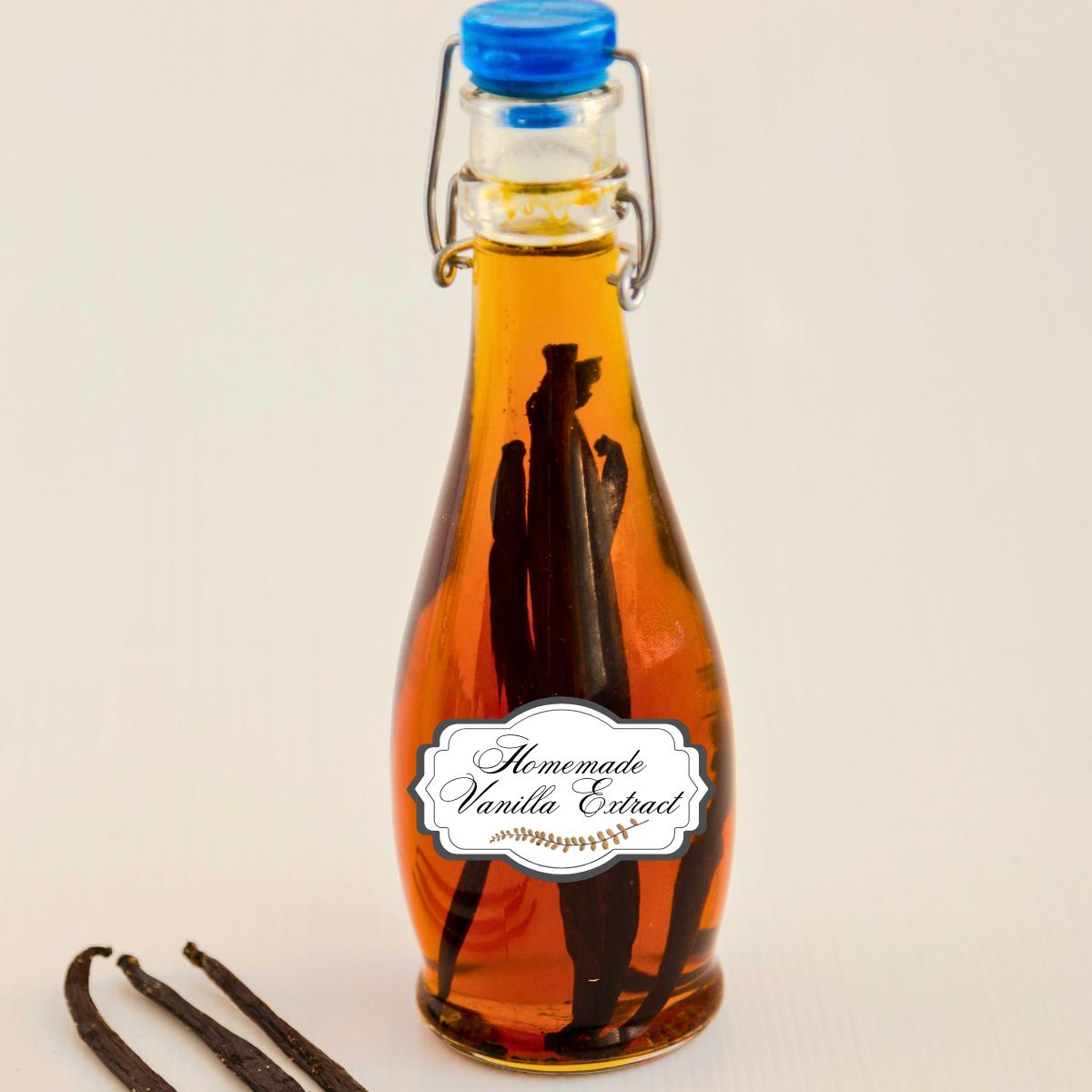
Homemade vanilla extract is surprisingly simple to make with just vanilla beans and alcohol. It takes about five minutes to prepare, then time does the rest.
Once you know how to make vanilla extract at home, you can adjust the strength to suit your baking and keep a bottle steeping so you always have some on hand. It’s economical, flavorful, and especially worthwhile if you bake often.
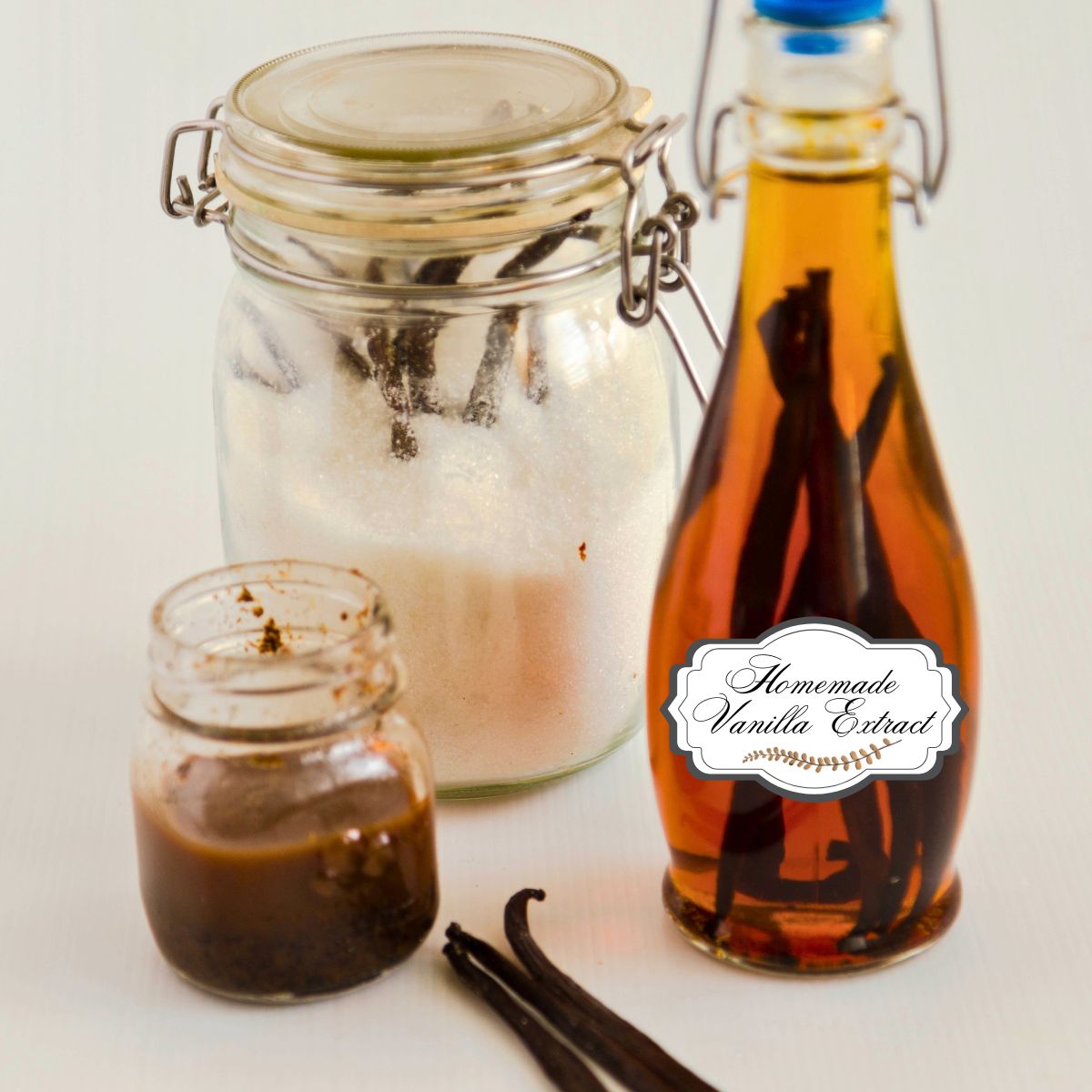
When I was running my cake business, I went through vanilla extract fast. It went into every cake, filling, and buttercream—and I’ll admit I usually added a little more than the recipe asked for. Good vanilla makes a difference.
The problem was the cost. Quality vanilla extract isn’t cheap, and buying bottle after bottle just didn’t make sense. Making my own was more economical and gave me control over the strength.
Once I started, it became routine. I always had vanilla extract steeping, vanilla sugar in a jar, and later even vanilla bean paste. It stopped being a DIY project and simply became how my kitchen worked.
Why You’ll Love This Homemade Vanilla Extract
- Just two ingredients – Vanilla beans and alcohol are all you need.
- Better value for frequent bakers – If you use vanilla often, making a larger batch can be more economical than buying small bottles.
- You control the flavor – Keep it classic with vodka or use bourbon, rum, or brandy for a slightly different flavor profile.
- It keeps getting better with time – The vanilla develops as the beans infuse, so this is one pantry staple worth making ahead.
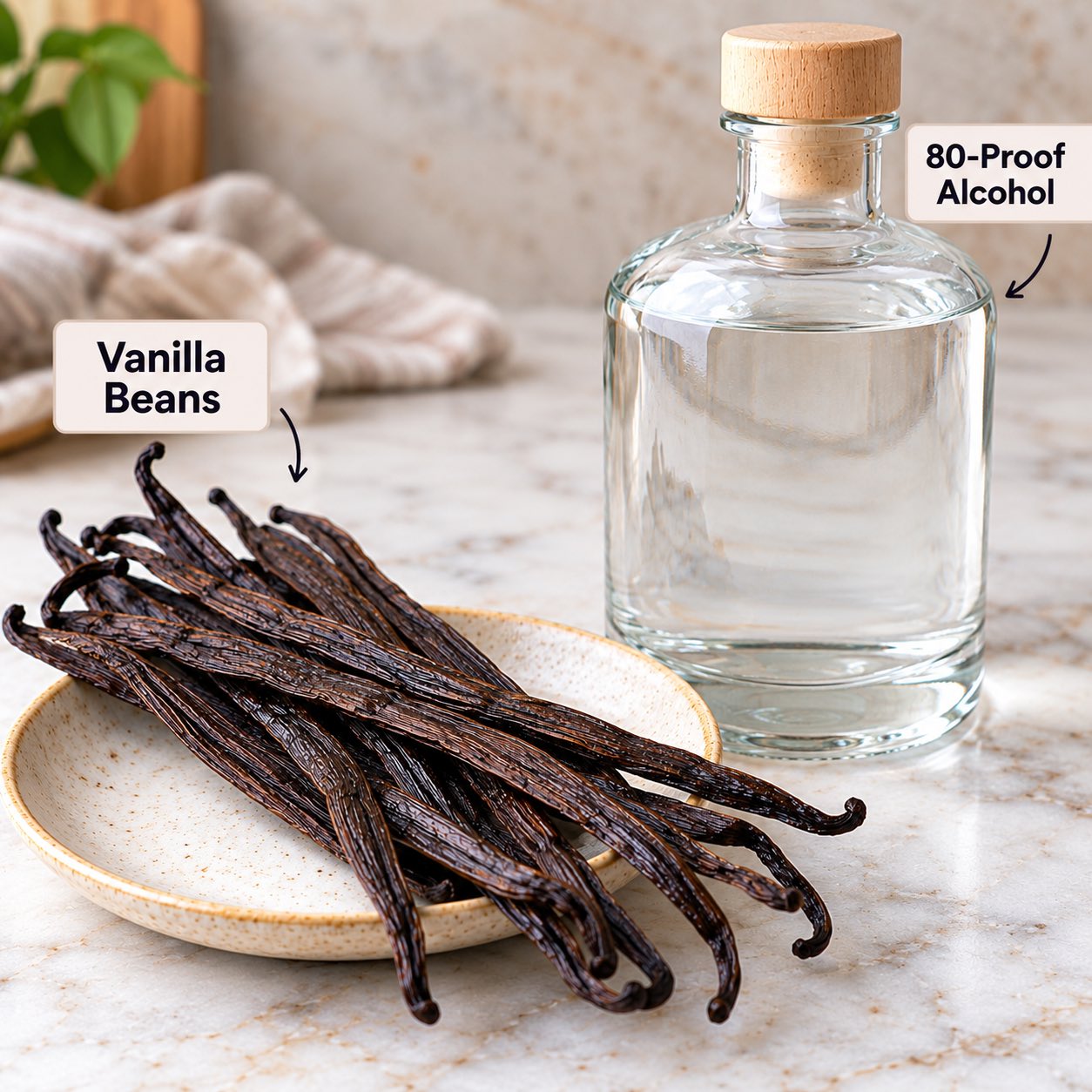
Ingredients and Substitutions (2 Ingredients)
- Vanilla beans – Use good-quality whole vanilla beans that are fragrant and flexible rather than brittle. Grade B beans are often sold specifically for making extract and tend to be more economical, but Grade A beans work too. Because vanilla beans vary in size, weight is more reliable than bean count when determining how much to use.
- Alcohol – Vodka is my preferred choice because its neutral flavor lets the vanilla shine. Use an 80-proof (40% ABV) vodka. You can also use bourbon, rum, or brandy if you want their flavors to come through in the finished extract.
How to Make Homemade Vanilla Extract
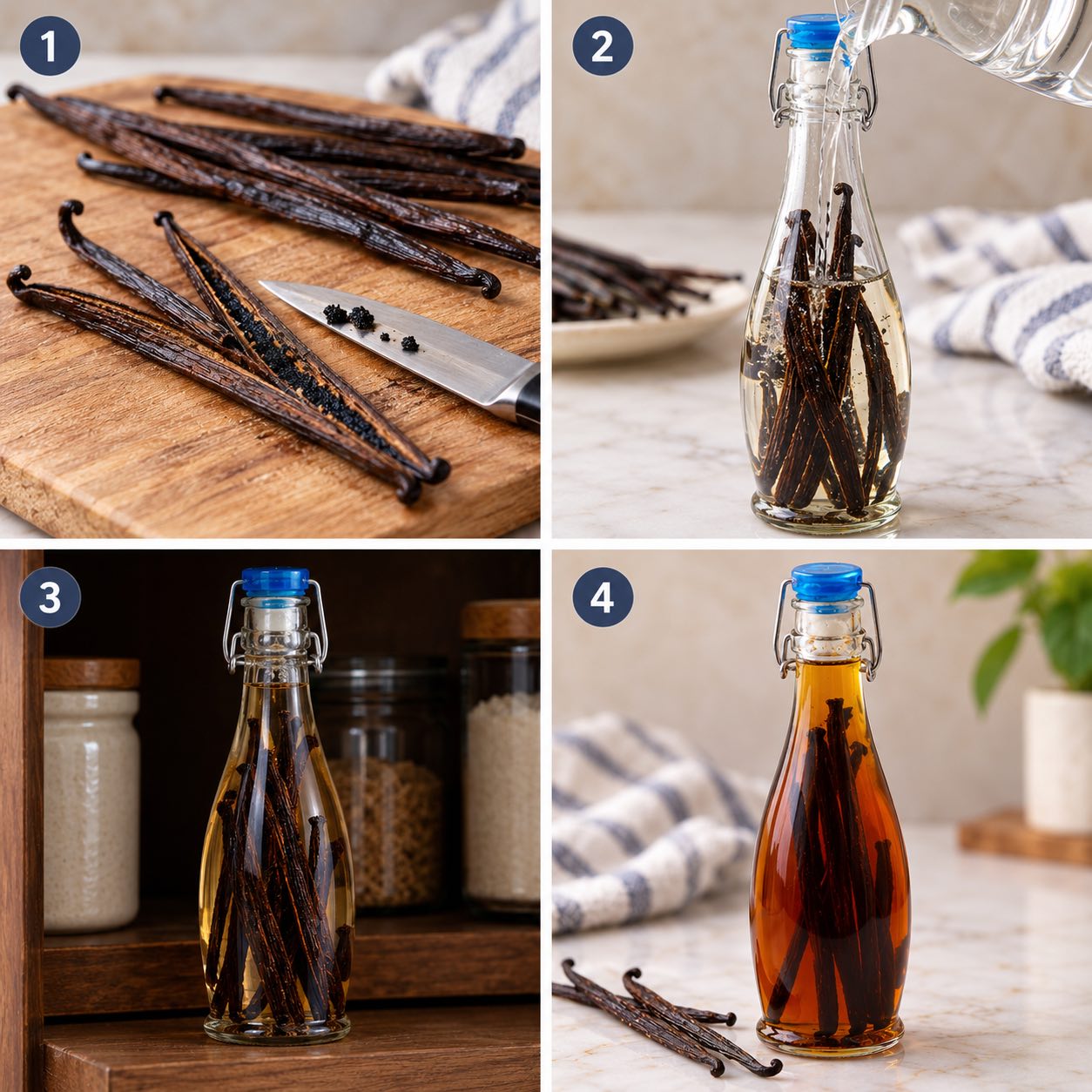
- Prepare the vanilla beans – Split each vanilla bean lengthwise to expose the seeds. You don’t need to scrape them out. If the beans are too tall for your bottle, cut them in half.
- Add to the bottle – Place the vanilla beans in a clean glass bottle or jar.
- Add the alcohol – Pour in the vodka, making sure the vanilla beans are completely submerged.
- Seal and store – Close tightly and store in a cool, dark place away from direct sunlight.
- Let it infuse – Give the bottle a shake occasionally while the vanilla develops.
How Long Does Homemade Vanilla Extract Take?
You can technically start using it after 8–12 weeks, but vanilla extract improves dramatically with time.
- 3 months: usable, mild flavor
- 6 months: good, well-rounded
- 12 months+: deep, rich, professional-quality
The longer it sits, the better it gets.
Can You Refill and Reuse Vanilla Extract?
Yes—and this is one of the best parts.
As you use the extract, simply top it up with more alcohol. Shake well and continue using. Over time, the beans will eventually lose strength, at which point you can replace them with fresh ones.
Can You Make Vanilla Extract Without Alcohol?
Alcohol is the most effective and traditional extraction method. Non-alcoholic versions exist, but they take longer, have a shorter shelf life, and don’t extract flavor as efficiently. For best results, alcohol is strongly recommended.
Having said that, you can make vanilla extract without alcohol, but the results are different. The best alcohol-free option is food-grade vegetable glycerin, which extracts vanilla flavor more gently and gives a slightly sweeter, milder extract. It takes longer to develop and won’t be as strong as traditional alcohol-based vanilla, but it works well for baking and desserts when alcohol isn’t an option.
When Should I Use Vanilla Extract, Vanilla Sugar, or Vanilla Bean Paste?
Each form of vanilla has its place:
- Vanilla extract – Best for batters, doughs, frostings, and most baking recipes.
- Vanilla bean paste – Use when you want strong vanilla flavor and visible specks (custards, pastry cream, ice cream).
- Vanilla sugar – Ideal when you want vanilla flavor without adding liquid, such as in cookies, cakes, coffee, or sprinkled toppings.
They can also be used together for layered vanilla flavor.
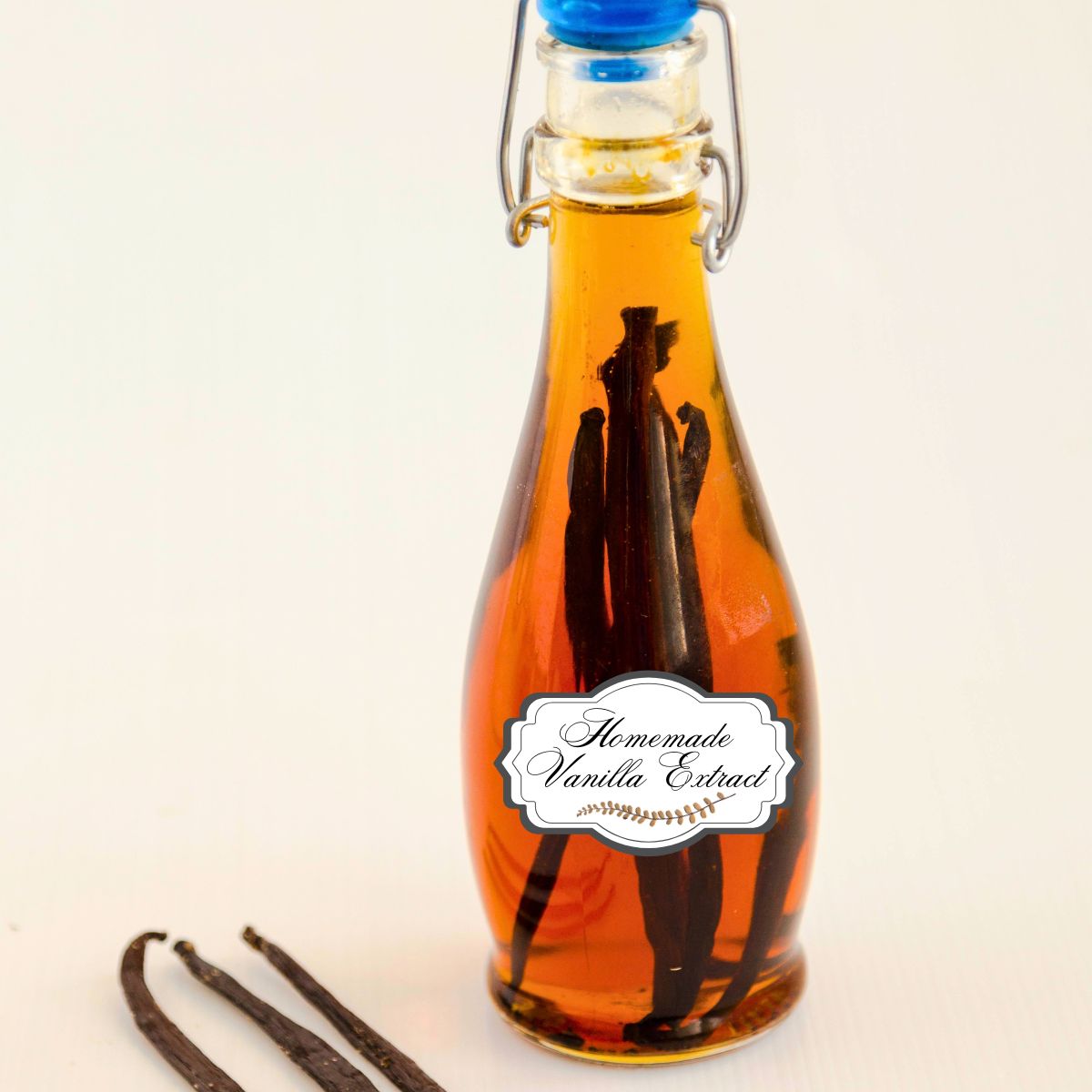
Homemade Vanilla Extract (2 Ingredients)
Ingredients
- 28 g (1 oz) Vanilla beans about 6 to 8 beans
- 240 ml (1 cup) 80-proof Alcohol (Vodka, bourbon, rum, or brandy)
Instructions
- Prepare the vanilla beans – Using a sharp knife, slit each vanilla bean lengthwise to expose the seeds. You don't need to cut completely through the bean. If the beans are too long for your bottle, cut them into smaller pieces.28 g Vanilla beans
- Add the alcohol – Place the vanilla beans in a clean glass bottle or jar. Pour the vodka over the beans, making sure they are completely submerged. Seal tightly and give the bottle a good shake.240 ml 80-proof Alcohol
- Infuse the vanilla – Store at room temperature in a cool, dark place away from direct sunlight. Shake the bottle about once a week or whenever you remember.
- Let it develop – You can begin using the vanilla after 6 months, but for a fuller, stronger vanilla flavor, let it infuse for 12 months or longer. Then keep your two short groups underneath:
- Storage & Shelf Life – Store at room temperature away from heat and direct sunlight. Keep the vanilla beans fully submerged in alcohol.
- Refilling & Reusing – As you use the extract, you can top up the bottle with more alcohol. Over time, the beans will lose their potency; add or replace them with fresh vanilla beans when the flavor begins to weaken.
Video
Notes
- Vanilla beans: Vanilla beans vary in size, so weighing them is more accurate than counting them. Use about 28 g (1 oz) vanilla beans per 240 ml (1 cup) alcohol.
- Alcohol: Vodka gives the cleanest vanilla flavor, but you can also use bourbon, rum, or brandy. Use 80-proof (40% ABV) alcohol.
- Infusion time: The extract can be used after about 6 months, but the flavor continues to develop and is even better after 12 months or longer.
- Keep beans submerged: The vanilla beans should remain covered with alcohol while they are in the bottle.
- Scaling: Keep the same ratio when making a larger batch — 28 g vanilla beans for every 240 ml alcohol.
- Using it: Once properly infused, use homemade vanilla extract 1:1 in place of store-bought vanilla extract in your baking recipes.
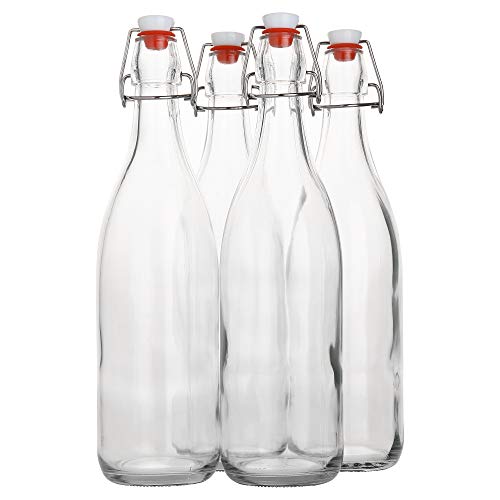
Equipment
Made this recipe?
I’d love to see how yours turned out! Share a photo on Instagram and tag @veenaazmanov_kitchen or use #veenaazmanovkitchen. And don’t forget to leave a rating and review!
Tips for Success
- Use enough vanilla beans. Vanilla beans vary in size, so weighing them is more reliable than simply counting the beans. Too few beans will give you a weak extract even after months of infusing.
- Keep the beans submerged. Make sure the vanilla beans stay covered with alcohol throughout the infusion. Cut or fold longer beans if necessary to fit the bottle.
- Give it time. The extract will darken and develop more flavor as it sits. You can start using it after a few months, but a longer infusion produces a fuller vanilla flavor.
- Store it in a cool, dark place. A pantry or cupboard is ideal. There’s no need to refrigerate homemade vanilla extract.
- Shake it occasionally. A gentle shake every week or two helps redistribute the vanilla seeds and beans, but don’t worry if you forget.
- Don’t judge it by color alone. A dark extract isn’t necessarily a stronger extract. Aroma and flavor are better indicators of how well your vanilla has developed.
- Replace tired beans. You can top up the bottle with alcohol as you use the extract, but the same beans won’t provide strong flavor forever. Add fresh beans when the vanilla begins to weaken.
More DIY recipes
- Bake a Moist, Fluffy Vanilla Bean Cake Every Time
- Bourbon Cherries
- Homemade Vanilla Sugar (2 ingredients)
- 10 Best Gifts for Bread Bakers
- Easiest Eggnog Recipe


Frequently asked questions
When made with alcohol and stored properly, homemade vanilla extract can last many years. If it still smells good and the beans remain submerged, it’s safe to use.
Yes. While vanilla beans can be expensive upfront, homemade vanilla extract costs less per cup than store-bought and can be refilled multiple times, making it much more economical in the long run.
You can start using it after about 8–12 weeks, but the flavor improves significantly after 6 months and continues to deepen for a year or longer.
A common formula is 5–6 vanilla beans per 1 cup (240 ml) of alcohol for standard-strength extract. For a stronger extract, use 8–10 beans per cup.
Homemade vanilla extract is made by soaking split vanilla beans in alcohol, usually vodka. The alcohol extracts the flavor from the beans over time. Prep takes about 5 minutes, then the mixture is left to infuse for several months.
Yes, you can reuse the vanilla beans after making extract. Rinse them off, let them dry, and then use them to make another batch of extract or for other recipes that call for vanilla beans.
Vodka is the most popular choice because it has a neutral flavor that lets the vanilla shine. Bourbon, rum, or brandy can also be used if you want a slightly warmer, more complex flavor.
You often get chefs who will tell you – use good quality vanilla when you bake. That is good advice. Because Imitation vanilla extract contains water, alcohol, and natural flavorings. The natural flavorings are usually an extract from cocoa and tea, vanillin, and other artificial flavorings. Imitation vanilla extract may also contain corn syrup and caramel color.
For a standard extract, use 15–18 vanilla beans. For a stronger extract, use 20–24 beans, depending on the size and quality of the beans.
No. Proper vanilla extract is made with at least 35–40% alcohol, which prevents bacterial growth. Always keep the beans fully submerged in alcohol.
More DIY Recipes
- How do I blind bake a crust
- What is Frangipani: Almond Cream Filling
- Can you freeze cheese or cream cheese?
- How to cook basmati rice
- How to cook basmati rice



Don’t lose this recipe! Save it for Later!
📌 Save this Recipe for later on Pinterest so you can easily find it again.
⭐ Add Veena Azmanov Kitchen to your Google Preferred Sources.
It helps Google show you more of our recipes.
📧 Subscribe for new recipes delivered to your inbox.
🎥 Follow us for more recipes

Hi, I’m Veena
I’m the recipe developer, baker, and food photographer behind Veena Azmanov Kitchen.
I’ve spent years developing and testing recipes, from everyday meals and homemade breads to cakes and desserts.
I share the practical tips and little details I’ve learned along the way so you can get great results in your own kitchen.



Hi Veena, You mention Vanilla extract, paste, and sugar. What are your thoughts on the use of vanilla powder? I have a jar of good-quality vp in my cabinet and have yet to open it. What would be the best use for it? Thanks.
Vanilla powder is a great alternative to vanilla extract. You can definitely use it in any recipe that calls for vanilla.
Mine has what look to be fibers I don’t know what else to call it. I get the vanilla bean seeds are in there but I’m not sure what this favor is I had clean equipment clean jars to put it in what could that be is it something just off the bean itself from me splitting it?
Not sure Angie. When you split the beans you should have seeds. It looks like a paste made with seeds. These seeds are what look pretty in a vanilla cake batter, or pastry. etc.
I think you have the fibers from the bean. It is not soaked until very soft so it didn’t become pastry or dry so it becomes a powder. It’s somewhere in between. A lot of it should come out when you strain it.
The fiber is edible so you can still use it.
I have made a ton of vanilla as well — of all different types. I’ve made Madagascar in bourbon and in vodka, Ugandan in vodka, Tahitian in white rum, Mexican in extra anejo tequila, etc. I have also mixed beans and use my Tahitian/Ugandan mix in vodka in my chocolate cakes. I use one ounce of beans to 8 ounces of alcohol, and if it is clear alcohol, I let it sit for six months, shaking every once in a while. They are also kept in my dark pantry. I have gifted my vanilla and people love it — they use it to bake or to even put straight into their coffee. I think people appreciate that my cakes contain homemade vanilla, and if you are doing a farmer’s market where you must use at least one locally sourced ingredient – I think vanilla would count.
In order to get a true extract, you need 1oz of beans to 8oz of alcohol. If you use 10 beans to 2 cups of alcohol, the best you will get is an infused alcohol. This ratio is according to what the FDA says is a true extract.
That is why you have to leave it to seep for a few months, Julia. Having said that you can of course use more or less liquid in this. The more vanilla beans you add the quicker the vanilla will be ready.
It was great tips…I’m at 1 months and the color is already amazing.
Not a lot of people knows that but Bourbon vanilla is not from Madagascar but from La Reunion, a french island close to madagascar. The beans are a not very big but they contains a lot of seedy stuff in it and the flavor is alot stronger. Under Napoleon Bonaparte, la Reunion used to be named Bourbon Island.
Thank you, Vincent. I did not know that. Always great to learn these things. Happy you are enjoying your vanilla extract
I did not know I could make vanilla extract at home. I always buy the vanilla beans and use the scrapings! But Just leave the left over in my pot puree. I love that the house smells of vanilla.
Thank you Isabel. OH my you can use the beans after you have scraped the seeds and put them in a bottle to make vanilla extract. The more beans you add the more concentrated the flavor – I hope you will use them now.
I agree with you I have never been able to give vanilla as gifts – it’s just way to expensive for me. I have never made more than a bottle and it last me a year or more.
Thank you Leonore. Yes vanila beans are very expensive in Israel too! One bottle is plenty if you do not bake much. I usually need one bottle every three months so I made to simultaneously,
I always use bourbon before but now I will use vodka – I didn’t know that these has caramel color added to it. I thought it was just more vanilla flavor. Thank you for such an informative post.
Thank you Linda. Yes I prefer vodka so the color and flavor is more neutral.
You always share such great information on your post and recipes. I love reading your blog. I just made vanilla extract few weeks ago using this recipe. I use to always use the bean for my desserts now I will use them to make the extract first. Thanks
Thank you Lisa. So happy to hear you like my blog. I love knowing every thing about my recipes so I find it helps many who come to learn cooking. Yes, use those scraped beans to make extract, it still has lots of flavor.
I didnt’ know it was so easy to make homemade vanilla. I love the idea of saving money. It really is so expensive but not so difficult to make. Thanks for all the great information. I’llstart making my vanilla sugar too!
Absolutely Natalie. So easy and so much more affordable in the long term. I make mine in two batches so while I’m using one bottle the other is seeping. Thanks