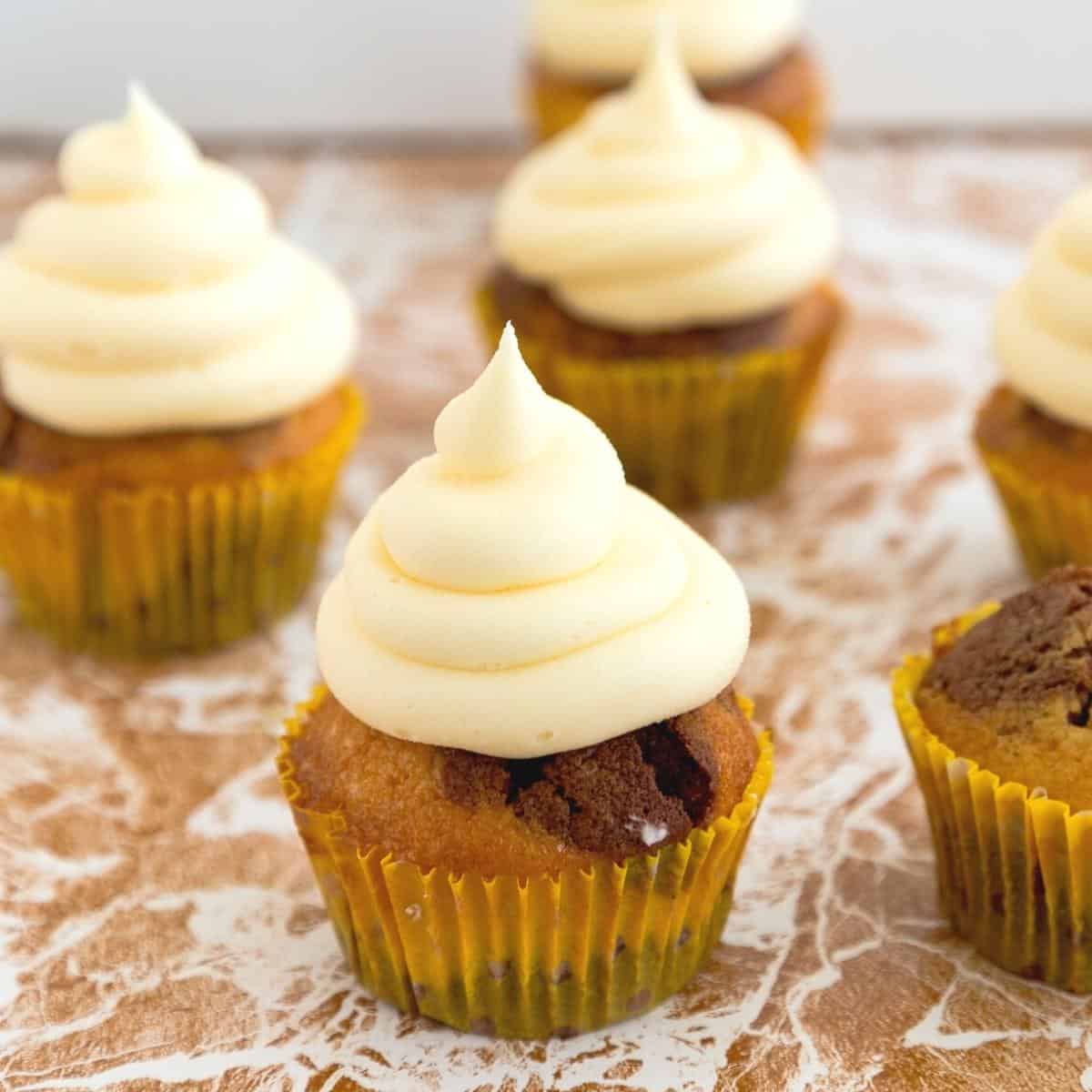
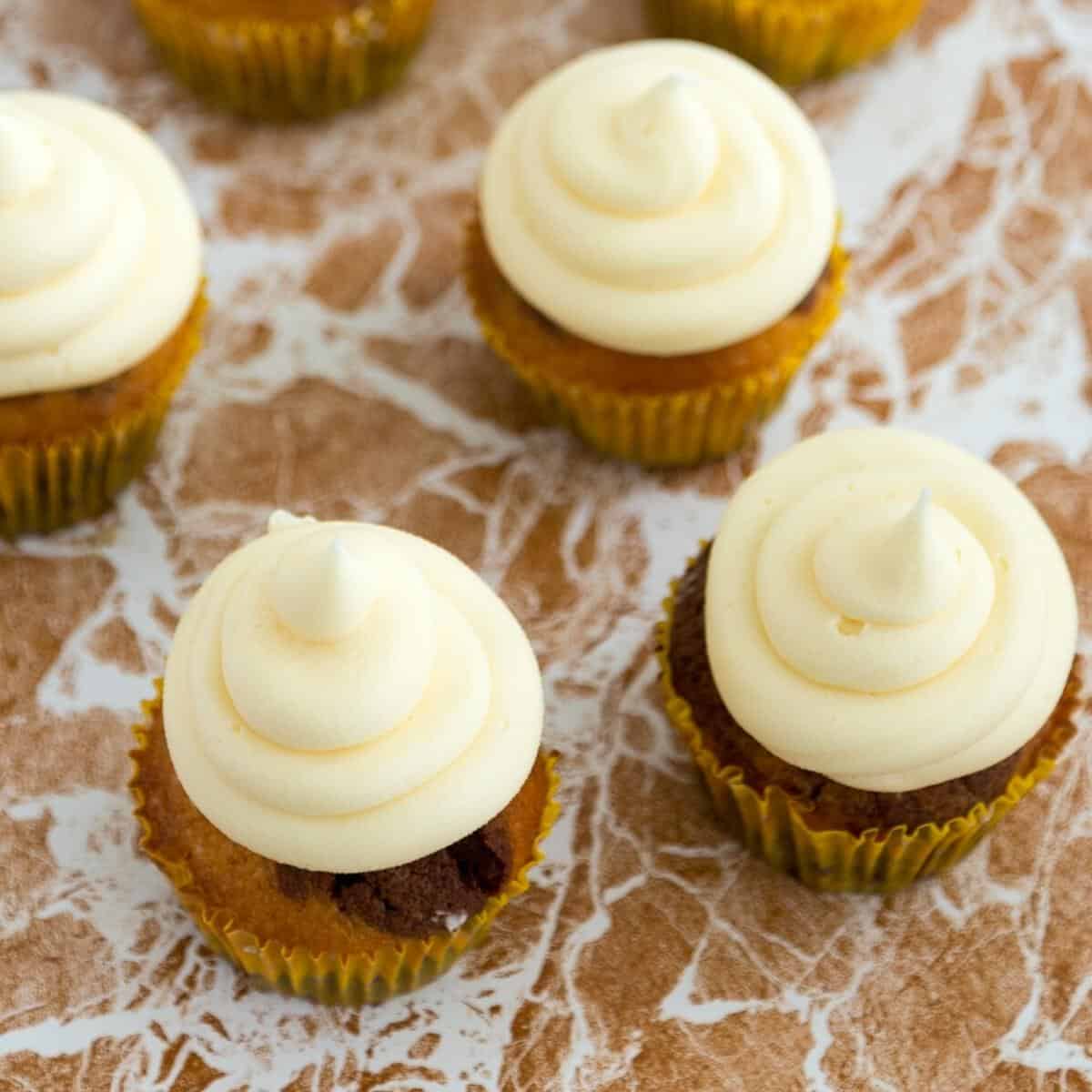
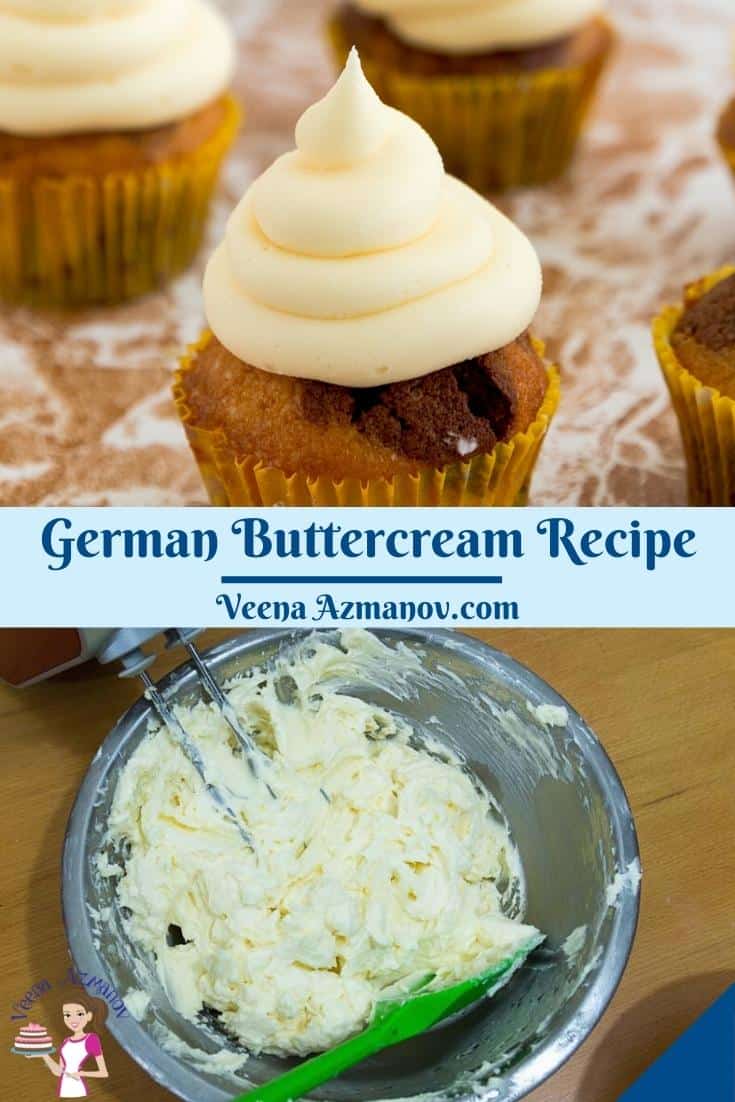
This German buttercream is silky smooth and buttery with the taste of vanilla pastry cream. Use this frosting to frost cakes, pipe on cupcakes, or fill it in macarons and other desserts.
I believe that German buttercream is one of the easiest to make, other than American buttercream. I mean when you compare it to other similar buttercreams like Italian meringue, Swiss meringue, or French buttercream. Often referred to as pudding buttercream because it is made using a custard base, this is one of the most delicious frostings you can make.
Why make this buttercream?
- There is no boiling syrup and no cooking eggs over a double boiler.
- Also, this is a pretty straightforward recipe and you don’t need any special types of equipment.
- Making pastry cream can be intimidating for some, but, not to worry, as I am using a simple one-pot method that does not involve any tempering of eggs. This is why I call this my fool-proof method.
- The buttercream holds well on its own and has the perfect consistency for spreading onto cakes or piping onto cupcakes. I personally love them on cupcakes.

Ingredients and substitutes
- Eggs – This buttercream is made with all egg yolks. Use large fresh eggs to prevent any eggy taste in the vanilla pastry cream. The yellow color of the frosting comes from the egg yolk mixture.
- Sugar – I highly recommend using fine-grain sugar so it dissolves quickly. And yet, if regular thick sugar is all you have, use it.
- Butter – I like using unsalted butter. Since butter is a key ingredient, it is highly recommended that you use good-quality butter. And if salted butter is all you have, go ahead and use it but omit any additional salt in the recipe.
- Starch – This helps thicken the vanilla pastry cream. Usually, we use only cornstarch. But using just a little flour makes a thicker custard and, eventually, a more stable buttercream. And if you don’t have cornstarch a good substitute would be pudding mix, arrowroot powder, or tapioca powder.
- Flavoring – Vanilla is always my first flavor of choice. It’s highly recommended the scrapings of a vanilla bean. But you can also add vanilla bean paste, vanilla extract, or vanilla sugar instead.

Easy German buttercream frosting
Pastry cream
- In a heavy-bottom saucepan, combine egg yolks, sugar, salt, and cornstarch with a whisk. Scrape the vanilla bean and add it in (or add vanilla bean paste).
Pro tip – The egg mixture will appear dry at first, but it will cream as you continue to combine. - Next, gently pour the whipping cream over, whisking constantly to prevent lumps, followed by the milk.
Pro tip – Make sure to scrape the sides of the pan to get any dry cornstarch pockets.

- Then, place the saucepan over medium-low heat and simmer, and stir constantly with a wooden spoon or rubber spatula until the mixture thickens and comes to a boil. The custard is done when it is thick enough to coat the back of a spoon. Once the custard (pastry cream) is ready, remove it from the heat.
Pro tip – It is important not to rush this process, as we want the cornstarch to be cooked. Otherwise, the mixture will thicken but taste starchy.

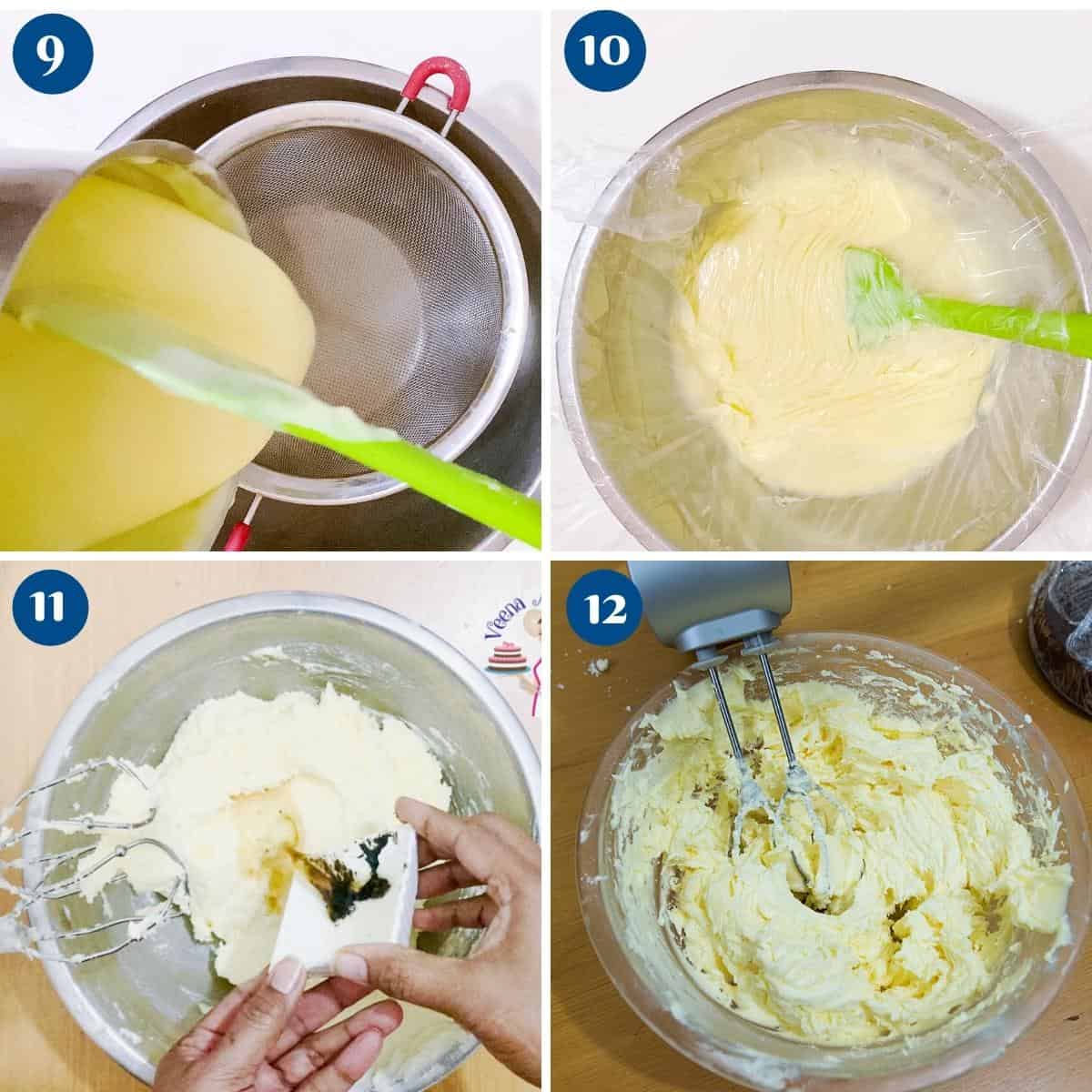
- Strain the custard into a clean bowl. And cover with plastic wrap, making sure the plastic touches the top surface to prevent skin. Then, chill on the counter until room temperature.
Pro tip – Straining will remove any curdled egg, giving a smooth, velvety texture to the cream.
Buttercream
- In the bowl of a stand mixer with the whisk attachment, whip the pastry cream (custard) until it’s light and fluffy with no lumps. Remove it from the bowl and set it aside.
Pro tip – Making sure the pastry cream has no lumps now will ensure a smooth buttercream later. And if you find the pastry cream is too stiff, add a tablespoon of milk and continue to whip. - Using the same bowl of the stand mixer and the paddle attachment, cream the butter until light and fluffy (there is no need to clean the mixer bowl).
Pro tip – Make sure the butter is well-creamed and becomes light and fluffy. This will ensure we have no lumps and that we have a light and airy buttercream. - Next, gradually add the cooled custard (pastry cream) and combine well. Followed by the vanilla extract or any other flavorings.
- Finally, whip for 3 minutes until you have a soft, creamy, buttery, yet light and fluffy buttercream.
Pro tip – It is important that you whip the buttercream so it becomes light and fluffy. Otherwise, it will be too soft to pipe or frost on cakes.
Storage
- German buttercream is highly perishable and needs to be refrigerated because it contains eggs and milk.
- And yet, you can keep a cake frosted with GBC for a few hours (3 or 4 hrs) in good weather.
- In fact, it should be treated just like butter. If left out in high temperatures or humidity, it will melt like butter.
- Also, it can be kept in the refrigerator for up to 3 to 4 days or frozen for up to 15 days.
- When frozen, it is best thawed in the fridge overnight.
- Then, whip with a paddle attachment for about five minutes to restore consistency.


How to flavor German buttercream?
- Dark, milk, or white chocolate – Add 200 grams of melted and cooled chocolate to 4 cups of GBC and combine well.
- Caramel or salted caramel -Add 1 cup caramel sauce to 4 (to 6) cups of GBC. And for salted add a tbsp of rock salt, and combine well.
- Butterscotch – Add 1 cup of butterscotch sauce to 4 (to 6) cups of GBC.
- Lemon – Add 1/4 teaspoon lemon juice to 4 (or 6) cups of buttercream. You can also add up to 1/2 if you want a very lemony buttercream. And 1 tsp of zest can also be added if you don’t mind the zest in the buttercream. Also, 1/4 teaspoon of lemon extract will enhance the flavor even more.
- Orange – Add 1/2 cup orange juice and 1/4 tsp orange extract to 4 (or 6) cups buttercream. Also, 1 tsp orange zest can be added too.
- Fruit flavors – blueberry, raspberry, blackberry, strawberry – Add 1 cup fruit puree to 4 (or 6) cups buttercream. I love adding a fruit filling instead, which makes it slightly sweeter and yet more vibrant in color.
- Dulce de leche – Add 1 cup dulce de leche to 4 (6 cups) buttercream.
- Coffee or espresso – Dissolve 1 tbsp coffee in 1/4 cup hot water, or use 1/4 cup espresso. Cool completely, then add 4 (or 6) cups of buttercream.
- Mocha – Add 200 grams of melted and cooled chocolate to 4 (or 6) cups of coffee GBC.
- Peanut butter – Add up to 2 cups of peanut butter to 4 (or 6) cups of buttercream.
- For more buttercream flavors and recipes, check out my post. One Buttercream Recipe – Many Different Flavors
How much buttercream do I need?
This is a general guide I use for my cakes.
Note: I have given you the filling and frosting separately, so you can choose to use another filling with your buttercream. And, if you choose to fill and frost the cake with this – you can use the last column/total.
Also, the amount is in cups – 1 kg frosting makes about 8 cups.
| Round | Square | Layers | Filling | Frosting | Total |
| 6-inch | 5-inch | 2 | 1.5 Cups | 3 C | 4.5 C |
| 8-inch | 6-inch | 2 | 2 C | 4 C | 6 C |
| 9-inch | 7-inch | 2 | 2.5 C | 5 C | 7.5 C |
| 10-inch | 8-inch | 2 | 3 C | 6 C | 9 C |
| 12-inch | 10-inch | 2 | 5 C | 8 C | 13 C |
| 14-inch | 12-inch | 2 | 7 C | 10 C | 17 C |
| Sheet | 9x13x2 | 1 | 2 C | 5 C | 12 C |
| Tube | 9-inch | 1 | 4 C | 4 C | |
| Cupcake | 12 | 3 C | 3 C |
More buttercream recipes
- Bakery-Style Frosting – Vanilla or Chocolate
- Caramel Buttercream, Butterscotch buttercream
- Eggless Vanilla Buttercream or Chocolate Buttercream
- American Buttercream Frosting, French Buttercream Recipe
- Swiss Meringue Buttercream, Italian Meringue Buttercream
- Coffee Buttercream, Eggnog buttercream, White chocolate
- Ermine frosting, Pink champagne buttercream
- See all frosting recipes
Frequently asked questions
German buttercream is highly perishable and needs to be refrigerated because it contains eggs and milk. You can keep a frosted cake at room temperature for a few hours (3 or 4 hrs) in good weather. It should be treated just like butter. If left out in high temperatures or humidity, it will melt like butter. It can be kept refrigerated for up to 3 to 4 days or frozen for up to 15 days. When frozen, it is best to thaw it in the fridge overnight. Whip with a paddle attachment for 3 to 5 minutes to restore consistency.
Well, both FBC and GBC are egg-yolk-based buttercreams or custard-based buttercreams. The difference between the two is in the method we use.
– In French buttercream, we use the method of boiling sugar syrup to 240 F and then pouring it over whipping eggs.
– While in a German buttercream, we first make the vanilla pastry cream using egg yolks and then combine it with butter, whipping it until we have a luscious buttercream.
– The French method requires a thermometer, and the German method does not.
Yes, absolutely. One of my favorite buttercreams to use under fondant is a meringue-based buttercream, either Swiss or Italian, as well as French or German. The trick is to make sure you chill the cake really well for more than a few hours. I love to keep my cakes overnight, so when it’s ready for fondant, it’s chilled through and has given me a nice firm surface to work with.
You can make an egg version of this buttercream by simply using eggless vanilla pastry cream instead of classic vanilla pastry cream.
Ingredients
Makes enough for 2 x 8 inch round cakes or 24 cupcakes
Pastry cream
- 6 large Egg yolks
- ¾ cup (150 g) White sugar
- 3 tbsp (25 g) Cornstarch
- 1 tbsp Flour (all-purpose or gluten-free)
- 1 cup (240 ml) Milk (2 or 3%)
- 1 cup (240 ml) Whipping crea (32% +)
- 1 med Vanilla bean (Or vanilla bean paste)
- ¼ tsp Salt
Buttercream
- 1 lb (1.00 lb) Unsalted butter room temperature
- 1 tsp Vanilla extact
- ½ tsp Other flavorings (optional)
Instructions
Pastry cream
- In a heavy-bottom saucepan, combine egg yolks, sugar, salt, and cornstarch with a whisk. Scrape the vanilla bean and add it in (or add vanilla bean paste).6 large Egg yolks, ¾ cup White sugar, 3 tbsp Cornstarch, 1 tbsp Flour, 1 med Vanilla bean , 1/4 tsp Salt
- Gently pour the whipping cream over, whisking constantly to prevent lumps, followed by the milk.1 cup Milk, 1 cup Whipping crea
- Place the saucepan over medium heat and cook, stirring constantly, until the mixture thickens and comes to a boil. The custard is done when it is thick enough to coat the back of a spoon. Once the custard is ready, remove it from the heat.
- Strain the custard into a clean bowl. Cover with plastic wrap, making sure the plastic touches the top surface to prevent skin. Chill on the counter until room temperature.
German Buttercream
- In the bowl of a stand mixer with the whisk attachment, whip the pastry cream until it's light and fluffy with no lumps. Remove it from the bowl and set aside.
- Using the same bowl of the stand mixer and the paddle attachment, cream the butter until light and fluffy. (there is no need to clean the mixer bowl).1 lb Unsalted butter
- Next, gradually add the cooled pastry cream and combine well. Followed by the vanilla extract or any other flavorings1 tsp Vanilla extact, ½ tsp Other flavorings
- Finally, whip for 3 minutes until you have a soft, creamy, buttery, yet light and fluffy buttercream.
Notes
-
- Pastry cream or custard base must be cooked until it’s thick and coats the back of a spoon. If in doubt, cook a minute longer
-
- If the pastry cream is overcooked, the eggs will curdle, so cook on low heat.
-
- A thin consistency of pastry cream will result in a soft buttercream that will not be smooth, spreadable, or pipable.
-
- Pastry cream that is too thick will result in lumps. The best way to take the lumps out is to use a whisk or, better yet, place it in a stand mixer and give it a good whip with the whisk attachment.
-
- If you find the pastry cream is too stiff, add a tablespoon of milk and continue to whip.
-
- Cover the top of the pastry cream well with plastic wrap to prevent skin from forming. If a skin forms, it will result in lumpy pastry cream and eventually lumpy buttercream.
-
- Cream buttercream until light and airy. To do this correctly, it is important that the butter is at room temperature but not too soft. Soft butter will cream but not be able to fluffy.
-
- Whip the buttercream until it’s light and airy. However, if you live in a warm place, do not overdo this whipping, as the butter will melt and result in a greasy frosting.
-
- You can adjust sweetness by simply adding a few tablespoons of powdered sugar to make it sweeter.
Troubleshooting
- Buttercream separating/curdling – Do not beat buttercream while it is very chilled. The cold fat in the butter separates from the liquid, and the emulsion you just created breaks. Ideally, you can just let the buttercream rest outside the fridge for a while until it’s not hard. Or you can use a hair dryer to gently warm the outside of the bowl until you see the edges of the buttercream soften a bit. Then, whip it with a paddle attachment.
- Coloring buttercream – Always use gel or powdered food colors for any buttercream. The food colors available at the grocery store are liquid-based and not suitable for cake decorating purposes. Hence, they will alter the consistency of your buttercream, giving you runny icing or sometimes even breaking the buttercream when you add too much.
Storage
- German buttercream is highly perishable and needs to be refrigerated because it contains eggs and milk.
- You can keep a cake frosted with GBC for a few hours (3 or 4 hrs) in good weather.
- It should be treated just like butter. If left out in high temperature or humidity, it will melt like butter.
- It can be kept refrigerated for up to 3 to 4 days or frozen for up to 15 days.
- When frozen, it is best to thaw it in the fridge overnight.
- Whip with a paddle attachment for about five minutes to restore consistency.
How to flavor German buttercream
- Dark, milk, or white chocolate – Add 200 grams melted and cooled chocolate to 4 cups of GBC, and combine well.
- Caramel or salted caramel -Add 1 cup caramel sauce to 4 (to 6) cups of GBC. And for salted add a tbsp of rock salt, and combine well.
- Butterscotch – Add 1 cup of butterscotch sauce to 4 (to 6) cups of GBC.
- Lemon – Add 1/4 tsp lemon juice to 4 (or 6) cups buttercream. You can also add up to 1/2 if you want a very lemony buttercream. And, 1 tsp of zest can also be added if you don’t mind the zest in the buttercream. Also, 1/4 tsp lemon extract will enhance the flavor even more.
- Orange – Add 1/2 cup orange juice, and 1/4 tsp orange extract to 4 (or 6) cups buttercream. Also, 1 tsp orange zest can be added too.
- Fruit flavors – blueberry, raspberry, blackberry, strawberry – Add 1 cup fruit puree to 4 (or 6) cups buttercream. I love adding a fruit filling instead, which makes it slightly sweeter, and yet, more vibrant in color.
- Dulce de leche – Add 1 cup dulce de leche to 4 (6 cups) buttercream.
- Coffee or espresso – Dissolve 1 tbsp coffee in 1/4 cup hot water, or use 1/4 cup espresso. Cool completely then add to 4 (or 6) cups of buttercream.
- Mocha – Add 200 grams of melted and cooled chocolate to 4 (or 6) cups of coffee GBC.
- Peanut butter – Add up to 2 cups of peanut butter to 4 (or 6) cups of buttercream.
- For more buttercream flavors and recipes check out my post. One Buttercream Recipe – Many Different Flavors
Equipment


Made this recipe?
I’d love to see how yours turned out! Share a photo on Instagram and tag @veenaazmanov_kitchen or use #veenaazmanovkitchen. And don’t forget to leave a rating and review!
Don’t lose this recipe! Save it for Later!
📌 Save this Recipe for later on Pinterest so you can easily find it again.
⭐ Add Veena Azmanov Kitchen to your Google Preferred Sources.
It helps Google show you more of our recipes.
📧 Subscribe for new recipes delivered to your inbox.
🎥 Follow us for more recipes
Hi, I’m Veena
I’m the recipe developer, baker, and food photographer behind Veena Azmanov Kitchen.
I’ve spent years developing and testing recipes, from everyday meals and homemade breads to cakes and desserts.
I share the practical tips and little details I’ve learned along the way so you can get great results in your own kitchen.



Can I use vanilla instead of vanilla bean or vanilla paste?
Yes, yes of course Paula.
Hi there,
Would I be able to use this to frost a sphere cake? (Making a basketball – no fondant).
I’m following your sphere cake instructions and always frost cakes with American butter cream, however my child really doesn’t like it as it’s so sweet. Was wondering if this would work and have the same smooth crusting effect when frosting a cake?
Also would I be able to pipe small start with it for the basketball texture?
Yes, of course you can use any buttercream for piping on a sphere cake. The meringue or custard buttercreams do not crust, but they are pipe-able.
How much does this make? I have a 2 layer 8 inch cake. Unsure if I should cut it in half.
Hey Megan. It says in the recipe cards. Makes enough for 2 x 8 inch round cakes or 24 cupcakes. I hope that helps.
Week 2 day 3 done