
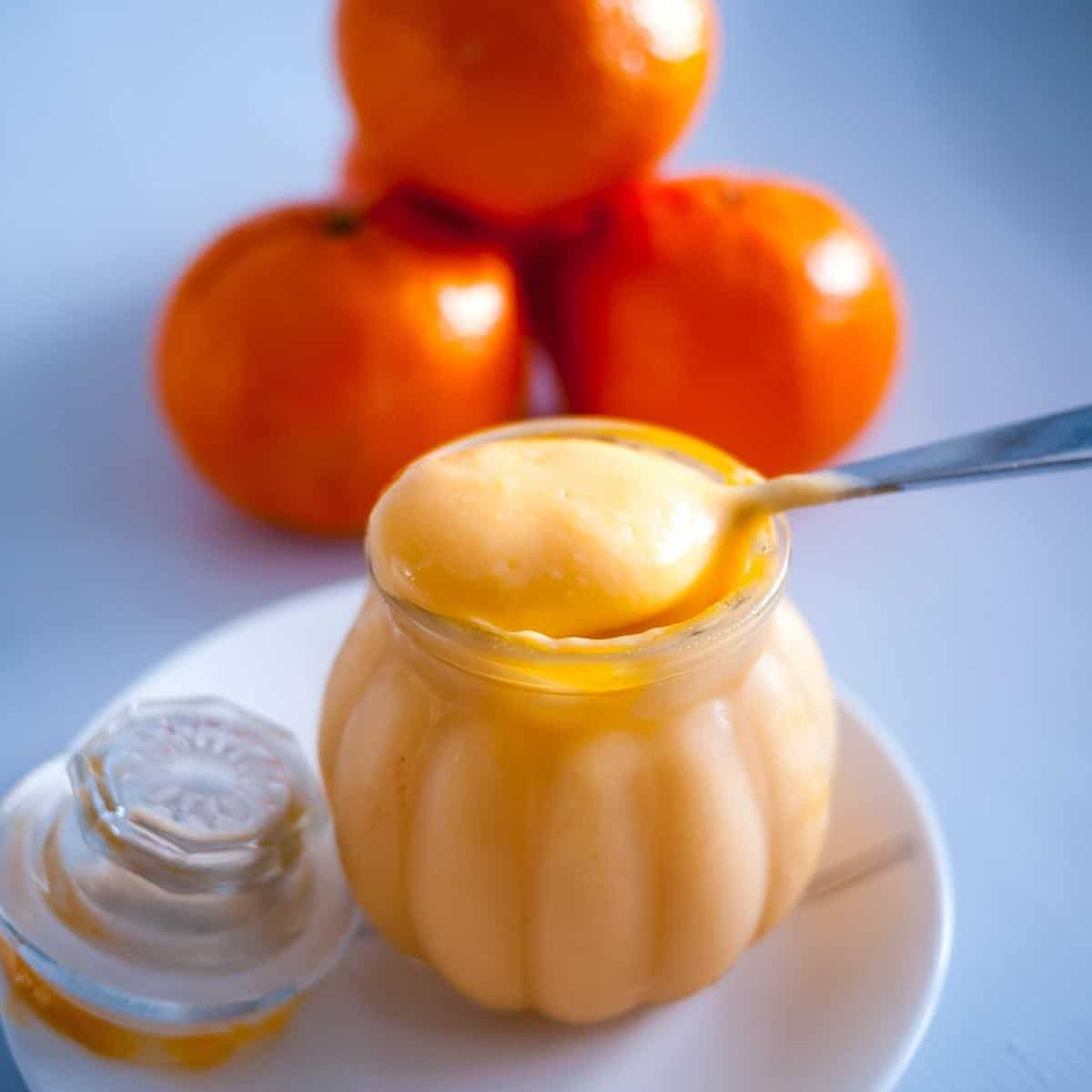



When oranges are in season, you must make homemade orange curd. This simple, easy, no-fail curd filling recipe is the best you will ever taste. Sweet, tangy with a luxurious texture. An orange curd that takes no more than 20 minutes to prepare and can be used as a filling for cakes, pies, and desserts is a must-have recipe.

Orange curd with fresh oranges is a must-have. And, I mean, must-have. The sweet oranges in a custard-like filling are out of this world. And, I love to add some lemon in there to give it a little zing. By now, you must have tried my lemon curd or at least seen my lemon curd video. It’s simple, easy, and really luxurious. It’s a no-fail method because I cook it low and slow. As a result, you will never have a curdled curd, whether you make lemon or orange curd.
Also, did you know there are endless options for making fruit curd using this exact same method? I love using citrus fruits because I really enjoy the tart flavors. And, if you love fruit curd, you must substitute the orange juice in this recipe with any other fruit juice, such as tangerine, passion fruit, lime, or grapefruit. I’ve even made mango and pineapple. Pineapple curd is absolute heaven.
What is orange curd?
Orange curd is a smooth citrus spread made with fresh orange juice, zest, eggs, sugar, and butter. It can be used as a filling for cakes, cupcakes, macarons, tarts, pastries, and cookies.
Why is this the best recipe?
- Freshness: This recipe uses fresh orange juice and zest, giving the curd a vibrant, citrusy flavor you just can’t get from store-bought versions.
- Simple Ingredients: With just a few basic ingredients like oranges, sugar, eggs, and butter, this recipe is easy to make and doesn’t require any special equipment.
- Versatility: Orange curd can be used in a variety of ways, from spreading it on toast to filling cakes and tarts. It’s a versatile condiment that adds a burst of flavor to any dish.
- Homemade Goodness: Making your own orange curd allows you to control the ingredients and customize the flavor to your liking. Plus, there’s something special about homemade goodies!

Ingredients and substitutes
- Oranges – Use the measure of orange juice, not the number of oranges, when making this recipe. So if a recipe says 1/2 cup juice (3 to 4 oranges), usually the number is a guide – the actual measurement you want to use is 1/2 cup or 60 ml. This can make a big difference. Avoid the membranes and seeds when juicing the oranges these can impart a bitter flavor to the curd.
- Lemon – A little tart taste in contrast to the sweet seasonal oranges works a treat. Unless, of course, you have sour oranges, then lemons won’t do justice. Instead, I suggest you add all the orange juice.
- Sugar: Use a fine-grain sugar that dissolves easily in the eggs. The amount of sugar used here presumes you have beautiful, sweet, seasonal oranges. This can be adjusted based on the sweetness of your oranges
- Egg yolks – The color of yolks will determine the end color of your orange curd. So if you use light yolks, you will have a pale yellow curd. A bright golden yellow or orange is much preferred. I’m using free-range eggs today that have a nice orange color.
- Artificial colors – I never use any artificial coloring in my lemon curd, but often I use orange curd in my cakes as filling. So sometimes I do add a dab of orange color just so it will be obvious on the cake. Orange color layers look nicer between two vanilla or chocolate layers.
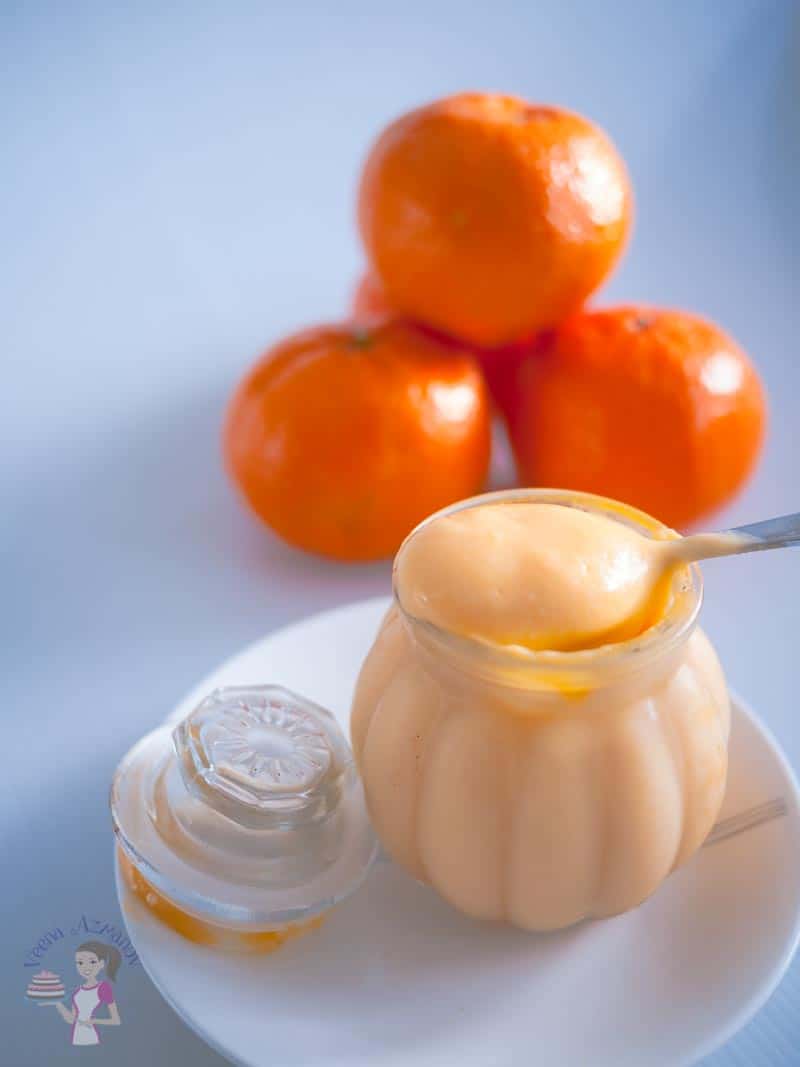
Step-by-step: Easy orange curd recipe
- Prep – Measure all ingredients before you start. Cut the butter into cubes – keep chilled. Place the oranges and lemon in the microwave for 10 seconds before cutting and squeezing them. This will make it easy. Warm the orange juice for about 30 seconds.
- Use a double boiler or make your own – To make your own, add an inch of water to the saucepan with a heatproof bowl on top. The water should not touch the top bowl.
Pro tip – We use a double-boiler to prevent the eggs from getting scrambled with direct heat. - Combine – In the top bowl of your double boiler, add egg and yolks, sugar, salt, cornstarch, and zest. Whisk until light and fluffy – sugar should almost melt. Add orange and lemon juice slowly into the egg mixture.
- Cook – Place the bowl on the double boiler. Continue to stir on medium heat. The mixture should cook with just the steam from the water in the saucepan below.
Pro tip – If you cook on low, it will take forever to thicken. Since we are cooking in a double boiler, keep the heat on medium and stir continuously. - Thicken – After about 8 to 10 minutes, you will notice the foam that was caused by whipping the egg mixture will slowly disappear, and the mixture will start to thicken. Continue to stir until it coats the back of your wooden spoon or spatula. Remove from heat.
- Butter – Gradually add butter cubes, one at a time. Make sure each piece is well incorporated. The mixture will continue to thicken as it cools.
Pro tip – The cool butter stops the cooking and makes it smooth and velvety. Add it slowly but not too slowly, or the last of the butter won’t incorporate into the cooled curd. - Strain – Once all the butter has been incorporated, strain it through a mesh or a strainer to remove the zest. This will give you a smooth, creamy curd.
- Store – I like to transfer mine to a mason jar.
How do you store Orange Curd
- The curd is best stored in a mason or glass jar in the fridge. The presence of eggs in lemon or orange curd makes it a perishable filling. So any item that has homemade lemon or orange curds, such as cakes and pies, needs to be placed in the fridge.
- Avoid keeping fruit curd or citrus fillings in metal containers, as they can react with the metal.
- Egg yolks can react with metals such as aluminum and cause it to become green in color.
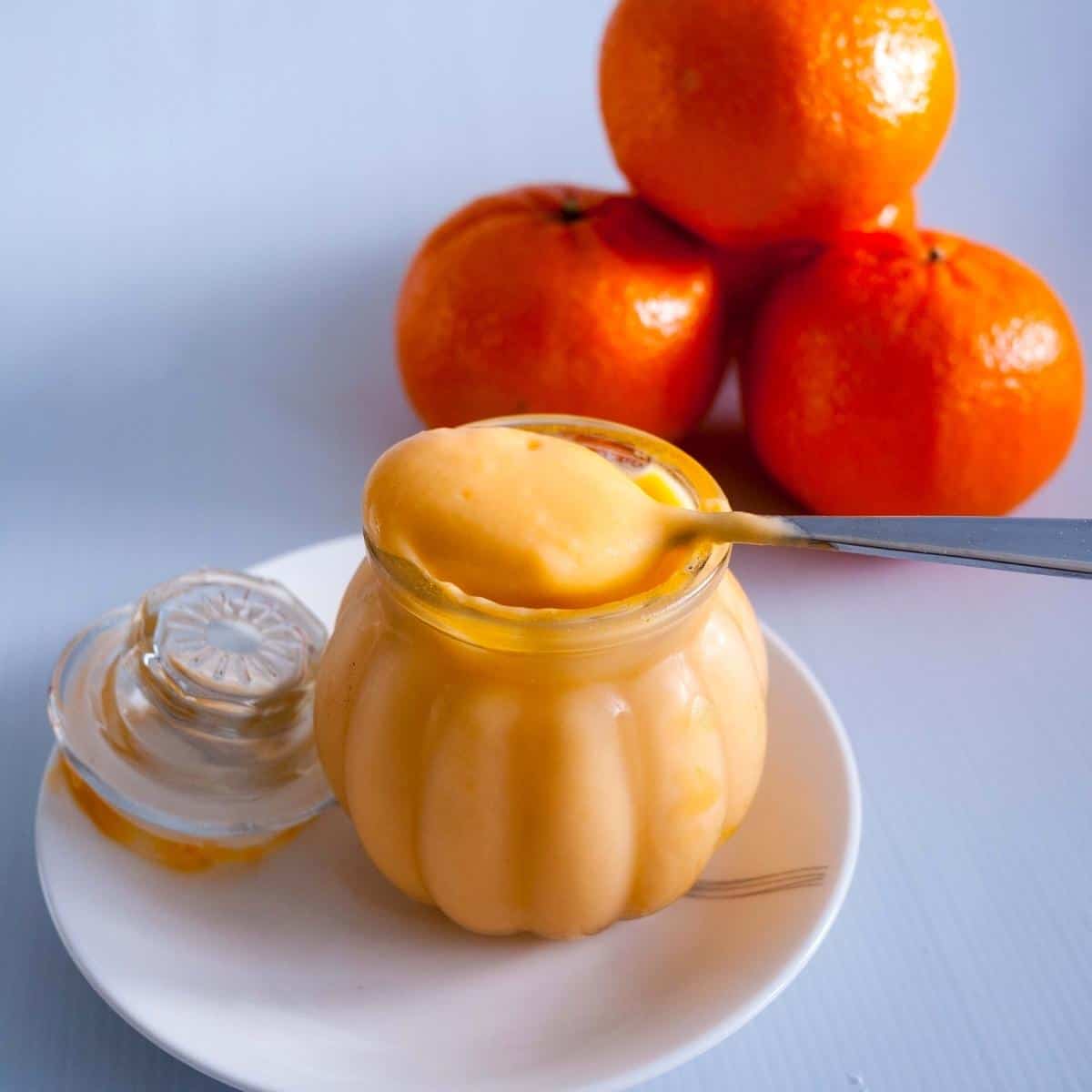
How do you use orange curd?
- Layered Desserts: Use orange curd between layers of cakes or in trifles.
- Macaron Filling: Use it as a filling for macarons for a citrusy twist.
- Pancake or Waffle Topping: Spread some orange curd on your morning pancakes or waffles instead of syrup.
- Cookies and tarts: Sandwich two shortbread cookies with a dollop of orange curd in between. Fill pre-baked tart shells with orange curd and fresh berries.
- Cocktails: Stir a spoonful into a cocktail for a zesty, sweet twist.
- Popsicles: Mix orange curd with yogurt and freeze for a creamy citrus popsicle.
- Fillings: Use orange curd as fillings in crepes, doughnuts, or croissants. Spread orange curd on a sponge cake, then roll it to create a citrus roulade.
- Cheesecake: Swirl orange curd into your cheesecake batter before baking or spread it on top after it cools.
- Salad Dressing: Mix it with olive oil, vinegar, and seasoning to create a tangy citrus salad dressing.
- Grilled Meats: Serve orange curd as a sauce on the side of grilled chicken or pork.
- Muffin or Cupcake Filling: Inject a small amount of orange curd into the center of freshly baked muffins or cupcakes for a citrusy surprise.
- Parfait and yogurt: Layer orange curd with granola and frozen yogurt to create a breakfast or dessert parfait.
- Panna Cotta: Top a set panna cotta with a layer of orange curd for a two-toned dessert.


No-Fail Orange Curd Recipe
Ingredients
- 3 large Egg yolks (large)
- 1 large Whole egg
- 2 tbsp Cornstarch or tapioca starch
- ½ tbsp Orange zest
- ½ tbsp Lemon zest
- 250 ml (1 cup) Orange juice
- 60 ml Lemon juice
- 70 g (⅓ cup) Fine grain Sugar (or castor sugar) use ½ cup if oranges are not sweet
- 60 g (4 tbsp) Unsalted butter chilled, cubed
- ¼ tsp Salt
Instructions
- Prep – Measure all ingredients before you start. Cut the butter into cubes – keep chilled. Place the oranges and lemon in the microwave for 10 seconds before cutting and squeezing them; this will make it easier. Warm the orange juice for about 30 secs.
- Use a double boiler or make your own – To make your own add an inch of water to the saucepan with a heatproof bowl on top. The water should not touch the top bowl.
- Combine – In the top bowl of your double boiler, add the egg and yolks, sugar, salt, cornstarch, and zest. Whisk until light and fluffy – sugar should almost melt. Add orange juice and lemon juice slowly into the egg mixture.3 large Egg yolks , 1 large Whole egg , 2 tbsp Cornstarch , ½ tbsp Orange zest , ½ tbsp Lemon zest , 250 ml Orange juice , 60 ml Lemon juice , 70 g Fine grain Sugar (or castor sugar) , ¼ tsp Salt
- Cook – Place the bowl on the double boiler. Continue to stir on medium heat. The mixture should cook with just the steam from the water in the saucepan below.
- Thicken – After about 8 to 10 minutes, you will notice the foam that was caused by whipping the egg mixture will slowly disappear, and the mixture will start to thicken. Continue to stir until it coats the back of your wooden spoon or spatula. Remove from heat.
- Butter – Gradually add butter cubes, one at a time. Make sure each piece is well incorporated. The mixture will continue to thicken as it cools.60 g Unsalted butter
- Store – I like to transfer mine to a mason jar.
Video
Notes
- Use Fresh Oranges: Freshly squeezed orange juice and zest will give your curd the best flavor. Avoid using bottled juice or zest, as they may not have the same fresh taste.
- Strain the Mixture: Straining the curd after cooking will help remove any bits of zest or cooked egg, resulting in a smoother texture.
- Whisk Constantly: Whisk the mixture constantly while cooking to prevent the eggs from scrambling and to ensure a smooth consistency.
- Low Heat: Cook the curd over low heat to prevent it from curdling. The mixture should thicken gradually.
- Chill Before Serving: Allow the curd to cool and set in the refrigerator for at least an hour before serving. This will help it thicken further and develop its flavor.
- Store Properly: Store any leftover orange curd in an airtight container in the refrigerator. It will keep for about a week.
- Experiment with Flavors: Feel free to experiment with different citrus fruits or add spices like cinnamon or cardamom to customize the flavor of your curd.
Equipment


Made this recipe?
I’d love to see how yours turned out! Share a photo on Instagram and tag @veenaazmanov_kitchen or use #veenaazmanovkitchen. And don’t forget to leave a rating and review!
Tips for Success
- Use Fresh Oranges: Freshly squeezed orange juice and zest will give your curd the best flavor. Avoid using bottled juice or zest, as they may not have the same fresh taste.
- Strain the Mixture: Straining the curd after cooking will help remove any bits of zest or cooked egg, resulting in a smoother texture.
- Whisk Constantly: Whisk the mixture constantly while cooking to prevent the eggs from scrambling and to ensure a smooth consistency.
- Low Heat: Cook the curd over medium-low heat to prevent it from curdling. The mixture should thicken gradually.
- Chill Before Serving: Allow the curd to cool and set in the refrigerator for at least an hour (preferably longer) before serving. This will help it thicken further and develop its flavor.
- Store Properly: Store any leftover orange curd in an airtight container in the refrigerator. It will keep for about a week.
more recipes with oranges
- Orange Macarons with Orange Curd
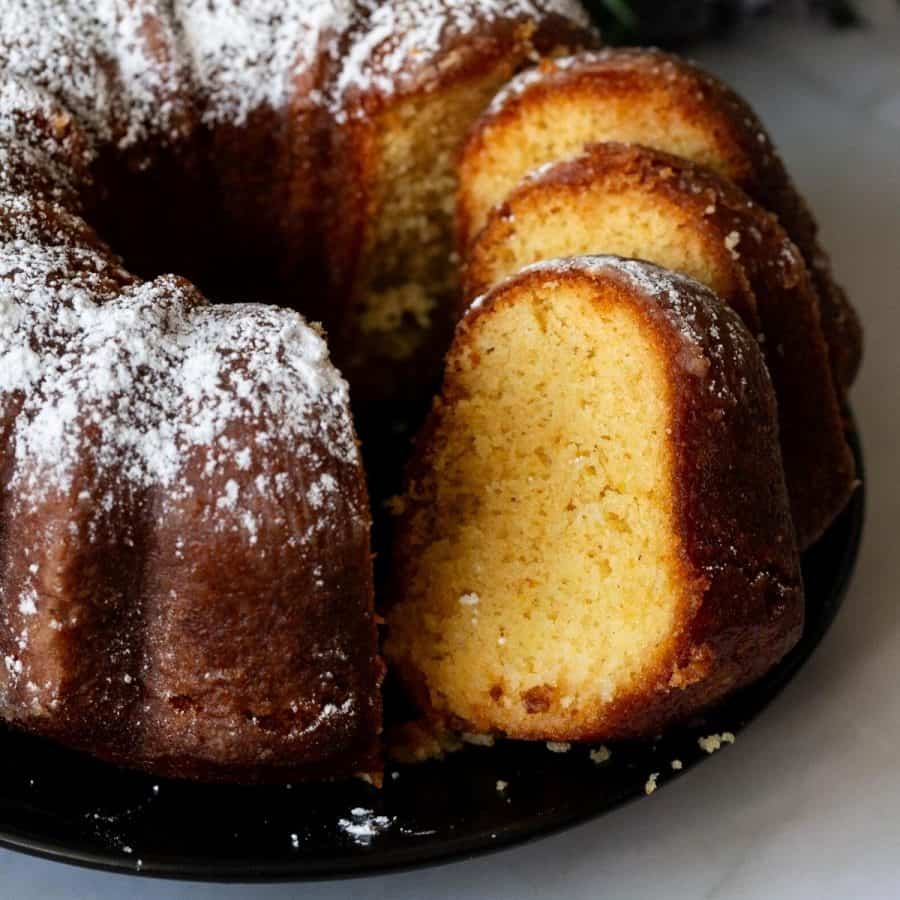
- Moist Orange Bundt Cake
- Frosted Orange Birthday Cake
- One Bowl Almond Orange Cake
- Orange cantaloupe smoothie
- Fruity Orange Marmalade: No-Pectin


Frequently asked questions
To me, fruit curd is like a dessert on its own. I can eat it out of a jar with a spoon. It tastes delicious on its own! BUT, you can use it for many things, from cake fillings, pie fillings, on breakfast toast, donuts, and bagels. I love it as a filling, such as in my lemon macaron with lemon buttercream, too. Have you tried an orange cake with orange curd yet? Always a hit with people who love the orange flavor. I eat orange curd plain with crackers, too!
One must make sure they have all the necessary information to make it right.
A fruit filling is usually the easiest to make. It mostly involves a fruit, some sweetener, and starch, which come beautifully together into a thick, gorgeous fruit filling. It looks and tastes beautiful when done right, as I shared with you in my Blueberry (Cake) Filling, cherry cake filling, or simple Strawberry (cake) Filling.
Fruit curd, on the other hand, requires a bit more tact because it involves a citrus fruit like lemon, lime, or orange, a few egg yolks, and emulsification with butter. Unlike a filling, you can’t just put it all in a pan and cook it. You need to exercise a bit more caution. Again, it’s not difficult; it only requires caution.
If sealed and properly stored, orange curd can be kept in the fridge for three months; however, once you have opened the jar, do not keep the open jar for more than ten days to a maximum of 2 weeks. The curd on the surface will get slightly darker when exposed to air, but it is not a health concern.
Yes, you can. Just replace the 1/2 cup of sugar with either 1 tbsp stevia or a similar product.
If you prefer, you can also substitute sugar with 1/4 cup honey, or 1/3 cup agave syrup
Yes, lemon curd freezes well and can be kept for up to 1 year if stored properly. For best results, thaw in the refrigerator overnight or 24 hours before use.
more fruit filling recipes
- Lemon Curd Recipe
- Blackberry Filling, Best Blueberry Pie Filling
- Raspberry Filling Recipe, Strawberry Filling for Cakes
- Homemade Cherry Pie Filling
- Perfect Custard Cake Filling

Don’t lose this recipe! Save it for Later!
📌 Save this Recipe for later on Pinterest so you can easily find it again.
⭐ Add Veena Azmanov Kitchen to your Google Preferred Sources.
It helps Google show you more of our recipes.
📧 Subscribe for new recipes delivered to your inbox.
🎥 Follow us for more recipes

Hi, I’m Veena
I’m the recipe developer, baker, and food photographer behind Veena Azmanov Kitchen.
I’ve spent years developing and testing recipes, from everyday meals and homemade breads to cakes and desserts.
I share the practical tips and little details I’ve learned along the way so you can get great results in your own kitchen.









I’ve made curd before, always lemon and using a different recipe. I thought I’d try this one with the mandarin oranges I had. I read all the instructions thoroughly. I had the hot water pot on low after boiling the water underneath it. It took 30 minutes to get to the point of coating the back of the spoon. By the time I got to the last cubes of the butter it barely melted in the curd. I did not strain it–maybe I should have. I never have strained my curds in the past and they have always turned out beautifully. The taste is very bitter, and the curd has almost a gritty texture. I’m not sure what happened. It also didn’t set up as firmly as I thought it would–it’s halfway between runny and spreadable. I may go back and strain it today. Maybe this is what is making it taste so bitter, I’m not sure. I might give this recipe a try again, or just go back to my old faithful so much for this to taste great!!
Madison, I am sorry to hear that you did not have success with this recipe. This is a very popular recipe and many have had success with it.
1. Yes, you need to cook this on medium to low heat but you still need to have enough heat to cook it. Sounds like your double boiler was not getting any heat.
2. The taste of the orange curd will come from the orange juice you use. The only addition we have is sugar, butter, and eggs – none of these make it bitter.
As I said in the post -when juicing the oranges avoid the membranes and seeds these can impart a bitter flavor.
3. The straining of the curd will only take away any curdled eggs to give you a smooth velvet-like curd.
If you had membranes or seeds cooking in the curd they have already done their job of imparting some bitterness.
This is a no-fail recipe because cooking in a double boiler prevent curdling which usually happens easily.
Thanks for the feedback. I will keep a close eye for more feedback
Thank you for your feedback Madison
Hi, This recipe was super easy and oh my!!!! The taste is so sinful!! ?. I will definitely try out your lemon curd recipe.
Thank you so much, Hally. Happy you enjoyed it so much
Love it – thanks for the recipe
Thank you for the feedback P.
Thanks so much, I’m going to try this today for a chocolate orange cake km making this weekend. I. Curious about freezing though, what vessel would you recommend freezing it in, is a jar ok?
Hey Charmaine. I usually prefer not to use glass to freeze things – just to avoid cracking –
I freeze my curds in these silicon storage bags – you can also use ziplock bags
followed recipe exactly as written. Took very long to thicken up. But the taste was delicious
I am so sorry to hear it took long to thicken Denise. Perhaps the heat was too low? Happy it was delicious
Hi Veena, the taste is very good and texture is nice (I may not have thickened it quite enough, but it’s satisfactory) but there is a chalky finish, presumably from the cornstarch. Any idea why this might have happened?
Hey Sho, if you do not cook the curd long enough it will not thicken and it will not cook the cornstarch which ends up with what you called chalky taste. The cornstarch needs to be really cooked well for it to become opaque, thicken, not taste like flour
Hi. I amde this recipe using Mandarins as we have a lot here in spain at the moment. The ones I used were very tart so I did not use lemon juice but upped the mandarin juice by 4 tbs. The recipe was super easy and the result was great. I usually use abother lemon curd recipe but I will be trying yours next time I make.
Thank you, Diane. Personally, I do love tart oranges for my orange curd. Sounds delicious. Happy to know you liked this recipe. Thank you for coming back to write this feedback. love to hear from those who try my recipes.
Could I use powdered/confectioner’s sugar instead of caster sugar? If so, what would the measurement be?
Hey Alina. I have not used powdered sugar so I can’t tell you much. I’d say use the same amount. I’d love to know how it was if you do try it with powdered sugar. Thanks
Can I use the juice from frozen orange juice concentrate? I’ve made lemon curd many times using fresh juice and I’ve also tried yet failed making orange curd using fresh juice. I don’t have any oranges on hand but would love to try this recipe. Really hoping to finally find an orange curd recipe that actually tastes like orange without having to add an extract, liquor or essence…
Hey Tammie. I have not tried using commercial orange juice.
I usually do not recommend these when it comes to baking so I’m not able to tell you for sure.
Some commercial brands have additives that can give a weird after taste and flavor.
You can make a small batch and try if you want. Sorry, I don’t have a definite answer for you.
Thanks
Excellent! Bookmarked recipe. Texture is PERFECT and taste is wonderful.
Thank you, Ariane. So happy you enjoyed this recipe. Thank you for coming back to write this feedback.
My experience with this recipe (NOT reflective of the poster- the directions were great, and I love when posts are short and to the point!) I spent 20 minutes with double boiler on low (set at 2 out of 8 on my burner). No cooking. Upped it to 3/4 out of 8 for 10 minutes. Still below 120 degrees. Upped it to 6 (out of 8!) for 10 minutes. Curd got to 130 degrees. Went to 7 for 5 minutes, curd did not get above 135 degrees. I finally just gave up the cooking portion, as it was relatively thick and not curdled and I was afraid if I went any higher it would curdle. I tried to then strain, using a pasta strainer as that is all I have on hand (so this has bigger holes than a fine mesh strainer)- would not strain through. I did a spoon lick test and it tastes pretty good, like I would expect a curd. I just went into this thinking 20 minutes and here I am over an hour later…..
Hey Ashley, sorry your orange curd didn’t turn out well.
Not sure what the setting on your double boiler is but as you can see in the video for lemon curd that I have shared, you still need the heat to be enough to cook the mixture.
The lemon curd video is the exact recipe with only orange juice instead of all lemon juice.
The reason I emphasize on low heat is that lemon is acid and can curdle just as easily as high heat can.
In your case, it sounds like your curd was not cooking because it was barely getting any heat.
Many people have tried this recipe successfully and I have made it more than a few times so this is a test and tired recipe.
Sorry, it didn’t work for you. Have a great day.