
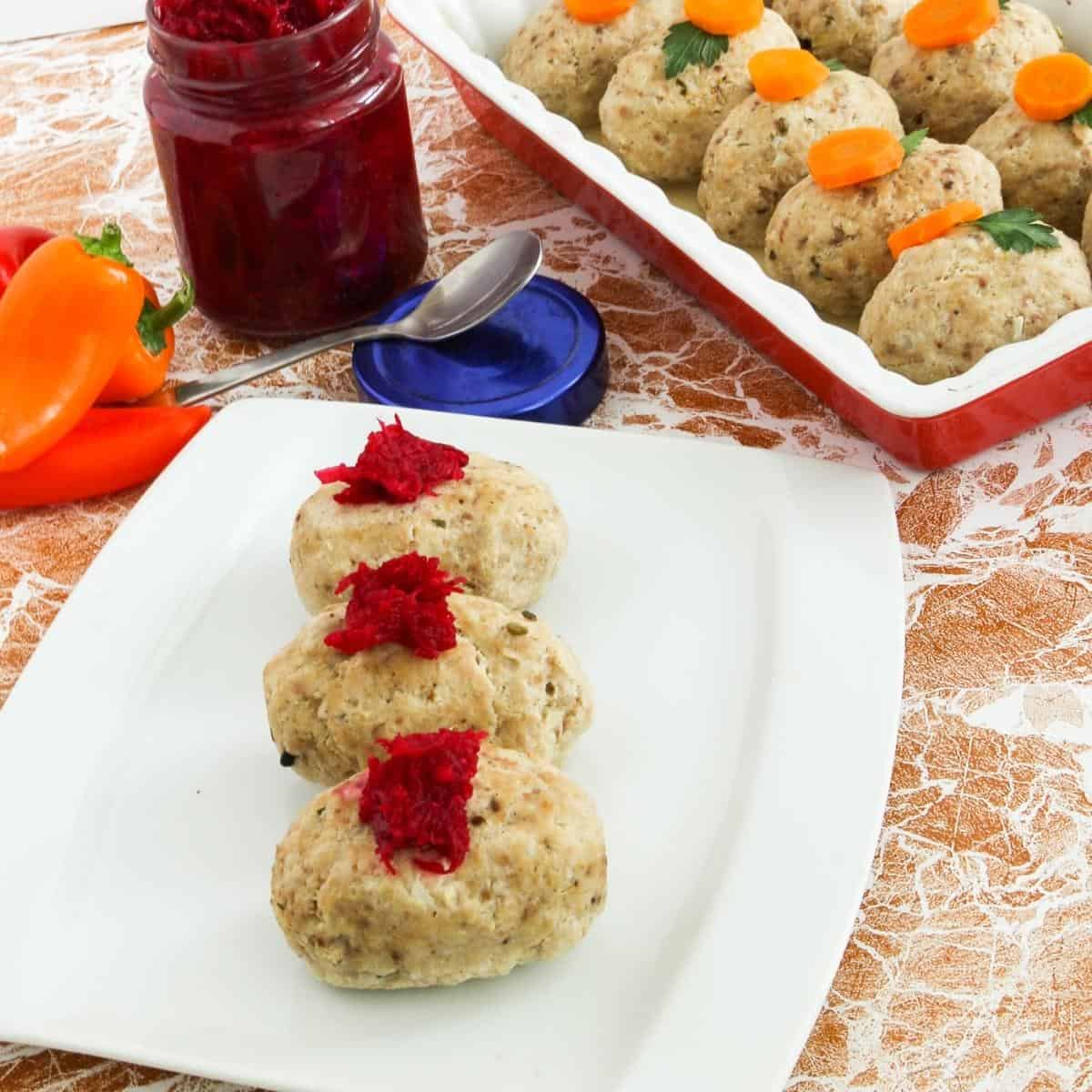




The gefilte fish is a traditional Jewish recipe that’s made during festive times like Passover and Rosh Hashanah. In fact, it is a must-have dish on the seder table. Traditionally made with carp or pike fish, boiled eggs, matzo meal, then shaped into fish cakes that are simmered in fish broth.
I wasn’t born Jewish (married one, though), but after living here and sharing holidays and traditions with family and friends, it’s nearly impossible not to fall in love with the food and the culture that surrounds it. For years, I truly believed my mother-in-law made her gefilte fish from scratch — she served it so proudly, and my son adored it. So, after she passed away, I decided to make some for him, hoping to carry on the tradition.
I was terrified he wouldn’t like it… But to my surprise, he loved it! In fact, he said it was even better than Grandma’s — “less fishy,” in his words. I was beaming with pride — until my father-in-law casually let it slip that Grandma’s version was actually store-bought all along, just served in her own dish! Classic.
Now that I am the host for almost all special events, not only do I make gefilte fish from scratch, but I’ve embraced several traditional dishes like matza ball soup, chrime — quite authentically, if I may say so. The kids keep me motivated, and honestly, there’s something special about connecting to a culture through the food that brings everyone to the table.
Why make your own gefilte fish
- Traditional Flavor: This recipe maintains the traditional flavor of gefilte fish, making it a classic choice for those who appreciate authentic Jewish cuisine.
- Simple Ingredients: The recipe uses basic, easy-to-find ingredients, making it accessible for home cooks without the need for specialty items.
- Easy Preparation: With straightforward instructions, this recipe is easy to follow, even for novice cooks, ensuring a successful outcome.
- Customizable: While this recipe is a classic version, it can be easily adapted to suit individual preferences by adjusting the seasonings or using different types of fish.
Ingredients and substitutes
- Fish – Traditionally used in this recipe is carp, white fish, halibut, cod, or pike, but you can use other varieties as well. Today, I am using bouri, which my fishmonger recommended. It comes in plenty and is quite affordable.
- Matzo meal – This dish is made for Passover. So, matzo meal is the obvious choice. But you can use bread crumbs or crushed matzah as well. And if you want to make it gluten-free, use an almond meal.
- Carrots – Add flavor to the stock. Some recipes have grated carrots in the fish cake mixture; you can add 1/2 cup of grated carrots. It will keep the fish cakes moist. Personally, I like them without the carrots. You can also use parsnip.
- Medium Onions – Add tons of flavor to the fish. As you can see, traditionally, this fish has minimal flavor ingredients.
- Fennel – Not traditionally used, which is why I put it as optional, but fennel is a great flavor addition to fish. You can also use dill if you prefer.
- Parsley – Again, not a traditional ingredient, but I love the flavor it brings to the stock and the fish cakes.
- Bay leaves – Not a traditional ingredient, but I think they help to add more flavor and lessen that fishy smell.
- Lemon slices – My main reason for adding lemon slices is to reduce that fishy smell. It really does help – if you don’t like the flavor of lemon, you can take it off after the first 30 minutes of boiling.
- Large eggs – The boiled eggs add texture to these fish cakes, which is grainier than smooth. The fresh raw eggs help combine all the ingredients. I’d say one egg per 500 grams is a good proportion – any more than that will tend to give you dry fish cakes.

Step-by-step: Gefilte fish recipe
Fish stock
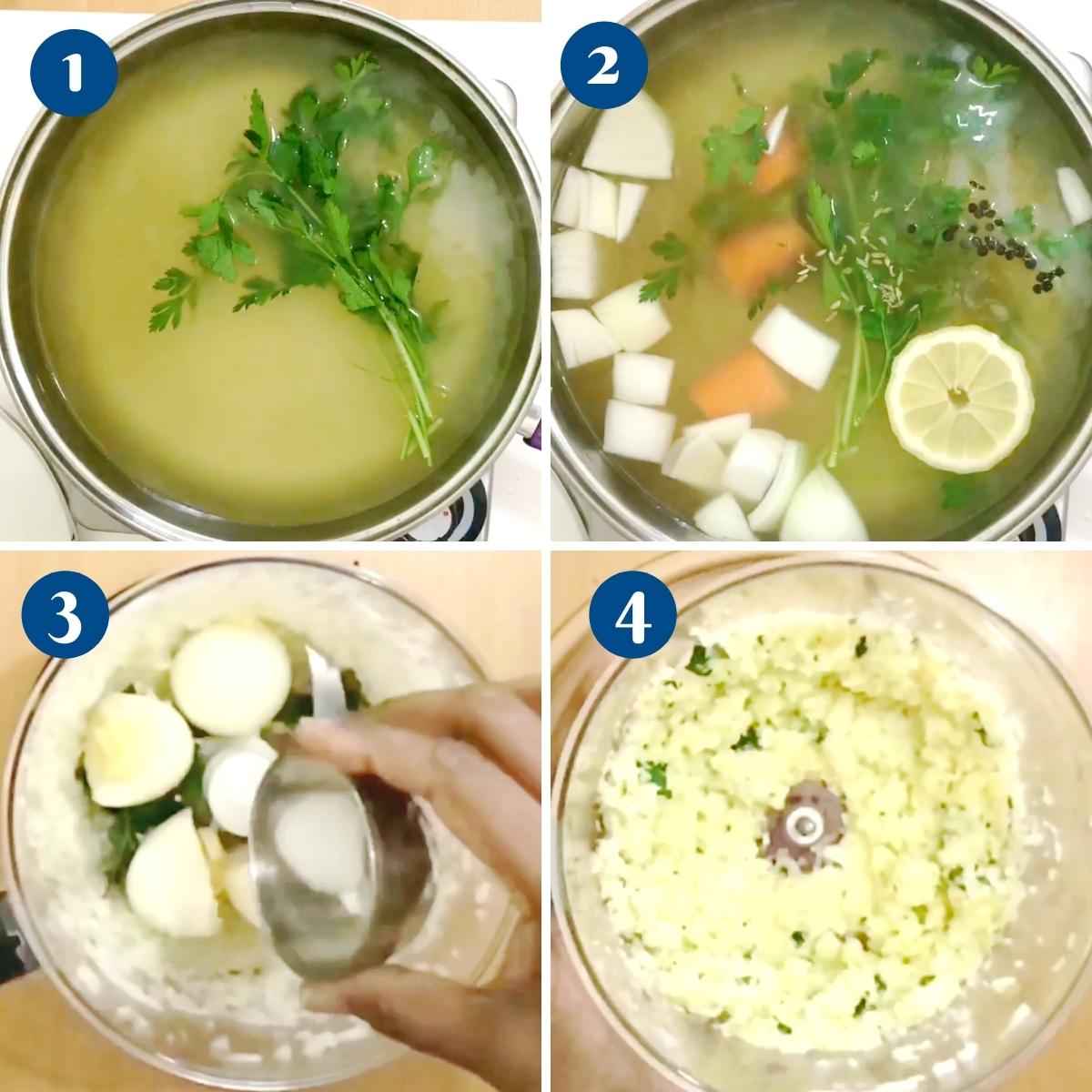
- In a pot, add the fish bones, water, and all the stock ingredients such as carrots, onions, fennel, parsley, etc. Alternatively, you can substitute the fish bones with fish broth, as I did in the video.
Pro tip – Use a wide pot so you have enough space to add all the fish cakes later. - Cover and simmer on medium-low heat for 1 hour (if using fish bones, simmer 1/2 hour more).
- Once simmered, drain or remove all veggies. Discard all other vegetables, but save the carrots for garnish.
Ground fish & Egg mixture
- Meanwhile, in the food processor, pulse the fish (without bones) for a minute or more to make groundfish. Set aside.
Pro tip – Traditionally, the whole fish is purchased. The bones are used for the broth, and the flesh for the fish cakes. - In the same food processor, pulse onions for a minute. Then, add the parsley, boiled eggs, salt, and pepper until fine but not smooth. Set aside.
Pro tip – Gefilte fish cakes are not smooth; they do have some texture. Plus, it is easier to mold when it is not as smooth.
Shape the fish cakes
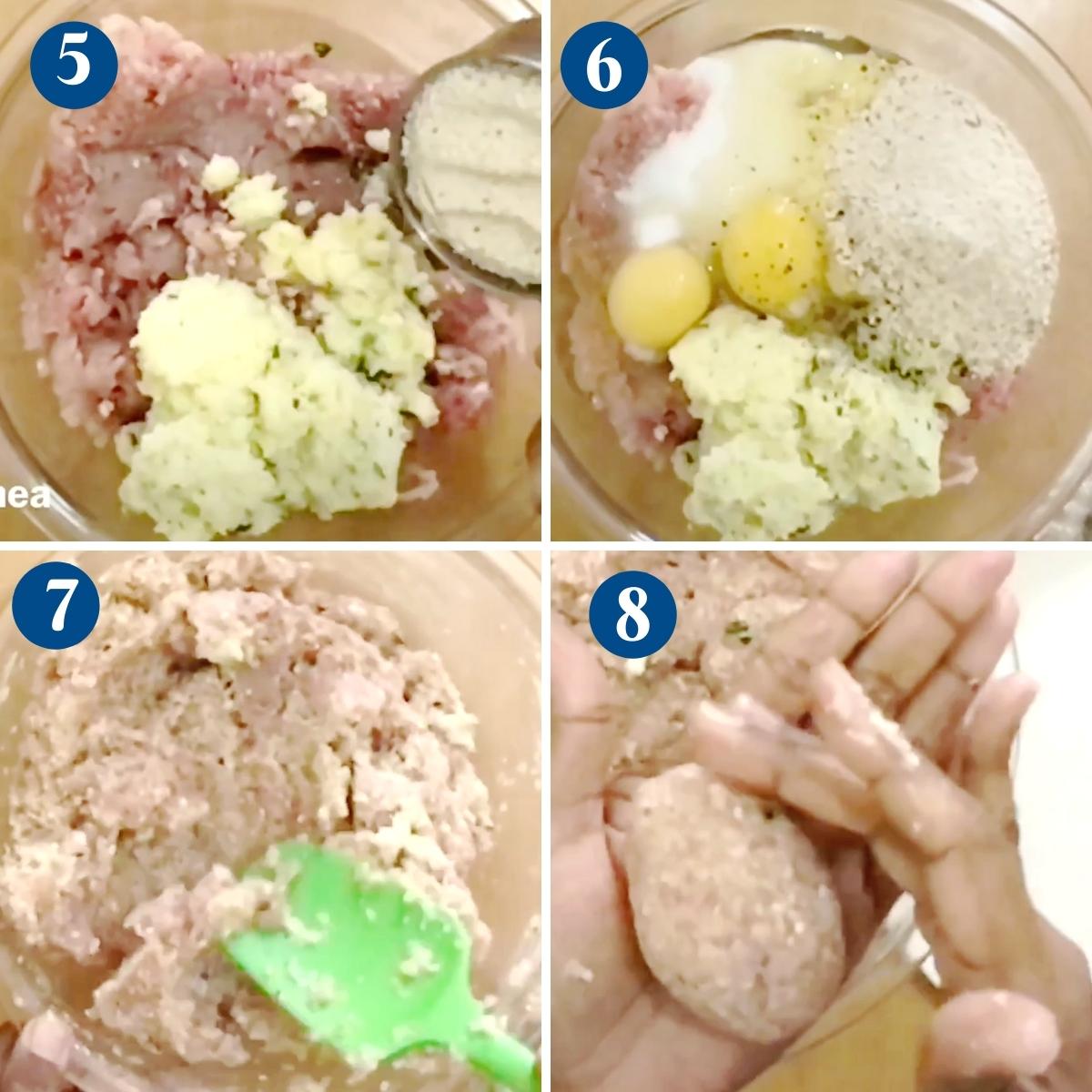
- In a large bowl, add all the fish cake ingredients, starting from ground fish, onion mixture, matzo meal, eggs, sugar, salt, and black pepper.
- Combine the mixture well, but do not over-mix. You want it to be soft but still be able to shape into an oval cake.
Pro tip – If the mixture is too stiff, the cakes will be hard because the matzo meal will absorb all the liquid. So, add a few tablespoons of water to the mixture if necessary. - Take small portions of the mixture and shape them into an oval. Use a 1/4 or 1/3 measuring cup to ensure all cakes are the same size.
Pro tip – Overmixing will make tough fish cakes, so be gentle and keep them light and airy. - The best way to do this is to roll the mixture into a ball, then shape it into an oval.
Pro tip – Wet your hands with water to prevent the fish mixture from sticking to your hands - You can keep the shaped fish cakes in the fridge until the stock is ready.
Pro tip – These cakes will keep in the refrigerator for up to two days before cooking further.
Cook the fish cakes
- Once the fish broth is ready, reduce the heat to low so the broth simmers gently.
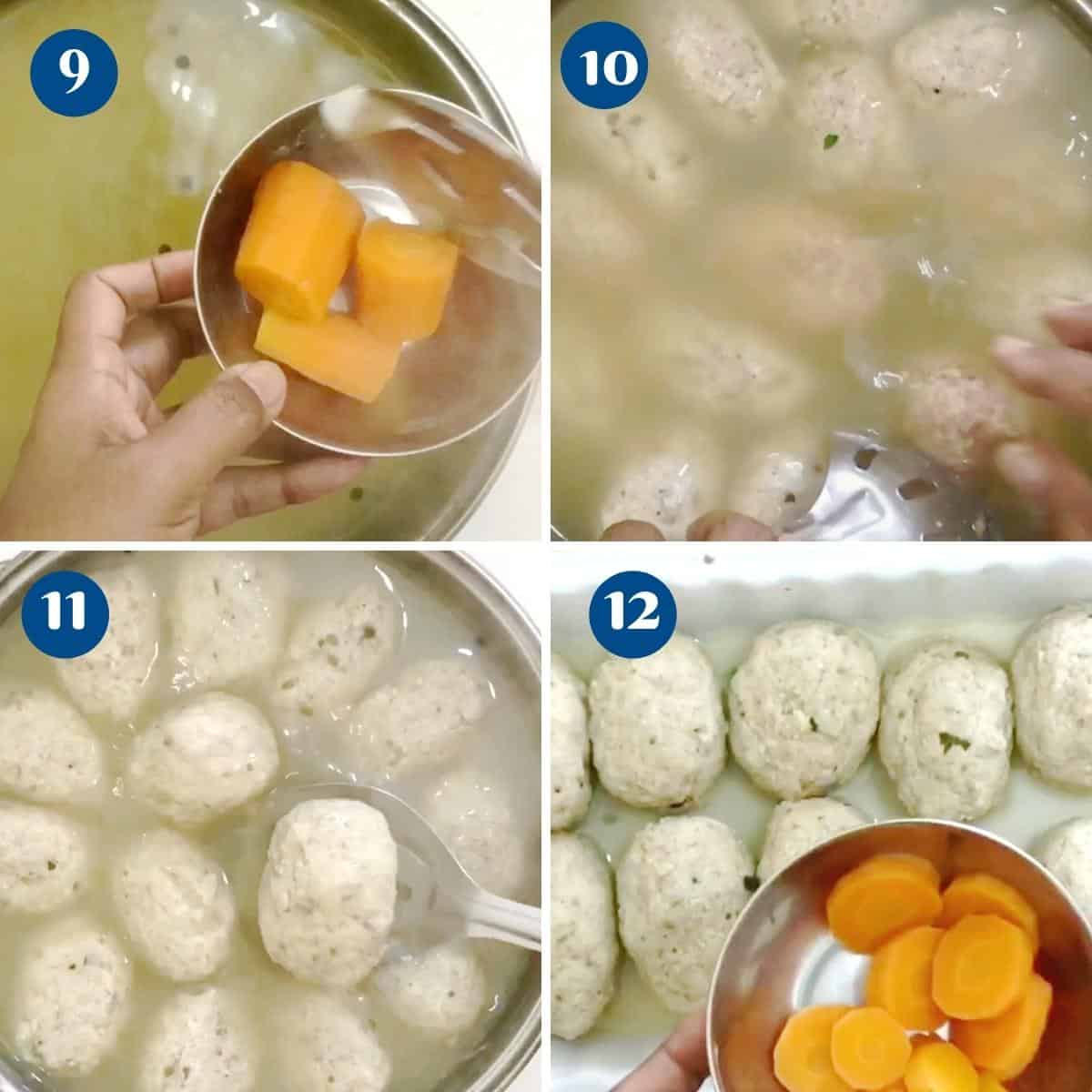
- Gently place the fish cakes one at a time. Use a spoon to move them around gently to create more space.
Pro tip – These cakes are very gentle at this time, so handle them carefully. - Once all the fish cakes are in, cover with a lid. Cook the broth on medium-low heat for 1.5 hours.
Pro tip – Keep to medium heat and, if necessary, medium-low heat. Otherwise, the fish cakes can break into pieces if boiled. - After an hour and a half, the fish cakes will be cooked and have turned white. Use a slotted spoon to remove them to a shallow serving platter.
Pro tip – It is necessary to take them out so they do not overcook and soak up too much liquid. The stock can be reused or served as a plain fish soup. - Pour some of the fish stock over the fish cakes to keep them moist. Garnish with sliced medium carrots (we saved from the stock above) and a parsley leaf.
- Place in the fridge for a few hours to chill. This dish is traditionally served cold with beet horseradish.
Pro tip – These will keep in the fridge for up to a week.

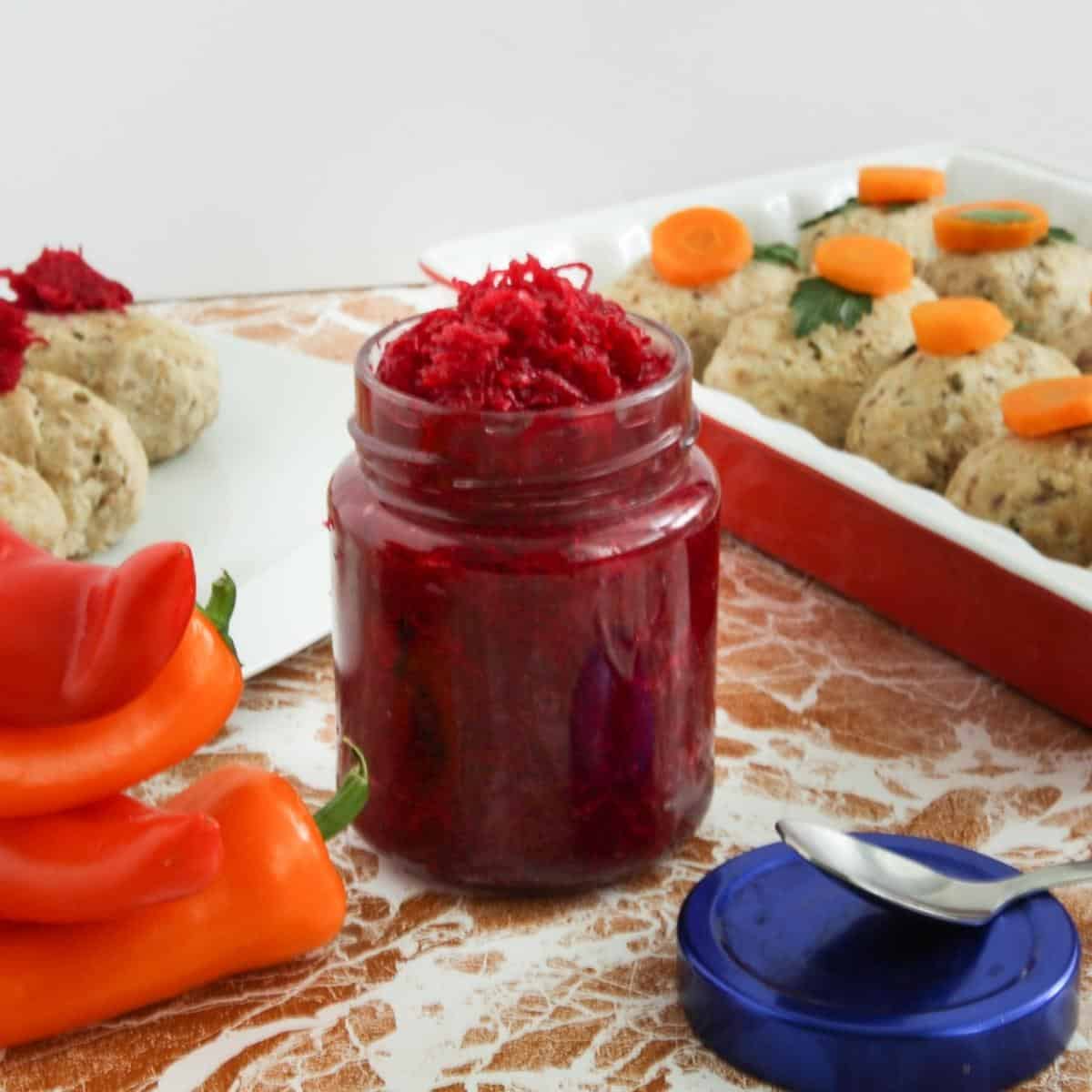
Make the beet/horseradish
- Peel and grate the horseradish and beets in a bowl. Add the vinegar, salt, and sugar – Combine well.
- Pour into a mason jar and let macerate in the fridge until ready to serve. This can be kept in the fridge for up to 2 weeks.
- Moroccan Fish in Spicy Tomato Sauce – Chraime
- Best EVER Hummus Recipe – Authentic
- Healthy Hummus (Greek Yogurt), Hummus with Meat
- Chicken Schnitzel,
- Easy Falafel Recipe – Step-by-Step
- Easiest Challah Bread Recipe – 3 Strand
- Leek and Potato Patties, Potato Latkes Recipe
- Sufganiyot – Hanukkah Doughnuts, Jelly Donuts
- See all Middle Eastern or Jewish recipes

Frequently asked questions
Gefilte fish is traditionally served cold, often with a dollop of horseradish.
Yes, you can freeze gefilte fish. It’s best to freeze it before cooking, either in patties or balls, and then cook it from frozen when ready to serve.
Gefilte fish will usually last for about 3 to 4 days in the refrigerator if stored properly in an airtight container.
Yes, you can make gefilte fish ahead of time and refrigerate it until ready to serve. You can also freeze it for longer storage.
Traditionally, the stock is made using the bones left after cleaning the fish, but I prefer to use fish stock. It’s not as strong with a fishy smell.
Gefilte Fish with Beet Horseradish
Ingredients
Fish stock
- 4 cups (1 liter) Fish stock or fish bones with water
- 2 sprigs Parsley
- ½ cup Onion (chopped)
- ½ cup Carrots (chopped)
- 1 tsp Kosher salt
- 10 Black peppercorns
- ½ tsp Fennel seeds (optional)
- 2 leaves Bay leaves
- 1 slice Lemon slice
Fish cakes
- 2 lbs (900 g) Fish fillets ground
- 1 cup Onion roughly chopped
- 2 Boiled eggs (large)
- 2 Fresh eggs (large)
- ¾ cups (100 g) Matzo meal
- 5 tbsp (75 g) Sugar
- 1 sprig Parsley
- ½ tsp Kosher salt
- ½ tsp Black pepper
Horseradish
- 2 cups Horseradish (grated)
- 1 cups Raw Beet (grated)
- ¼ cup (60 ml) White vinegar
- 3 tbsp (35 g) Sugar
Instructions
Fish stock
- In a pot, add the fish bones, water, and all the stock ingredients such as carrots, onions, fennel, parsley, etc. Alternatively, you can substitute the fish bones with fish broth as I did in the video.
- Cover and simmer on medium-low for 1 hour (if using fish bones, simmer 1/2 hour more). Once simmered, drain or remove all veggies. Discard all other vegetables but save the carrots for garnish.
Ground fish & Egg mixture
- Meanwhile, in the food processor, pulse the fish (without bones) for a minute or more to make ground fish. Remove and set aside.
- In the same food processor, pulse onions for a minute. Then, add the parsley, boiled eggs, salt, and pepper until fine but not smooth. Set aside.
Shape the fish cakes
- In a large bowl, add all the fish cake ingredients starting from ground fish, onion mixture, matzo meal, eggs, sugar, salt, and pepper.
- Combine the mixture well, but do not over-mix. You want it to be soft but still be able to shape into an oval cake.
- Take small portions of the mixture and shape them into an oval. Use a 1/4 or 1/3 measuring cup to ensure all cakes are the same size.
- The best way to do this is to roll the mixture into a ball, then shape it into an oval.
- You can keep the shaped fish cakes in the fridge until the stock is ready.
Cook the fish cakes
- Once the fish broth is ready, reduce the heat to low so the broth is at a gentle simmer.
- Gently place the fish cakes one at a time. Use a spoon to move them around gently to create more space.
- Once all the fish cakes are in, cover with a lid. Cook the broth on a medium-low simmer for one and a half hours.
- After an hour and a half, the fish cakes will be cooked and have turned white. Use a slotted spoon to remove them to a shallow serving platter.
- Pour some of the fish stock over the fish cakes to keep them moist. Garnish with sliced carrots (we saved from the stock above) and a parsley leaf.
- Place in the fridge for a few hours to chill. This dish is traditionally served cold with beet horseradish.
Make the beet/horseradish
- Peel and grate the horseradish and beets in a bowl. Add the vinegar, salt, and sugar – Combine well.
- Pour into a mason jar and let macerate in the fridge until ready to serve. This can be kept in the fridge for up to 2 weeks.
Video
Notes
- Ask your fishmonger to do the cleaning and mincing of the fish. Yes, they do charge a little more, but why not? If it reduces your workload, stress, and keeps the house clean, not smelling of fish!!
- Gefilte fish has a good shelf life and can be kept in the fridge for a few days, so make it ahead of time.
- After you are done cooking this dish. Place a pot of water on to boil. Then, add a cinnamon stick and a chopped lemon – let it boil on a medium-low simmer for an hour. Your home will smell amazing again. The lemon does a great job of removing all the fish smell from every corner of the house.
- Horseradish – Over time, the horseradish tends to get more intense in flavor, so if you like it spicy, prepare it a few days ahead. If not, make it on the day you want to serve it. Alternatively, change the ratio of the horseradish to beets; instead of using 1:1, use 1:2 or even 1:3, three being beets, of course. I notice that when I use more beets, my kids can eat some too.
Tips for success
- Use Fresh Fish: Use fresh fish for the best flavor. Avoid frozen fish if possible, as it can affect the texture of the gefilte fish.
- Consistent Size: Try to make your gefilte fish patties or balls as consistent in size as possible. This will help them cook evenly.
- Poaching Liquid: Use a flavorful poaching liquid, such as fish or vegetable broth, to enhance the taste of the gefilte fish.
- Gentle Cooking: Cook the gefilte fish at a gentle simmer to prevent them from falling apart.
- Chill Before Serving: Chill the cooked gefilte fish before serving to allow the flavors to meld and the texture to firm up.
- Serve with Horseradish: Serve the gefilte fish with horseradish to add a spicy kick and complement the flavors of the dish.
- Make Ahead: Gefilte fish can be made ahead of time and refrigerated until serving, making it a convenient dish for holiday meals.



Made this recipe?
I’d love to see how yours turned out! Share a photo on Instagram and tag @veenaazmanov_kitchen or use #veenaazmanovkitchen. And don’t forget to leave a rating and review!


Don’t lose this recipe! Save it for Later!
📌 Save this Recipe for later on Pinterest so you can easily find it again.
⭐ Add Veena Azmanov Kitchen to your Google Preferred Sources.
It helps Google show you more of our recipes.
📧 Subscribe for new recipes delivered to your inbox.
🎥 Follow us for more recipes


Hi, I’m Veena
I’m the recipe developer, baker, and food photographer behind Veena Azmanov Kitchen.
I’ve spent years developing and testing recipes, from everyday meals and homemade breads to cakes and desserts.
I share the practical tips and little details I’ve learned along the way so you can get great results in your own kitchen.








Your recipes are always so detailed that even the beginner cook can make something delicious for their family! Thanks for sharing!
Thank you, Lois.
Love your presentation! And I agree with you, horseradish is the miracle cure for a stopped up nose. We all like horseradish, especially in mashed potatoes. The fish is very interesting. I’ve never even heard of it before, I’d love to try it. And if you have to prepare for 2 different feasts i can see how you’d be overwhelmed with cooking. The Roman Catholics are a little bit more easy going about their foods — just what they like to eat or what is traditional in their family. I’ll have to keep an eye out for the gefilte fish.
Thanks, Marisa. It’s very Jewish. I learned about it when I came to Israel myself.
You posts are always so informative! I have never had gefilte fish before and actually didn’t even know what was in it but it looks just like a fish cake which I think would be delicious! I especially like the beet horseradish. I would eat that with everything!
Thanks, Denise. I started eating Gefilte Fish only since I came to Israel myself. I love horseradish myself.
My dad loves all things fish. During lent he gives up meat but I think he enjoys it more because he gets to eat all the fish lol. He will enjoy this dish for sure.
Thanks, Jolina. You must make it for him.
This looks like an interesting recipe for lent/Passover. My mom used to make horseradish beets. Hubby still asks for them. What a fun recipe to make, and presentation perfect too.
Thanks, Gloria. I love horseradish beets very much too.
Nice to read the cultural context too.
Thanks, Jessica.
I too am Catholic and my grandkids are being raised Jewish. I am enjoying learning about all their customer and traditions as well as the food! However I have not yet had gefeltte fish yet but everything you make is delicious. I’m going to pass this on to my stepdaughter as she is learning how to make all those delicious Jewish dishes.
Thanks Denise. I never heard of gefilte fish until I got married about 12 years ago. Since then we have it every year at Passover.
My mom used to make a similar dish for Ukrainian Easter we called it Horseradish Beets. Hubby still asks for it. We would use it on ham….but not on Good Friday. Hubby likes horseradish and the hotter the better for him. Even grew her own horseradish too. As for the fish we had during the holiday…it was just white fish…nothing fancy.
Yeah I like the hot stuff by my hubby can’t handle the hot stuff. So cool that he grew his own horseradish. I love white fish – sounds yum.
Thank you for the recipe. My dear mom taught me to make gefilte fish as her family did with a slightly different recipe that we find has a less heavy flavor and a lighter texture. There is no filler of any kind, NO matzo meal, bread crumbs, Almond meal nor potatoes. There are no hard boiled eggs. There is NO sugar in the fish or poaching liquid.
We use only ground fish which is part carp and part any white fish, to add up to 2 lbs/900 gms. 2 raw eggs, 1/2 teaspoon black pepper, 1 teaspoon salt, 1 large peeled raw carrot and 1 large peeled onion ground up or processed to fine. I usually buy ground fish from the store.
Mix everything together and then keep mixing and mixing vigorously until the mixture is not only well mixed but also has become a firm mixture. This is why you don’t need any filler nor hard cooked eggs. The onion and carrot add enough sweetness.
Now you form balls with moistened hands and add gently to
A big pot of poaching liquid. This contains a few sliced carrots and onions, fresh sprigs of dill and parsley, salt and pepper. No sugar or other ingredients. When the broth is boiling & veggies are tender, add your fish balls When all are in the broth, turn down the heat to low, Cover completely, and simmer for about 2 hours. Check the fish balls and cook as long as it takes for tender fish balls. Chill or serve.
Thank you Rochelle. Someday I will try this version too. I learned the basic recipe from my mother in law and it’s now a family favorite. I did tweak the recipe a little adding more flavors but original recipe is the family recipe. She was from Poland and she learned it from her family perhaps. I think for the family I will keep this version because it reminds my husband of his mom and my son of his grandmother. I love recipes that get carried thru tradition in the family. I will try your version some day.
I’m going to my friends house for Seder on Saturday, and I’m thinking I might give this a go. I love an awesome cooking project like this, and I think everyone will love it.
Oh they will be very impressed if you take this along Valentina. There is a myth that making this dish is very time consuming and difficult but as you can see if you organize yourself and get some help – it is so possible! Try it they will all be so impressed.