

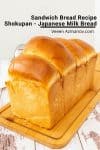
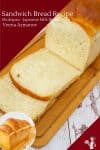
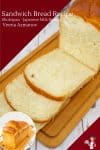
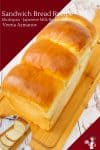
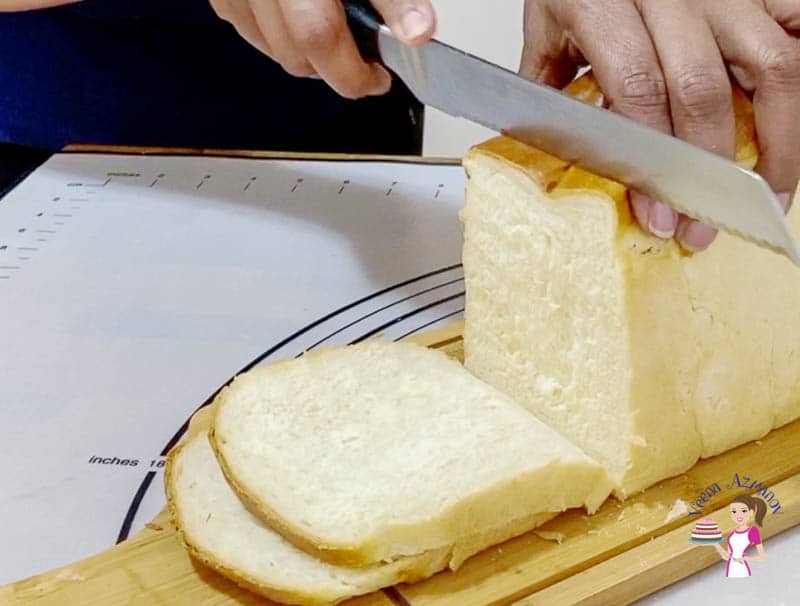
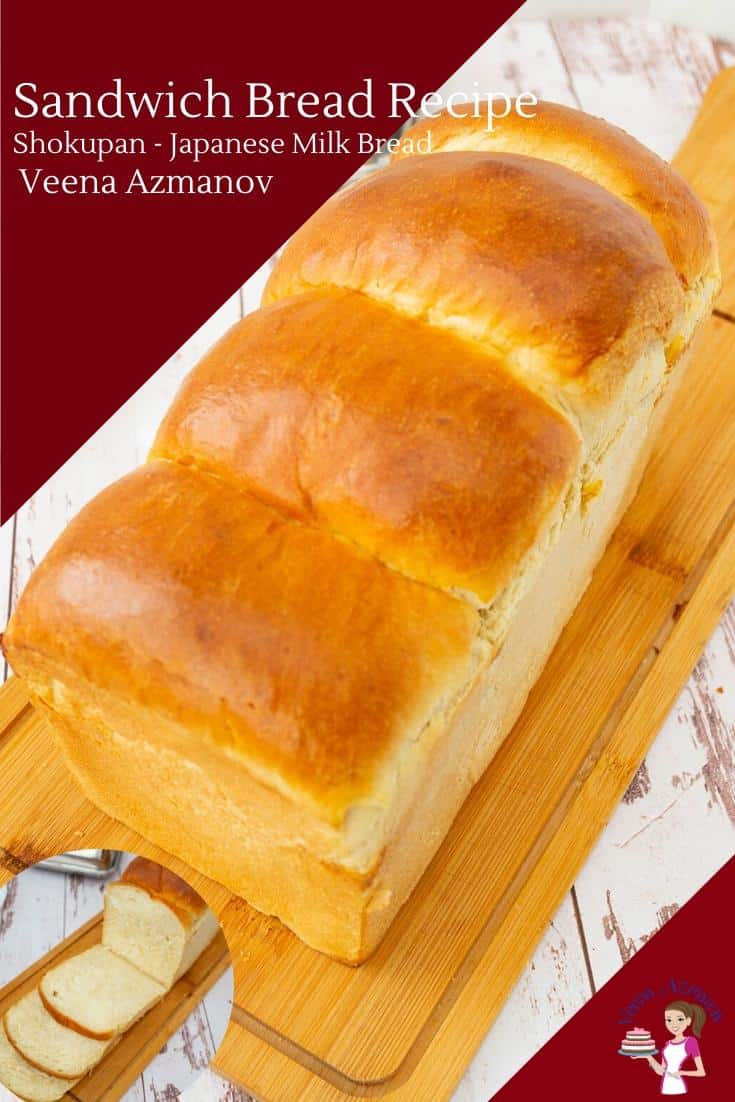
This is the Japanese sandwich bread shokupan, also known as the Hokkaido milk bread. It uses an Asian tangzhong method and produces the softest, lightest, and airiest slice of bread you will ever make. Amazing on its own, perfect for breakfast, lunch, or dinner, and of course, sandwiches.
Every time I make the Japanese milk bread, it ruins my ability to make any other bread. I get so tempted to add the tangzhong in every bread I make. If you’ve never made this Hokkaido milk bread, I highly recommend you try it at least once. The soft, light, and airy texture of the bread is as light as a cloud.
What is tangzhong?
It’s a Japanese technique called yukone (yudane) using a roux made with flour and water (or milk). I like the combination of the two. This roux is like a thick pudding made by cooking flour, water, and milk. Once thickened, it is cooled to room temperature and then added to the dough-making process.
How does it work? Well, the water is absorbed by the flour at high temperature, and the starch is gelatinized without forming any gluten (that is why it must be cooked carefully). This allows the starch in the tangzhong to absorb far more liquid at room temperature later. That’s why when tangzhong is added to the dough, we can use more water, which in turn gives us a soft, stable yet spongy texture in the final bread.
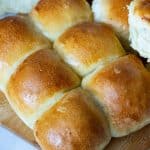
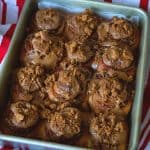
Today, we make sandwich bread, but you can use this to make almost anything. For example, try my softest burger buns, dinner rolls, or even cinnamon rolls.
Why make this bread?
- The recipe is simple and easy, with one more step than all other bread recipes. That’s preparing the tangzhong. But that, too, is very simple and easy. The whole process takes no more than 3 minutes.
- This process produces the lightest, airiest, and softest sandwich bread, impressing everyone.
- This bread is perfect for everyday use, and leftovers freeze beautifully.
- These are all-purpose breads – Delicious on their own or served for breakfast with butter and jam. Alongside the main course for lunch or dinner. Of course, these also make the most amazing sandwiches!!

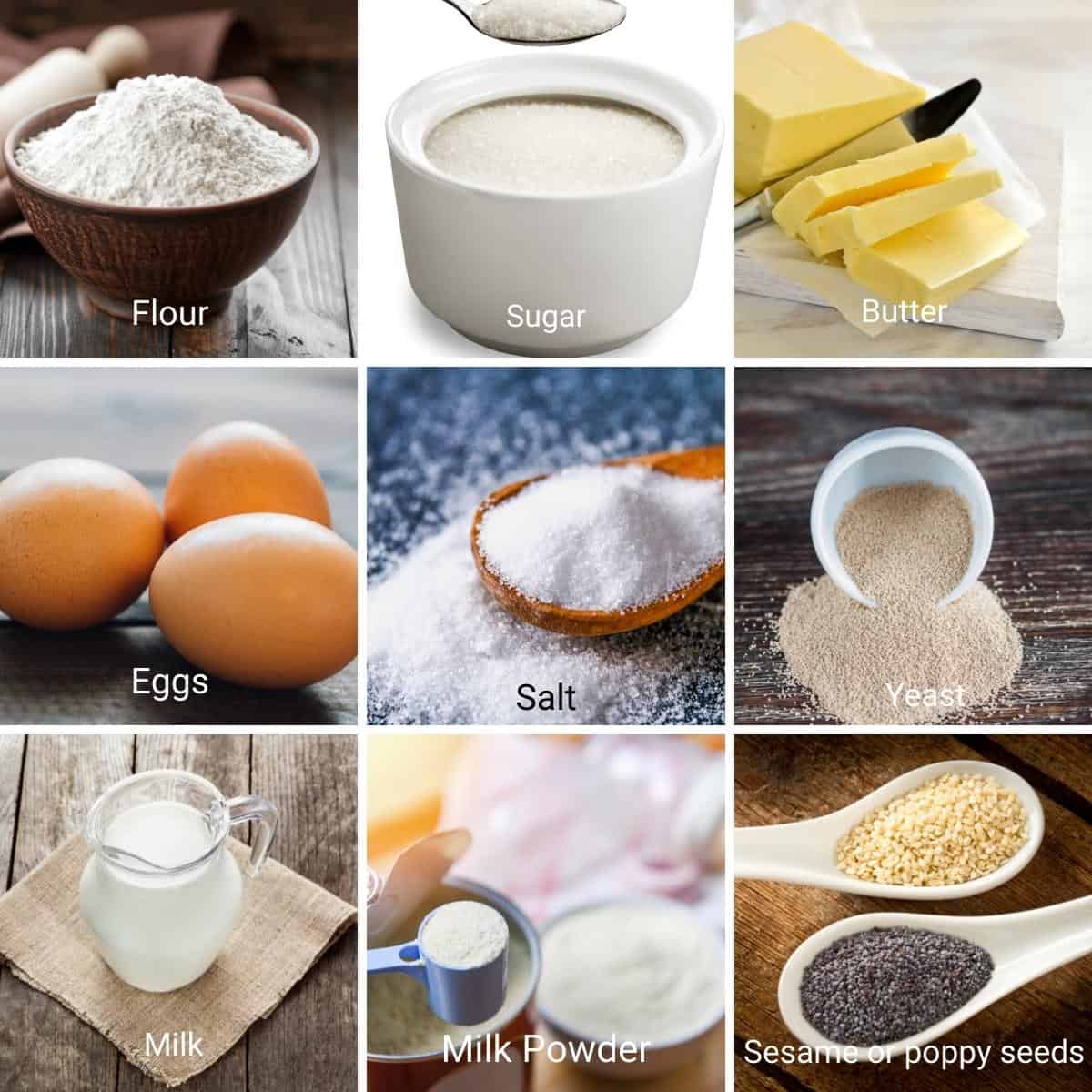
Ingredients and substitutes
- Flour – I love to use bread flour because it produces the softest, most delicious bread, which is also slightly chewy.
- Egg – I use a large egg, about 60 to 65 grams in weight.
- Sugar – This bread is slightly sweeter than most other white bread. And yet, you can certainly reduce the sugar by half.
- Butter – A good quality butter at room temperature works best for flavor and consistency.
- Milk powder – This bread is often called milk bread because it contains milk and milk powder.
- Yeast – Today, I am using baker’s fresh yeast, which is about 21 grams. But you can use 2 1/4 tsp of instant yeast. For other substitutes for yeast, read my post – Baking with yeast: A beginner’s guide.
Step-by-step instructions: Shokupan sandwich bread
Tangzhong
- In a saucepan, combine water and flour with a whisk until no lumps remain. Add the milk and combine well again.
Pro tip – It is very important to make sure you have no lumps, as these will be difficult to remove from the dough. - Place the saucepan over medium heat and cook this mixture for 2 to 3 minutes. Keep stirring constantly to prevent lumps.
Pro tip – Keep the heat on medium to low. At first, the mixture will take a while to thicken, but then it does get thicker quickly. So, keep a close eye and take it off just when it reaches almost a paste consistency similar to a pudding. - Take it off the heat and transfer it to a bowl or plate. Cover and let cool to almost room temperature. Make sure the plastic touches the surface of the tangzhong to prevent a skin.
Pro tip – Removing the hot pan will prevent it from cooking further, as we don’t want it to get lumpy. - At first, the mixture will take a while to thicken, but then it does get thicker quickly. So, keep a close eye and take it off just when it reaches almost paste consistency, similar to a pudding (see video).

Dough
- In the bowl of a stand mixer, add the lukewarm milk (no warmer than 110°F) and the yeast. Combine well with a whisk. Then, add the sugar, milk powder, egg, and cooled tangzhong.
- Add the flour and salt. Turn the mixer on medium-high speed.
Pro tip – Scrape the sides of the bowl well to ensure all the flour is well incorporated, and do not add more flour yet. - Once all the flour has been incorporated, knead:
- By hand – transfer to a well-dusted worktop and knead for 5 to 6 minutes
- Stand mixer – once all the flour is well incorporated, knead on medium for 4 to 5 minutes
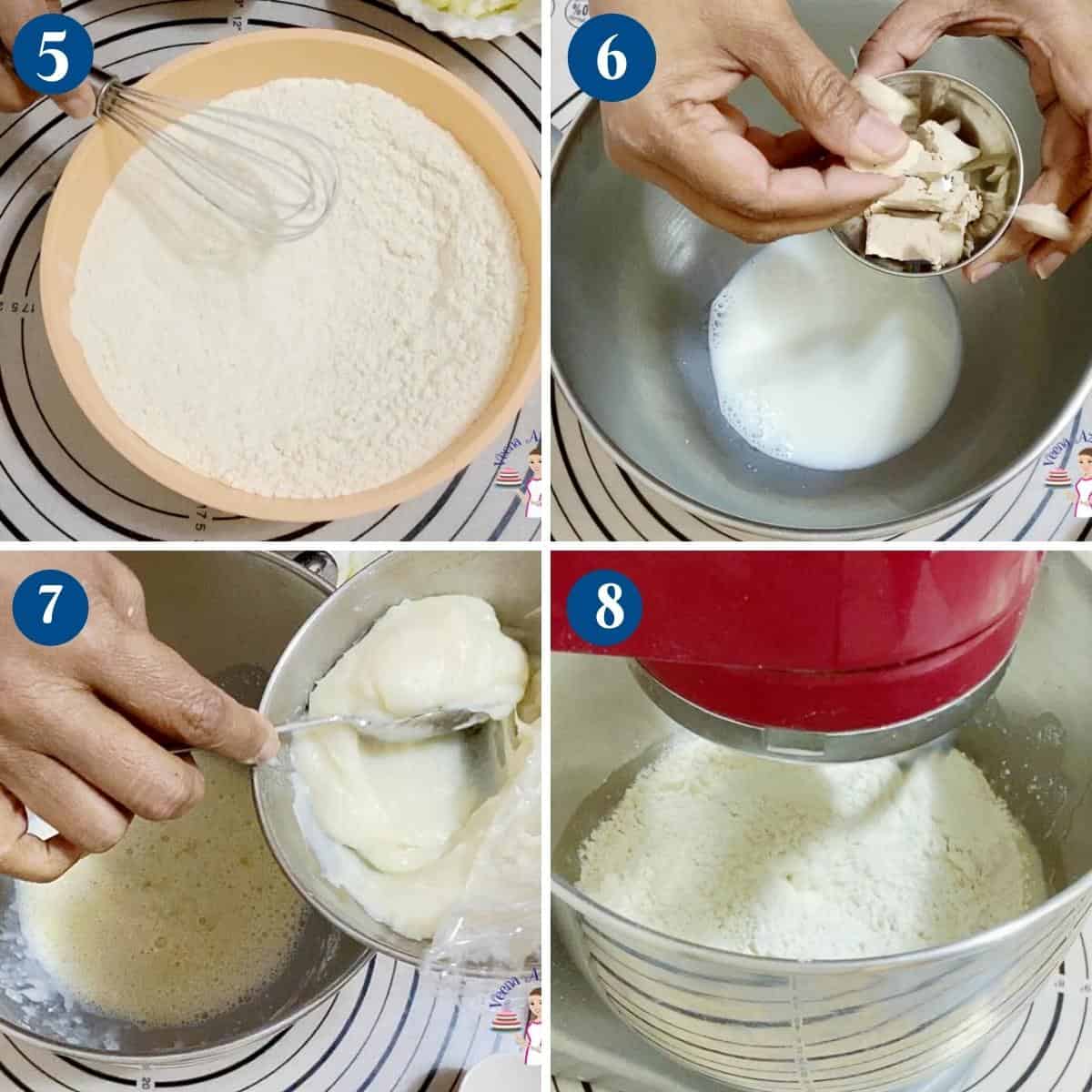
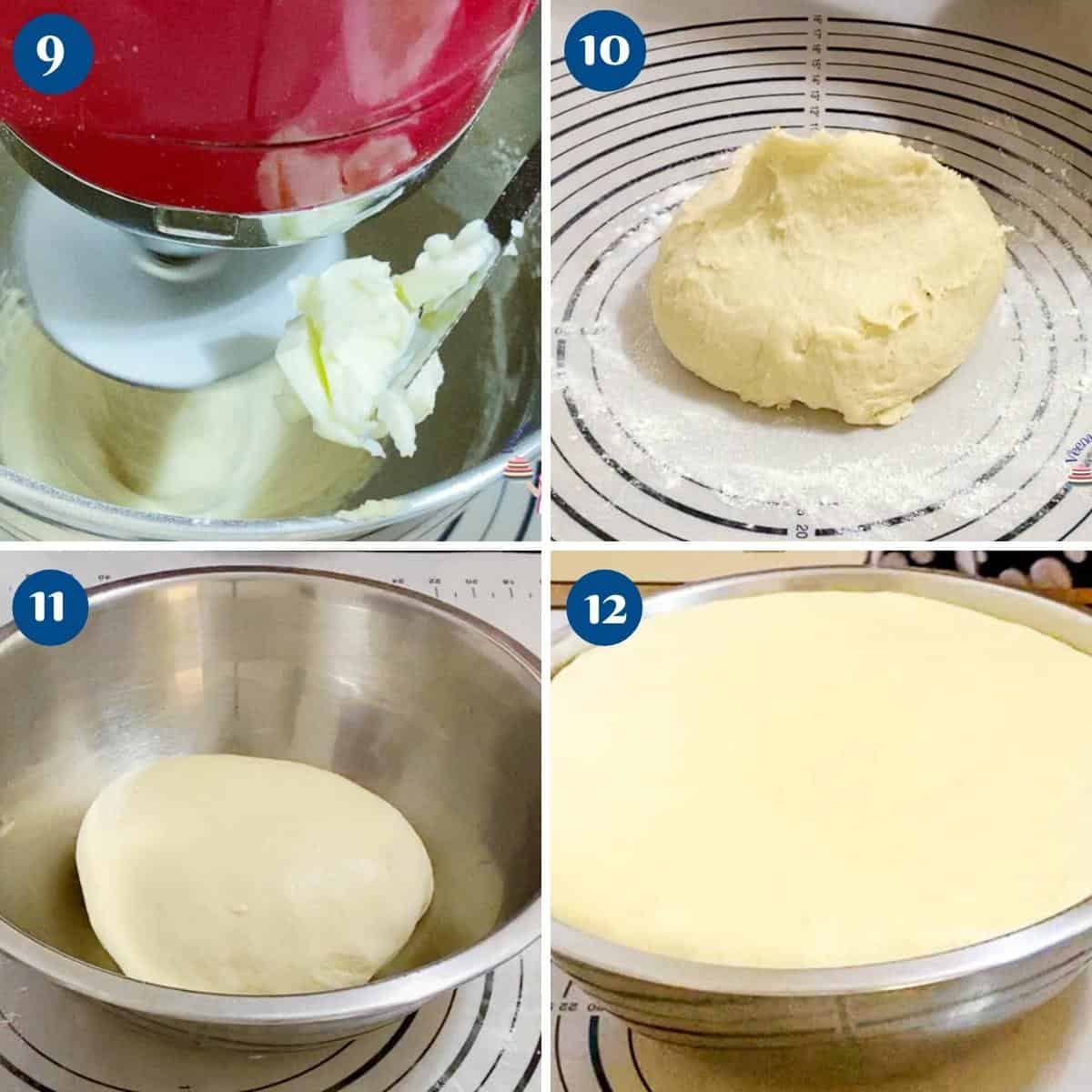
- Then, gradually add the butter one tablespoon at a time. Once all the butter has been incorporated, knead for 3 minutes more.
- When the dough is soft and shiny but still slightly sticky, shape it into a ball. Place the dough in an oiled bowl, seam side down. Coat the surface with oil to prevent drying. Cover with a clean kitchen cloth or plastic wrap.
- Leave in a warm place. Let rise for 60 to 90 minutes until doubled in volume.
Pro tip – In winter, you may need 90 minutes or more. But in summer, the dough may double in 45 minutes. If you can’t attend to it at that moment, degas, reshape, and let it double in volume again.
Shape the loaf
- When the dough doubles in volume, transfer it to a well-dusted floured surface. De-gas, reshape into a ball.
Pro tip – At this point, there is no need for additional flour. So use a light dusting of flour. - Roll the dough into a cylinder and divide it into 4 portions. Weigh the portions to ensure they are similar in size. Mine was about 200 to 215 grams each.
- Shape each portion into a tight roll. To do this correctly,
- Flatten the dough on an unfloured surface.
- Fold the top and two sides in.
- Then roll towards you into a sausage shape.

Proof and bake
- Place the shaped portions in a 9 x 4 loaf pan. Cover with a clean kitchen cloth or plastic wrap and leave in a warm place for about 45 minutes until almost doubled in size.
Pro tip – Spray the plastic wrap with oil to prevent it from sticking to the rolls. - When the bread is almost doubled in volume at about 30 minutes, preheat the oven to 375°F /190°C / Gas Mark 5
- Brush the rolls with egg wash, milk, or cream.
Pro tip – Egg wash is a full egg with 2 tbsp of water. An egg wash will give a nice golden color. If you can’t use egg, milk or cream will work just as well. Do not use oil or butter, as it will create a crust.

- Bake for about 30 to 40 minutes until lightly golden on top. If the top of the sandwich bread is getting too dark, tent it with aluminum foil. When baked, brush with melted butter
Pro tip – This is optional, but it adds a nice flavor and keeps the top crust soft. - Take it out of the pan and cover it with a clean kitchen cloth for at least 5 minutes to keep it soft.
Pro tip – Do not leave the bread in the pan for too long, as the steam will make the bread soggy on the bottom.

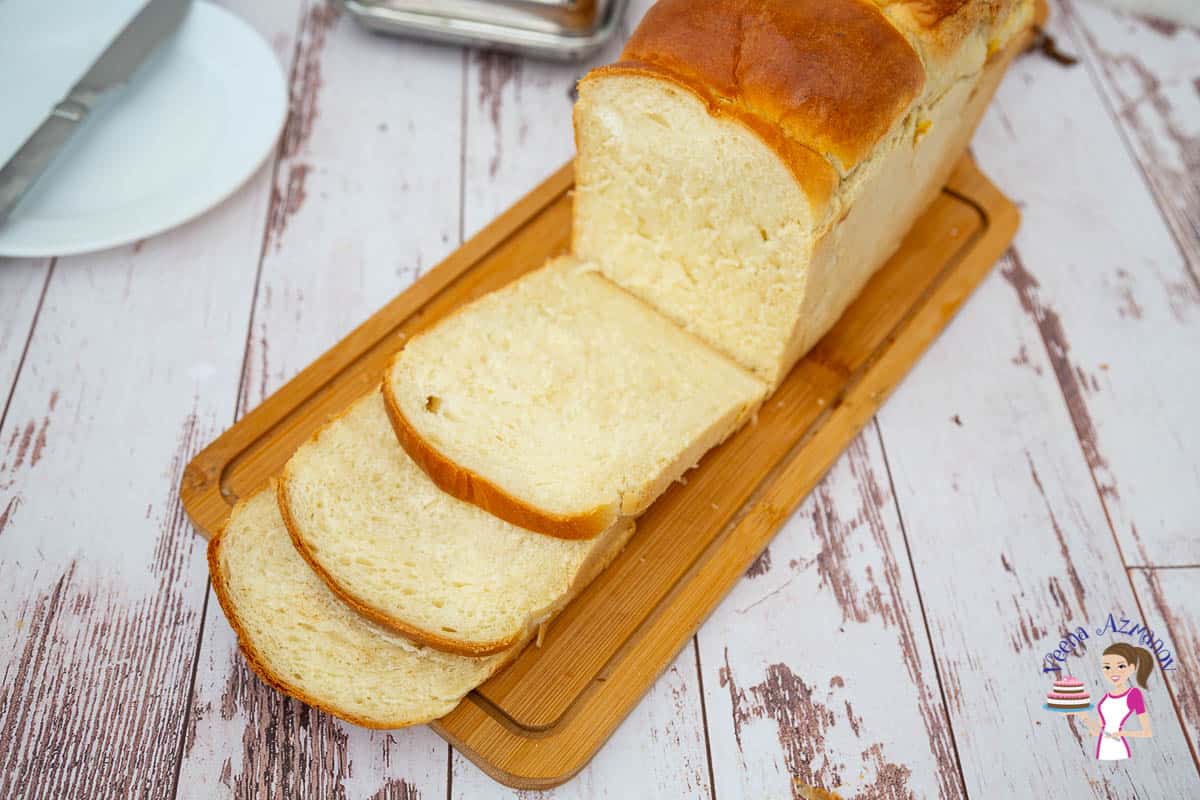
Shokupan Sandwich Bread Recipe
This is the Japanese sandwich bread shokupan, also known as the Hokkaido milk bread. It uses an Asian tangzhong method and produces the softest, lightest, and airiest slice of bread you will ever make. Amazing on its own, perfect for breakfast, lunch, or dinner, and of course, sandwiches.
Video
Ingredients
- 60 g (¼ cup) Milk
- 60 g (¼ cup) Water
- 45 g (3 tbsp) Bread flour
- 320 grams (1½ ml) Warm milk 100°F
- 12 grams (1½ tbsp) Instant dry yeast I used 35 grams fresh bakers yeast
- 30 grams (2 tbsp) Sugar
- 15 grams (2 tbsp) Milk powder
- 100 grams (2 large) Egg
- 60 grams (2 tbsp) Unsalted butter room temperature
- 650 grams (5¼ cups) Bread flour or 50/50 bread and all-purpose
- 13 grams (2¼ tsp) Kosher salt
- 30 g (2 tbsp) Milk
- 30 g (2 tbsp) Water
- 30 g (2 tbsp) Bread flour
- 300 g (1¼ cups) Warm milk (100F)
- 9 g (2¼ tsp) Instant dry yeast
- 15 g (1 tbsp) Sugar
- 7 g (1 tbsp) Milk powder
- 50 g (1 large) Egg
- 45 g (3 tbsp) Butter
- 500 g (4 cups) Bread flour
- 8 g (1½ tsp) Salt
- ½ Egg for egg wash
- 2 tbsp Water for egg wash
Method
- In a saucepan, combine water and flour with a whisk until no lumps. Add the milk and combine well again. Place the saucepan over medium heat and cook this mixture for 2 to 3 minutes. Keep stirring constantly to prevent lumps.60 g Milk, 60 g Water, 45 g Bread flour
- Take it off the heat and transfer it to a bowl or plate. Cover and let cool to almost room temperature. Make sure the plastic touches the surface of the tangzhong to prevent skin.
- At first, the mixture will take a while to thicken, but then it does get thicker quickly. So, keep a close eye and remove it just when it reaches almost a paste consistency, similar to a pudding (see video).
- In a bowl of a stand mixer, add the lukewarm milk (no warmer than 110°F) and the yeast. Combine well with a whisk. Then, add the sugar, milk powder, egg, and cooled tangzhong.320 grams Warm milk, 12 grams Instant dry yeast, 30 grams Sugar, 15 grams Milk powder, 100 grams Egg
- Add the flour and salt. Turn the mixer on medium-high speed. Once all the flour has been incorporated, knead for 5 to 6 minutes by hand on a well-dusted surface or in a stand mixer with a dough hook attachment for about 4 to 5 minutes on medium speed. Then, gradually add the butter, one tablespoon at a time. Once all the butter has been incorporated, knead for 3 minutes more.650 grams Bread flour, 13 grams Kosher salt, 60 grams Unsalted butter
- When the dough is soft and shiny but still slightly sticky, shape it into a ball. Place the dough in an oiled bowl, seam side down. Coat the surface with oil to prevent drying. Cover with a clean kitchen cloth or plastic wrap.
- Leave in a warm place. Let rise for 60 to 90 minutes until it doubles in volume.
- When the dough is doubled in volume, transfer it to a well-dusted floured surface, degas, and reshape into a ball.
- Roll the dough into a cylinder and divide it into four portions. Weigh the portions to ensure they are similar in size. Mine was about 200 to 215 grams each.
- Shape each portion into a tight roll. To do this correctly, flatten the dough on an unfloured surface. Fold the top and two sides in. Then roll towards you into a sausage shape.
- Place the shaped portions in a 9 x 4 loaf pan. Cover with a clean kitchen cloth or plastic wrap and leave in a warm place for about 45 minutes until almost doubled in size.
- When the bread is almost doubled in volume at about 30 minutes, preheat the oven to 375°F / 190°C / Gas Mark 5
- Brush the rolls with egg wash, milk, or cream.½ Egg, 2 tbsp Water
- Bake for about 30 to 40 minutes until lightly golden on top. If the top of the sandwich bread is getting too dark, tent it with aluminum foil. When baked, brush with melted butter.
- Take it out of the pan and cover it with a clean kitchen cloth for at least 30 minutes to keep it soft.
Notes
- Cook the tangzhong at medium to low speed so the flour has a chance to absorb the liquid – if you cook on high heat, the liquid will evaporate.
- Also, you need to stir the tangzhong continuously but not vigorously. Why? We want to avoid gluten formation.
- The tangzhong must be a paste consistency, and it gets thicker as it cools, so remove it earlier rather than later. It will be difficult to incorporate into the dough if it gets too thick and lumpy.
- Cool the tangzhong to room temperature before you add it to the dough. But do not place it in the fridge to avoid lumps.
- Add salt to the flour, not the yeast mixture. Salt can kill the yeast.
- Knead the dough for the time mentioned in the recipe. Using a timer works great to under- or over-knead the dough. This is a high-hydration dough, which means it has more water compared to other bread dough. As such, the dough is quite soft to knead, so a stand mixer makes it easier. Having said that, you can certainly knead this dough by hand. In fact, I have done it on many occasions. And chilling the dough for an hour after the first rise will make it easier to shape.
- Bread flour works best for this bread, making it soft and chewy. That said, I have used all-purpose flour, and it works just as well.
- Overnight Bread – The dough can be prepared a day in advance. Proof them on the counter for an hour, then punch down and let the dough rest in the fridge overnight. Overnight proofing is a great way to add flavor to the bagels. The next day, let the dough come to room temperature before you shape and bake it.
- Storing sandwich bread – This sandwich bread freezes beautifully. Cool the baked bread, then place it in a freezer-safe storage bag. It can be frozen for up to a month. I like to cut the sandwich bread into slices and freeze the slices so my kids can thaw the slices as needed.
- Kneading the dough – If possible, use an electric mixer because the dough is soft and sticky.
- Bread machine – buns can be easily made in a bread machine. Pour all ingredients into the pan set to dough or manual. Start and let the dough run its cycle for about 9 to 10 minutes – continue with the recipe as shown above.
- The dough did not rise? – Most often, the simplest explanation is that the liquid (milk) used was not warm. You need the liquid to be no more than 110°F/ 41 °C. Hotter than that will not activate the yeast. In some cases, it could also be that the yeast was old and not good.
- Dry, dense, not soft bread? If you add too much flour to the dough, the bread will be dense, not soft. You want the dough to be soft, elastic, and still slightly sticky when kneading. Follow the recipe and look at the video to see the consistency of my dough.
- Bread deflated during baking – Proof the bread for only 45 minutes or until it is almost doubled in volume. They will continue to rise some more in the oven when baking. If you overproof the bread, it tends to rise and deflate when baking.
Equipment you will need


Nutrition
Tried this recipe?
Mention @veenaazmanov_kitchen or tag #veenaazmanovkitchen!Tips for Success
- Cook the tangzhong gently – Cook over medium-low heat, stirring continuously, until it forms a smooth paste. High heat can evaporate the liquid too quickly.
- Don’t overcook the tangzhong – Remove it from the heat while it is still smooth and creamy. It will continue to thicken as it cools, and an overly thick tangzhong is difficult to incorporate into the dough.
- Cool before using – Let the tangzhong cool to room temperature before adding it to the dough. Avoid refrigerating it before mixing, as it can become too firm or lumpy.
- Expect a soft dough – Shokupan is a high-hydration bread, so the dough will be softer and stickier than a typical sandwich bread dough. Resist adding extra flour.
- Knead sufficiently – Give the dough enough time to develop good gluten structure. A stand mixer makes this easier, but the dough can also be kneaded by hand.
- Watch the final proof – Let the shaped loaf rise until almost doubled rather than relying only on the clock. Overproofing can cause the bread to collapse during baking.
more sandwich bread recipes
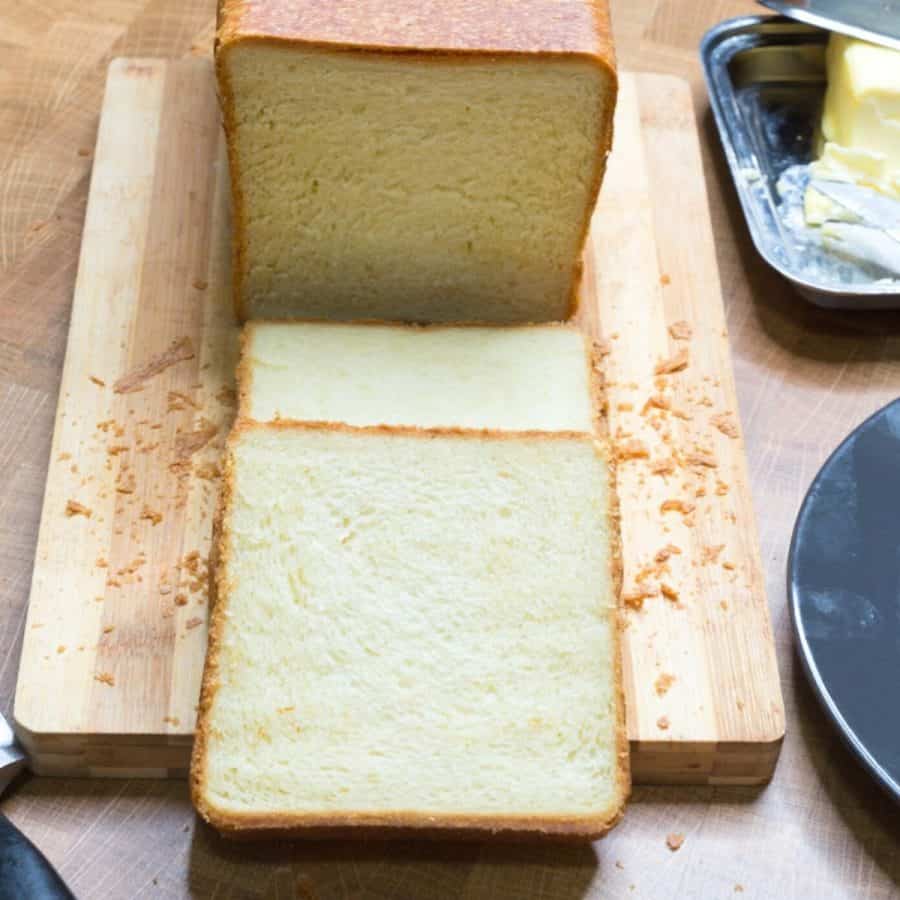
- BEST Sandwich Bread Recipe
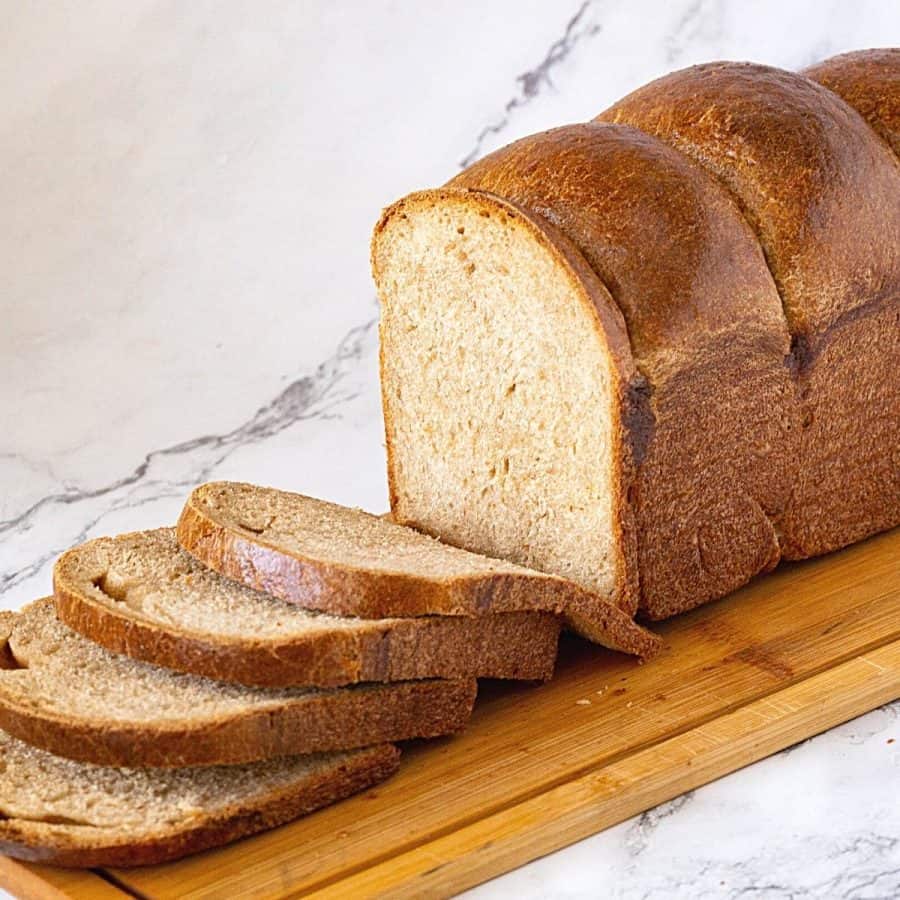
- Whole Wheat Sandwich Bread
- Brioche Sandwich Bread Recipe
- Challah Sandwich Bread
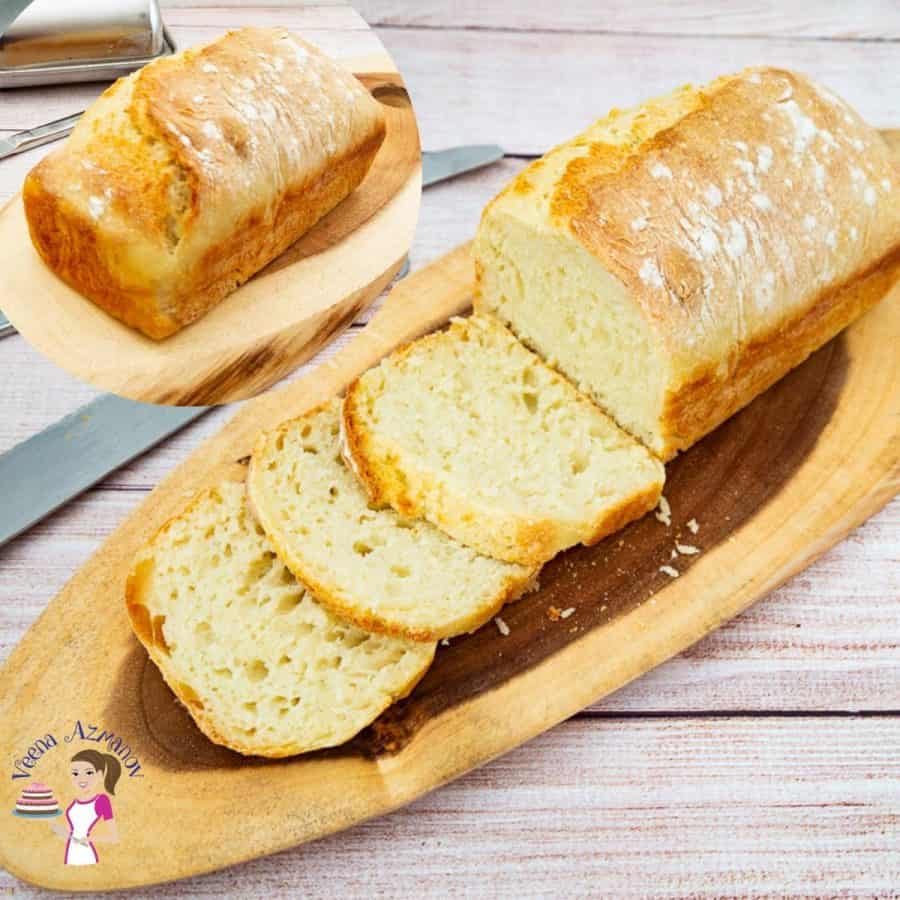
- No-Knead Sandwich Bread
- Grilled Chicken Sandwich or Turkey Sandwich
- See all sandwich Bread recipes

Troubleshooting
| Problem | Possible cause | Solution |
|---|---|---|
| Dough isn’t rising | Yeast may be old or the liquid temperature was unsuitable | Use fresh yeast and warm, not hot, liquid. If activating the yeast first, aim for about 105–110°F / 40–43°C. |
| Dough is very sticky | This is a high-hydration dough or gluten hasn’t developed enough | Continue kneading before adding more flour. The finished dough should be soft, elastic, and slightly tacky. |
| Bread is dense or dry | Too much flour or insufficient kneading/proofing | Measure flour accurately and knead until the dough is smooth and elastic. Avoid adding extra flour just to eliminate stickiness. |
| Loaf rises then collapses | Dough was likely overproofed | Bake when the shaped loaf is almost doubled and properly proofed rather than allowing it to rise excessively. |
Frequently asked questions
This milk bread will keep at room temperature for 3 to 4 days. You can also freeze it for up to a month. However, I do not recommend keeping bread in the fridge as it dries out the moisture from the bread.
This Hokkaido bread is called Japanese milk bread. It is quite milky in taste because it uses both milk and milk powder. And it is a very light and airy bread, often referred to as soft as a cloud or sponge in texture.
At high temperatures, the water is absorbed by the flour, and the starch is gelatinized without forming gluten. This allows the starch in the tangzhong to absorb far more liquid at room temperature. That’s why when tangzhong is added to the dough, we can use more water, which in turn gives us a soft, stable yet spongy texture in the final bread.
No, it doesn’t work like this. Add only as much as requested in the recipe. This recipe has been tried and tested a few times, so it works perfectly with these measurements. As you can see in the video, the bread is soft as cotton, light, and airy.
Dinner rolls you may like
- Japanese Milk Bread
- Soft Fluffy Crescent Rolls
- No-Knead Knotted Rolls
- Soft and Fluffy Dinner Rolls
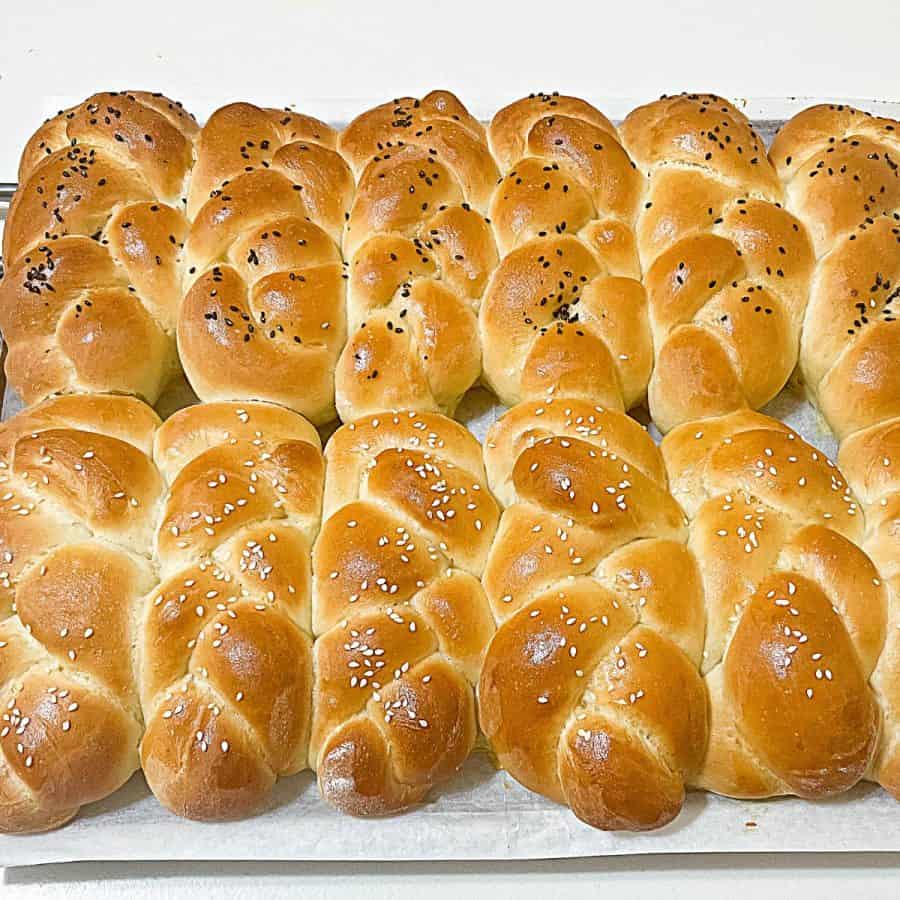
- Sourdough Mini Challah • Dinner Rolls


Don’t lose this recipe! Save it for Later!
📌 Save this Recipe for later on Pinterest so you can easily find it again.
⭐ Add Veena Azmanov Kitchen to your Google Preferred Sources.
It helps Google show you more of our recipes.
📧 Subscribe for new recipes delivered to your inbox.
🎥 Follow us for more recipes

Hi, I’m Veena
I’m the recipe developer, baker, and food photographer behind Veena Azmanov Kitchen.
I’ve spent years developing and testing recipes, from everyday meals and homemade breads to cakes and desserts.
I share the practical tips and little details I’ve learned along the way so you can get great results in your own kitchen.




I’m so excited to make this recipe! I’ve seen this style of bread but had no idea how to prepare it. Such an interesting technique with the roux! Thanks for such a detailed post about it!.
It is very easy, Mikayla. You must try
This looks like the fluffiest bread ever! I can see why you feel tempted to add tangzhong to every bread you make. I so wish a GF version of this existed. ?
Thanks, Erin. No, I have not tried a gluten-free version of this
This bread recipe looks like a big, fluffy cloud! I can’t believe how high it rises after you bake it!
It does.. Thanks Leslie
What a gorgeous loaf of bread! It looks perfect and fluffy, I’m intimidated to make it, but with the step by step instructions I should have no problem.
Thanks, Denise. Happy you found my step by step useful
Ahh this is a bread I’ve always wanted to try! Yours looks so soft and beautiful, Veena! I cannot wait to give it a go! Thank you for this detailed and informative post 🙂
Thank you, Tammy. It is soft and delicious. I hope you try it.
This bread has the softest texture! It’s great with salted butter and jam. I would be curious to try to make croque monsieur, I think it would work really nicely.
it sure would, Eva. Thanks
I’ve never made or tasted shokupan bread, but it looks so fluffy and perfectly proofed. I love a good loaf of bread!
My friend Didi introduced me to Japanese milk bread two years ago. SHe is also a baker. I loved how soft and light it was. Thanks for this recipe.
Thanks, Kari. yes, this bread is so soft.. you must try
This bread looks incredible! I’ve never heard of tangzhong so thank you for explaining it so well. I can’t wait to give this recipe a try.
Thank you, Colleen I do hope you try this recipe.
This bread looks so fluffy and easy to make. Can’t wait to try it, thank you for the step-by-step instructions 🙂
You are very welcome, Kathryn