

Rich, decadent, light, and airy chocolate chiffon cake is an oil-based cake made with whipped eggs and cocoa paste. You can serve it on its own dusted with powdered sugar or as a layer cake with your favorite frosting.

What is Chiffon Cake?
A chiffon cake is a light, airy cake made with oil instead of butter, eggs, sugar, flour, and a liquid such as water or juice. What makes it unique is the way the eggs are used—the yolks go into the batter, while the egg whites are whipped separately and folded in, giving the cake its signature soft, fluffy texture.
Chiffon cakes sit somewhere between a sponge cake and a butter cake. They are lighter than butter cakes but more moist and tender than traditional sponge cakes, making them ideal for layered cakes, celebration cakes, and desserts that need a delicate crumb without drying out.
When I ran my cake business, my Chocolate Chiffon Cake was one of my most popular choices—especially for customers who wanted something light, airy, and not too rich. Traditionally, chiffon cakes are baked in tube pans, but I’ve always baked mine in regular cake pans, making them perfect for custom-decorated cakes.
What I loved most about this cake was how versatile it was. The delicate, fluffy texture made it a great match for whipped cream, pastry cream, and fruit fillings, unlike heavier cakes that needed thick buttercream or fondant. It was my go-to for celebration cakes, elegant layered designs, and fresh, light desserts.
Even though it’s a simple cake at heart, the way it pairs with different fillings and frostings makes it incredibly special. Whether layered with chocolate mousse, fresh berries, or just a dusting of cocoa powder, my Chocolate Chiffon Cake was always a customer favorite—and honestly, one of my favorites to make too!
Why you’ll love this chiffon cake?
- First and foremost, it strikes the perfect balance between rich, chocolaty flavor and light, airy texture.
- This recipe also incorporates a secret ingredient that takes the cake to a new level of moistness, tenderness, and color: hot water.
- Furthermore, this recipe pays attention to detail when achieving the perfect rise and structure.
- Another reason why this recipe reigns supreme is the careful selection of ingredients. Each component plays a crucial role in the final outcome, and this recipe leaves no room for compromise.

Ingredients and substitutes
- Opt for a high-quality, unsweetened cocoa powder to enhance the rich chocolate flavor of your cake.
- Eggs play a crucial role in creating the light, airy texture characteristic of chiffon cakes. Ideally, you want to use large eggs at room temperature.
- Vegetable oil contributes to both the cake’s moisture and tenderness. If you prefer a milder flavor, you can substitute vegetable oil with a light-tasting oil like canola oil or even melted coconut oil.
- While the recipe calls for granulated sugar, you can experiment with different types of sweeteners, such as brown sugar or coconut sugar, to add a unique twist to your cake.
- I always recommend using all-purpose flour for chocolate cakes as it adds stability to the cocoa powder.

Step-by-step: Easiest chocolate chiffon cake recipe
- Oven & Pan – Preheat your oven to 325°F (165°C) and make sure the oven rack is positioned in the center.
Grease and flour only the bottom (not sides) of a 10-inch chiffon tube cake pan.

- Cocoa paste. Combine the cocoa powder and a small amount of water in another bowl, stirring vigorously, until a smooth and thick paste forms.
- Dry ingredients: In a large mixing bowl, sift together the flour, baking powder, baking soda, and salt to create a fine, well-combined dry mixture.
- Whip egg yolks – In a separate bowl, whisk together the egg yolks with half the sugar, adding the sugar gradually. Once all the sugar is in, whip until you have a pale and foamy mixture. Then, gradually add the vegetable oil.
- Next, add the flour mixture to the egg yolk mixture in three batches, using a spatula to combine. Do not overmix; it is okay to leave it undermixed at this stage.
- Now add the cooled cocoa paste to the batter and fold it in, but do not overmix. Set aside.

- In a separate clean bowl of a stand mixer with the whisk attachment, whip the egg whites with cream of tartar and salt until frothy. Start on low speed, gradually add the sugar, increase the speed, and continue whipping until stiff peaks form. The egg whites should be glossy and hold their shape when the beaters are lifted.
- Gently fold the whipped egg whites into the cake batter until fully incorporated.

- Once the batter is well combined, pour it into the prepared chiffon cake pan, gently tapping the pan on a flat surface to remove any air bubbles. Smooth the top with a spatula to ensure an even distribution of batter.
- Place the pan in the preheated oven and bake for approximately 55-60 minutes, or until a toothpick inserted into the center comes out clean. Avoid opening the oven door during the first 30 minutes of baking as this may cause the cake to collapse.
- Once the cake is fully baked, remove it from the oven and immediately invert the pan onto a wire rack. This will prevent the cake from deflating as it cools. Allow the cake to cool completely in this inverted position.

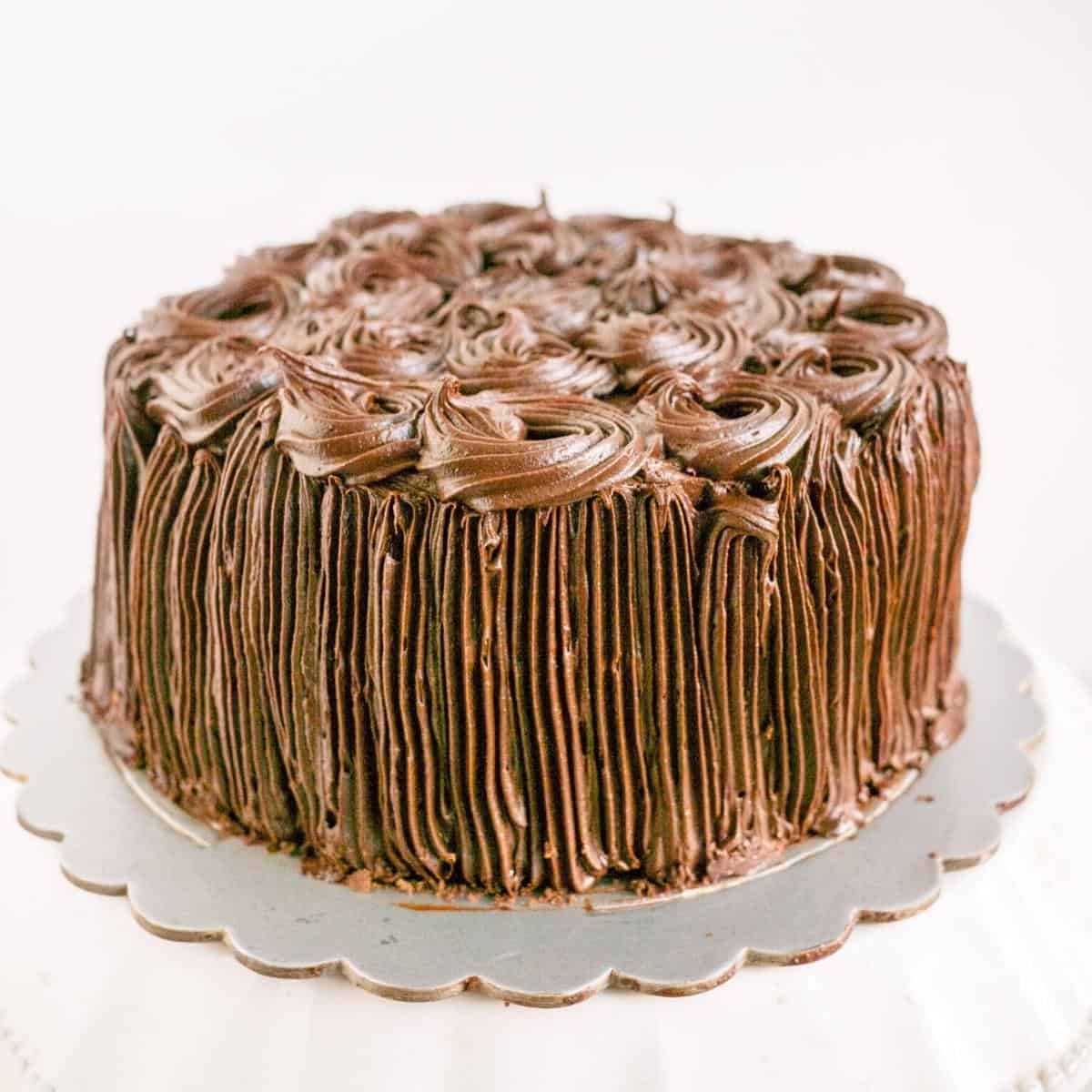
Most Chiffon cakes are usually baked in tube pans, but as a cake decorator, I always had to bake them in round or squared cake pans and decorate them layered with fillings and frosting. I used the recipe below to bake in 2 x 8-inch round cake pans and frosted them with Kahlua-infused Swiss meringue buttercream.
Tips for Success
- When you’re separating the eggs, make sure to do it carefully so that no traces of yolks end up in the whites. Even a small amount of yolk can prevent the whites from whipping up properly, resulting in a flat cake. To avoid this, crack each egg into a separate bowl, then transfer the whites to a larger bowl once you’ve confirmed there are no yolks present.
- Ensure your stand mixer is clean and free of any grease. Any residual oil or fat can interfere with the egg whites’ ability to whip up and create those coveted fluffy peaks. Wiping your equipment with a bit of lemon juice or vinegar can help remove any grease and ensure your egg whites reach their full potential.
- When it comes to folding the dry ingredients into the egg mixture, take your time and be gentle. Overmixing at this stage can lead to a dense and tough cake. Instead, use a rubber spatula to gently fold the dry ingredients into the egg mixture using a figure-eight motion. This will help incorporate everything while maintaining the airiness of the batter.
- Pay attention to the baking time and temperature. Chiffon cakes can be quite sensitive and prone to collapsing if not baked properly. When your cake is done, resist the temptation to open the oven door too soon. A sudden temperature drop can cause the cake to sink in the center. Instead, rely on visual cues such as a golden-brown top and a toothpick coming out clean to determine whether your chiffon cake is perfectly baked.
Troubleshooting Chiffon Cake
| Problem | Likely Cause | How to Fix It |
|---|---|---|
| Chiffon cake didn’t rise / turned out dense | Egg whites were under-whipped and didn’t reach stiff peaks | Whip the egg whites until they hold stiff, glossy peaks. This is what traps air and gives chiffon cake its lift. |
| Meringue was deflated when folded into the batter | Fold gently using a spatula, working in batches. Stop as soon as the batter is combined—do not stir or beat. | |
| Cake feels gummy or heavy | Weak or unstable meringue | Make sure the bowl is grease-free and the sugar is added gradually while whipping the whites for stability. |
| Cake sank as it cooled | Cake was removed before fully baked | Bake until the cake springs back and a skewer inserted comes out clean. The structure must be fully set. |
| Incorrect pan used | Use an ungreased aluminum tube pan. The center tube and sides help the cake cling and stay tall. | |
| Cake was not cooled upside down | Immediately invert the pan after baking and let it cool completely before removing. This prevents collapse. | |
| Cake collapsed more than expected | Steam trapped inside the cake | As soon as the cake comes out of the oven, give the pan a firm tap on the counter to release excess hot air before inverting. |

- Chocolate Fudge Cake
- Death by chocolate cake
- One bowl chocolate cake
- Chocolate ganache cake
- See all chocolate cakes or see all layer cakes



Frequently asked questions
A properly stored chiffon cake can stay fresh for up to 3-4 days at room temperature. Ensure that it is stored in an airtight container or covered with plastic wrap to prevent it from drying out. If you’d like to extend its freshness, you can store it in the refrigerator for up to a week. Just be sure to bring it back to room temperature before serving to enhance its flavors.
While a tube pan is the traditional choice for baking a chiffon cake, you can use alternative baking pans such as a bundt pan or angel food cake pan. Just make sure the pan allows for optimal air circulation to ensure the cake bakes evenly. Keep in mind that the baking time may vary with different pans, so keep a close eye on your cake as it bakes.
One of the main reasons for a sinking chiffon cake is underbaking. Make sure to test the doneness of your cake by inserting a toothpick in the center. If it comes out clean or with a few crumbs attached, your cake is ready. Additionally, avoid opening the oven door too early during baking, as it can cause the cake to collapse.
Yes, you can freeze a chiffon cake! Once the cake has completely cooled, wrap it tightly in plastic wrap and then place it in an airtight container or freezer bag. It’s best to freeze the cake without any frosting or glaze. When you’re ready to enjoy it, thaw the cake in the refrigerator overnight and then bring it to room temperature before adding your desired frosting.
Chocolate Chiffon Cake
RRich, decadent, light, and airy chocolate chiffon cake is an oil-based cake made with whipped eggs and cocoa paste. You can serve it on its own dusted with powdered sugar or as a layer cake with your favorite frosting.
Video
Ingredients
- 43 g (¾ cup) Cocoa powder
- 120 ml (½ cup) Boiling water
- 250 g (2 cups) All purpose flour
- 1 tsp Baking soda
- ½ tsp Baking powder
- ½ tsp Salt separated
- 7 large Eggs separate
- 300 g (1½ cup) White sugar separated
- 120 ml (½ cup) Vegetable oil
- 2 tsp Vanilla extract
- ¼ tsp Cream of tartar
Method
- Oven and Pan – Preheat the oven to 325°F/165 °C/Gas Mark 3. Grease and flour the bottom (not sides) of a 10-inch chiffon pan or tube pan.
- Dry ingredients – Combine the flour, baking powder, baking soda, and salt. Sift the flour mixture will give a light and airy chiffon.250 g All purpose flour, 1 tsp Baking soda, ½ tsp Baking powder, ½ tsp Salt
- Cocoa paste – Pour boiling water into the cocoa powder and create a paste. Set aside to cool.43 g Cocoa powder, 120 ml Boiling water
- Cake batter – Place the yolks in the bowl of a stand mixer with the whisk attachment. Whip with half the sugar until light and fluffy. Gradually add the vegetable oil and continue to whip. Next, fold in the flour mixture followed by the cocoa paste with a spatula and combine well, but do not overmix. Set aside.7 large Eggs, 300 g White sugar, 120 ml Vegetable oil, 2 tsp Vanilla extract
- Whip whites – In the clean, grease-free bowl of a stand mixer with the whisk attachment, whip the egg whites with the cream of tartar and salt. Gradually add the remaining sugar until almost stiff peaks form. Then, fold it into the cake batter in three batches.¼ tsp Cream of tartar
- Bake: Pour it into the prepared tube pan, then gently tap the pan on a flat surface to release any air bubbles. Place the pan in the preheated oven and bake for approximately 55-60 minutes, or until a toothpick inserted into the center comes out clean.
- Store – Remove the cake from the oven and immediately invert the pan onto a wire rack once the cake is fully baked. This will prevent the cake from deflating as it cools. Allow the cake to cool completely in this inverted position.
Notes
- Check your oven accuracy: Ovens vary more than we think. Use an oven thermometer if possible, and avoid opening the oven door too often, which can cause the cake to deflate.
- Bake it just right: Test for doneness with a wooden skewer inserted into the center. It should come out clean. Underbaking can cause collapse, while overbaking can dry the cake.
- Fold gently: When incorporating the meringue, use slow, deliberate folding motions. Overworking the batter will knock out the air needed for a light chiffon texture.
- Do not grease the pan: Chiffon cakes need to cling to the sides of the pan to rise properly. Greasing the pan prevents this and affects structure.
- Cool upside down: Always invert the cake immediately after baking and let it cool completely. Cooling upright can cause the cake to sink and lose its airy crumb.
Equipment you will need

Nutrition
Tried this recipe?
Mention @veenaazmanov_kitchen or tag #veenaazmanovkitchen!

Don’t lose this recipe! Save it for Later!
📌 Save this Recipe for later on Pinterest so you can easily find it again.
⭐ Add Veena Azmanov Kitchen to your Google Preferred Sources.
It helps Google show you more of our recipes.
📧 Subscribe for new recipes delivered to your inbox.
🎥 Follow us for more recipes


Hi, I’m Veena
I’m the recipe developer, baker, and food photographer behind Veena Azmanov Kitchen.
I’ve spent years developing and testing recipes, from everyday meals and homemade breads to cakes and desserts.
I share the practical tips and little details I’ve learned along the way so you can get great results in your own kitchen.





I have a couple of questions. I want to make this cake – the first step says to grease and flour the pan but in the notes it says not to grease the pan – should it be greased or not? Also, I see you have used this recipe successfully in two 8 inch pans – what is the approximate cooking time for those pans? Thanks so much for the clarifications.
Hi Mary, great questions. For chiffon cakes, I usually grease and flour only the bottom of the pan, not the sides. The batter needs to cling to the sides as it rises, which helps give the cake its light texture and height.
And yes, you can definitely make this in two 8-inch pans. The baking time will be a little shorter, usually about 25 to 30 minutes, but start checking around the 22-minute mark since ovens can vary. The cakes are done when the tops spring back lightly and a skewer inserted in the center comes out clean.
This is the most frustrating recipe I have ever read. And I consider myself an expert baker.
1) the ingredients are not listed in the order they are used. Not the end of the world, but this deviation from the norm is slightly aggravating.
2) there is baking soda in the ingredient list, but we’re never actually told to put it into the mix. Not a huge deal, anyone who bakes a lot will just add it at the same time as the baking powder.
3) there is NOT vanilla extract in the cake ingredient list, but we ARE told to add it to the mix, so how much are we supposed to add? Again, not a huge deal because I bake a lot so I have a good idea on the proper amount.
And those are just my issues from the cake recipe, I haven’t even gotten further than that yet.
All these issues, while individually are not a big deal, all together have made for one extremely difficult recipe to follow. A beginner or amateur would probably never be able to follow and have to find a different recipe.
Thank you for the feedback, Ashley.
Ah, I have listed the ingredients as I have used them. Separate the eggs first, then combine the dry ingredients, etc.
Yes, I see the baking soda was missing with the dry ingredients. Apologies, and thanks for bringing it to my attention. Appreciate it very much.
And you are right though small these can be frustrating. I have taken care of them. Thanks again.
Week 2
Day 5 done
Chocolate chiffon cake with chocolate butter cream and chocolate ganache