
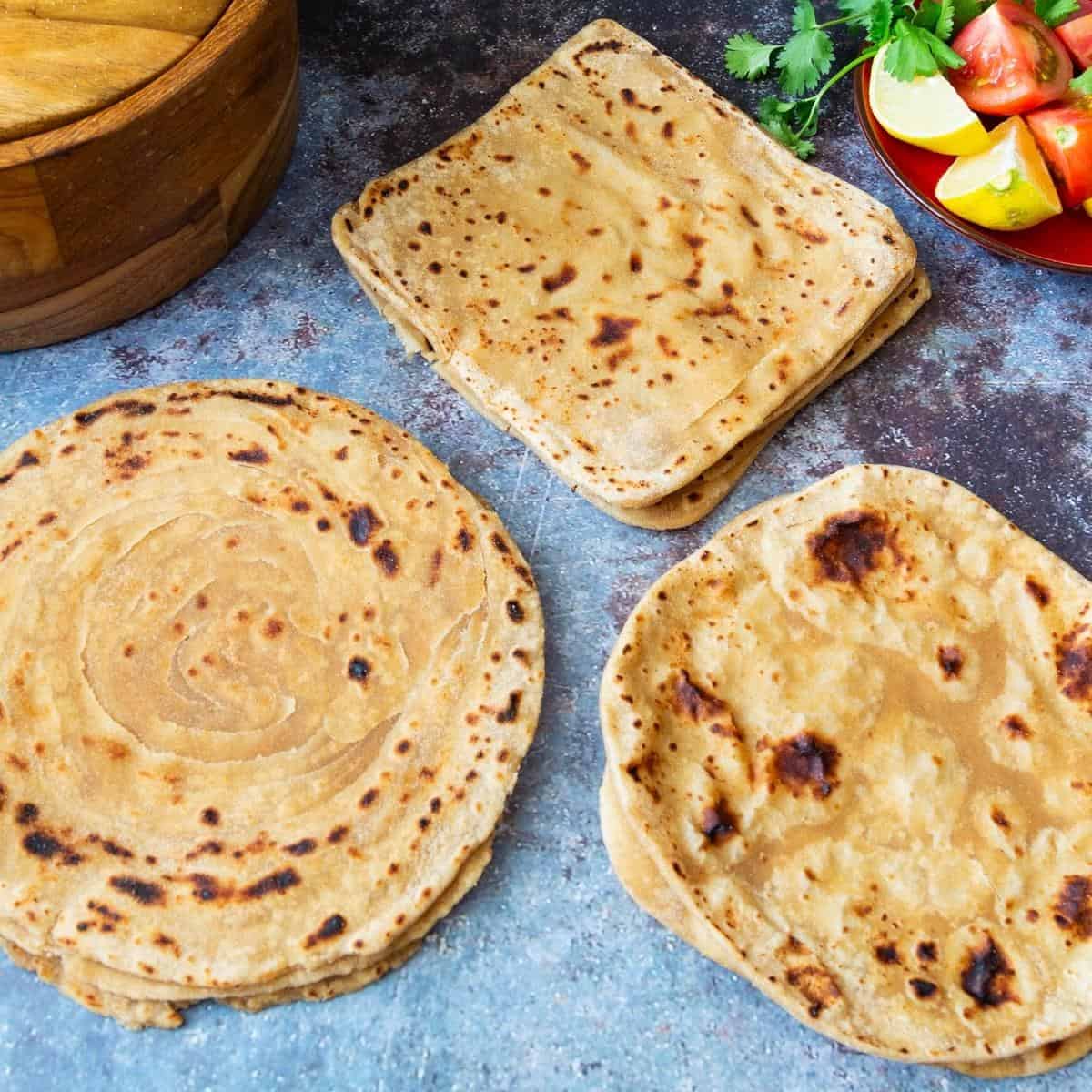









Indian flatbreads can be confusing — is roti the same as chapati? And where does paratha fit in? These classic Indian flatbreads — roti, chapati, and paratha — are made in homes across India and South Asia, each with its own unique texture and cooking style. In this post, I’ll explain the key differences and show you how to make each one at home with just one simple dough.
Indians probably learned how to make flatbreads from the Persians and Turks. Flatbread recipes were described in Indian texts two thousand years ago. These recipes are very easy to prepare. Also, we use simple ingredients to make them, and they do not require professional bakeware.
Most of my non-Indian friends say they want to learn how to make the Indian flatbread. But when you ask them which one, guess what? It’s always so confusing.
Type of Indian flatbreads
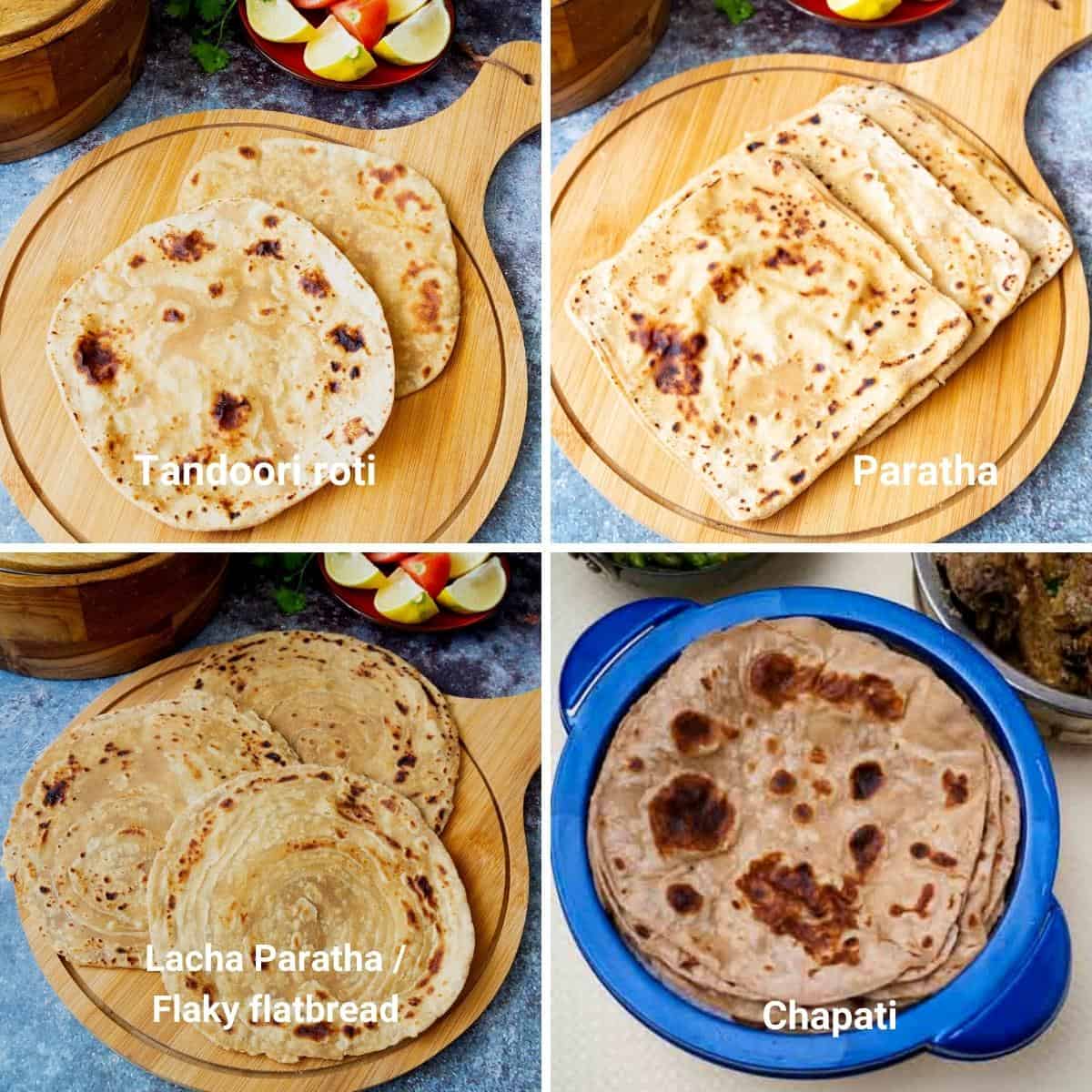
Indian flatbread recipes can be yeast-risen, such as naan bread (or garlic butter naan), or the fermented variety, such as dosas and appams. And, of course, the easier and quickest ones, such as chapati, roti, and parathas. All of these unleavened breads, of course, have their own varieties. Here’s a quick comparison chart to help you see the difference between chapati, roti, and paratha at a glance.
| Flatbread | Flour | Fat | Texture | Cooking Method | Use |
|---|---|---|---|---|---|
| Chapati | Whole wheat (atta) | Minimal / brushed with ghee | Soft, thin, pliable | Cooked dry on tawa | Daily staple |
| Roti | Whole wheat (atta) | None | Slightly thicker, wholesome | Tawa or clay oven | Restaurants & homes |
| Paratha | Whole wheat (atta) | Ghee or oil layered in | Flaky, crispy, rich | Tawa with fat | Breakfast, stuffed |
Why you’ll love these homemade flatbreads?
- It’s easy and fast. The dough takes only 5 minutes to make.
- Also, you can make one variety or a few different versions of the flatbread, which looks rather impressive to show off to your guests.
- In addition, flatbreads are perfect to serve with curry or protein with sauce.
- You control the ingredients — homemade roti and chapati are lighter and healthier than restaurant versions, while paratha can be made as rich or as light as you prefer.
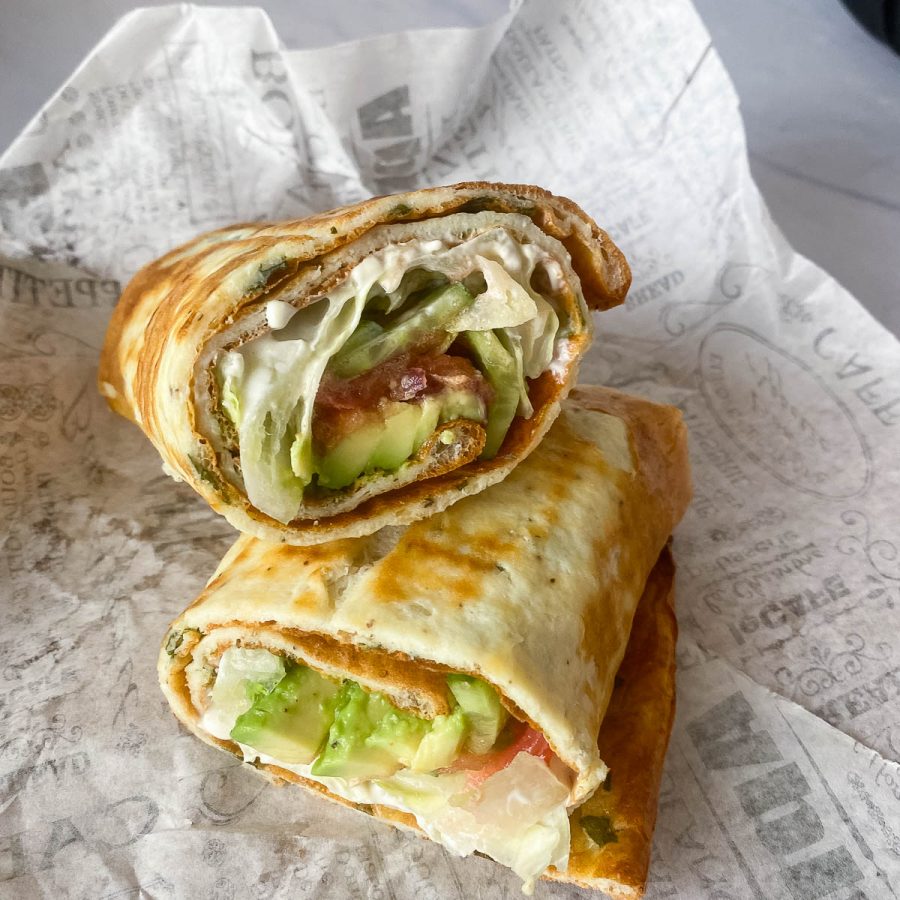
- Use leftover flatbread to make sandwiches and wraps, such as avocado and chicken, chicken tikka wrap, fish wrap, or chicken tandoori wrap.
Ingredients and substitutes
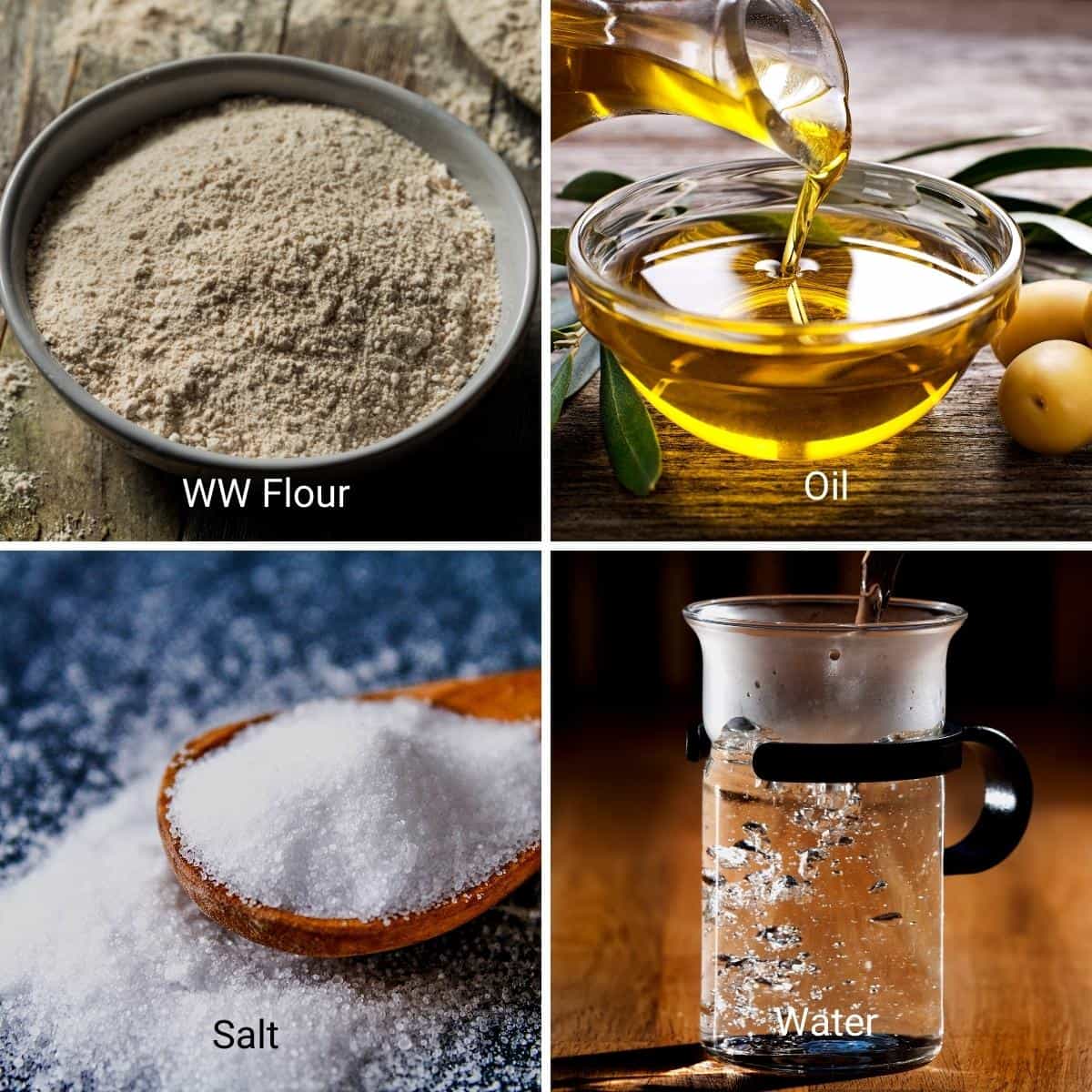
- Flour – Indian chapati flour, or as we call it chapati atta, is whole wheat flour that is not as coarsely ground. Of course, you can also use regular whole wheat flour. To get a consistency close to Indian chapati flour, I recommend using 3 cups of whole wheat flour and 1 cup of all-purpose flour.
- Oil – You can use as little as one tablespoon to knead, and omit any oil when cooking. I also like a light smear of oil on the cooked chapati, as this keeps them soft.
- On the other hand, you can go liberal with oil, ghee, or butter, which is common practice in Indian homes. The resulting chapati will be very rich, and of course, high in saturated fat.
- Warm water – It’s not necessary; just regular room-temperature water. However, I personally recommend using warm water as it softens the gluten, and the resulting chapati is soft and supple.
Step-by-step: How to make Indian flatbreads – One dough for chapati, roti, or paratha
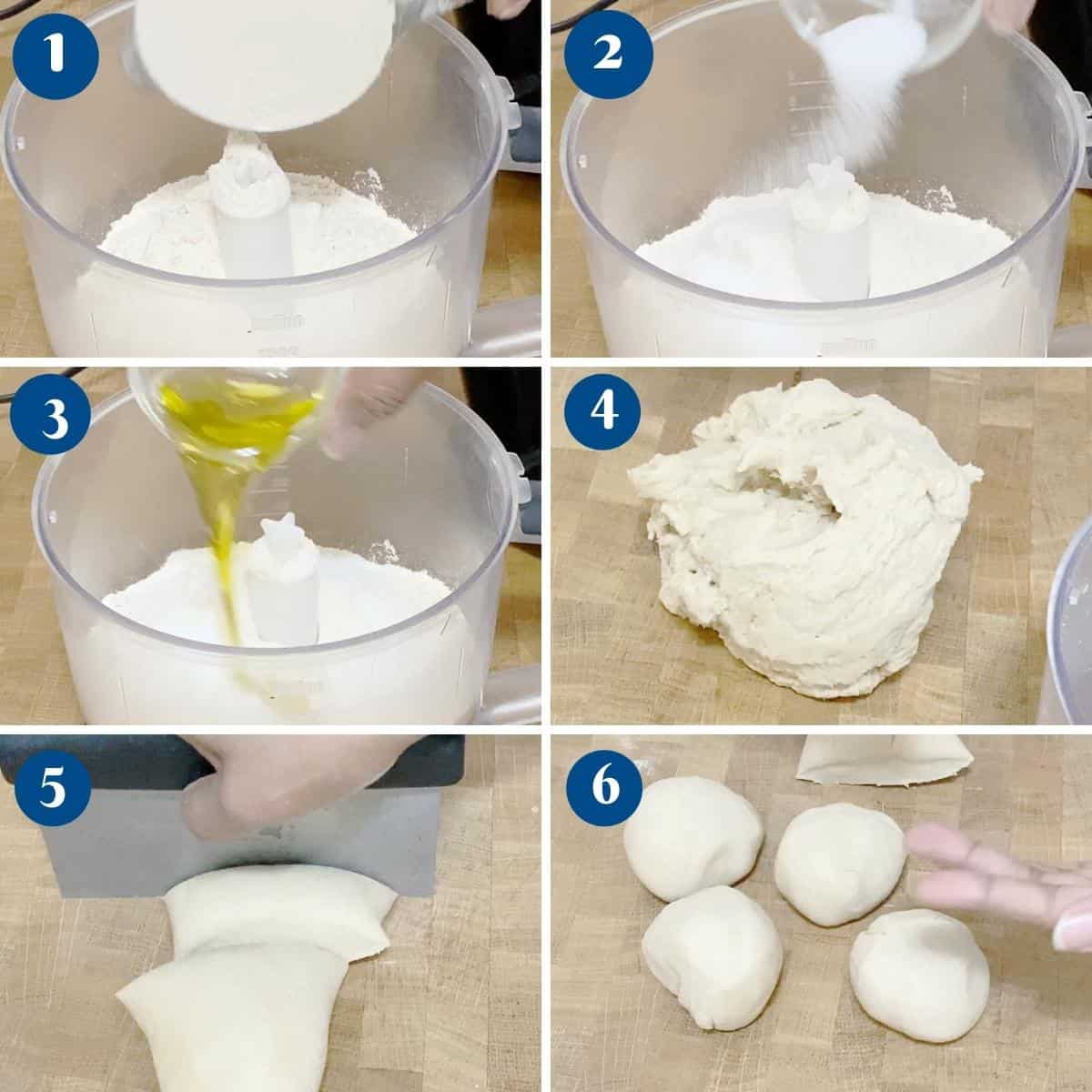
- In a large bowl, food processor, or bowl of a stand mixer, add flour, salt, and oil. Stir to combine or pulse for a few seconds. Gradually add water while mixing until you have a soft mixture.
Pro tip – Pour water through the feeder of the food processor, but do not add too much. - Transfer the dough to a lightly floured surface. Knead the dough until smooth and elastic but still soft.
Pro tip – You can continue to do the kneading in the food processor or knead in a stand mixer at medium speed until it is smooth and soft. - Cover with a clean kitchen towel or plastic wrap and rest for 10 to 15 minutes.
Pro tip – Resting the dough will help the gluten relax and make it easier to roll. - Divide the dough into 12 equal pieces. Roll each portion into a ball.
How to roll Chapati (thin unleavened bread)
Let’s start with chapati. Many people confuse it with roti, but chapati is usually rolled thinner and cooked dry on a skillet.
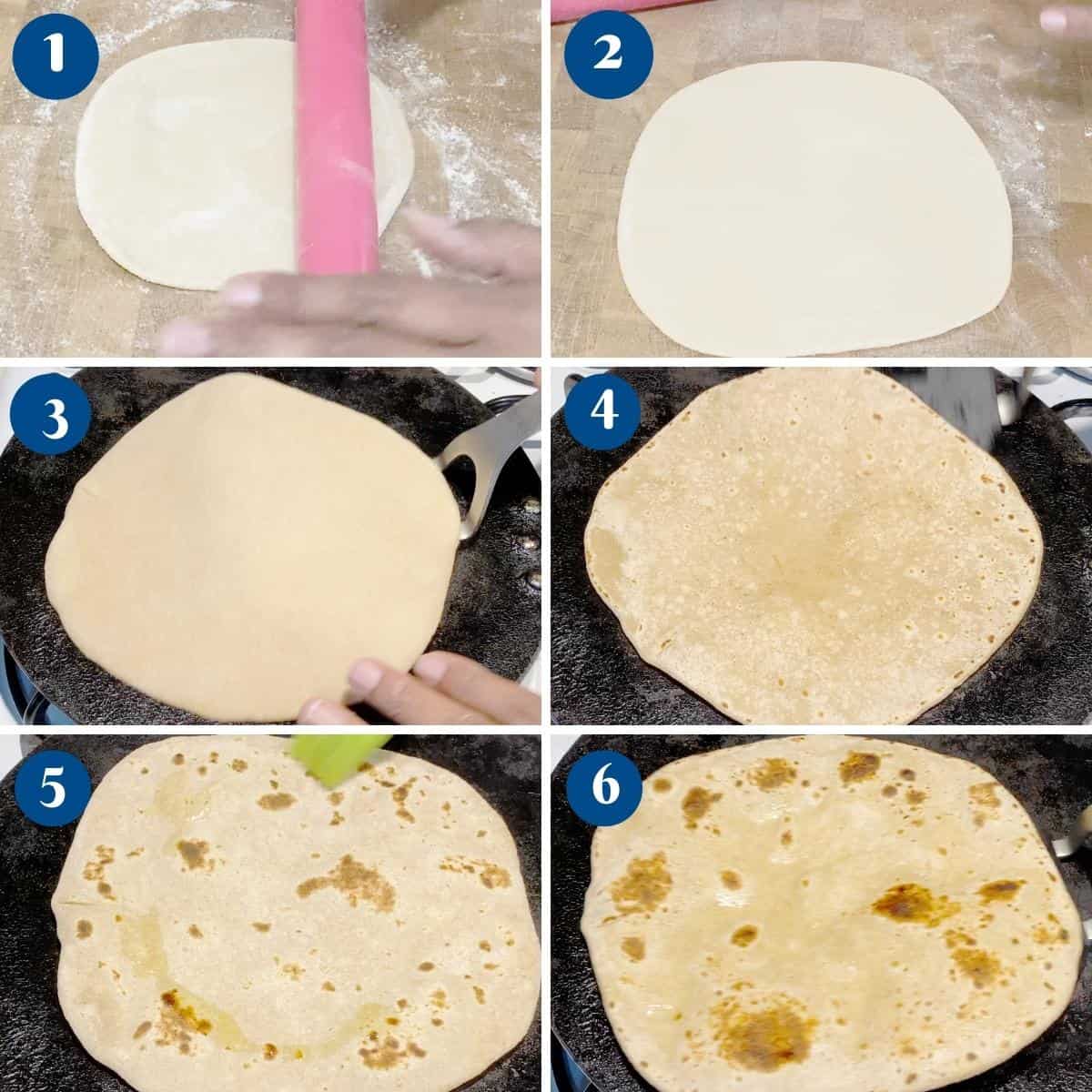
- Using a rolling pin, roll each ball on a work surface lightly dusted with flour. The disc can be about 8 inches in diameter (approximately). Keep covered under a clean kitchen cloth or cheesecloth to prevent them from drying out.
How to roll Indian Roti / Tandoori Roti
- Using a rolling pin, roll each ball on a work surface lightly dusted with flour. The disc can be about 6 inches in diameter (approximately).
Keep covered under a clean kitchen cloth or cheesecloth to prevent them from drying out.

How to shape Indian Paratha (layered & stuffed flatbread)
Paratha is very different from roti and chapati because of the added fat. That’s what gives it those signature flaky layers.
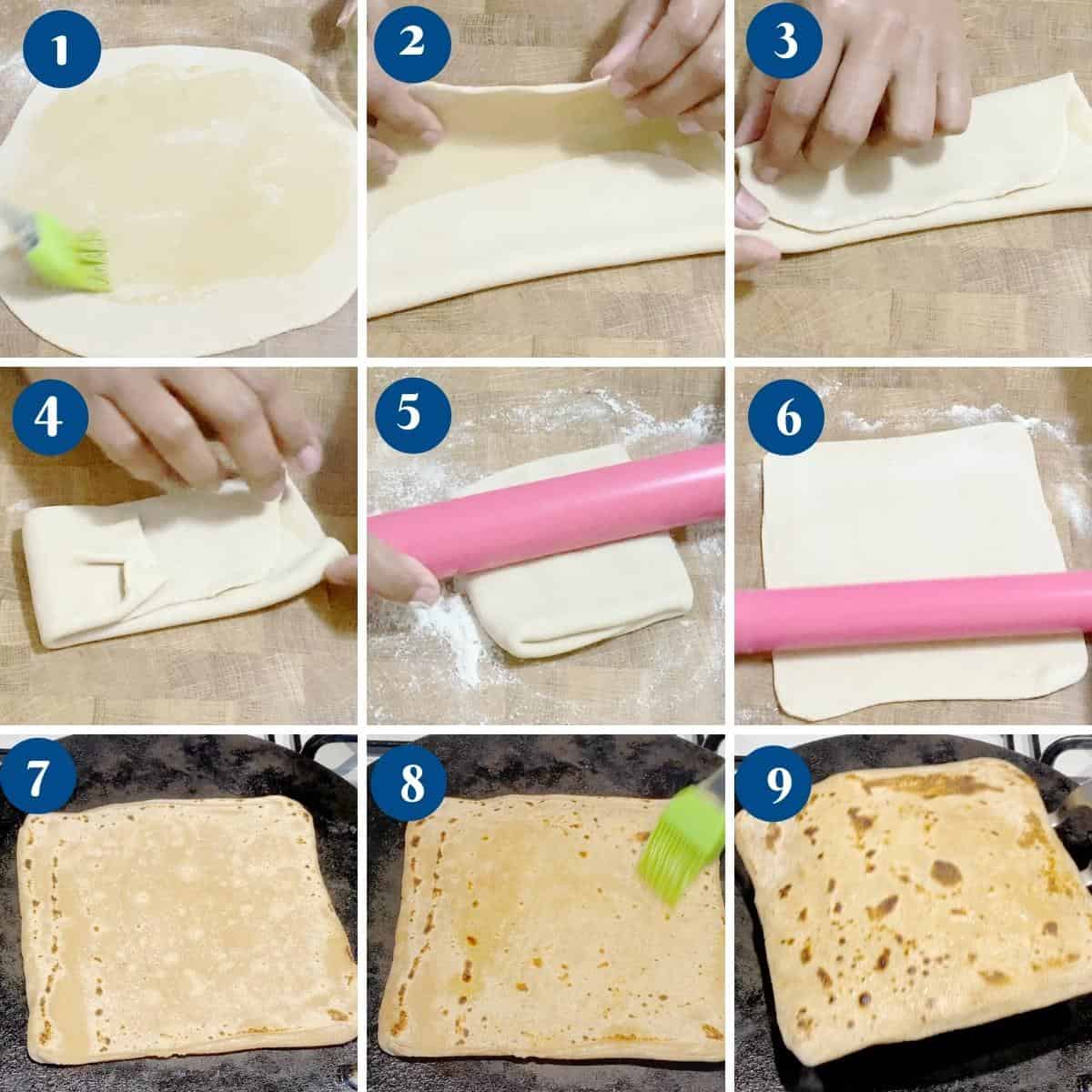
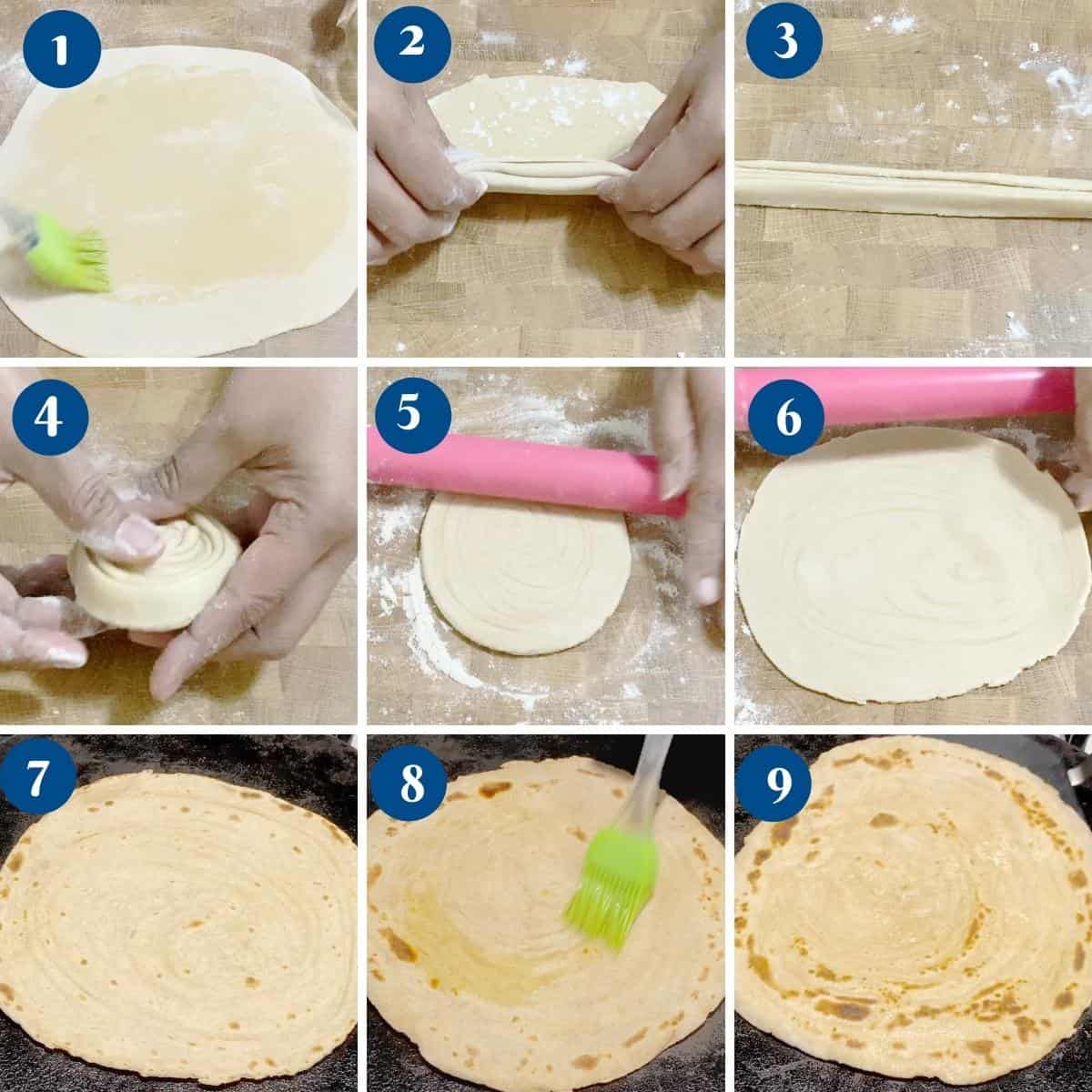
- Using a rolling pin, roll each ball on a work surface lightly dusted with flour. The disc can be about 8 inches in diameter. Brush the dough with oil and fold as shown in the video. Roll again into a square or roll shape to about 6 inches in diameter.
Pro tip – Do not roll paratha too thin, as it will flatten the layers. You want it to be flaky but cooked through.
What is Lacha Paratha?
- Using a rolling pin, roll each ball on a work surface lightly dusted with flour. The disc can be about 8 inches in diameter. Brush the dough with oil and fold it like an accordion. Then, roll it into a coil and make a flat disc, as shown in the video. Roll again about 6 inches in diameter.
Pro tip – Do not roll paratha too thin, as it will flatten the layers. You want it to be flaky and cooked.
Cooking chapati vs roti vs paratha.
- Heat a large skillet, griddle, or cast-iron pan on the stove over medium-high heat.
- Place the chapati, roti, paratha, or lacha paratha on the hot skillet.
Pro tip – Dust off any excess flour first so it does not burn in the pan. - Cook for 30 seconds until you see a few bubbles, then flip to the other side. Cook another 30 to 45 seconds on medium heat.
- Lightly brush with oil or butter on one side. Gently press with a flat spatula. Turn over and brush the other side. Then, gently press with a flat spatula until light golden-brown spots appear.
Pro tip – Pressing with a flat spatula will help cook the parts of the dough that do not get direct heat. This adds nice color and brown spots to the flatbread, which tastes better. - Remove the flatbreads from the pan and stack them. Store it wrapped in a clean kitchen towel or cheesecloth to keep it soft.
Pro tip – Keeping the flatbreads wrapped will ensure they do not dry out.

Tips for Making Perfect Indian Flatbreads
- Soft dough = soft bread – If your dough feels stiff, add 1–2 teaspoons of water at a time.
- Rest the dough – 10–15 minutes of rest makes rolling much easier and keeps breads soft.
- Don’t over-flour – Too much dry flour when rolling makes flatbreads dry and dusty.
- Medium heat only – High heat burns the outside before the inside cooks; low heat makes them chewy.
- Cover after cooking – Always wrap breads in a clean towel to trap steam and keep them soft.
- Want extra softness? Mix 1 cup of all-purpose flour into the wheat flour — it makes rolling easier and chapati softer.
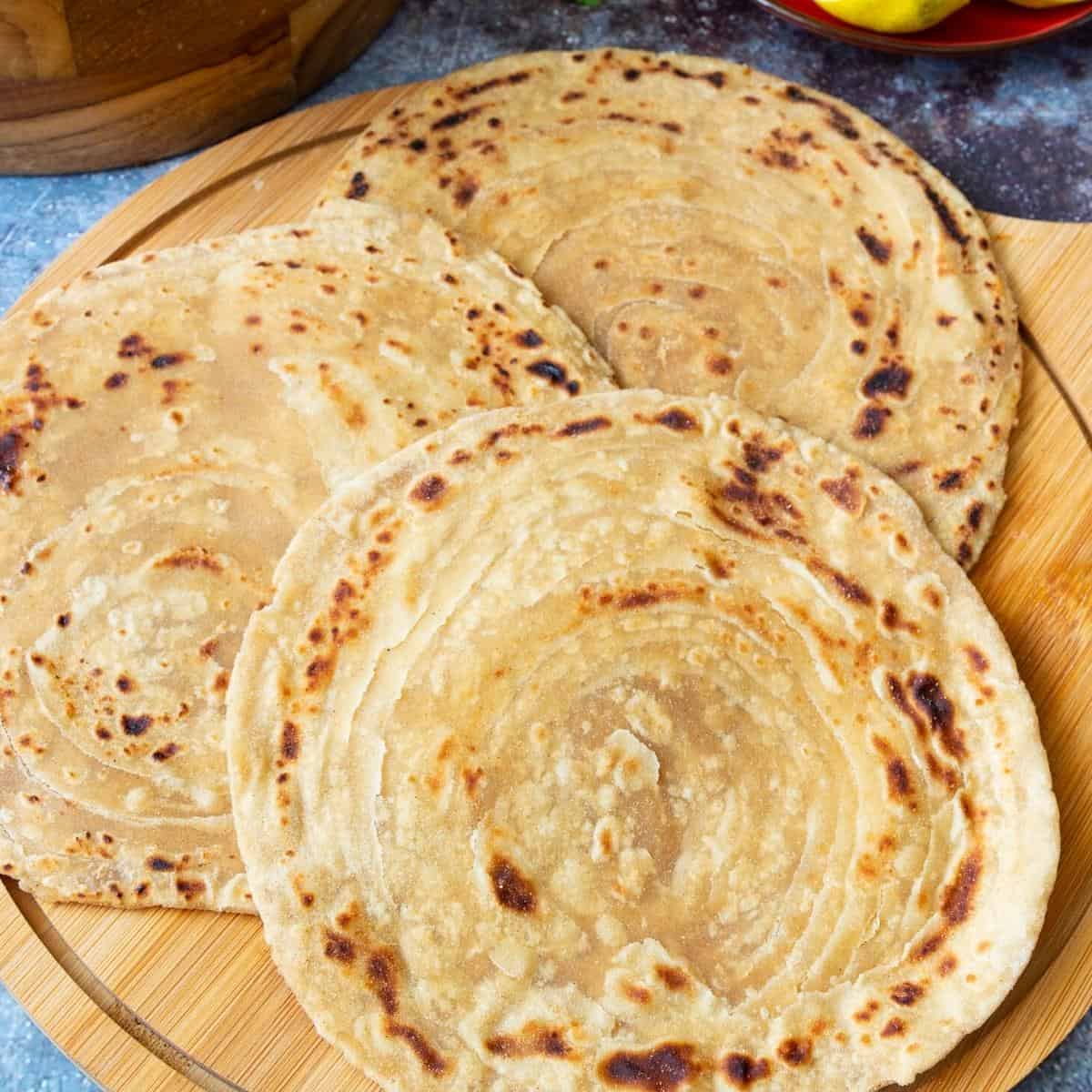
Troubleshooting Indian flatbread
| Problem | Likely Cause | Fix |
|---|---|---|
| Flatbreads are hard or dry | Dough too stiff, not enough water | Add 1–2 tsp more water when kneading; keep breads wrapped in a towel after cooking |
| Edges crack while rolling | Dough too dry | Sprinkle water and knead again until smooth |
| Chapati/roti not puffing | Dough not rested, rolled unevenly, or heated too low | Rest the dough at least 10 mins, roll evenly, and cook on medium-high heat |
| Flatbreads are chewy | Cooked on too low heat | Use medium-high heat so they cook quickly and stay soft |
| Burning spots appear quickly | Pan too hot, or there is excess dry flour on the dough | Lower the heat slightly and dust off extra flour before cooking |
| Paratha is too oily/greasy | Too much ghee or oil is layered inside | Brush lightly instead of spooning oil between folds |
| Flatbreads taste bland | Not enough salt in the dough | Add ½ tsp more salt per 2 cups of flour next time |
| Chapati feels tough after cooling | Not stored properly | Stack and wrap immediately in a clean kitchen towel to trap steam |
| Roti feels thick and dense | Rolled too thickly, or the dough was not kneaded enough | Roll evenly to 6–7 inches; knead until the dough is elastic |
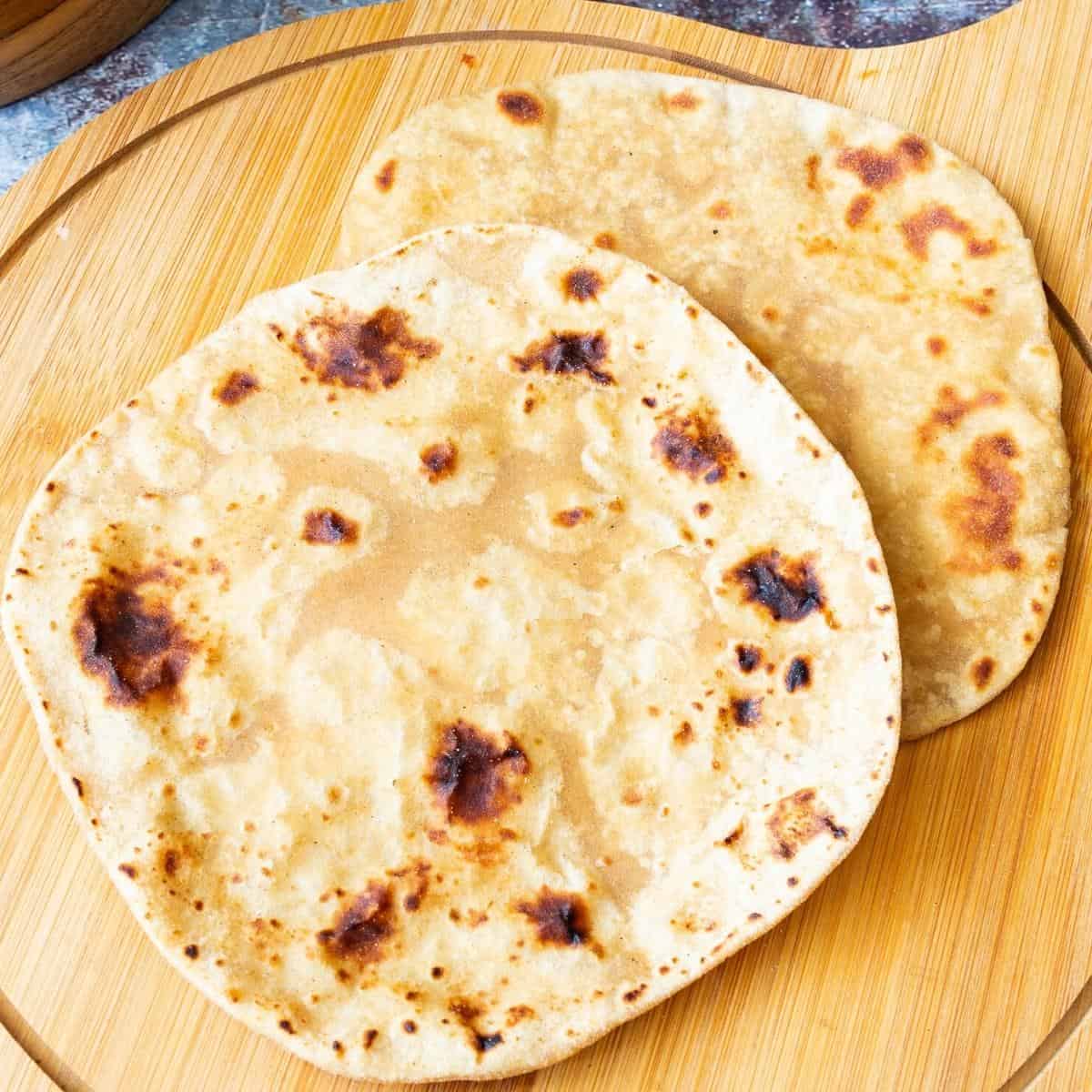
What do you serve with Indian flatbreads?
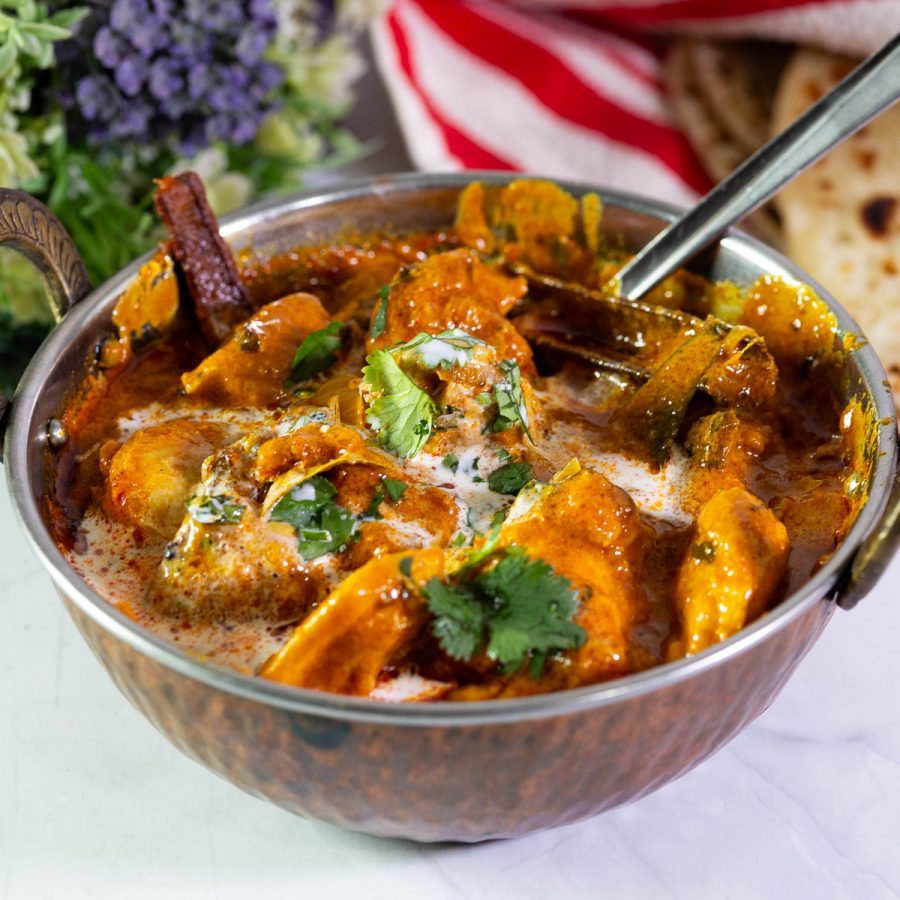
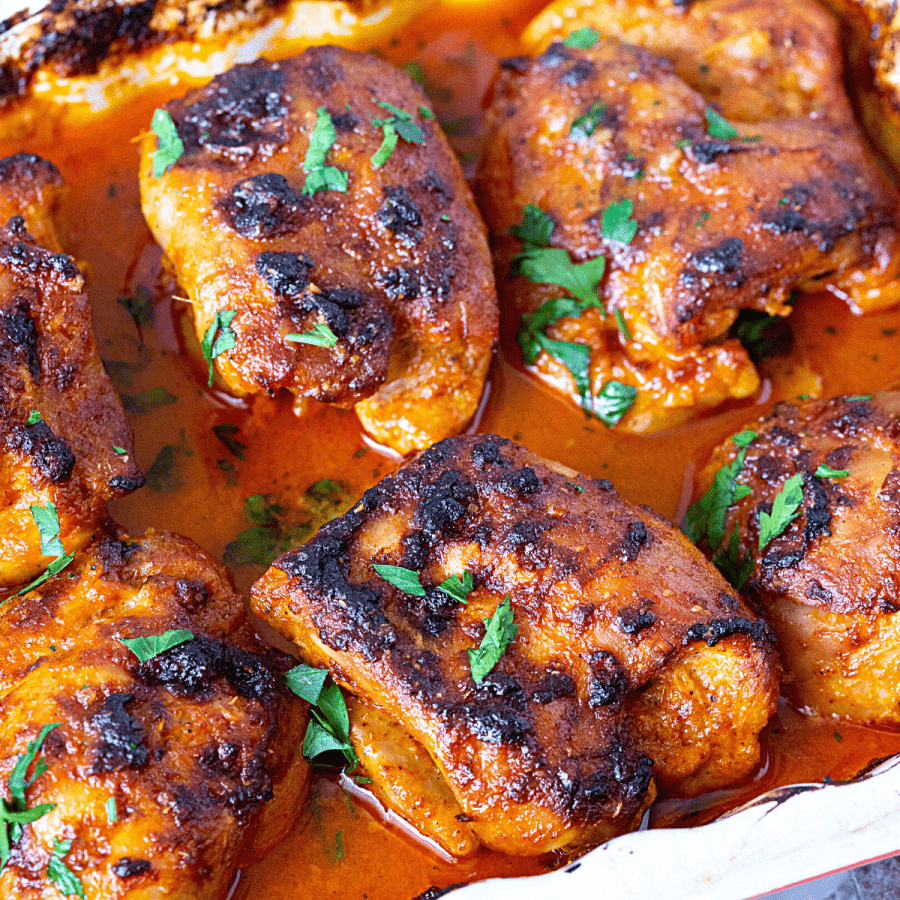
- Chicken Curry, Slow Cooker Chicken Curry, Instant Pot Chicken Curry
- Indian Lamb Curry, Slow Cooker Lamb Curry, Instant Pot Lamb Curry
- Slow Cooked Beef Curry, Beef Mince Curry with Peas
- Mushroom Masala, Aloo Gobi – Sautéed Cauliflower and Potato
- Lentil Chicken Curry, Black Beans Curry (Indian Recipe)
- Butter Chicken, Chickpeas Curry – Channa Masala

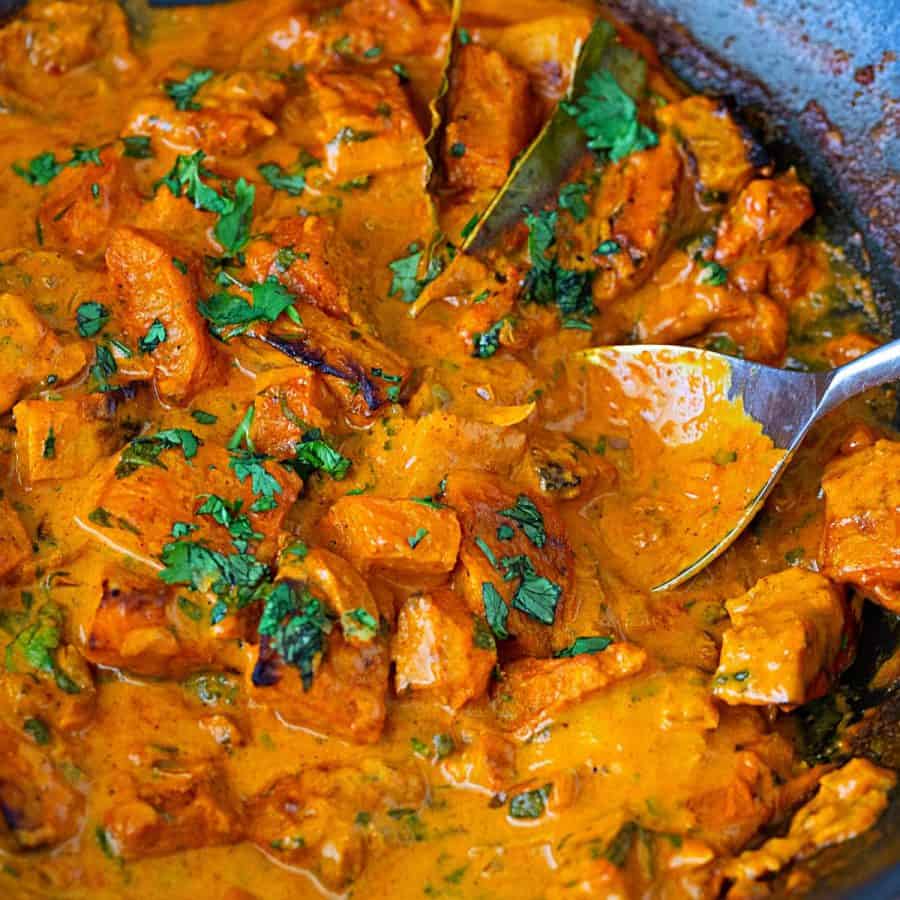
Frequently asked questions
Indian flatbread will stay well for three days at room temperature if wrapped well. And you can also save them for a week in the fridge or a month, well wrapped, in the freezer.
Both of these are often used interchangeably, but they are not the same. Chapati is made with wheat flour (or chapati flour). And the grind is thinner than whole wheat flour but more wholesome than white flour. It is rolled thinner and is cooked on the Tawa, griddle, or skillet. On the other hand, roti is made with whole wheat flour, so it is more wholesome. It is rolled thicker and cooked in the clay or tandoor oven (seen in Indian restaurants), but you can also cook it on the skillet as we have done today.
The main difference is that naan is a yeast-risen flatbread with eggs and yogurt, while chapati, roti, and paratha are instant flatbreads made with only flour and water. You need to proof naan for hours or overnight, while you can make these with just 10 minutes of resting the dough.
Roti and chapati are very similar — both are made with whole wheat flour and water. Chapati is usually thinner and cooked dry on a skillet, while roti can be slightly thicker and sometimes cooked in a tandoor.
Chapati is plain and soft, while paratha has ghee or oil folded into layers, making it flaky and richer in taste.
No. Naan is a leavened bread made with yeast or yogurt and often cooked in a tandoor. Roti is unleavened and much simpler.
Chapati and roti are lighter since they’re made without added fat. Paratha, while delicious, has more ghee or oil and is higher in calories.
Chapati flour, also called Atta, is not exactly the same as supermarket-brand whole-wheat flour. In fact, the Chapati flour is milled somewhere between the whole wheat and the all-purpose. So, actually, the supermarket brand whole wheat makes a thicker chapati because the flour is coarser. And if you ever happen to be at an Asian grocery store and see Indian Chapati flour, buy it! I promise you will remember them forever. It does make a difference. And no, the flour won’t go to waste – you can make bread with the leftover.
No. They are not the same. Many people refer to chapati as “Indian flatbread” or compare it to a tortilla, but the traditional name is chapati. Chapati is made with whole wheat atta flour and cooked on a skillet without fat, while tortillas are usually made with maize or refined wheat flour and may use lard or shortening.
Chapati is made with whole wheat flour and water, so it’s lighter and higher in fiber. Tortillas can vary — corn tortillas are gluten-free and light, while flour tortillas can be heavier depending on the fat used.
In a wrap or a sandwich, yes—you can use whole-wheat tortillas instead of chapati. But the flavor and texture are different, so the dish won’t be exactly the same.
Indian Flatbread Recipe (Chapati, Roti, Paratha)
Ingredients
- 4 cups (500 g) Wheat flour or chapati flour
- 2 tbsp Oil or butter for flavor
- 1 tsp Salt
- 1 cup (240 ml) Warm water you may need a bit more
Instructions
Dough
- In a large bowl, food processor, or bowl of a stand mixer, add flour, salt, and oil. Stir to combine or pulse for a few seconds. Gradually add water while mixing until you have a soft mixture.
- Transfer the dough to a lightly floured surface. Knead the dough until smooth and elastic but still soft.
- Cover with a clean kitchen towel or plastic wrap and rest for 10 to 15 minutes.
- Divide the dough into 12 equal pieces. Roll each portion into a ball.
Chapati
- Using a rolling pin, roll each ball on a work surface lightly dusted with flour. The disc can be about 8 inches in diameter (approximately). Keep covered under a clean kitchen cloth or cheesecloth to prevent them from drying out.
Indian roti / Tandoori roti
- Using a rolling pin, roll each ball on a work surface lightly dusted with flour. The disc can be about 6 inches in diameter (approximately). Keep covered under a clean kitchen cloth or cheesecloth to prevent them from drying out.
Paratha
- Using a rolling pin, roll each ball on a work surface lightly dusted with flour. The disc can be about 8 inches in diameter. Brush the dough with oil and fold as shown in the video. Then, roll again into a square or roll shape to about 6 inches in diameter.
Lacha Paratha
- Using a rolling pin, roll each ball on a work surface lightly dusted with flour. The disc can be about 8 inches in diameter. Brush the dough with oil and fold like an accordion. Then, roll it into a coil and make a flat disc, as shown in the video. Roll again about 6 inches in diameter.
Cook
- Heat a large skillet, griddle, or cast-iron pan on the stove over medium-high heat.
- Place the chapati, roti, paratha, or lacha paratha on the hot skillet.
- Cook for 30 seconds until you see a few bubbles. Then, flip to the other side. Cook another 30 to 45 seconds on medium heat.
- Lightly brush with oil or butter on one side. Gently press with a flat spatula. Turn over and brush the other side. Then, gently press with a flat spatula until light golden-brown spots appear.
- Remove the flatbreads from the pan and stack them. Store it wrapped in a clean kitchen towel or cheesecloth to keep them soft.
Video
Notes
- A soft dough will make soft flatbreads. And a stiff dough will make a stiff, chewy chapati. If your chapati edges are hard or have cracks on the edges, you have made a stiff dough.
- Leave the kneaded dough on the counter for 10 minutes. Resting the dough will make it easier to work with it.
- Do not add too much flour to roll it out. Dry flour doesn’t taste good on flatbread and will make it dry.
- Most Indian women are used to rolling and cooking Indian chapati simultaneously. However, feel free to just roll them out first and then move on to cooking them. Otherwise, you might end up burning a few trying to multitask.
- As soon as the flatbread is out of the skillet, wrap it in a clean kitchen cloth. The retaining steam in the chapati is what creates moisture and keeps the chapati soft.
- Lightly brush some oil with a pastry brush rather than using a spoon. This will give you a light but better coverage, unlike a puddle with a spoon.


Made this recipe?
I’d love to see how yours turned out! Share a photo on Instagram and tag @veenaazmanov_kitchen or use #veenaazmanovkitchen. And don’t forget to leave a rating and review!
- Sweet Potato Chapati
- Healthy Tortillas Recipe – Best Homemade Tortillas
- Softest Homemade Naan or Softest Garlic Butter Naan
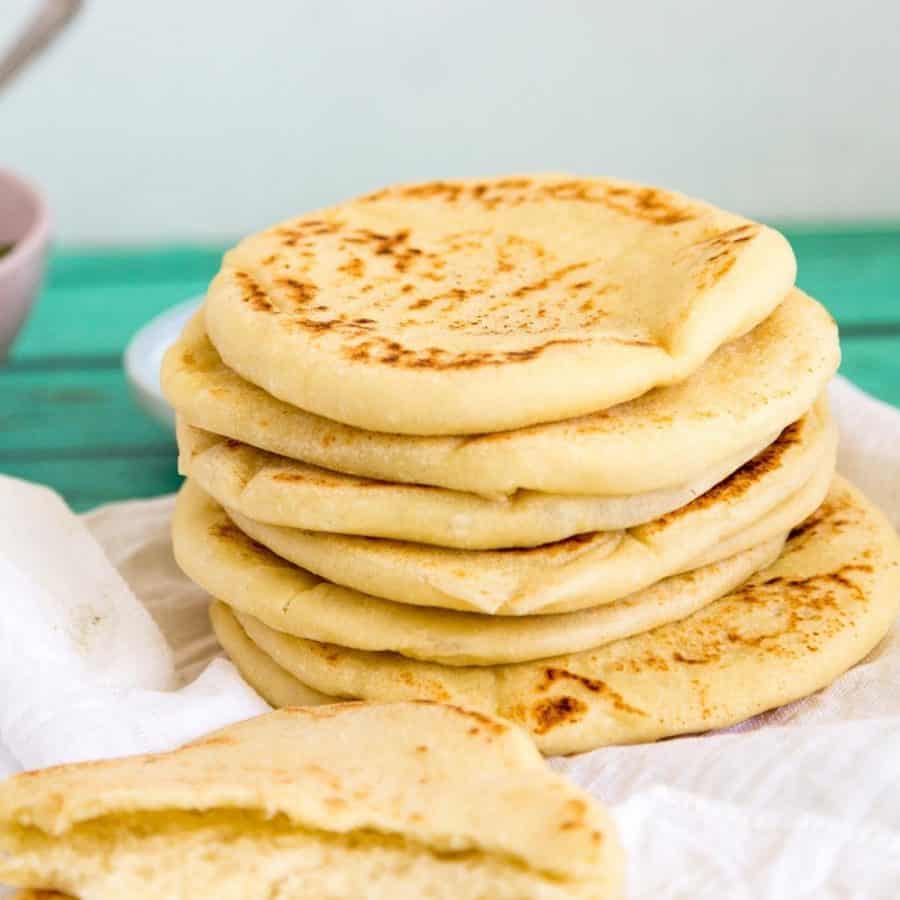
- Easy Pita Bread Recipe
- No-Knead flatbread recipe
- Potato Flatbread Recipe
- Easy Soft Flatbread Without Yeast (no-knead)


Don’t lose this recipe! Save it for Later!
📌 Save this Recipe for later on Pinterest so you can easily find it again.
⭐ Add Veena Azmanov Kitchen to your Google Preferred Sources.
It helps Google show you more of our recipes.
📧 Subscribe for new recipes delivered to your inbox.
🎥 Follow us for more recipes


Hi, I’m Veena
I’m the recipe developer, baker, and food photographer behind Veena Azmanov Kitchen.
I’ve spent years developing and testing recipes, from everyday meals and homemade breads to cakes and desserts.
I share the practical tips and little details I’ve learned along the way so you can get great results in your own kitchen.










You sold me at it only takes 5 minutes to make! I love Indian flatbread, so delicious! I have never tried making them at home, but I will be now!
Just about my favourite flatbread ever! Thanks so much for a perfect recipe.
You are very welcome Megan. Thanks for the lovely feedback.
Indian cuisine has so much variety. I have tried your chapati and it is fantastic now I need to make the roti!
I am so happy to hear you enjoyed the chapati. Roti is just thicker and cooked in the tandoor.
This flatbread was perfect! Thanks for sharing such an easy recipe, this was my first time making this and I served with our favorite hummus..such a delicious combo!
Thank you, Kathrynk. Happy you enjoyed it.
I love flatbread so much and your easy and clear instructions have made it so that we can make flatbread at home any time we want – which is often! Thank you for such a great tutorial and recipe!
I am very excited to make this. So many different options! Thanks for the great step by step instructions.
It looks so easy, perfect flatbread to accompany Indian curries.
This is an incredible and informative post! I’m thrilled to have the tools to make all my favourite Indian style breads. Thank you for being so thorough!
You can’t beat homemade flat bread!
Those flaky flatbreads look fantastic and easy to make too! Bookmarking this page!!