

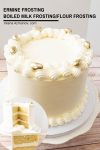
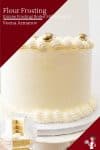
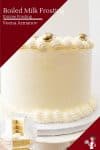
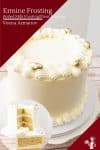
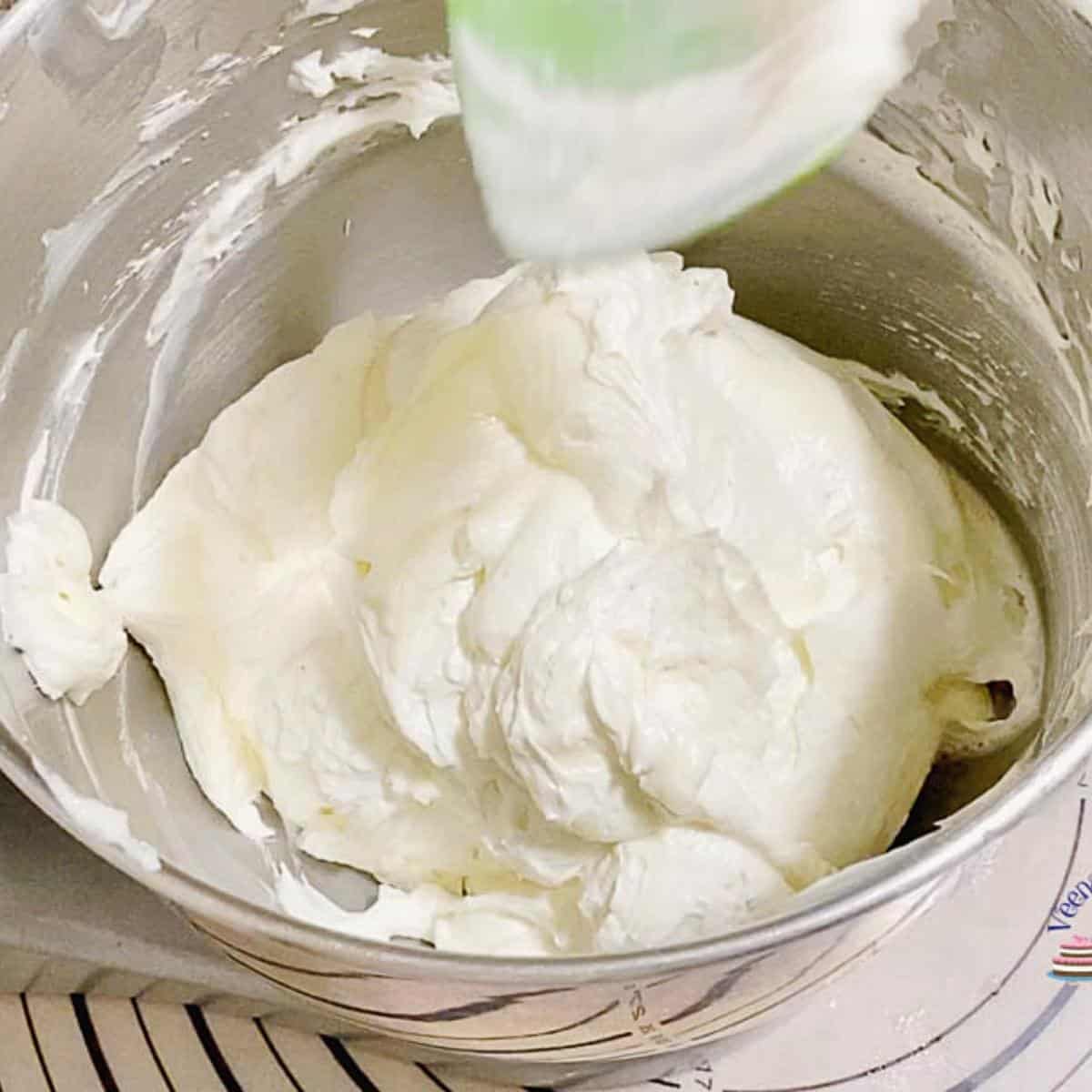
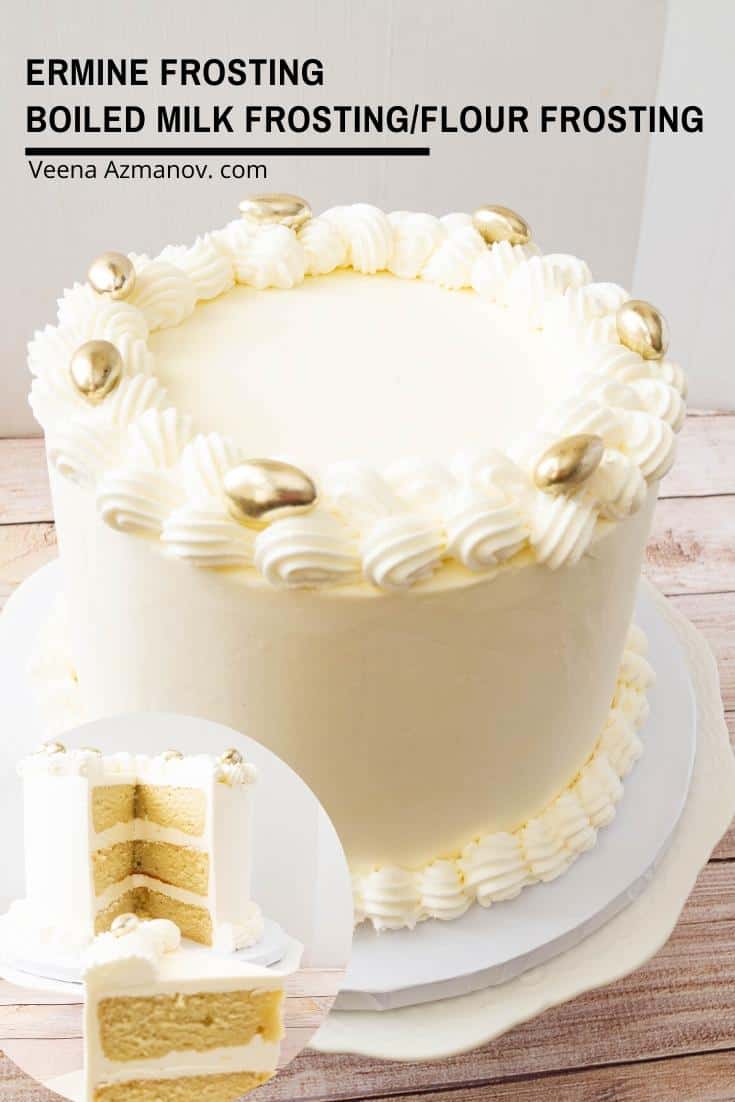
Looking for a frosting that’s ultra creamy, pipeable, and not too sweet? This ermine frosting recipe—also known as boiled milk frosting, flour frosting, or roux frosting—might just become your new favorite.
Made by cooking milk, sugar, and flour into a thick pudding, then whipping it with butter until light and fluffy, ermine buttercream has a unique texture that’s somewhere between Swiss meringue and American buttercream. It’s smooth, airy, and incredibly stable—perfect for piping, filling, and even covering layer cakes.
This cooked flour frosting has been around for generations and is the original frosting paired with red velvet cake. But honestly? It goes with just about anything—from chocolate cupcakes to vanilla layer cakes and beyond.
When I was running my cake decorating business, I used to get requests for “something less sweet” more often than you’d expect. Clients loved the look of American buttercream but weren’t always a fan of the sugar hit.
That’s when I turned to ermine frosting—which I’d first seen in an old cookbook labeled as “boiled milk frosting.” I was skeptical at first (flour in frosting?!) but after one batch, I was sold. It’s soft and fluffy like whipped cream, but much more stable and pipeable. And it holds up beautifully under fondant, which made it a dream to use for wedding cakes.
What Is Ermine Frosting?
Ermine frosting (also known as boiled milk frosting, flour frosting, or cooked flour buttercream) is made by cooking milk, sugar, and flour into a thick custard-like paste, cooling it, and whipping it with butter.
Unlike American buttercream, it doesn’t use powdered sugar and isn’t overly sweet. It’s light, fluffy, and silky smooth—making it ideal for layered cakes, cupcakes, and piping.
It’s a traditional pairing for red velvet cake, but it works just as beautifully with vanilla, chocolate, and spice cakes.
Why you’ll love this frosting
- Less Sweet Than Traditional Buttercream – No powdered sugar needed.
- Light and Fluffy Texture – Like whipped cream, but stable and pipeable.
- Perfect for Layer Cakes and Cupcakes – Smooth enough to spread, strong enough to pipe.
- Budget-Friendly – Made with flour, milk, and butter—no meringue or fancy ingredients required.
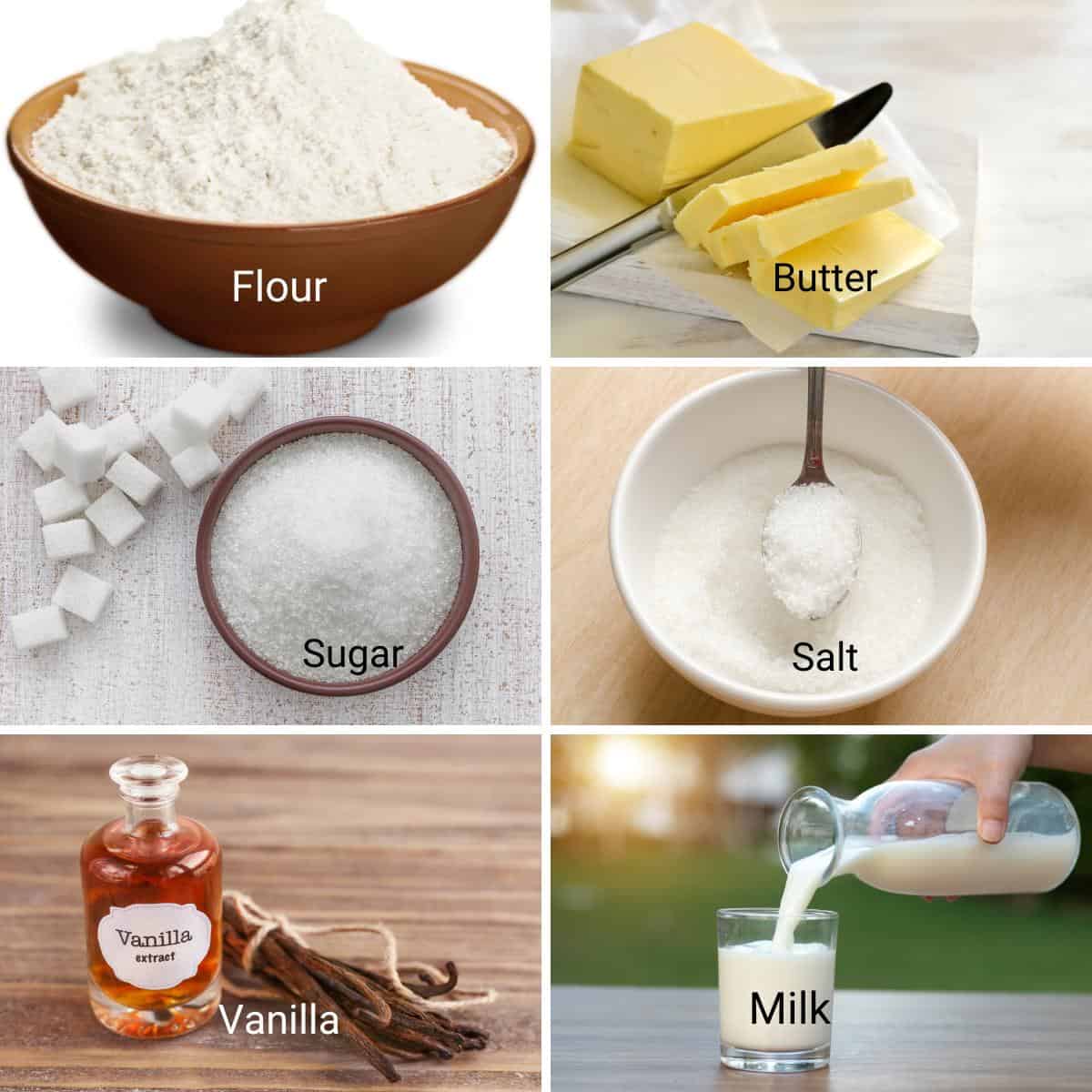
Ingredients and substitutes
- Flour – All-purpose flour is used to thicken the milk and sugar into a pudding base. Do not substitute with cornstarch or other flours.
- Sugar – White granulated sugar works best here. Brown sugar will affect flavor and color.
- Milk – Whole milk gives the creamiest texture, but 2% also works. Avoid non-dairy or skim milk for best results.
- Butter – Unsalted butter, softened to room temperature. If using salted, omit extra salt.
- Salt – A pinch helps balance the sweetness.
- Vanilla Extract – Adds flavor and rounds out the taste.
Step-by-step: Easy ermine buttercream frosting
Make the pudding base:
In a saucepan, whisk together the flour and sugar. Slowly pour in the milk while whisking constantly to prevent lumps.
Cook until thick:
Cook over medium heat, stirring constantly, until the mixture thickens into a smooth pudding-like texture. This can take 5–7 minutes. Don’t rush it.
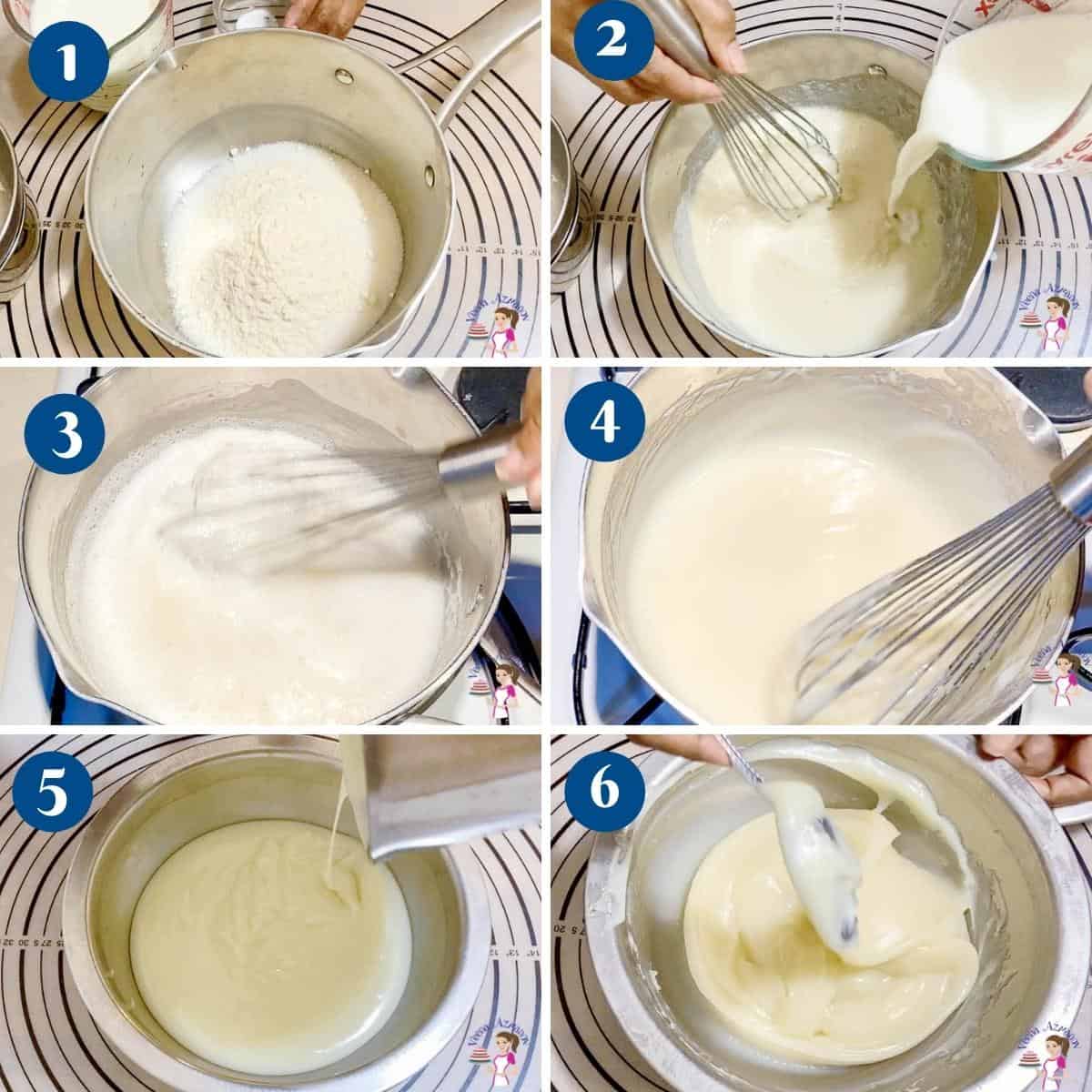
Cool completely:
Transfer the mixture to a bowl, cover with plastic wrap (pressing it directly onto the surface), and let it cool to room temperature. You can also refrigerate it to speed up the process—but let it come back to room temp before beating in butter.

Beat with butter:
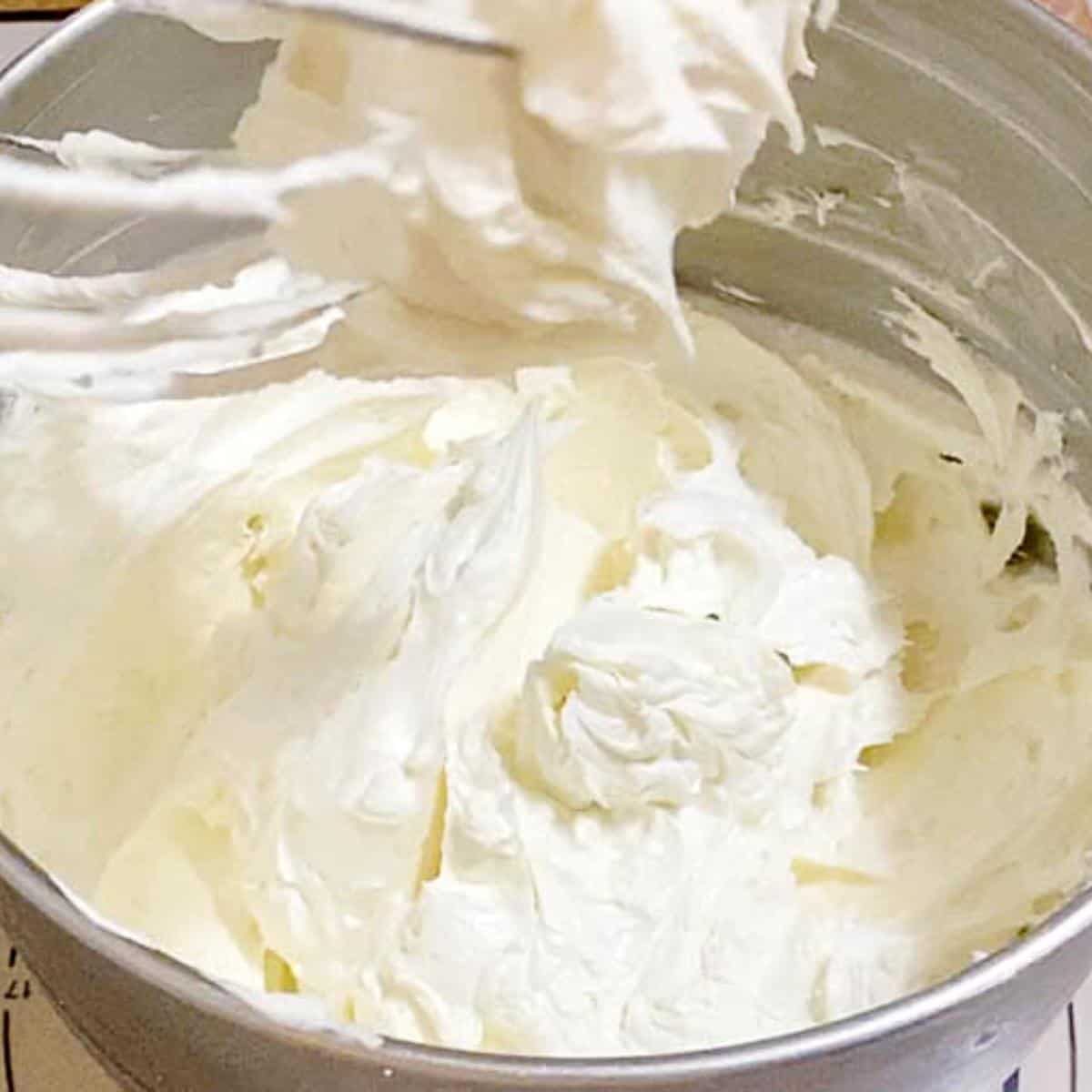
In a stand mixer, beat the butter until pale and fluffy (about 2–3 minutes). Gradually add the cooled pudding mixture, one tablespoon at a time, and beat until smooth and light.
Flavor and whip:
Add vanilla and beat until light and airy. Your ermine frosting is ready to use.
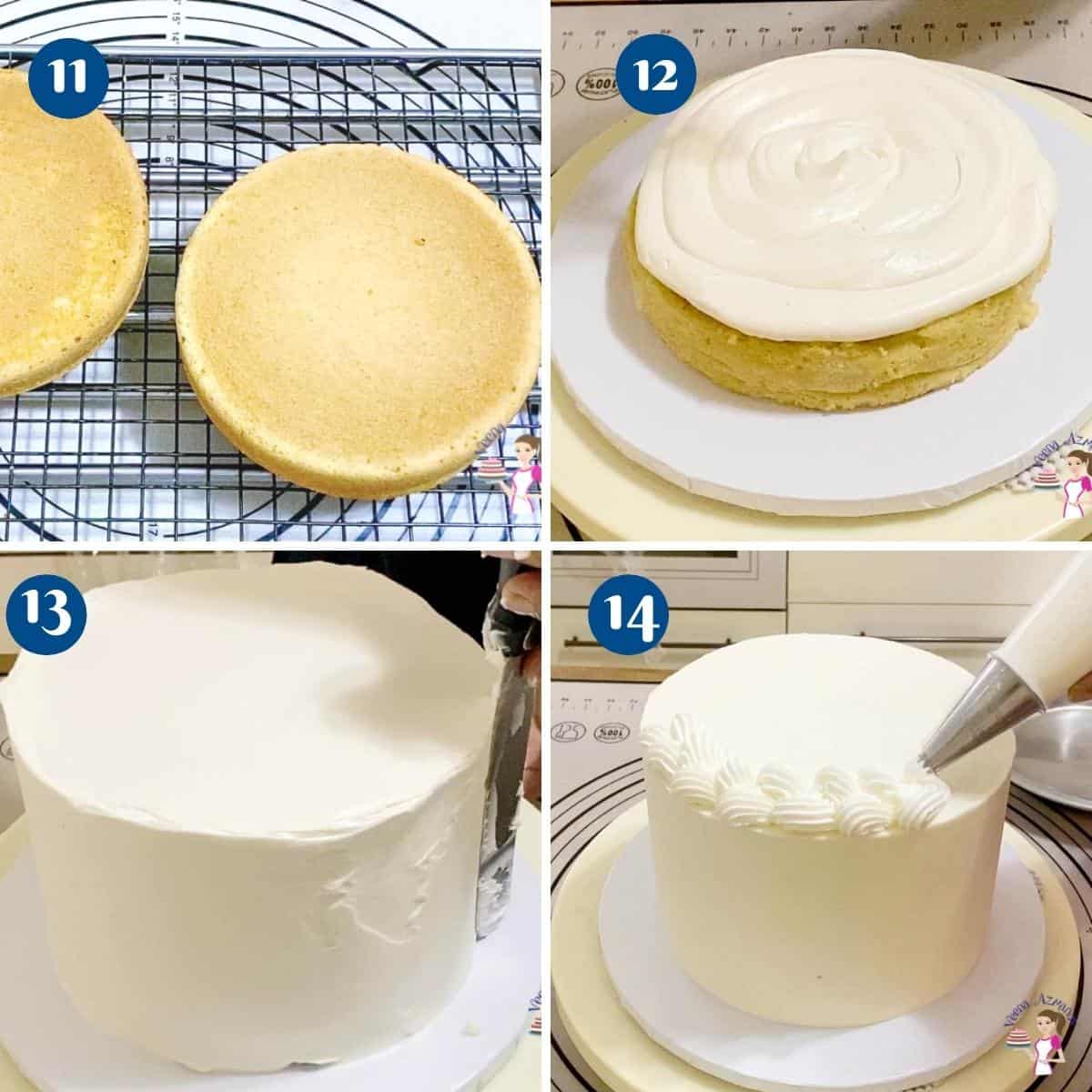
Tips for Success
- Cool the pudding completely before adding to the butter or the frosting will split.
- Whip your butter until light and fluffy for a more stable buttercream.
- If your frosting looks split or curdled, keep whipping—it usually comes back together.
- The pudding base should be thick like custard—not runny. If it’s too thin, cook it a bit longer.
- For extra smoothness, strain the cooked flour mixture before cooling.
Storage & Make-Ahead
- Store ermine frosting in an airtight container in the fridge for up to 5 days.
- Bring to room temperature before re-whipping.
- Not ideal for freezing, as texture may change.
Troubleshooting
| Problem | What It Looks Like | Why It Happens | How to Fix It |
|---|---|---|---|
| Frosting looks curdled or separated | Grainy, split, or chunky texture | The pudding base was too cold or added too quickly | Keep whipping. Let it warm slightly and beat until smooth again. |
| Frosting is runny | Too soft to hold shape, slides off cake | Pudding was undercooked or butter was too soft | Chill the frosting 15–20 mins, then rewhip. Cook pudding longer next time. |
| Frosting is too thick or stiff | Difficult to spread or pipe | Too much flour or overcooked pudding | Add 1–2 tsp milk, one at a time, while beating to loosen texture. |
| Frosting is grainy | Sugar crystals, not smooth | Pudding wasn’t cooked properly or not fully dissolved | Try straining the pudding before cooling next time. |
| Pudding formed lumps | Lumpy mixture while cooking | Milk added too fast or not whisked enough | Whisk vigorously while slowly adding milk. Strain mixture before cooling. |
| Butter didn’t fully combine | Streaks or oily spots in the frosting | Butter or pudding was too cold or too firm | Let everything come to room temp, then beat until emulsified. |
How to Flavor Ermine Frosting
Ermine frosting is a great base because it’s light, creamy, and neutral—perfect for adding unique flavors! Here are some of my favorite variations:
- Chocolate: Add 2 to 3 tablespoons of cocoa powder to the pudding mixture or 60g (2 oz) melted cooled chocolate during whipping.
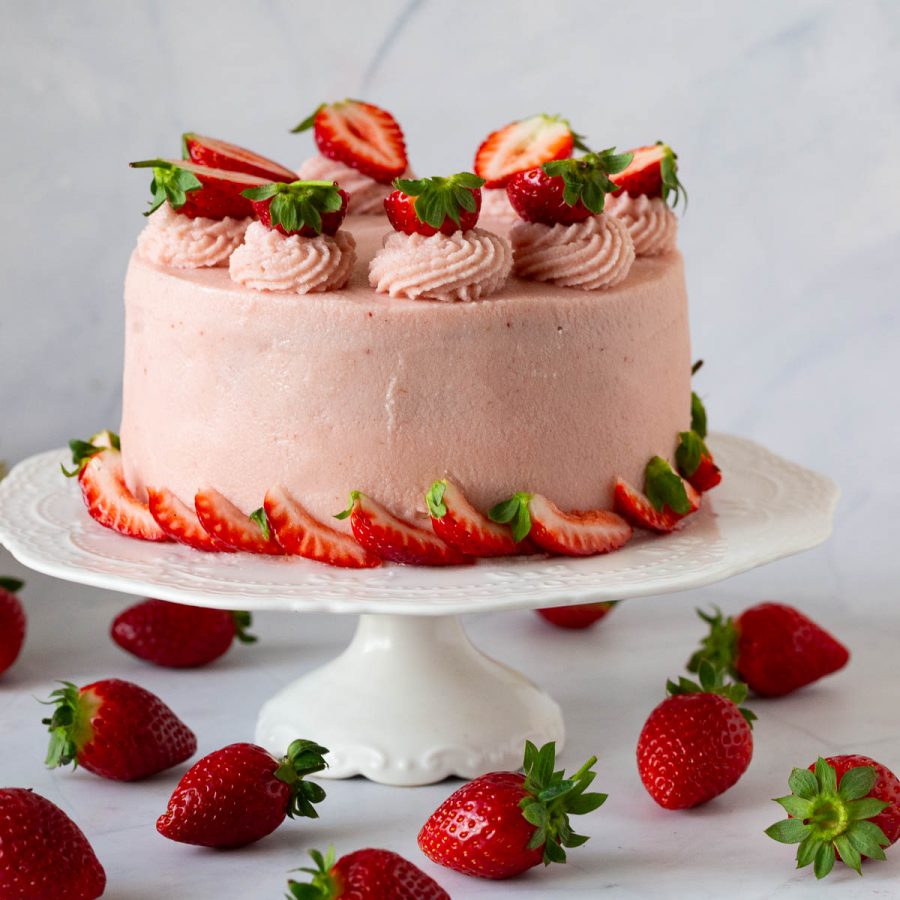
- Berry: Add 2–3 tablespoons of thick berry puree or jam (raspberry, strawberry, blueberry). Adjust sweetness if needed.
- Citrus: Stir in 1–2 teaspoons of lemon, lime, or orange zest. A little citrus juice (1 tsp) can be added for extra zing.
- Spiced: Add ½ teaspoon cinnamon, ¼ teaspoon nutmeg, or pumpkin spice—great for fall cakes.
- Coffee: Dissolve 1 tablespoon instant espresso powder in 1 teaspoon hot water, then beat into the frosting.
- Liqueur: Add 1–2 tablespoons of Baileys, Kahlúa, Grand Marnier, or your favorite liqueur—great for grown-up cakes.
- Nutty: Add 1–2 tablespoons finely ground hazelnuts, pistachios, or almond flour. Toast them for extra flavor.
Ermine Frosting – Boiled Milk Frosting
Learn how to make ermine frosting—also known as boiled milk frosting or cooked flour frosting. This smooth, pipeable buttercream is less sweet and perfect for cakes and cupcakes.
Video
Ingredients
- 226 g (1 cups) Granulated sugar
- 40 g (⅓ cup) All-purpose flour
- 240 g (1 cups) Whole Milk 3% at least
- 226 g (1 cups) Butter
- ¼ tsp Salt
- 1 tsp Vanilla Extract
Method
- Make the pudding base: In a saucepan, whisk together the flour and sugar. Slowly pour in the milk while whisking constantly to prevent lumps.40 g All-purpose flour, 240 g Whole Milk, 226 g Granulated sugar
- Cook until thick: Cook over medium heat, stirring constantly, until the mixture thickens into a smooth pudding-like texture. This can take 5–7 minutes. Don’t rush it.
- Cool completely: Transfer the mixture to a bowl, cover with plastic wrap (pressing it directly onto the surface), and let it cool to room temperature. You can also refrigerate it to speed up the process, but let it come back to room temperature before beating in the butter.
- Beat with butter: In a stand mixer, beat the butter and salt until pale and fluffy (about 2–3 minutes). Gradually add the cooled pudding mixture, one tablespoon at a time, and beat until smooth and light.226 g Butter, ¼ tsp Salt
- Flavor and whip: Add vanilla and beat until light and airy. Your ermine frosting is ready to use.1 tsp Vanilla Extract
Notes
Tips for Success
- Cool the pudding completely before adding to the butter or the frosting will split.
- Whip your butter until light and fluffy for a more stable buttercream.
- If your frosting looks split or curdled, keep whipping—it usually comes back together.
- The pudding base should be thick like custard—not runny. If it’s too thin, cook it a bit longer.
- For extra smoothness, strain the cooked flour mixture before cooling.
Storage & Make-Ahead
- Store ermine frosting in an airtight container in the fridge for up to 5 days.
- Bring to room temperature before re-whipping.
- Not ideal for freezing, as texture may change.
Equipment you will need


Nutrition
Tried this recipe?
Mention @veenaazmanov_kitchen or tag #veenaazmanovkitchen!more frosting recipes
- American buttercream, Vanilla Buttercream Frosting (eggless)
- Swiss meringue buttercream, or Italian meringue butterceam
- French buttercream or German buttercream
- The BEST Cream Cheese Frosting,
- No Butter Cream Cheese Frosting
- See all 50 plus buttercream frosting recipes

Frequently asked questions
Once frosted, the cakes and cupcakes with Ermine frosting will keep in the fridge for three to four days. And the frosting itself will keep in the fridge for up to a week. However, you will need to bring it to room temperature and re-whip it.
Yes! Store in the fridge for up to 5 days and re-whip before using.
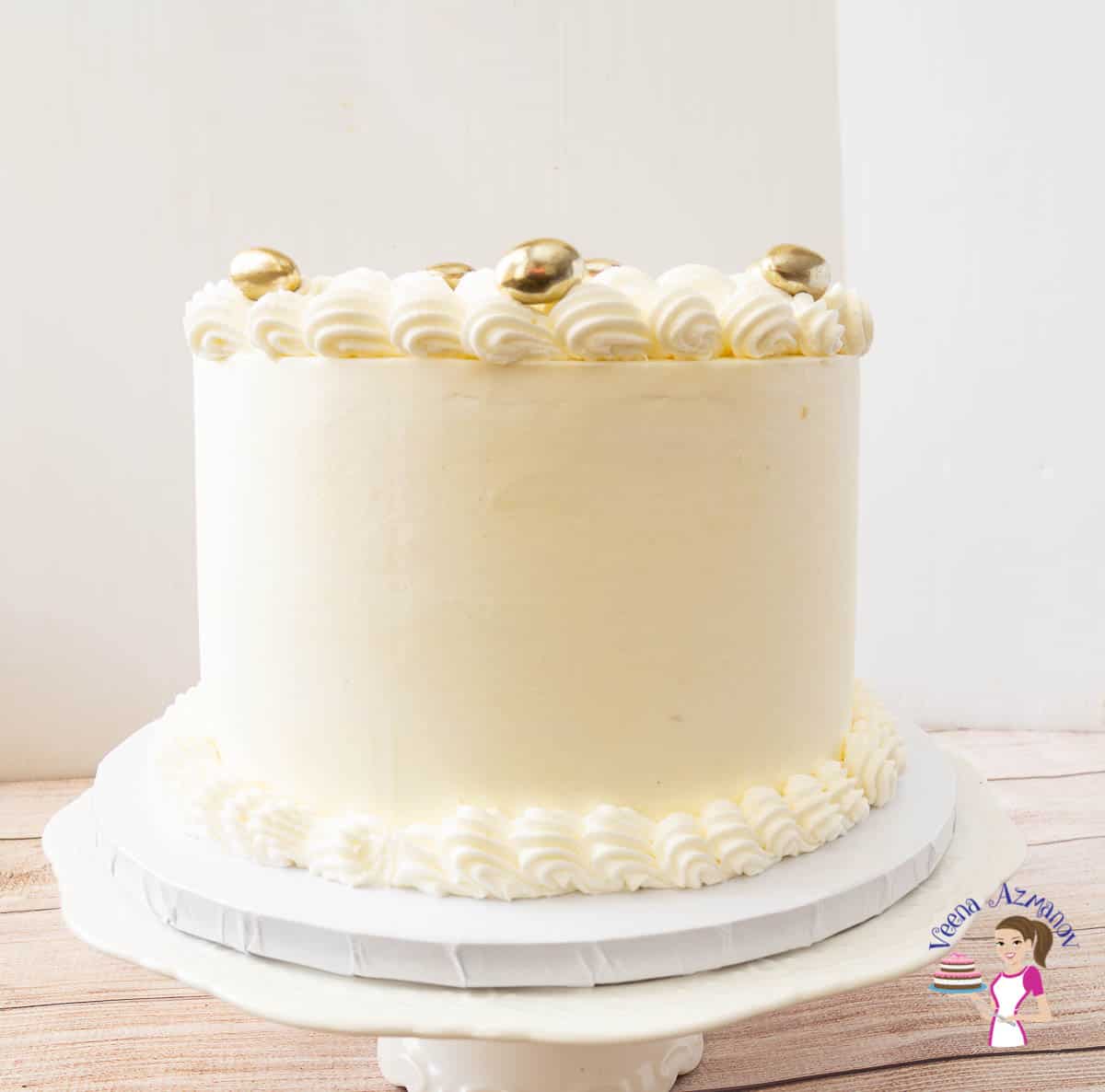
Absolutely. Ermine frosting holds its shape beautifully and is great for rosettes, swirls, and borders.
Yes, you can freeze ermine frosting. Store it in an airtight container and freeze for up to 1 month. Thaw overnight in the refrigerator and re-whip before using.
No—Swiss meringue is made with egg whites and sugar. Ermine uses flour, milk, and butter for a lighter, eggless alternative.
Ermine frosting can be used in bakeries, but it’s not very common—especially in commercial or high-volume settings.
Why it’s not as common in bakeries:
It’s more delicate than American buttercream or Swiss meringue. Because it’s made with a cooked roux (flour + milk), it has a shorter shelf life and needs to be refrigerated, which can be a hassle in a bakery setting.
It takes more time. You have to cook and cool the base before whipping in the butter. That extra step isn’t ideal for busy bakeries working on tight production schedules.
Less stable in warm environments. It holds up well at room temp, but not as well as meringue or shortening-based frostings under heat or long display hours.
But here’s where it shines:
Smaller, boutique bakeries or home-based cake artists use ermine frosting for wedding cakes, red velvet cakes, or special requests because it’s so smooth, light, and less sweet. It feels luxurious, like something made with care.
Some old-school bakeries still use it because it’s the original frosting used on red velvet cake before cream cheese frosting became the trend.
So while it’s not a bakery staple like American or SMBC, it’s definitely loved by bakers who want that soft, whipped texture and a more refined flavor.
- Bakery Style Vanilla Frosting,
- Bakery-Style Chocolate Frosting
- White Chocolate Buttercream Frosting
- Korean Buttercream Recipe
- Strawberry Cream Cheese Frosting

Don’t lose this recipe! Save it for Later!
📌 Save this Recipe for later on Pinterest so you can easily find it again.
⭐ Add Veena Azmanov Kitchen to your Google Preferred Sources.
It helps Google show you more of our recipes.
📧 Subscribe for new recipes delivered to your inbox.
🎥 Follow us for more recipes

Hi, I’m Veena
I’m the recipe developer, baker, and food photographer behind Veena Azmanov Kitchen.
I’ve spent years developing and testing recipes, from everyday meals and homemade breads to cakes and desserts.
I share the practical tips and little details I’ve learned along the way so you can get great results in your own kitchen.









I am decorating a wedding cake in two weeks (in Hungary, where I live). I really want to use this frosting recipe, because my Hungarian friends asked for the frosting not to be too sweet. I have never made this kind of frosting, and I have a few questions:
1) I am planning to make the frosting ahead of time, or at least the pudding part. I will need to decorate the cake on a Friday, take it to the reception location, and leave it there until the Saturday evening. I don’t know for sure yet, but I am assuming it will not be possible to refrigerate it. (And maybe not even preferable, if it will make it too stiff?) Will the frosting be okay at room temperature from Friday afternoon to Saturday afternoon/evening. (It’s the first weekend of November, so I am assuming it will not be hot, unless the restaurant starts running their furnace.)
2) Have you ever used sugar lace on ermine frosting? Since this recipe doesn’t have egg white or meringue powder, I assume it will not get the dry-ish surface of buttercream made with meringue powder. Will the sugar lace stick to this frosting on it’s own? Would the sugar lace dissolve on this type of icing? Should I put the lace on on Friday, or wait until Saturday?
3) How many cups of finished frosting does this recipe make? I need to cover a 2-layer 14″ cake, a 2-layer 10″ cake, and a 2-layer 7″ cake. (I found a website that provided estimates on how much frosting is needed for different sizes, and it added up to 29 cups.) I don’t plan to do much extra piping, probably just some kind of small border around the top and bottom edge of each cake, with the sugar lace applied on the sides.
I’m a hobby cake baker/decorator, with many years of experience, but this is only my second actual wedding cake, (besides two other wedding-style cakes for 25th anniversaries), so I’m trying to make sure I get as much info as possible. Also, I have pretty limited time right now, so I can’t afford to make mistakes or have to re-do anything. Haha! 🙂 I do plan to make a sample batch of the icing this week, so that I learn what it’s like, and can see how it reacts to being left out vs. refrigerated.
Thank you for any help you can give!
Beth.
1. This frosting is made with milk so I would not keep it out of the fridge for hours. It’s better to be safe than sorry. This buttercream will stay at room temperature for 6 hours unless it is hot.
2. The recipe is for a 6-inch cake with 12 servings. If you don’t use too much frosting you can even use it for an 8-inch round. You are making 134 servings (that’s 14″ is 78. 10″ is 38 and 7″ is 18 servings) If you change the serving size in the recipe card it will calculate the recipe for you. (you can check the cake servings chart here )
3. This makes about 4 cups of frosting.
week 2 day 3
Hi there can you use half shortening and half butter ?
Bonita. I have not tried with shortening. But it should work.
Can I freeze ermine frosted cakes and if so how to defrost them ?
Yes you can freeze this frosting for up to a month. Any frosting must be thawed in the fridge not counter
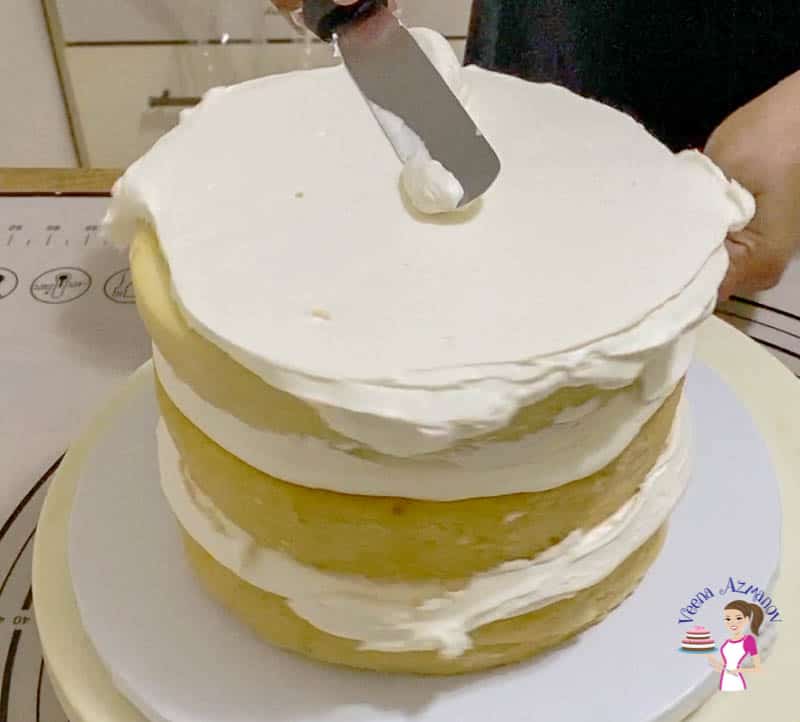
I’m planning to make this frosting for the first time this weekend. It sounds delicious! All the descriptions I read compare it to whipped cream, so I’m a little nervous about being able to get the sides of my cake smooth like you have in your picture. Any tips or tricks for how you did that? With ABC I sometimes smooth sides once they are chilled with a clean damp towel, but it looks like that won’t work for this.
Thanks!
Elise. I have a video on how to level, torte and frost a cake. I hope you find those tips and tricks
This frosting is so delicious! Mine ended up with a few tiny lumps of the milk paste in it. The butter was whipped smooth and the paste was smooth when I added it to the butter. Any ideas why it would’ve clumped once it was whipped with the butter?
This is a frosting I want to perfect! The flavor is amazing!
Emilee. Here are a few things to consider
Was the milk paste lumpy when you added it to the buttercream?
Or did you perhaps not cover it with plastic on the surface? That can cause tiny lumps. Or
Did you cook the paste too long so it clumped up as it cooled? (this is unlikely but possible)
If you look at the video for this recipe you will see the paste is soft and smooth – no lumps.
I have never heard of this type of frosting before, but it looks perfect! 🙂
Thank you Carrie
I loved it! So easy to make! Thank you for sharing!
You are very welcome Toni
What an interesting frosting recipe. I haven’t try it this way. Thanks for sharing
You are welcome Kushi. I hope you try this one
How beautiful is this and easy to work with too! I love that it’s less sweet than typical buttercream.
Yes, it is less sweet than traditional buttercreams
Would this work with almond flour as a substitute? I’m always trying to make new desserts for our gluten free loved ones but most of us find buttercream to be too sweet(as you said) so I’m hoping this recipe works. Either way I’m excited to make this for myself as-is, it sounds wonderful! Will share updates later once completed ?
Hey Kimberly, I have not tried it with almond flour but I think any gluten-free flour like cornstarch or tapioca will work as well. If you do try let me know. Thanks