
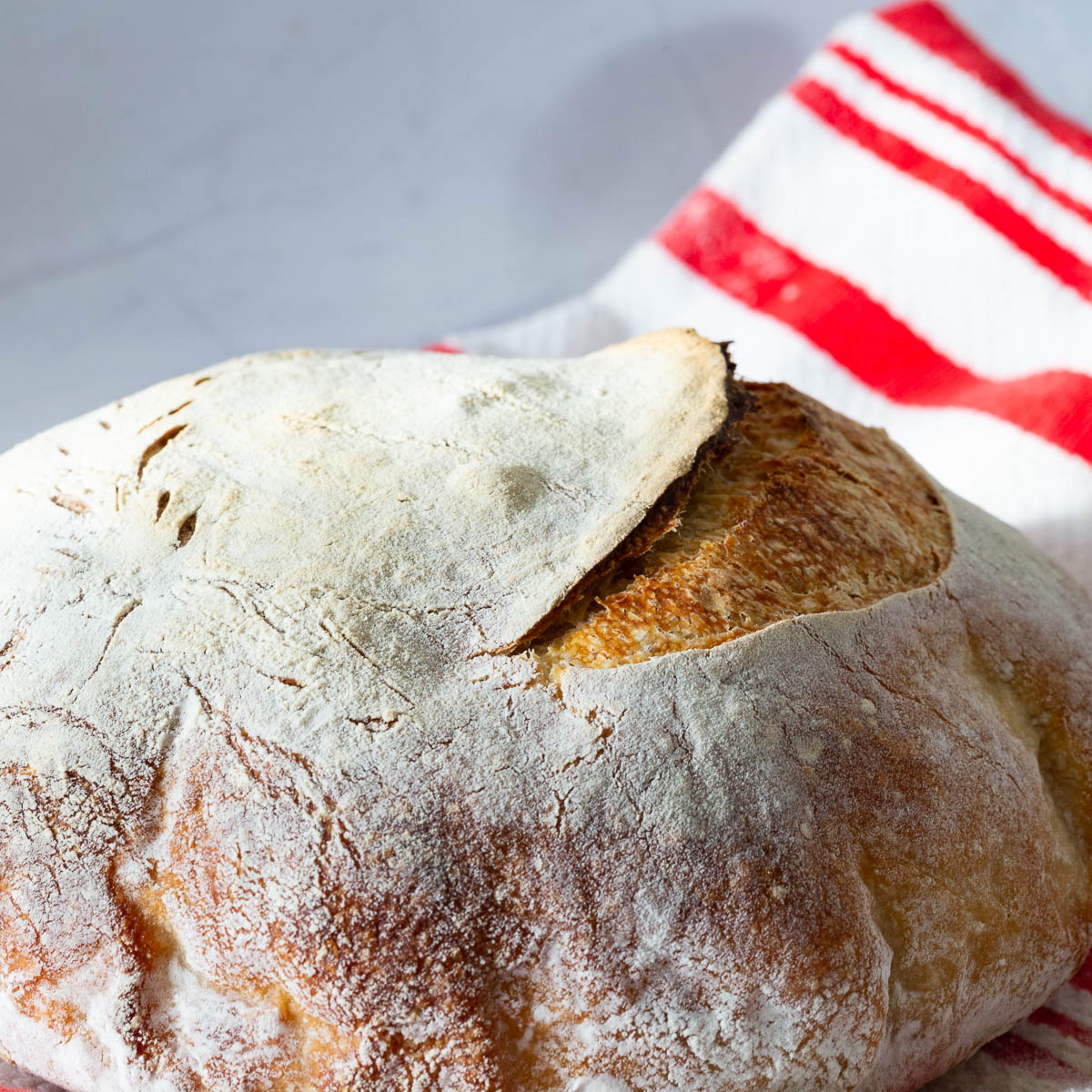






This is the simplest way to make sourdough bread at home with just four ingredients and minimal hands-on time. No complicated techniques—just mix, rest, shape, and bake!
I still remember my first sourdough loaf. It wasn’t perfect—too dense, a little underbaked, and definitely not as pretty as I had imagined. But the moment I sliced into it, I was hooked. The rich aroma, the crisp crust, the satisfaction of creating something from just flour, water, and salt—it was pure magic.
Over time, I experimented, failed, and learned what works best. I’ve baked everything from classic sourdough boules to flavored loaves with nuts, seeds, and dried fruit. But I know how overwhelming it can feel when you’re just starting out. That’s why I created this beginner-friendly sourdough bread recipe—a simple, reliable method to help you bake your first loaf with confidence.
If you’re new to sourdough, I promise it’s worth the journey. With patience and practice, you’ll be baking beautiful loaves in no time. And once you taste your first homemade sourdough, there’s no going back!
Why make this recipe?
- No complicated kneading—just mix and let time do the work.
- One bowl, no special equipment needed—just an oven and a pot.
- Flexible timing—make it in a day or let it rise overnight.
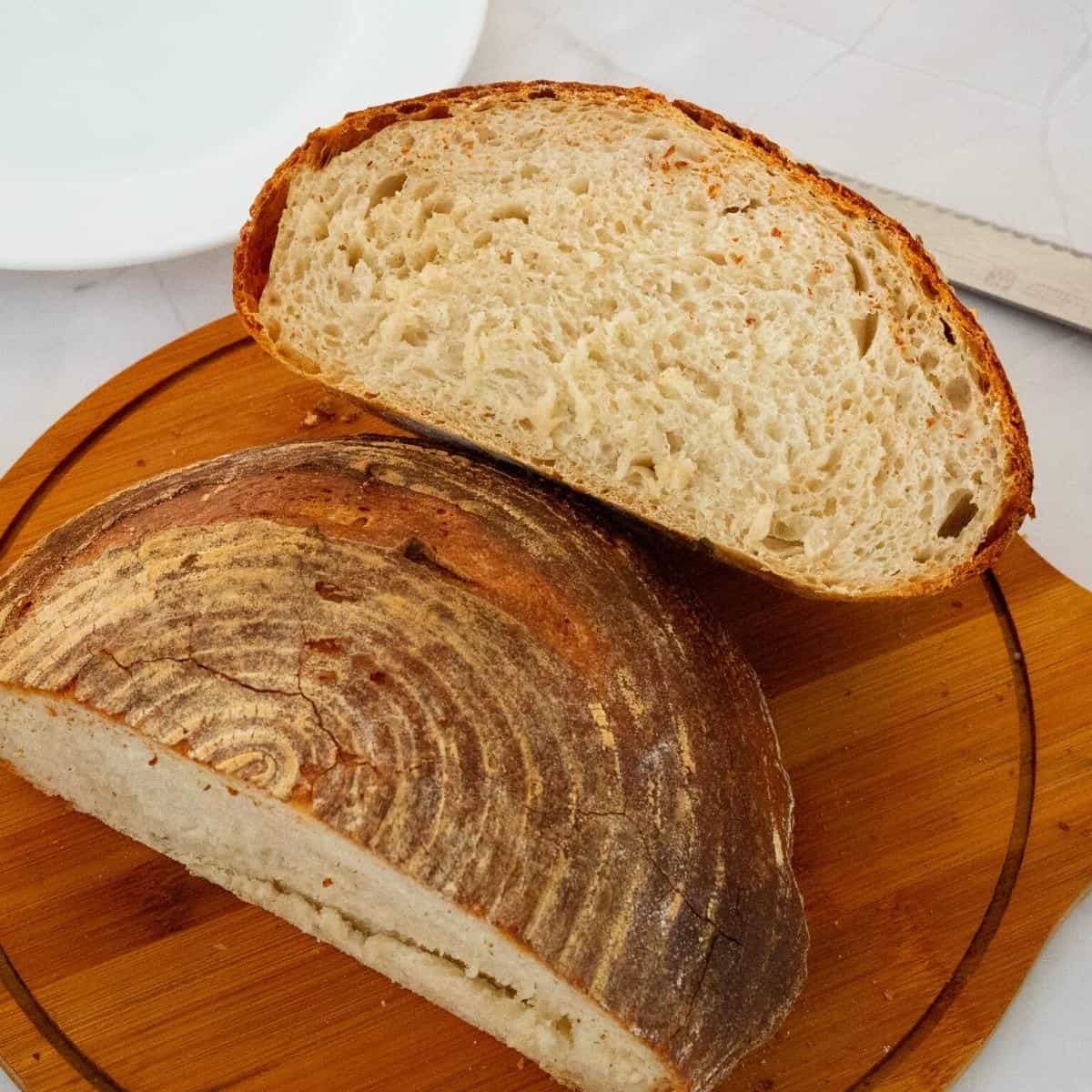
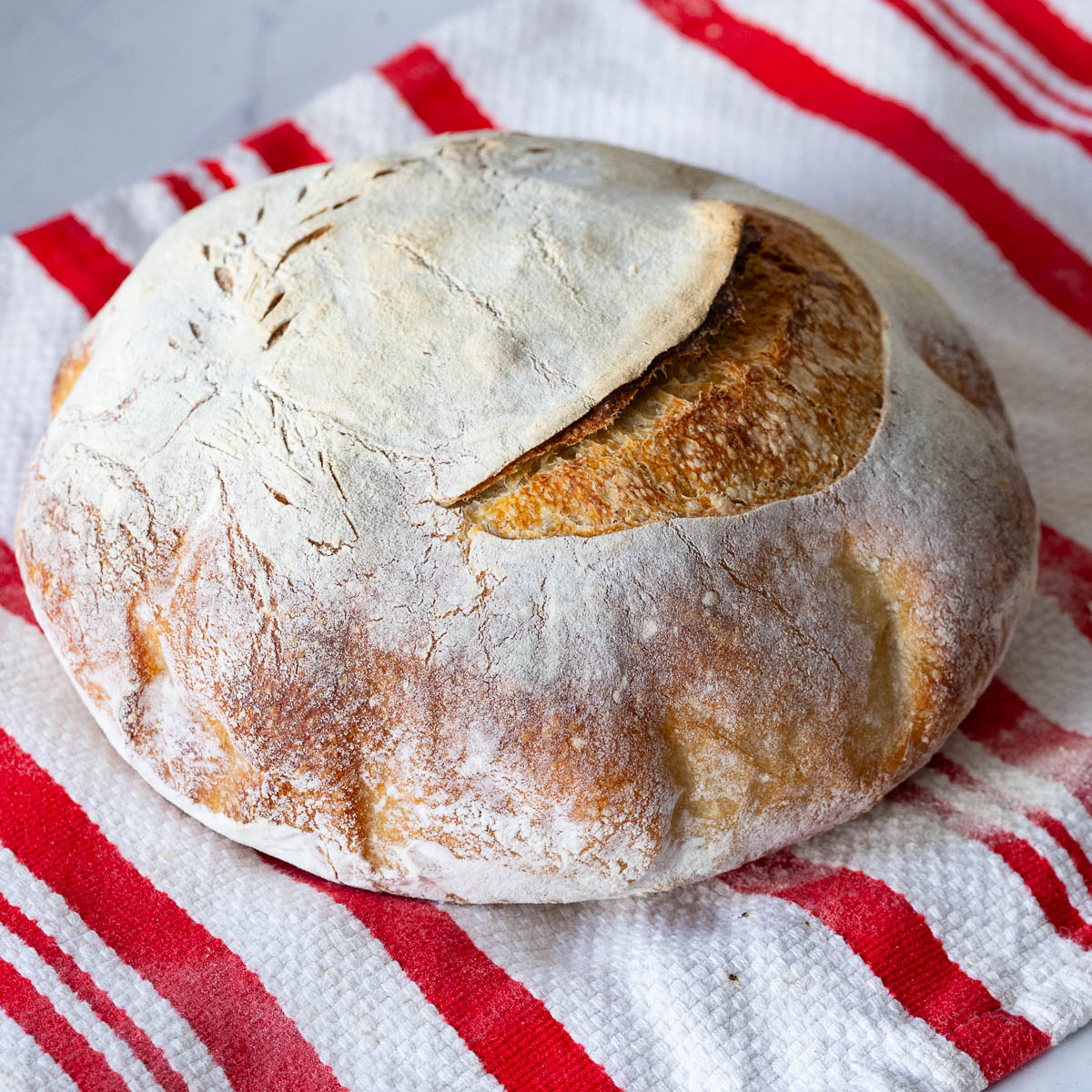
- Delicious results—crusty outside, soft inside, and full of flavor!
Ingredients and substitutions
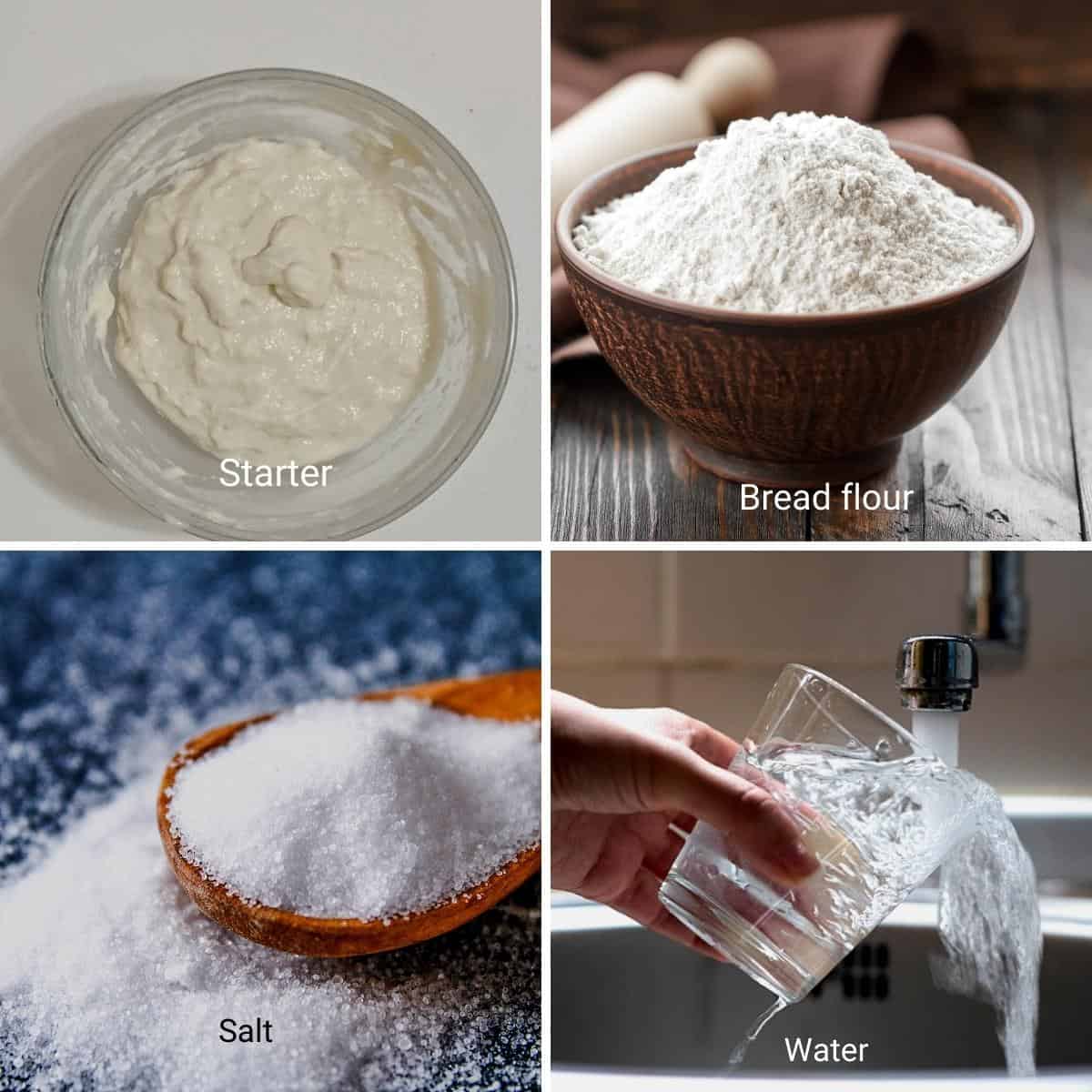
- Bread Flour: Provides structure and chewiness. You can also use all-purpose flour (less chewy) or a mix of whole wheat and bread flour (denser but with more flavor).
- Sourdough Starter: The natural yeast that makes the dough rise. If you don’t have one yet, start with commercial yeast (¼ tsp dry yeast + ¼ cup water) for a similar process, though it won’t be true sourdough.
- Salt: Enhances flavor and regulates yeast activity. You can use sea salt, kosher salt, or table salt (adjust quantity slightly if using fine salt).
- Water: Helps hydrate the dough. Use filtered water if your tap water has chlorine, which can slow fermentation.
Feeding your starter for the recipe
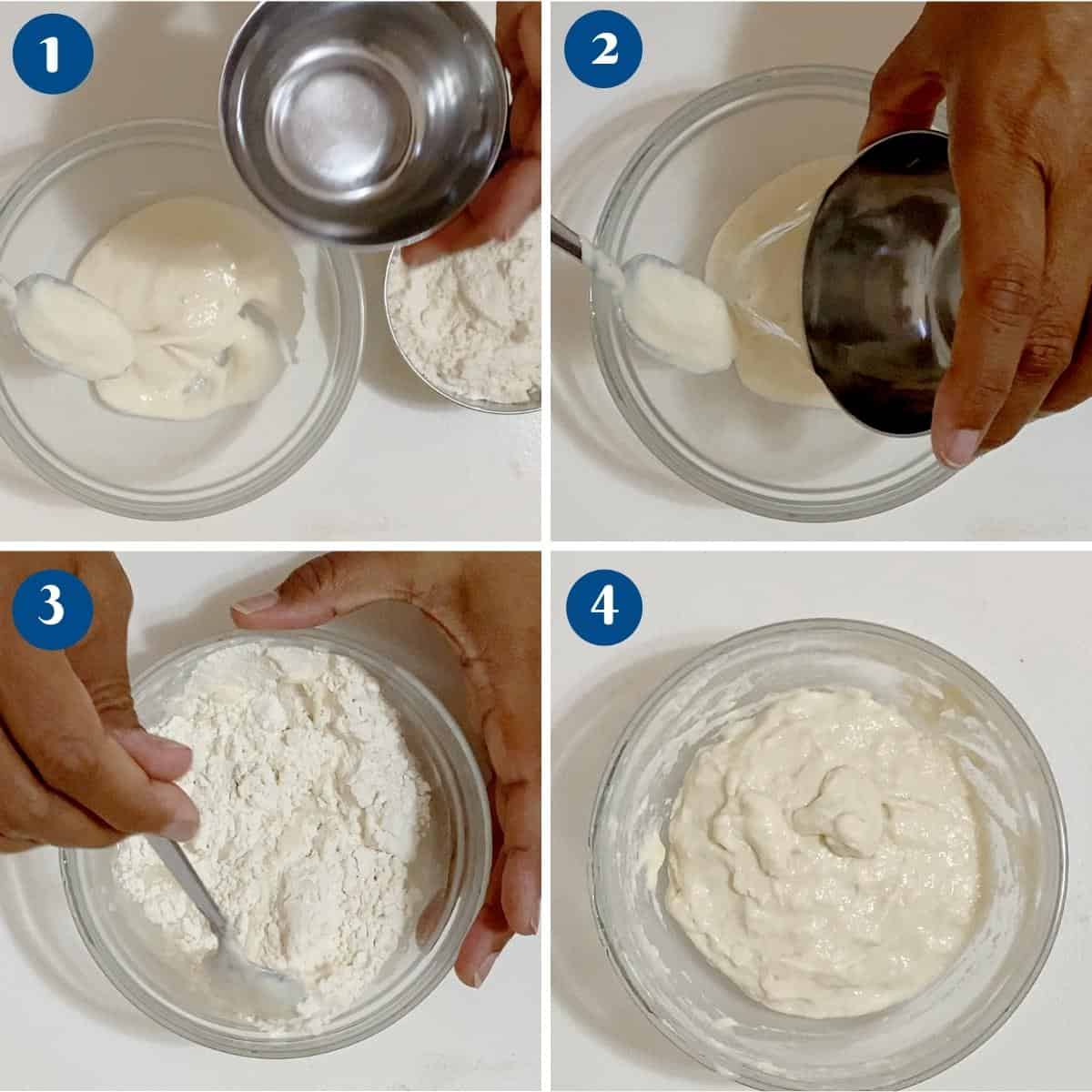
Most of us have a small batch of sourdough starter at home, so we need to make more for every new recipe. Depending on the temperature in your kitchen at home, this process takes as little as 3 to 8 hours.
- Combine the 1 part sourdough starter, 1 part water, and 1 part flour in a medium bowl. You will need 50 grams each for this recipe. Stir well to combine. Cover and leave to rise for 3 to 5 hours at room temperature.
- Pro tip – You can make the levain up to 5 days in advance and leave it in the fridge.
Step-by-step: Beginner’s sourdough bread recipe
- Mix the Dough (5 minutes) – In a large bowl, mix the flour with room-temperature water. Stir with a spoon until it forms a rough dough. Add sourdough starter and salt, then mix until combined. Cover the bowl with a towel and let it rest for 30 minutes.
Pro tip – You can just add all four ingredients into the bowl and combine well.
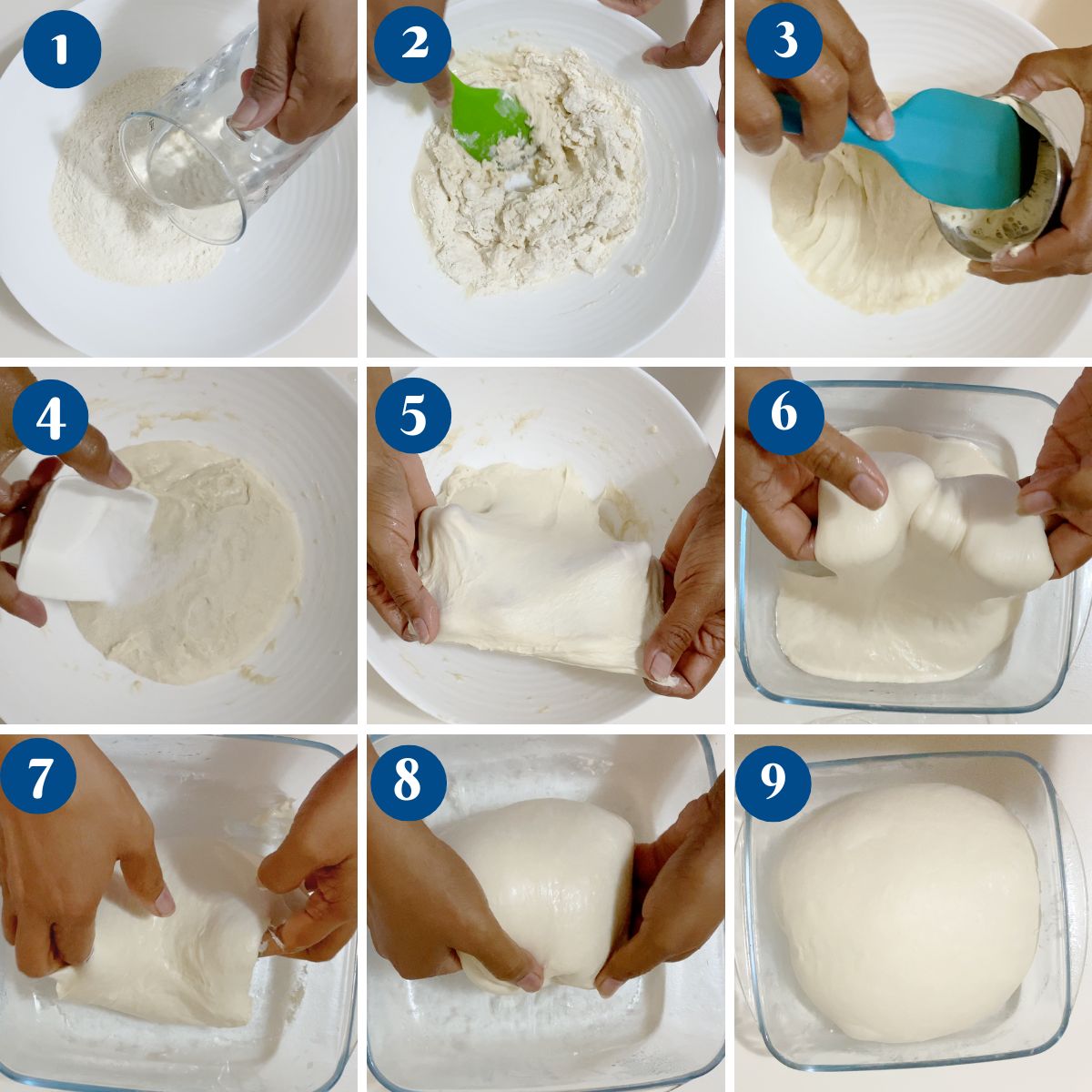
- Let it Rise (Bulk Ferment) (6-8 hours) – Leave the dough at room temperature (on the counter) for 6-8 hours until it doubles in size.
- (optional step)- Stretch & Fold – If you remember, during the bulk ferment hours. Every 30 minutes for the first 2 hours, perform stretch and folds: Gently grab one side of the dough, stretch it up, and fold it over itself. Rotate the bowl and repeat on all four sides.
Pro tip – This is where most newbies get nervous! The truth is that even if you do not do the stretch-and-fold, time will ensure there is gluten formation. You can test it both ways, with or without stretch and fold.
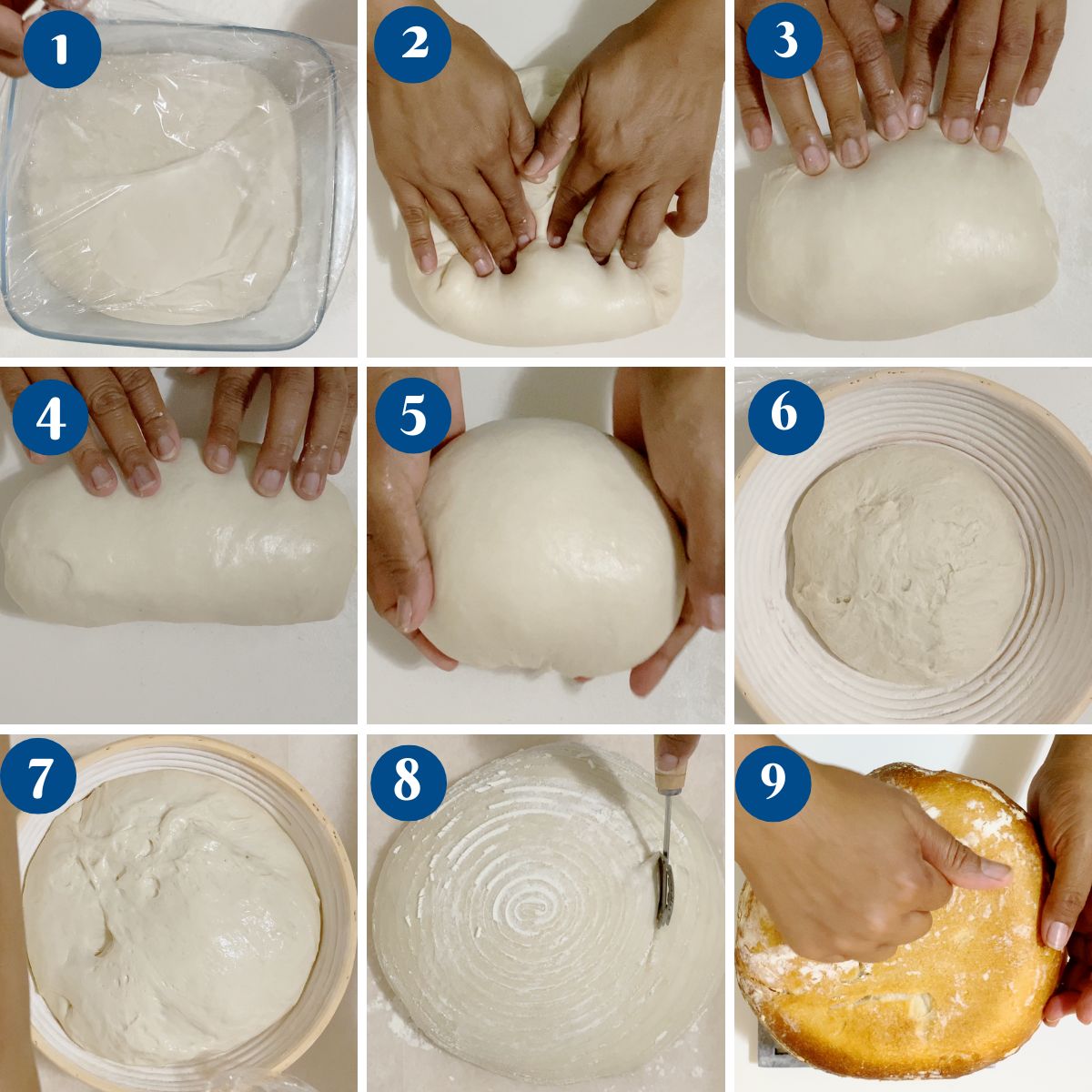
- Shape the Dough (2 minutes) – Sprinkle a little flour on your counter and gently shape the dough into a ball. Place it in a lightly floured bowl or a proofing basket.
Pro tip – You will notice that if you do the stretch-and-fold, the dough has more structure and is easier to handle, plus you will need less flour. - Second Rise (1 hour or Overnight) – Cover the dough and let it rest for 1 hour at room temperature, OR put it in the fridge overnight for better flavor.
- Bake the Bread (45 minutes) – Preheat oven to 230°C (450°F). If using a Dutch oven, preheat it too. Place the dough on parchment paper, score the top with a knife, and put it in the hot Dutch oven. Bake covered for 25 minutes, then uncover and bake for another 20 minutes until golden brown.
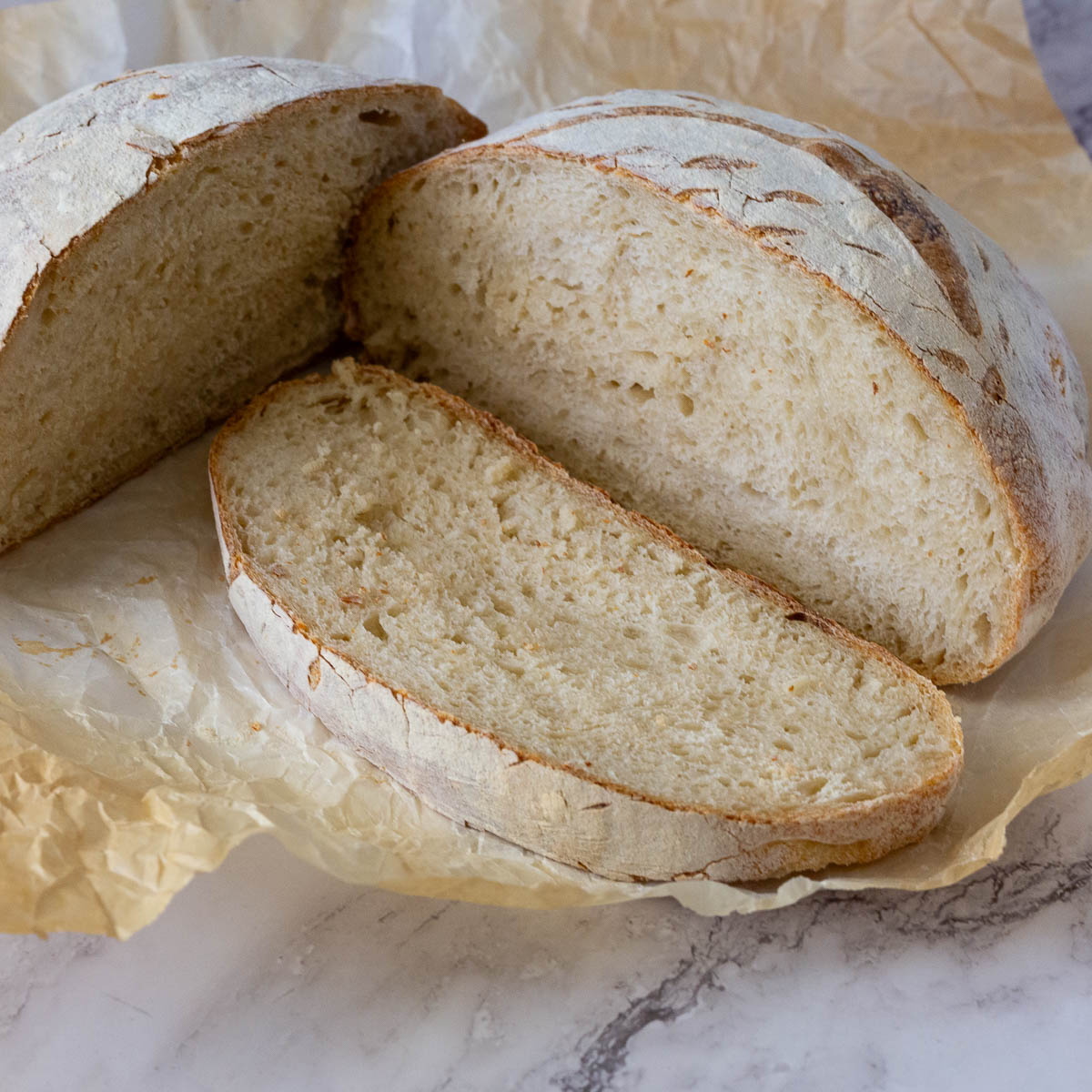
- Cool and Enjoy – Let the bread cool completely before slicing (it keeps the inside soft and airy).
Troubleshooting
- My dough is too sticky and hard to handle. The dough may be too wet or underdeveloped. Lightly flour your hands and surface when shaping. If it’s still too sticky, let it rest longer—gluten strengthens over time.
- My bread didn’t rise much. Your sourdough starter may be weak, or your kitchen may be too cold. Ensure your starter is bubbly and active before using. If your kitchen is cold, let the dough rise in a warm spot (like inside the oven with the light on).
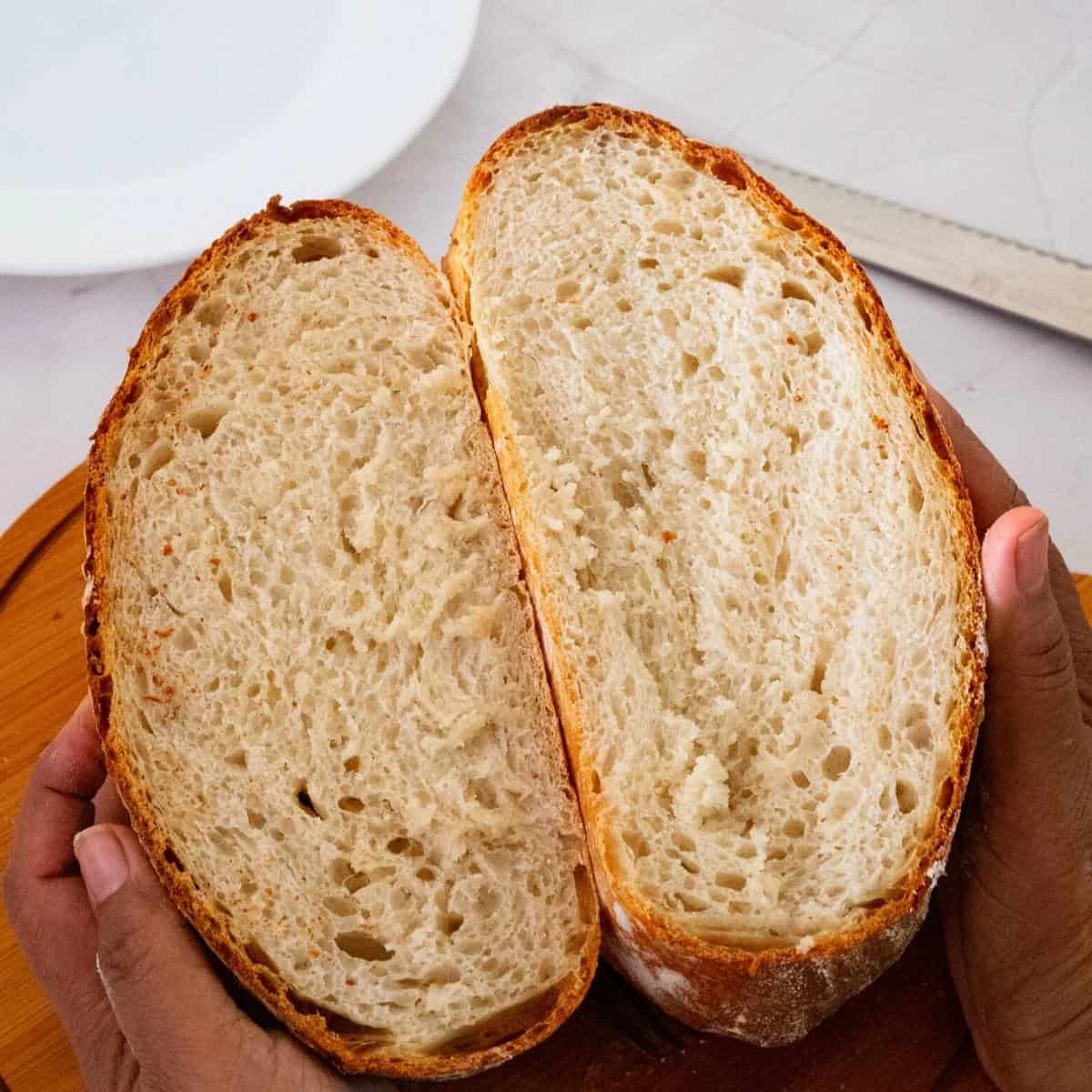
- My bread is too dense. The dough didn’t ferment long enough, or the flour is too heavy. Let the dough rise longer and ensure it doubles in size before shaping. Use a mix of bread flour and all-purpose flour for better structure.
- My crust is too thick and hard. The bread was baked too long without steam. Bake in a Dutch oven for the first 25 minutes with the lid on, then uncover. If you don’t have a Dutch oven, place a tray of hot water in the oven.
- My bread is gummy inside. The bread was sliced too soon, or it was underbaked. Let the bread cool completely before slicing (at least 1 hour). If underbaked, next time bake for 5-10 minutes longer.
- My bread spread flat instead of holding its shape. The dough was too wet or over-proofed. Use a little less water next time and avoid letting the dough rise too long before shaping.


Frequently asked questions
The best thing about sourdough bread is that it can last for 4 to 5 days at room temperature.
While a Dutch oven is ideal for baking sourdough bread, you can still achieve good results without one. Consider using a baking stone or a heavy-bottomed pot with a lid to create steam and mimic the oven’s humid environment.
Absolutely! Sourdough bread freezes well and can be stored for up to three months. Slice it before freezing, so it’s easier to thaw and enjoy a piece whenever you crave it.
Sourdough bread is healthier than commercial bread. The slow-fermentation process breaks down the gluten and makes the bread more digestible. The probiotics also keep your gut happy.
Easy Sourdough Bread for Beginners
Embark on your sourdough journey with confidence using this beginner-friendly recipe. Learn how to create and maintain a starter and master the art of baking a classic sourdough loaf with step-by-step instructions. Perfect for those new to sourdough baking, this recipe guarantees a deliciously tangy bread with a crispy crust and airy crumb. Start your sourdough adventure today!
Video
Ingredients
- 350 grams (1½ cups) Water (warm, about 80-85°F / 26-29°C)
- 500 grams (4 cups) Bread flour (preferably 11-12% protein)
- 100 grams (½ cups) Sourdough starter (100% hydration, active & bubbly)
- 10 grams (1½ tsp) Kosher salt
- 30 grams (2 tbsp) Olive oil (optional)
Method
- Mix the Dough (5 minutes)- In a large bowl, mix flour and warm water. Stir with a spoon until it forms a rough dough. Add sourdough starter and salt, then mix until combined. Cover the bowl with a towel and let it rest for 30 minutes.350 grams Water, 500 grams Bread flour, 100 grams Sourdough starter, 10 grams Kosher salt, 30 grams Olive oil
- Let it Rise (Bulk Ferment) (6-8 hours) – Leave the dough at room temperature (on the counter) for 6-8 hours until it doubles in size.
- (optional step)- Stretch & Fold – If you remember, during the bulk ferment hours. Every 30 minutes for the first 2 hours, perform stretch and folds: Gently grab one side of the dough, stretch it up, and fold it over itself. Rotate the bowl and repeat on all four sides.
- Shape the Dough (2 minutes) – Sprinkle a little flour on your counter and gently shape the dough into a ball. Place it in a lightly floured bowl or a proofing basket.
- Second Rise (1 hour or Overnight) – Cover the dough and let it rest for 1 hour at room temperature, OR put it in the fridge overnight for better flavor.
- Bake the Bread (45 minutes) – Preheat oven to 230°C (450°F). If using a Dutch oven, preheat it too. Place the dough on parchment paper, score the top with a knife, and put it in the hot Dutch oven. Bake covered for 25 minutes, then uncover and bake for another 20 minutes until golden brown.
- Cool and Enjoy – Let the bread cool completely before slicing (it keeps the inside soft and airy).
Notes
- Use an Active Starter – Your sourdough starter should be bubbly and double in size before using. If it’s not active, your bread won’t rise well.
- Don’t Stress Over Perfect Kneading – Sourdough develops a structure on its own over time. A few gentle folds are enough—no need for heavy kneading.
- Give It Time – Fermentation is key to great sourdough. If your dough hasn’t doubled in size, let it sit longer. Cold weather slows the process, so be patient.
- Flour Your Surface Lightly – Too much flour when shaping can prevent the dough from forming a good crust. Use just enough to prevent sticking.
- Use a Dutch Oven (If Possible) – It traps steam, creating a crispy crust. If you don’t have one, place a pan of hot water in the oven while baking.
- Score Before Baking – A simple slash on top helps control how the bread expands in the oven. Use a sharp knife or razor blade.
- Cool Before Slicing – Freshly baked bread is still finishing the cooking process inside. Slicing too soon makes it gummy instead of airy.
Equipment you will need


Nutrition
Tried this recipe?
Mention @veenaazmanov_kitchen or tag #veenaazmanovkitchen!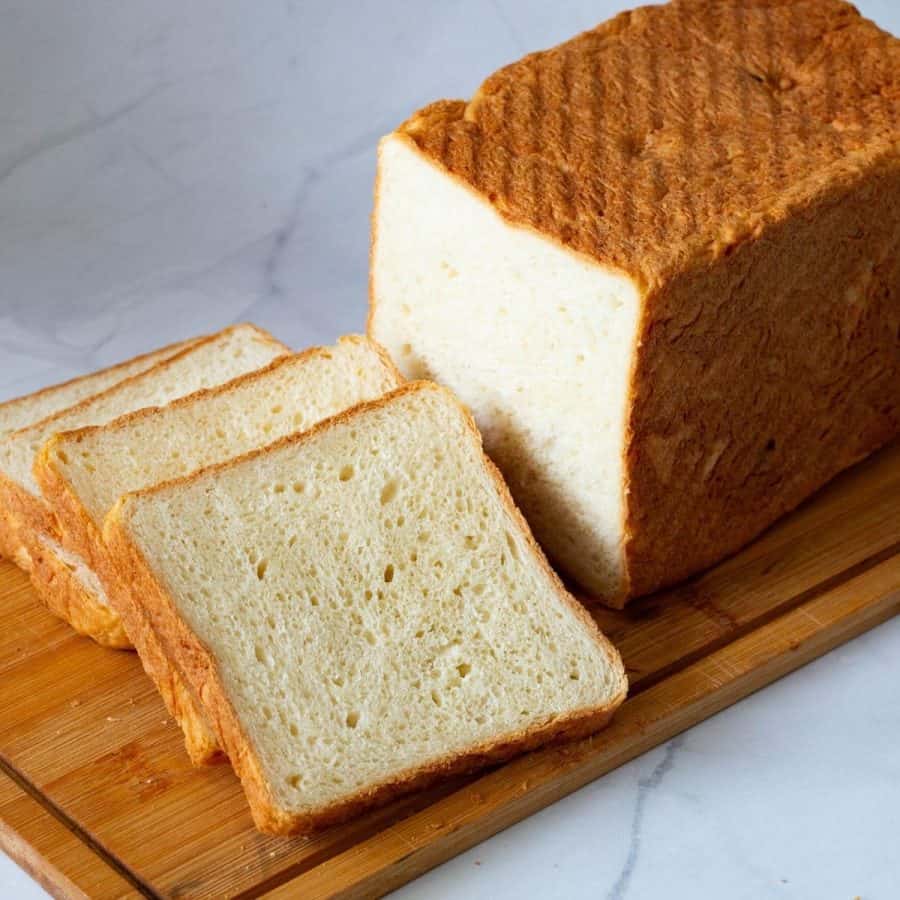



Don’t lose this recipe! Save it for Later!
📌 Save this Recipe for later on Pinterest so you can easily find it again.
⭐ Add Veena Azmanov Kitchen to your Google Preferred Sources.
It helps Google show you more of our recipes.
📧 Subscribe for new recipes delivered to your inbox.
🎥 Follow us for more recipes


Hi, I’m Veena
I’m the recipe developer, baker, and food photographer behind Veena Azmanov Kitchen.
I’ve spent years developing and testing recipes, from everyday meals and homemade breads to cakes and desserts.
I share the practical tips and little details I’ve learned along the way so you can get great results in your own kitchen.









Finally a simple sourdough bread recipe that is easy to follow! This will definitely be my go-to recipe from now on!
I am obsessed with sourdough and this recipe I so thorough and helpful! Thank you so Much!
i have been thinking to try a sourdough bread at home but was always skeptical. I love your recipe and style and i am definitely baking this tonight.
Making sourdough bread may sound intimidating to many but you explained so well, in simple steps that everybody can make this flavorful bread. We love sourdough so much.
I’ve always been a bit hesitant about making sour dough bread but you have made it look quite doable! Definitely want to try this recipe!
Another winner! I love sourdough bread and been making it now for a couple of years – this version was wonderful, will definitely make again.
Thank you, Heather
I haven’t made a loaf of sourdough bread before so I appreciate the detailed instructions and the tips for best results. Now I need to buy the ingredients and start baking!
I so appreciate this post. Your instructions are very clear and making bread with this recipe looks very approachable. Thank you!