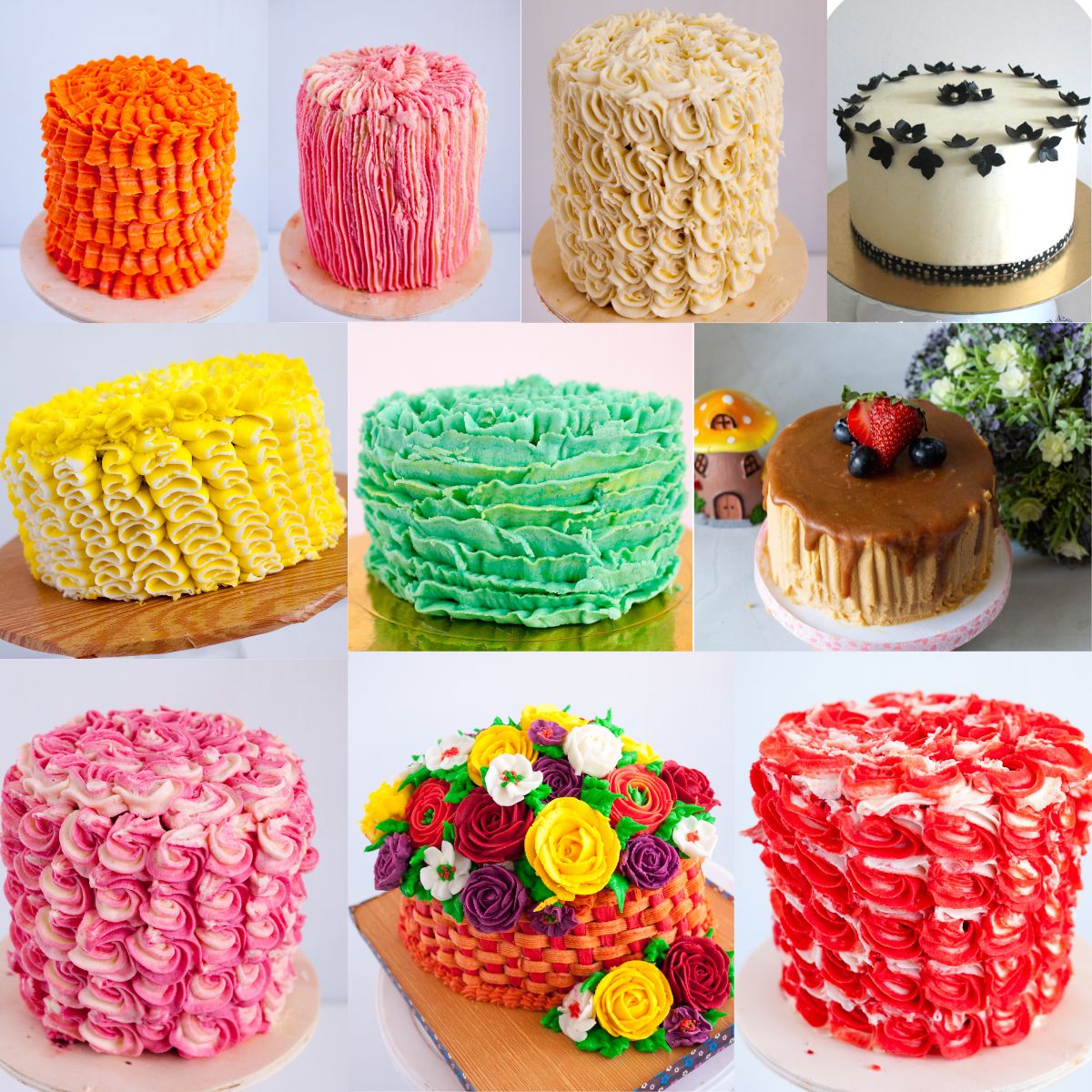


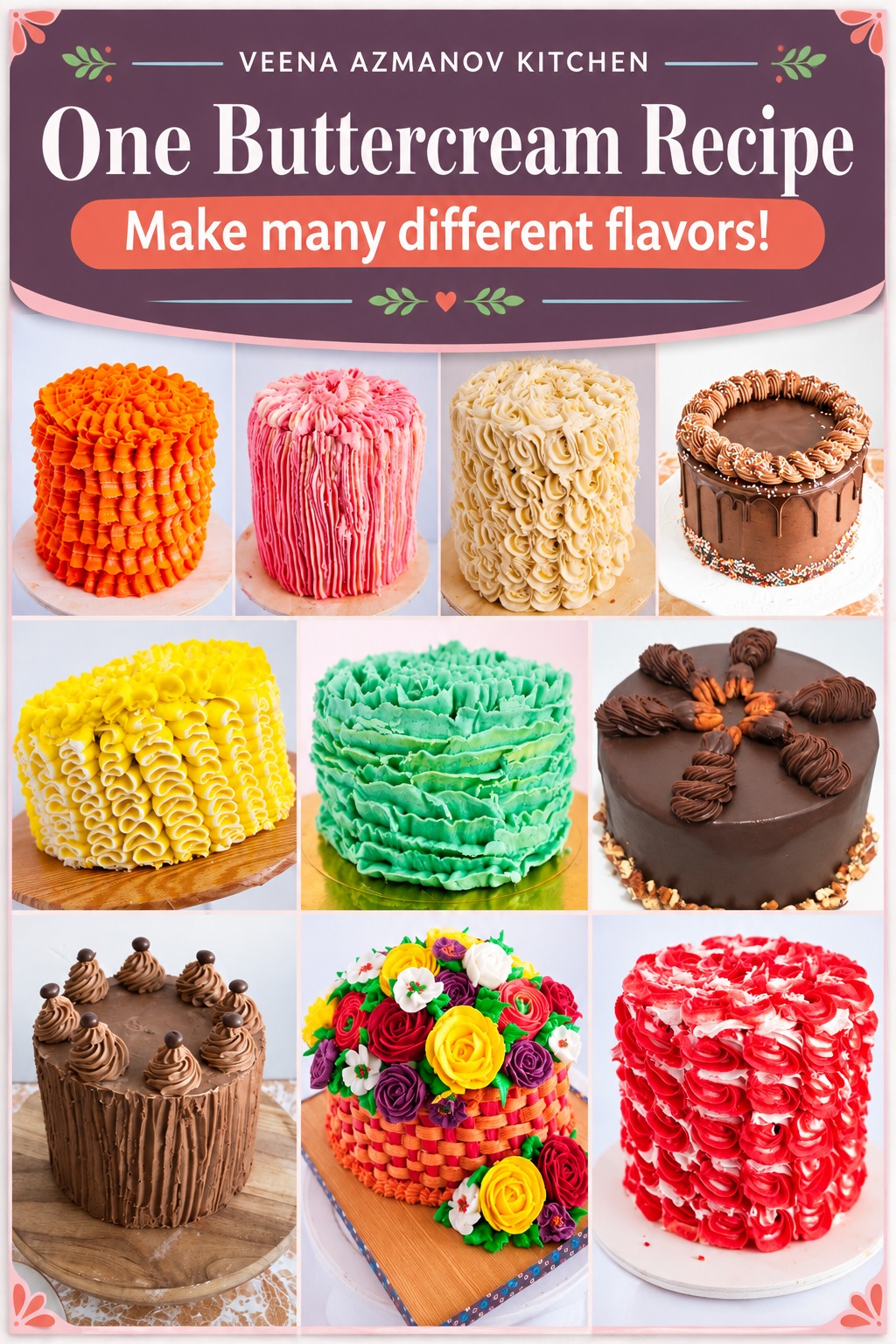
One basic buttercream can become dozens of different flavors with just a few simple additions. Chocolate, coffee, caramel, fruit, citrus, nut butter and liqueurs can all transform a vanilla buttercream without making a completely new frosting from scratch.
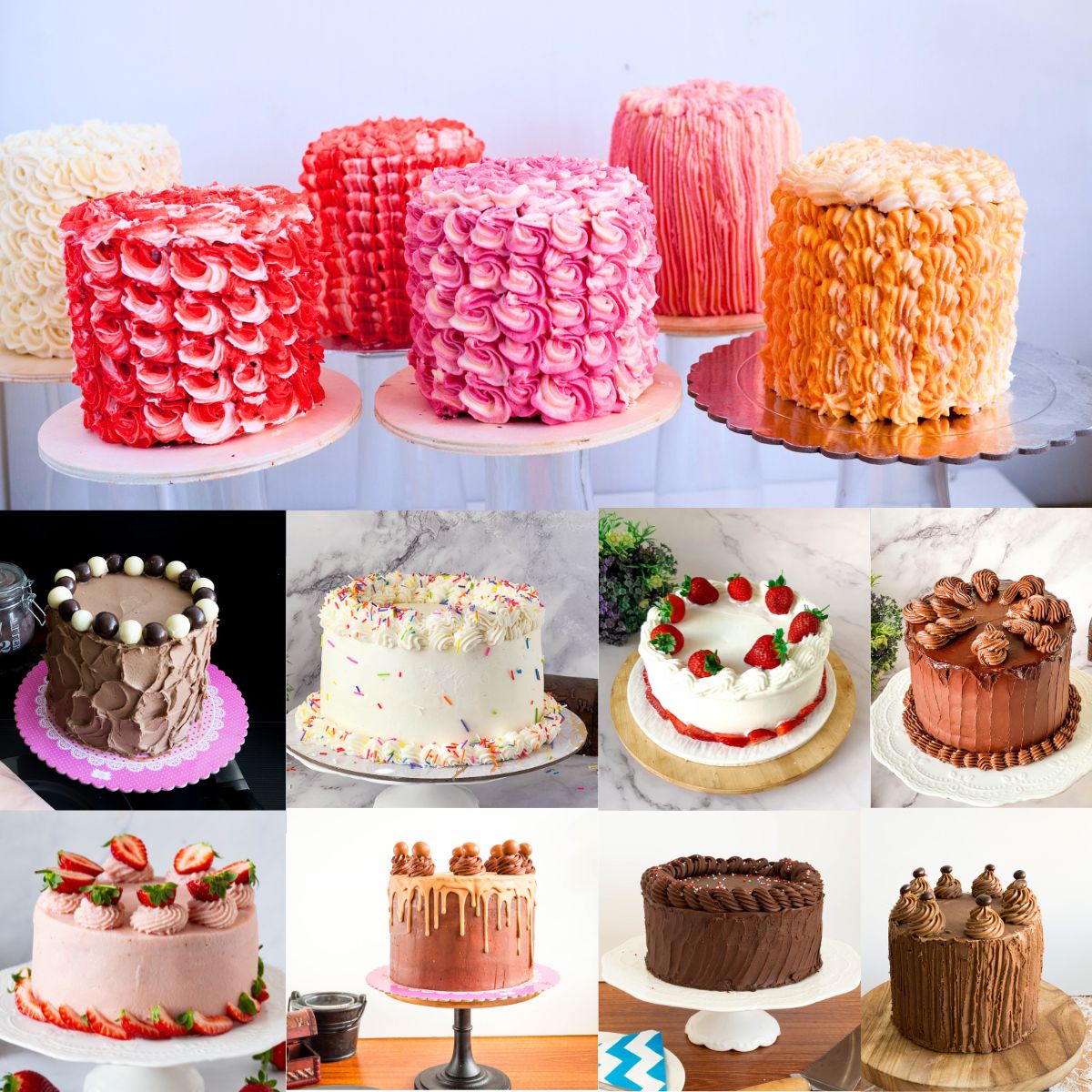
When I decorated cakes professionally, I made buttercream in just about every flavor imaginable. The problem was that before long, the fridge and freezer would be filled with small containers of leftover chocolate, coffee, caramel, fruit and other flavored buttercreams.
For large orders, birthdays, anniversaries and celebration cakes, when I knew I needed a good amount of one flavor, I made a full batch of that buttercream. But for smaller orders or when I needed several flavors at once, it made much more sense to start with my classic vanilla buttercream and turn portions of it into different flavors.
That became my rule of thumb: make a full batch when you need a lot of one flavor; use vanilla buttercream as your base when you need smaller amounts or several flavor variations.
Over the years, I also learned that flavor and consistency have to be adjusted together. Chocolate and nut butters can make buttercream firmer, while fruit purees, coffee, citrus juice and liqueurs can soften it. That’s especially important when the buttercream needs to hold its shape for piping rather than simply filling a cake.
The secret to one buttercream, many flavors
The secret is to start with a plain buttercream base and add the flavorings afterward. This works with American buttercream as well as Swiss, Italian, German or French buttercream.
When I’m planning several flavors, I make the base buttercream first without the optional flavorings or additional liquid. Then I divide off what I need and flavor each portion separately.
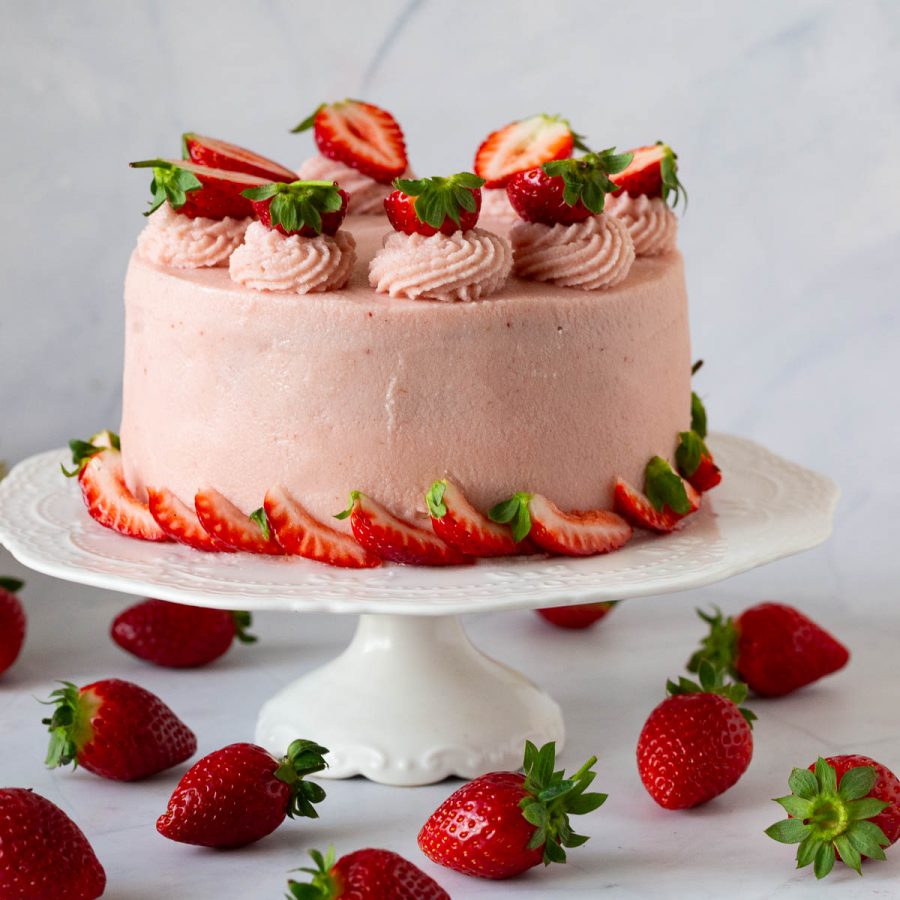
For example, vanilla can get vanilla bean paste and cream, strawberry can get reduced strawberry puree or freeze-dried strawberry powder, chocolate can get melted chocolate or cocoa, and coffee can get concentrated espresso.
This gives you much more control over both flavor and consistency. Instead of making five completely different buttercream recipes, you make one reliable base and turn it into the flavors you need.
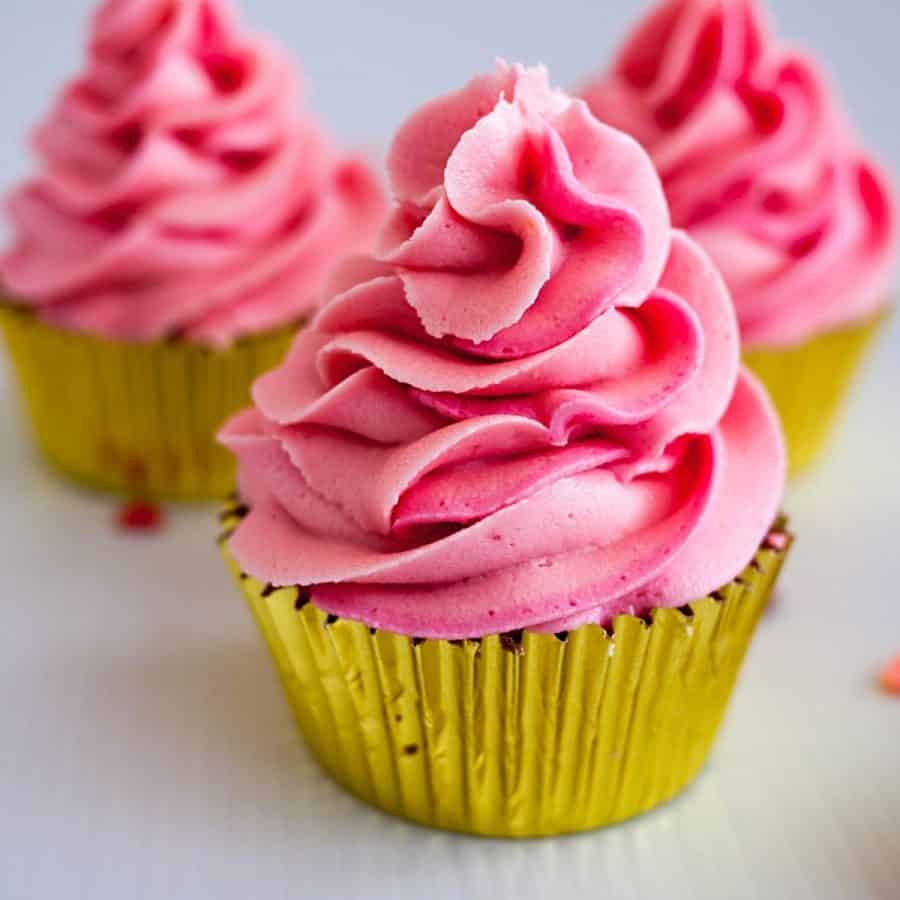
Choose your buttercream base first
This method isn’t limited to American buttercream. You can start with American, Swiss meringue, Italian meringue, German or French buttercream and then turn that base into different flavors.
The principle is the same: make the buttercream base first, then add the flavoring. When possible, leave out optional liquids and flavorings from the base so you have more control over the final consistency.
For example, I can make one batch of buttercream, divide it into several bowls, and turn one portion into vanilla with vanilla bean paste, another into strawberry with reduced strawberry puree or freeze-dried strawberry powder, another into chocolate, and another into coffee.
The amount and type of flavoring may need to be adjusted depending on the buttercream you’re using. A rich French buttercream won’t need exactly the same treatment as an American buttercream, but the basic approach remains the same: add the flavor first, then adjust the consistency.
Which buttercream should you use?
Then I think a small comparison table would be very useful:
| Buttercream base | Best for |
|---|---|
| American buttercream | Easy to flavor, sweet, sturdy and excellent for piping |
| Swiss meringue buttercream | Silky, less sweet and good for cakes and cupcakes |
| Italian meringue buttercream | Smooth, stable and excellent for celebration cakes |
| French buttercream | Rich, custard-like and especially good with chocolate, coffee and nut flavors |
| German buttercream | Creamy, less sweet and a good base for fruit, chocolate and caramel flavors |
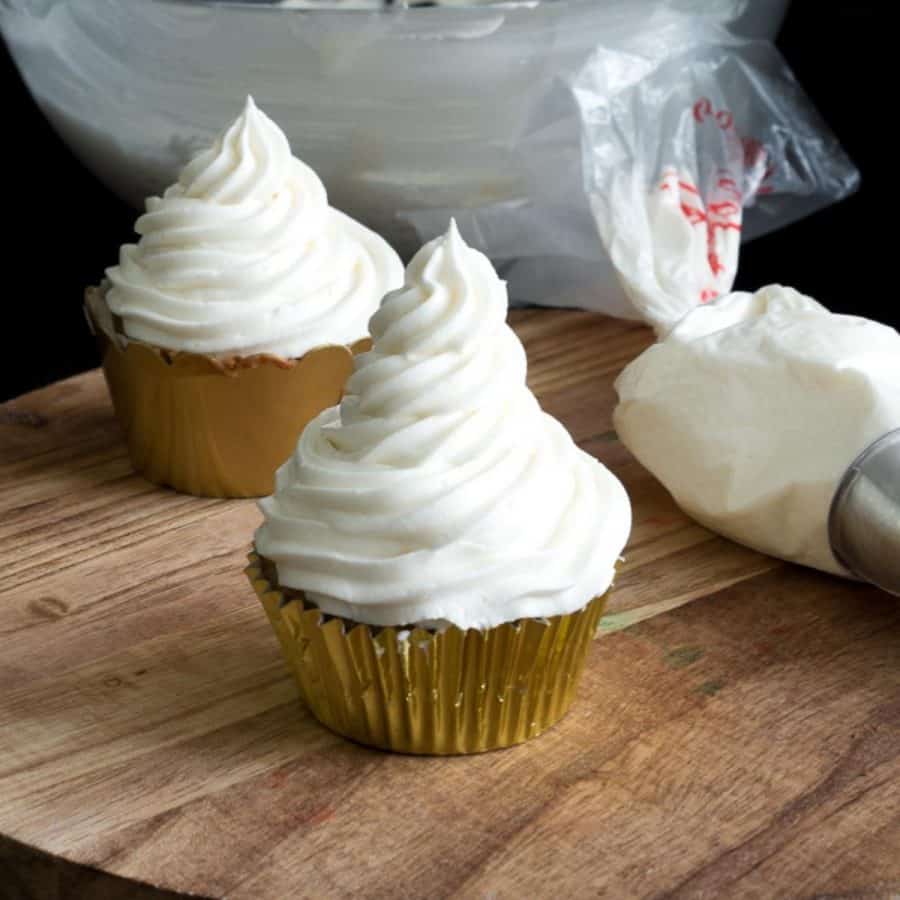
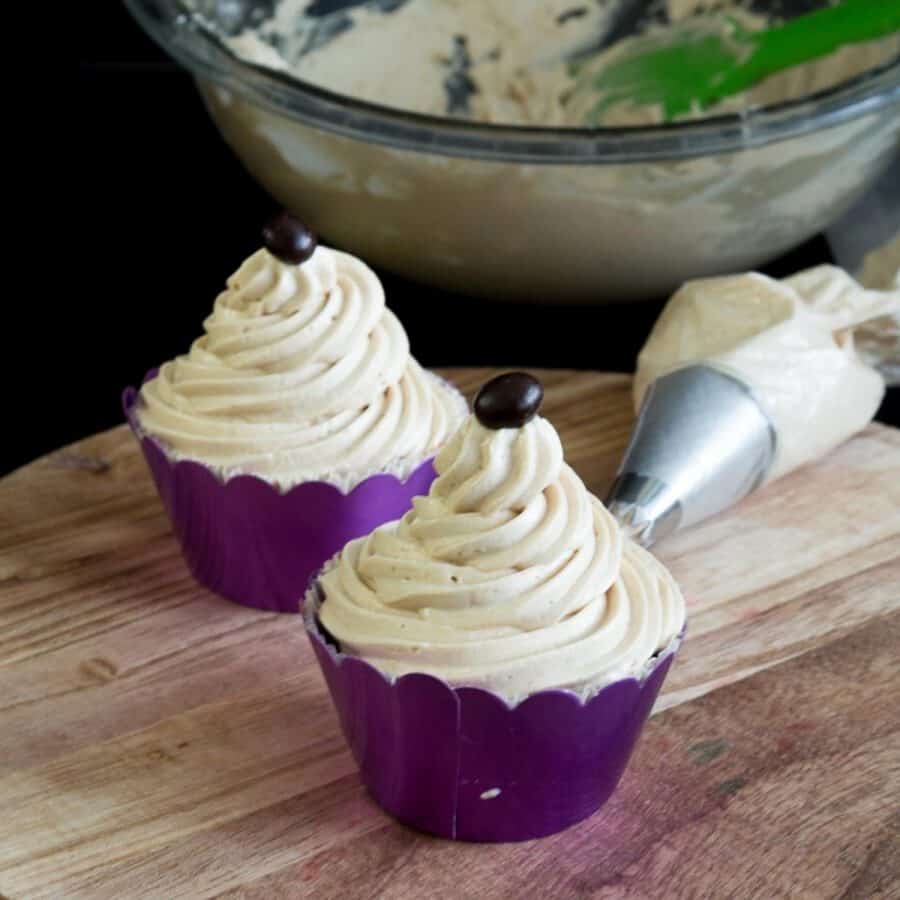
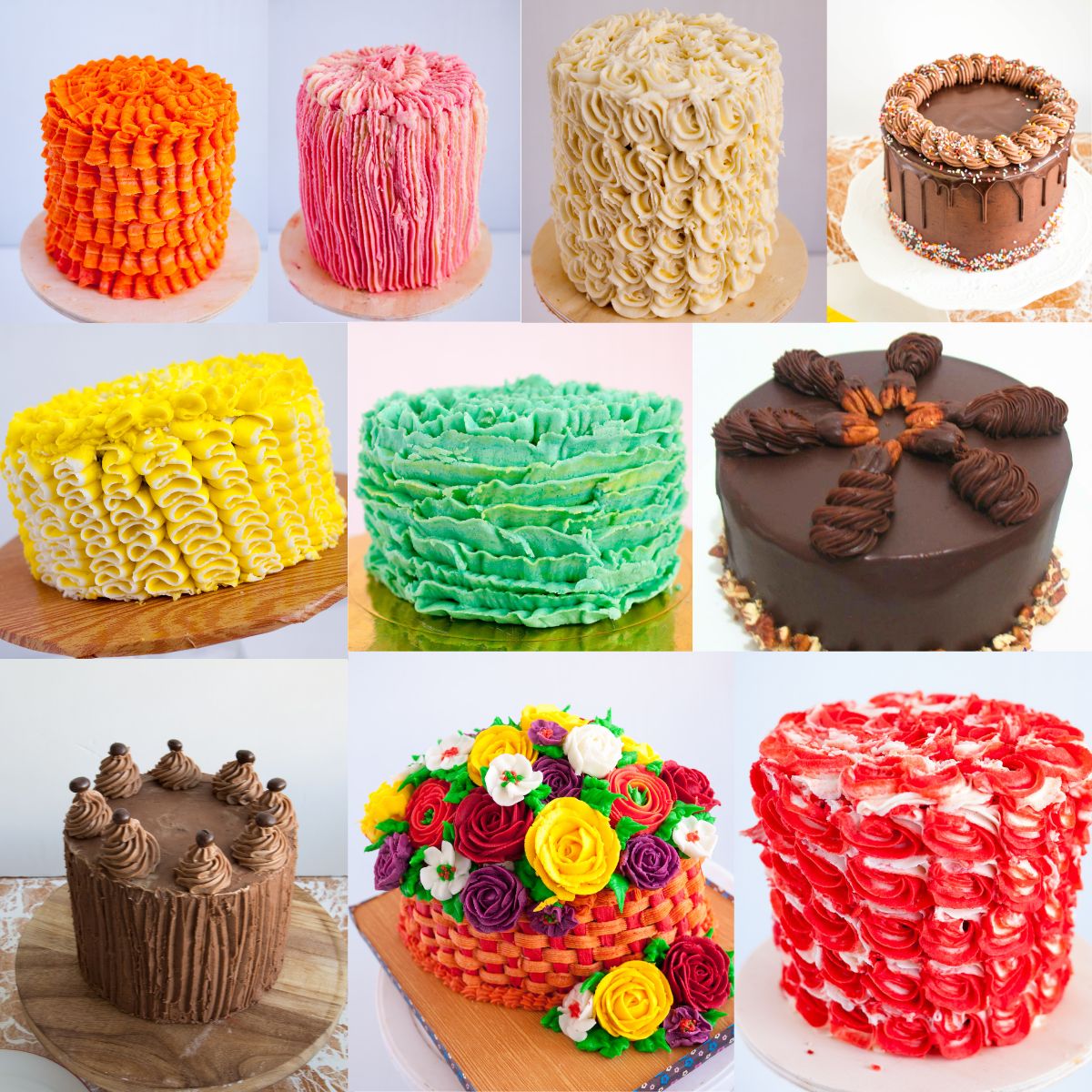
Buttercream flavor variations
The amounts below are based on 4 cups of American-style buttercream. You can use the same flavoring method with Swiss, Italian, French or German buttercream, but begin with about half the suggested liquid additions and add more gradually, since softer and meringue-based buttercreams may need less.
| Flavor | Addition | What I’d change |
|---|---|---|
| Vanilla | 2 tsp vanilla bean paste/extract + 2–4 tbsp heavy cream | Add cream only as needed |
| Chocolate | 225 g (8 oz) melted, cooled chocolate | Keep |
| Mocha | 225 g chocolate + 2 tbsp strong espresso | Keep |
| Caramel | ½ cup (120 ml) thick caramel sauce | Reduce from ¾ cup; add more only if consistency allows |
| Salted Caramel | ½ cup caramel + ¼–½ tsp fine sea salt | Definitely change the current 1 tbsp rock salt |
| Nutella | ¾ cup (225 g approx.) Nutella | Keep |
| Lemon | 2 tbsp lemon juice + 1–2 tbsp finely grated zest | I’d reduce the current ¼ cup juice; zest gives flavor without thinning |
| Strawberry | ½ cup reduced strawberry puree, cooled | Change from raw crushed strawberries |
| Raspberry | ½ cup reduced, strained raspberry puree, cooled | Same change |
| Peanut Butter | ¾ cup (190 g approx.) creamy peanut butter | Keep |
| Pineapple | ½ cup well-drained crushed pineapple OR reduced pineapple puree | Current 200 ml crushed pineapple could add too much moisture |
| Maraschino Cherry | ½ cup finely chopped, well-drained cherries + 1–2 tbsp cherry juice | Current idea is fine; just make it precise |
| Baileys/Kahlúa | ¼ cup (60 ml), then more to taste if consistency allows | Current ½ cup is a lot of liquid |
| Coconut | ¼ cup (60 ml) thick coconut cream + ½ tsp coconut extract | Better flavor without dumping ½ cup liquid into the buttercream |
| Marzipan | 110 g (½ cup) softened marzipan | Keep, but don’t soften it with much water |
| Boston Cream | ¾ cup (180 ml) thick, chilled pastry cream | Keep, but this becomes a softer filling-style buttercream |
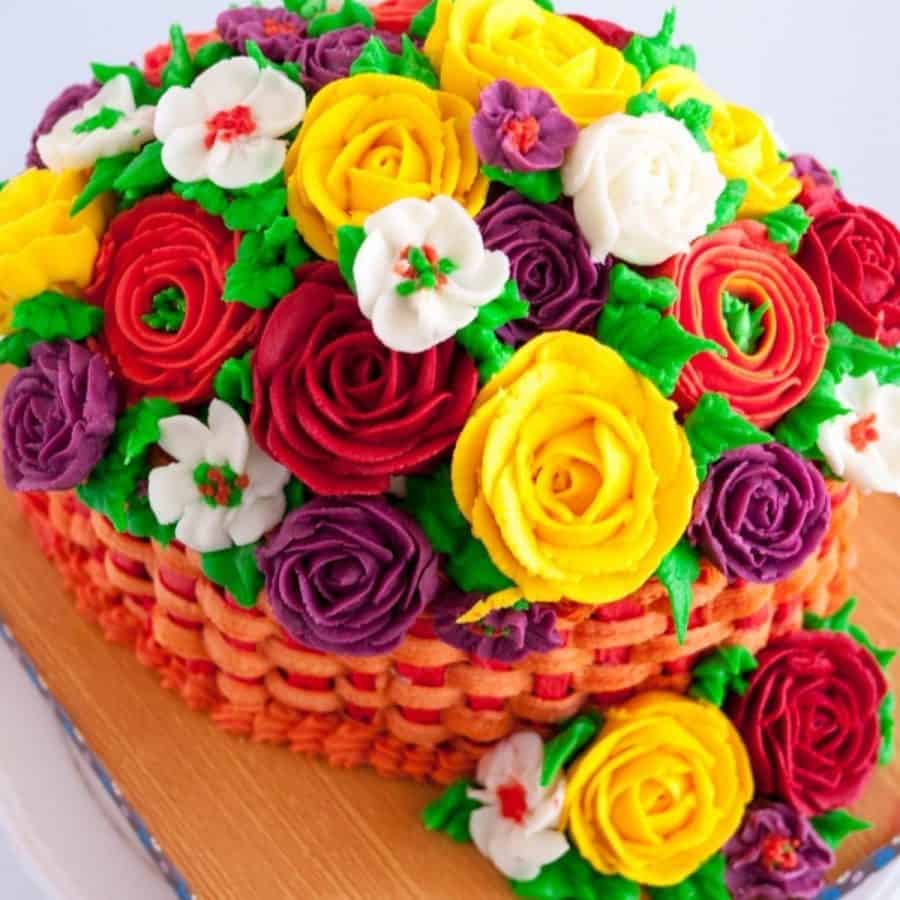

Different Buttercream Flavors from One Recipe
Ingredients
4 to 6 Cups – any one of these Basic Buttercream Recipes
Chocolate Buttercream
- 8 oz (225 g) chocolate
Mocha Buttercream
- 8 oz (225 g) chocolate
- 2 tbsp strong Espresso coffee (liquid)
Caramel Buttercream
- ¾ cup (0.75 cup ) caramel sauce
Salted Caramel Buttercream
- ¾ cup (0.75 cup) caramel sauce
- 1 tbsp ( ) rock salt
Nutella Buttercream
- ¾ cup (0.75 cup ) Nutella
Lemon Buttercream
- ¼ cup lemon juice
- 1 tsp lemon zest
Strawberry Buttercream
- 200 ml (7 oz) crushed strawberries
- ½ tsp strawberry extract (optional)
Raspberry Buttercream
- 8 oz (7 oz) crushed raspberries
- ½ tsp raspberry extract (optional)
Peanut Butter Buttercream
- ¾ cup (0.75 cup ) peanut butter
Pineapple Buttercream
- 8 oz (200 ml ) crushed pineapple
- ½ tsp pineapple extract (optional)
Marshino Cherry Buttercream
- ½ cup maraschino cherries
- 2 tsp cherry juice
Baileys Buttercream/Kahlua Buttercream
- ½ cup (120 ml) Baileys or Kahlua
Coconut Buttercream
- ½ cup (120 g) Coconut cream
Marzipan Buttercream
- ½ cup (110 g) marzipan
Boston Cream Pie
- ¾ cup (180 ml) vanilla pastry cream
Instructions
- Make the base buttercream – Prepare your chosen buttercream recipe, leaving out optional liquid and flavorings where possible.
- Divide the buttercream – Keep the full batch for one flavor or divide it into smaller portions if you’re making several flavors from one batch.
- Add the flavoring – Use the buttercream flavor table above as a guide. Add concentrated flavorings first, then gradually add ingredients that contain more liquid, such as fruit puree, coffee, caramel or liqueur.
- Adjust the consistency – For a softer buttercream, add cream or milk a little at a time. If the buttercream becomes too soft, chill it briefly or adjust it according to the type of buttercream you’re using.
- Taste and adjust – Flavor intensity varies between chocolate, fruit, extracts, coffee and liqueurs, so taste before adding more.
Equipment


Made this recipe?
I’d love to see how yours turned out! Share a photo on Instagram and tag @veenaazmanov_kitchen or use #veenaazmanovkitchen. And don’t forget to leave a rating and review!
Pro tips from a cake decorator
- Flavor first, adjust consistency second. Don’t thin your base buttercream before adding an ingredient that already contains liquid.
- Concentrate fruit whenever possible. Reduced puree or freeze-dried fruit gives stronger flavor without flooding the buttercream with moisture.
- Match consistency to the job. Filling between cake layers can be softer; piping flowers, borders and decorations needs a firmer buttercream.
- Make one large base batch for multiple flavors. Divide it first, then flavor each portion separately. This saves time — and avoids a refrigerator full of half-used containers of frosting.
Troubleshooting flavored buttercream
| Problem | Why it happens | How to fix it |
|---|---|---|
| Buttercream is too soft | Too much fruit puree, coffee, caramel, liqueur or other liquid was added | Chill briefly, then rewhip. For American buttercream, you can also add a little powdered sugar. Next time, add liquid flavorings gradually. |
| Buttercream is too stiff | Chocolate, cocoa, peanut butter or freeze-dried fruit can thicken the buttercream | Add heavy cream or milk, 1 teaspoon at a time, until you reach the right consistency. |
| Buttercream looks curdled or separated | The flavoring and buttercream may be at very different temperatures, or too much liquid was added at once | Keep mixing first—it often comes back together. If necessary, gently warm a small portion, then beat it back into the buttercream. |
| Fruit flavor is too weak | Fresh fruit contains a lot of water, so adding enough for strong flavor can make the frosting too soft | Use reduced fruit puree or freeze-dried fruit powder for more concentrated flavor. |
| Buttercream tastes too sweet | Sweet additions such as caramel, Nutella or chocolate add more sugar to an already sweet base | Start with a less-sweet base such as Swiss or Italian buttercream, or balance the flavor with a small pinch of salt where appropriate. |
| Buttercream won’t hold its shape for piping | The finished frosting is too soft for the decoration you’re making | Chill briefly and test again. For detailed piping, use concentrated flavorings rather than adding large amounts of liquid. |
| Melted chocolate made the buttercream grainy or lumpy | The chocolate was too hot, too cold or began setting when it hit the buttercream | Use melted chocolate that has cooled but is still fluid, and make sure the buttercream isn’t refrigerator-cold. |
Frequently asked questions
Yes. Make one large batch of plain buttercream, divide it into smaller portions, then add a different flavoring to each. This is especially useful when you need several cake or cupcake flavors at the same time.
Yes. The same method works with American, Swiss, Italian, French and German buttercream. However, start with smaller amounts of liquid flavorings and add gradually because each buttercream handles additional liquid differently.
Use reduced fruit puree or freeze-dried fruit powder. Both give you more concentrated flavor with less moisture than adding a large amount of fresh fruit or puree.
Add flavoring after the base buttercream is completely made. If you’re making several flavors, divide the plain buttercream first and then flavor each portion separately.
Absolutely. Vanilla, almond, coconut, lemon, orange, strawberry and other extracts are useful because you can add plenty of flavor without changing the consistency. Start with a small amount and taste before adding more.
It depends on the ingredient. Extracts may need only a teaspoon or two, while chocolate, caramel, nut butter or fruit puree require considerably more. Use the flavor variation table above as your starting point, then adjust to taste.
American buttercream is particularly easy to customize and can handle many additions. Swiss and Italian meringue buttercreams are excellent when you want something less sweet, while French and German buttercreams give you richer options. The best base depends on the cake and how you plan to use the frosting.
Yes, but watch the consistency. Melted chocolate, nut butter and freeze-dried fruit may make buttercream firmer, while fruit puree, coffee, caramel and liqueurs can soften it. For detailed piping, keep the finished buttercream firmer than you would for filling a cake.
More buttercream recipes from scratch
- Ermine Frosting
- Maple Buttercream Frosting Recipe
- White Chocolate Buttercream Frosting
- Bakery Style Frosting -(Fluffy and Pipeable)
- Coffee Buttercream Frosting
- Best Eggnog Frosting
- The BEST Caramel Frosting Recipe
- Butterscotch Buttercream Frosting
Don’t lose this recipe! Save it for Later!
📌 Save this Recipe for later on Pinterest so you can easily find it again.
⭐ Add Veena Azmanov Kitchen to your Google Preferred Sources.
It helps Google show you more of our recipes.
📧 Subscribe for new recipes delivered to your inbox.
🎥 Follow us for more recipes
Hi, I’m Veena
I’m the recipe developer, baker, and food photographer behind Veena Azmanov Kitchen.
I’ve spent years developing and testing recipes, from everyday meals and homemade breads to cakes and desserts.
I share the practical tips and little details I’ve learned along the way so you can get great results in your own kitchen.
I would like to make a coconut lime American buttercream. How much coconut cream should I add to the basic recipe? Can I substitute coconut cream for heavy cream at the beginning of the recipe? I am thinking two teaspoons of grated zest. Thank you, Veena!
Yes you can use thick coconut cream instead of heavy cream. I like to add a coconut extract for more flavor too.
Is it the same ratio for all types of chocolate? I want to add white chocolate. How much do I need to add?
YOu can start with that amount and increase it if necessary.
If you are adding things to flavor it (example- caramel sauce) do you have to adjust liquids in the recipe? I feel like adding caramel sauce would make it inconsistent for decorating; will it? Thank you!
Yes, if you add other liquid ingredients, you must adjust basic liquid as well. Like caramel sauce, butterscotch, curds, etc.
Week 2, day 3 done. Thanks.