
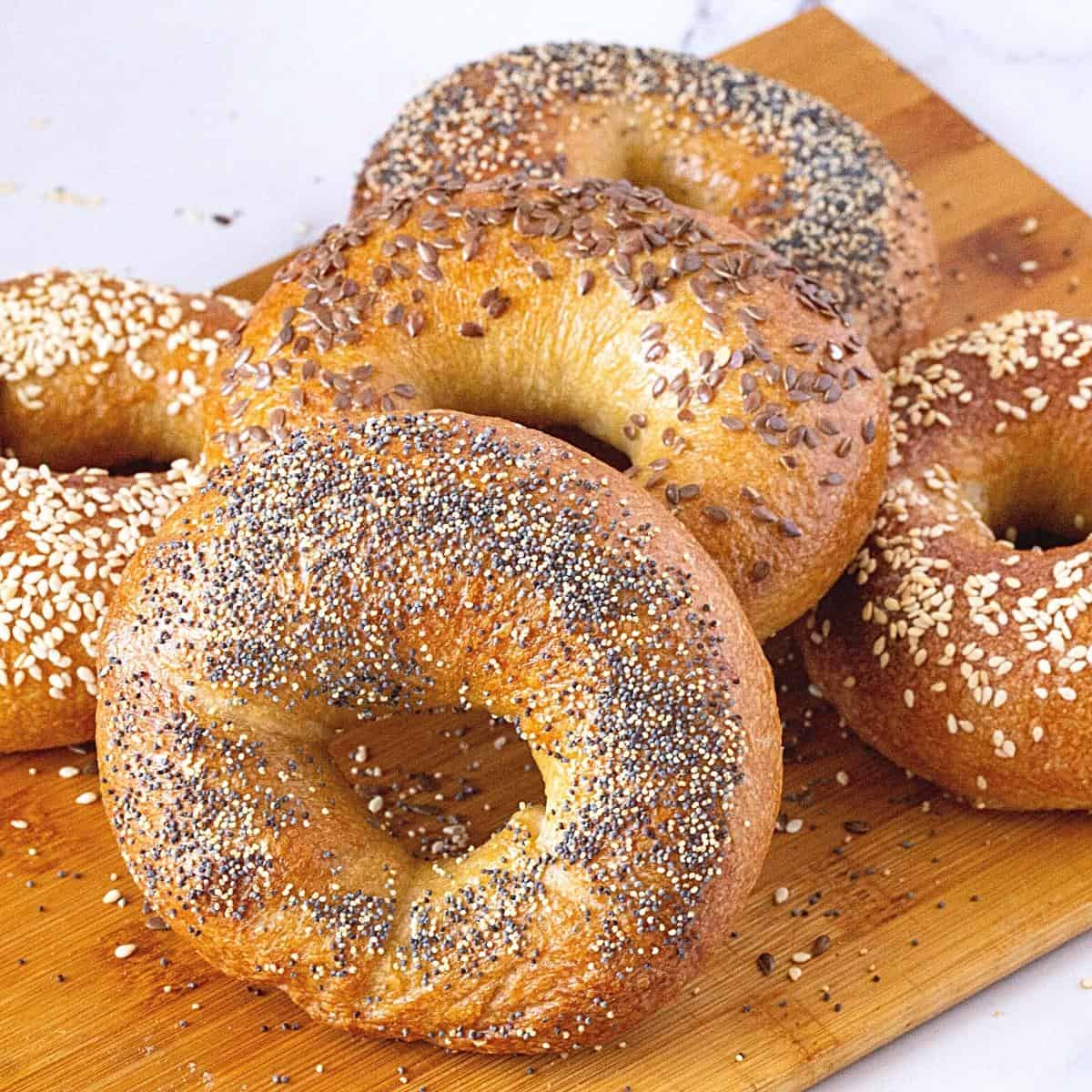
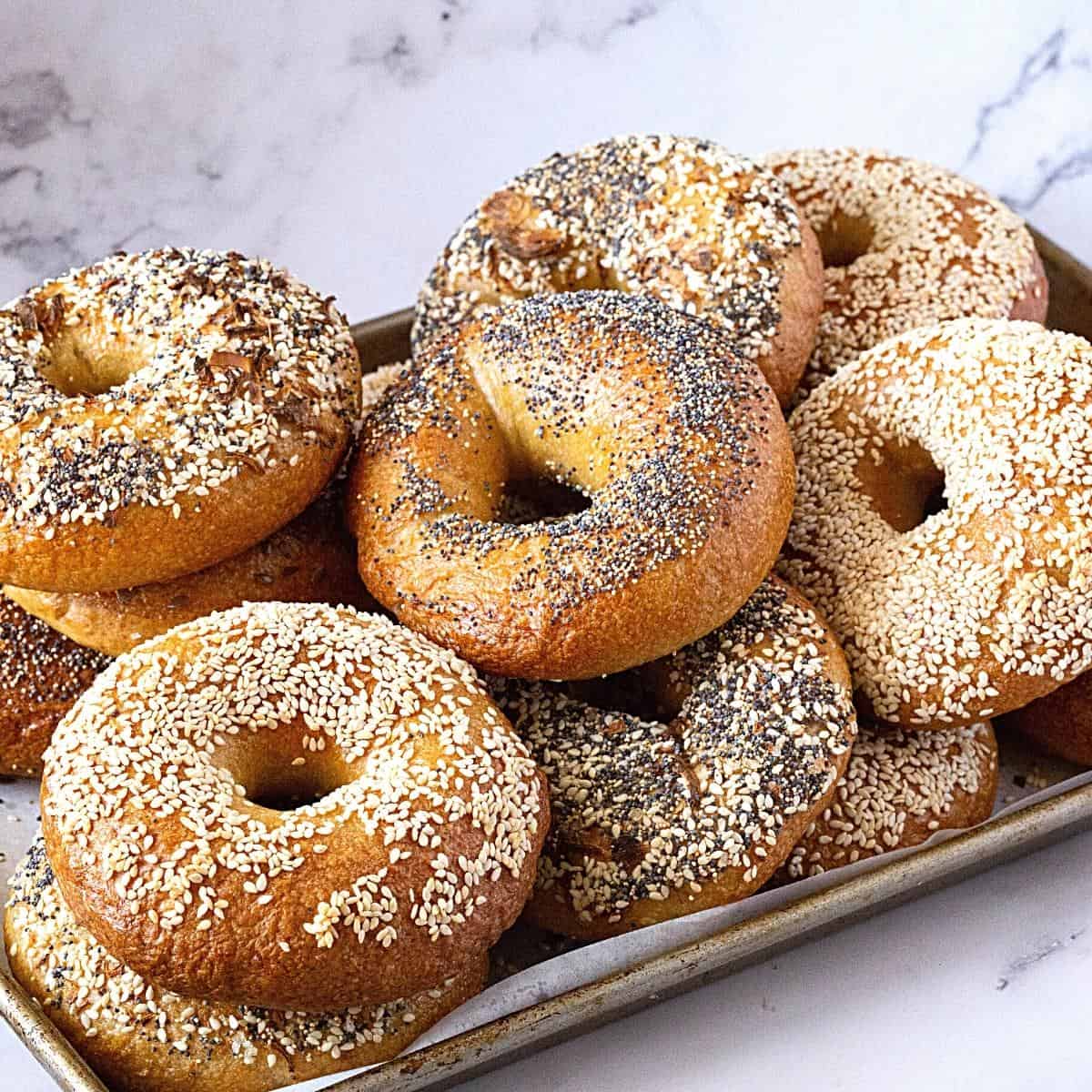
Homemade bagels are easy to make if you follow a few basic steps, and they only require a few staple ingredients. These bagels are light and chewy, with a flavor that’s perfect for any topping you can imagine.
One of my favorite things to do every time I visit New York is to eat a lox bagel sandwich. Having left the US for so many years, we do miss these things, especially Ziv. He lived in New York for many years.
Although we can find bagels locally, it still isn’t the same thing.
So, of course, I thought, how hard can it be? After all, it’s like baking bread. Well, turns out it’s not that simple to get the right texture, chewiness, and flavor. However, after a few attempts, I finally got it right. So, Mission accomplished.
Bagels are ring-shaped bread that look like donuts, but they have a unique flavor and texture. The real difference is in the shaping, then poaching, and baking. The bagels are poached in water with baking soda, which is what gives this bread its unique flavor, texture, and chewiness. And the poaching also creates this thick skin on the surface, which bakes into a chewy crust while still keeping the inside wonderfully soft.
Why make these bagels?
- These New York-style homemade bagels are easy to make and don’t need any special equipment.
- They are soft and chewy, delicious on their own, and perfect for any bagel sandwiches from breakfast to dinner.
- All the ingredients are easy to find or simple staples such as flour, yeast, sugar, oil, and water.
- And we do the classic poaching with baking soda, which gives us a thick, chewy skin on the surface while still keeping the inside soft and light.
Ingredients and substitutes
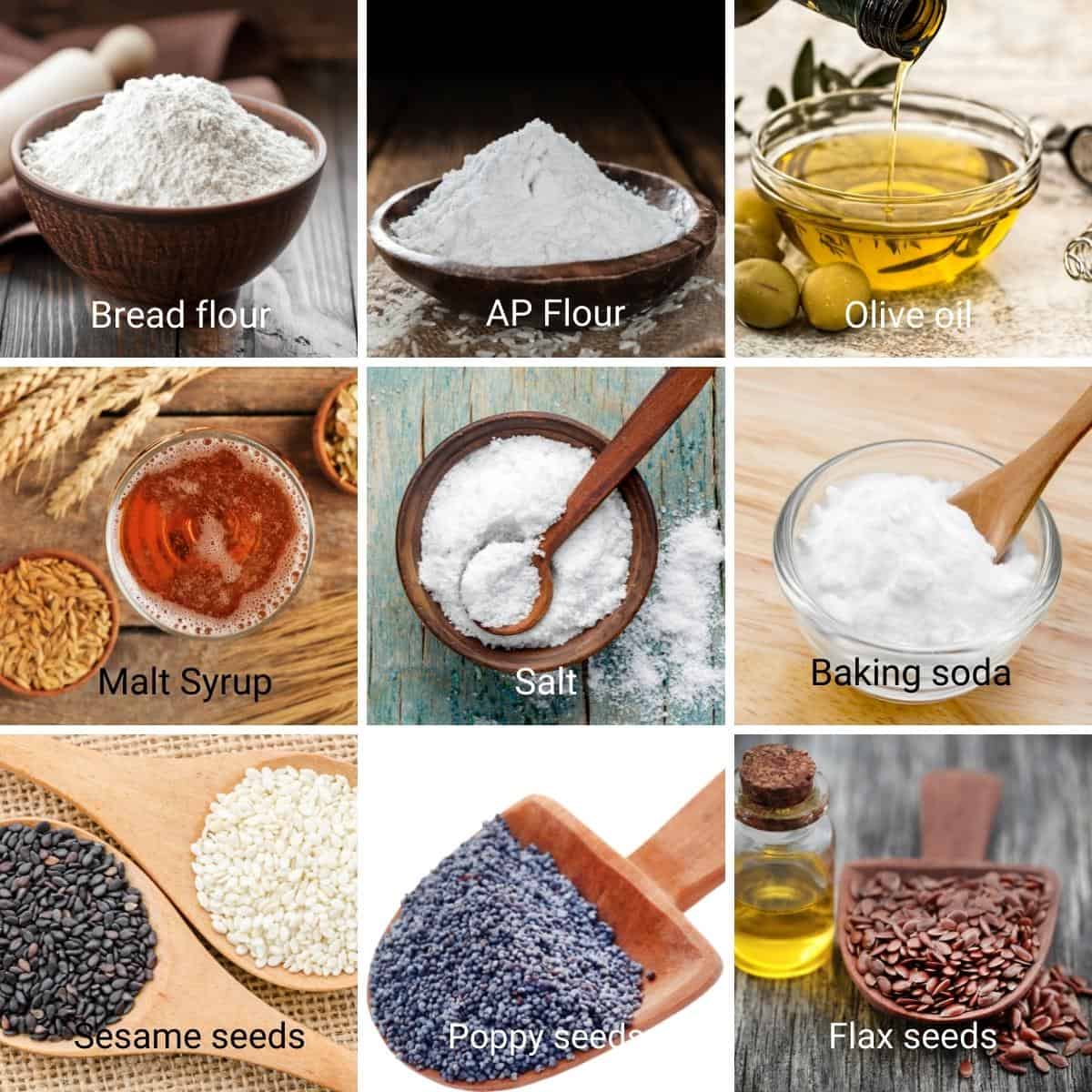
- Flour—I prefer to use a combination of bread flour and a little all-purpose flour. Bread flour has high gluten, which makes these the most deliciously chewy bagels. However, you can certainly make bagels with all-purpose flour, too.
- Water – The water in the dough must be warm, about 110°F. You don’t need a thermometer; lukewarm is a good description.
- Yeast – I like to use instant dry because I’ve always had great success with it. You can also use the same amount of active dry yeast or 21 grams of fresh baker’s yeast.
- Oil – I like to use olive oil. Coconut oil or avocado oil also works wonderfully.
- Baking soda – Poaching the bagels in soda water is what gives them their unique flavor and texture. So don’t skip this step.
- Malt syrup – Gives these that wonderful flavor that is very unique to bagels. You can also use honey or brown sugar instead.
Step-by-step: Homemade bagel recipe
Bagel dough
- Combine – In the bowl of a stand mixer with the dough hook attachment, combine the warm water, yeast, oil, and barley malt syrup (or honey). Add the bread, all-purpose flour, and salt.
- Knead – Start the mixer at medium-high speed until all the flour is well incorporated. Then, continue to knead on medium speed for 8 to 10 minutes.
Pro tip – Transfer the dough to a well-dusted worktop and knead for 12 to 15 minutes.
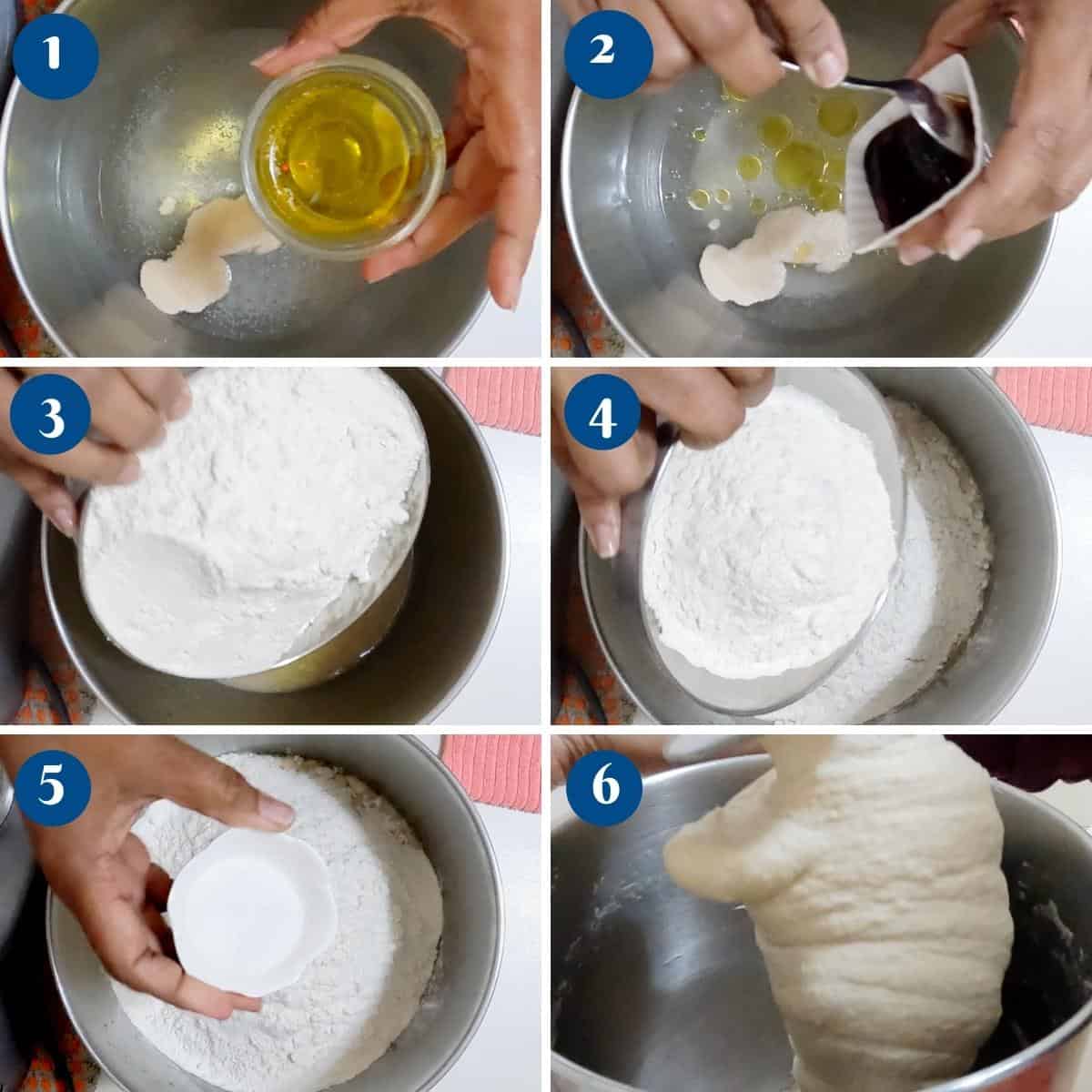
- Rest – When the dough is smooth, soft, and elastic, shape it into a ball. Then, place the dough in an oiled bowl, seam side down. And cover with a clean kitchen cloth or plastic wrap. Leave in a warm place. And let it rise for 60 to 90 minutes until it doubles in volume.
Pro tip – In winter, you may need 90 minutes or more for the dough to rise. But, in summer, the dough may double in 45 minutes. And if you can’t attend to it at that moment, degas and reshape the dough into a ball, then leave it to double in volume again. - Divide – When the dough is doubled in volume, transfer to a well-dusted floured surface. Punch it down and remove any air bubbles.
Divide the dough into two portions, then each portion into 6. This makes 12 bagels of approximately 125 grams each.
Pro tip – At this point, there is no need for additional flour. So, use a light dusting of flour if necessary. - Ball – Roll each piece of dough into a tight ball, tucking all the seams under. Then, let the dough balls rest for 15 minutes.
Pro tip – Resting the dough in between steps is crucial to help the gluten relax. Otherwise, stretching and shaping become a challenge.

Shape & proof
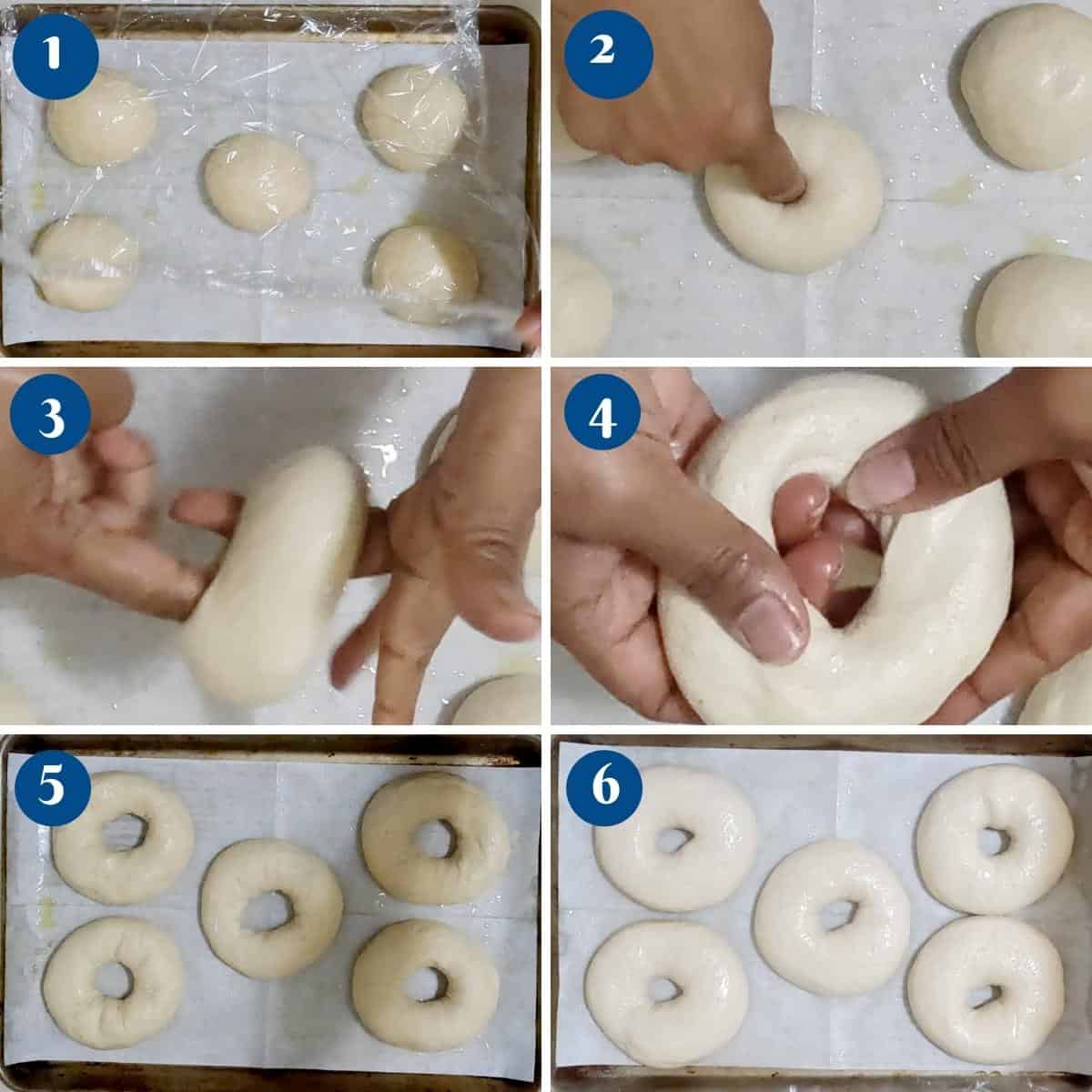
- Method 1 – Using your fingers, poke a hole in the center of each ball. Stretch it so the hole is at least 1 1/2 to 2 inches wide.
Pro tip – Make sure the hole is big enough. Otherwise, it will close during proofing and baking.
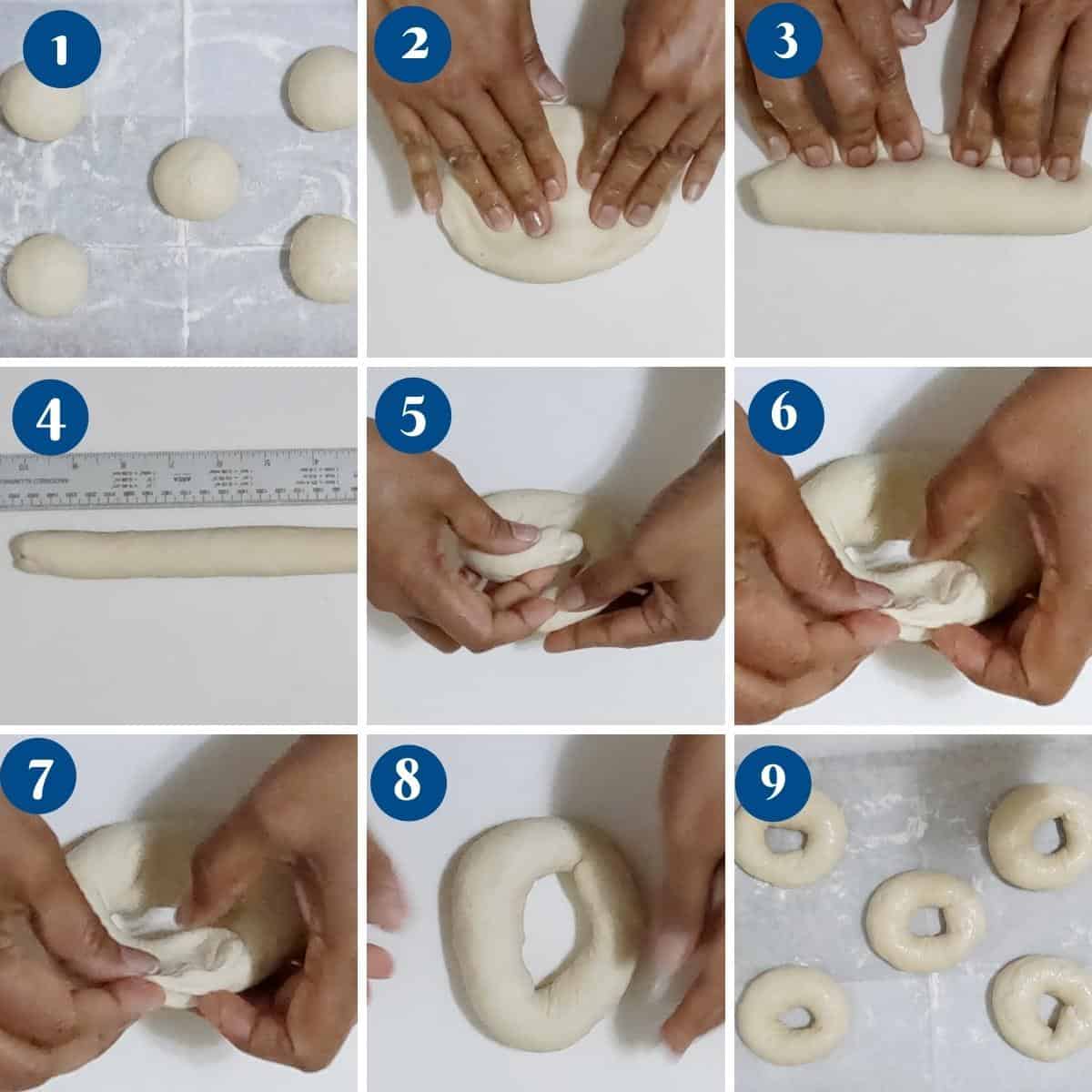
- Method 2 – Press the ball into a flat disc.
- Roll from one side to the other and roll to about 10 to 11 inches long rope.
- Then, flatten one side of the rope like a fan.
- Next, twist the rope and then tuck the other side into the fan.
- Pinch the seams well.
Pro tip – Do not use too much flour, as it will prevent the dough from sticking together.

- Method 3 – Press the ball into a flat disc.
- Roll from one side to the other and roll into a 10 to 11-inch-long rope.
- Then, twist the rope, bring the two ends together, and attach them.
- Next, put your hand through the hole in the center.
- And roll the dough back and forth on the unfloured work surface until the two ends are sealed together almost seamlessly.
Pro tip – You can use a dab of water to pinch the two ends together, but too much water will prevent them from sticking.
- Baking tray – Line two large baking trays with parchment paper. Spray the parchment with cooking spray or dust with flour. Then, place the bagel on the parchment, leaving enough room for it to rise. Cover with plastic wrap or a clean kitchen towel and leave to rise for 60 to 90 minutes or until almost doubled in size.
Pro tip – You can leave the bagels in the fridge overnight to slowly proof. Then, leave them on the counter for 45 to 60 minutes before you poach them in a water bath. - Proof
- Counter – Leave to rise on the counter at room temperature for 60 to 90 minutes or until almost doubled in size.
- Overnight – Alternatively, you can leave the bagels in the fridge overnight to slow-proof. Then, take them out on the counter for 45 to 60 minutes before you poach them in a water bath.
Water bath & bake
- Preheat the oven to 390°F / 200°C/ Gas Mark 6
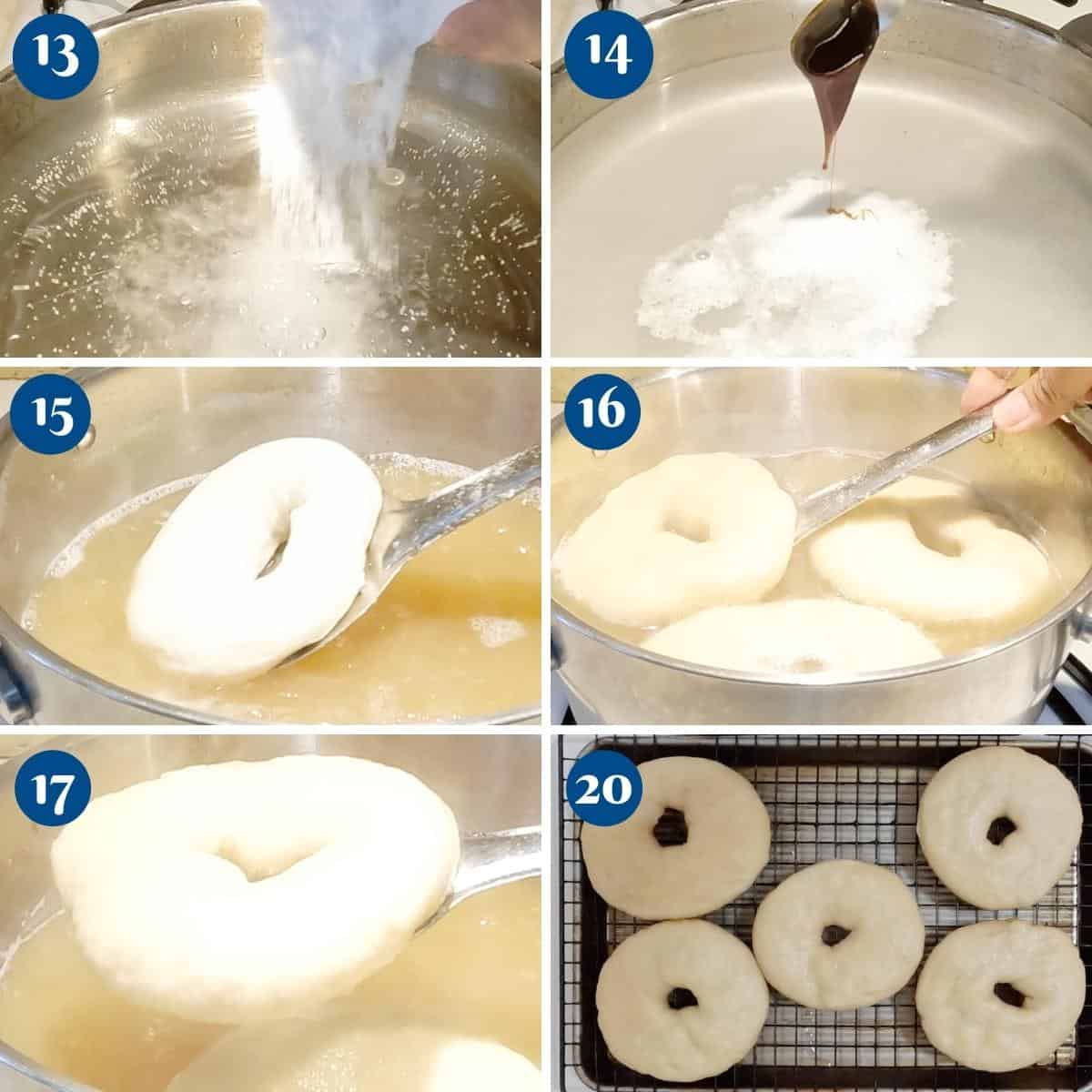
- Poaching liquid – Bring a large pot of water to a boil. Add the salt, sugar, baking soda, and malt syrup.
Pro tip – We need a wide, shallow pan so you can add 3 to 4 bagels at once. Otherwise, the water will be deep, but there will not be enough space for the bagels. - Water bath – Once the water comes to a boil, carefully add the bagels, a few at a time. Boil each bagel for 30 seconds on each side. Remove and place them back onto a baking tray lined with a wire rack to drain excess water.
Pro tip – Overcrowding the pan will lower the water’s temperature. And the longer you boil the bagels, the thicker and chewier the crust will be.
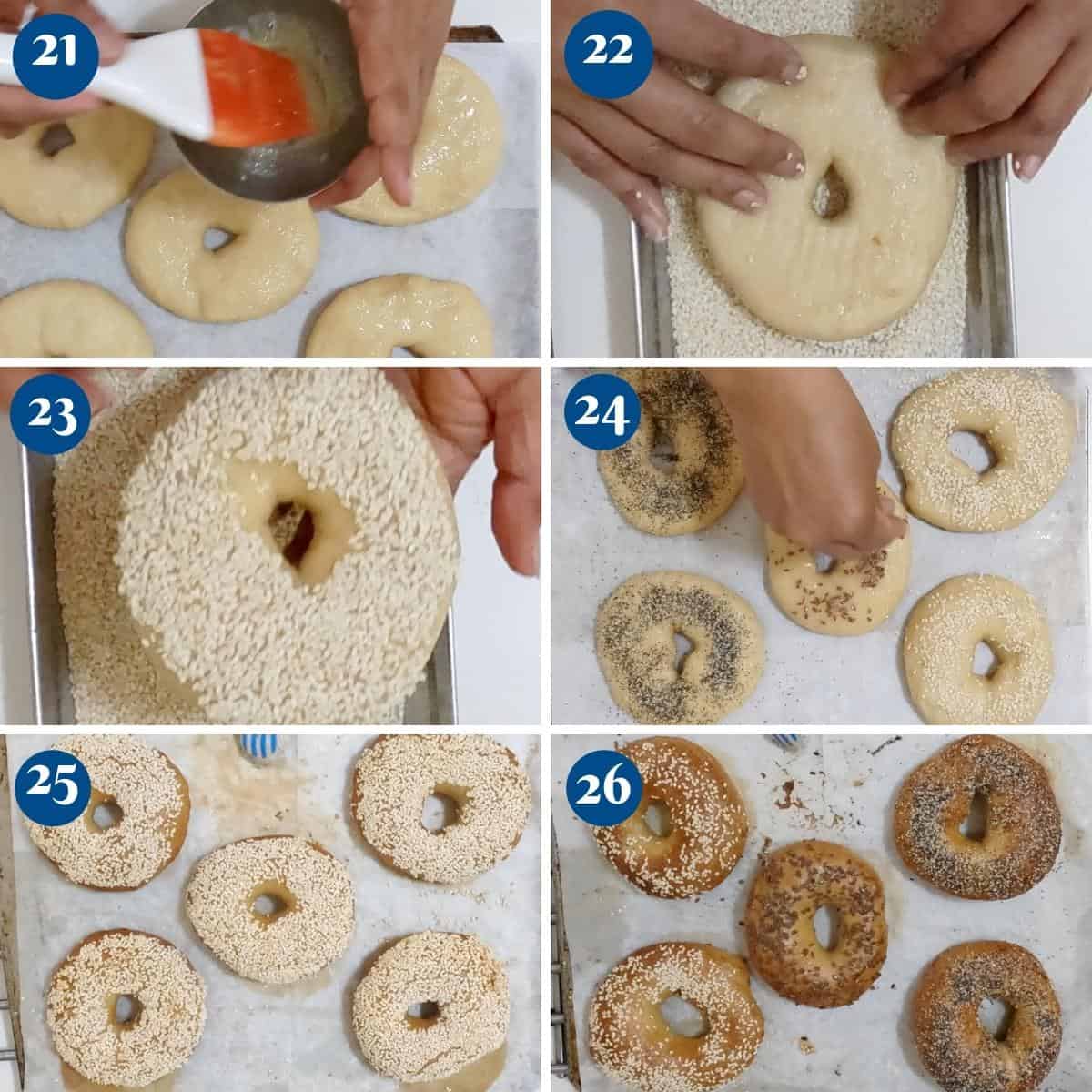
- Egg wash – Transfer the bagels back to the baking sheet lined with parchment paper or wipe excess moisture from the tray. Then, brush each bagel with beaten egg white or olive oil.
Pro tip – Excess liquid in the baking tray will create steam during baking. This will make the crust harder. So, wipe excess liquid. - Toppings – You can place the bagel upside down in the topping for a thicker coating. Or just sprinkle a few toppings on the bagel, as shown in the video.
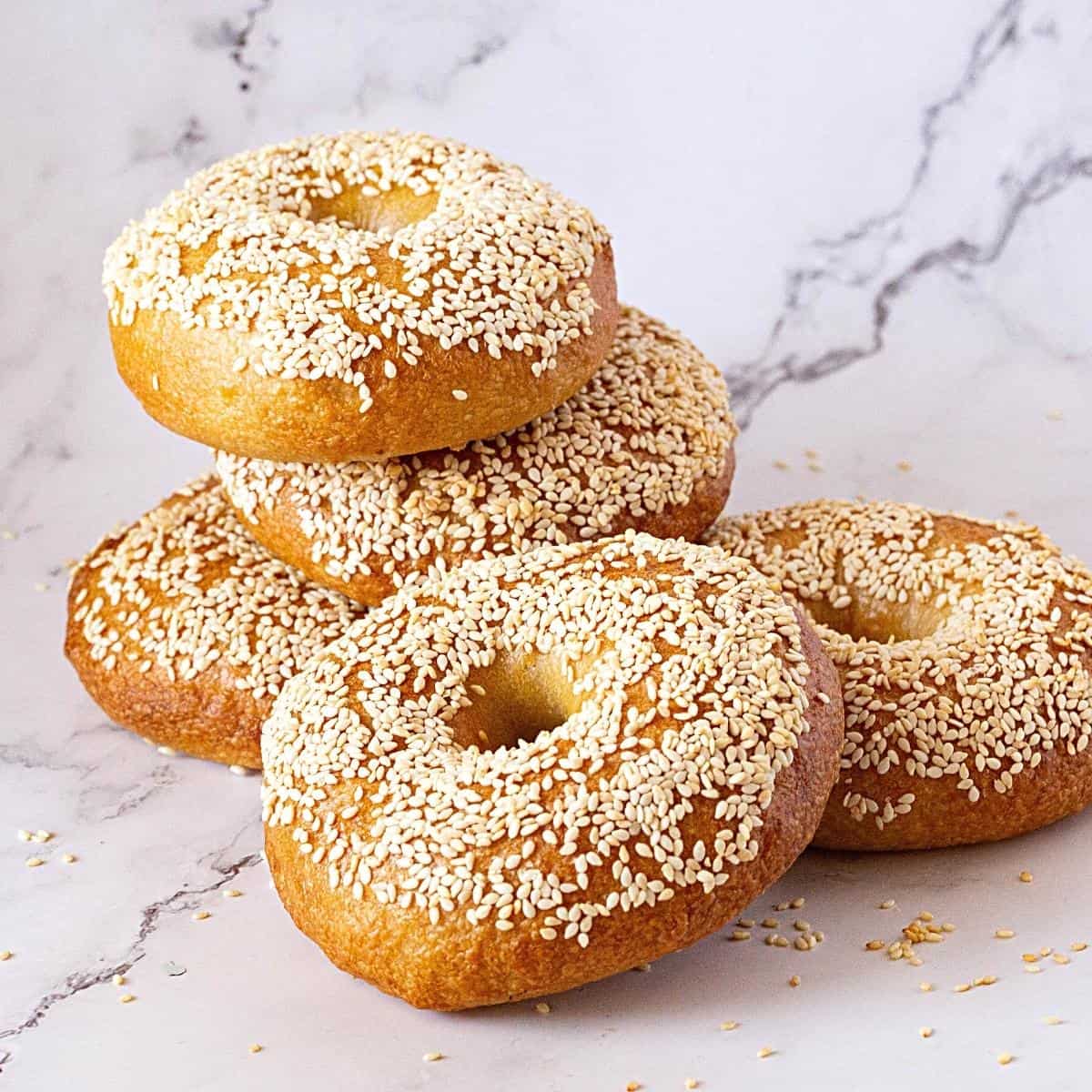
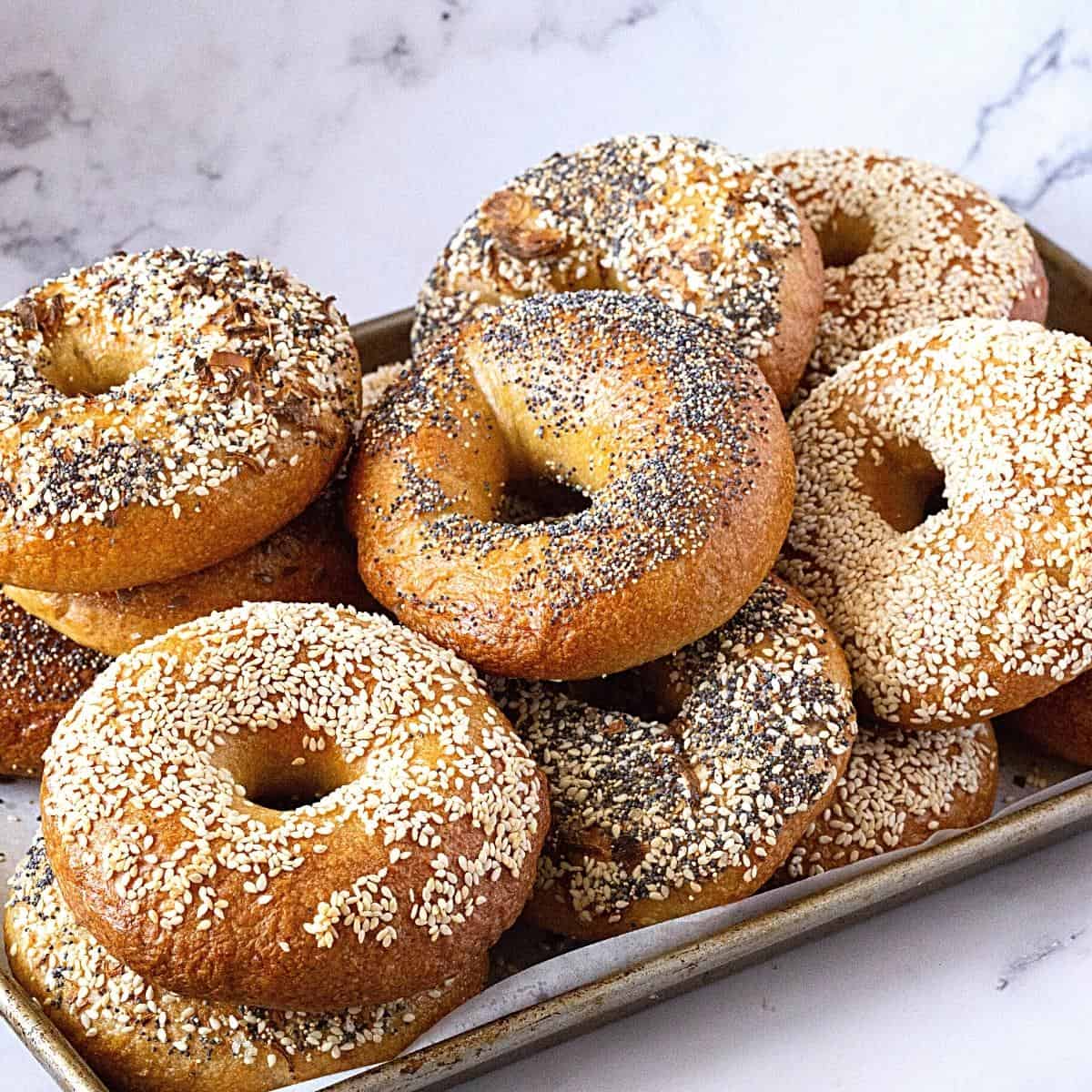
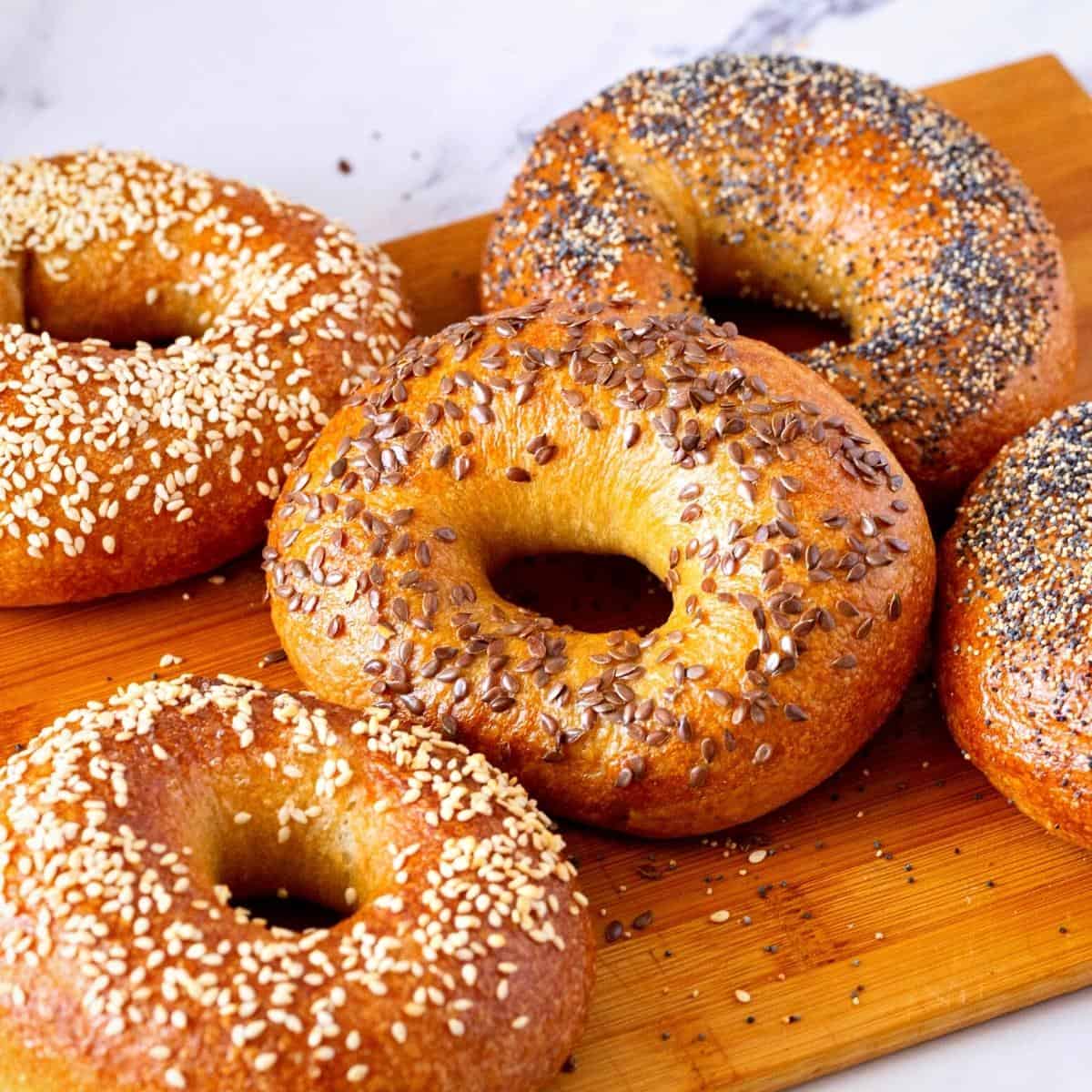
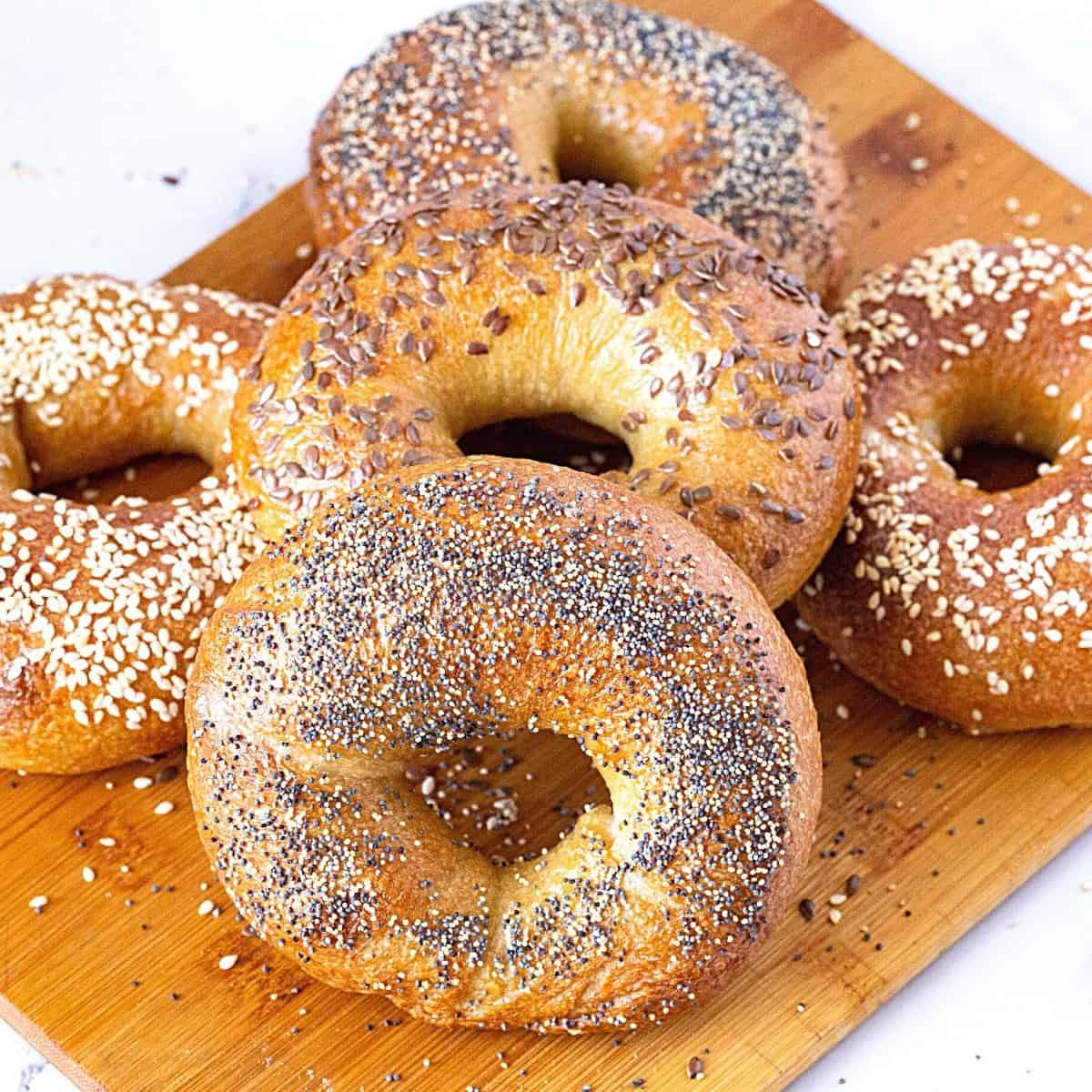
Pro tip – I’ve used sesame seeds, poppy seeds, flax seeds, or everything bagel seasoning. You can also use other toppings like zaatar, fried onions, etc. - Bake for 20 to 25 minutes until the top is golden brown. As soon as they come out of the oven, move them to the baking tray to prevent them from sticking.
Pro tip – The egg whites and water can cause the bagel to stick to the parchment paper, so move them on the tray while they are still hot. - Cool – Let cool on the baking tray for 3 to 5 minutes. Then, transfer to a wire rack to cool further. Bagels are at their best the day they are baked. But leftovers make great toast. And they also keep well in the freezer.
Troubleshooting
- My bagels are flat; why? If you over-boil the bagels in the boiling water, it can deflate the bagels, losing all the air incorporated during the proofing. These will end up baking flat, hard, and dry.
- The bagel holes are closed; why? When shaping the bagels, make the holes about 1 1/2 to 2 inches. These will get smaller as they proof and bake. And if you make them too small, they will close when baking. Having said that, the holes do not affect the taste. They will still taste incredibly delicious.
- The bagels got stuck to the bottom of the pan; why? The water must be boiling. Do not add the bagels unless the water has come to a boil. When you add the bagel in, it must instantly float. This means the water is ready. If not, wait until the water is boiling. Covering the pot can help bring it up to a boil.
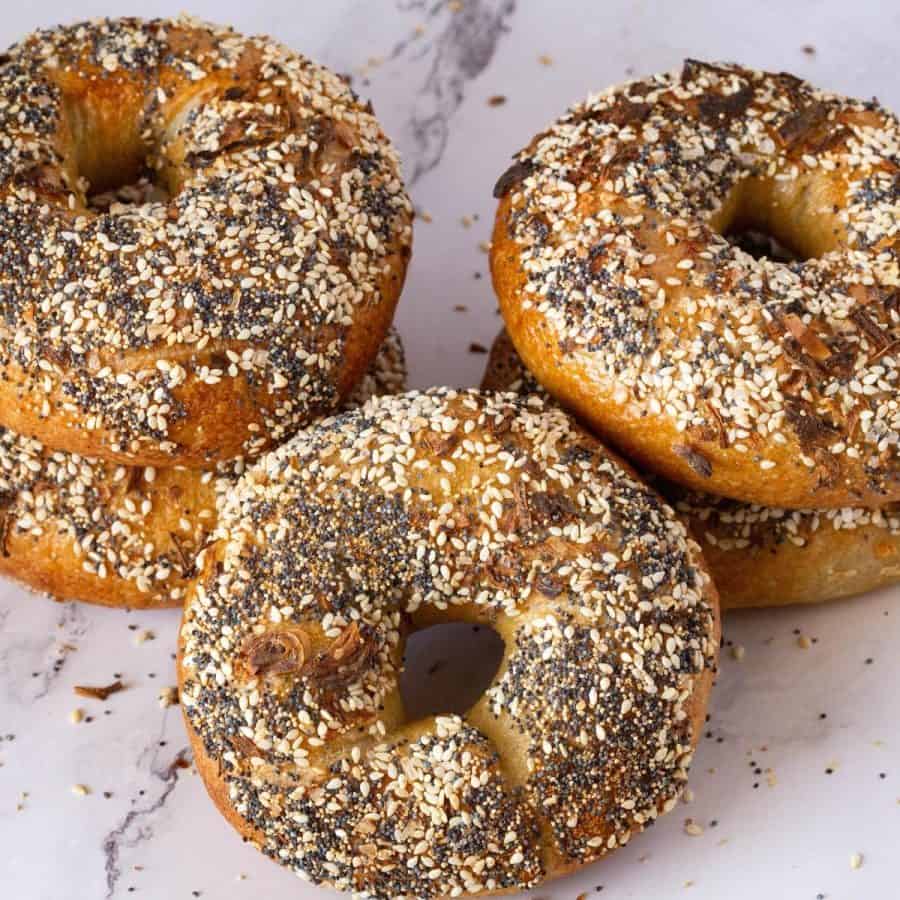
- The bagel toppings are burnt. Some toppings do well when baking, and some don’t. For example, seeds such as sesame, poppy, and salt do well. But garlic and onion flakes tend to burn. Instead, use garlic and onion granules.
- Homemade Everything Bagels
- Easy Homemade Pretzels, Soft Whole Wheat Pretzels
- Milk and Honey Challah
- Shokupan Sandwich Bread
- Homemade Soft Dinner Rolls
- Sourdough Loaf Bread
- See all Bread recipes


Frequently asked questions
Bagels are best eaten the same day they are made, but they do freeze beautifully. Cool the baked bagels, then place them in a freezer-safe storage bag. These can also be frozen for up to 3 months.
A bagel is a bread made with yeast, but unlike regular bread, the dough is denser and has a very short shelf life. Also, it has malt syrup in the dough and is poached in a baking soda bath before baking, which gives it a very distinct taste and flavor.
You can place the frozen bagel in the microwave at 30-second intervals until warm. The water from condensation helps keep them soft.
The dough can be prepared a day in advance. Proof them for an hour on the counter, then punch down and let the dough rest in the fridge overnight. In fact, overnight proofing is a great way to add flavor to the bagels. The next day, let the dough come to room temperature before you shape and boil it.
Best Homemade Bagels Recipe
Ingredients
Bagel dough
- 500 grams (2.11 cups) Warm water warm 110 F
- 14 g (1½ tbsp) Instant yeast (1 packet)
- 30 g (2. tbsp) Olive oil
- 30 g (2 tbsp) Barley malt syrup or honey
- 733 g (5¾ cups) Bread flour
- 183 g (1¾ cups) All-purpose flour
- 13 g (2¼ tsp) Salt
Poaching liquid
- 1½ liter (6 cups) Water
- 30 grams (2½ tbsp) Baking soda
- 30 grams (1¾ tbsp) Malt syrup
- 15 grams (1¼ tbsp) Sugar
- 15 grams (¾ tbsp) Salt
Plus
- 1 Egg white beaten
- 4 tbsp Sesame seeds
- 4 tbsp Poppy seeds
- 4 tbsp Flaxseeds
Instructions
Bagel Dough
- Combine – In the bowl of a stand mixer with the dough hook attachment, combine the warm water, yeast, oil, and barley malt syrup (or honey). Add the bread, all-purpose flour, and salt.500 grams Warm water, 14 g Instant yeast, 30 g Olive oil, 30 g Barley malt syrup, 733 g Bread flour, 183 g All-purpose flour, 13 g Salt
- Knead – Start the mixer at medium-high speed until all the flour is well incorporated. Then, continue to knead on medium speed for 8 to 10 minutes or 10 to 12 minutes by hand on a floured surface.
- Rest – When the dough is smooth, soft, and elastic, shape it into a ball. Place the dough in an oiled bowl, seam side down. Cover with a clean kitchen cloth or plastic wrap. Leave in a warm place. Let rise for 60 to 90 minutes until it doubles in volume.
- Divide—When the dough is doubled in volume, transfer it to a well-dusted floured surface. Punch it down and remove any air bubbles. Divide the dough into two portions, each portion into 6. This makes 12 bagels of approximately 125 grams each.
- Ball – Roll each piece of dough into a tight ball, tucking all the seams under. Let the dough balls rest for 15 minutes.
Shape & Proof
- Method 1– Using your fingers, make a hole in the center of each ball. – Stretch it so the hole is at least 1 1/2 to 2 inches wide.
- Method 2 – Press the ball into a flat disc. – Roll from one side to the other and roll to about 10 to 11 inches long rope.-Flatten one side of the rope like a fan, – Twist the rope, then tuck the other side into the fan. -Pinch the seams well.
- Method 3– Press the ball into a flat disc. – Roll from one side to the other and roll into a 10 to 11-inch-long rope. – Twist the rope and bring the two ends together, and attach them. – Put your hand through the hole in the center and roll the dough back and forth on the unfloured work surface until the two ends are sealed together almost seamlessly.
- Baking tray – Line two large baking trays with parchment paper. Spray the parchment with cooking spray or dust with flour. Place the bagel on the parchment, leaving enough room for them to rise. Cover with plastic wrap or a clean kitchen towel and leave to rise for 60 to 90 minutes or until almost doubled in size.
- Proof – Leave to rise on the counter at room temperature for 60 to 90 minutes or until almost doubled in size. Alternatively, you can leave the bagels in the fridge overnight to slow proof. Take them out on the counter for 45 to 60 minutes before you poach them in a water bath.
Poach & Bake
- Preheat the oven to 390°F / 200°C/ Gas Mark 6
- Poaching liquid – Bring a large pot of water to a boil. Add the salt, sugar, baking soda, and malt syrup.1½ liter Water, 30 grams Baking soda, 30 grams Malt syrup, 15 grams Sugar, 15 grams Salt
- Water bath – Once the water comes to a boil, carefully add the bagels, a few at a time. Boil each bagel for 30 seconds on each side. Remove them back onto a baking tray lined with a wire rack to drain excess water.
- Egg wash – Transfer the bagels back to the baking sheet lined with parchment paper or wipe excess moisture from the tray. Brush each bagel with beaten egg white or olive oil.1 Egg white
- Toppings—You can place the bagel upside down in the topping for a thicker coating or just sprinkle a few toppings on it, as shown in the video.4 tbsp Sesame seeds, 4 tbsp Poppy seeds, 4 tbsp Flaxseeds
- Bake for 20 to 25 minutes until the top is golden brown. When they come out of the oven, move them to the baking tray to prevent them from sticking.
- Cool – Let cool on the baking tray for 3 to 5 minutes. Then, transfer to a wire rack to cool further. Bagels are at their best the day they are baked. But leftovers make great toast. They also keep well in the freezer.
Video
Notes
- Use bread flour – it gives a chewier bagel than all-purpose flour.
- The dough is very easy to knead by hand, too. It must be soft and elastic. Use just enough flour necessary for kneading. If you add too much flour, it will be a very dense bagel.
- If you want the dough to rise quicker than 60 minutes, place the bowl in a warm oven with the light on. This usually takes only 30 to 45 minutes for me.
- Let the bagels proof for 45 to 60 minutes before you boil them in baking soda. These will ensure the inside is wonderfully light.
- The poaching liquid must be boiling when you add the bagels. Adding salt to the baking soda helps it come to a rolling boil. The bagel must float on the water, not sink. If they sink, it means the water is not hot enough. It’s best to wait.
- Wipe all excess moisture from the baking pan. This moisture can create steam in the oven when baking. The steam causes the crust to become hard. We want a chewy, not hard crust.
- Brush the bagels with egg white – this will help the toppings stick. To make them egg-free, brush with olive oil.
- Toppings – Avoid using onion or garlic flakes as these tend to burn when baking. The granules work better. Alternatively, you can bake the bagels plain, brush them with egg white, and add the garlic/onion flakes in the final 2 minutes of baking.
- Browning – too much or not enough. You can tent the bagels to prevent them from getting too brown. If your bagels don’t get a brown color, it usually means the oven is not hot enough or there is uneven heating.
- Overnight Bagels – The dough can be prepared a day in advance. Proof them for an hour on the counter, then punch down and let the dough rest in the fridge overnight. Overnight proofing is a great way to add flavor to the bagels. The next day, let the dough come to room temperature before you shape and boil it.
- Storing Bagels – Bagels are best eaten the same day they are made, but they do freeze beautifully. Cool the baked bagels, then place them in a freezer-safe storage bag. These can be frozen for up to 3 months.
- Seasoning – The options for topping are endless. Try sesame seeds, poppy seeds, nigella seeds, sea salt, flaxseeds, and zaatar, as well as everything bagel seasoning. It can be found in most supermarkets, but you can also make it yourself.
- Kneading the dough –
- Hand – This is an easy dough that uses 60% hydration, so it is an easy dough to knead by hand.
- Electric mixer – Of course, it is easier to use an electric stand mixer.
- Bread machine – bagels can be easily made in a bread machine. Pour all ingredients into the pan, set to dough or manual. Start and let the dough run its cycle for about 9 to 10 minutes – continue with the recipe as shown above.


Made this recipe?
I’d love to see how yours turned out! Share a photo on Instagram and tag @veenaazmanov_kitchen or use #veenaazmanovkitchen. And don’t forget to leave a rating and review!

Don’t lose this recipe! Save it for Later!
📌 Save this Recipe for later on Pinterest so you can easily find it again.
⭐ Add Veena Azmanov Kitchen to your Google Preferred Sources.
It helps Google show you more of our recipes.
📧 Subscribe for new recipes delivered to your inbox.
🎥 Follow us for more recipes

Hi, I’m Veena
I’m the recipe developer, baker, and food photographer behind Veena Azmanov Kitchen.
I’ve spent years developing and testing recipes, from everyday meals and homemade breads to cakes and desserts.
I share the practical tips and little details I’ve learned along the way so you can get great results in your own kitchen.










Loved the bagel recipe.
Thank you, Joe
I could not believe how easy this bagel recipe was! My husband was thrilled with these bagels. Thank you!
Thank you for the lovely feedback, Tara. Happy you enjoyed making them.
Love a homemade bagel … so much fun to make! Can’t wait to try all the toppings!
i love homemade bagels mine never looked this good trying this recipe today yours are perfect!
Perfect bagels! I used honey instead of barley malt syrup and they turned out amazing! Lovely, easy to follow recipe, and a lot more chewy than the previous recipes I tried. Thanks!
Thank you for the lovely feedback, Leva. Happy you enjoyed making these bagels.