




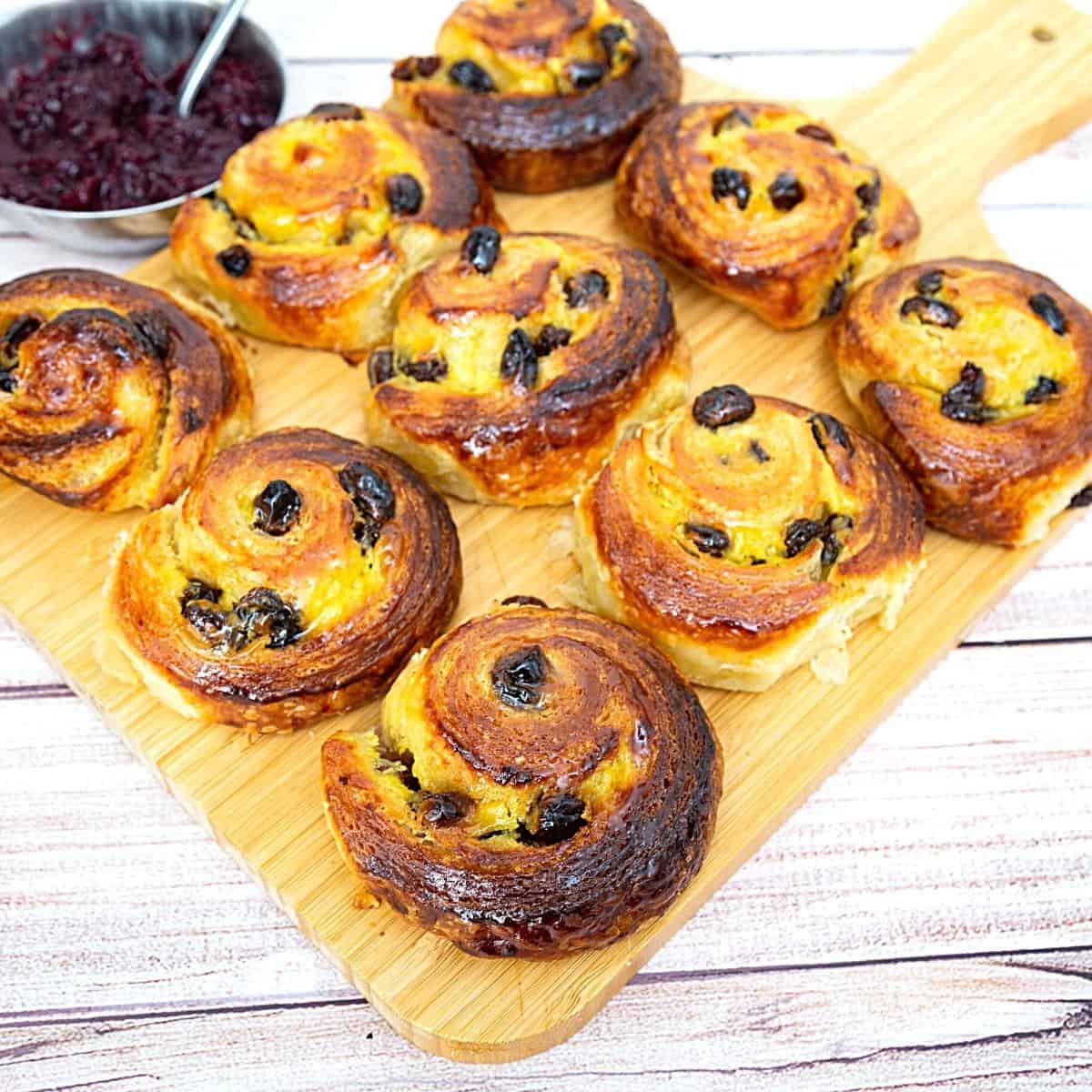
These pain aux raisins or raisin Danish pastry spirals use the classic Danish pastry dough filled with pastry cream and rum-soaked raisins. The laminated dough results in a rich, buttery, tender yet flaky pastry.
Danish pastries, or Viennese (wienerbrød) in Denmark, are made with a laminated dough similar to puff pastry and croissants. And, Danish pastry dough includes yeast, eggs, sugar, and butter. Then, it’s laminated with more butter, which results in tender but rich, flaky, buttery pastries with lots of layers.
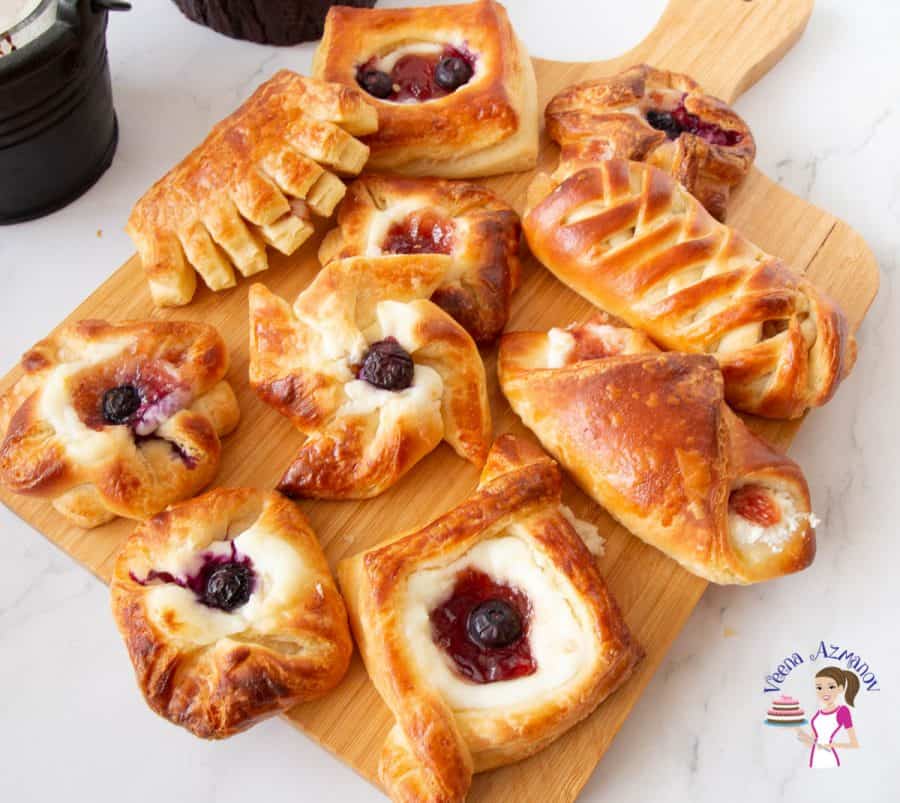
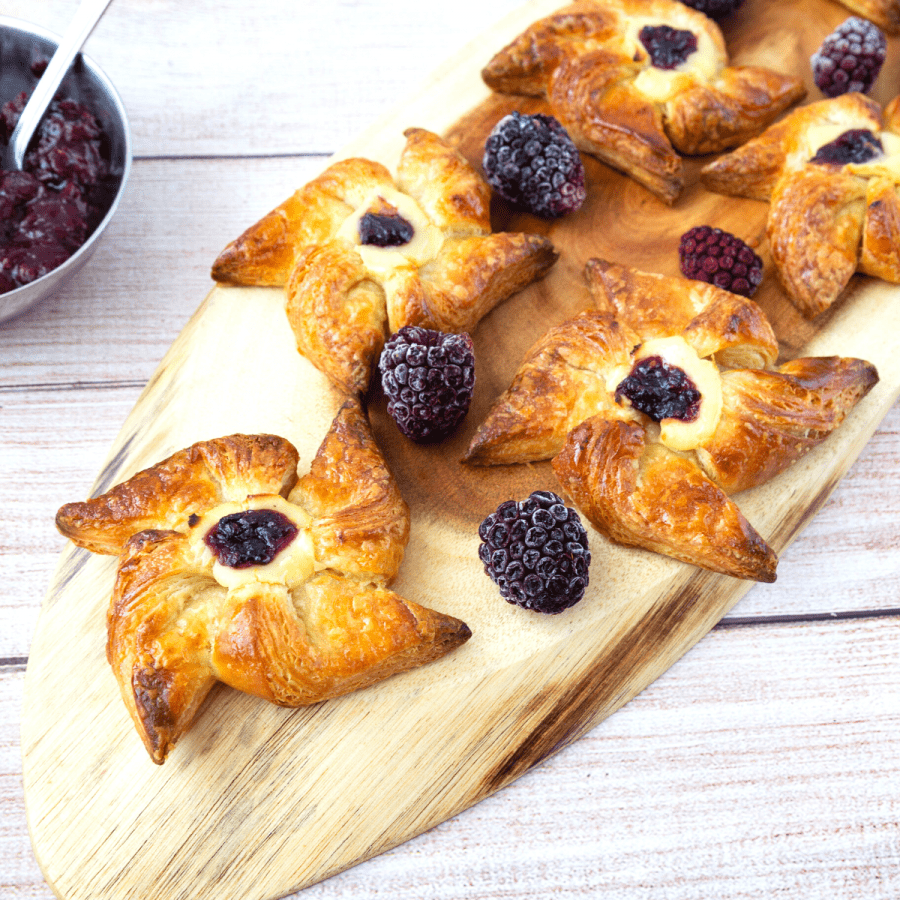
You can use the Danish pastry dough to create many different shapes or varieties of Viennese (pastries), such as these pastry cream raisins spirals, cinnamon sugar spirals, Danish pinwheels or darts, cylinders, stars, braids, envelopes, pockets, combs, squares, horns, etc.
The filling in these shapes can be different as well. You can pick any shape and choose a filling. For example, try cream cheese, almond cream, pastry cream, jams, and fruit fillings as well as fresh fruits. In fact, the options are endless.
Danish pastry has always been my weakness. And soon, I plan to share many of these shapes and fillings using the Danish dough.
Why make this Danish pastry
- Bakery-quality at home – buttery, flaky layers with that classic swirl and golden finish
- Soft, custardy center – filled with creamy pastry cream and juicy raisins in every bite
- Make-ahead friendly – prep the dough in advance and bake fresh when you need it
- Perfect for breakfast or brunch – looks impressive but surprisingly doable in your own kitchen

This is a classic Danish dough, and you could use the same dough to make other shapes and fillings too, such as the Danish cream cheese cylinders, Danish pinwheels, Danish braided pastry, etc.

Ingredients and substitutes
- All-purpose flour – Yes, plain all-purpose flour works perfectly with Danish pastry dough. So, don’t use bread flour and definitely do not use self-raising flour.
- Sugar – Danish is a sweet dough, but you can definitely reduce the sugar by half if you prefer.
- The liquid – Danish dough is made with milk. In fact, use full-fat milk, not skim or similar.
- Yeast – I am using instant dry yeast today. And yet, you can certainly use other types of yeast, including fresh yeast. You can read all about yeast and its substitutes here – Baking with Yeast: A Beginner’s Guide.
- Butter – The best butter to use is European butter. The reason for that is that good European butter has a high-fat content. And, high-fat means less moisture, which can cause the butter to melt and create steam in the pastry when baking.

Step-by-step: Danish pastry – Pain au raisin
Pastry cream
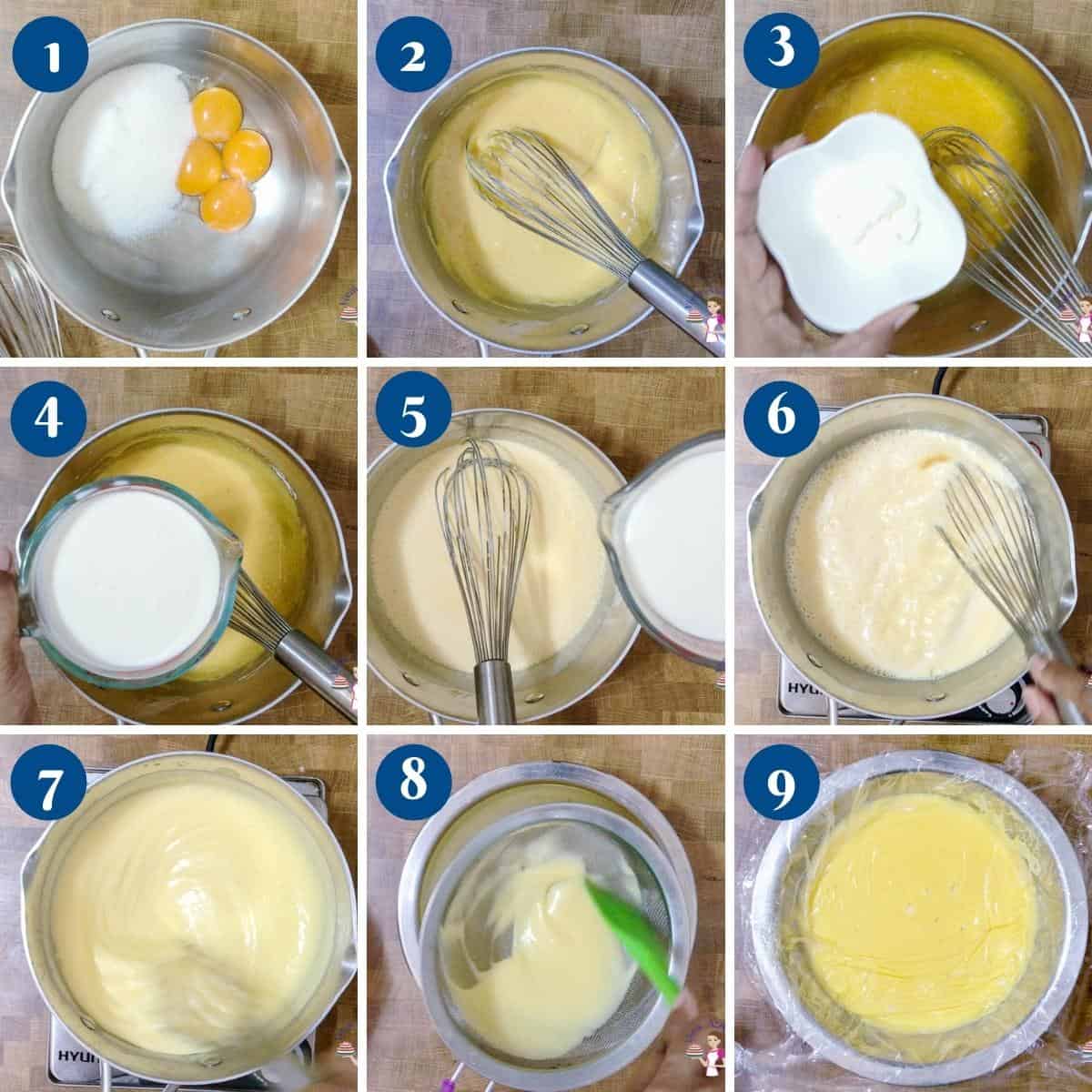
- In a heavy-bottomed saucepan, add the egg yolks, sugar, flour, and vanilla bean paste. Combine until smooth. Then, add the salt and vanilla extract. Followed by the milk and heavy cream. Stirring constantly to avoid lumps.
Pro tip : Gradually add the milk, a little at a time, to prevent lumps. - Then place the pan on medium-low heat and continue cooking the pastry cream, stirring constantly. When the pastry cream is thick enough to coat the back of a wooden spoon or spatula, add the butter and take it off the heat.
- Strain through a mesh or sieve – discard the vanilla pod as well as any curdled eggs. Cover the surface of the pastry cream with plastic wrap. Chill in the fridge for 4 to 6 hours.
Raisins
- Soak the raisins in rum for 4 hours up to overnight. Drain well before using it.
Apricot glaze
- Heat the apricot jam and water on low heat until dissolved. Strain through a sieve – set aside until ready to use.
Pro tip – If necessary, warm in the microwave for 10 seconds before using it.

Danish dough
- Dry ingredients – In the bowl of a stand mixer with the hook attachment, combine flour and salt. Set aside. You can also use a food processor to make this dough.
- Yeast mixture – In a measuring cup or bowl, combine milk, sugar, yeast, egg, and vanilla extract.
- Wet to dry – Then, add the yeast mixture to the flour mixture. Combine on medium-high until all flour is incorporated. Knead a minute more.
- Knead – Then, gradually add the room temperature butter, one tablespoon at a time. Then, knead for 3 minutes on medium. Alternatively, you can knead by hand for 5 to 7 minutes.
- Rest – The dough will be soft and slightly sticky. Remove from the mixer and shape into a ball. Place in an oiled bowl, cover with plastic wrap, and chill for 15 minutes.

Butter blocks
- Template – Use a parchment paper to create a template 12 x 6 inches (see video) – set aside.
- Cream – In the same bowl of the electric mixer bowl (no need to wash), cream the butter and flour just until combined. Transfer to the prepared parchment paper template. Spread evenly with a spatula. Use a rolling pin to guide it inside the template towards the corners (see video)
- Divide – Use a ruler to mark them at 6 inches. So, now this will give you two 6 x 6-inch blocks (see video).
Pro tip – We need two sheets of butter, 6 x 6 inches each. You can use a 6-inch square baking pan to make two such blocks. This 12 x 6 method ensures the blocks are even.
Pro tip – Be gentle with the rolling pin, using a spreading motion so the butter doesn’t come out of the corners. - Chill in the fridge for 15 minutes.
Pro tip – We want the fat to be cold but still be flexible so that when we roll it, it will spread between the folds. If you chill too long, it will break rather than spread.

Laminate the dough
- Roll – Transfer the dough to a lightly floured surface. Roll to a long rectangle of 7 x 18 inches.
- Fold – Open the butter block and divide it into 2 at the mark you created. Now you should have two 6 x 6-inch blocks. Place one block over the center. Fold one side over. Then, place the second block on top and fold the other side over.
Pro tip – Now you should have layers of dough, butter, dough, butter, dough. Does that make sense? - Chill – Wrap the dough, place it on a baking sheet, and put it in the refrigerator – chill for 15 minutes.
Pro tip – If the dough and butter are still cold when you wrap, you can continue with the first fold. Also, in warm places, you may need more cooling time.
Folds/turns
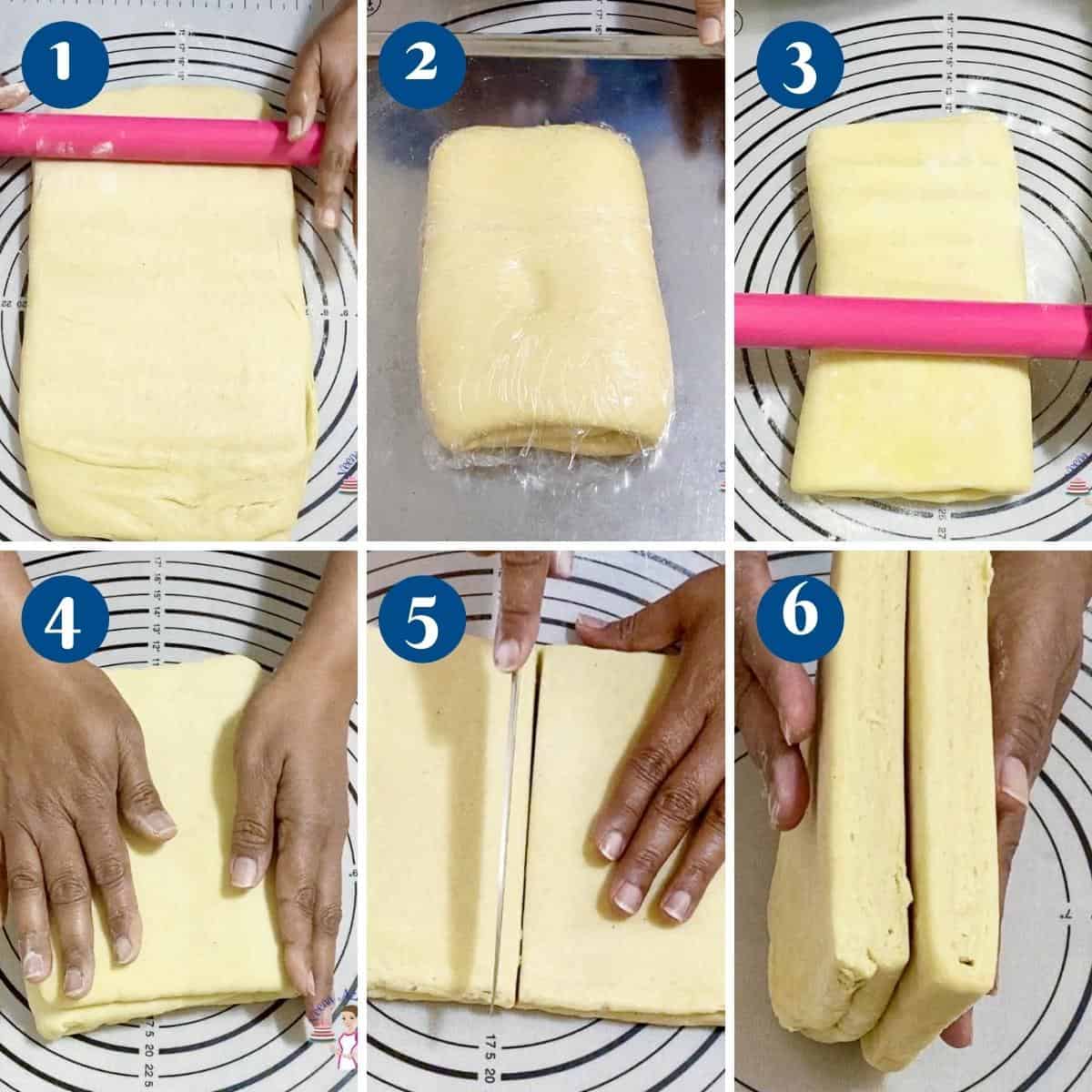
- Turn the dough – Roll the chilled pastry dough into a rectangle, with the short side facing you. Roll to a rectangle approximately 6 x 12 inches.
- First fold – Fold the dough lengthways into thirds like a business letter (see video). Wrap in plastic on a baking sheet and place into the fridge to chill for 30 minutes.
- Second fold – Roll the dough lengthways again with the short side facing you (see video) to about 6 x 12 inches long again. Fold the dough into thirds again like a business letter (see video). Place in the fridge for 30 minutes if necessary.
- Third fold – Roll the dough lengthways again with the short side facing you – (see video) to about 6 x 12 inches long again. Fold the dough into thirds again like a business letter (see video).
- Chill – After the third fold, chill in the fridge for at least two hours or until well chilled. This can be chilled for up to 48 hours.
Pro tip – It is very important that the dough is well chilled before use; otherwise, the folds will blend, ruining all your effort. - Divide – Roll the dough into a 6 x 12-inch rectangle. Divide into 2. Place one in the fridge while you work on the second one.
Pro tip – You want to work in batches so the dough stays cold at all times. Also, it means you won’t roll too thick.
Shape the dough
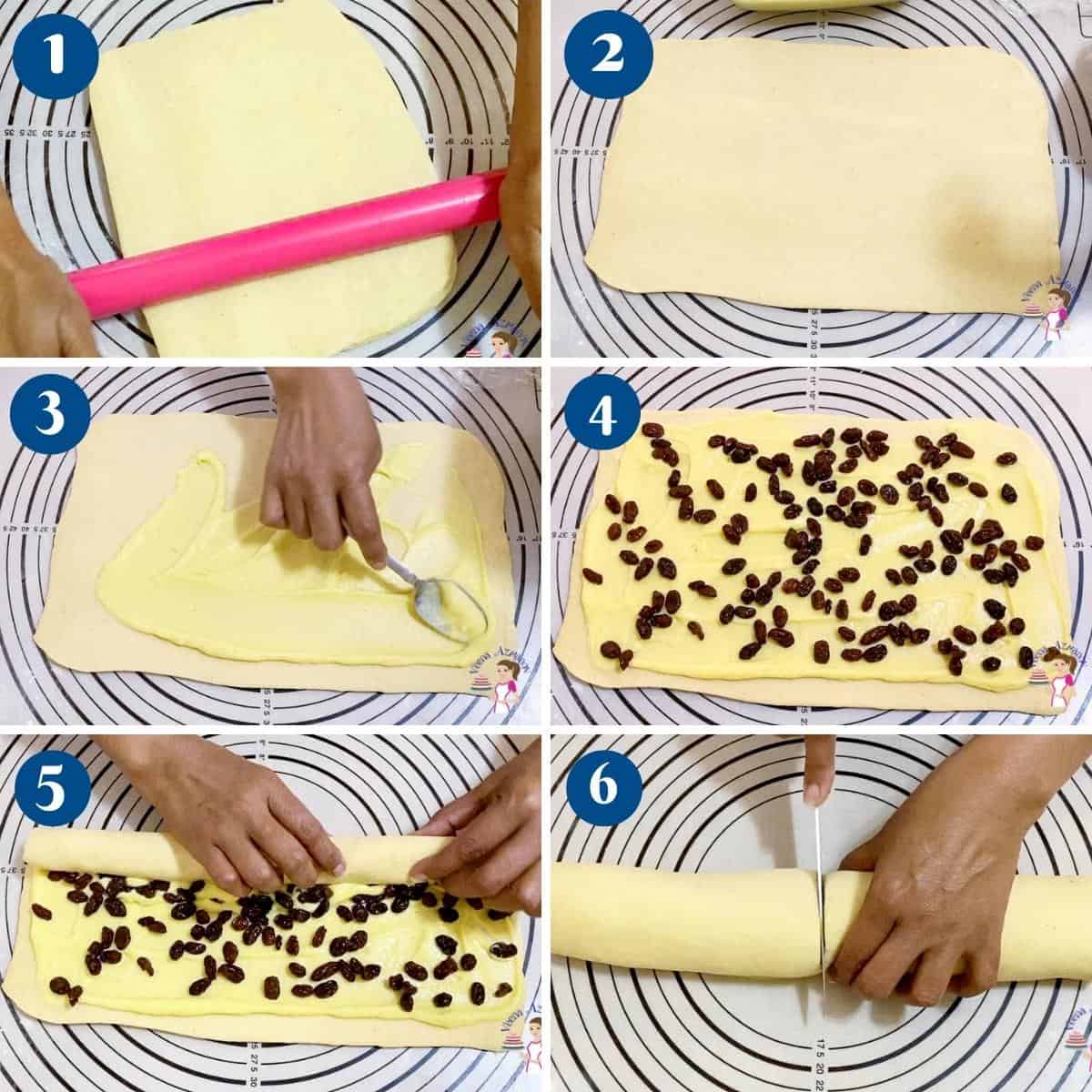
- Rectangle – Roll the dough to about a 10 x 12-inch rectangle.
Pro tip – It is very important that the dough is very chilled when you roll it; otherwise, the butter can ooze out of the sides, and you will not have a flaky pastry. - Fill – Spread a generous amount of pastry cream over the dough, making sure to get all the corners as well. Sprinkle the soaked and drained raisins. Roll the dough (like a jelly roll).
Pro tip – This process is similar to making cinnamon rolls. If necessary, chill the dough in the fridge again before slicing. - Divide – Cut into 1 1/2-inch slices (about 12). Cut each half in half until you have 12 pieces. Place on a silicone mat or parchment-lined baking tray.
- Proof – Place on a baking tray and cover the pinwheels with a clean kitchen cloth – let poof for 45 minutes.

Bake the Danish
- Oven – Preheat the oven at 375°F/ 190°C / Gas Mark 5. Brush the pastry with a beaten egg.
- Bake – Bake in the hot oven for 20 to 25 minutes until rich, golden brown.
Pro tip – If the pastries become too dark while baking, tent them with aluminum foil. - Glaze – Remove from the oven and let cool on the tray for 10 minutes. Then, using a pastry brush, glaze them with the prepared apricot glaze. (below)
Pro tip – If you brush while the pastry is very hot, it will absorb all the glaze and become too sweet, and you won’t have that shiny appearance. - Cool – Transfer to a cooling rack and cool them completely before storing. These pastries are best enjoyed on the day they are baked. But they also freeze well for months.


Troubleshooting
- My Danish pastry was baked too dark brown. Some home ovens, especially the fan-assisted oven, can cause pastries to become dark quickly. You can tent the Danishes with parchment paper or foil. For the next batch, brush the pastries with egg white instead of egg yolks.
- My pastry melted; all the butter had melted in the oven. If the pan has lots of melted butter, it means the oven temperature was too low or the oven was not properly preheated. Ensure your oven is preheated for at least 20 minutes before you put the danishes in.
- My Danish pastries are too big. If you follow the above measurements, you should get standard-size pastries. Rolling the dough too thick means thicker layers, but the pastry will also look bulky. Rolling too thin means the layers will be lost, baking the layers thin and crisp.
Frequently asked questions
Both puff pastry and Danish are laminated dough, but they are not the same. Puff pastry does not have yeast, sugar, or milk. The Danish dough is yeast-based with eggs, sugar, and milk.
Both croissant dough and Danish pastry are laminated dough, but they are not the same.
Danish is a sweet dough made with yeast, milk, and eggs. It is Crispy, tender, light, and flaky.
Danish is much heavier than croissants because it contains more butter, along with other ingredients like eggs, which are not in croissants.
Croissant dough can be used for sweet and savory pastries, but Danish is a sweet pastry.
The purpose of the flour in the butter block is to stabilize it. It will take care of any excess moisture in the butter. I highly recommend using it.
The best way to bake laminated pastries is to place them in a hot oven so the layers open up and the butter between the layers is cooked off instantly, leaving no time for it to melt. But you also want them to continue cooking without becoming too dark on the outside. The ideal temperature for homemade danish I find is 190 C/ 375F for 20 to 25 minutes. Tent the pastries if they are browning quickly.
The measurements are guides, so there are no leaks and no waste. After all, this dough does take a lot of effort, so we want to get the maximum out of it. For example, we use a 7 x 18-inch rectangle of dough for our 6 x 6-inch butter blocks. This way we can be sure the butter will not peek out. You could also use smaller measurements as long as you can calculate them correctly.
Raisin Danish Pastry Spirals – Pain Aux Raisins
These Danish pastry spirals use the classic Danish pastry dough. Then, filled with pastry cream and rum-soaked raisins. The laminated dough results in a rich, buttery, tender yet flaky pastry.
Video
Ingredients
- 1 cup (240 ml) Whole Milk
- ½ cup (120 ml) Whipping cream
- 4 large Egg yolks
- ¼ cup (50 g) Sugar
- 2 tbsp All-purpose flour
- 1 tsp Vanilla bean paste
- 4 cups (500 g) All-purpose flour
- 2 tsp Salt
- 1 cup (240 ml) Milk
- ¼ cup (50 g) Sugar
- 2¼ tsp Instant dry yeast (1 packet)
- 1 Egg large
- 1 tsp Vanilla
- ¼ cup (60 g) Butter (1/2 stick), unsalted, room temperature
- 1 ½ cup (340 g) Butter (3 sticks) unsalted, room temperature
- 4 tbsp (30 g) All-purpose flour
- ¾ cup (100 g) Raisins
- ½ cup (120 ml) Rum (or water) for soaking
- ½ cup (120 ml) Apricot jam
- ¼ cup (60 ml) Water
- 1 Egg beaten
Method
- In a heavy-bottomed saucepan, add the egg yolks, sugar, flour, and vanilla bean paste. Combine until smooth. Then, add the salt and vanilla extract. Followed by the milk and heavy cream. Stirring constantly to avoid lumps.1 cup Whole Milk, ½ cup Whipping cream, 4 large Egg yolks, ¼ cup Sugar, 2 tbsp All-purpose flour, 1 tsp Vanilla bean paste
- Then, place the pan on medium-low heat and continue to cook the pastry cream, stirring all the time. When the thick pastry cream coats the back of a wooden spoon or spatula, add the butter and take it off the heat.
- Strain through a mesh or sieve – discard the vanilla pod as well as any curdled eggs. Cover the surface of the pastry cream with plastic wrap. Chill in the fridge for 4 to 6 hours.
- Soak the raisins in rum for 4 hours up to overnight. Drain well before using it.¾ cup Raisins, ½ cup Rum
- Heat the apricot jam and water on low heat until dissolved. Strain through a sieve – set aside until ready to use.1/2 cup Apricot jam, 1/4 cup Water, 1 Egg
- Dry ingredients – In the bowl of a stand mixer with the hook attachment, combine flour and salt. Set aside. You can also use a food processor to make this dough.4 cups All-purpose flour, 2 tsp Salt
- Yeast mixture – In a measuring cup or bowl, combine milk, sugar, yeast, egg, and vanilla extract.1 cup Milk, ¼ cup Sugar, 2¼ tsp Instant dry yeast, 1 Egg, 1 tsp Vanilla
- Wet to dry – Then, add the yeast mixture to the flour mixture. Combine on medium-high until all flour is incorporated. Knead a minute more.
- Knead – Then, gradually add the room temperature butter, one tablespoon at a time. Then, knead for 3 minutes on medium. Alternatively, you can knead by hand for 5 to 7 minutes.1/4 cup Butter
- Rest – The dough will be soft and slightly sticky. Remove from the mixer and shape into a ball. Place in an oiled bowl, cover with plastic wrap, and chill for 15 minutes.
- Template – Use a parchment paper to create a template 12 x 6 inches (see video) – set aside.
- Cream – In the same bowl of the electric mixer bowl (no need to wash), cream the butter and flour just until combined. Transfer to the prepared parchment paper template. Spread evenly with a spatula. Use a rolling pin to guide it inside the template towards the corners (see video).1 ½ cup Butter, 4 tbsp All-purpose flour
- Divide – Use a ruler to mark them at 6 inches. So, now this will give you two 6 x 6-inch blocks (see video).
- Chill in the fridge for 15 minutes.
- Roll – Transfer the dough to a lightly floured surface. Roll to a long rectangle of 7 x 18 inches.
- Fold – Open the butter block and divide it into 2 at the mark you created. Now you should have two 6 x 6-inch blocks. Place one block over the center. Fold one side over. Then, place the second block on top and fold the other side over.
- Chill – Wrap the dough, place it on a baking sheet, and put it in the refrigerator – chill for 15 minutes.
- Turn the dough – Roll the chilled pastry dough into a rectangle, with the short side facing you. Roll to a rectangle approximately 6 x 12 inches.
- First fold – Fold the dough lengthways into thirds like a business letter (see video). Wrap in plastic on a baking sheet and place into the fridge to chill for 30 minutes.
- Second fold – Roll the dough lengthways again with the short side facing you (see video) to about 6 x 12 inches long again. Fold the dough into thirds again like a business letter (see video). Place in the fridge for 30 minutes if necessary.
- Third fold – Roll the dough lengthways again with the short side facing you – (see video) to about 6 x 12 inches long again. Fold the dough into thirds again like a business letter (see video).
- Chill – After the third fold, chill in the fridge for at least two hours or until well chilled. This can be chilled for up to 48 hours.
- Divide – Roll the dough into a 6 x 12-inch rectangle. Divide into 2. Place one in the fridge while you work on the second one.
- Rectangle – Roll the dough to about a 10 x 12-inch rectangle.
- Fill – Spread a generous amount of pastry cream over the dough making sure to get all the corners as well. Sprinkle the soaked and drained raisins. Roll the dough (like a jelly roll).
- Divide – Cut into 1 1/2-inch slices (about 12). Cut each half in half until you have 12 pieces. Place on a silicone mat or parchment-lined baking tray.
- Proof – Place on a baking tray and cover the pinwheels with a clean kitchen cloth – let poof for 45 minutes.
- Oven – Preheat the oven at 375°F/ 190°C / Gas Mark 5. Brush the pastry with a beaten egg.
- Bake – Bake in the hot oven for 20 to 25 minutes until rich, golden brown.
- Glaze- Remove from the oven and let cool on the tray for 10 minutes. Then, using a pastry brush, glaze them with the prepared apricot glaze. (below)
- Cool – Transfer to a cooling rack and cool them completely before storing. These pastries are best enjoyed on the day they are baked. But they also freeze well for months.
Notes
- Knead the dough to a soft, not firm consistency. This will make it easier to roll. So, avoid adding too much flour.
- Chill the dough well before lamination; this will help the butter in the dough chill and make it easier to roll.
- When laminating the dough, ensure the butter is cold but not hard. Seal the butter properly so it does not come out.
- While chilling the dough is important, overchilling can cause the butter to shatter into pieces when rolling.
- Fold the dough – for home baking, we have used the classic book fold. This is done three times for croissants and Danish pastry. There are other types of folds that we will cover in future recipes.
- It is very important to chill the dough for at least 30 minutes between folds so the butter is cold but still spreadable, not hard.
- When the dough is done, after folding three times, the dough can be kept in the fridge for up to 48 hours.
Alternatively, you can freeze it for up to 3 months. I divide my dough into 2 and use one portion at a time. - Don’t roll the dough too thin. This will give you more pastries, but the layers will be lost.
Equipment you will need


Nutrition
Tried this recipe?
Mention @veenaazmanov_kitchen or tag #veenaazmanovkitchen!- Choux Pastry Recipe
- Cream Puffs – Cheesecake Cream Puffs, Tiramisu Cream Puffs
- Classic Puff Pastry from Scratch – Pate Feuilletée
- Blackberry Braided Puff Pastry, Strawberry Braided Pastry,
- Braided Apple Puff Pastry
Don’t lose this recipe! Save it for Later!
📌 Save this Recipe for later on Pinterest so you can easily find it again.
⭐ Add Veena Azmanov Kitchen to your Google Preferred Sources.
It helps Google show you more of our recipes.
📧 Subscribe for new recipes delivered to your inbox.
🎥 Follow us for more recipes

Hi, I’m Veena
I’m the recipe developer, baker, and food photographer behind Veena Azmanov Kitchen.
I’ve spent years developing and testing recipes, from everyday meals and homemade breads to cakes and desserts.
I share the practical tips and little details I’ve learned along the way so you can get great results in your own kitchen.





Omg I haven’t had that in ages, we have the same in France, it is called Pain aux raisins. This looks divine!
Thanks, Melanie.
I’ve always wanted to make pastries like this, but haven’t had the confidence to do so. But, after seeing how you’ve broken everything down step by step, I know I can do it!
I am so happy to hear that my detailed post gives you confidence. Let me know how it was if you do try it.
This little gems had the most incredible flavors! I love all the tips and details to make them. Thanks so much for sharing!
You are very welcome, Analida.
My Dad loves anything with raisins and I can’t wait to make these for him. Thanks for the detailed step by step instructions!
Thank you, Tara. I hope you make these for him.
yum! Rum soaked raisins and pastry cream…I would love to try this recipe out. It would be perfect project for on the weekend!
Absolutely, Bernice. Let me know how it was
Thanks for the thorough guide to prepare danish pastry. I bake bread all the time, but I have yet to attempt baking these. I’m sure they’ll turn out great! 🙂
Thank you, Anita. I am happy you found my detailed tutorial useful
These pastry spirals are so delicious and impressive. I love all the step by step photos too.
Thank you, Erika.
The video was so helpful! My mouth is watering.
Thank you, Rachel
This post was so incredibly informative. I feel totally confident making this delicious pastry!
It is really easy, Kelli
This recipe reminds me of the danishes they sell around Europe. Can’t wait to try this one out. Thanks so much for sharing!!
You are very welcome, Angela