
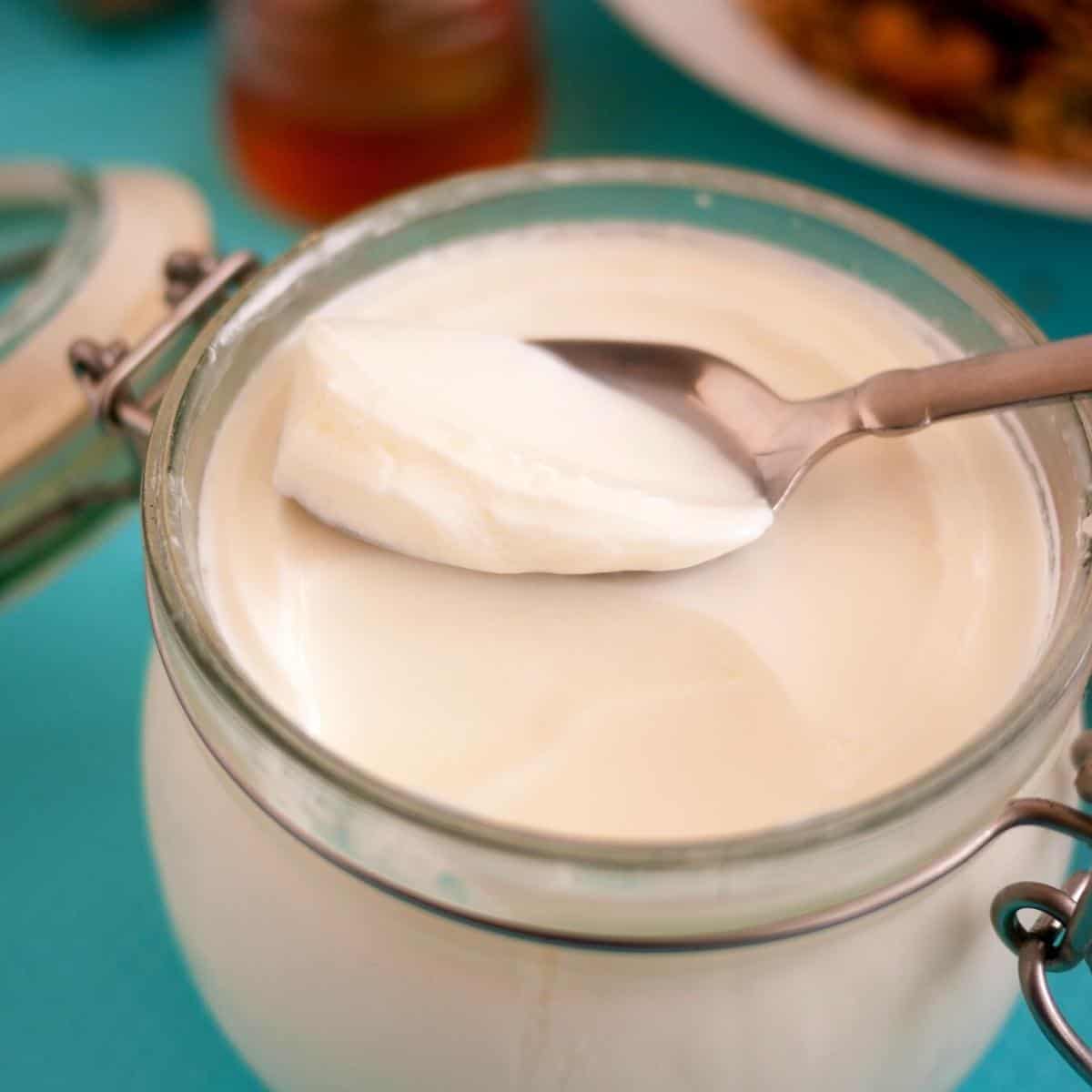








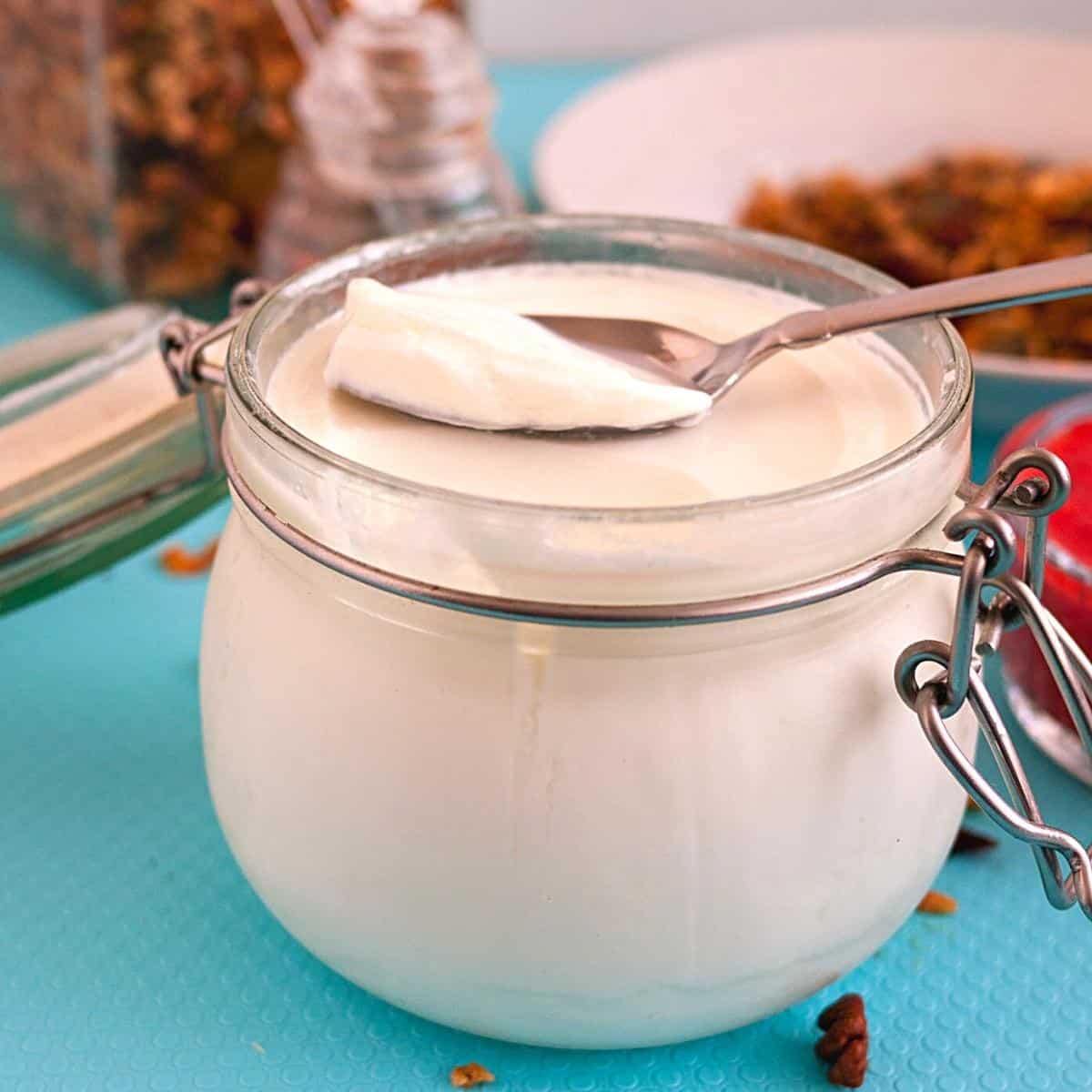
This is how to make yogurt or Greek yogurt at home with just 2 ingredients. It makes a rich, creamy, healthy, and wholesome dish. Use it with granola, parfaits, cakes, and other cooking or baking recipes.
Growing up in India, fresh homemade yogurt was just a part of everyday life. Every night, my mom would set a fresh batch, and by morning, it was perfectly set and ready to be chilled in the fridge. By the time breakfast rolled around, we had cold, creamy yogurt waiting for us—no store-bought tubs, no shortcuts, just pure homemade goodness.
She didn’t stop there. She’d mash up whatever seasonal fruit we had—a ripe banana, sweet mango, or juicy berries—with just a fork, creating the most delicious flavored yogurt. And in the hot summer months? She turned it into refreshing yogurt drinks, sometimes with fruit, sometimes with fresh mint. It was effortless for her, something she did so naturally that we never thought of it as a task—just part of our daily routine.
Fast forward to today, and we’re so used to grabbing yogurt off the grocery store shelf that we forget what real, homemade yogurt tastes like. But every once in a while, when I take the time to make it from scratch, I’m reminded—gosh, the difference is HUGE. The taste, the texture, the freshness… nothing compares.
If you’ve never tried making your own yogurt, trust me, it’s worth it. And if you grew up with homemade yogurt as I did, this is your sign to bring it back.
Why make homemade yogurt
- Only two ingredients – All you need is milk and a little yogurt with live cultures to start your first batch.
- Fresh and creamy – Homemade yogurt has a clean, fresh taste without added thickeners or unnecessary ingredients.
- Control the texture – Keep it soft and creamy or strain it longer to make thick Greek yogurt.
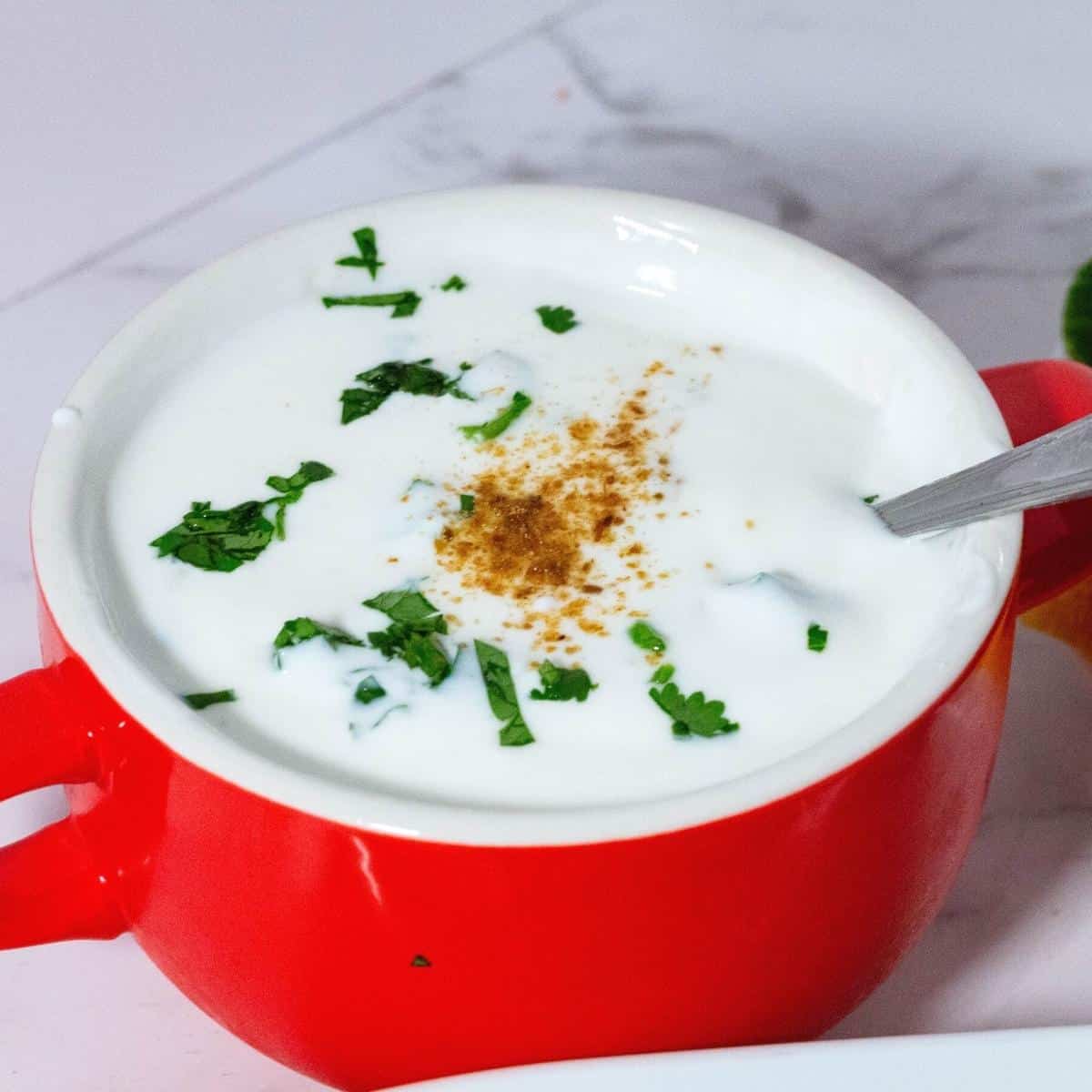
- Use it every day – Perfect for breakfast bowls, smoothies, marinades, baking, sauces, and Indian recipes like raita.
Ingredients and substitutes
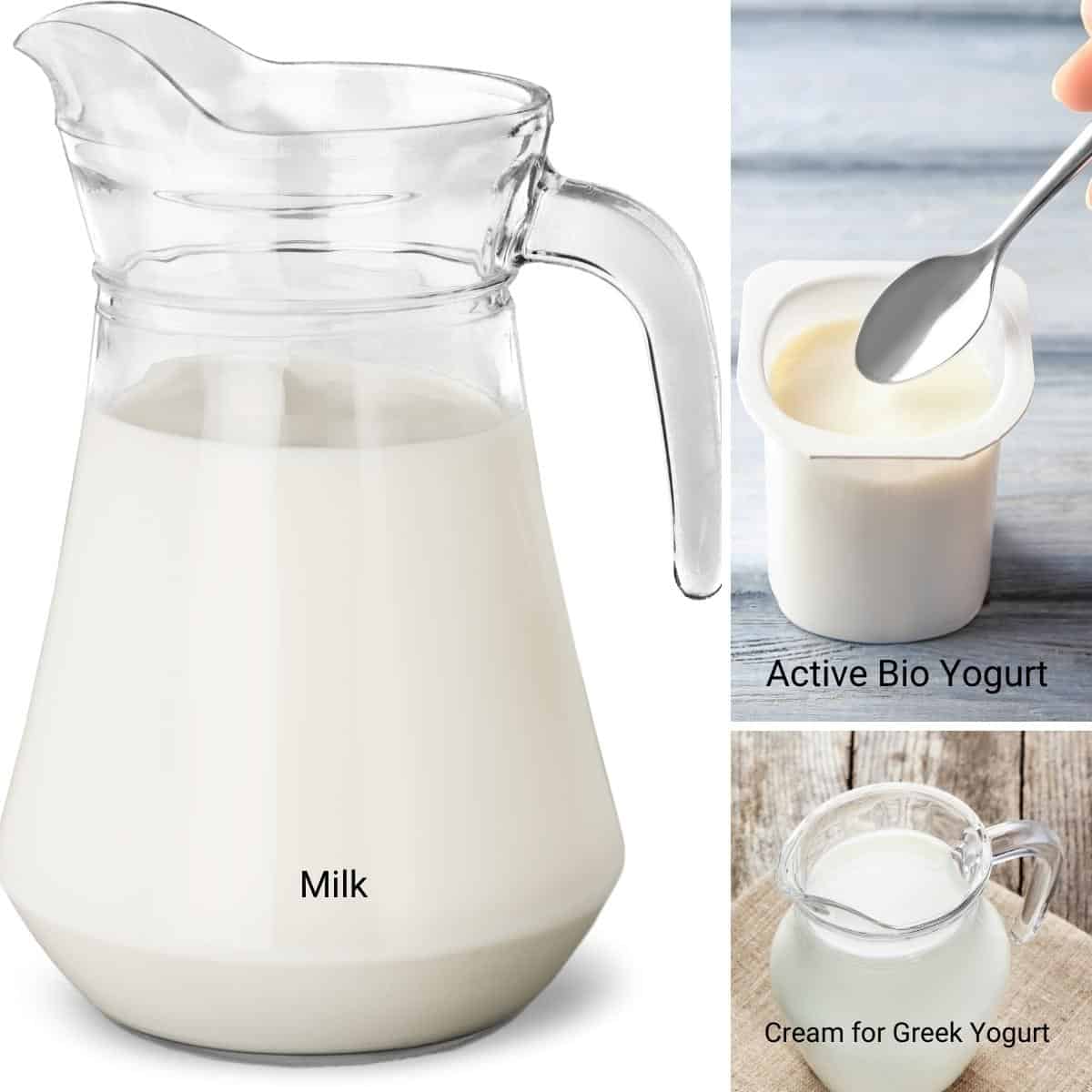
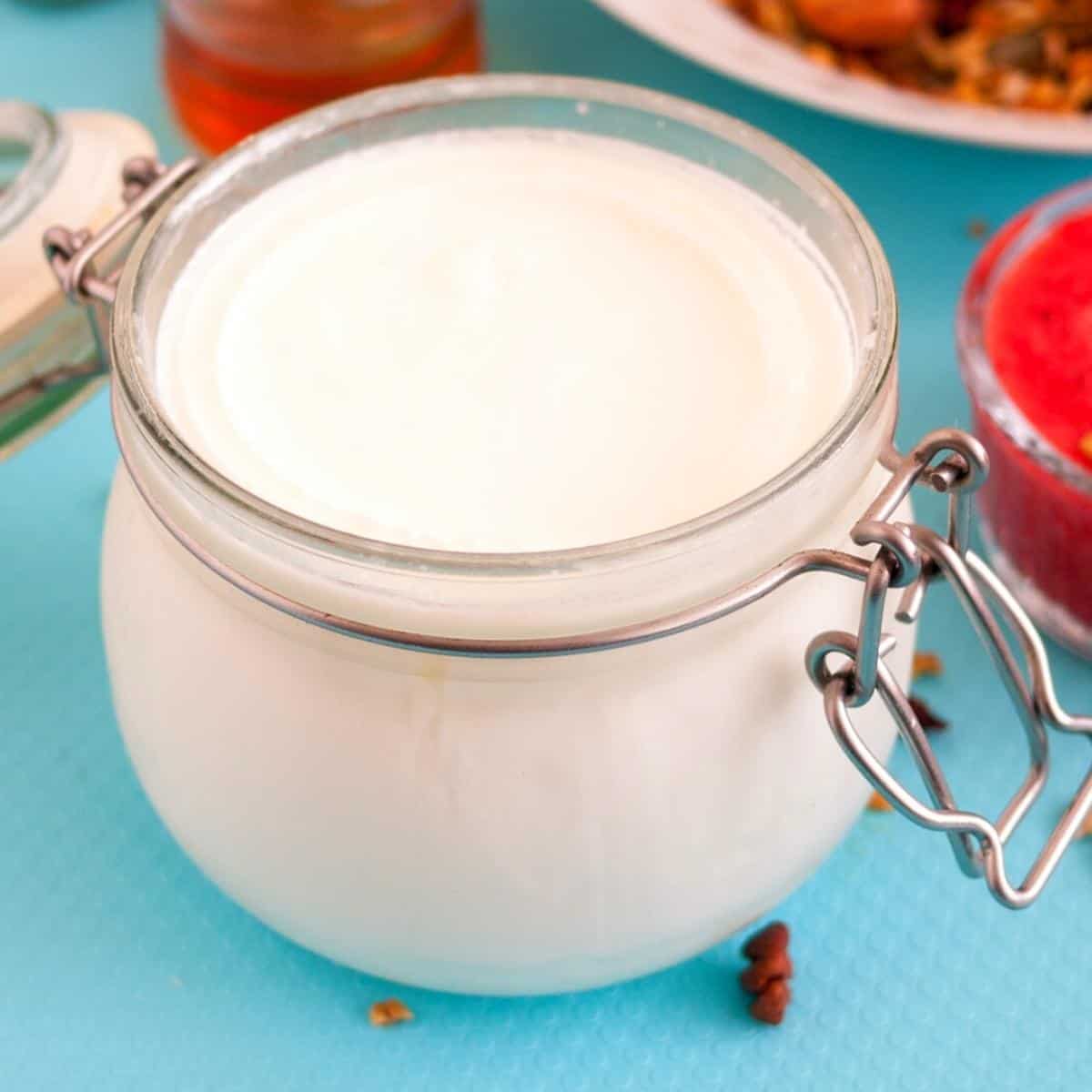
- Milk: You can use any type of milk you prefer, such as cow’s milk, goat’s milk, or plant-based milks like almond milk or soy milk. It is best to use whole milk, but you can also use 1% or 2%. The difference is that whole milk will be a wonderful, thick, luscious milk like you see in the pictures, but skimmed milk will have more whey, obviously, because it lacks milk fat.
- Yogurt with live active cultures: If you don’t have plain yogurt with live active cultures, you can also use a yogurt starter culture, which you can purchase online or at health food stores.
- Active bio culture – Alternatively, you can find freeze-dried yogurt sachets on Amazon called Active Yogurt Culture. And yet, I strongly suggest you go to the nearest supermarket and look in the dairy aisle. There will be one that contains Active Bio Culture. Usually, they are labeled as BIO.
- Citric acid – Also, if you do not have active bio yogurt, you can also use citric acid or freeze-dried active culture.
Step-by-step: Homemade yogurt (with bio yogurt starter)
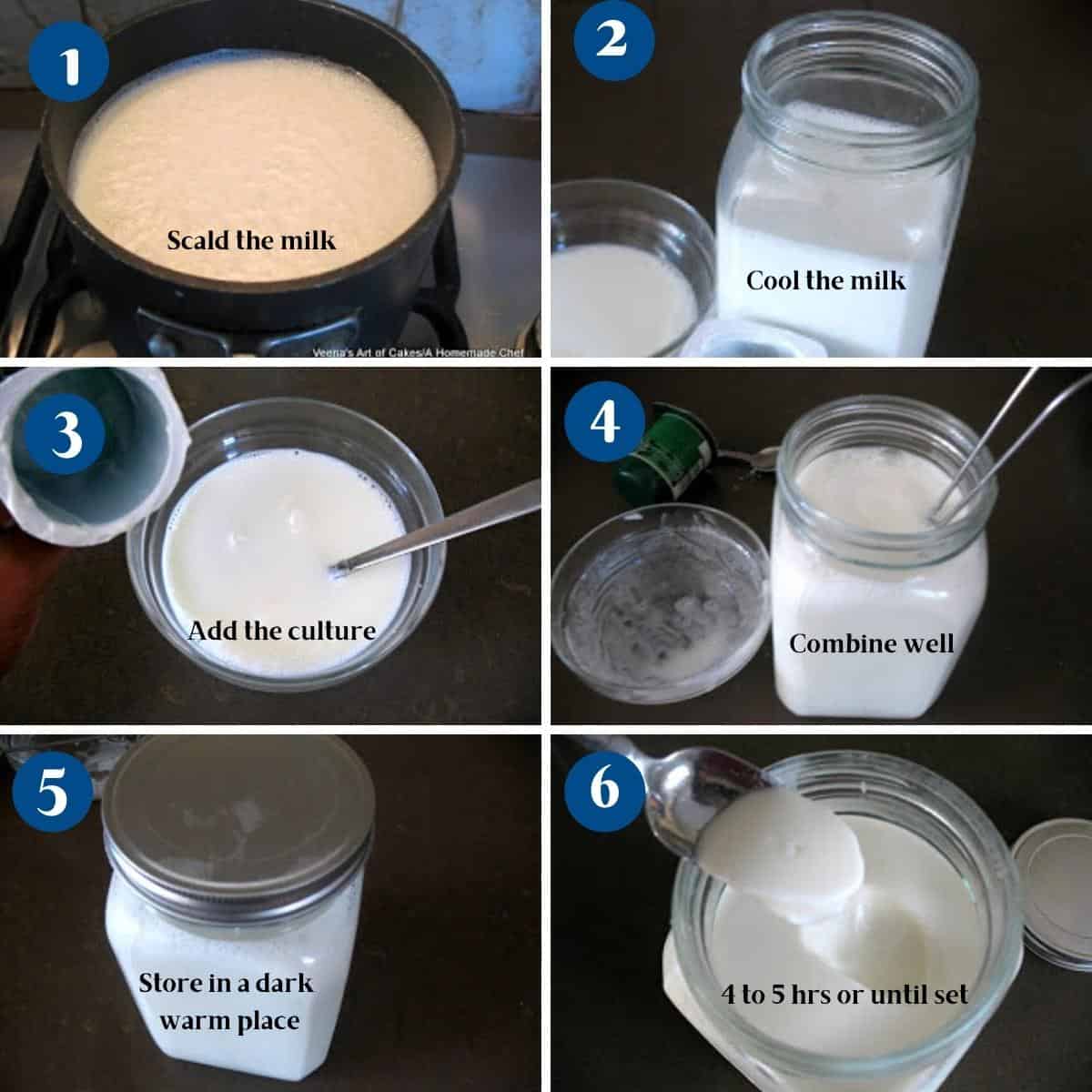
- Scald – Pour milk into a saucepan and heat on medium until it almost comes to a boil. (180°F or 82°C)
- Cool – Cool the milk to room temperature (110°F or 43°C). Then, pour the milk into a glass jar or stainless steel bowl, but do not use aluminum.
Pro tip – You do not need a thermometer. Just leave it until it is barely warm, similar to milk used for making bread. - Culture – Add the active yogurt to the milk and combine well with a whisk.
Pro tip – I like to take half a cup of milk in a bowl and add the yogurt. Use a whisk to ensure there are no lumps. Then add this to the rest of the milk. - Rest – Cover the milk jar with a clean kitchen cloth or paper hand towel, and store in a warm place, untouched, for 4 to 6 hours.
Pro tip – Cover loosely while the yogurt sets. The cultures need a warm, stable environment to ferment properly. - Chill – After 4 to 6 hours, it should be set. Next, place it in the fridge and let it chill for a couple of hours.
Pro tip – At this point, the culture is set, but leaving it in the fridge will help it mature better without becoming too sour.
Can you make yogurt without a yogurt starter?
Traditional yogurt needs live cultures to ferment properly, which usually come from a spoonful of existing yogurt or a freeze-dried yogurt starter. If you don’t have yogurt, you can use a purchased starter culture. Some methods use alternatives like citric acid, but they will create a different texture and flavor because they do not contain the same live yogurt cultures.
Step-by-step: Homemade yogurt without starter – bioculture
- Scald – Pour milk into a saucepan and heat on medium until it almost comes to a boil. (180°F or 82°C)
- Cool – Cool the milk to room temperature (110°F or 43°C). Then, pour the milk into a glass jar or stainless steel bowl, but do not use aluminum.
Pro tip – You do not need a thermometer. Just leave it until it is barely warm, similar to milk used for making bread. - Culture – Add the citric acid or freeze-dried culture starter to the milk and combine well with a whisk.
Pro tip – Adding citric acid to hot milk will cause it to curdle, so make sure the milk is at room temperature. - Rest – Cover the milk jar with a clean kitchen cloth or paper hand towel, and store in a warm place, untouched, for 4 to 6 hours.
Pro tip – Do not put the lid on tightly. The yeast in the milk needs to breathe. - Chill – After 4 to 6 hours, it should be set. Next, place it in the fridge and let it chill for a couple of hours.
Pro tip – At this point, the culture is set, but leaving it in the fridge will help it mature better without becoming too sour.
Step-by-step: How to make Greek yogurt
- Scald – Pour milk and cream into a saucepan and heat on medium until it almost comes to a boil (180°F or 82°C).
- Cool – Cool the milk to room temperature (110°F or 43°C). Then, pour the milk into a glass jar or stainless steel bowl, but do not use aluminum.
Pro tip – You do not need a thermometer. Just leave it until it is barely warm, similar to milk used for making bread. - Culture – Add the active yogurt (or freeze-dried active culture) to the milk and combine well with a whisk.
- Rest – Cover the milk jar with a clean kitchen cloth or paper hand towel, and store in a warm place, untouched, for 4 to 6 hours.
Pro tip – Do not put the lid on tightly. The yeast in the milk needs to breathe. - Chill – After 4 to 6 hours, it should have been set. Next, place it in the fridge and let it chill for a couple of hours.
Pro tip – At this point, the culture is set, but leaving it in the fridge will help it mature better without becoming too sour.
How to make low-fat yogurt?
Low-fat is made exactly the same way as above, using low-fat milk (1% or 2%). Due to the lack of sufficient milk fat.
- It may take longer for the culture to develop, so instead of 4 to 6, it may take up to 8 or more hours
- The appearance of low-fat is that it can be thinner because it has more whey and less milk fat.
- Commercial low-fat varieties are thickened. You can thicken the low-fat milk using no-fat milk powder or a tiny amount of unflavored gelatin. Add the gelatin to the milk while still cold, then continue with the recipe below.

Homemade fruit yogurt?
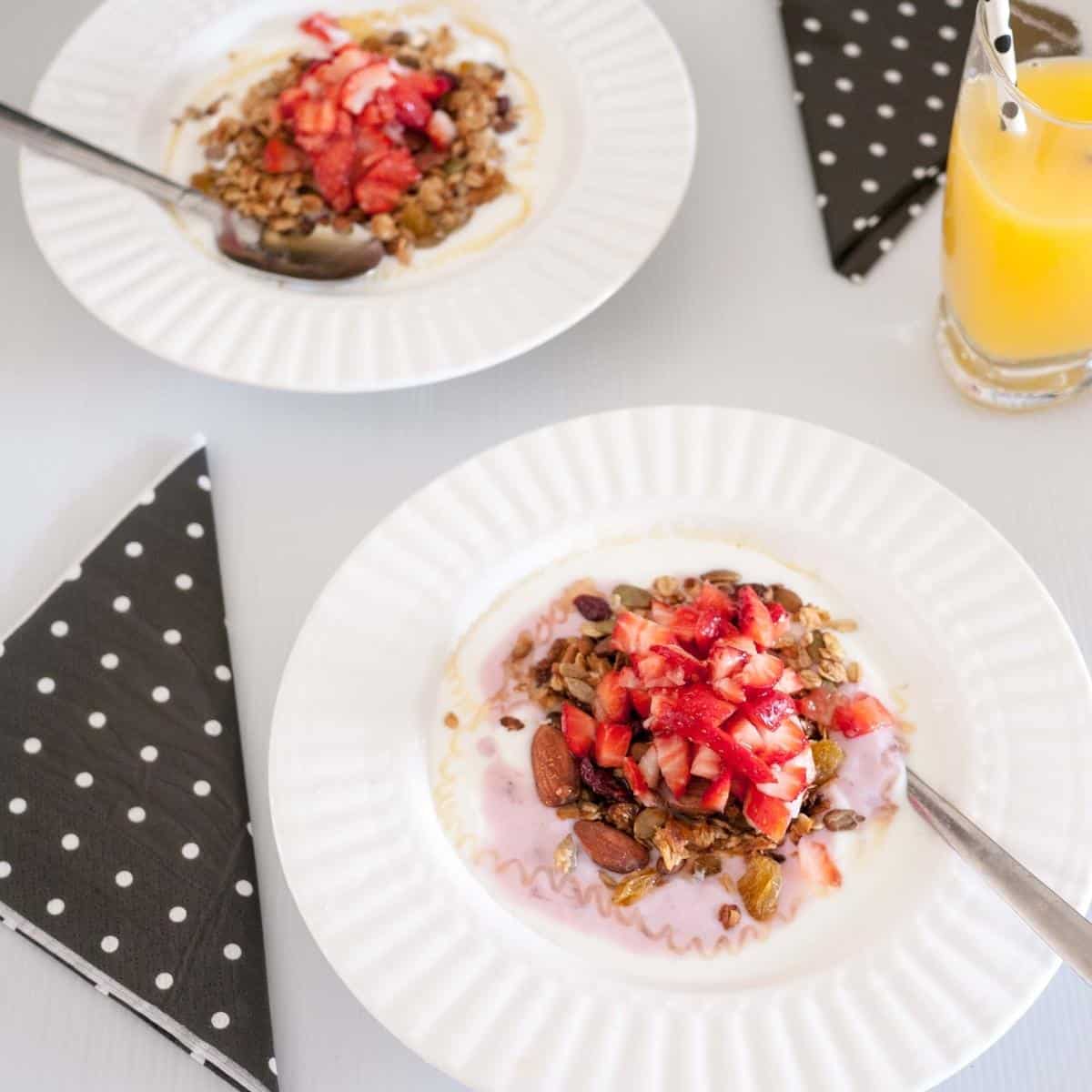
It is straightforward to make fruit-flavored drinks at home. In fact, all you need is fruit puree or fresh, finely chopped fruits.
- Add 2 tbsp fruit puree to 1 cup of homemade yogurt (or 1 cup puree to 4 cups yogurt)
- And, depending on the fruit you use, you may or may not need a drizzle of honey or maple syrup for sweetness.

Homemade yogurt drink?
The most delicious way to use it is in smoothies and yogurt drinks. Blend the following in a blender until smooth.
- 1 cup yogurt (regular or Greek)
- 1 cup ice
- and 1 tbsp honey, maple, or agave syrup.
- Add 1 cup of chopped fruits to make an amazing fruit yogurt drink.
See all my milkshakes, smoothies, and drinks

How to Make Yogurt or Greek Yogurt
Ingredients
Yogurt with yogurt starter
- 2 cups (470 ml) Milk whole, 1% or 2%
- 2 tbsp Plain bioactive yogurt (or 1 tbsp freeze-dried starter)
Homemade Yogurt without yogurt starter
- 2 cups (470 ml) Whole milk
- ¼ tsp Citric Acid
Greek Yogurt
- 2 cups (470 ml) Whole milk 3% (not skimmed)
- 1 cup (240 ml) Whipping cream 28% to 39%
- ¼ cup Plain bioactive yogurt
Instructions
Homemade Yogurt with starter
- Heat– pour milk into a saucepan and heat on medium until it almost comes to a boil. (180°F or 82°C). Cool the milk to room temperature (110°F or 43°C). Pour the milk in a glass jar or stainless steel bowl but do not use aluminum.Pro tip – You do not need a thermometer. Just leave it until it is barely warm, like milk used for making bread.2 cups Milk
- Culture – Add the active yogurt to the milk and combine well with a whisk. Pro tip – I like to take half a cup of milk in a bowl and add the yogurt. Use a whisk to ensure there are no lumps. Then add this to the rest of the milk.2 tbsp Plain bioactive yogurt
- Rest – Cover the milk jar with a clean kitchen cloth or paper hand towel and store in a warm place untouched for 4 to 6 hours.Pro tip – Do not put the lid on tightly. The yeast in the milk needs to breathe.
- Chill – After 4 to 6 hours, the yogurt should have been set. Place it in the fridge and let chill for a couple of hours.Pro tip – at this point the culture is set but leaving it in the fridge will help it mature better without becoming too sour.
Homemade yogurt without starter
- Heat – pour milk into a saucepan and heat on medium until it almost comes to a boil. (180°F or 82°C). Cool the milk to room temperature (110°F or 43°C). Pour the milk in a glass jar or stainless steel bowl but do not use aluminum.Pro tip – You do not need a thermometer. Just leave it until it is barely warm, like milk used for making bread.2 cups Whole milk
- Culture – Add the citric acid or freeze-dried culture to the milk and combine well with a whisk. Pro tip – Adding citric acid to hot milk will cause it to curdle so make sure the milk is at room temperature.¼ tsp Citric Acid
- Rest – Cover the milk jar with a clean kitchen cloth or paper hand towel and store in a warm place untouched for 4 to 6 hours.Pro tip – Do not put the lid on tightly. The yeast in the milk needs to breathe.
- Chill – After 4 to 6 hours, the yogurt should have been set. Place it in the fridge and let chill for a couple of hours.Pro tip – at this point the culture is set but leaving it in the fridge will help it mature better without becoming too sour.
Greek yogurt
- pour milk and cream into a saucepan and heat on medium until it almost boils. (180°F or 82°C). Cool the milk to room temperature (110°F or 43°C). Pour the milk in a glass jar or stainless steel bowl but do not use aluminum.Pro tip – You do not need a thermometer. Just leave it until it is barely warm similar to milk used for making bread.2 cups Whole milk , 1 cup Whipping cream
- Culture – Add the active yogurt (or freeze-dried culture) to the milk and combine well with a whisk. Pro tip – I like to take half a cup of milk in a bowl and add the yogurt. Use a whisk to ensure there are no lumps. Then add this to the rest of the milk.¼ cup Plain bioactive yogurt
- Rest – Cover the milk jar with a clean kitchen cloth or paper hand towel and store in a warm place untouched for 4 to 6 hours.Pro tip – Do not put the lid on tightly. The yeast in the milk needs to breathe.
- Chill – After 4 to 6 hours, the yogurt should have been set. Place it in the fridge and let chill for a couple of hours.Pro tip – at this point the culture is set but leaving it in the fridge will help it mature better without becoming too sour.
Notes
- Use fresh milk: Start with fresh, high-quality milk for the best results. Avoid using milk that is close to its expiration date.
- Use a thermometer: Use a kitchen thermometer to monitor the temperature of the milk. Heating the milk to the right temperature is crucial for the yogurt cultures to thrive.
- Use a starter: Use a yogurt starter with live active cultures for the best results. You can use store-bought plain yogurt with live cultures as a starter, or use a yogurt starter culture.
- Keep it warm: Maintain a warm and stable temperature (around 110°F or 43°C) for the yogurt to incubate. You can use a yogurt maker, a warm spot in your kitchen, or an oven with just the light turned on for incubation.
- Be patient: Allow the yogurt to incubate for at least 4-6 hours, or until it reaches your desired thickness. Longer incubation times will result in thicker and tangier yogurt.
- Strain for Greek yogurt: If you prefer Greek yogurt, strain the homemade yogurt using a cheesecloth or a fine mesh strainer over a bowl for a few hours or overnight in the refrigerator. The longer you strain it, the thicker it will become.
- Save the starter: Save a small portion of your homemade yogurt to use as a starter for your next batch. This will save you from having to buy yogurt or starter cultures every time you make yogurt.
- Experiment: Don’t be afraid to experiment with different types of milk, cultures, and incubation times to find the perfect recipe for your taste preferences.
How to flavor homemade yogurt?
- Honey – One tablespoon of honey per one cup of yogurt
- Honey – one tbsp honey, 1 tsp vanilla per one cup of yogurt
- Maple – One tablespoon of maple syrup per one cup of yogurt.
- Date yogurt with Silan – One tablespoon of silane (date honey) per one cup of yogurt
- Mango – 2 tbsp mashed mango flesh per cup yogurt – add 1 tsp honey if you want it sweeter.
- Banana – 1/2 mashed banana flesh per cup yogurt – add 1 tsp honey if you want it sweeter.
Fruit yogurt with jam is a perfect mid-day snack.
- Blueberry yogurt – One tablespoon of blueberry jam per one cup of yogurt (Y)
- Strawberry yogurt – one tbsp strawberry jam per one cup of Y
- Mixed berry yogurt – one tbsp mixed berry jam per one cup of Y
- Raspberry yogurt- one tbsp raspberry jam per one cup of Y
Equipment

Made this recipe?
I’d love to see how yours turned out! Share a photo on Instagram and tag @veenaazmanov_kitchen or use #veenaazmanovkitchen. And don’t forget to leave a rating and review!
more DIY recipes



Frequently asked questions
Homemade can last in the refrigerator for about 1-2 weeks. Be sure to store it in a tightly sealed container to maintain freshness.
Yes, you can use non-dairy milk such as almond milk, soy milk, or coconut milk to make yogurt. However, you may need to use a thickener or stabilizer, such as agar-agar or tapioca starch, to achieve a creamy texture.
To make it thicker, you can strain it through cheesecloth or a fine-mesh strainer to remove excess whey. The longer you strain it, the thicker it will become.
Homemade can be healthier than store-bought. You have control over the ingredients and can avoid added sugars, preservatives, and artificial flavors. Plus, homemade contains live active cultures, which are beneficial for gut health.
- Homemade Dulce De Leche
- Homemade Caramel Sauce
- Creamy Caramel Filling for Cakes Tarts Desserts
- Homemade Butterscotch Sauce


Don’t lose this recipe! Save it for Later!
📌 Save this Recipe for later on Pinterest so you can easily find it again.
⭐ Add Veena Azmanov Kitchen to your Google Preferred Sources.
It helps Google show you more of our recipes.
📧 Subscribe for new recipes delivered to your inbox.
🎥 Follow us for more recipes


Hi, I’m Veena
I’m the recipe developer, baker, and food photographer behind Veena Azmanov Kitchen.
I’ve spent years developing and testing recipes, from everyday meals and homemade breads to cakes and desserts.
I share the practical tips and little details I’ve learned along the way so you can get great results in your own kitchen.










Yay…love yogurt and eat it everyday! Thanks for sharing this easy recipe 🙂
Us too Traci. We have it every single day.
OH MY GOSH!!! I love this, its so simple and only 2 ingredients is perfect! Plus you can customize it to how you want it!
Yes, it is only two ingredients Tisha.
Homemade yogurt is my fave! I love how I can control the ingredients and not have nasties like preservatives or added sugar. Thanks for the recipe!
Absolutely Lisa. Especially when it’s as simple as yogurt.
Hi Veena,
Thank you so much for sharing this recipe! I’ve been wanting to make yogurt forever and had been put off before by the overly complex yogurt kits. I remember when I was young my Persian friend’s mom used to make yogurt like this and it was delicious! I’d love to give it a try! I just have a couple questions I’m unclear about if you could help me out!
1. When you put the jar in the oven, you mentioned that you “cover” it. Are you covering it with the air tight seal that comes with the jar or are you just loosely covering it with a cloth or something?
2. You mentioned that you know the yogurt is done when it is “caked”. Are you frequently checking? Do you want to take it out as soon as it’s solid? Or do you want to leave it a bit longer after it’s just become solid? I guess I’m not sure how firm or solid is “done”.
3. How long can you keep this yogurt in the fridge for? Can you make a batch for the week or should it be fresh every couple days?
Thanks so much Veena! I’ve never made yogurt before so I would appreciate your help!
Hey Rose,
1 No not an airtight container. you want it to breathe. I just place the jar partially.
2. As I explained in the post. You don’t want to leave it undisturbed for a few hours. Min 3.5 hours but sometimes it takes longer. In winter it takes 7 hours here. I usually make it at night before bed so it has the whole night undisturbed.
3. Yogurt it the fridge has a long shelf life… I’ve had mine for more than a week.. the bacteria continue to mature so it gets sourer over time.
Hope that helps.
Hi Veena,
Can we use epigania yogurt to make homemade yogurt? They have mentioned: ” active live cultures: S. Thermophilus, L. Bacillus delbrueckii subsp. Bugaricus”
Hey Vidhi. If it says active live culture it should work. I highly recommend you try a small batch and see how it goes. Thanks
My mom made yogurt using this method for years. Old school but so organic. Thanks for sharing Veena
Thank you, Jayla. happy to hear the recipe worked out well for you. Thanks for coming back to write this feedback. Love to hear from people who try my recipes. Have a nice day. Thanks
I did not know it was so easy to make homemade yogurt!! Was so intrigued I tried it last week.!! OMG!! Thank you ! It worked.. There is nothing like fresh yogurt and I tasted it for the first time. Thank you for sharing all amazing recipes on your blog in such details.
Thank you Shaun – So happy to hear that you had great success with this recipe. Homemade is always the best of course. Glad you like my blog – thanks !
I stumbled upon your post while pinning your yogurt to one of our boards on Pinterest. Thank you for sharing this information. I had no idea you could make yogurt at home. I know it sounds silly, but where I grew up in the U.S. making homemade yogurt is not common knowledge. My wife and I will start making yogurt at home very soon. We will be sure to use the links (affiliate) in this post when we buy the products. Thanks again for sharing this excellent process!!
You are very welcome John. I do make this at least once a week if not more. I love that it has the natural of active culture which is actually very good for your stomach and for loosing weight too. The homemade is of course not sweet like the super market brands so I add a bit of honey and my kids love it. Let me know who yours turns out. Just make sure to keep in a warm place untouched preferably over night.
Hello veena
Can you tell me the ingredients that i should ask wen i go to buy them
Mirembe.. you just need to look for a yogurt that says it has active bio culture in it. Thanks
thank you, i’ll try
greetins from México
Thank you !