
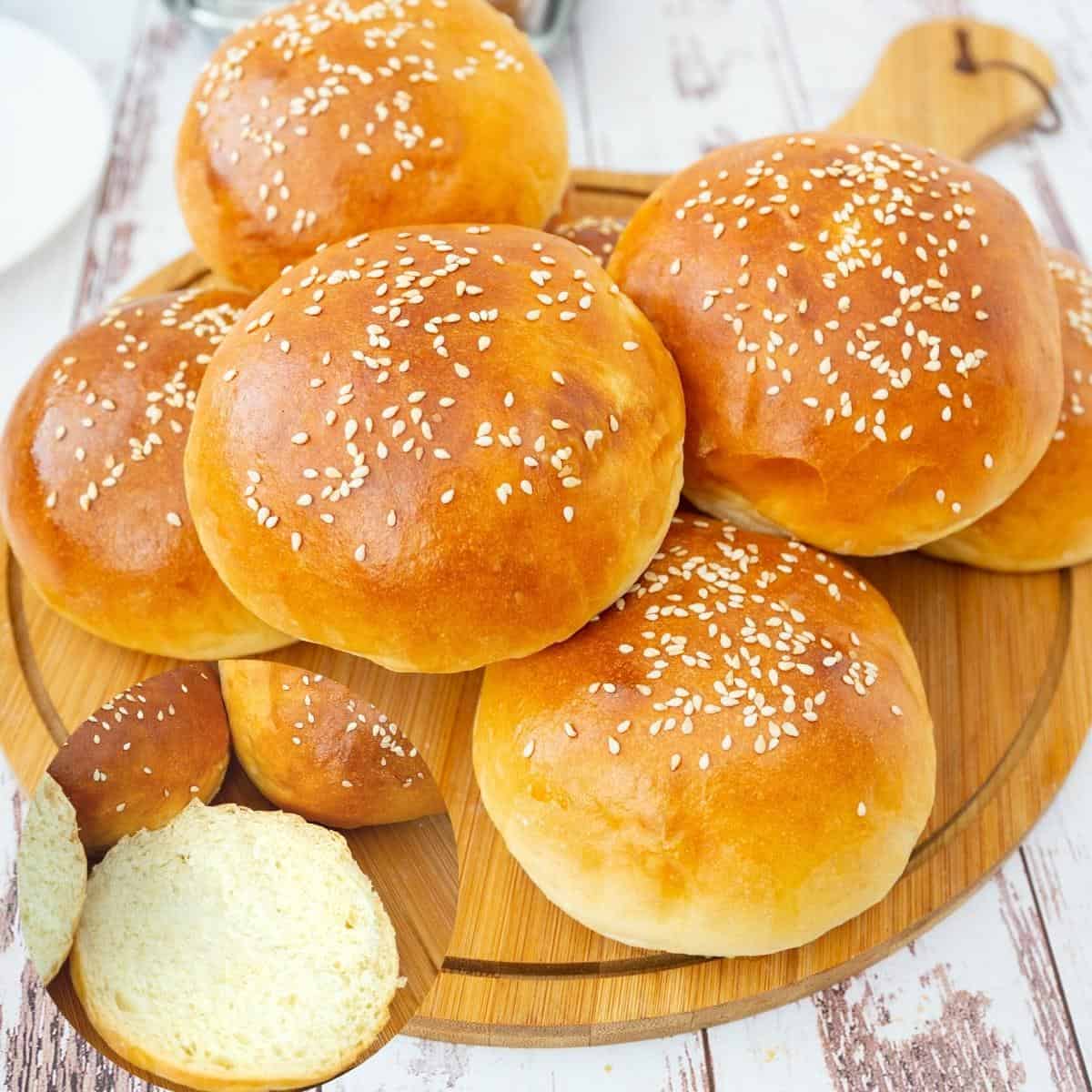
The Japanese Hokkaido milk bread makes the softest and easiest homemade hamburger buns you will ever have. Slightly sweet and milky, but soft like cotton. Amazing on its own, perfect for breakfast, lunch, or dinner, and of course, your hamburger sandwiches.
Have you ever tasted the Japanese milk bread Hokkaido? Back when I traveled, every single trip to Japan, I’d buy a slice of bread and bring it back home to Singapore. I always wondered how they got the bread to be so soft, soft like cotton. For a long time, I thought it was bread flour. But, no, it’s the technique.
They use what is called a tangzhong. It’s a Japanese technique called yukone (yudane), which uses a roux made with flour and water (or milk). I like the combination of the two. This roux is like a thick pudding made by cooking flour, water, and milk. Once thickened, it is cooled to room temperature and added to the dough-making process.
How does it work? Well, the water is absorbed by the flour at a high temperature, and the starch is gelatinized without forming any gluten (that is why it must be cooked carefully). This allows the starch in the tangzhong to absorb far more liquid at room temperature later. That’s why when tangzhong is added to the dough, we can use more water, giving us a soft, stable, yet spongy texture in the final bread.
Why make these buns?
- Unmatched Softness: The tangzhong method creates a moist and pillowy texture that stays soft for days, making it perfect for sandwiches, toast, or as-is.
- Enhanced Flavor: The pre-cooked flour in tangzhong adds a subtle sweetness and depth of flavor, elevating the taste of your bread beyond the ordinary.
- Extended Freshness: Tangzhong helps retain moisture, keeping your bread fresher for longer without needing preservatives.
- Perfect for Beginners: The tangzhong method is forgiving and ensures a consistent dough, making it an ideal choice for those new to bread baking.

Ingredients and substitutes
- Flour – I love to use bread flour because it produces the softest, most delicious bread, which is also slightly chewy.
- Egg – I use a large egg, about 60 to 65 grams in weight.
- Sugar – This bread is slightly sweeter than most other white bread. And yet, you can certainly reduce the sugar by half.
- Butter – A good quality butter at room temperature works best for flavor and consistency.
- Milk powder – This bread is often referred to as milk bread because it has milk and milk powder.
- Yeast – Today, I am using baker’s fresh yeast, about 21 grams. But you can use 2 1/4 tsp of instant yeast. For other substitutes for yeast, read my post – Baking with yeast: a beginner’s guide.

Step-by-step: Softest hamburger buns
Tangzhong
- In a saucepan, combine water and flour with a whisk until there are no lumps. Add the milk and combine well again.
Pro tip – It is very important to make sure you have no lumps, as these will be difficult to remove from the dough. - Place the saucepan over medium heat and cook this mixture for 2 to 3 minutes. Keep stirring constantly to prevent lumps.
Pro tip – Keep the heat on medium to low. At first, the mixture will take a while to thicken, but then it does get thicker quickly. So, keep a close eye on it and take it off just when it reaches almost a paste consistency similar to a pudding. - Take it off the heat and transfer it to a bowl or plate. Cover and let cool to almost room temperature. Make sure the plastic touches the surface of the tangzhong to prevent skin.
Pro tip – Removing the hot pan will prevent it from cooking further, as we don’t want it to get lumpy.
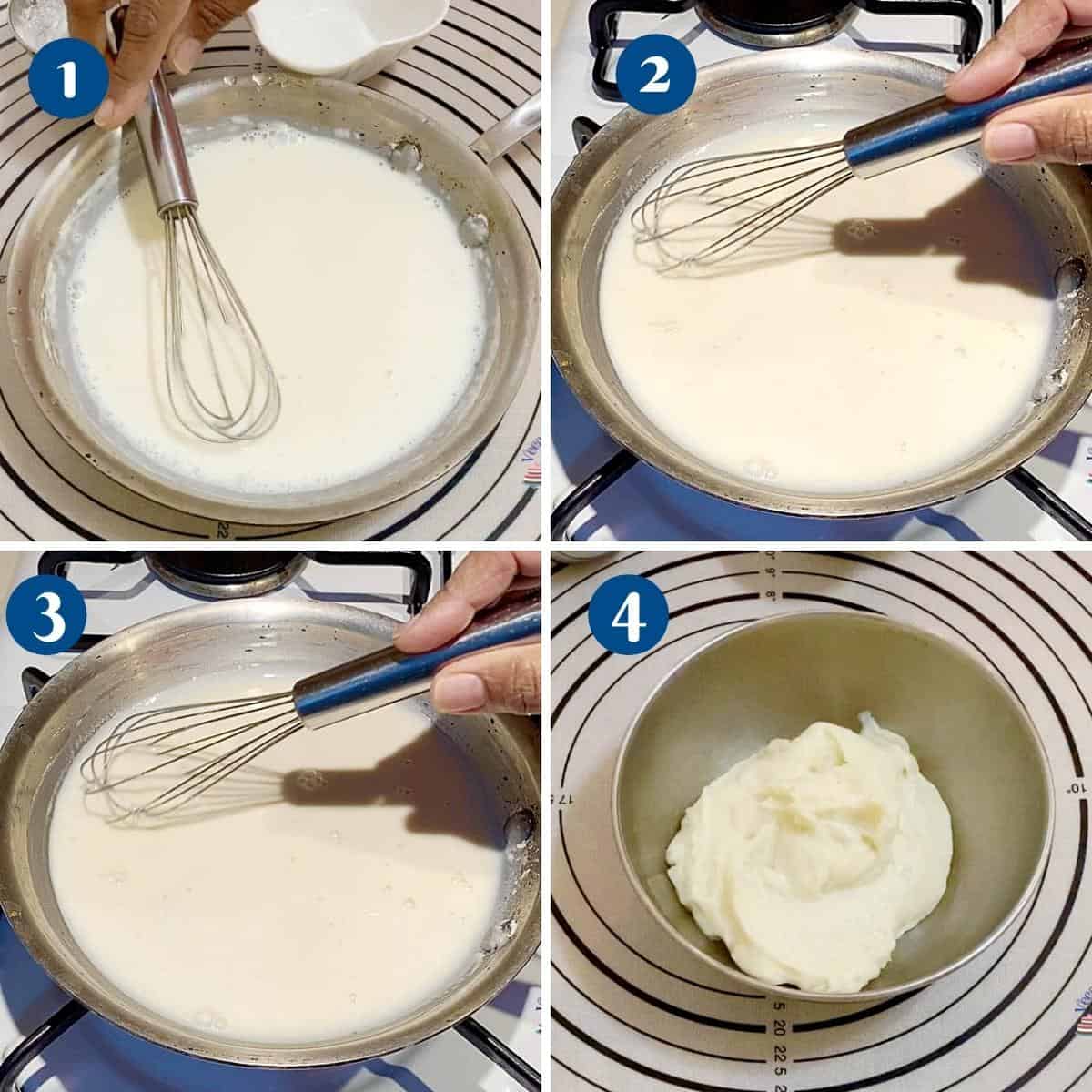
Dough
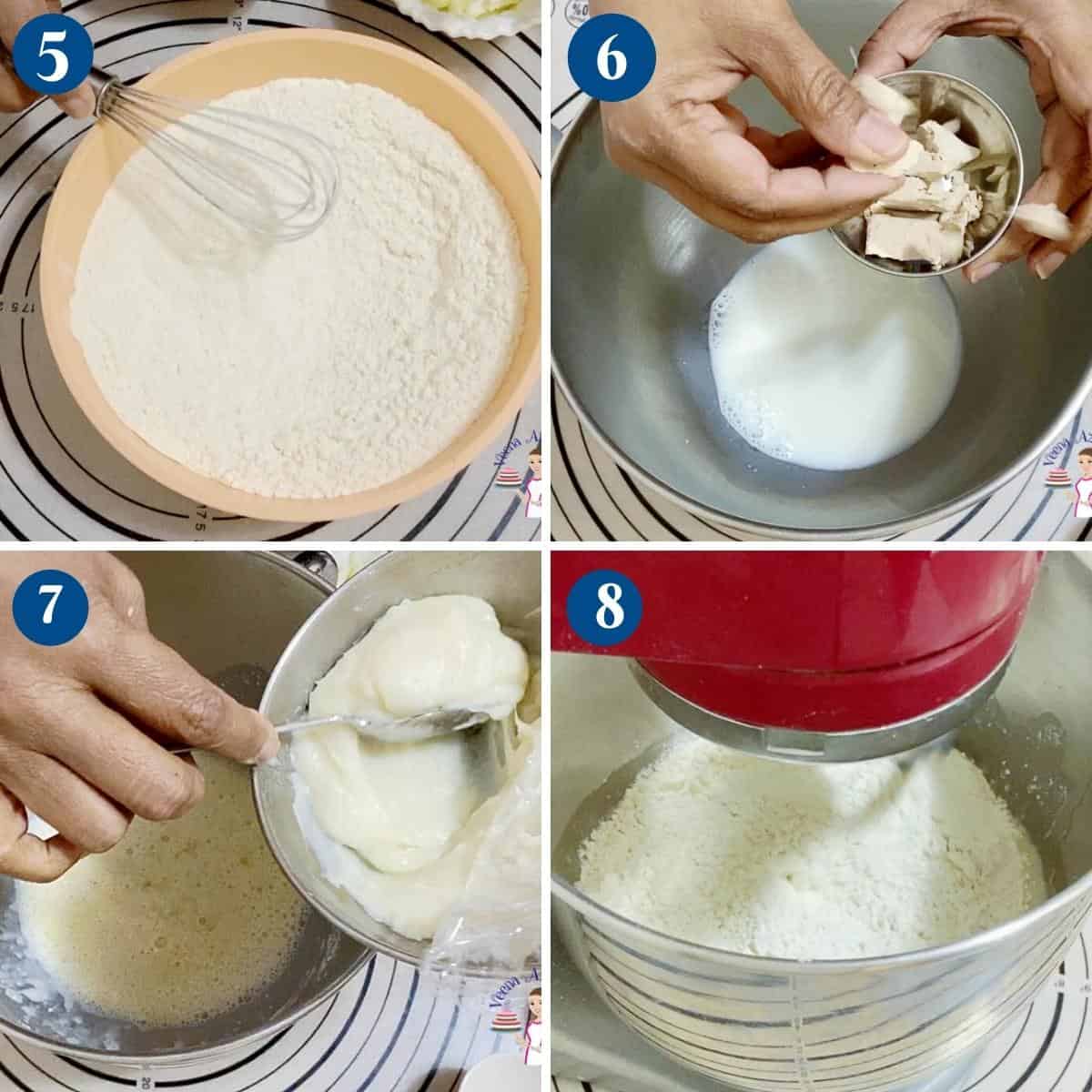
- Yeast mixture – In a bowl of a stand mixer, add the lukewarm milk (no warmer than 110°F) and the yeast. Combine well with a whisk. Then, add the sugar, milk powder, egg, and cooled tangzhong.
- Combine – Add the flour and salt. Combine well on medium-high speed for 2 to 3 minutes until all the flour is well incorporated.
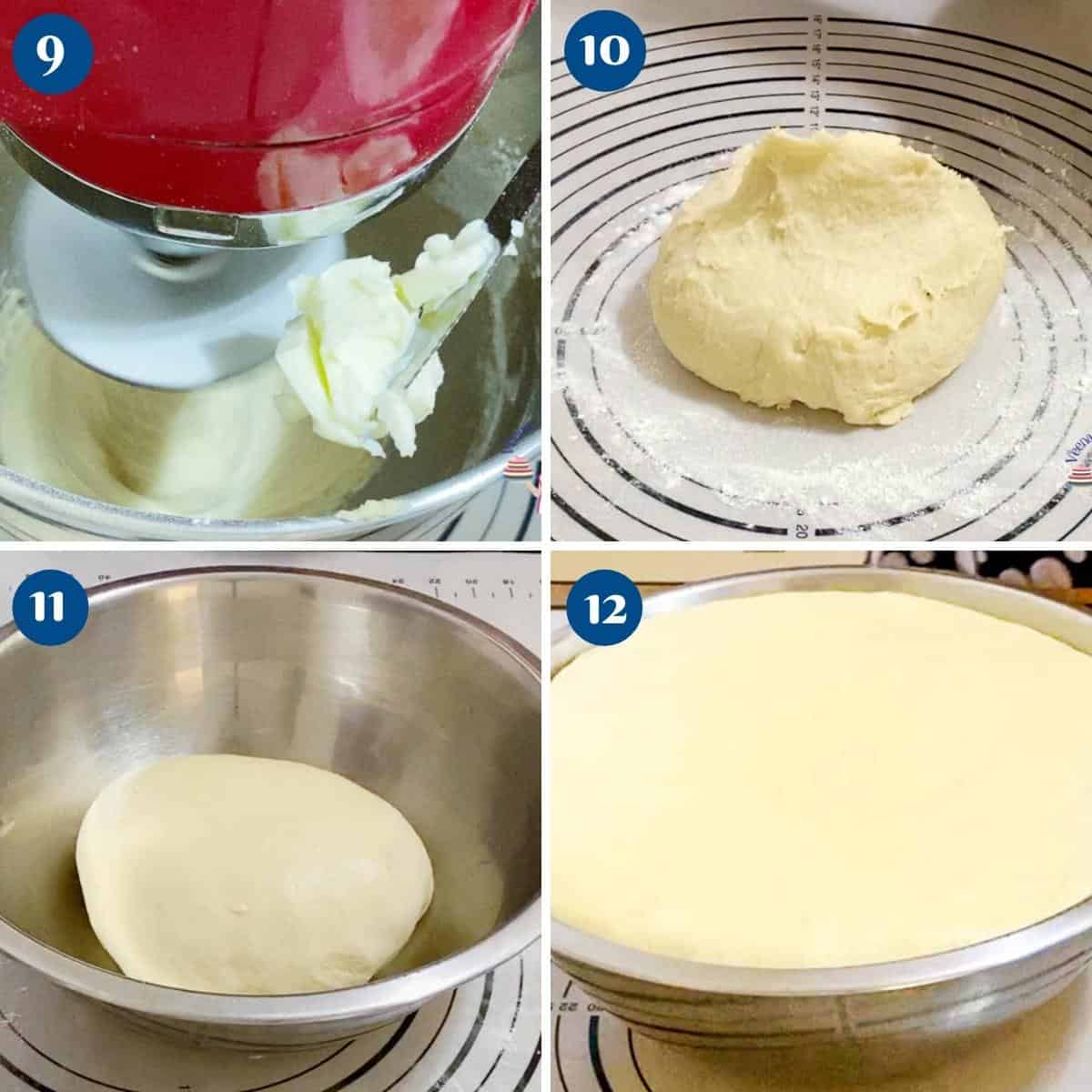
Pro tip – Scrape the sides of the bowl well to ensure all the flour is well incorporated, and do not add more flour unless necessary. - Knead – Continue to knead on medium speed for 6 to 8 minutes. Then, add the butter and continue to knead for 3 to 4 minutes more until you have a soft, smooth, and elastic dough.
Pro tip – Avoid the temptation to add more flour. We want soft, light, and fluffy rolls, and this is only possible when the dough is soft, elastic, yet slightly sticky.
- Bowl – When the dough is soft and shiny but still slightly sticky, shape it into a ball. Place the dough in an oiled bowl, seam side down. Coat the surface with oil to prevent drying. Cover with a clean kitchen cloth or plastic wrap.
- Rise – Leave in a warm place. Let it rise for 60 to 90 minutes until it doubles in volume.
Pro tip – In winter, you may need 90 minutes or more. But in summer, the dough may double in 45 minutes. And if you can’t attend to it at that moment, degas, reshape, and let it double in volume again.
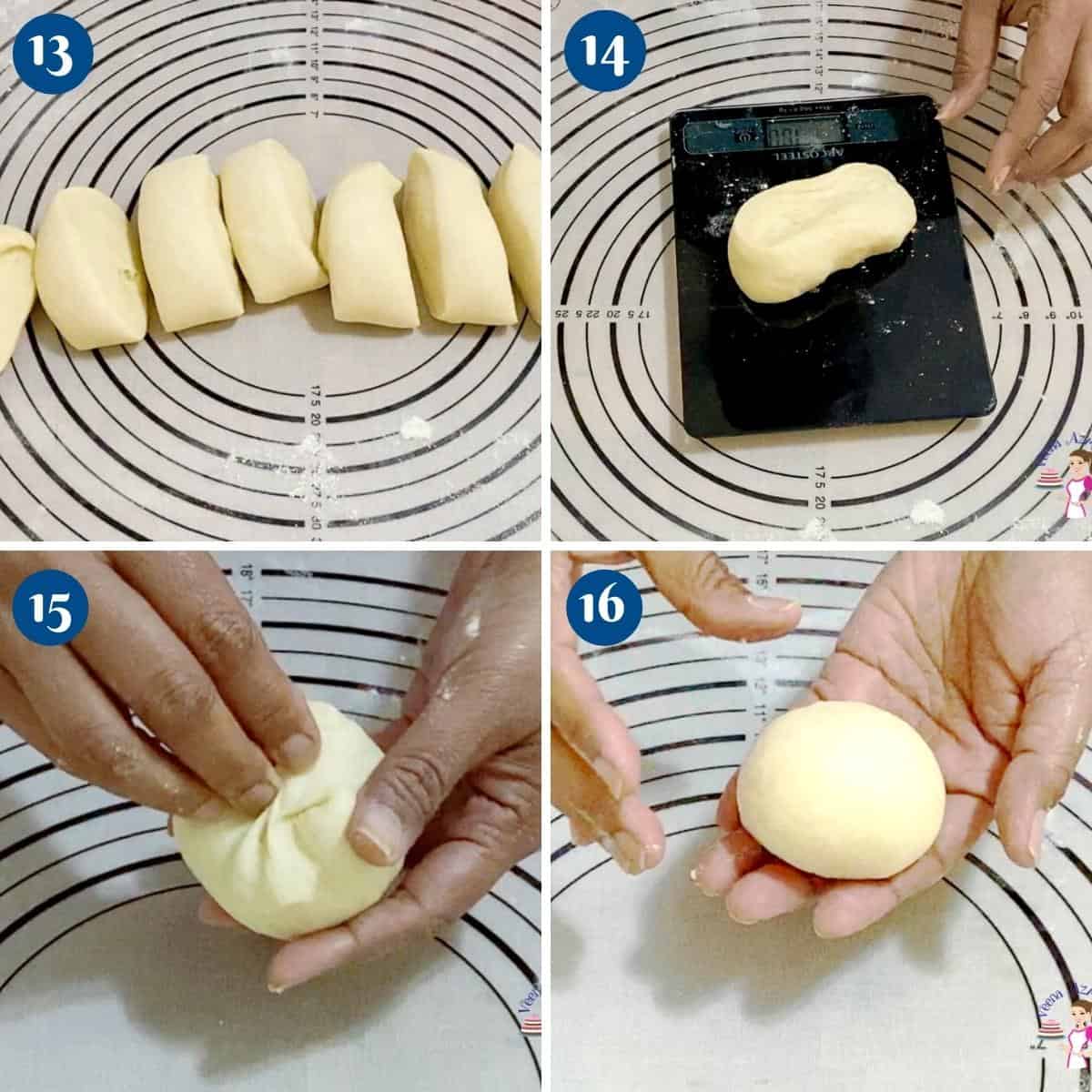
- Punch – When the dough is doubled in volume, transfer it to a well-dusted floured surface. Punch down and reshape into a ball. Then, roll it into a small log.
Pro tip – At this point, there is no need for additional flour. So use a light dusting of flour. - Divide – Using a dough scraper, divide this log into smaller portions. You can make eight buns x 100 grams each or 12 smaller buns x 60 grams each (similar to dinner rolls).
How to shape hamburger buns
- Hold each piece of dough in your hand and gather all the seams together. Pinch the seams at the bottom, and then place the ball on a non-flour surface while still holding it in your hand.
Pro tip – The unfloured surface creates the tension we need in the dough. - Loosen the grip on the dough and roll it back and forth into a tight circle against the work surface. You will feel the dough become tight and smooth.
Pro tip – The goal is to create a tight, smooth ball. If you overdo the rolling, you will rip the top surface, which will give a rough, not smooth, roll. - Tray – Place the buns on a baking tray, leaving enough room for them to rise and spread. Once you place the ball on the baking tray, flatten it with your fingers.
Pro tip – Flattening it will give us that bun, not ball shape, as it proofs and bakes.

Proof and bake
- Proof – Cover with a clean kitchen cloth or plastic wrap and leave in a warm place for about 45 minutes until almost doubled in size.
Pro tip – Spray the plastic wrap with oil to prevent it from sticking to the rolls. - Oven – When the rolls are almost double in volume, at about 30 minutes, preheat the oven to 375°F /190°C / Gas Mark 5.
- Brush the buns with egg wash, milk, or cream. Sprinkle with sesame seeds or poppy seeds (optional).
Pro tip – Egg wash is a full egg with 2 tbsp of water. An egg wash will give a nice golden color. If you can’t use egg, milk or cream will work just as well. Do not use oil or butter, as it will create a crust. - Bake for about 22 to 25 minutes until lightly golden on top. When baked, brush with melted butter.
Pro tip – If the tops are getting too dark, tent them with aluminum foil. Brushing with butter is optional but adds a nice flavor and keeps the top crust soft. - Cool – Take them out of the pan and cover them with a clean kitchen cloth for at least 5 minutes to keep them soft.
Pro tip – Do not leave the rolls in the pan for too long, as the steam will make the bread soggy on the bottom. - Enjoy!
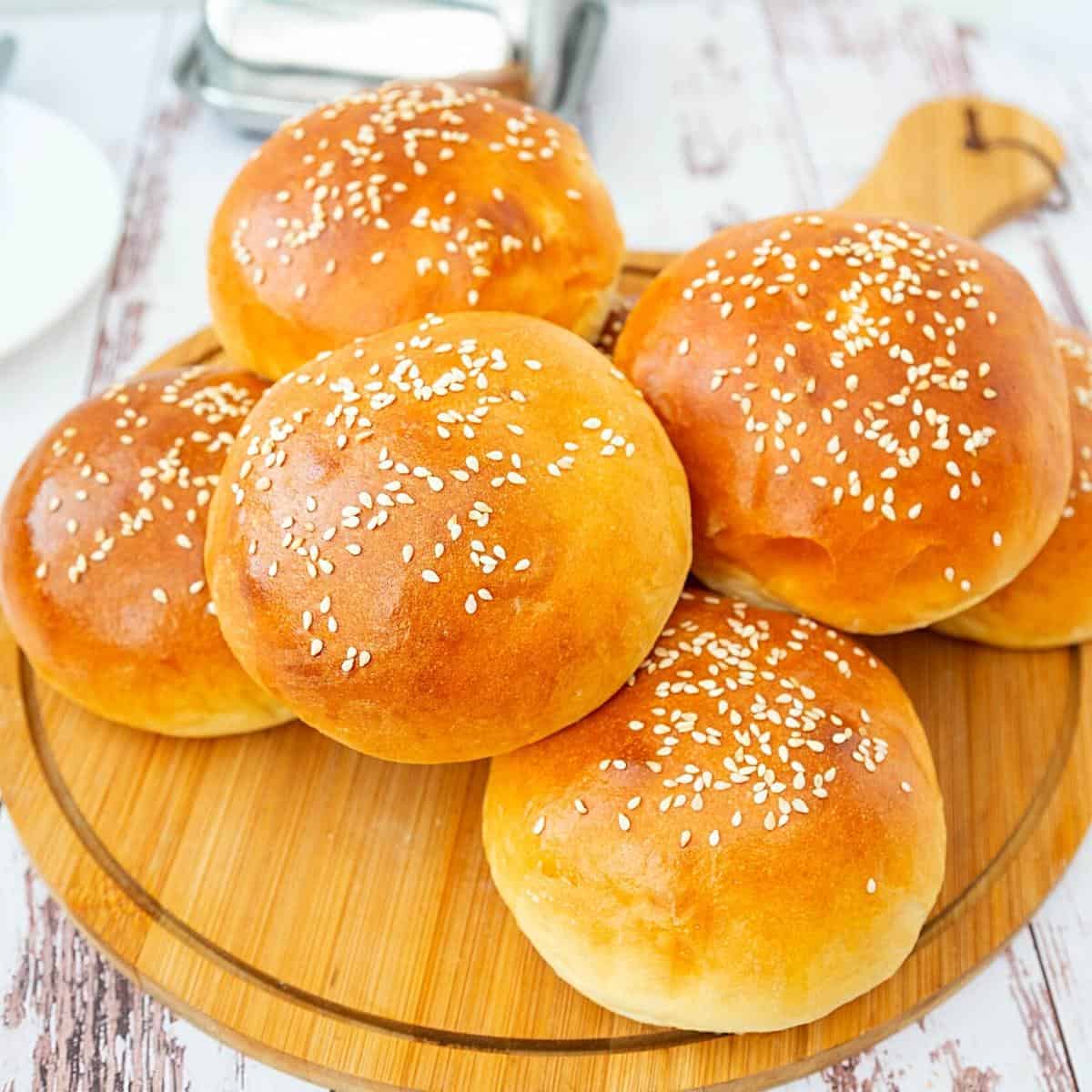
- Burger Buns – Hamburger Buns, or Soft Whole Wheat Burger Buns
- Homemade Soft Brioche Buns or Homemade Hawaiian Rolls
- Hot Cross Buns or Soft Dinner Rolls, Whole Wheat Dinner Rolls
- Homemade Chicken Burgers or Turkey Burgers Recipe
- Best Juicy Beef Burgers
No posts
Frequently asked questions
This milk bread will keep at room temperature for 3 to 4 days. You can even freeze it for up to a month. I do not recommend keeping bread in the fridge as it dries out the moisture from the bread.
The water is absorbed by the flour at a high temperature, and the starch is gelatinized without forming any gluten. This allows the starch in the tangzhong to absorb far more liquid at room temperature. That’s why when tangzhong is added to the dough, we can use more water, giving us a soft, stable, yet spongy texture in the final bread.
No, it doesn’t work like this. Add only as much as requested in the recipe. This recipe has been tried and tested a few times, so it works perfectly with these measurements. As you can see in the video, the bread is soft, like cotton, light, and airy.
My kids warm a single bun in the microwave for 30 seconds or more as necessary.
If I am reheating a whole batch of buns, I like to place them (room temperature) in a baking tray wrapped with foil and bake them for 10 to 15 minutes. The foil prevents them from drying out.
Homemade Hamburger Buns – Hokkaido Buns
Ingredients
Tangzhong
- 60 g (¼ cup) Milk
- 60 g (¼ cup) Water
- 45 g (45 g) Bread flour
Dough
Plus
- 1 med Beaten Egg with 2 tbsp water for egg wash
- 2 tbsp Sesame seeds or poppy seeds (optional)
Instructions
Tangzhong
- In a saucepan, combine water and flour with a whisk until no lumps. Add the milk and combine well again. Place the saucepan over medium heat and cook this mixture for 2 to 3 minutes. Keep stirring constantly to prevent lumps.60 g Milk, 60 g Water, 45 g Bread flour
- Take it off the heat and transfer to a bowl or plate. Cover and let cool to almost room temperature. Make sure the plastic touches the surface of the tangzhong to prevent a skin.
Dough
- Yeast mixture – In a bowl of a stand mixer, add the lukewarm milk (no warmer than 110 F) and the yeast. Combine well with a whisk. Then, add the sugar, milk powder, egg, and cooled tangzhong.320 g Warm milk, 7 g Instant yeast, 30 g Sugar, 30 g Milk powder, 50 g Egg
- Combine – Add the flour and salt. Combine well on medium-high speed for 2 to 3 minutes until all the flour is well incorporated.680 g Bread flour, 13 g Kosher salt
- Knead – Continue to knead on medium speed for 6 to 8 minutes. Then, add the butter and continue to knead for 3 to 4 minutes more until you have a soft, smooth, and elastic dough.60 g Butter
- Bowl – When the dough is soft and shiny, but still slightly sticky, shape it into a ball. Place the dough in an oiled bowl, seam side down. Coat the surface with oil to prevent drying. Cover with a clean kitchen cloth or plastic wrap.
- Rise – Leave in a warm place. Let rise for 60 to 90 minutes until it doubles in volume.
Shape the buns
- Punch – When the dough is doubled in volume, transfer it to a well-dusted floured surface. Punch down and reshape into a ball. Then, roll it into a small log.
- Divide – Using a dough scraper, divide this log into smaller portions. You can make 8 buns x 100 grams each or 12 smaller buns x 60 grams each (similar to dinner rolls).
How to shape hamburger buns
- Hold each piece of dough in your hand and gather all the seams together. Pinch the seams at the bottom, then place the ball on a non-flour surface while still holding it in your hand.
- Loosen the grip on the dough and roll it back and forth into a tight circle against the work surface. You will feel the dough become tight and smooth.
- Tray – Place the buns on a baking tray, leaving enough room to rise and spread. Once you place the ball on the baking tray, flatten it with your fingers.
Proof and bake
- Proof – Cover with a clean kitchen cloth or plastic wrap and leave in a warm place for about 45 minutes until almost doubled in size.
- Oven – When the rolls are almost doubled in volume, at about 30 minutes, preheat the oven to 375°F / 190°C / Gas Mark 5.
- Eggwash – Brush the buns with egg wash, milk, or cream. Sprinkle with sesame seeds or poppy seeds (optional).1 med Beaten Egg with 2 tbsp water
- Bake for about 22 to 25 minutes until lightly golden on top. When baked, brush with melted butter.2 tbsp Sesame seeds
- Take them out of the pan and cover them with a clean kitchen cloth for at least 5 minutes to keep them soft.
Video
Notes
- Cook the tangzhong at medium to low speed so the flour has a chance to absorb the liquid – if you cook on high heat, the liquid will evaporate.
- Also, you need to stir the tangzhong continuously but not vigorously. Why? We want to avoid gluten formation.
- The tangzhong must be a paste consistency, and it gets thicker as it cools, so remove it earlier rather than later. If it gets too thick and lumpy, it will be difficult to incorporate into the dough.
- Cool the tangzhong to room temperature before you add it to the dough. But do not place it in the fridge to avoid lumps.
- Add salt to the flour, not the yeast mixture. Salt can kill the yeast.
- Knead the dough for the time mentioned in the recipe. Using a timer works great to under- or over-knead the dough.
- Bread flour works best for this bread, making it soft and chewy. Having said that, I have used all-purpose flour, and it works just as well.
- Overnight buns – You can prepare the dough a day in advance. Proof them on the counter for an hour, then punch down and let the dough rest in the fridge overnight. Overnight proofing is a great way to add flavor to the bagels. The next day, let the dough come to room temperature before you shape and bake it.
- Storing hamburger buns – These buns do freeze beautifully. Cool the baked buns, then place them in a freezer-safe storage bag. These can be frozen for up to a month.
- Kneading the dough – If possible, use an electric mixer because the dough is soft and sticky.
- Bread machine – These rolls can be easily made in a bread machine. Pour all ingredients into the pan set to dough or manual. Start and let the dough run its cycle for about 9 to 10 minutes – continue with the recipe as shown above.
- Keeping the buns soft – The best way to keep homemade bread soft is to contain the steam within the bread. So, while they are still hot, place a clean kitchen cloth over them and let them rest for 10 minutes. Keeping these dinner rolls covered will also keep them from drying out.
- Freezing buns – For make-ahead or freezer-friendly buns, bake the buns as instructed in this recipe. Let them cool completely. Once cooled, place them in an airtight freezer-safe ziplock bag. For best results, thaw in the fridge overnight, then reheat in the microwave for 30 seconds or more as needed.
- The dough did not rise? Most often, the simplest explanation for this is that the liquid (milk) used was not warm. You need the liquid to be no more than 110°F/ 41 °C. Hotter than that will not activate the yeast. In some cases, it could also be that the yeast was old and not good.
- Dry, dense, not soft bread? If you add too much flour to the dough, the bread will be dense, not soft. You want the dough to be soft, elastic, and still slightly sticky when kneading. Follow the recipe and look at the video to see the consistency of my dough.
- Bread deflated during baking -Proof the buns for only 45 minutes or until almost doubled in volume. They will continue to rise some more in the oven when baking. If you overproof the buns, they tend to rise and deflate when baking.


Made this recipe?
I’d love to see how yours turned out! Share a photo on Instagram and tag @veenaazmanov_kitchen or use #veenaazmanovkitchen. And don’t forget to leave a rating and review!


Don’t lose this recipe! Save it for Later!
📌 Save this Recipe for later on Pinterest so you can easily find it again.
⭐ Add Veena Azmanov Kitchen to your Google Preferred Sources.
It helps Google show you more of our recipes.
📧 Subscribe for new recipes delivered to your inbox.
🎥 Follow us for more recipes


Hi, I’m Veena
I’m the recipe developer, baker, and food photographer behind Veena Azmanov Kitchen.
I’ve spent years developing and testing recipes, from everyday meals and homemade breads to cakes and desserts.
I share the practical tips and little details I’ve learned along the way so you can get great results in your own kitchen.









Tried this recipe today and I’m very pleased with the texture. [Wish I could show you how beautiful they came out.] Only change I made was making the tangzhong in the microwave *super quick and easy*. Next time I will probably choose your option for a milk wash over the egg wash in order to make the outside just a little softer, but these soft and fluffy buns will definitely hold up nicely to some great burgers tonight.
Thank you for sharing your recipe.
Thank you so much for the lovely feedback. Netha. Happy you enjoyed these
I made this yesterday after trying many recipes for sandwich bread. I made 1 1/2 quantity as our tin was larger. Absolutely gorgeous bread, so soft and not a difficult recipe once you work through it. I used a stand mixer and will absolutely be repeating this every week. Great bread. Had it toasted this morning and wow! Will be trying the burger rolls with this recipe once we get the BBQ out. Thank you so much. XxX
Thank you, so much, Loraine for the lovely feedback. I am so happy your enjoyed these buns too.
Hi there, I was wondering if these can be made without milk powder? Or is there a substitute I can use?
Edyta. You can omit the milk powder in this recipe. You may need a few tablespoons of additional flour.
can i shapes the dough and let it rest in the fridge overnight and on next day let the dough come to room temperature before bake.
Shireen. You can let the dough rise in the fridge overnight. Thaw and hour, then shape and proof again before baking.
Excellent ..I tried this recipe ..
Thank you, Rajini
Very good recipe. I usually make them with vegan substitutes and I love how soft and fluffy they are!
Thank you, Cory.
I love freshly homemade buns and these look great. I guess I have to try this recipe 🙂
Thanks, Marcel
These buns look absolutely divine. So fluffy and delicious. I would love these with my burger and we are planning a bbq this coming Wednesday and I will definitely have to make these.
Thanks, Romana. Let me know how they were.
These burger buns are the perfect addition to super cheesy smash burgers! Take the time and make your own bins and skip the store brought ones.
Thank you, Sharon. yes, so true
I’ve never tried milk bread before but I’ve heard so much about it. I love the technique! That is genius and one I will definitely need to try sometime. These rolls are beautiful!
It is so light and airy, you will be hooked Tammy