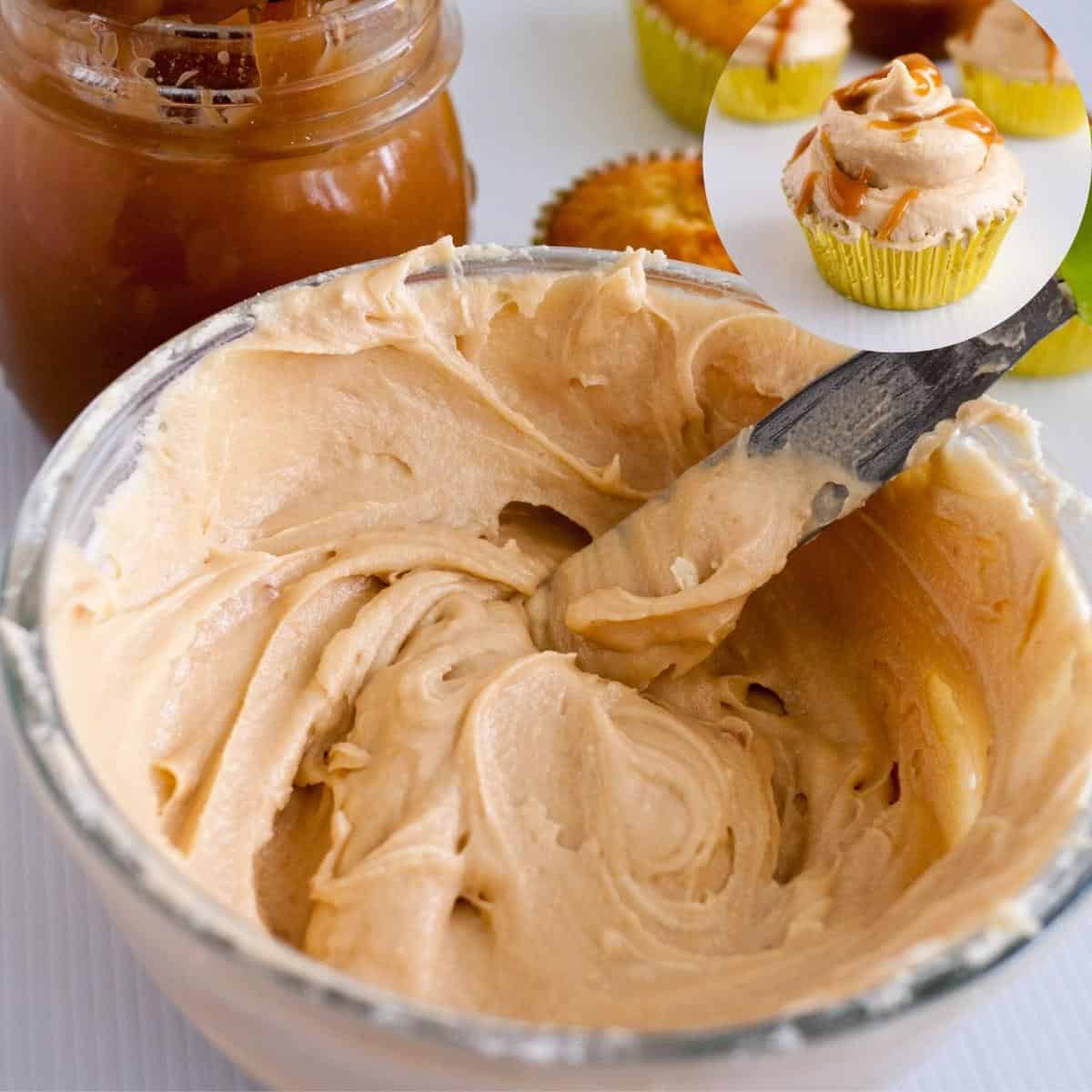



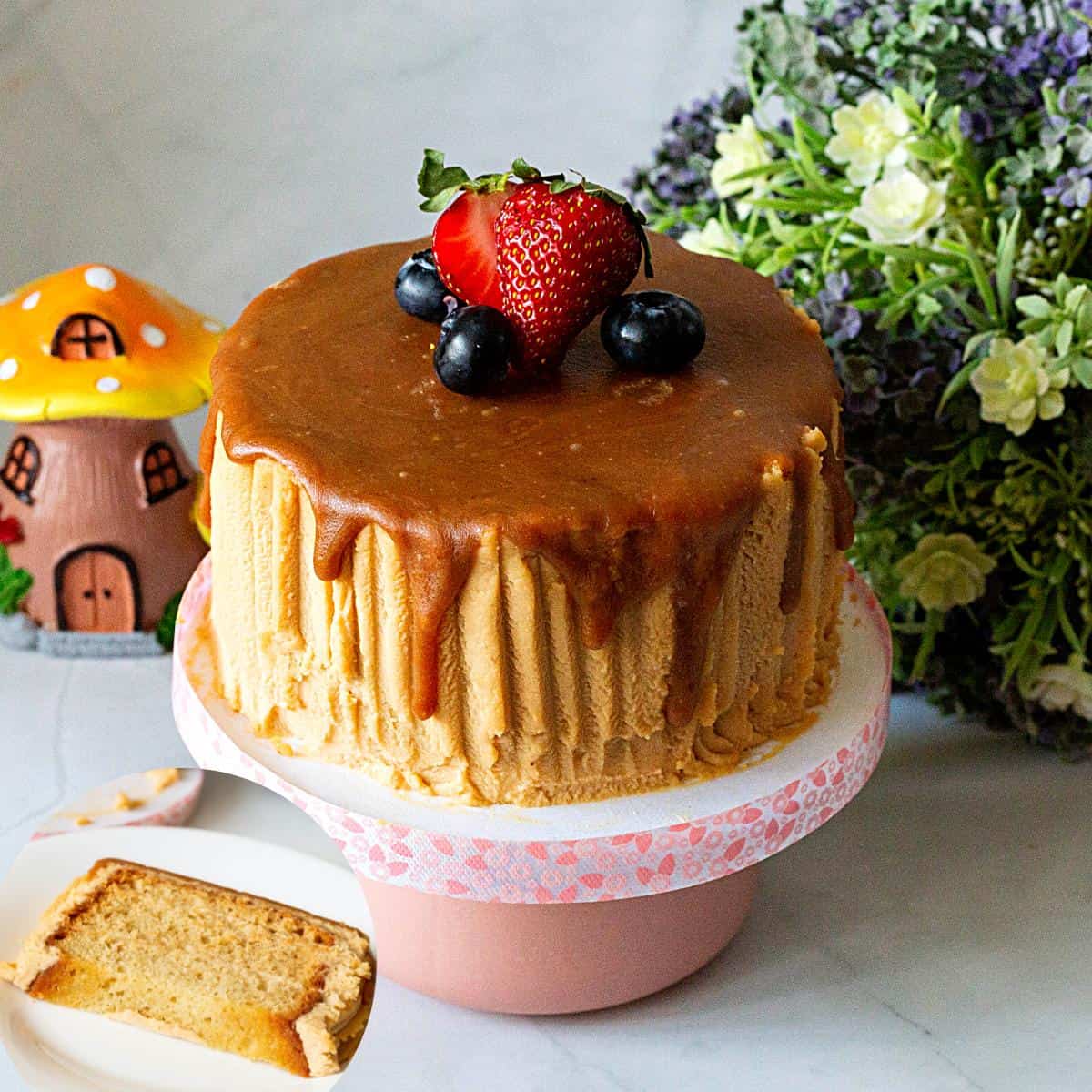
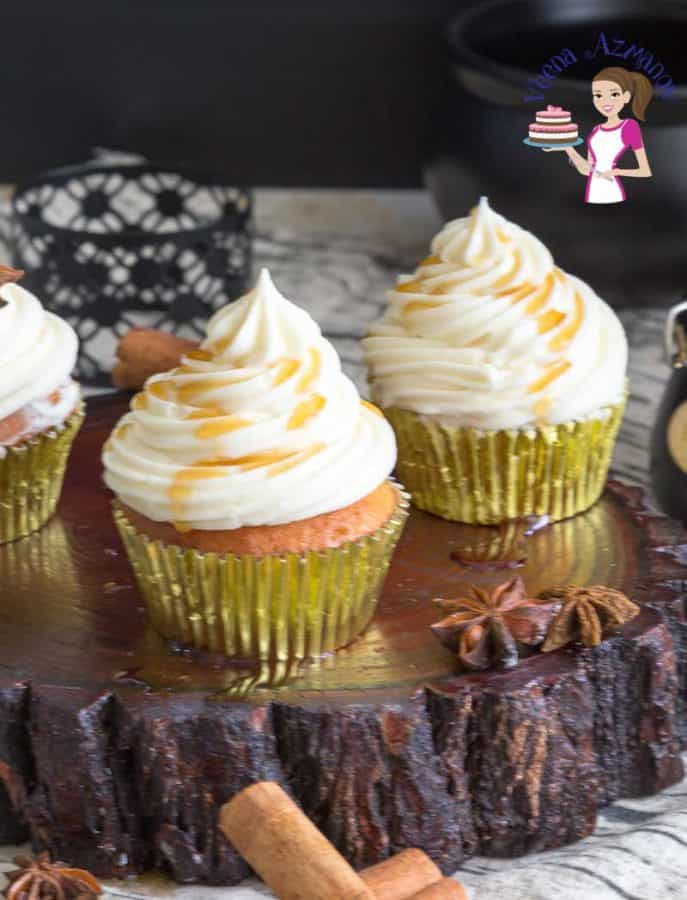
I like to call butterscotch buttercream frosting the sweeter, softer twin of caramel buttercream. It has that deep brown sugar flavor we all love, but it’s a bit more mellow, with a buttery finish that pairs beautifully with vanilla, pumpkin, banana, or chocolate cakes.
When I was running my cake business, this butterscotch frosting was one of my secret weapons. Brides wanted something “different” but still classic—and this flavor always delivered. That cozy, nostalgic flavor of homemade butterscotch sauce folded into silky buttercream? Trust me, it had people licking the cake board clean.
In this post, I’ll show you how to make it from scratch using homemade sauce, or how to save time by using a store-bought version. Either way, this butterscotch buttercream is rich, creamy, and easy to whip up in minutes.
Back when I ran my custom cake business, I had clients who were always asking for “something different—but not chocolate.” Once I introduced butterscotch buttercream frosting, it quickly became one of my most requested flavors, especially for fall and winter weddings. It’s rich, nostalgic, and pairs beautifully with vanilla, pumpkin, chocolate, banana, and spice cakes.
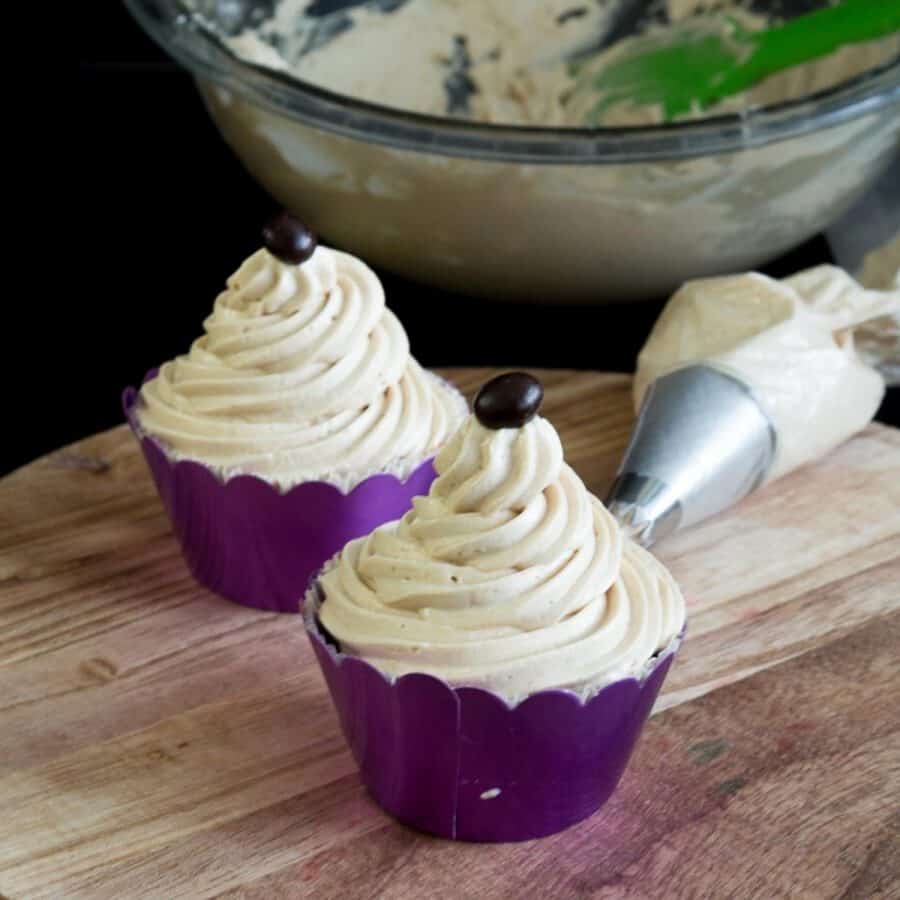
This frosting is made by blending thick butterscotch sauce (either homemade or store-bought) into whipped butter and powdered sugar. The result? A silky, smooth buttercream with deep brown sugar flavor and a golden hue that looks as amazing as it tastes.
Whether you’re topping cupcakes, filling layer cakes, or just licking it straight off the spatula (no judgment), this butterscotch buttercream will hit all the right notes.
What Is Butterscotch Buttercream?
Butterscotch buttercream is a flavored frosting made by combining buttercream with butterscotch sauce. Traditional butterscotch sauce is made by cooking brown sugar and butter together, often with cream and vanilla, giving it a rich, slightly tangy flavor that’s deeper than caramel.
When added to frosting, the butterscotch brings a warm, comforting sweetness with a velvety smooth finish. It’s perfect for anyone who loves caramel-like flavors but wants something softer, more nostalgic, and less sugary-sweet.
You can use homemade butterscotch sauce (recipe included below) or take a shortcut with a good-quality store-bought version.
Why is this the best recipe?
- Rich butterscotch flavor – Made with real brown sugar and butter for that deep, caramel-like taste.
- Smooth and fluffy texture – Whips up perfectly for spreading, piping, or layering.
- Works with store-bought or homemade sauce – Choose what fits your time and mood.
- Pairs with almost anything – Vanilla, banana, pumpkin, spice, or even chocolate cakes and cupcakes.
Ingredients and substitutes
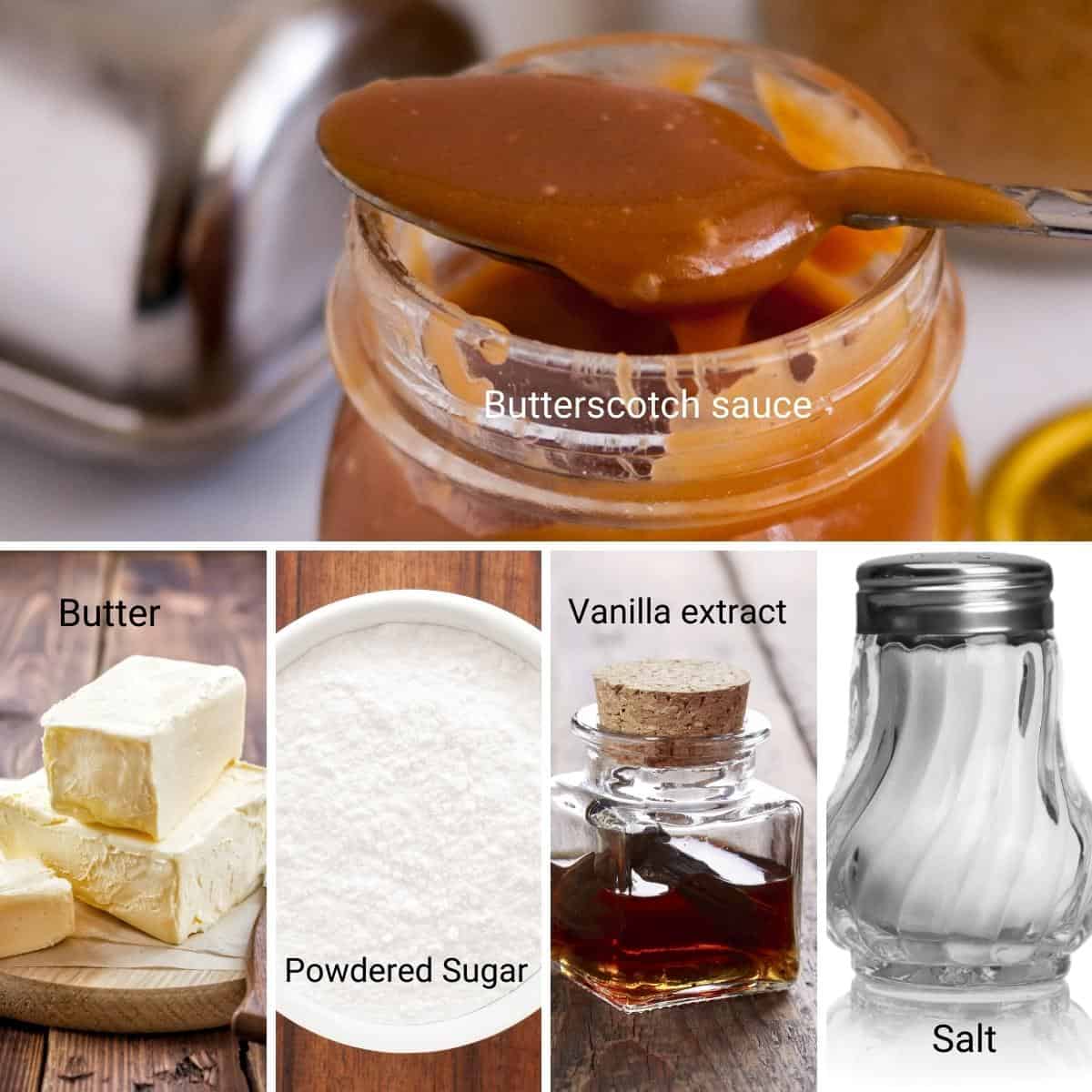
- Unsalted Butter – Base of the buttercream. Use salted butter if needed, but reduce added salt.
- Butterscotch Sauce – Use homemade (recipe below) or store-bought. Make sure it’s thick, not runny. Thin sauce can make the buttercream too soft.
- Powdered Sugar – Sweetens and stabilizes the buttercream. If you don’t have it, blend granulated sugar into a fine powder.
- Vanilla Extract – Enhances the butterscotch flavor. You can also use vanilla bean paste or scraped vanilla bean.
- Salt – Optional, helps balance the sweetness. Omit if using salted butter.
- Heavy Cream or Milk – Optional, to adjust the consistency of the buttercream. Whole milk or half-and-half also work.
Step-by-step: How to Make Butterscotch buttercream frosting
Make the homemade butterscotch sauce (optional)
- In a medium saucepan, melt the butter over medium heat.
- Add the brown sugar and cream. Stir constantly and bring to a gentle boil.
- Simmer for 4–5 minutes, stirring occasionally.
- Remove from heat and stir in vanilla extract and salt.
- Let the sauce cool completely to room temperature before using in buttercream.
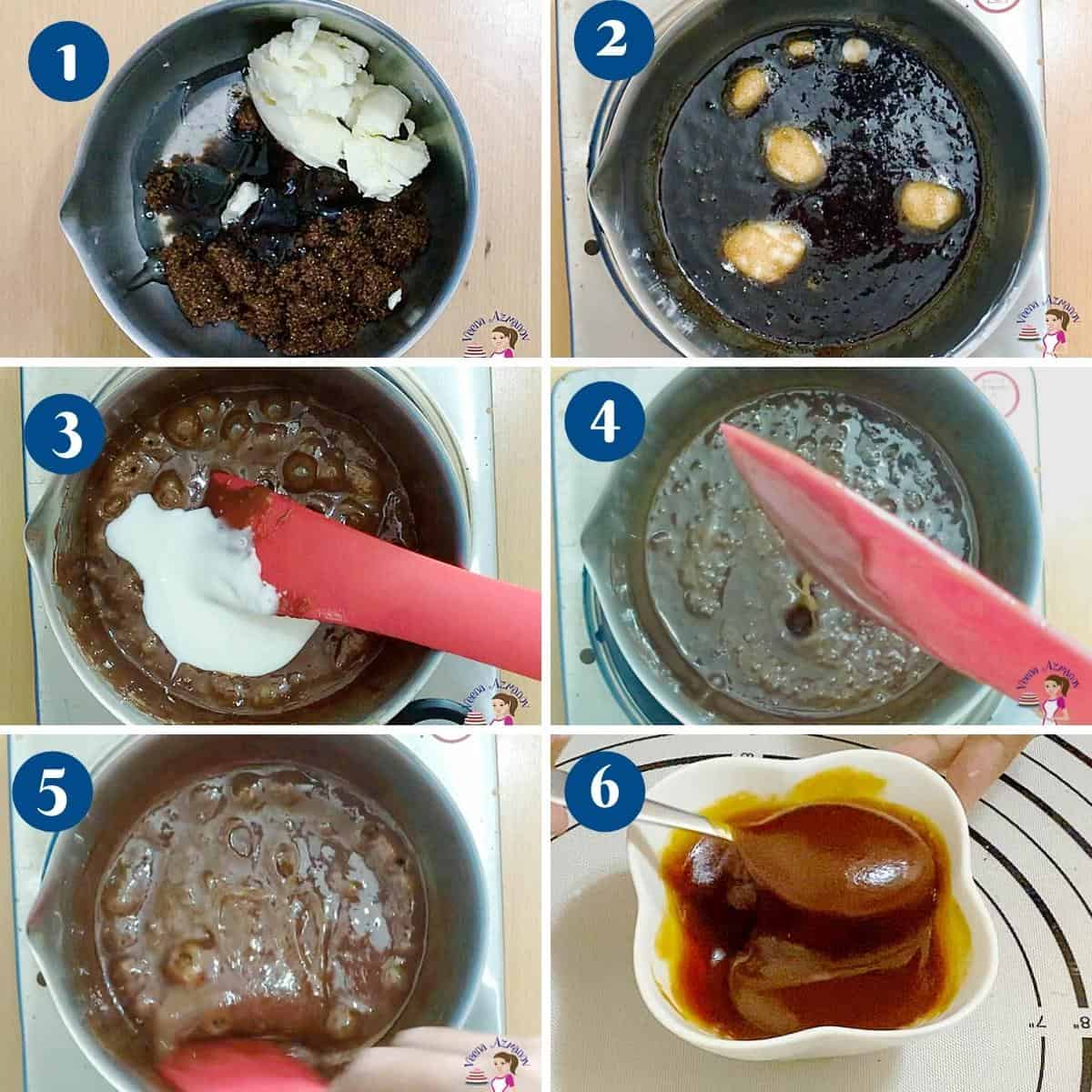
How to make butterscotch buttercream
(with homemade or store bought butterscotch sauce)
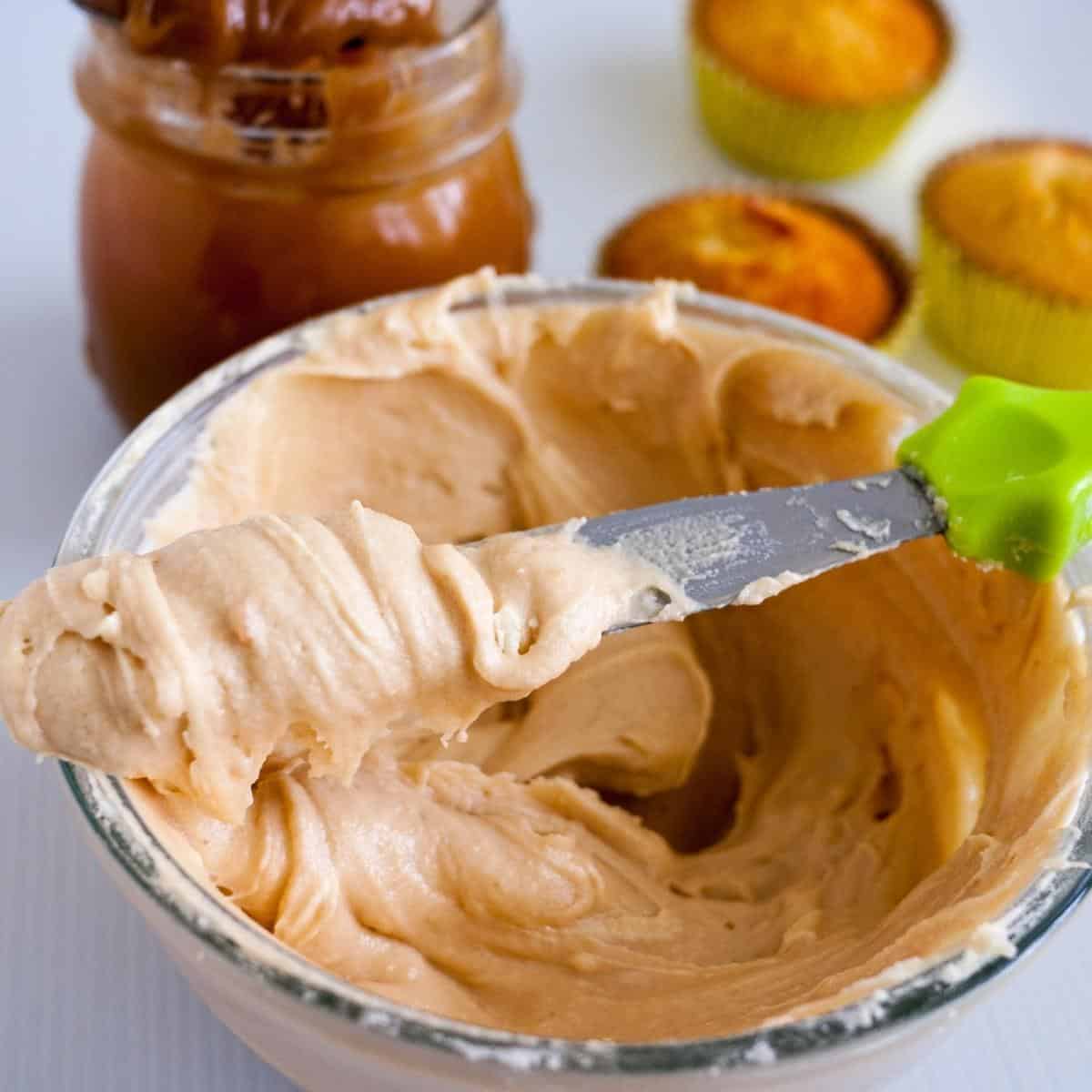
- In a mixing bowl, beat the butter until pale and creamy.
- Add the butterscotch sauce and beat until well combined.
- Gradually add powdered sugar, mixing well between additions.
- Add vanilla extract and salt (if using).
- Adjust consistency with cream or milk as needed.
- Whip on medium-high speed for 2–3 minutes until light and fluffy.

Storage
- Refrigerator: Store in an airtight container for up to 1 week.
- Before Use: Let come to room temp and re-whip to restore texture.
- Freezer: You can freeze for up to 1 month. Thaw overnight in the fridge and re-whip.
Tips for Success
- Cool the sauce completely – If you’re making homemade butterscotch sauce, make sure it’s fully cooled before adding it to the butter. Warm sauce will melt the butter and ruin the buttercream texture.
- Use room temperature butter – Soft (not melted!) butter will cream more easily and give you that fluffy, smooth consistency.
- Choose a thick sauce – Whether you’re using homemade or store-bought, the butterscotch sauce should be thick and spoonable—not runny. Thin sauces can make the frosting too soft or cause it to split.
- Sift your powdered sugar – This helps avoid lumps and gives a silky finish, especially if you plan to pipe the frosting.
- Whip it well – After all ingredients are mixed, beat the buttercream on medium-high for 2 to 3 minutes. This adds air and creates a light, fluffy texture.
- Adjust the consistency – If the buttercream is too thick, add 1 tablespoon of cream or milk at a time. If too soft, chill briefly or add a bit more powdered sugar.
- Taste and balance – If the frosting feels too sweet, a pinch of salt or a tiny squeeze of lemon juice can balance it out.
- Chill to firm up – If your kitchen is warm or the frosting feels too soft to pipe, refrigerate it for 10–15 minutes, then re-whip slightly before using.
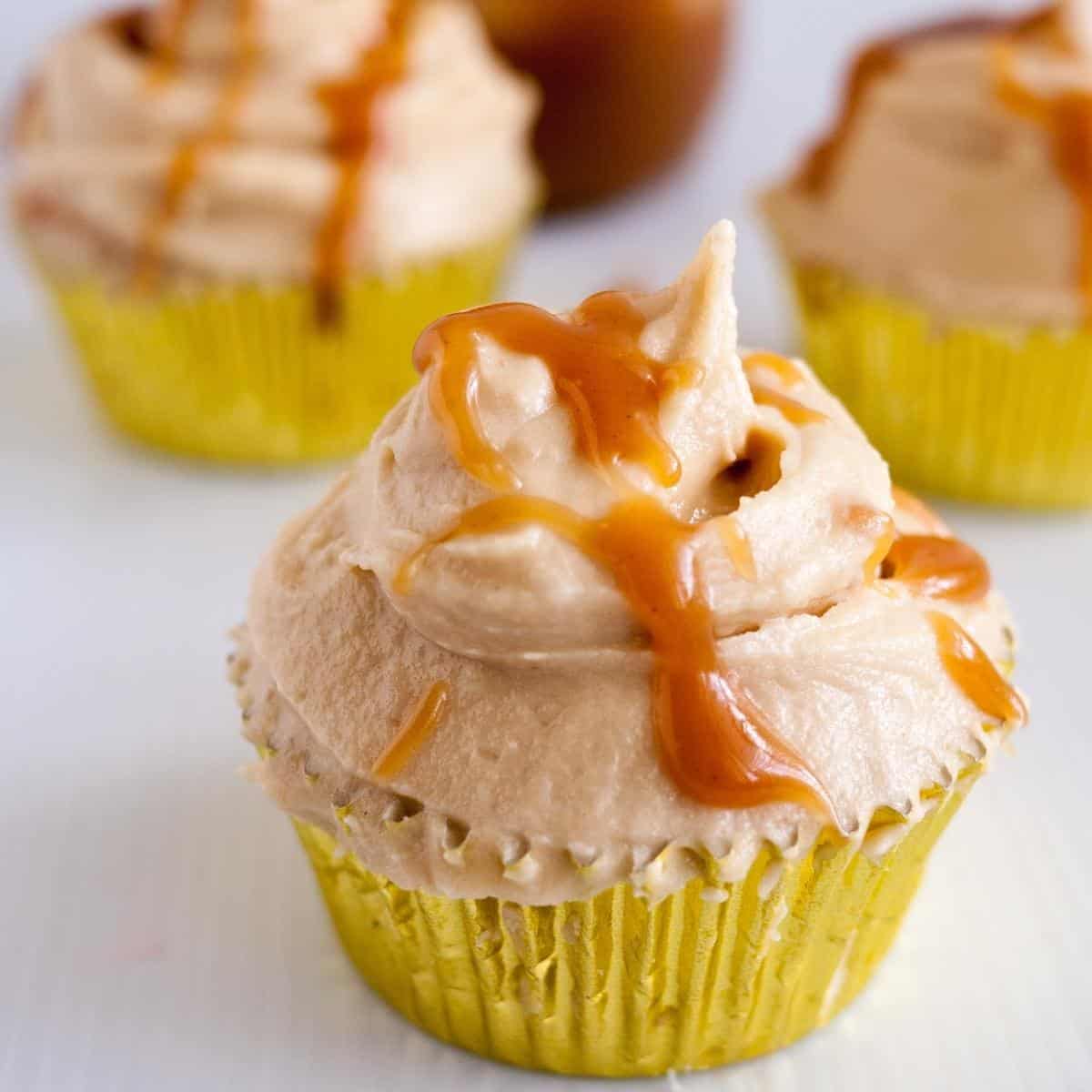
Troubleshooting
| Issue | What Went Wrong | How to Fix |
|---|---|---|
| Buttercream too soft | Sauce too warm or too much liquid | Chill and rewhip, or add more powdered sugar |
| Grainy texture | Sugar in sauce didn’t dissolve | Make sure to cook the sauce until fully smooth |
| Too sweet | Personal taste | Add a pinch of salt to balance |
| Split or curdled | Sauce was too hot or too cold | Bring both butter and sauce to room temp, rewhip |
| Too thick to spread | Not enough liquid | Add cream, 1 tbsp at a time |
Ways to Use Butterscotch Buttercream
- Pumpkin cupcakes or banana cake
- Chocolate layer cakes
- Apple spice loaf
- Between cookies or sandwich macarons
- As a filling for doughnuts or tarts

you may also like
- 30 + Buttercream Recipes – Frosting
- White Chocolate Buttercream Frosting
- Maple Buttercream Frosting
- Korean Buttercream Recipe
- Eggnog Buttercream Frosting
- Light & Fluffy Ermine Frosting (Less Sweet)
- See all Frosting recipes
Frequently asked questions
This buttercream will keep in the fridge for up to a week. You can also store leftovers in the freezer for up to 3 months. Thaw in the fridge overnight for best results
– In the bowl of a stand mixer with the paddle attachment, whip the butterscotch sauce with the premade buttercream until light and fluffy.
– The consistency of this buttercream will depend on the consistency of the original buttercream as well as the consistency of your Butterscotch Sauce.
– If you need to frost a cake or pipe swirls on cupcakes, this will work just great.
– However, if you need a firm or stiff buttercream, then you are probably better off using the recipe from scratch below.
Caramel is made with white sugar while butterscotch is made with brown sugar. Butterscotch has a unique flavor that comes from the molasses in the brown sugar.
Recipes that use brown sugar are often enhanced with the flavor of butterscotch. Coffee and chocolate both work well with it as well.
Butterscotch Buttercream Frosting
I call butterscotch buttercream frosting the twin sister of caramel buttercream. While quite similar, butterscotch has a uniquely delicate and sweet flavor from brown sugar. Also, it's much softer than caramel and goes well with some unique cake flavors such as banana, pumpkin, apple, and even vanilla or chocolate.
Video
Ingredients
- 113 g (½ cup) Unsalted butter
- 220 g (1 cup) Brown sugar packed
- 60 ml (¼ cup) Heavy cream 38%
- 1 tsp Vanilla extract
- ½ tsp Salt
- 240 g (1 cup) Butterscotch sauce use homemade or store-bought
- 113 g (½ cup) Butter unsalted, room temperature
- ½ tsp Salt
- 240 g (2 cups) Powdered sugar approximately
- 1 tsp Vanilla extract
- 1 – 2 tbsp Heavy cream if needed
Method
- In a medium saucepan, melt the butter over medium heat. Add the brown sugar and cream. Stir constantly and bring to a gentle boil. Simmer for 4–5 minutes, stirring occasionally. Remove from heat and stir in vanilla extract and salt. Let the sauce cool completely to room temperature before using in buttercream.113 g Unsalted butter, 220 g Brown sugar , 60 ml Heavy cream , 1 tsp Vanilla extract, ½ tsp Salt
- In a stand mixer bowl, beat the butter until pale and creamy. Add the butterscotch sauce and beat until well combined. Gradually add powdered sugar, mixing well between additions. Add vanilla extract and salt (if using). Adjust consistency with cream or milk as needed. Whip on medium-high speed for 2–3 minutes until light and fluffy.240 g Butterscotch sauce, 113 g Butter, ½ tsp Salt, 240 g Powdered sugar, 1 tsp Vanilla extract
Notes
Tips for Success
- Cool the sauce completely – If you’re making homemade butterscotch sauce, make sure it’s fully cooled before adding it to the butter. Warm sauce will melt the butter and ruin the buttercream texture.
- Use room temperature butter – Soft (not melted!) butter will cream more easily and give you that fluffy, smooth consistency.
- Choose a thick sauce – Whether you’re using homemade or store-bought, the butterscotch sauce should be thick and spoonable—not runny. Thin sauces can make the frosting too soft or cause it to split.
- Sift your powdered sugar – This helps avoid lumps and gives a silky finish, especially if you plan to pipe the frosting.
- Whip it well – After all ingredients are mixed, beat the buttercream on medium-high for 2 to 3 minutes. This adds air and creates a light, fluffy texture.
- Adjust the consistency – If the buttercream is too thick, add 1 tablespoon of cream or milk at a time. If too soft, chill briefly or add a bit more powdered sugar.
- Taste and balance – If the frosting feels too sweet, a pinch of salt or a tiny squeeze of lemon juice can balance it out.
- Chill to firm up – If your kitchen is warm or the frosting feels too soft to pipe, refrigerate it for 10–15 minutes, then re-whip slightly before using.
Equipment you will need


Nutrition
Tried this recipe?
Mention @veenaazmanov_kitchen or tag #veenaazmanovkitchen!
Don’t lose this recipe! Save it for Later!
📌 Save this Recipe for later on Pinterest so you can easily find it again.
⭐ Add Veena Azmanov Kitchen to your Google Preferred Sources.
It helps Google show you more of our recipes.
📧 Subscribe for new recipes delivered to your inbox.
🎥 Follow us for more recipes


Hi, I’m Veena
I’m the recipe developer, baker, and food photographer behind Veena Azmanov Kitchen.
I’ve spent years developing and testing recipes, from everyday meals and homemade breads to cakes and desserts.
I share the practical tips and little details I’ve learned along the way so you can get great results in your own kitchen.




First, thank you. This was really good – not too sweet. This buttercream was Butterscotch forward, middle, and finish. I made your sauce – appreciated that the default sauce proportions was essentially the 1 cup that was needed in this recipe. I used it on coconut cupcakes.
Thank you, Sue
I’m guessing the homemade butterscotch sauce should be completely cooled when being used in the frosting? Or should it be room temperature?
It is best to be room temperature KR. The cold will not mix thoroughly.
I just made this for our Fourth of July celebration to frost a banana cake. The recipe was spectacular and it turned out so light and fluffy! I used your homemade butterscotch sauce recipe it in too! Thanks so much sharing! 🙂
Thank you so much, Meredith.
My comments from last week seemed to have disappeared. I made this frosting for a Valentines Day cake. I believe I measured everything properly prior to starting. Frosting tasted like a stick of butter. One pound butter to 1.5 cups powdered sugar and 1 cup butterscotch sauce seems off now after making it. Other buttercream frosting I looked at after making this, have 4 times the amount of powdered sugar. Not sure whether I messed something up, if there is a type o or if this is just a bad recipe…..
Trisha, Thank you for your feedback. Sorry this buttercream did not work for you
No this is not like the other buttercream recipes on the blog. The recipe is correct, though you can use more powdered sugar if you prefer. It is similar to my caramel buttercream which has a video if you would like to see.
Caramel or butterscotch sauce are both made with butter and whipping cream. So when whipped well, these two ingredients will add volume to create a light and airy frosting.
But, you must whip to that consistency. I hope that makes sense.
Hi. I have a question regarding a filling that will pair well with the buttersctoch frosting. I plan to make a white cake but I’m not sure what type of filling (like a homemade jam or even a curd) would pair nicely with this frosting. Last week I did my first cake that had a dam and filling inside and now I can’t wait to do more. ? I’m just having an issue when it comes to pairing flavor profiles that aren’t as common. I’m looking for a filling that won’t be too sweet but will work. Can you please give me some suggestions? Thanks!
Hey Tammie. I have a post that has great suggestions for flavor combinations that you might like to check out.
For butterscotch, a great combination is a coffee, espresso or dark chocolate ganache.
The bitterness of coffee or dark chocolate does go well with the sweet butterscotch.
Another great combination with butterscotch are tart berries – like sour cherries, blackberries,
Personally, I do like orange curd with butterscotch but it’s not very popular with everyone.
I hope these suggestions help.
Hi Veena, I am planning to bake two 9″ cake with 4 layers and use butterscotch buttercream for frosting. Can i use the exact amount give n in your recipe for both sauce and buttercream. will it be enough to cover the cake..it will be semi naked cake so i just need basically for filing and top and little on side.
Thanks in advance.
Hey Rajal
This recipe makes for 3 x 6-inch layers. A 9-inch cake is about 32 servings.
Just adjust the serving size in the recipe card below (change 12 to 32)
it will automatically calculate the recipe for you.
Bake in two 9 inch pans then split those layers in two – so you have 4 layers.
If you want only to fill the cake – naked- the above sauce and buttercream will be fine.
For more frosting, you will need to adjust the recipe in the card below again.
Enjoy the cake and let me know how it was. Thanks
Thank you so much for such a delicious recipe.. can I add food colors to the butterscotch buttercream icing?? Like blue color.. what ll b the end result. Thank you.
Aiswarya. You sure can add color but since the base color is not white it will give you a different tone of color. I suggest adding to a small batch and see if its’ what you like.
Looks yummy but How do I find your post about the difference between butterscotch and caramel? I’ve never seen a clear explanation. Thanks
Thanks Janet. I think I speak about it in either my Butterscotch or Caramel Sauce post.
Thank you so much for such a detailed explanation about butterscotch. I’m going to make it with my premade smbc, just to make sure I got the ratio right. It’s 1 cup butterscotch to 1 cup smbc right? Thank you so much for your time reading this and sharing the recipe.
Mabel the quantity can differ. If you use it for a filling a 1:1 ratio works great. If you use it as a frosting the consistency may be too soft. Perhaps a 1:3 or 1:4 may work better.
Oh my! I will end up eating this all up without bothering to bake anything. Haha. But I think this would be perfect for plain sugar or butter cookies.
Thanks for the recipe! 🙂
I hear ya!! I have the same problem when I made it – it’s so delicious on it’s own.