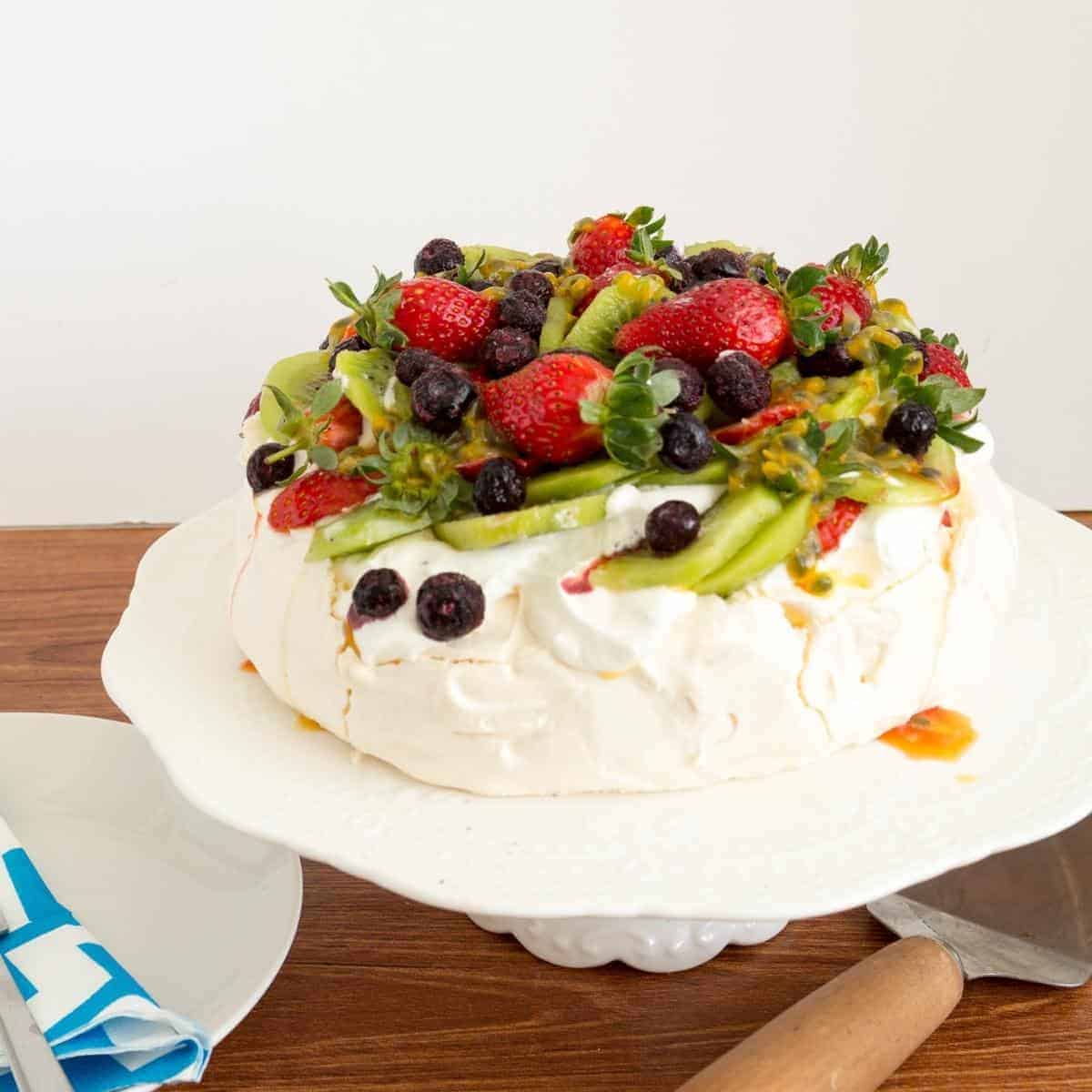
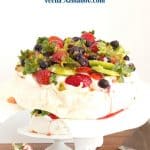
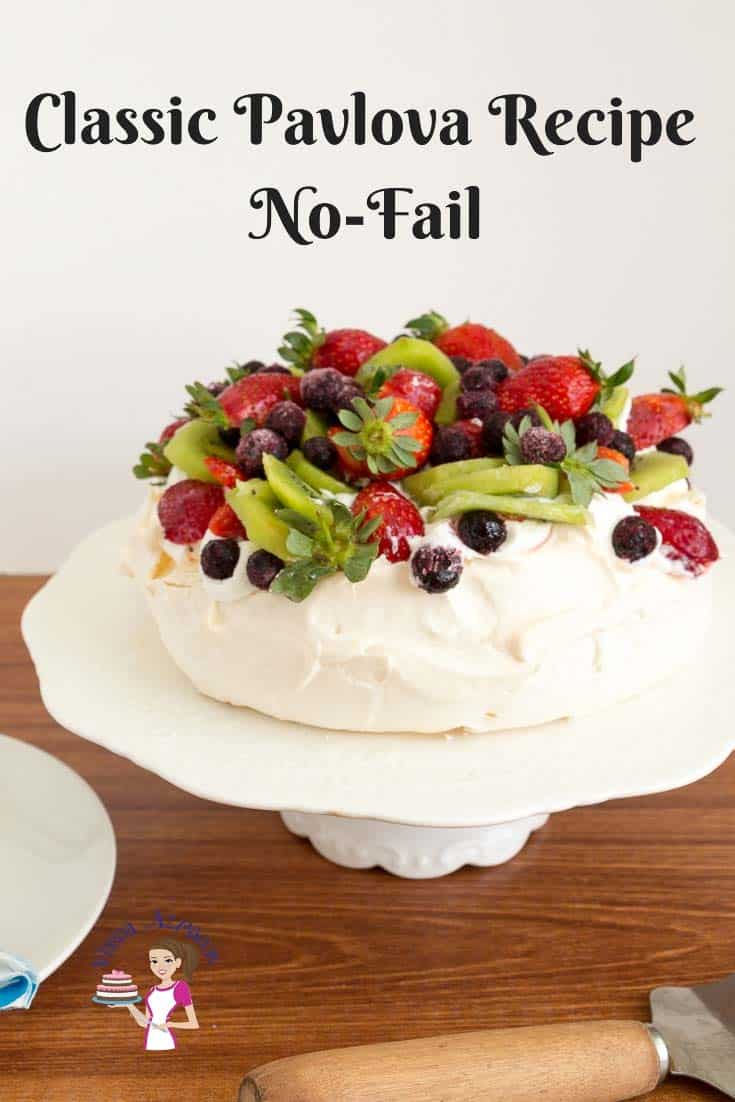
Crisp outside with a soft marshmallow-like inside is what makes the pavlova recipe so unique. Topped with whipped cream and fresh fruits this naturally gluten-free dessert uses my no-fail recipe and method.
Do you want to impress your friends and family with a dessert that looks like it came straight out of a gourmet bakery? Look no further than mastering the perfect pavlova! This light and fluffy meringue dessert topped with fresh fruit and cream is sure to wow your guests. But fear not, we know that pavlovas can be notoriously tricky to get right.
Did you know that the pavlova was named in honor of a Russian ballerina? I used to think this was a Russian dessert. And yet, it’s not! Some say it’s Australian while others say it’s from New Zealand.
The first time I had a pavlova was on my first trip to Melbourne, Australia. I fell in love and had to make it myself. I’ve had my fair share of success and failures over the years. We love making this at home and it’s now my kids’ favorite over meringue!
What is a pavlova?
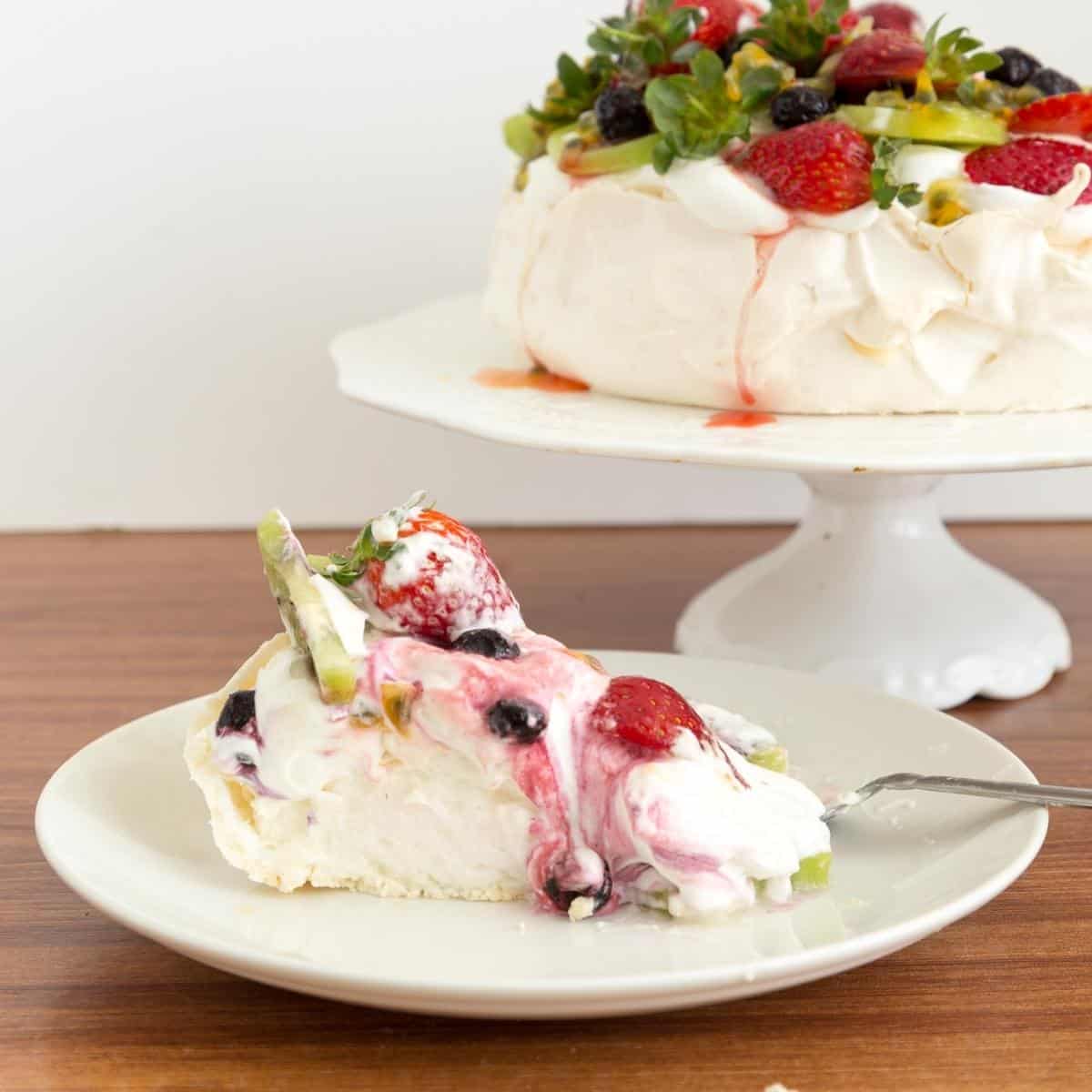
I say a pavlova is where the meringue and marshmallow come together as one. Yes, a pavlova is a baked meringue resulting in a sweet sugary crisp meringue-like outside with a sweet marshmallowy-like pillow on the inside.
Meringue vs pav? Both are made of egg whites and sugar. In a meringue, egg whites are whipped to stiff peaks. While for a pav, you take a whipped meringue, add cornflour and vinegar and then bake it low and slow. So pav is essentially a baked meringue.
Why you’ll love this recipe?
- When making a Pavlova, it’s important to use the right ingredients and equipment. But even with the best of intentions, a simple mistake can turn your dream dessert into a baking nightmare. That’s where this no-fail recipe comes in. By following these tips and tricks, you will be able to make the perfect Pavlova every time.
- Not only is it a crowd-pleaser, but it’s also a versatile dessert that can be customized to suit any taste. Try my mini pavlovas or raspberry pavlova ice cream.
- Most of the ingredients are easy to find or simple pantry staples. In fact, if you have leftover egg whites this is a great dessert to use.
- And, this is a perfect make-ahead dessert. Just make the pavlova ahead of time and frost it on the day of the event.
- It is naturally gluten-free and Nut-free, so it is a great dessert to serve when entertaining.

Ingredients and substitutes
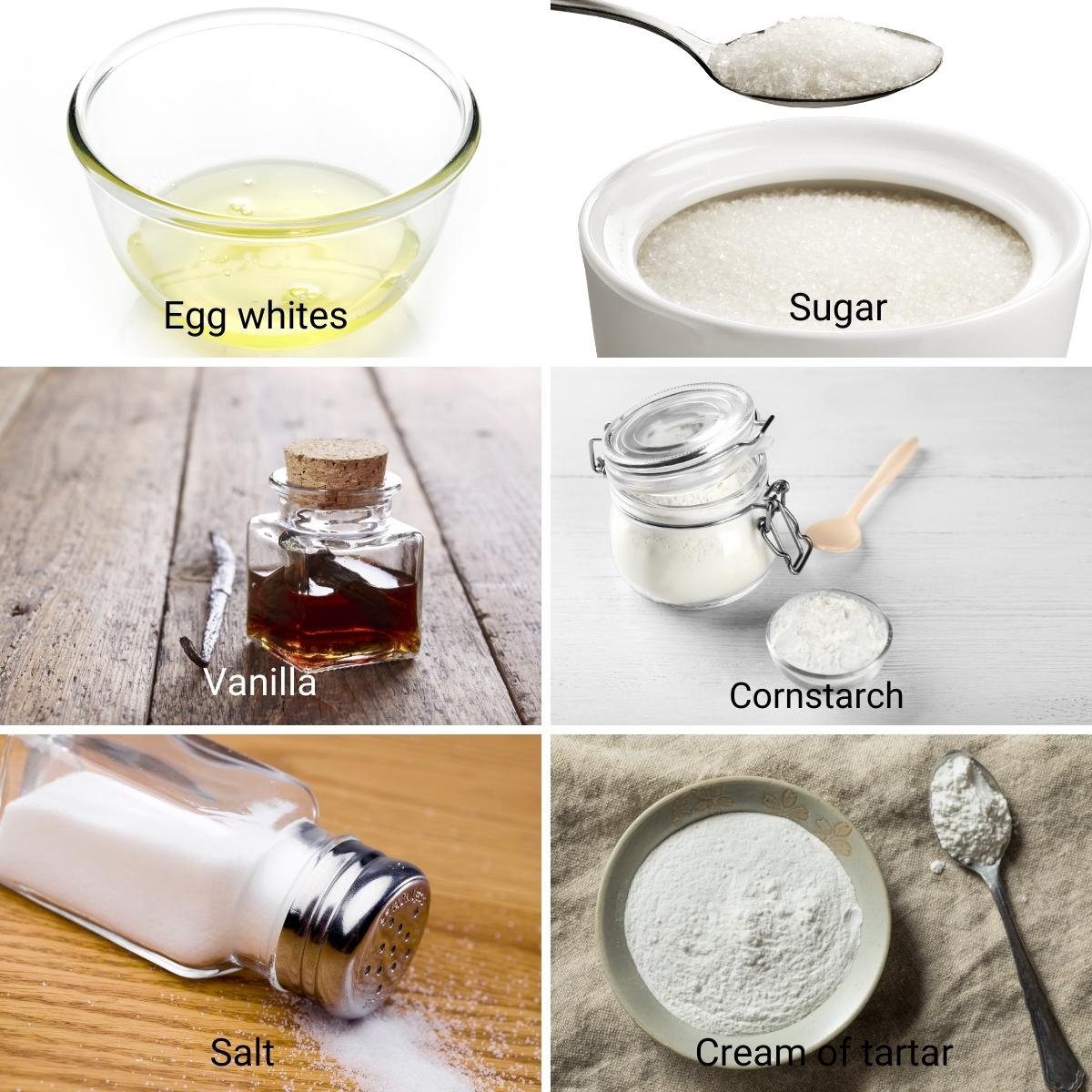
- Egg whites – Egg whites are the backbone of any pavlova recipe, and it’s essential to use fresh eggs at room temperature. If using store-bought eggs, check the expiration date and discard any that are past it. Aged eggs are considered the best for pavlova. So, if you have old egg whites (without any yolk) use them. For substitutions, aquafaba (the liquid from a can of chickpeas) can be use but that is a recipe for another day.
Pro tip – cold eggs are easier to separate. So separate them when cold but let them thaw before using. - Sugar – Granulated sugar is needed to give the pavlova structure and sweetness. However, some recipes call for caster sugar which is fine-grain white sugar, which dissolves more easily. If you don’t have caster sugar, you can make your own by blitzing granulated sugar in a blender for a few seconds Apart from that sugar stabilizes the egg whites helping them build volume and stay puffed up. how sugar affects baking
- Cream of tartar – Gives a much creamier egg white and it prevents the separation of protein and water in the whites. It’s also flavorless so it does not affect the flavor of your baked goods. The best substitute for cream of tartar is a pinch of salt, but lemon juice and vinegar are often used.
- Cornstarch – Cornflour (cornstarch in the US) is used to stabilize the egg whites and prevent weeping. This means that it absorbs any excess liquid left in your meringue so you have a nice crisp outside crust and a soft dry marshmallow on the inside without any weeping. If cornflour is not available, arrowroot powder or potato starch can be used instead.
Equipment for making pavlova
- Electric mixer: You will need an electric mixer to beat the egg whites until they are stiff and glossy. It’s best to use a stand mixer with a whisk attachment, as this will give you the best results.
- Mixing bowl: Choose a large metal or glass mixing bowl to beat the egg whites in. Plastic bowls can sometimes retain traces of oil or grease, which can affect the stability of the egg whites.
- Baking sheet: A baking sheet is essential for baking your pavlova. Make sure it’s large enough to hold the meringue and has a lip to prevent any spillages.
- Parchment paper: Line your baking sheet with parchment paper to prevent the pavlova from sticking and make it easier to transfer to a serving plate.
- Spatula: Use a silicone spatula to gently fold in the sugar and vinegar or lemon juice after beating the egg whites.
Step-by-step: Easy No-Fail Pavlova
Whip Egg Whites (10 mins)
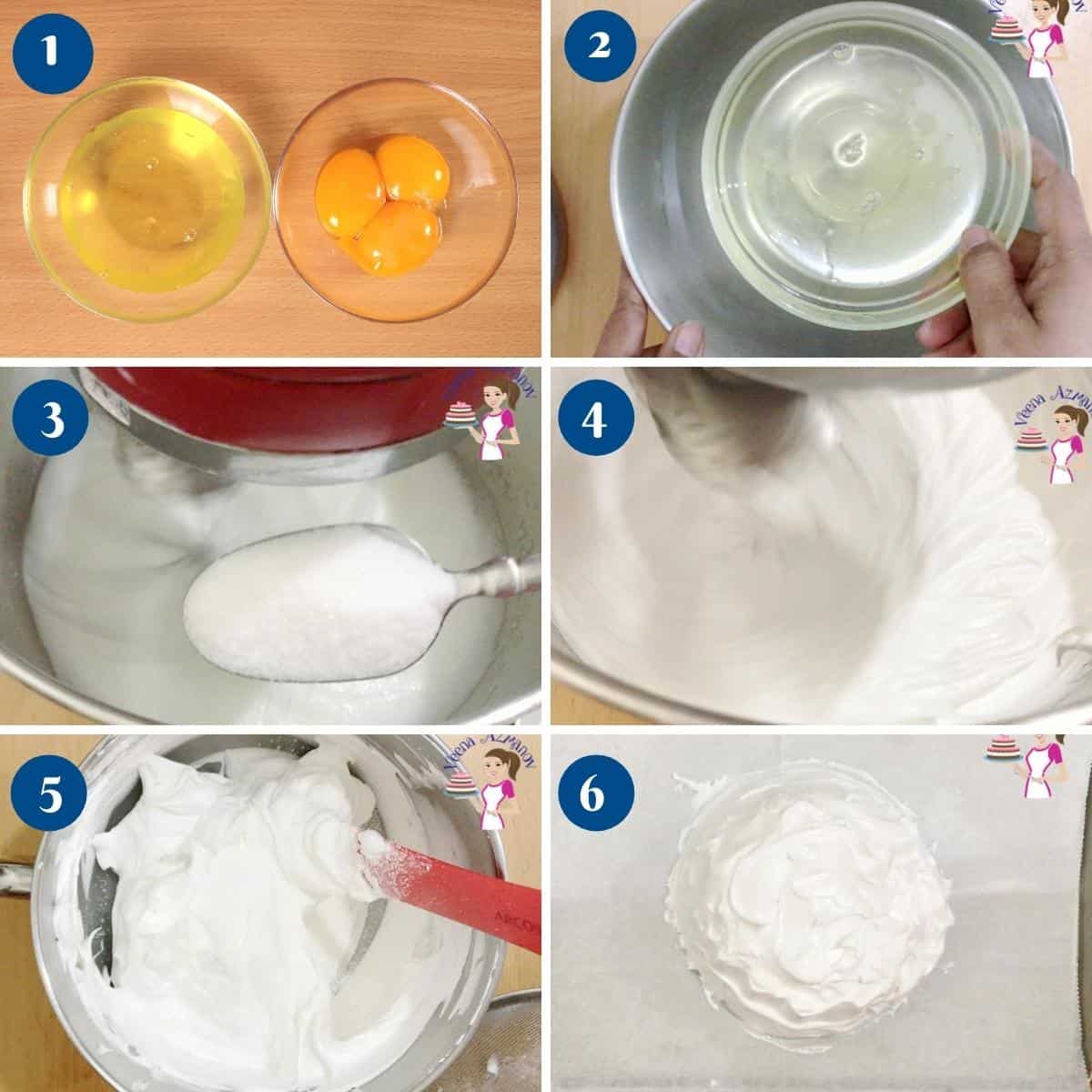
- Egg whites – In the bowl of a stand mixer with a whisk attachment – whip the egg whites with salt on medium speed. Gradually add the sugar one tablespoon at a time
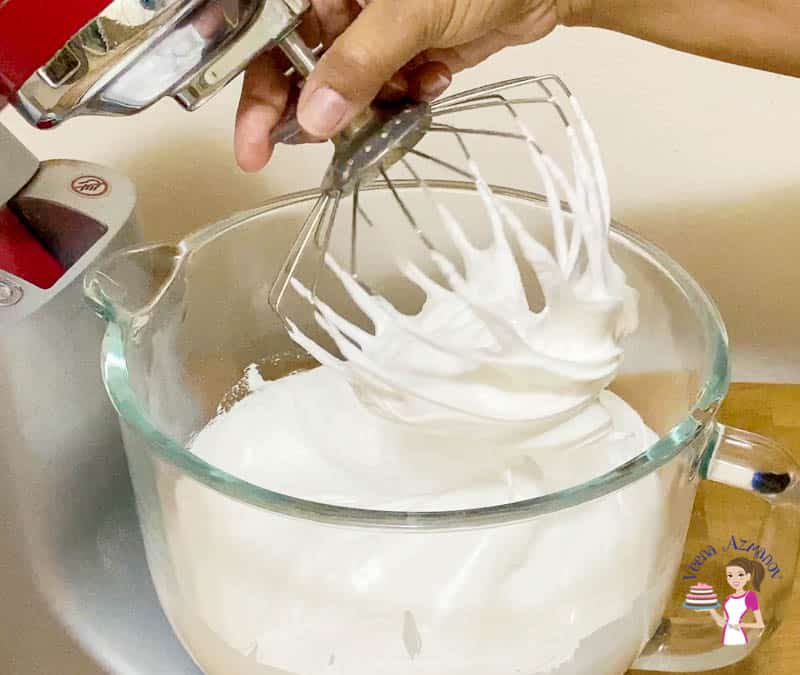
Pro tip – adding the sugar slowly prevents the protein from drying out. Adding sugar quickly can cause the meringue to become flat and runny later too. - Sugar – Gradually add the sugar one tablespoon at a time. When all the sugar has been added – continue to whip the meringue until you have stiff peaks.
Pro tip – the meringue should be sticky with stiff peaks but still have a shiny appearance. - Additions – Switch to a spatula. Fold in the vanilla extract. Then sift in the cream of tartar and cornstarch.
Pro tip – Cream of tartar helps stabilizes the protein in the meringue and prevents it from separating. The cornstarch absorbs all the excess moisture and gives a crisp meringue
Shape the pavlova (10 mins)
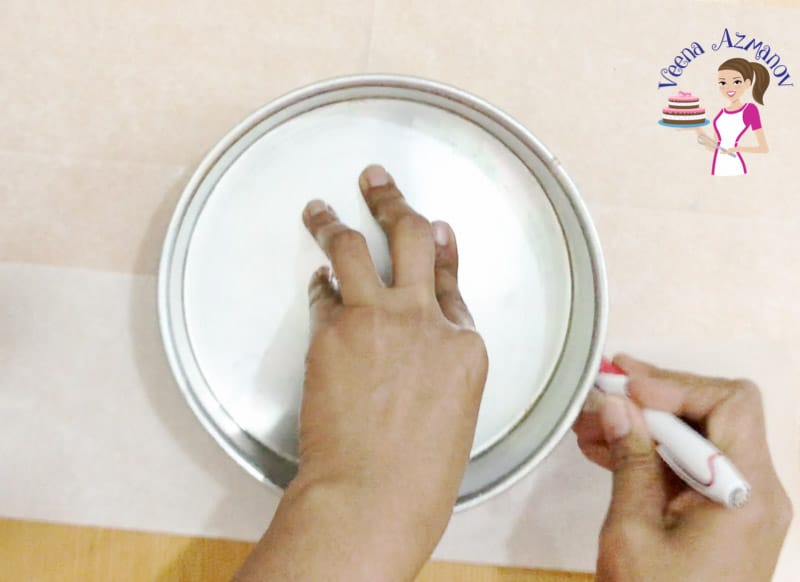
- Template – Preheat the oven to 305F/150°C/ Gas Mark 2. Line a baking tray with parchment paper. Trace an 8-inch circle as a guide on the parchment paper. Flip the paper so the pencil side is down not under the meringue.
Pro tip – we start with a higher temperature then change to a lower temperature when we place the pavlova in the oven.
- Shape – Spread the meringue on the circle you created – being careful to stay inside the circle. Use a spatula to smooth the sides evenly. Keep the sides high and the top flat.
Bake and cool the pavlova (90 Mins + 3 Hours)
- Bake – Transfer the pavlova to the oven on the center rack. Close the oven door and immediately reduce the oven temperature to 265°F/130°C/Gas Mark 1/2. Bake for 90 minutes. When the baking time is done do not open the door, let the pavlova cool inside the oven naturally.
Pro tip – (DO NOT OPEN THE OVEN DOOR DURING BAKING)You can leave it in the oven for 2 to 3 hours up to 12 hours.

Assemble (10 mins)
- Whipped cream – In the bowl of a stand mixer with the whisk attachment whip the cream with powdered sugar.1 cup Whipping cream
- Loosen – Use an offset spatula to gently loosen the pavlova from the parchment paper. Place it on a serving platter or cake board.
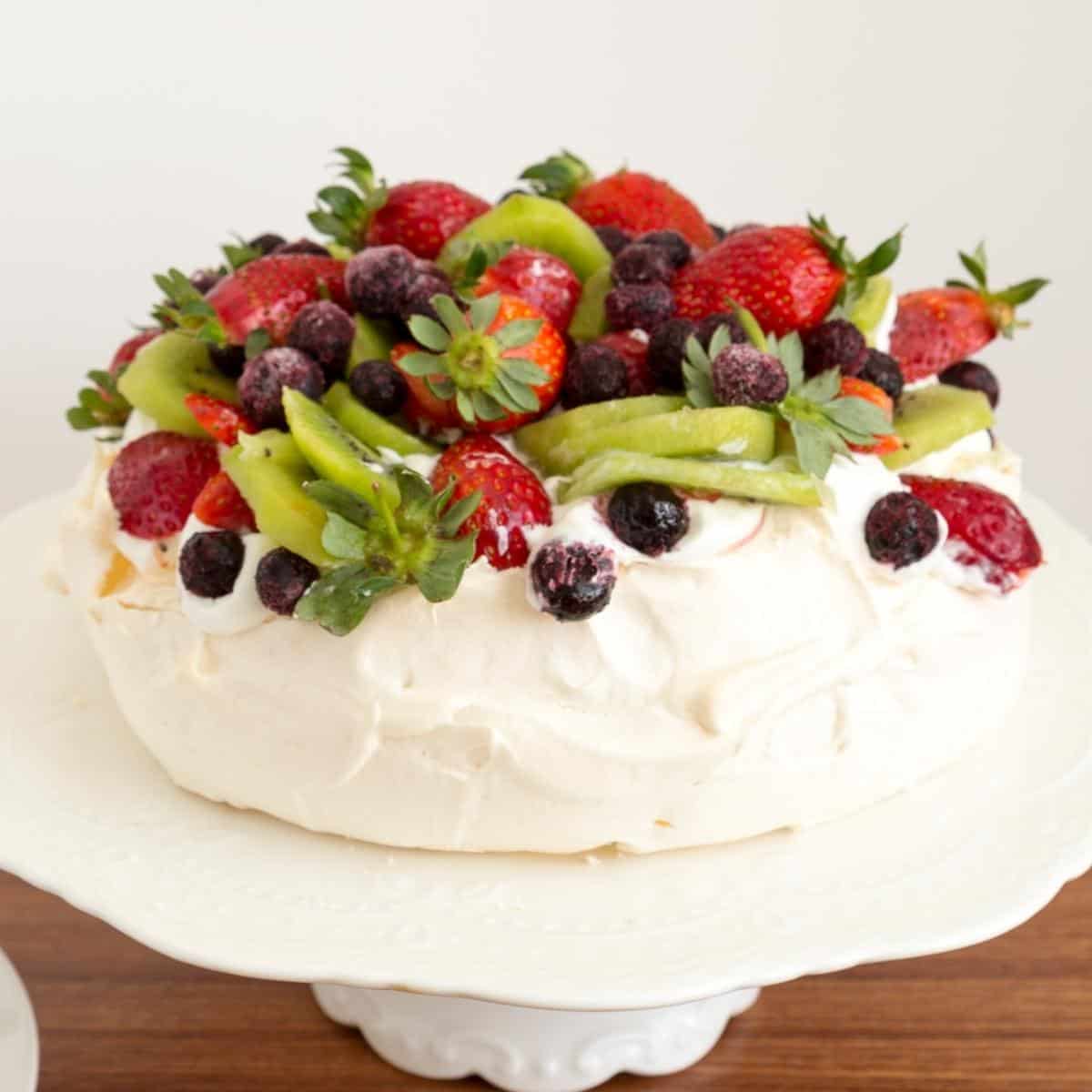
Pro tip – once assembled this is a delicate dessert to move around so always assemble it on a serving platter and not too early as the moisture from the whipping cream will make them soft - Decorate – Evenly spread or pipe the whipped cream on each pavlova. Arrange the fruits of your choice. I’m using sliced strawberries, fresh blueberries, kiwi, and mint leaves for garnish.
- Enjoy!

Pavlova tips & tricks
- Weigh your eggs to ensure you have approximately 150 to 160 grams. 4 large eggs often make between 140 to 177 grams, depending on the size. You may need more or fewer than 4 egg whites.
- Use room temperature eggs – Cold egg whites don’t whip up as well as room temperature ones. Let your eggs sit at room temperature for at least 30 minutes before separating them.
- Any grease in the egg whites will not whip the meringue. So break each egg separately in a bowl before you combine all four. If any egg yolk breaks when baking, save it for your breakfast omelet and use another egg.
- Aged eggs are often the best for making meringues. So if you have any egg whites in the freezer or fridge use them for this recipe as long as they are yolk-free.
- Add sugar slowly. Adding the sugar too quickly can cause a grainy texture. Pour it in slowly, one tablespoon at a time, while beating the egg whites.
- Meringue does require a good amount of whipping, handheld or whisk can be hard work. Use a stand mixer if possible
- Use cornstarch and vinegar: Adding cornstarch and vinegar to your egg whites stabilizes them and helps give the pavlova its signature crispy exterior and marshmallowy interior.
- A circle of 7 to 9 inches works best for this recipe. Do not make it smaller or larger than 9 inches.
- The taller the pav the higher the risk of being undercooked in the center. So, one way to ensure it cooks is to create a little dip in the top. Not too low, it also prevents sinking.
- DO NOT OPEN THE OVEN DOOR WHEN BAKING – OR AFTER THE PAV HAS BAKED. Cooling naturally in the oven will prevent sinking.
- Let it cool in the oven. Once your pavlova is finished baking, turn off the oven and let it cool inside. This will prevent cracks from forming and give the pavlova time to set.
- To cool the pav quicker, gently create an opening in the oven door with a wooden spoon. This will help the warm air to escape slowly and prevent sinking.
- A well-baked pav will have cracks on the outside with a small marshmallow-like pillow on the inside.
- Add whipped cream and fruit just before serving. Moisture from the cream and fruits will start to soften the crisp outer shell and soak into the inside.
Troubleshooting
- Why is my pavlova cracking? A baked meringue when cooled always has cracks. This is normal. When baking a pavlova it is always recommended to cool it in the oven even after switching it off. This cools it gradually, as the oven temperature gets lower, resulting in fewer cracks. And yet, there will still be cracks and this is normal.
- Why is my pavlova soft in the middle? The baked pavlova is supposed to be spongy like marshmallow but dry. As long as it’s dry, not wet, it is normal. One way to ensure the center is always cooked is to create a little dip in the center when shaping the meringue on the tray.
- Why is my pavlova weeping? Undissolved sugar in whipped egg whites can cause weeping. That is why it is recommended to use extra-fine sugar for meringue. The purpose of the cornstarch in the recipe is to absorb excess moisture from the egg whites. However, if there is too much-undissolved sugar the meringue will weep.
- Why is my pavlova runny? It is always recommended to use extra fine sugar and add it to whipping meringue slowly (one tablespoon at a time). Adding sugar quickly causes the meringue to become flat and runny. Even if the meringue does whip it has the tendency to collapse and become runny.

No posts
Frequently asked questions
A baked pavlova will last a day at room temperature and can be kept in an airtight container for up to two days. Add the whipped cream and fruit just before serving.
A perfect pavlova should be white, perhaps slightly beige in color, dry and crisp on the outside, and soft on the inside.
Ideally, you can check with a skewer but that runs the risk of it sinking. So I prefer to use a tried and tested method for the right temperature and time. For this recipe, I find baking at a high quick blast gets a nice crisp shell, then reducing the oven temperature to low and cooking for another 90 minutes then leaving in the oven switched off for a further 2 to 3 hours ensures that the inside is baked.
Never refrigerate a baked pavlova base because condensation from the fridge will soften the crisp outside shell. Store it at room temperature in an airtight container for up to two days.
Also, any leftover pavlova with whipped cream and fruits can be left in the fridge and must be eaten within a day.
Yes, if you find that the pavlova is too soft in the center or undercooked, place it back in the oven at 150 C / 300 F for an hour.
Best Pavlova Recipe
Crisp outside with a soft marshmallow-like inside is what makes the pavlova so unique. Topped with whipped cream and fresh fruits this naturally gluten-free dessert uses my no-fail recipe and method.
Video
Ingredients
- 4 large (150 g) Egg whites
- 1 cup (200 g) White sugar or powdered sugar
- 2 tsp Cornstarch cornflour
- 1 tsp Cream of tartar or vinegar
- ¼ tsp Salt
- 1 tsp Vanilla extract
- 1 cup (240 ml) Whipping cream
- 2 cups (500 g) Chopped fruits
Method
- Template – Preheat the oven to 305F/150°C/ Gas Mark 2. Line a baking tray with parchment paper. Trace an 8-inch circle as a guide on the parchment paper. Flip the paper so the pencil side is down not under the meringue.Pro tip – we start with a higher temperature then change to a lower temperature when we place the pavlova in the oven.
- Whites – In the bowl of a stand mixer with a whisk attachment – whip the egg whites with salt on medium speed. Gradually add the sugar one tablespoon at a timePro tip – adding the sugar slowly prevents the protein from drying out. Adding sugar quickly can cause the meringue to become flat and runny later too.4 large Egg whites, 1 cup White sugar, 1/4 tsp Salt
- Sugar – Gradually add the sugar one tablespoon at a time. When all the sugar has been added – continue to whip the meringue until you have stiff peaks.Pro tip – the meringue should be sticky with stiff peaks but still have a shiny appearance.
- Additions – Switch to a spatula. Fold in the vanilla extract. Then sift in the cream of tartar and cornstarch.Pro tip – Cream of tartar helps stabilizes the protein in the meringue and prevents it from separating. The cornstarch absorbs all the excess moisture and gives a crisp meringue2 tsp Cornstarch, 1 tsp Cream of tartar, 1 tsp Vanilla extract
- Shape – Spread the meringue on the circle you created – being careful to stay inside the circle. Use a spatula to smooth the sides evenly. Keep the sides high and the top flat.
- Bake – Transfer the pavlova to the oven on the center rack. Close the oven door and immediately reduce the oven temperature to 265°F/130°C/Gas Mark 1/2. Bake for 90 minutes. When the baking time is done do not open the door, let the pavlova cool inside the oven naturally.Pro tip – (DO NOT OPEN THE OVEN DOOR DURING BAKING)You can leave it in the oven for 2 to 3 hours up to 12 hours.
- Whipped cream – In the bowl of a stand mixer with the whisk attachment whip the cream with powdered sugar.1 cup Whipping cream
- Loosen – Use an offset spatula to gently loosen the pavlova from the parchment paper. Place it on a serving platter or cake board.Pro tip – once assembled this is a delicate dessert to move around so always assemble it on a serving platter and not too early as the moisture from the whipping cream will make them soft
- Decorate – Evenly spread or pipe the whipped cream on each pavlova. Arrange the fruits of your choice. I'm using sliced strawberries, fresh blueberries, kiwi, and mint leaves for garnish.2 cups Chopped fruits
- Enjoy!
Notes
- Weigh your eggs to ensure you have approximately 150 to 160 grams. 4 large eggs often make between 140 to 177 grams, depending on the size. You may need more or fewer than 4 egg whites.
- Use room temperature eggs – Cold egg whites don’t whip up as well as room temperature ones. Let your eggs sit at room temperature for at least 30 minutes before separating them.
- Any grease in the egg whites will not whip the meringue. So break each egg separately in a bowl before you combine all four. If any egg yolk breaks when baking, save it for your breakfast omelet and use another egg.
- Aged eggs are often the best for making meringues. So if you have any egg whites in the freezer or fridge use them for this recipe as long as they are yolk-free.
- Add sugar slowly. Adding the sugar too quickly can cause a grainy texture. Pour it in slowly, one tablespoon at a time, while beating the egg whites.
- Meringue does require a good amount of whipping, handheld or whisk can be hard work. Use a stand mixer if possible
- Use cornstarch and vinegar: Adding cornstarch and vinegar to your egg whites stabilizes them and helps give the pavlova its signature crispy exterior and marshmallowy interior.
- A circle of 7 to 9 inches works best for this recipe. Do not make it smaller or larger than 9 inches.
- The taller the pav the higher the risk of being undercooked in the center. So, one way to ensure it cooks is to create a little dip in the top. Not too low, it also prevents sinking.
- DO NOT OPEN THE OVEN DOOR WHEN BAKING – OR AFTER THE PAV HAS BAKED. Cooling naturally in the oven will prevent sinking.
- Let it cool in the oven. Once your pavlova is finished baking, turn off the oven and let it cool inside. This will prevent cracks from forming and give the pavlova time to set.
- To cool the pav quicker, gently create an opening in the oven door with a wooden spoon. This will help the warm air to escape slowly and prevent sinking.
- A well-baked pav will have cracks on the outside with a small marshmallow-like pillow on the inside.
- Add whipped cream and fruit just before serving. Moisture from the cream and fruits will start to soften the crisp outer shell and soak into the inside.
Equipment you will need


Nutrition
Tried this recipe?
Mention @veenaazmanov_kitchen or tag #veenaazmanovkitchen!


Don’t lose this recipe! Save it for Later!
📌 Save this Recipe for later on Pinterest so you can easily find it again.
⭐ Add Veena Azmanov Kitchen to your Google Preferred Sources.
It helps Google show you more of our recipes.
📧 Subscribe for new recipes delivered to your inbox.
🎥 Follow us for more recipes
Hi, I’m Veena
I’m the recipe developer, baker, and food photographer behind Veena Azmanov Kitchen.
I’ve spent years developing and testing recipes, from everyday meals and homemade breads to cakes and desserts.
I share the practical tips and little details I’ve learned along the way so you can get great results in your own kitchen.
Thanks! So yumm
I don’t know if I missing something, but I don’t see where and when to add the salt. I added it when I was close to soft Peak stage
Michael. The eggs whites and salt go together. Thanks
This was an absolutely amazing pavlova. The recipe will definitely be going in the family cookbook. Thanks alot for sharing!
Thank you, Lucinda. Happy you enjoyed it. Appreciate the feedback.
First time making a Pavlova.Easy to follow and turned out lovely if slightly browned. Won’t make it so high on the sides next time Only 1 piece left so everyone enjoyed it!
Thanks Sharon. Yes, sounds like the oven was hot, reducing the oven temperature a bit will definitely help. Thanks for the feedback.
How much whipping cream for the top
The recipe says one cup whipping cream Cindy. Look below in the card
Eggwhites and sugar were really stiff and sticky. After I folded in the vanilla, cornstarch and cream of tarter, it became much softer and after 30 min in the oven, it was a flat wide pancake.
This is the third pavlova recipe I have tried and the only “no fail” one. It was the only one that failed!
Nancy, I’m sorry this recipe did not work for you.
Yes, egg whites and sugar when whipped into a meringue are definitely very sticky.
However, if you overbeat the egg whites until they are dry the can lose volume during baking.
I’m not sure what happened with your pavlova but I do have a video on the blog if you’d like to compare and troubleshoot
Thanks for the feedback
tried your recipe
inside was soft but outside not crispy
what did i do wrong?
Hey Anita. How long did you keep it? Sounds like it was not completely done? It will become soft in humidity too
Absolutely beautiful, Veena! The dessert is a real show stopper. I’ve never made a Pavlova although my daughter-in-law did for my birthday. I’ve always wanted to make one – that is on my bucket list this year. I love the touch of the fresh fruit — so pretty and colorful. Truthfully? I’d rather have that than any other kind of dessert.
Thank you, Marisa. Yes, I love pavlova with fresh fruits. So refreshing. Thanks
I love pavlova and actually all meringue desserts! Pavlovas are so versatile and you can really make each one unique. Thanks for all the tips!
Me too, Jolina. Love any meringue desserts.
Pavlovas are one of my favorite desserts!
Thank you, Mary.
I just can’t get over how good this fruity pavlova looks! And I didn’t know that there was that subtle difference between pavlova and meringue, will have to keep that in mind! (:
Thanks, Nicolas. Yes, a Pavlova is just a big baked meringue
I’ve never even tasted a pavlova but this looks so good I’m going to have to give it a try! You make it look easy!
Thanks, Denise. So good. And it’s your favorite Gluten-free