
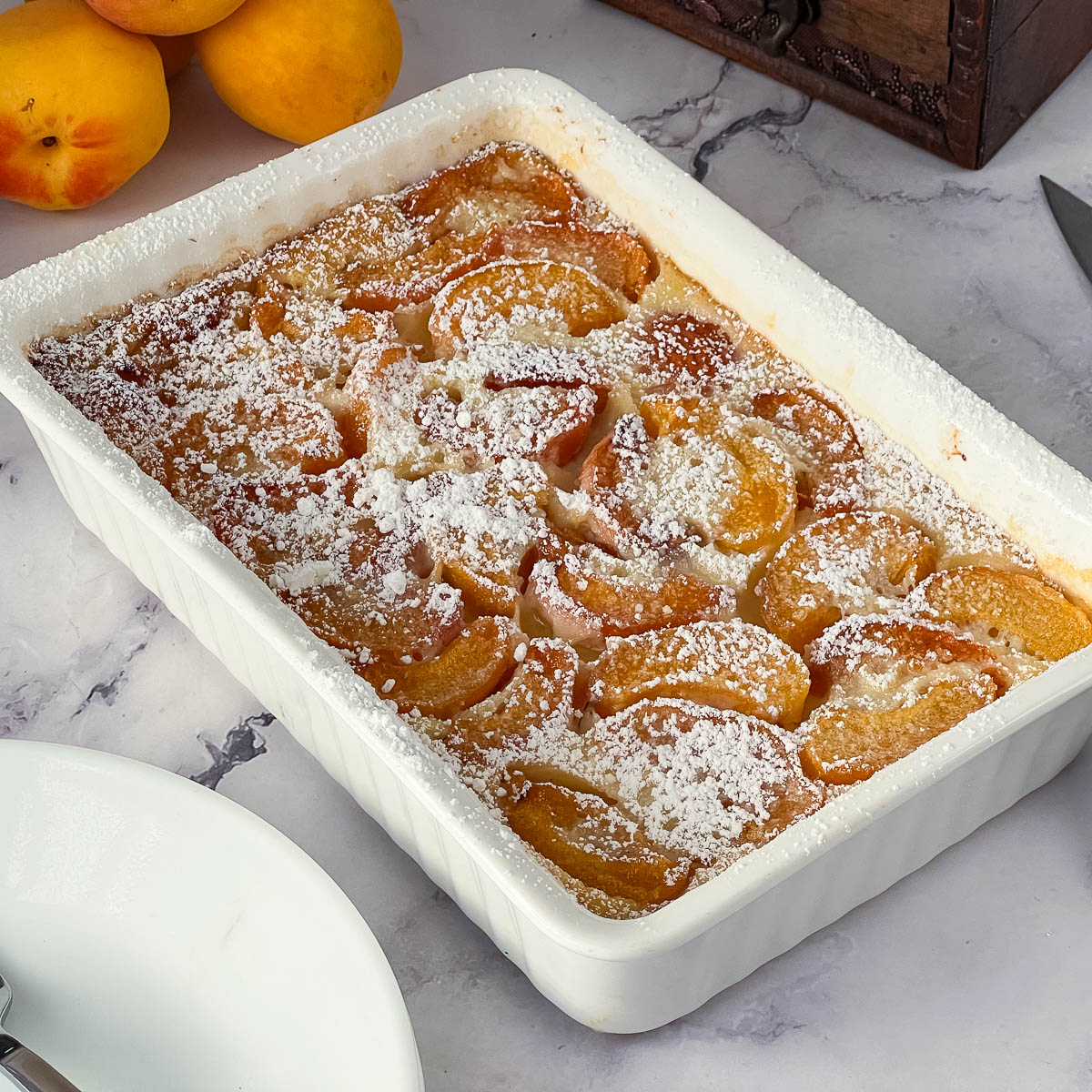





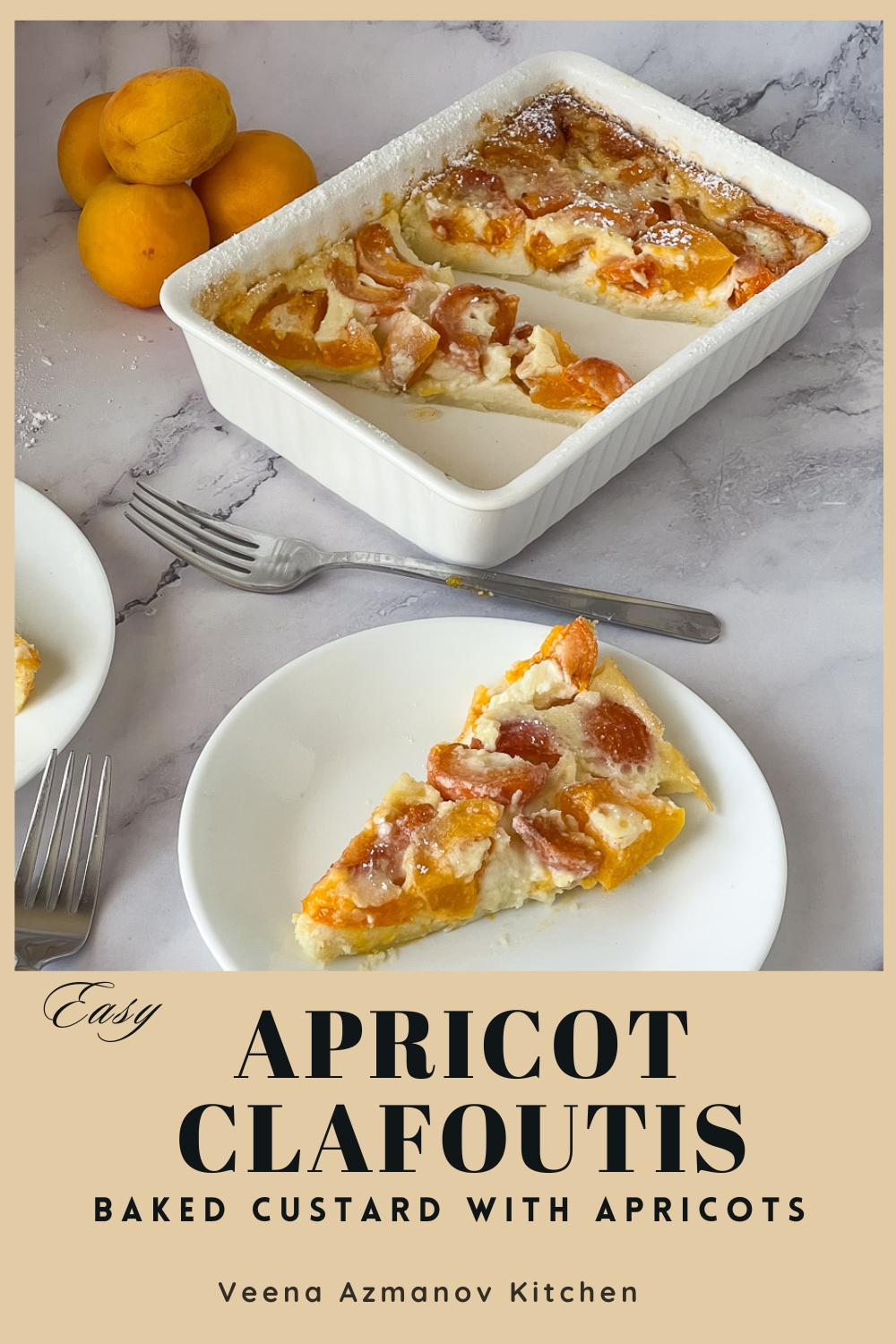
This apricot clafoutis combines fresh apricots with a soft, lightly sweet custard-like batter. The apricots are arranged in a buttered and sugared baking dish, covered with a simple hand-whisked batter, and baked until puffed and golden.
You do not need a blender or mixer for this recipe. Everything comes together in one bowl with a whisk, making it an easy summer dessert when fresh apricots are in season.
Apricot season always feels far too short, so I try to make the most of it while the fruit is available. After making apricot cobbler and a few apricot tarts, I wanted something even simpler that would let the fresh fruit remain the main focus.
Clafoutis was the perfect choice. I left the skins on the apricots, cut them into quarters, and arranged them in a buttered and sugared pan. Instead of using a blender, I whisked the batter by hand in one bowl. It is simple, rustic, and exactly the kind of dessert that works equally well warm from the oven or chilled the next day.
What is clafoutis?
Clafoutis is a French baked dessert made by arranging fruit in a baking dish and covering it with a thin, custard-like batter. The texture falls somewhere between a baked custard, pancake, and soft cake
Why You’ll Love This Recipe
- Simple one-bowl batter – No blender, mixer, or special equipment is needed.
- Fresh apricot flavor – The tart apricots balance the lightly sweet custard.
- Easy preparation – There is no pastry crust to roll or filling to cook separately.
- Lovely served warm or cold – Enjoy it warm, at room temperature, or chilled.
Ingredients and Substitutions
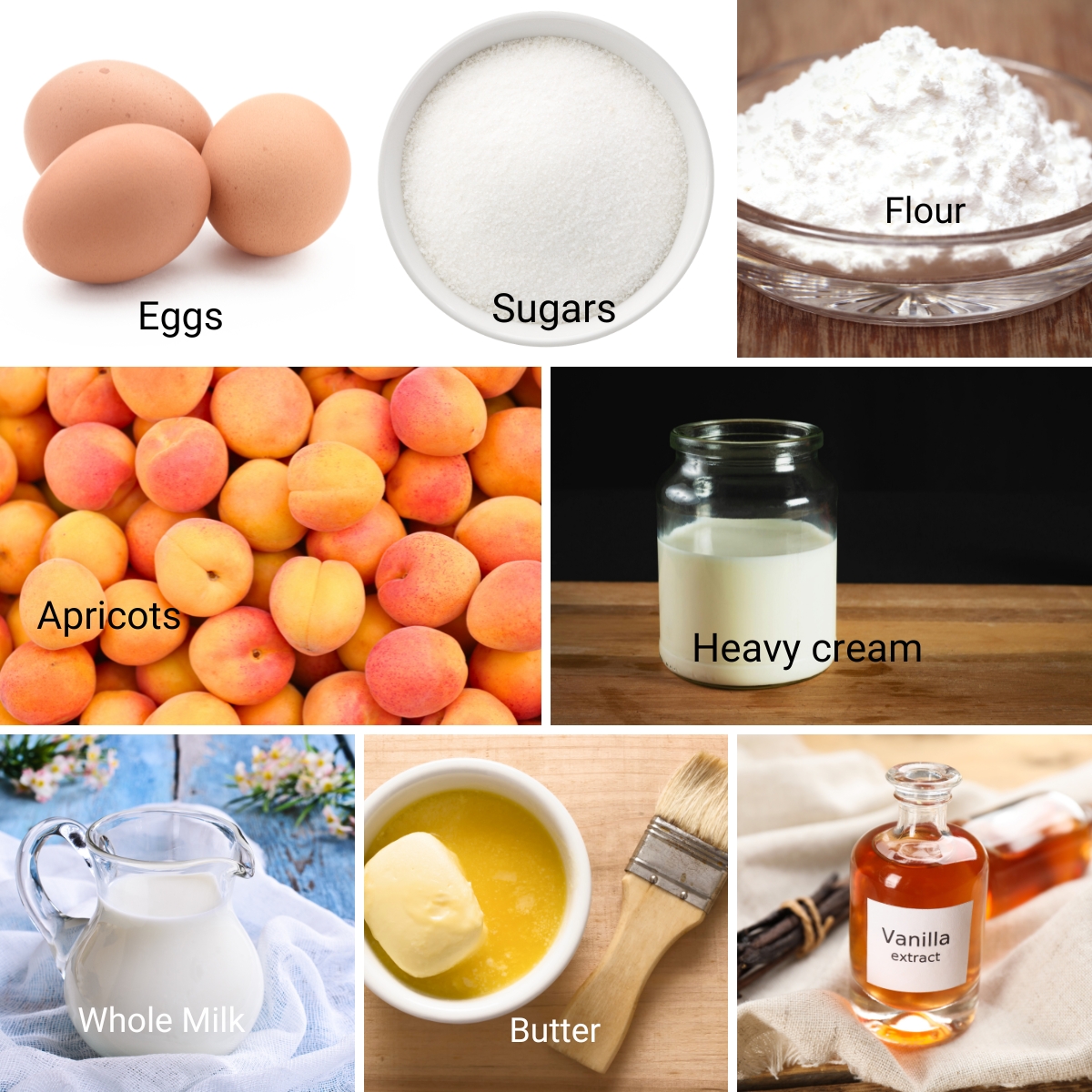
- Fresh apricots – Use approximately 8 to 10 medium apricots, or enough to cover the bottom of the baking dish. Pit and cut each apricot into quarters. There is no need to peel them.
- Butter for the pan – Helps prevent sticking and gives the edges a richer flavor.
- Sugar for the pan – Creates a lightly caramelized coating around the fruit and batter.
- Eggs – Three large eggs give the clafoutis its custard-like texture.
- Sugar – Half a cup lightly sweetens the batter without overpowering the fruit.
- All-purpose flour – Gives the custard enough structure to slice once baked.
- Salt – A small pinch balances the sweetness.
- Vanilla extract – Adds warmth and complements the apricots. Almond extract can be used instead, but use only ¼ teaspoon because it is much stronger.
- Heavy cream – Makes the clafoutis creamy and rich. You can replace it with additional whole milk for a lighter texture.
- Milk – Whole milk works best, but 2% milk can also be used.
- Melted butter – Adds richness and helps create a tender texture.
- Powdered sugar, optional – For dusting over the baked clafoutis before serving.
Step-by-step: How to Make Apricot Clafoutis
Prepare the apricots and pan
Preheat the oven to 350°F/170°C.
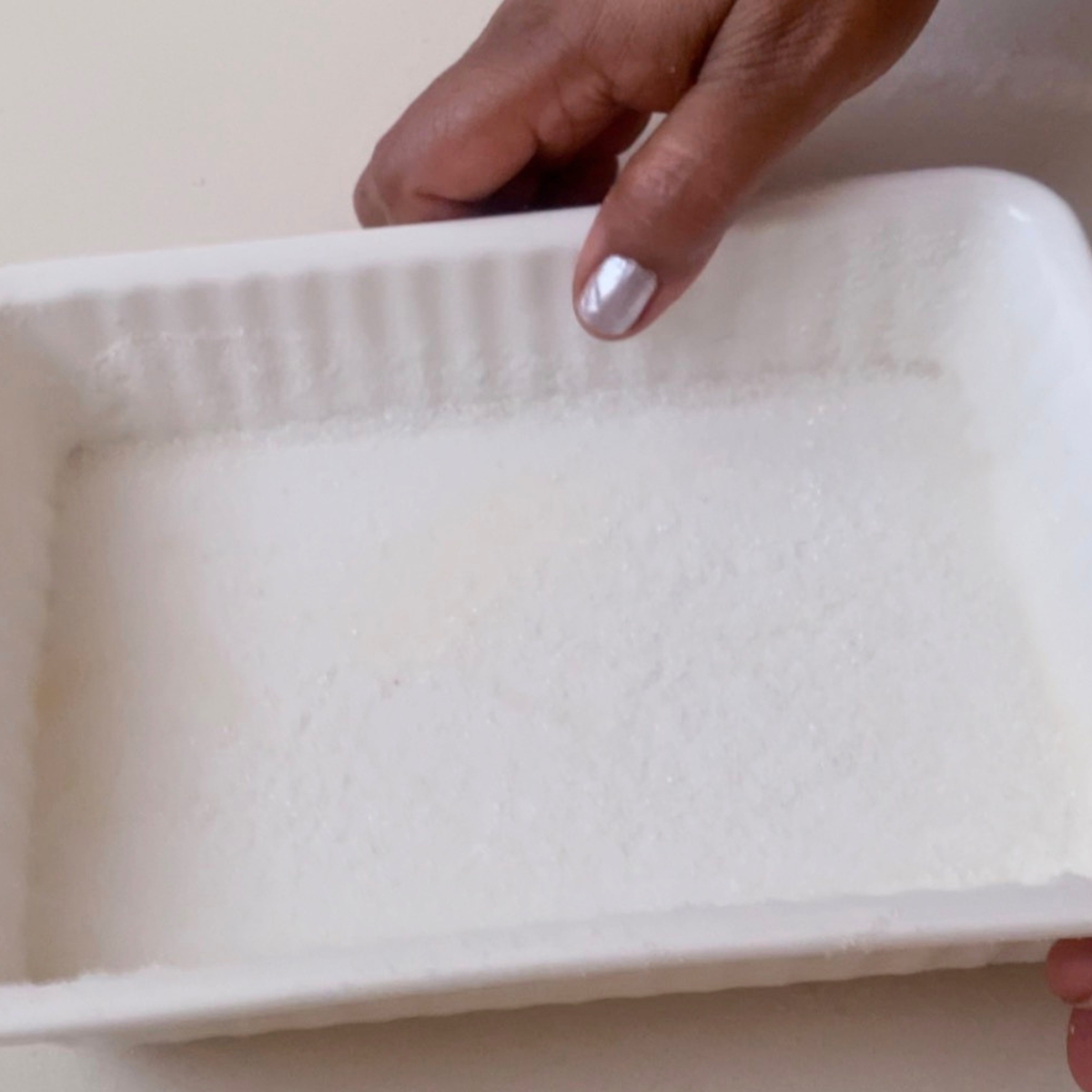
Generously butter a 9-inch round baking dish or a similarly sized rectangular baking dish, approximately 8 x 10 inches.
Sprinkle about 1 tablespoon of sugar over the buttered surface, turning the pan so the bottom and sides are lightly coated.
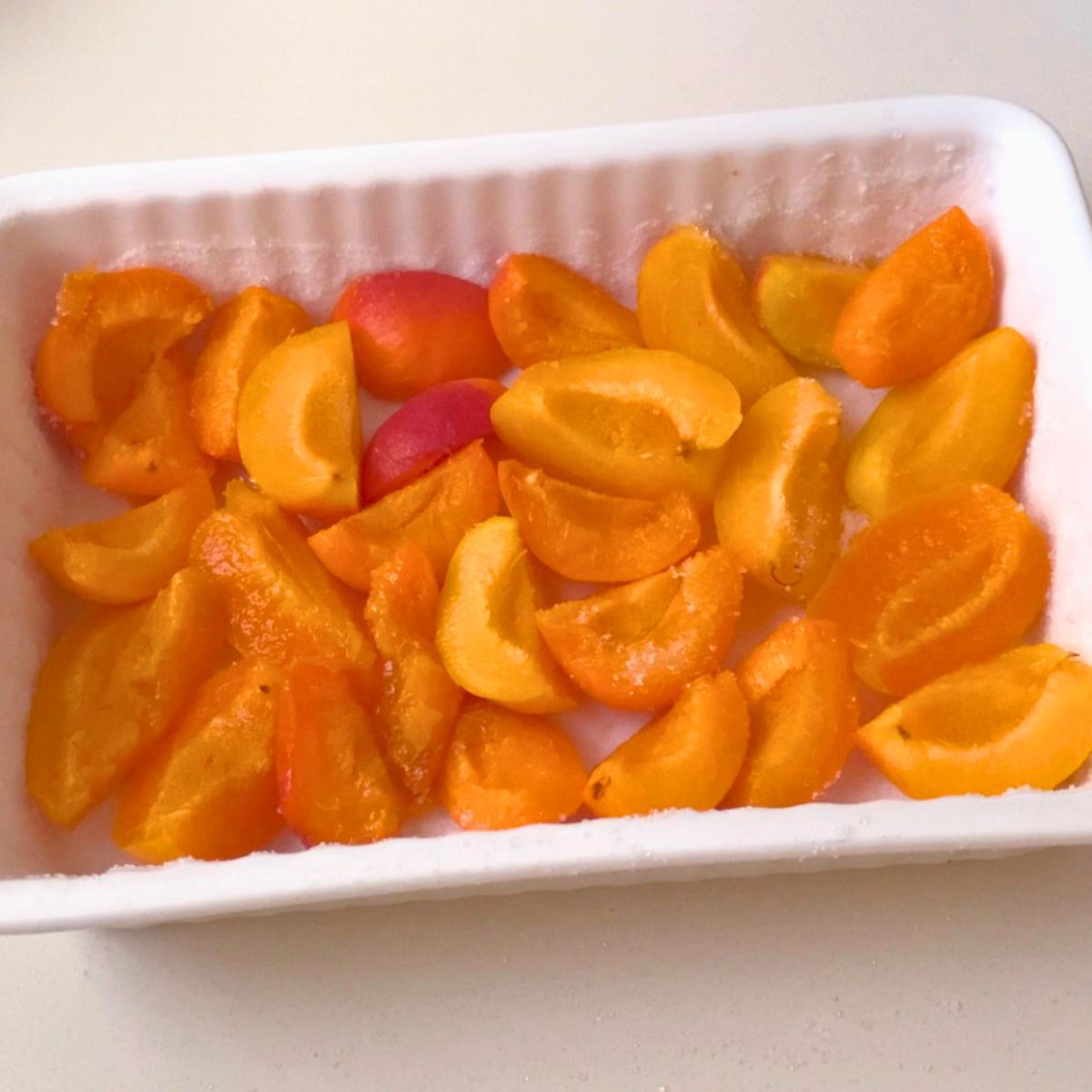
Wash the apricots, cut them in half, and remove the pits. Cut each half again to make quarters. Arrange the apricot quarters evenly in the prepared baking dish with the cut sides facing upward.
Make the batter
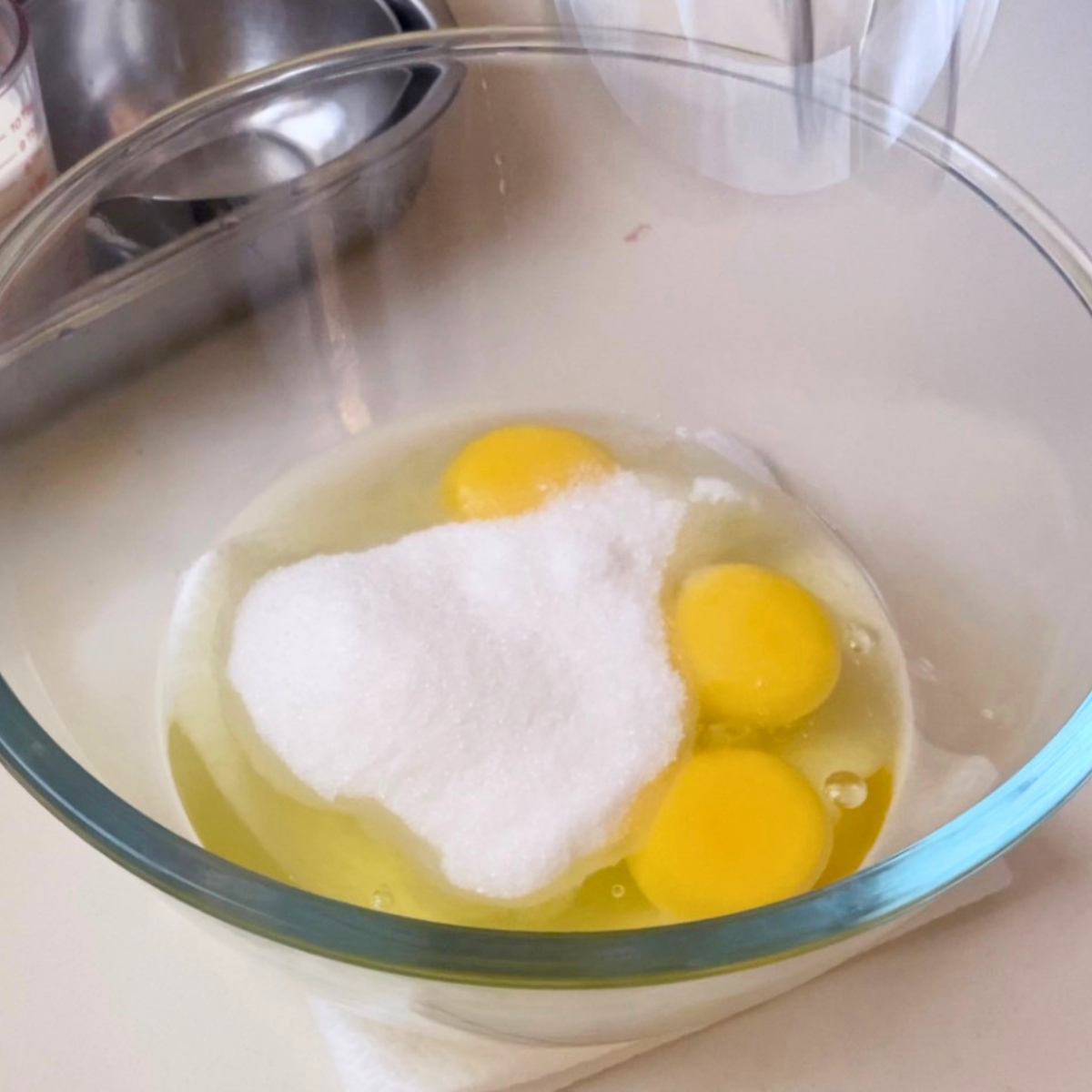
In a medium bowl, whisk the eggs and sugar until smooth and slightly lighter in color.
Add the flour, salt, and vanilla. Whisk until you have a smooth, thick batter with no visible lumps.
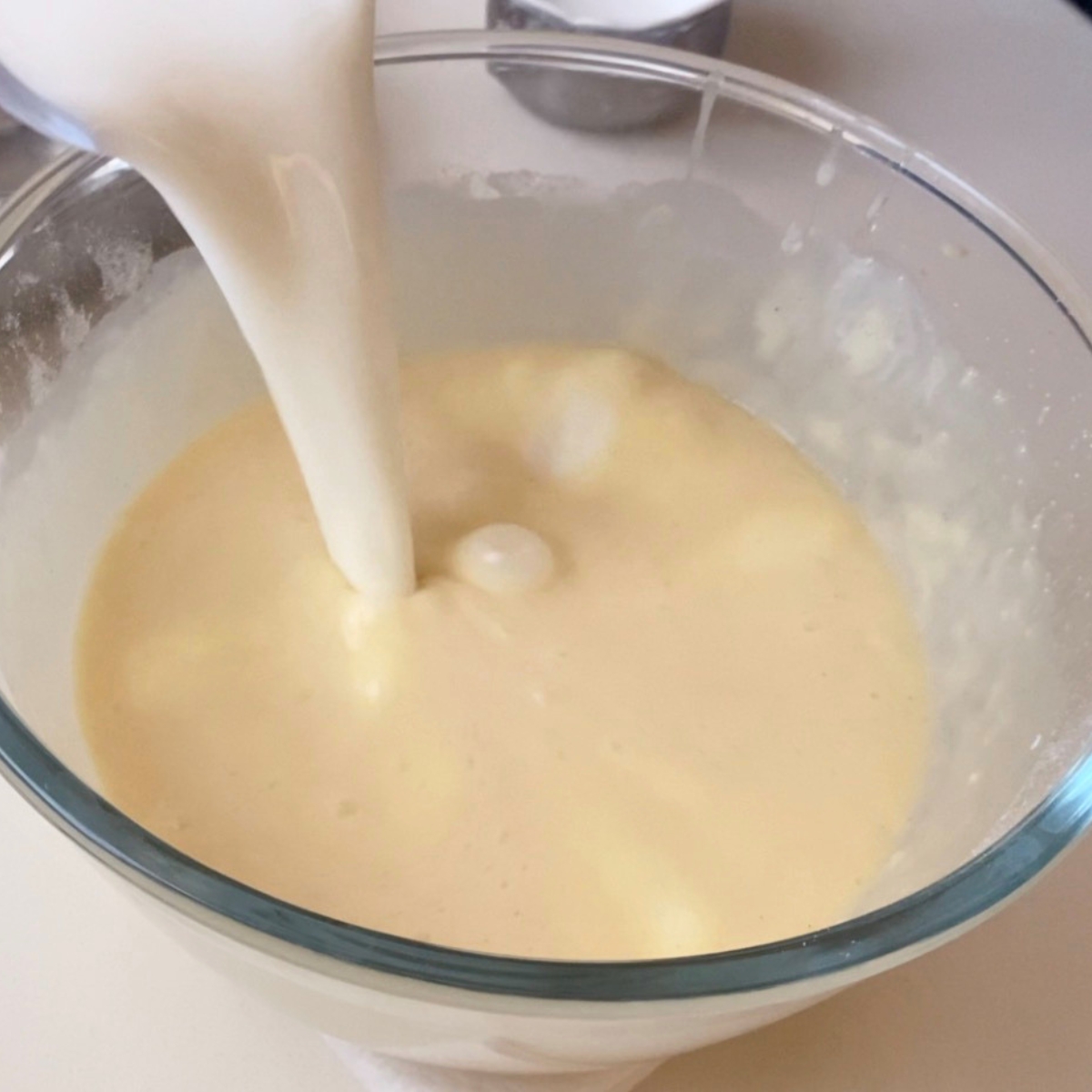
Gradually add the heavy cream and milk, whisking continuously until completely combined.
Finally, whisk in the melted butter. The finished batter will be thin, similar to pancake or crêpe batter.
Assemble the clafoutis
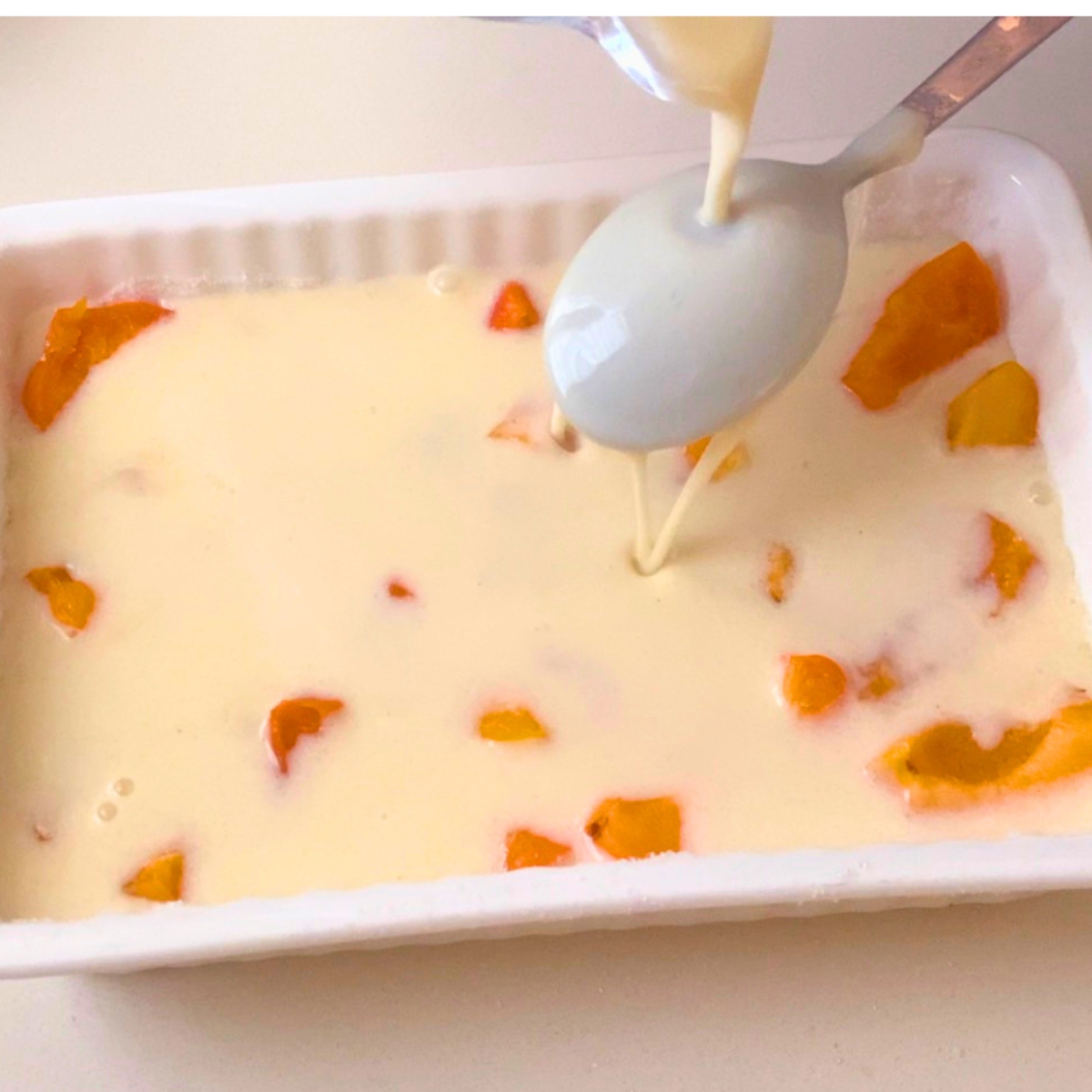
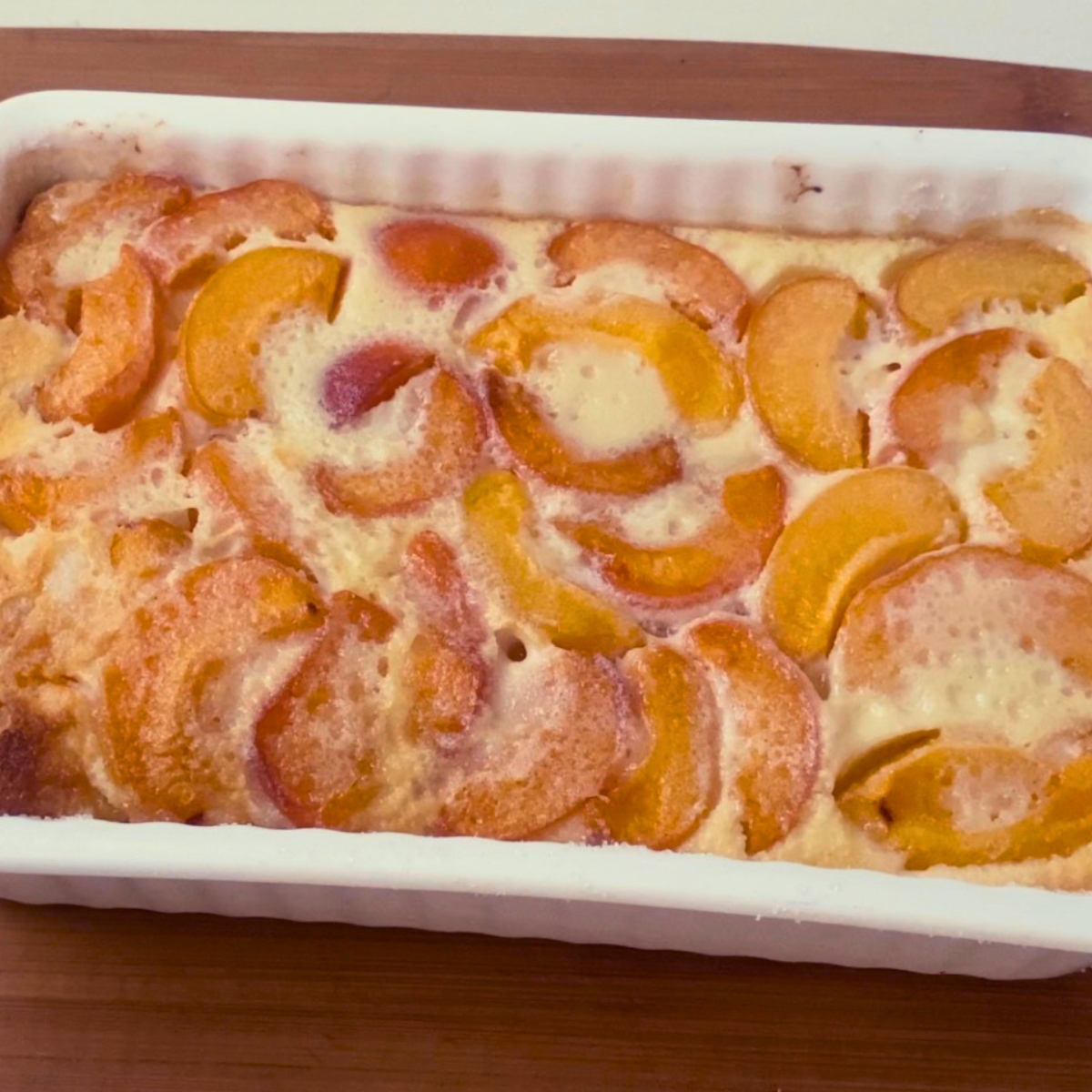
Slowly pour the batter over and around the arranged apricots. Some of the fruit should remain visible above the batter.
Let the pan sit for 2 to 3 minutes so the batter settles evenly around the fruit.
Bake
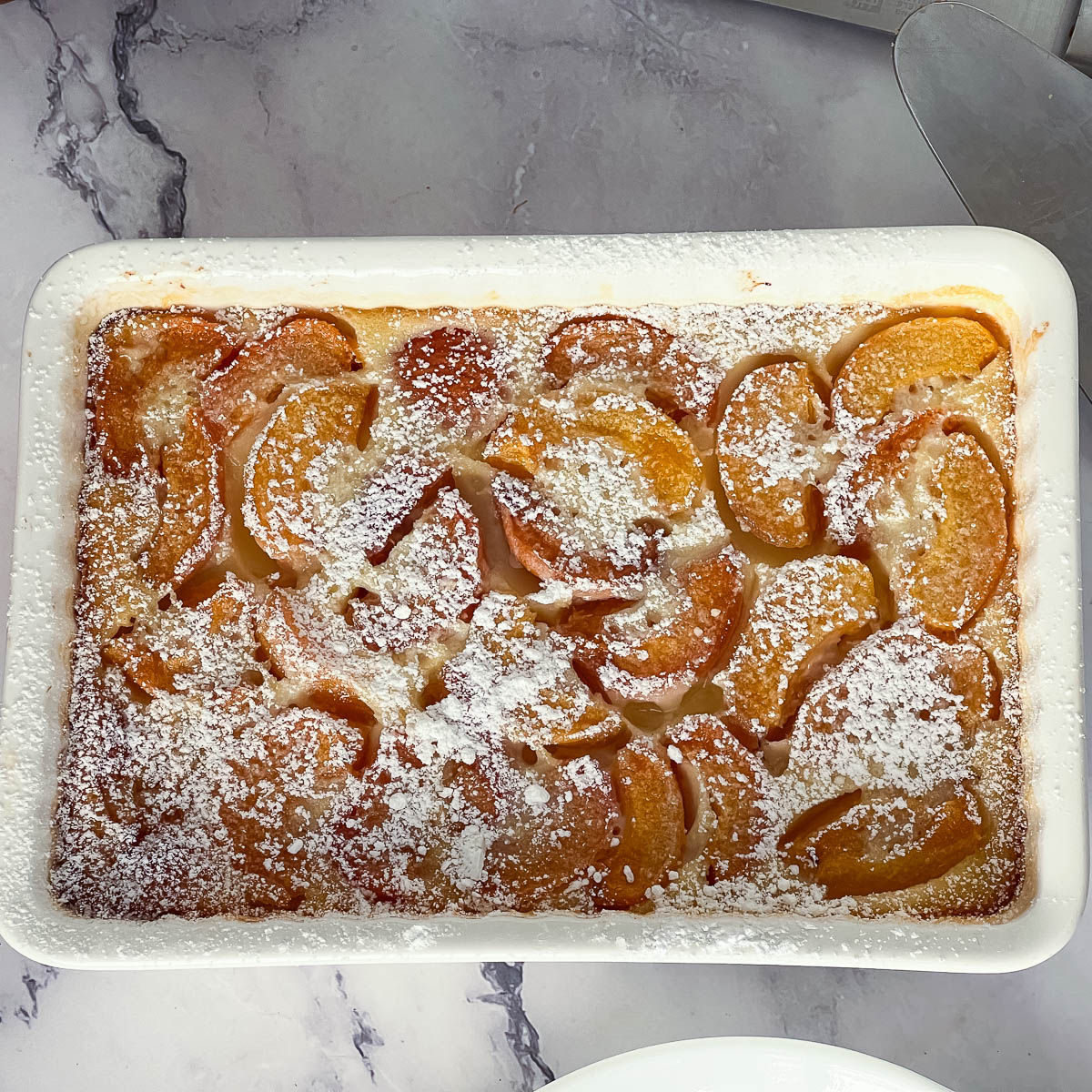
Bake for approximately 40 to 45 minutes, or until the clafoutis is puffed around the edges, lightly golden, and just set in the center.
The center may have a slight wobble when the pan is gently moved, but it should not look wet or liquid.
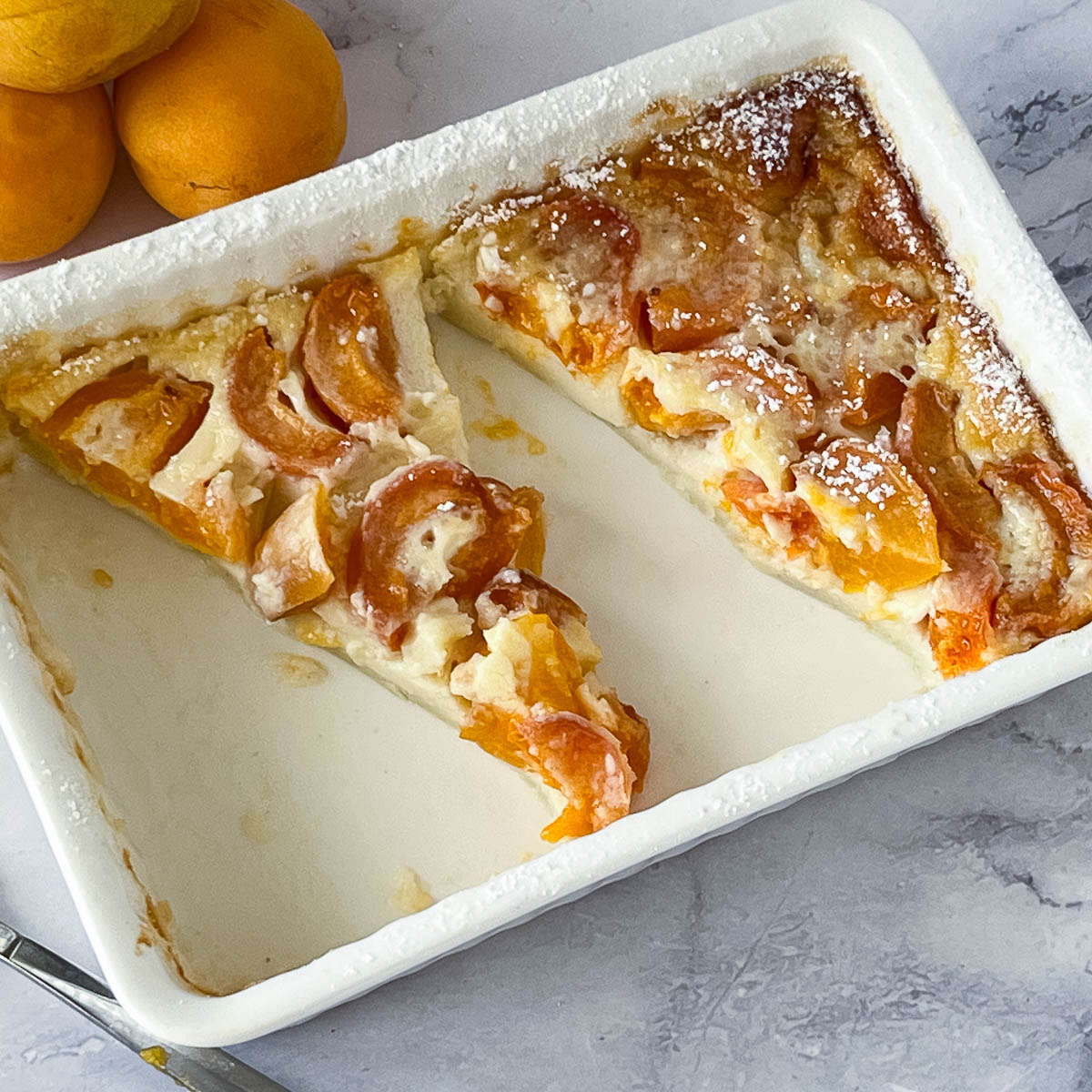
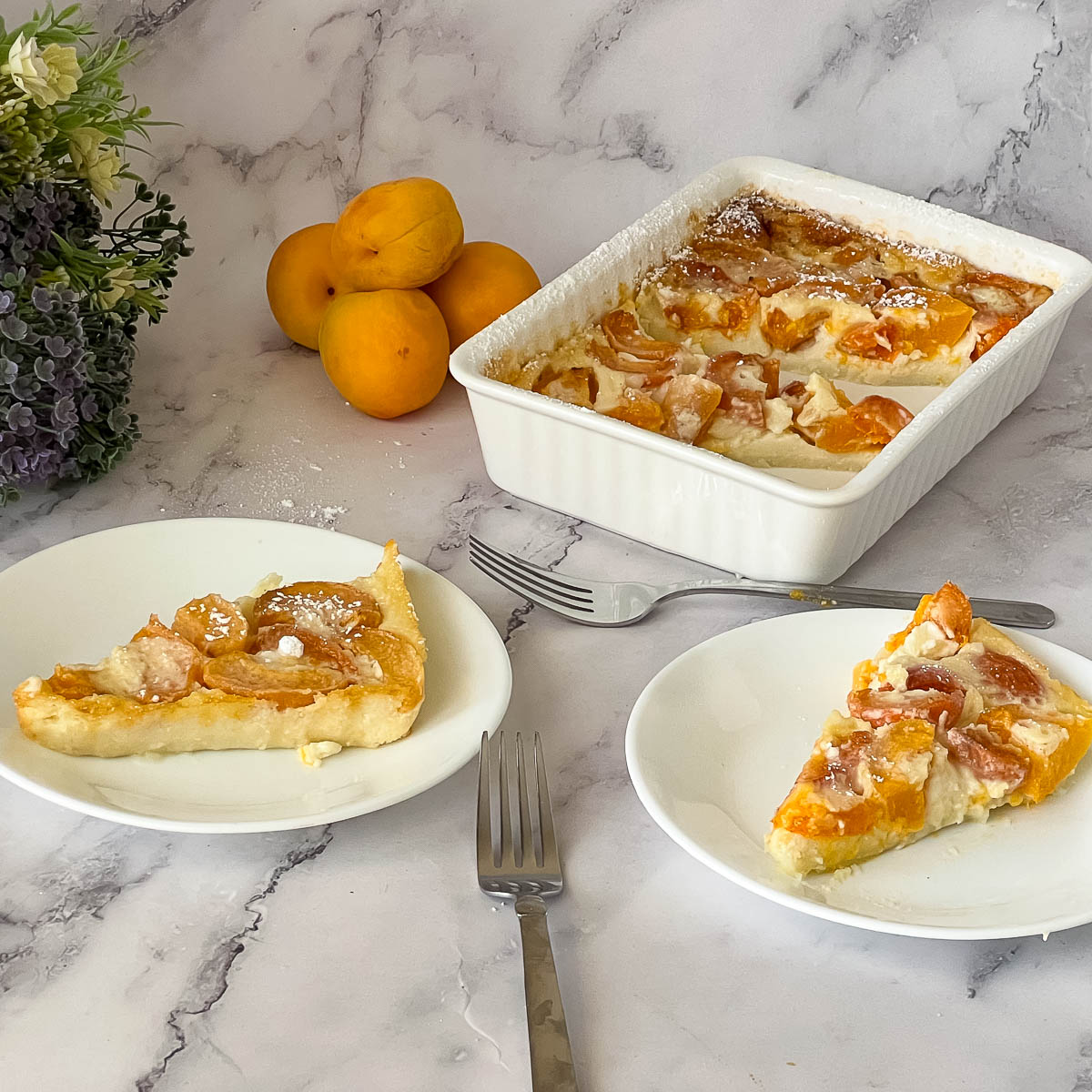
Cool for at least 15 to 20 minutes before serving. The clafoutis will puff in the oven and settle slightly as it cools. Dust with powdered sugar just before serving, if desired.
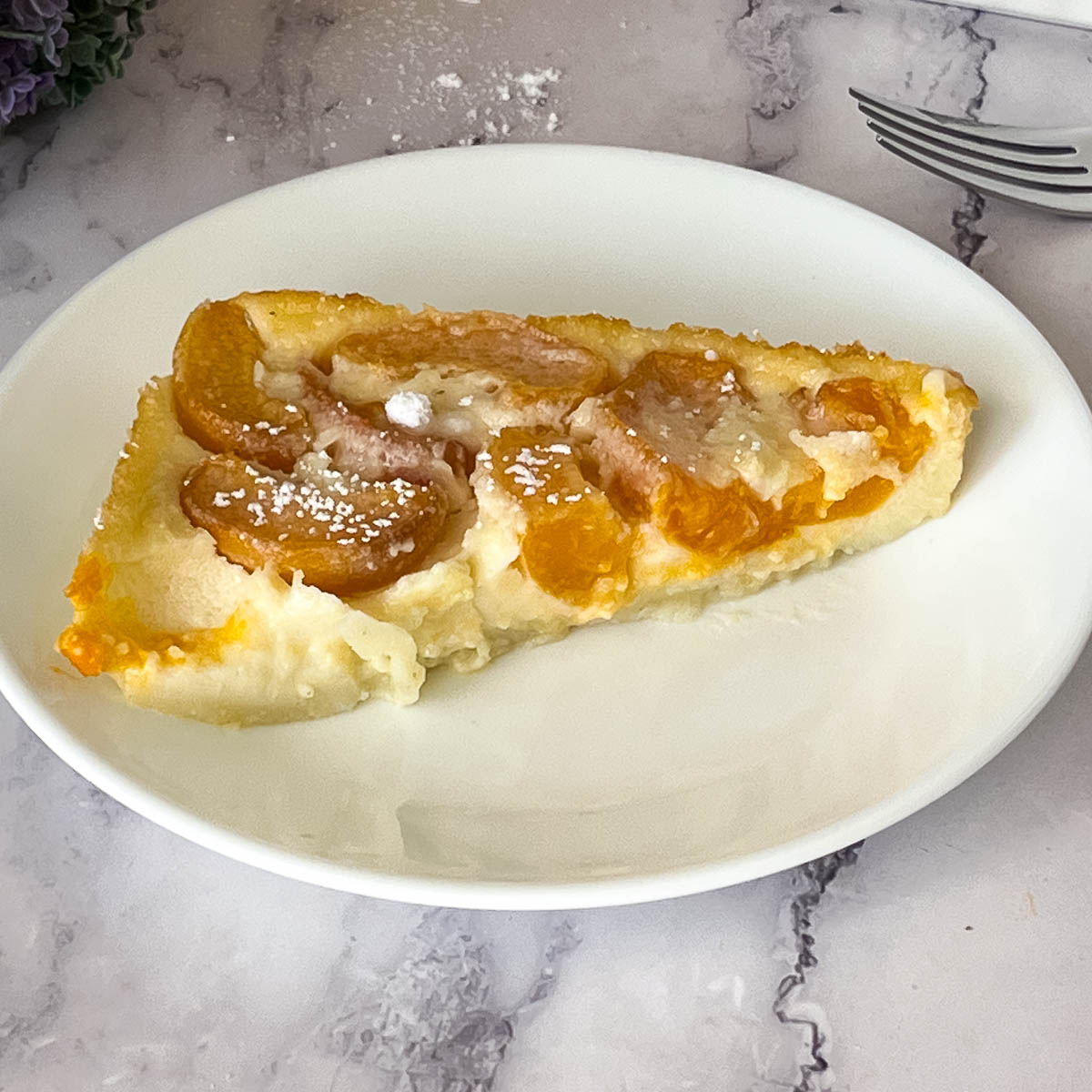
Apricot Clafoutis
Fresh apricots baked in a simple one-bowl custard batter made with eggs, cream, milk, vanilla, and butter. This easy apricot clafoutis requires no blender and can be served warm, at room temperature, or chilled.
Video
Ingredients
- 500 g (1 lb) Fresh apricots approximately 8 to 10 medium apricots
- 1 tbsp Butter softened for greasing the pan
- 1 tbsp Sugar for coating the pan
- 3 large Eggs
- 100 ml (½ cup) Granulated sugar
- 65 g (½ cup) All-purpose flour
- ⅛ tsp Salt
- 1 tsp Vanilla extract
- 120 ml (½ cup) Heavy cream
- 120 ml (½ cup) Whole milk
- 2 tbsp Unsalted butter melted and slightly cooled (optional)
- Powdered sugar for dusting optional
Method
- Oven & Pan – Preheat the oven to 350°F/170°C. Generously grease a 9-inch round baking dish or an approximately 8 x 10-inch rectangular baking dish with the softened butter. Sprinkle the tablespoon of sugar over the buttered pan. Tilt and turn the pan so the sugar coats the bottom and sides.
- Prep the apricots – Wash the apricots, cut them in half, and remove the pits. Cut each half into quarters. Arrange the apricot quarters evenly over the bottom of the prepared baking dish.500 g Fresh apricots, 1 tbsp Butter softened, 1 tbsp Sugar
- Clafoutis Batter – In a medium bowl, whisk the eggs and sugar until smooth and slightly lighter in color. Add the flour, salt, and vanilla extract. Whisk until smooth with no visible lumps. Gradually pour in the heavy cream and milk while whisking continuously. Add the melted butter and whisk until completely combined.3 large Eggs, 100 ml Granulated sugar, 65 g All-purpose flour, ⅛ tsp Salt, 1 tsp Vanilla extract, 120 ml Heavy cream, 120 ml Whole milk, 2 tbsp Unsalted butter
- Assemble – Slowly pour the batter over and around the apricots.
- Bake and Cool – Bake for 40 to 45 minutes, until the edges are puffed and golden and the center is just set. Remove from the oven and cool for at least 15 to 20 minutes. The clafoutis will settle slightly as it cools.
- Powdered sugar – Dust with powdered sugar, if desired, and serve warm, at room temperature, or chilled.Powdered sugar for dusting
Notes
- Use ripe but firm apricots so they hold their shape during baking.
- There is no need to peel the apricots.
- Whisk the flour into the egg mixture before adding the liquids to prevent lumps.
- The batter will be thin. This is normal.
- Do not overbake. The center should have a slight wobble when removed from the oven.
- The clafoutis will puff while baking and deflate slightly as it cools.
- Store leftovers covered in the refrigerator for up to 3 days.
- Freezing is not recommended because it can affect the custard texture.
Equipment you will need


Nutrition
Tried this recipe?
Mention @veenaazmanov_kitchen or tag #veenaazmanovkitchen!Variations
- Apricot almond clafoutis – Add ¼ teaspoon almond extract to the batter and sprinkle sliced almonds over the top before baking.
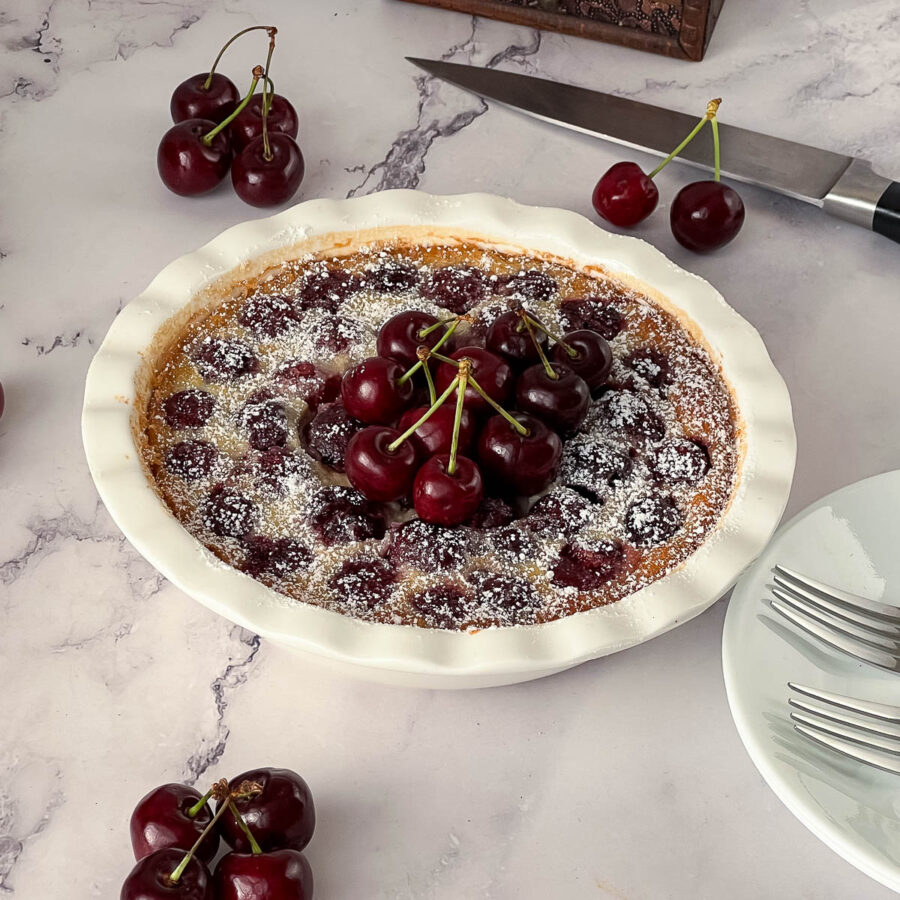
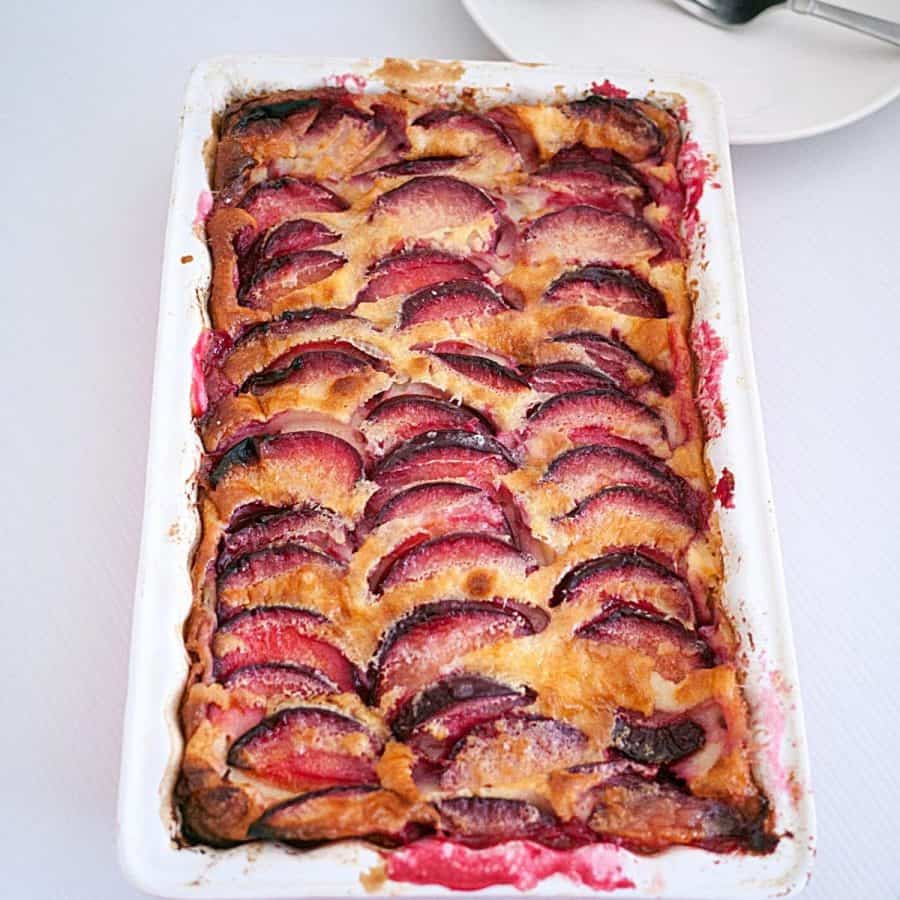
- Mixed stone fruit clafoutis – Replace some of the apricots with sliced peaches, nectarines, plums, or cherries.
- Berry apricot clafoutis – Scatter a small handful of raspberries or blueberries between the apricot pieces.
- Spiced apricot clafoutis – Add a pinch of cinnamon, cardamom, or nutmeg to the batter.
- Lighter clafoutis – Replace the heavy cream with an equal amount of whole milk. The texture will be lighter and slightly less creamy.
Tips for Success
- Use ripe but still firm apricots. Very soft fruit can release too much liquid while baking.
- Leave the skins on. Apricot skins soften during baking and help the fruit hold its shape.
- Whisk the flour into the eggs before adding the milk and cream. This makes it easier to create a smooth batter without a blender.
- Add the milk and cream gradually to prevent lumps.
- Let the melted butter cool slightly before adding it to the batter so it does not cook the eggs.
- Do not overbake. The center should be set but still soft and custard-like.
- Expect the clafoutis to deflate slightly as it cools. This is normal.
- Let it rest before slicing. The custard continues to set as it cools.
More apricot recipes
- Apricot Cake
- Apricot Crème Brûlée
- Best Apricot Crumble Squares
- Fresh Apricot Cobbler Recipe
- Delicious Apricot Galette for Summer
- Ultimate Apricot Tart Recipe
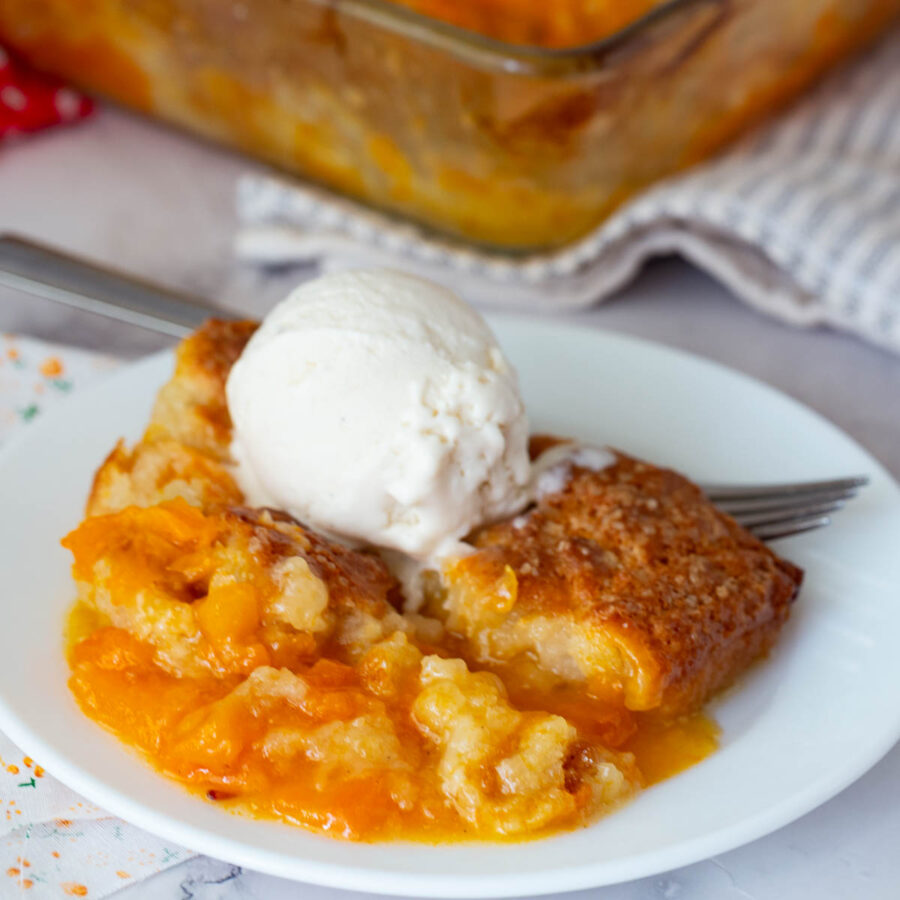


Troubleshooting
| Problem | Possible cause | Solution |
|---|---|---|
| The center is still liquid | The clafoutis needs more baking time or the fruit released extra juice | Bake for another 5 to 10 minutes and check again |
| The batter is lumpy | The milk and cream were added too quickly | Whisk the flour into the eggs first, then add the liquids gradually |
| The clafoutis is rubbery | It was overbaked, or too much flour was used | Remove it once the center is just set and measure the flour accurately |
| The fruit sank completely | The apricots were very soft, or the batter was poured too quickly | Use firm-ripe fruit and pour the batter slowly around the apricots |
Frequently Asked Questions
Cover the baking dish or transfer the leftovers to an airtight container. Refrigerate for up to 3 days.
Freezing is not recommended because the custard can become watery or grainy once thawed.
No. The apricot skins soften during baking and help the fruit retain its shape.
Yes, but it is not necessary. This batter comes together easily by hand when the flour is whisked into the eggs before adding the milk and cream.
Clafoutis naturally puffs while baking and then settles as it cools. This is normal and does not mean anything went wrong.
Fresh apricots give the best texture. Canned apricots can be used, but they must be drained and dried thoroughly to prevent excess moisture.
Yes, but thaw and drain them first. Pat them dry before arranging them in the pan.
The edges should look puffed and golden, and the center should be set with only a slight wobble. A knife inserted close to the center should come out mostly clean.
Yes. It can be baked several hours ahead and served at room temperature or chilled. The texture becomes firmer after refrigeration.
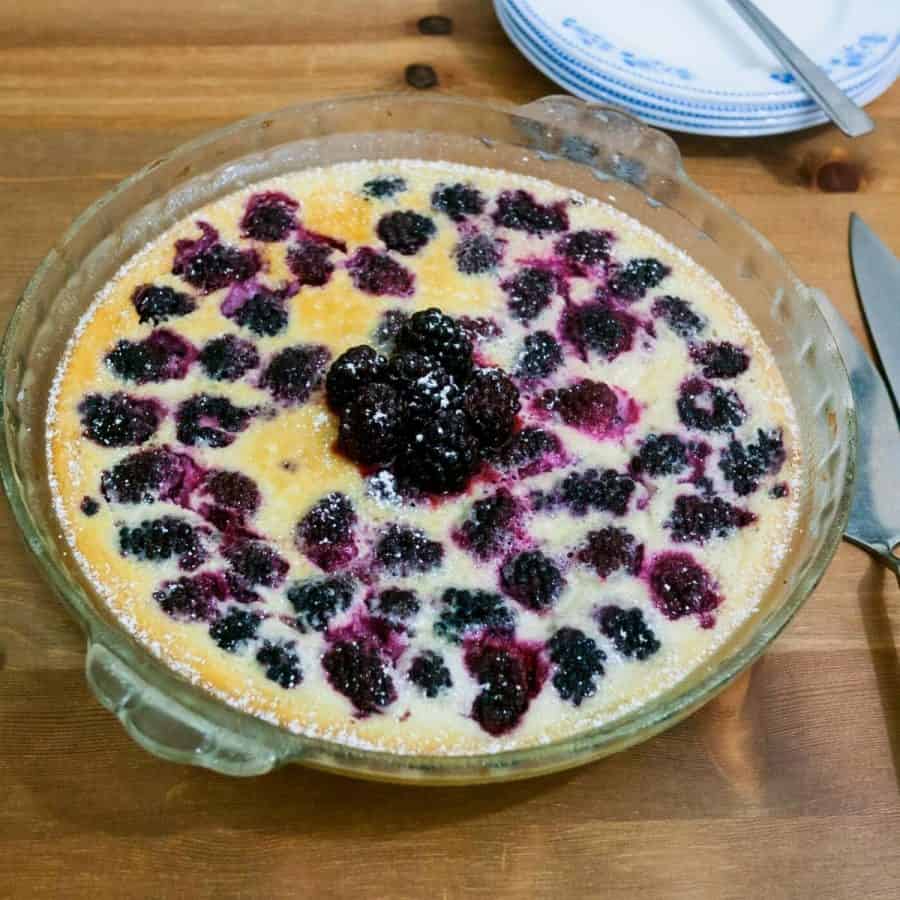
More clafoutis recipes
Don’t lose this recipe! Save it for Later!
📌 Save this Recipe for later on Pinterest so you can easily find it again.
⭐ Add Veena Azmanov Kitchen to your Google Preferred Sources.
It helps Google show you more of our recipes.
📧 Subscribe for new recipes delivered to your inbox.
🎥 Follow us for more recipes

Hi, I’m Veena
I’m the recipe developer, baker, and food photographer behind Veena Azmanov Kitchen.
I’ve spent years developing and testing recipes, from everyday meals and homemade breads to cakes and desserts.
I share the practical tips and little details I’ve learned along the way so you can get great results in your own kitchen.







Would canned apricots work when fresh apricots aren’t in season? I know the texture will probably be softer but I’d love to make this again later in the year.
Yes, you can use canned apricots. Drain them really well and pat away any excess moisture before adding them. As you said, they’ll be a little softer than fresh apricots, but you can still make a lovely clafoutis with them.