
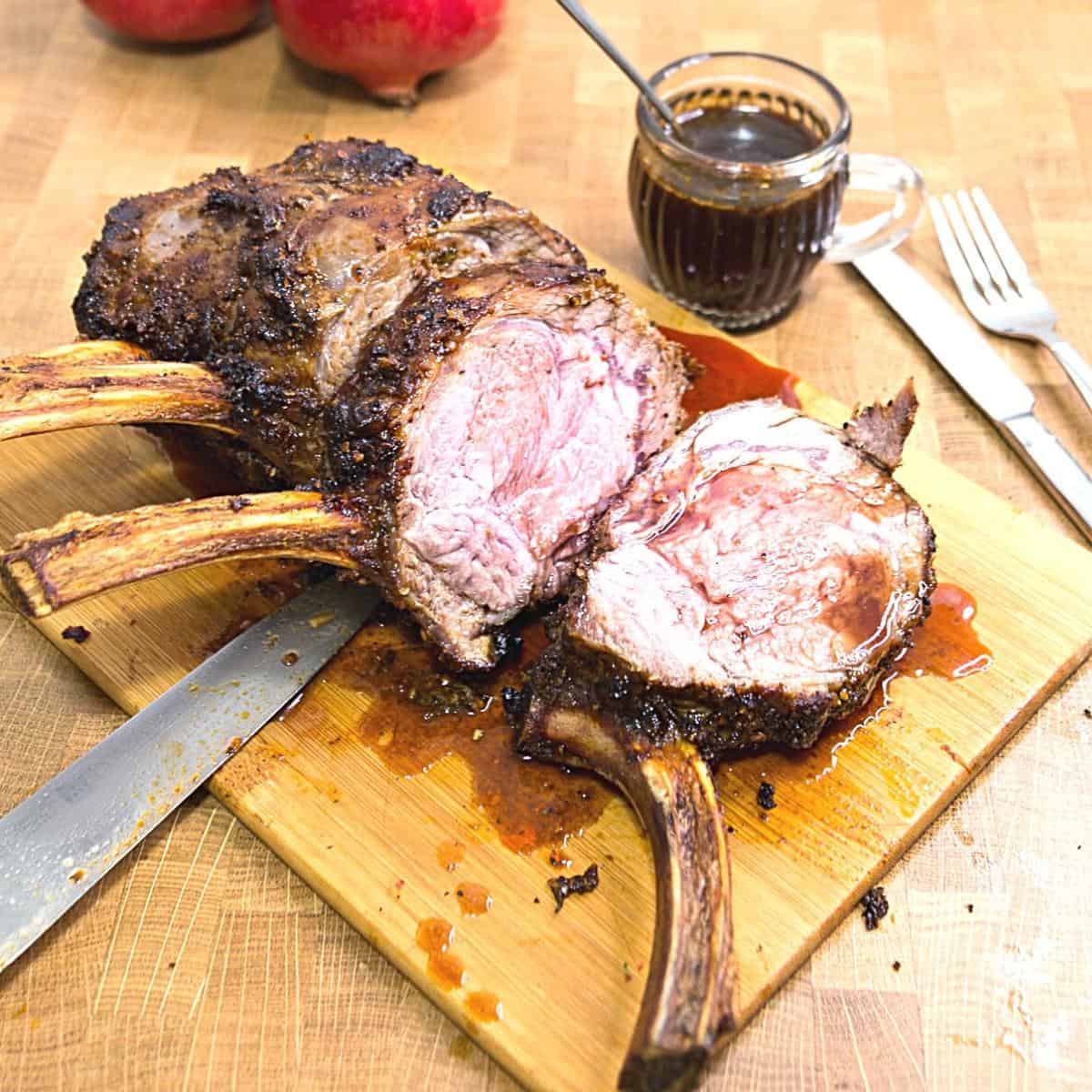

This prime rib roast or standing rib roast is seasoned with a dry spice rib marinade. Then, cooked to a perfect medium-rare and served with pomegranate gravy. The perfect roast to serve onspecial occasions.

Ask my husband how he enjoyed this rib roast, and you will get a big smile on his face. It’s so good. We are a family that loves meat, so we do love our steaks and roasts.
Standing rib roasts, prime rib roasts, beef rib roasts, or rib-eye roasts are all the same thing with different names. This is an expensive cut but also a very tender, juicy, and delicious piece of meat. It comes from the back/ribs and has a large chunk of fat in the middle called the eye, hence the term rib-eye roast. A full primal rib is seven ribs together, but you will always get the butcher to cut the number you want.
The meat is so good on its own that you do not need anything other than a seasoning of salt and pepper to make it tasty, especially when it is grilled. In addition, the oven cooking time is not long, and there is not much work involved.
Why you’ll love this rib roast?
- This is a simple and easy recipe that takes just 10 minutes to prep. There is no sautéing of the veggies and no searing of the meat.
- Also, roasting in the oven takes less than an hour, resulting in a soft, tender, and juicy meat that is cooked to perfection.
- Want to impress your guests? This is the best roast beef recipe for entertaining. When you cut your first slice, everybody will drool and think What an amazing cook you are!
- And the best part is it’s all so easy.
Ingredients and substitutes
- Coriander – The flavor of coriander in the dry rub is wonderful. I like to lightly toast the coriander in a frying pan before pounding it to bring out maximum flavor. It also makes it easier to crush it.
- Cumin – Adds a smoky flavor that works beautifully with most red meats.
- Paprika – I’ve used sweet smoked red paprika, which adds a nice flavor and color to the meat.
- Garlic – Though I’ve used two large cloves, it’s just enough to season the meat. A lot of it stays out and gets crusted with the high baking.
- Pomegranate molasses – This is actually pomegranate juice that has been reduced with a little sugar and lemon juice. It is tart and works beautifully with the honey added to it.
- Rosemary and Thyme – A wonderful combination with red meat. I’m using fresh, and yet if you don’t have fresh, you can use dried as well.
- Mustard – I use a good Dijon creamy mustard. Mustard has a strong flavor, but when mixed with honey, it is delicious! Absolutely heavenly. You can replace it with yellow mustard or grainy mustard if you like the flavor.
- Honey – Use a good quality thick honey that really brings out the flavor of the mustard.

Step-by-step: Standing Beef Ribs Roast with Pomegranate Glaze
- Rib marinade – Dry rub – Crush coriander, cumin, salt, pepper, chopped rosemary, and thyme in a mortar and pestle or food processor until coarse. Grate in the garlic and nutmeg. Drizzle in the olive oil. Set aside until ready to use.
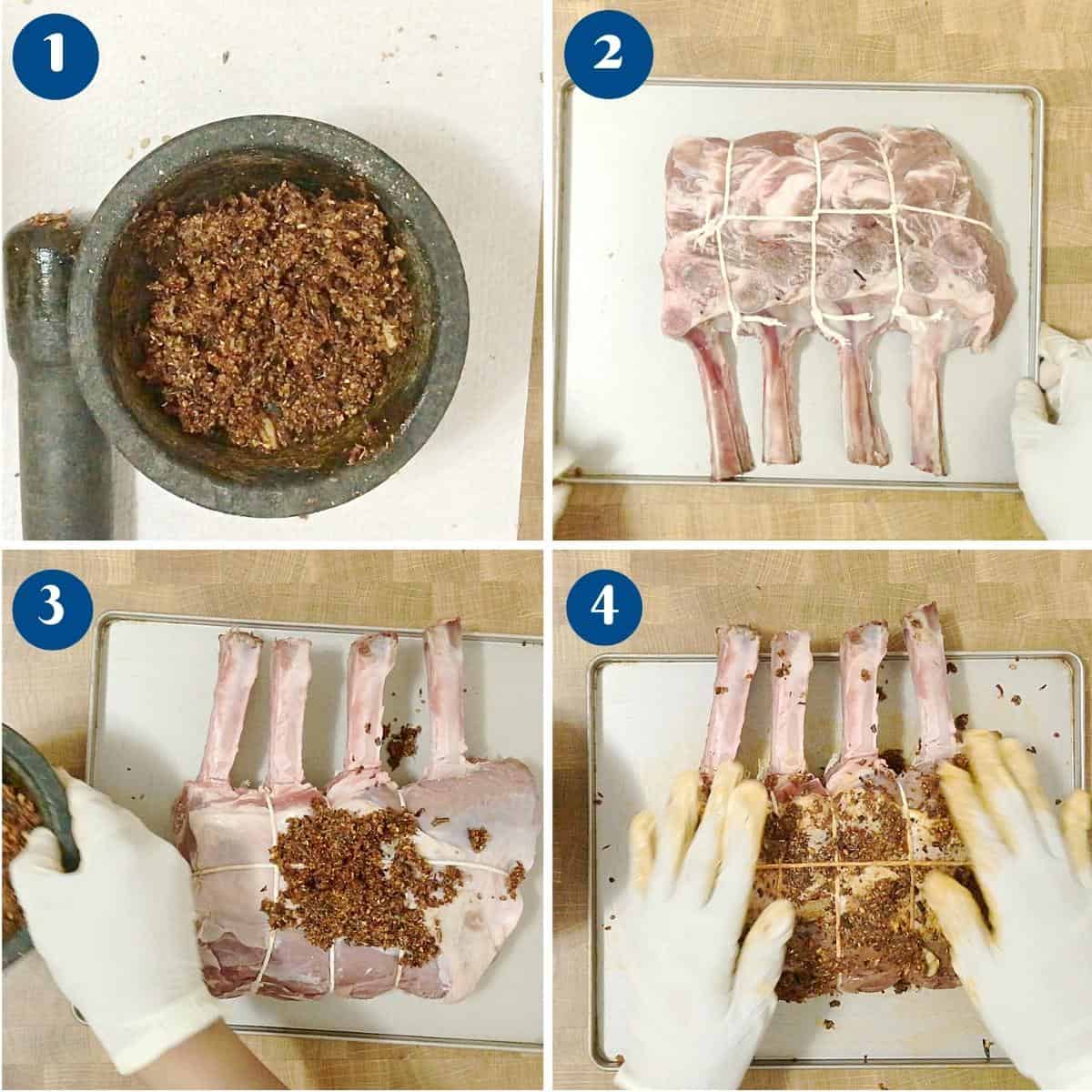
- Pomegranate glaze – Place all ingredients in a bowl and combine well with a whisk. Set aside until ready to use.
- Preheat the oven to 425°F/220 °C/Gas Mark 7 for at least 20 mins.
- Wipe the rib with a paper towel and dry it as much as you can. Generously apply the dry rub all over the ribs.
- Place the prime rib on the roasting rack, fat side up. I like to place a piece of foil under the bones so they stay upright.
Pro tip – Remove the ribs from the fridge and let them come to room temperature.
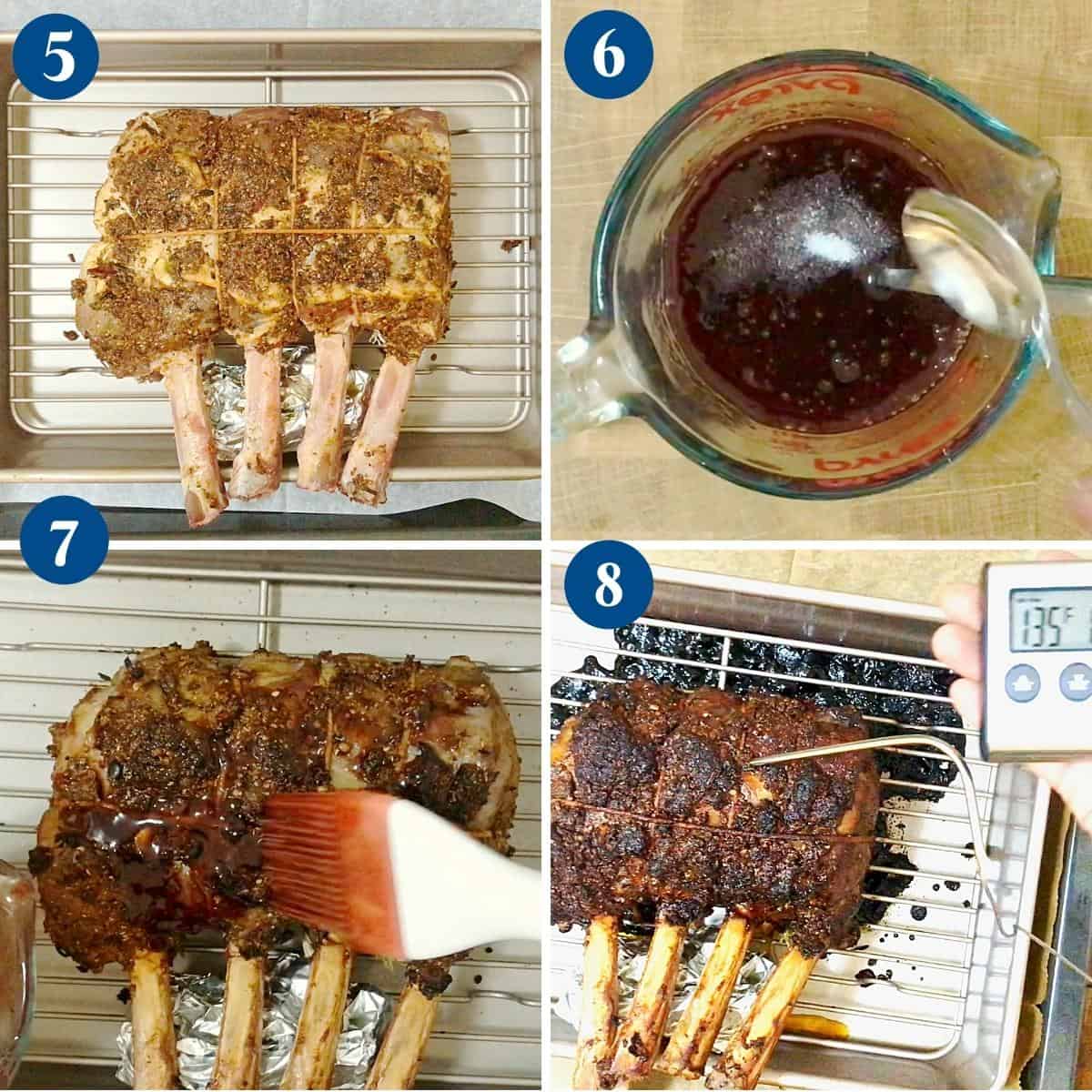
- Cook for 15 minutes, then reduce the oven temperature to 350°F / 177 ° / Gas Mark 4. Brush the meat with pomegranate glaze. Place a meat thermometer into the thickest part of the meat.
- Continue to cook until the internal temperature of the meat reaches the desired temperature:
- Medium rare – between 130°F and 135°F, approximately 15 minutes per pound
- or Medium – between 135°F to 140°F, approximately 22 to 23 minutes per pound
- Medium well between 145°F to 150°F, approximately 25 minutes per pound
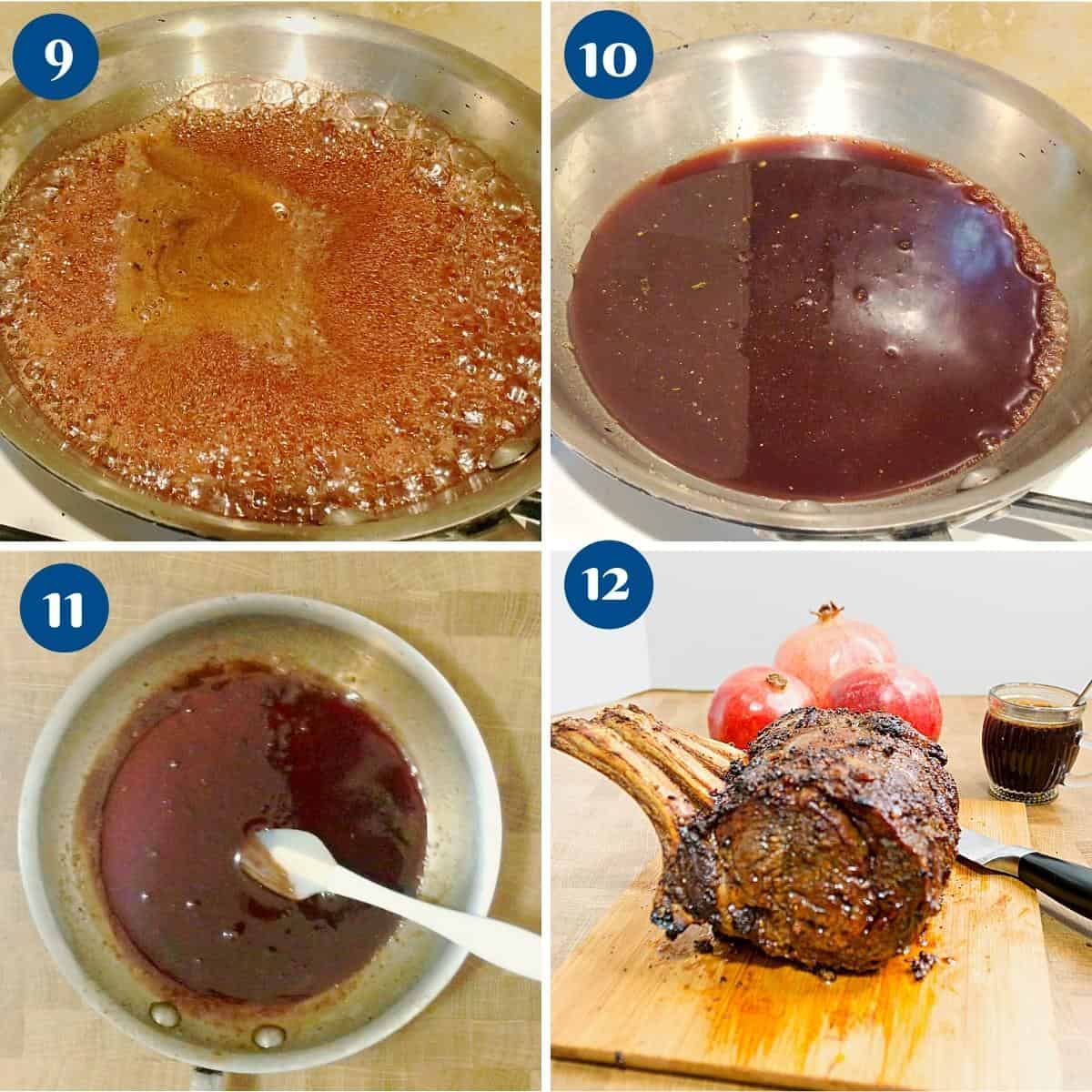
- When the desired doneness temperature is reached, remove from the oven and leave on the counter, covered with foil, for 15 to 30 minutes.
- Glaze – Pour the remaining pomegranate glaze and any pan juices into a frying pan or saute pan. Cook over medium heat until reduced to 1/3 or thick like a syrup. Serve with the roast.
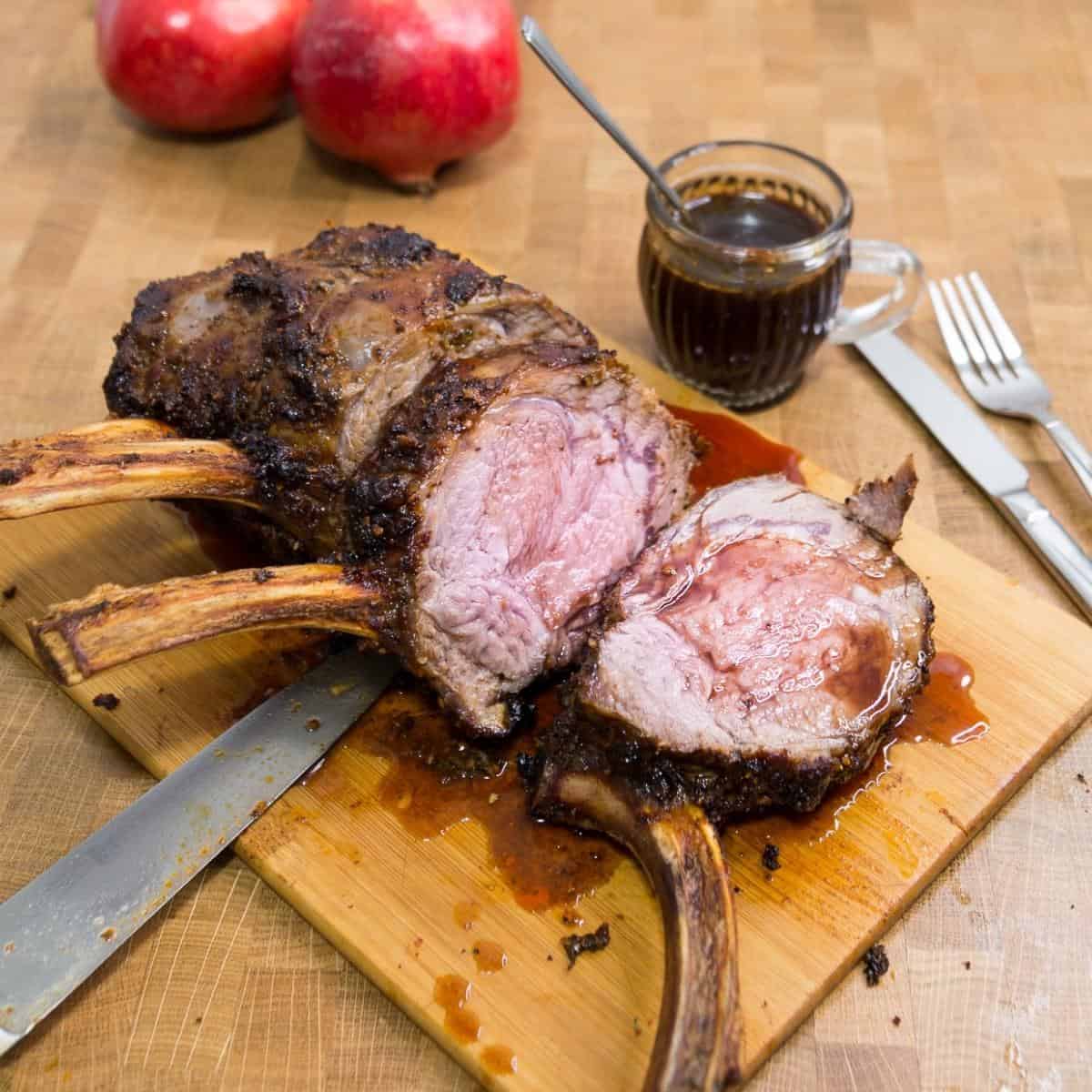

Standing Prime Rib Roast
Ingredients
- 4 lbs (2 kg) Beef Prime Rib Rack with ribs bones attached
Dry rub
- 2 tbsp Salt
- 2 tbsp Black pepper
- 2 tsp Paprika
- 2 tbsp Coriander seeds lighted toasted
- 1 tsp Cumin seeds
- 1 tbsp Rosemary fresh chopped
- 1 tbsp Thyme fresh chopped
- 2 Garlic cloves grated
- ½ tsp Nutmeg grated
- 2 tbsp olive oil
Pomegranate glaze
- ½ cup (120 ml) Pomegranate molasses
- ½ cup (120 ml) Honey
- 2 tbsp Mustard
- 2 tbsp Brown sugar
- ¼ tsp Salt
- ½ tsp Pepper
Instructions
- Rib marinade – Dry rub: Crush the coriander, cumin, salt, pepper, chopped rosemary, and thyme in a mortar and pestle or food processor until coarse. Grate in the garlic and nutmeg. Drizzle in the olive oil. Set aside until ready to use.
- Pomegranate glaze – Place all ingredients in a bowl and combine well with a whisk. Set aside until ready to use. Pro tip – Brushing the ribs with this glaze will add nice color and flavor, as well as make the most delicious gravy to go with the roast.
- Preheat the oven to 425°F/ 220°C/ Gas Mark 7 for at least 20 mins.Pro tip – A hot oven will sear the meat from the outside, making sure all the juices stay inside.
- Wipe the rib with a paper towel and dry it as much as possible. Generously apply the dry rub all over the ribs. Pro tip – If the meat is wet, the marinade will slide down as soon as it goes into the oven. You can also leave it marinated in the fridge up to overnight.
- Place the prime rib on the roasting rack, fat side up. I like to place a piece of foil under the bones so they stay upright. Pro tip – Remove the ribs from the fridge and let them come to room temperature. Chilled or frozen meat will cook unevenly. l like to leave it out for at least 2 to 3 hours.
- Cook for 15 minutes, then reduce the oven temperature to 350°F / 177 ° / Gas Mark 4. Brush the meat with pomegranate glaze. Place a meat thermometer into the thickest part of the meat. Pro tip – You can glaze the meat more than once. If you don't have a thermometer, just calculate the time based on the weight of the meat, as suggested below.
- Continue to cook until the internal temperature of the meat reaches the desired temperature:– Medium rare – between 130 F to 135 F, approximately 15 minutes per pound – or Medium – between 135 F to 140 F, approximately 22 to 23 minutes per pound – Medium well between 145 F to 150 F, approximately 25 minutes per pound
- When you reach the desired temperature for doneness, remove from the oven and leave on the counter covered with foil for at least 15 to 30 minutes.Pro tip – The meat will continue to cook about 5 degrees more after you take it out of the oven.
- Glaze – Pour the remaining pomegranate glaze and any pan juices into a frying pan or saute pan. Cook over medium heat until reduced to 1/3 or thickened like a syrup. Serve with the roast.
Video
Notes
- You want to choose a well-marbled piece of meat with a decent amount of fat on top. The fattier the prime rib, the more juicy and flavorful the roast.
- Always thaw the prime rib before cooking – a few hours, at least 2 to 3 hours. Cooking chilled meat results in uneven baking, causing the outer parts of the meat to overcook.
- A prime rib is a large chunk of meat that is not exposed much. So, make sure to over-season the meat because only some of it will penetrate the meat. The rest of it will get crusted on.
- Use a roasting rack; don’t just place the meat on the baking tray. The roasting rack will let the juices flow below and let the outside of the prime rib form a crust.
- Elevate the bones from the base. This encourages even cooking by circulating the air.
- Internal temperature for standing rib roast
- Medium-rare – 130 F to 140 F (55 C – 60 C) or
- Medium – 145 – 155 F (63 C- 68 C)
- Remember that even after you take the meat out of the oven, the meat continues to cook about 5 degrees more with the residual heat.
- Cook the meat just until you reach the desired doneness, not a minute more. The meat continues to cook about 5 degrees more after you take it out of the oven.
- If you are entertaining and want to ensure you have the perfect roast. Remove the prime rib at about 120 F (49C) – this will be perfectly pink and about 130 F by the time you serve it.
- Don’t open the oven door too often to check doneness. Instead, calculate the cooking time and check closer to the time.
- Medium rare – approximately 15 minutes per pound
- or Medium – approximately 22 to 23 minutes per pound
- Medium well – approximately 25 minutes per pound
- Don’t poke too many holes in the meat while checking for doneness. When you poke a hole in the meat, you will see juices flow out. You want these to stay in, so don’t make too many holes. I poke the thermometer just once and then leave it there until it reaches the desired temperature.
- Let the meat rest after cooking. If you cut the meat too soon, all the juices will flow out of the meat and give you a dry roast. Instead, let the meat rest for at least 15 minutes, if not more.


Made this recipe?
I’d love to see how yours turned out! Share a photo on Instagram and tag @veenaazmanov_kitchen or use #veenaazmanovkitchen. And don’t forget to leave a rating and review!
Tips for Success
- You want to choose a well-marbled piece of meat with a decent amount of fat on top. The fattier the prime rib, the juicier and more flavorful the roast.
- Always thaw the prime rib before cooking – a few hours, at least 2 to 3 hours. Cooking chilled meat results in uneven baking, causing the outer parts of the meat to overcook.
- A prime rib is a large chunk of meat that is not exposed much. So, make sure to over-season the meat because only some of it will penetrate the meat. The rest of it will get crusted on.
- Use a roasting rack; don’t just place the meat on the baking tray. The roasting rack will let the juices flow below and let the outside of the prime rib form a crust.
- Elevate the bones from the base. This encourages even cooking by circulating the air.
- Cook the meat just until you reach the desired doneness, not a minute more. The meat continues to cook about 5 degrees more after you take it out of the oven.
- If you are entertaining and want to ensure you have the perfect roast. Remove the prime rib at about 120°F (49 °C) – this will be perfectly pink and about 130°F by the time you serve it.
- Don’t open the oven door too often to check doneness. Instead, calculate the cooking time and check closer to the time.
- Medium rare – approximately 15 minutes per pound
- or Medium – approximately 22 to 23 minutes per pound
- Medium well – approximately 25 minutes per pound
- Don’t poke too many holes in the meat while checking for doneness. When you poke a hole in the meat, you will see juices flow out. You want these to stay in, so don’t make too many holes. I poke the thermometer just once and then leave it there until it reaches the desired temperature.
- Let the meat rest after cooking. If you cut the meat too soon, all the juices will flow out of the meat and give you a dry roast. Instead, let the meat rest for at least 15 minutes, if not more.
- Lamb Roast Shoulder Boneless
- How to Roast Garlic
- How to roast a leg of lamb
- How to Make A Perfect Roast Chicken
- See all roast recipes

Frequently asked questions
Prime rib is a big roast cut with more muscle and fat. While ribeye is a steak cut from the rib roast without bone.
When it comes to prime ribs, I usually go by the number rather than by the weight. Because when I cut each slice of the rib, it’s quite a chunky piece of meat. Personally, I can’t have more than one per meal, but I do calculate about 2 per serving. So, in this case, I would say I have four ribs, which are about 1.5 kg (4.5 pounds), but only four servings.
This is one that used to confuse me quite a bit. When I grew up, I just knew it as a rack of ribs. But in the US, we have Prime, Choice, and Select. The Prime is, of course, the most expensive.
– In most supermarkets, you will find a boneless rib roast called ‘eye of ribs.’ And if the ribs are still attached to it, they call it a ‘standing rib’ roast, which is what I have today.
– You can also buy a boneless rib roast, which is often referred to as the eye of the rib roast. Personally, I like to keep the bone in for maximum flavor. And yet, the boneless is easier to carve, especially if you are entertaining.
There are a few ways to cook prime ribs in the oven.
– My favorite method is to give it a blast on high heat (220 °C/ 425°F) for a few minutes, then reduce the heat (165 °C/ 325°F) and cook until I reach the desired temperature of doneness.
– My second favorite method is, of course, slow-cooking – cook it at a lower temperature (160 °C/ 325°F ) for a long time until the meat is soft and tender.
– Another way would be to cook it on high heat (220 °C/ 425°F) for a shorter time, then turn the heat off and let the meat cook in the residual oven heat – this works great if you like medium-rare.
Personally, I have always made this with bone-in after all its ribs. The best part is chewing the meat off the bones. Right? You can also make this with a boneless rib roast, also known as ribeye.
However, in most places, you can ask the butcher to cut the bone off and then tie it back on, so you get the best of both worlds. And yet, the bones add more flavor. And once you cut off the strings, you can set the bones aside. Then, you can cut the boneless part into thick, juicy slices.
Here, I get good meat, but the butcher does not tie the chicken, roast beef, or rib roast for me. So, I have to do it myself. But, as you can see in the video, it’s fairly simple and easy to do.
more beef recipes
- Beef Back Ribs (Oven Baked)
- Short Ribs with Black Eyed Peas
- Braised Short Ribs with Red Wine
- Moroccan Beef Tagine
- Beef Tenderloin Recipe
- Standing Rib Roast
Don’t lose this recipe! Save it for Later!
📌 Save this Recipe for later on Pinterest so you can easily find it again.
⭐ Add Veena Azmanov Kitchen to your Google Preferred Sources.
It helps Google show you more of our recipes.
📧 Subscribe for new recipes delivered to your inbox.
🎥 Follow us for more recipes
Hi, I’m Veena
I’m the recipe developer, baker, and food photographer behind Veena Azmanov Kitchen.
I’ve spent years developing and testing recipes, from everyday meals and homemade breads to cakes and desserts.
I share the practical tips and little details I’ve learned along the way so you can get great results in your own kitchen.



I love that you used a rub to flavor up this luxurious cut of meat. The pomegranate sounds very intriguing and by the way those slices look it was so so tender and juicy. My mouth is truly watering right now. You have captured the essence of this cut of meat so well. Great work!
Cheers!
Thank you, Loreto. Yes, the rub and pomegranate made this rib roast a luxury to enjoy.
This looks so so good. I love how detailed this post is and how informative. Thank you.
Thank you, Sophie.
Wow! This Prime Rib Recipe looks amazing! I love the crust from the dry rub and pairing it with a Pomegranate glaze is genius! Perfect for the Holidays!
Thank you, Shanika.
I love prime rib roast but never had it with pomegranate glaze – how special must this be!!! I’m definitely trying this recipe this holiday season!!
Thanks, Aline. It was so delicious you must try.
My mouth waters when I look at these images. I wonder how long I can wait until I finally go to the store and get everything I need for this recipe. Delicious prime rib that looks incredibly delicious!
Thank you, Elaine.
This recipe looks amazing and sounds delicious. I would love to make this for my brother and impress him with his favorite meat.
Thank you, Gunjan. I’m sure your brother will love this
See, this is the reason I don’t make expensive meat. Well one, because I am so cheap :p But also I never know how to cook it, so I feel like I am going to be wasting my money.
But if I am going to be impressing someone, I will have to try this!!
This is very easy to make Cathleen. No need to stress and no wasting money. Just use a meat thermometer and you will love cooking meat every time. Thanks
I couldn’t agree more with how easy it is. It seriously is easier than roasting a chicken. This recipe will be a real treat to anyone who tries it.
Thank you, Kelly. I think so too.
I love all the tips on how to prepare this roast and the toasting of the spice will really add a punch of flavor. Thanks or sharing!
Thank you, Analida. Yes, toasting the spices really brings out the flavor so much more .
I have never tried roasting a roast with the bones still in place, but wow, what a fancy and delicious meal, perfect for serving to guests! And that pomegranate glaze looks like the perfect addition!
Absolutely, Aleta. Perfect for serving guests