
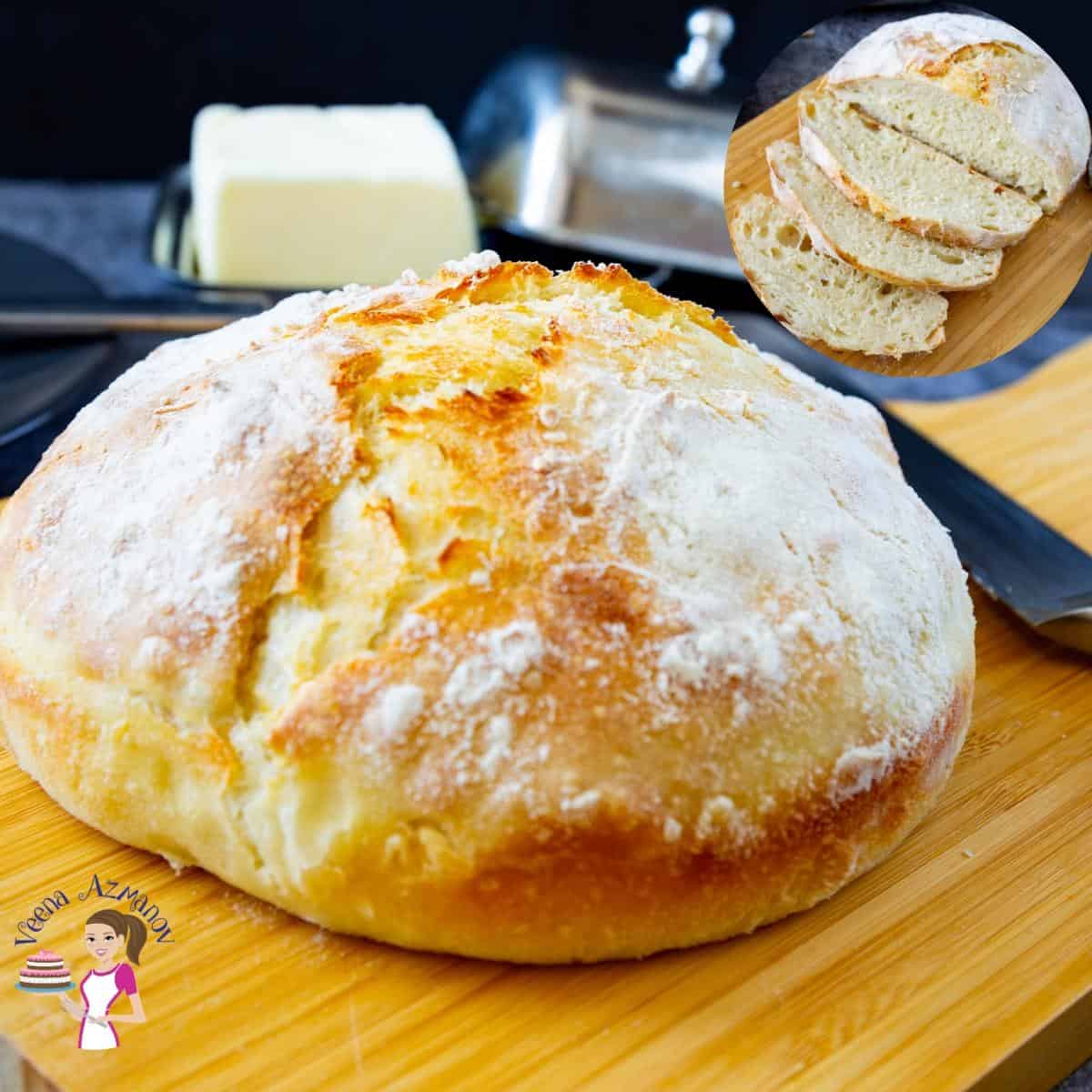
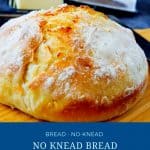
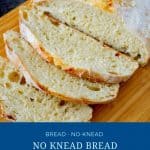
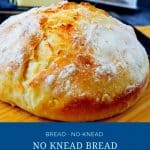
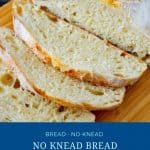
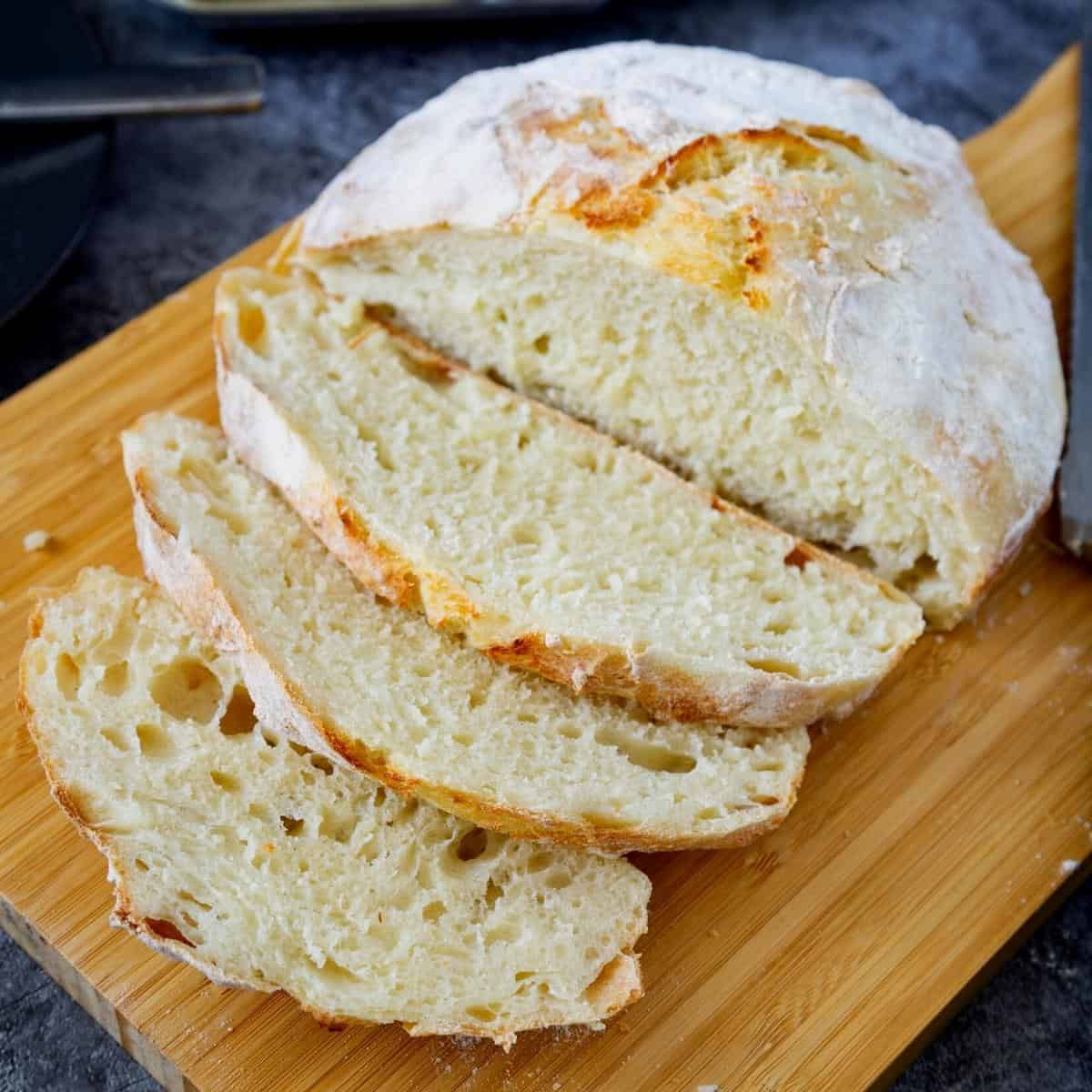
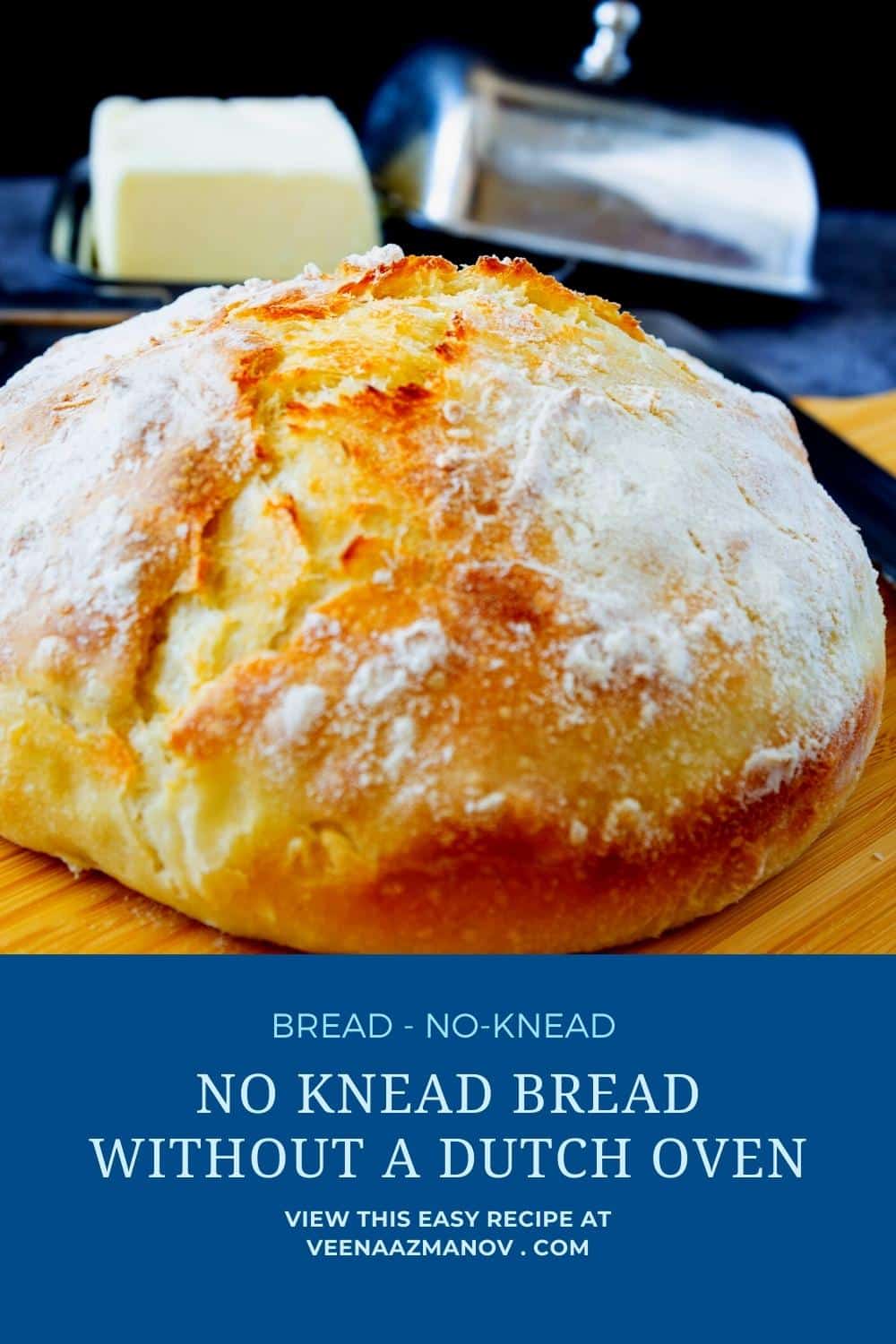
If you’ve ever wondered how to make no-knead bread without a Dutch oven, this recipe is for you. Just 4 ingredients, a bowl, and a simple pan are all you need for a crusty artisan loaf. The wonders of this no-knead bread recipe are endless…
As a passionate baker, I’ve spent countless hours perfecting my craft, particularly bread-making. From sourdough boules to delicate baguettes, I’ve honed my skills to the point where I can confidently call myself a pro. However, even the most dedicated bakers have days when time feels like an elusive luxury.
In this dilemma, I turn to a trusty companion in the bread-making world: the no-knead bread recipe. It’s a marvel of simplicity, requiring only a handful of ingredients and a fraction of the effort demanded by traditional bread recipes.
While my days as a bread-making enthusiast often involve intricate techniques and elaborate recipes, there’s something profoundly satisfying about this humble no-knead bread, a reminder that even amidst the chaos of life, there’s always time for a little homemade, effortless comfort.
Why You’ll Love This Easy Artisan Bread (Without a Dutch Oven)
- Ready in just 5 minutes of hands-on time.
- No Dutch oven needed—works in Pyrex, ceramic, enamel, or even a regular cake pan.
- Crusty artisan-style bread with a soft, airy crumb.
- Beginner-friendly—no kneading, no fancy tools required.
- Versatile—make it plain, whole wheat, multigrain, or even beer bread.
Ingredients & Substitutes for Beginner-Friendly Bread Recipe
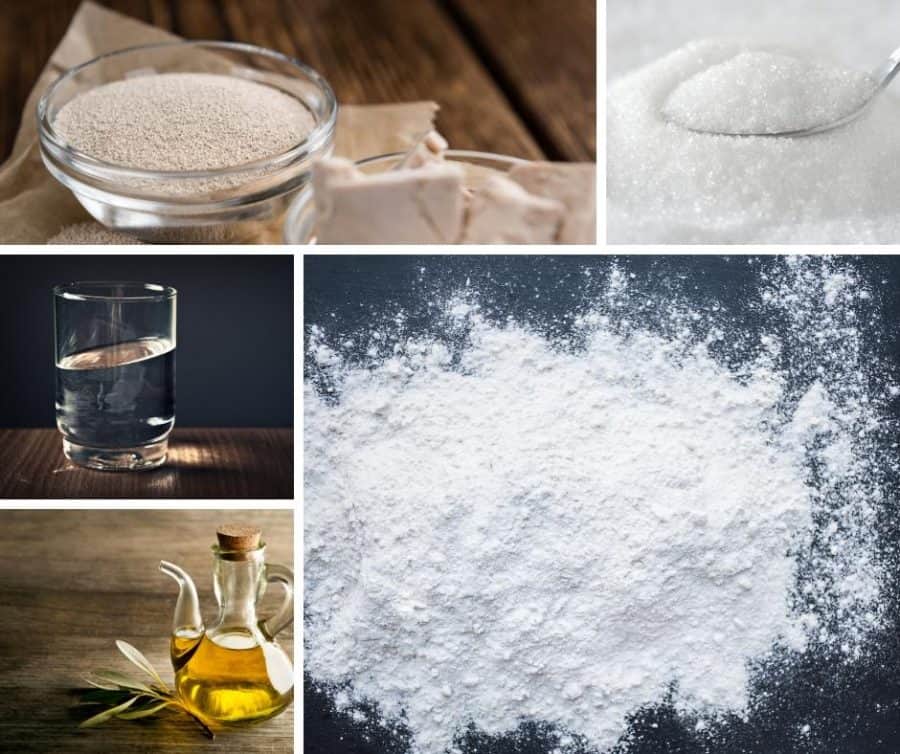
- Flour – You can use either bread flour or all-purpose flour. Bread flour will give the bread a chewier texture.
- Water – It is very important to use warm water, not cold or hot water. Cold water will not revive the yeast, and hot water will kill it.
- Instant dry yeast – I like to use instant yeast because I’ve always had great success with it. However, you can also use the same amount of active dry yeast or 15 grams of fresh baker’s yeast.
- Sugar – The sugar here is not really to add sweetness. So no, the one tablespoon won’t make your homemade dinner rolls sweet. The sugar and fat in the recipe are there to feed the yeast.
- Olive oil – A good source of food for the yeast, and also adds a nice flavor.
How to Make No-Knead Bread Without a Dutch Oven (Step-by-Step)
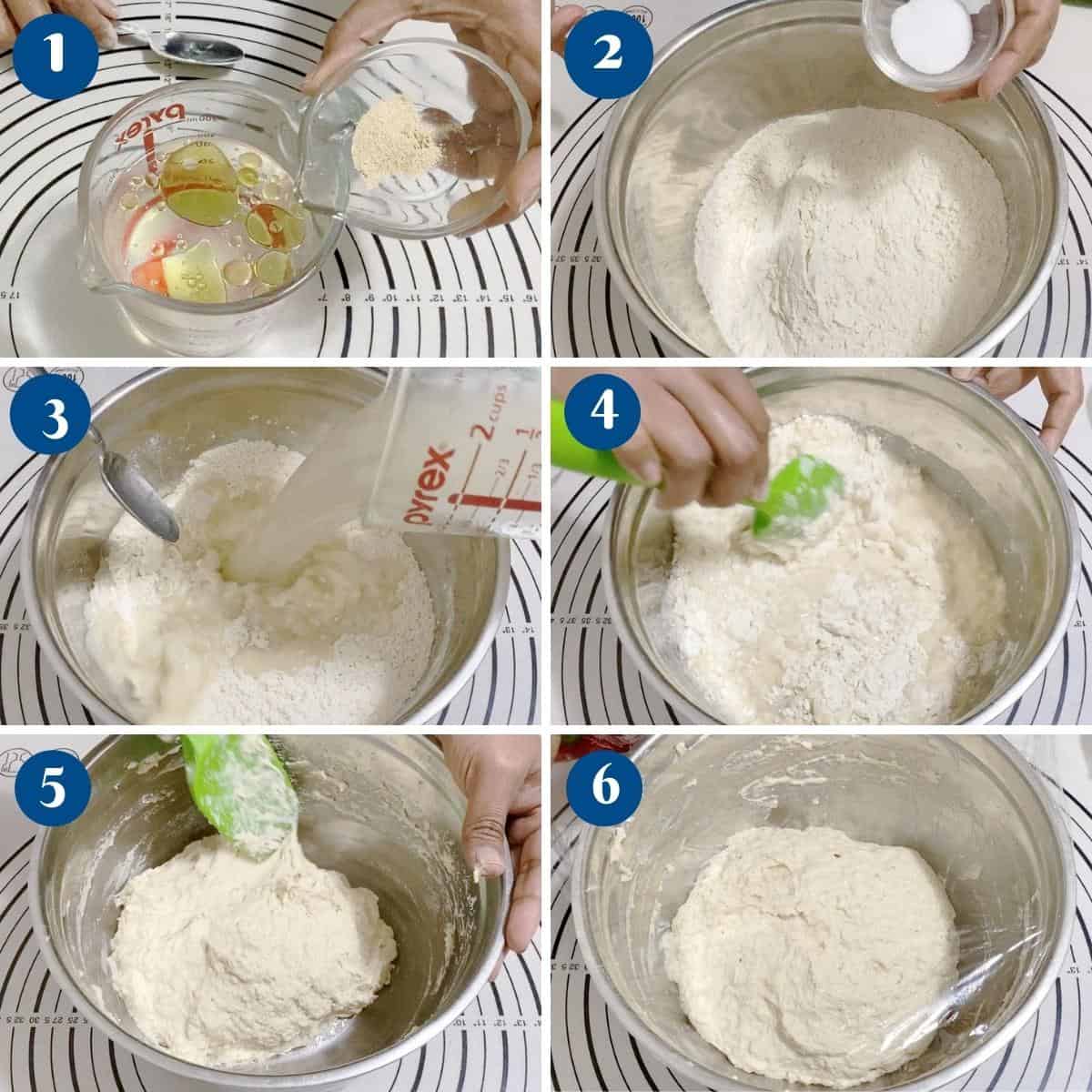
- Dry ingredients – In a large bowl, combine flour and salt, and set aside.
- Wet ingredients – In a measuring cup or medium bowl, measure the warm water, and add olive oil, sugar, and yeast. Combine well.
- Dry to wet – Add the yeast mixture to the flour mixture. Then, use a wooden spoon or spatula to combine the mixture thoroughly, ensuring that no dry flour remains on the bottom.
Pro tip – This is what makes no-knead bread so unique—while it rests, the gluten develops naturally, so you don’t need kneading. - Rise – Cover with a clean cotton towel or plastic wrap. Let it sit on the countertop in a warm room for an hour. Then, place in the fridge for 4 hours to 12 hours. I like to leave it overnight.
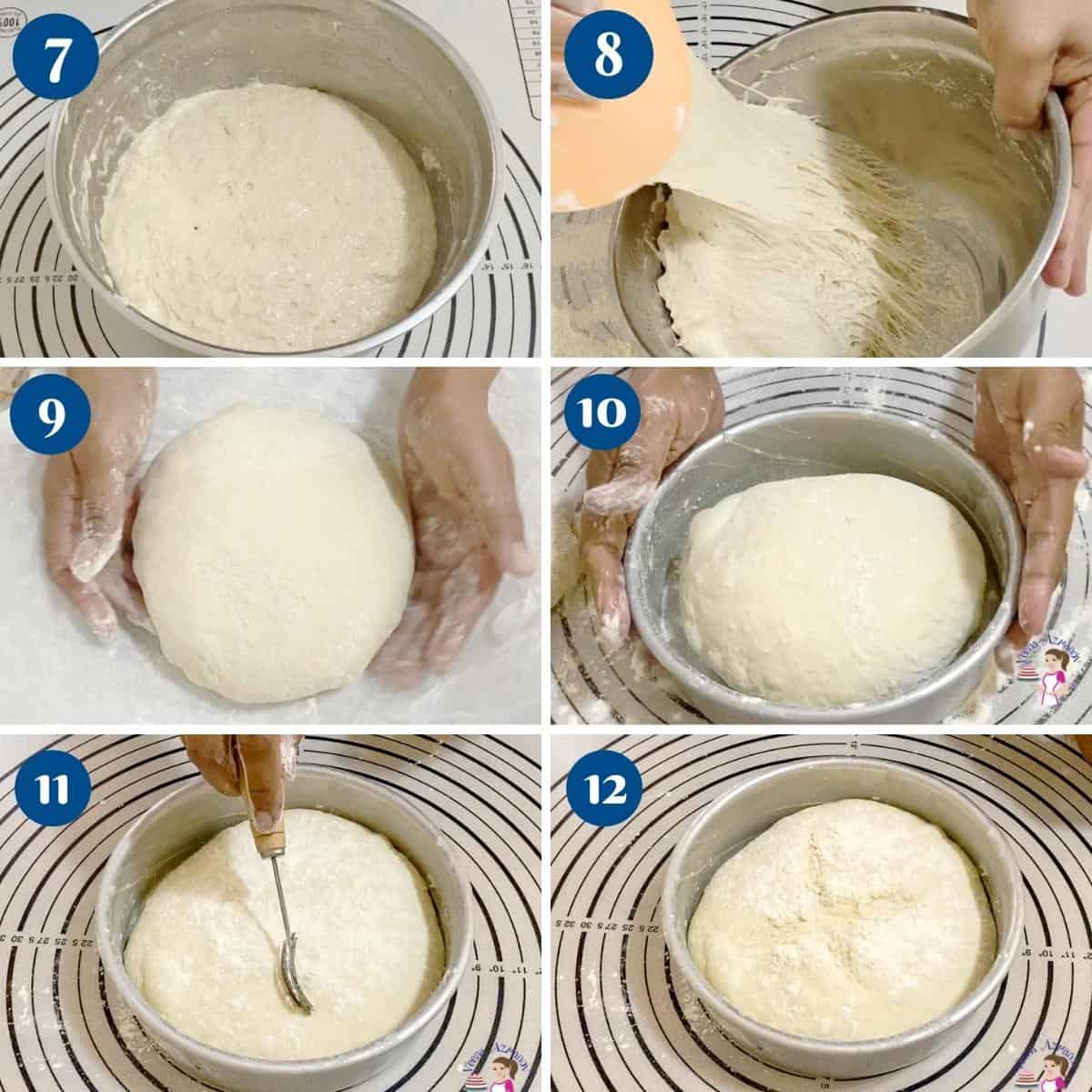
- Shape – Remove the dough from the fridge. Dust your work surface with enough flour to prevent sticking. Then, turn the dough onto the floured work surface. It is best to use a bench scraper or spatula.
- Divide the dough into two pieces with a bench scraper (this makes two loaves). Gently use your hands to bring each portion together into a ball (see video). Do the same with both loaves.
- Proof – Dust two 8-inch round baking pans with flour. Next, place the dough into each baking pan, seam side down. Shake the pan to help the dough center. Sprinkle some dry flour on top. Then, cover the bowl and let it proof for 30 minutes. Alternatively, you can place the dough on parchment paper to move from the work surface to the pan. Also, you can use a Pyrex, enamel, or ceramic pot.
- Preheat oven to 400°F/ 200°C / Gas Mark 6 for at least half an hour (30 minutes) before baking.
- Score – Using a blade or a sharp knife, slash the top of the proofed bread (see video). This will help release steam from the bread.
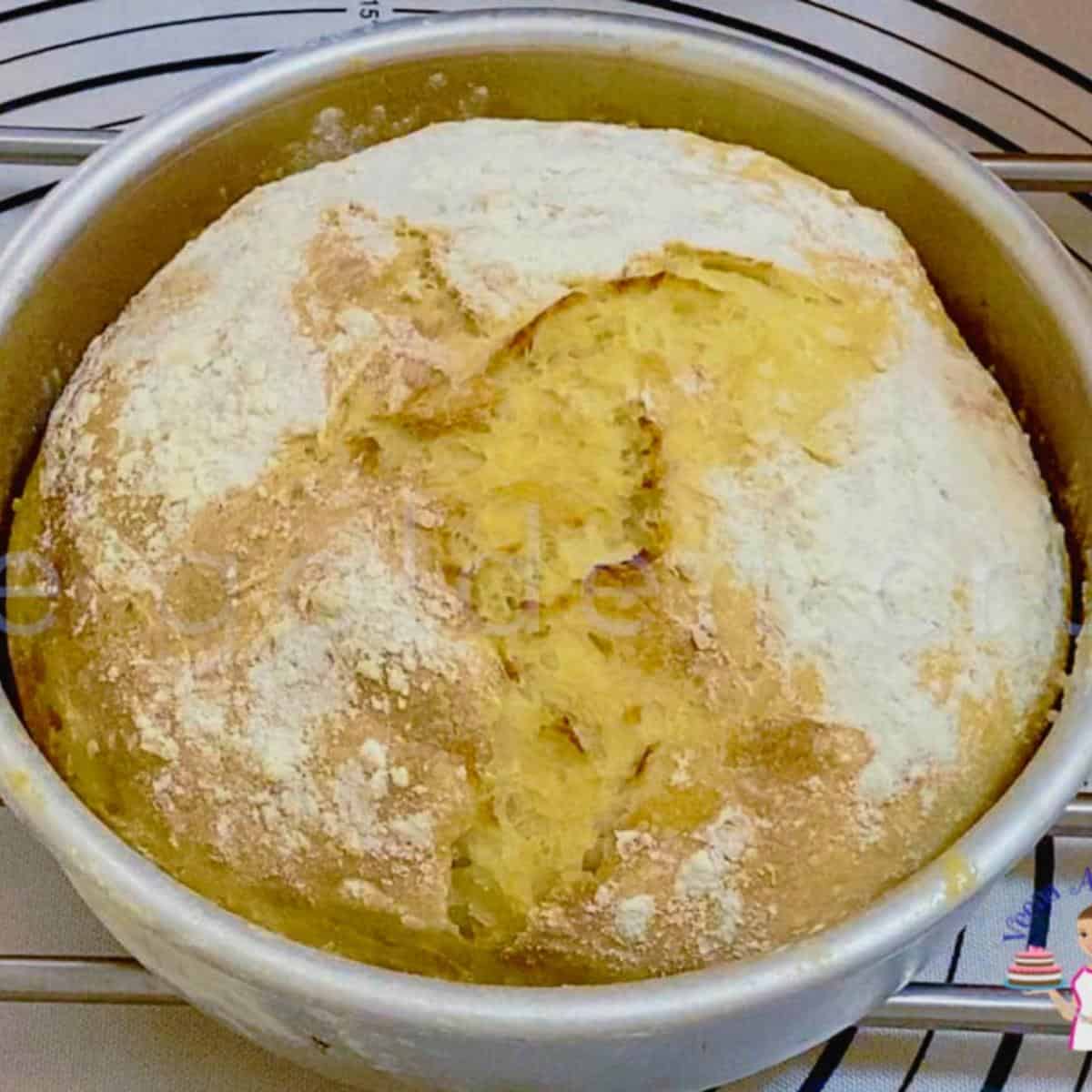
- Bake – Place the bread pans in the hot oven on the middle shelf. Place a bowl or tray of water on the bottom of the oven. Bake for about 35 minutes until lightly golden on top.
Pro tip – Water will create steam, which will give us a nice crust on the top. - Cool – Remove the bread from the oven and take it out of the pan. Then, place the bread on a wire rack – this will prevent the bread from becoming soggy on the bottom due to the steam. Let it cool for at least 20 minutes before you cut it into the bread.
- Enjoy!
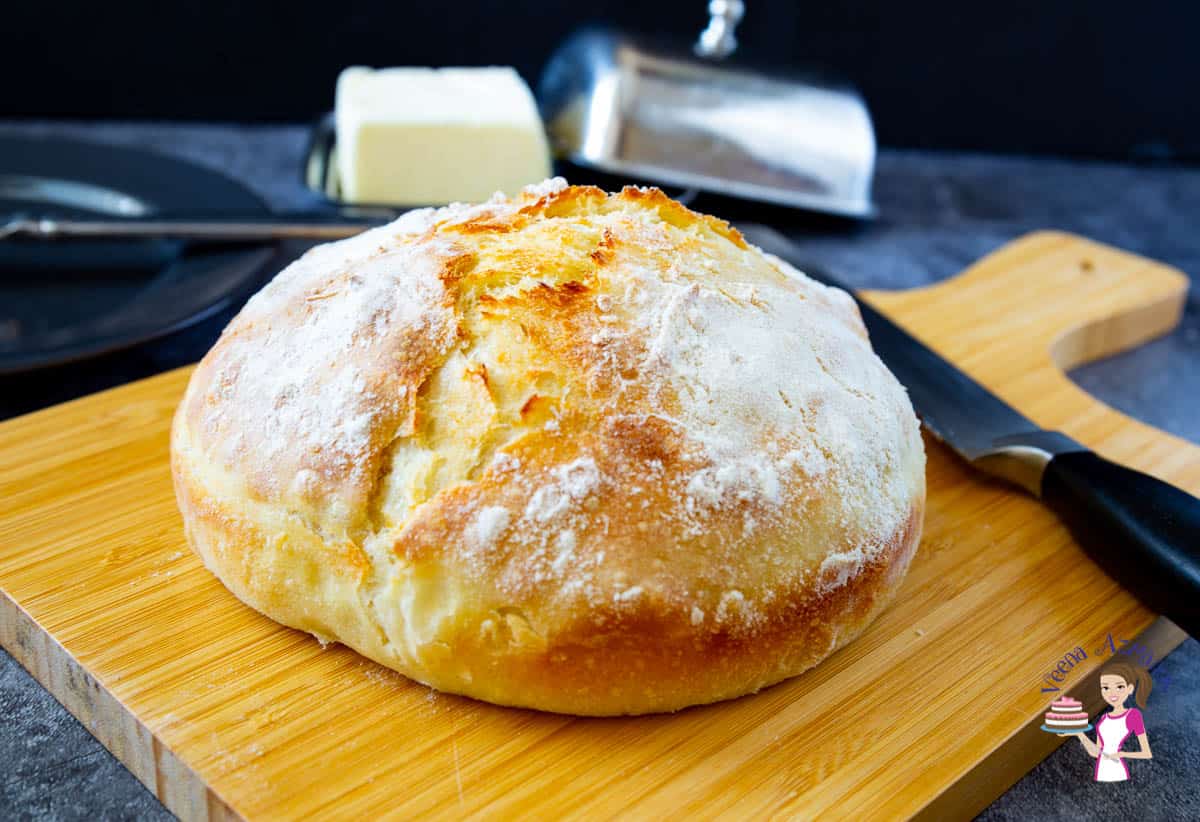
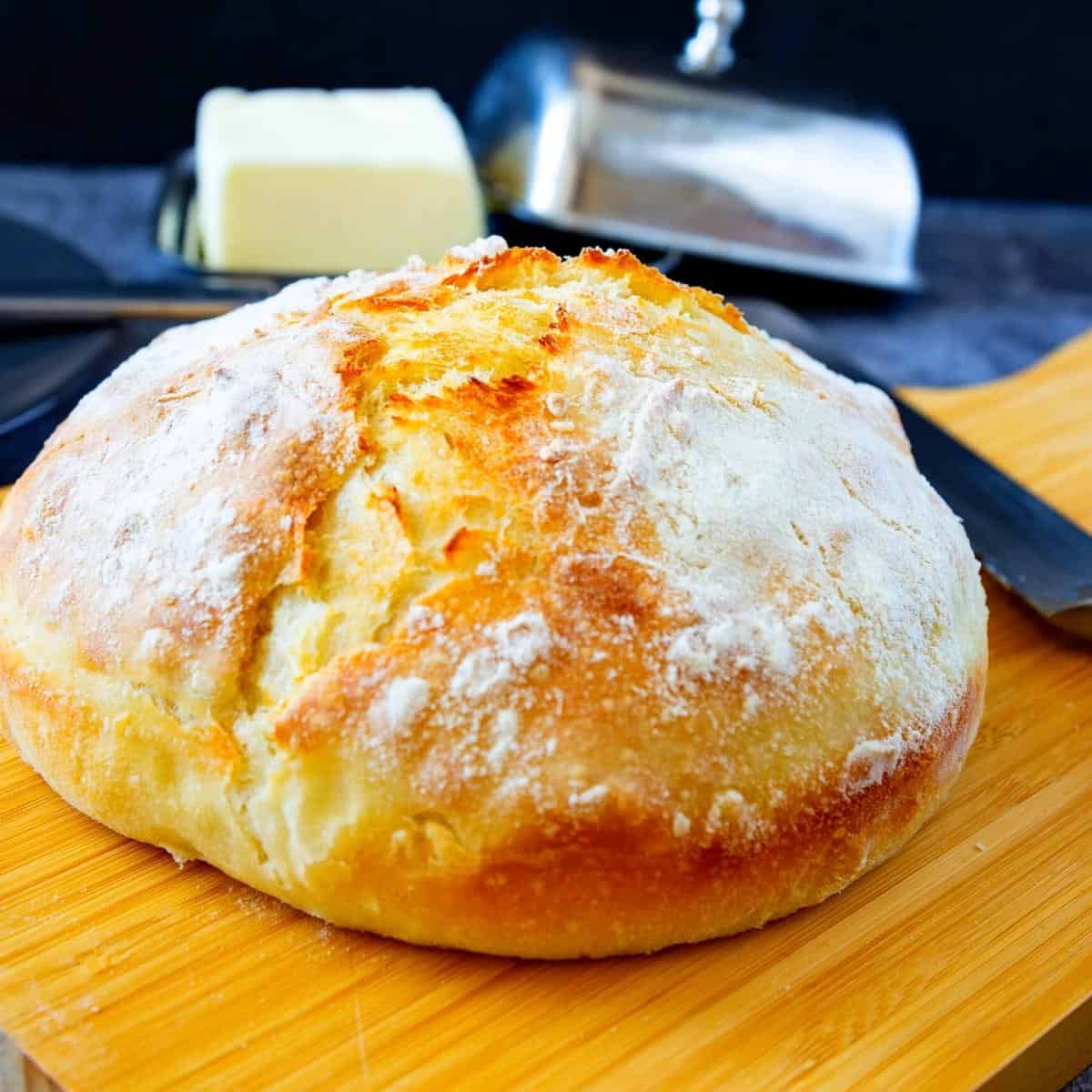
Easy No-Knead Bread Recipe without Dutch Oven
Ingredients
- 4 cups (500 g) All-purpose flour
- 1 ½ tsp (7 g) Salt
- 1½ tsp (5 g) Instant dry yeast
- 1½ cup (350 ml) Water warm (110F)
- 1 tbsp (15 g) Olive oil
- 1 tbsp (15 g) Sugar
Instructions
- Dry ingredients – In a large bowl, combine flour and salt, and set aside.4 cups All-purpose flour, 1 ½ tsp Salt
- Wet ingredients – In a measuring cup or medium bowl, measure the warm water, add olive oil, sugar, and yeast. Combine well.1½ tsp Instant dry yeast, 1½ cup Water warm, 1 tbsp Olive oil, 1 tbsp Sugar
- Dry to wet – Add the yeast mixture to the flour mixture. Use a wooden spoon or spatula to combine the ingredients thoroughly, ensuring no dry flour remains on the bottom.
- Rise – Cover with a clean cotton towel or plastic wrap. Let it sit on the countertop in a warm room for an hour. Then place in the fridge for 4 hours, or up to 12 hours. I like to leave it overnight.
- Shape – Remove the dough from the fridge. Dust your work surface with enough flour to prevent sticking. Turn the dough onto the floured work surface. It is best to use a bench scraper or spatula.
- Divide the dough into two with a bench scraper (this makes two loaves). Gently use your hands to bring each portion together into a ball (see video). Do the same with both loaves.
- Proof – Dust two 8-inch round baking pans with flour. Place the dough into each baking pan, seam side down. Shake the pan to help the dough settle in the center. Sprinkle some dry flour on top. Cover the bowl and let it proof for 30 minutes.Alternatively, you can place the dough on parchment paper to move from the work surface to the pan. Also, you can also use a Pyrex, enamel, or ceramic pot.
- Preheat the oven to 400°F/ 200°C / Gas Mark 6 for at least half an hour (30 minutes) before baking.
- Score – Using a blade, or a sharp kitchen knife, slash the proofed bread on top (see video) (this will help release steam from the bread).
- Bake – Place the bread pans on the middle shelf. Place a bowl or tray of water on the bottom of the oven. Bake for about 35 minutes until lightly golden on top.
- Cool – Remove the bread from the oven and take it out of the pan. Place the bread on a wire rack – this will prevent the bread from becoming soggy on the bottom due to steam. Let the bread cool for at least 20 minutes before you cut it.
Video
Notes
Tips for Success with No-Knead Bread (Without a Dutch Oven)
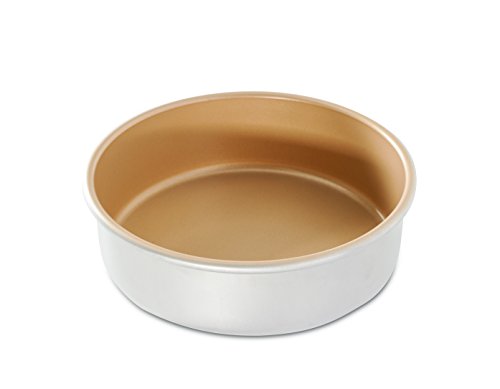
- Choose the right vessel – A heavy metal, ceramic, Pyrex, or cast iron pan works fine; just make sure it’s oven-safe at high heat.
- Preheat well – Heat your oven and pan for at least 30 minutes for better oven spring and a crisp crust.
- Add steam – Place a tray of water in the oven or mist the dough before baking to mimic Dutch oven results.
- Use parchment paper – Prevents sticking and makes transferring the dough easier.
- Score the dough – A quick slash on top lets the bread expand evenly.
- Watch baking time – If the crust browns too fast, lower the temp slightly; bread is done when it sounds hollow or reaches 190–200°F (88–93°C).


Made this recipe?
I’d love to see how yours turned out! Share a photo on Instagram and tag @veenaazmanov_kitchen or use #veenaazmanovkitchen. And don’t forget to leave a rating and review!
Tips for Success (Crusty Artisan Loaf Every Time)
- Choose the right vessel – A heavy metal, ceramic, Pyrex, or cast iron pan works fine; just make sure it’s oven-safe at high heat.
- Preheat well – Heat your oven and pan for at least 30 minutes for better oven spring and a crisp crust.
- Add steam – Place a tray of water in the oven or mist the dough before baking to mimic Dutch oven results.
- Use parchment paper – Prevents sticking and makes transferring the dough easier.
- Score the dough – A quick slash on top lets the bread expand evenly.
- Watch baking time – If the crust browns too fast, lower the temp slightly; bread is done when it sounds hollow or reaches 190–200°F (88–93°C).
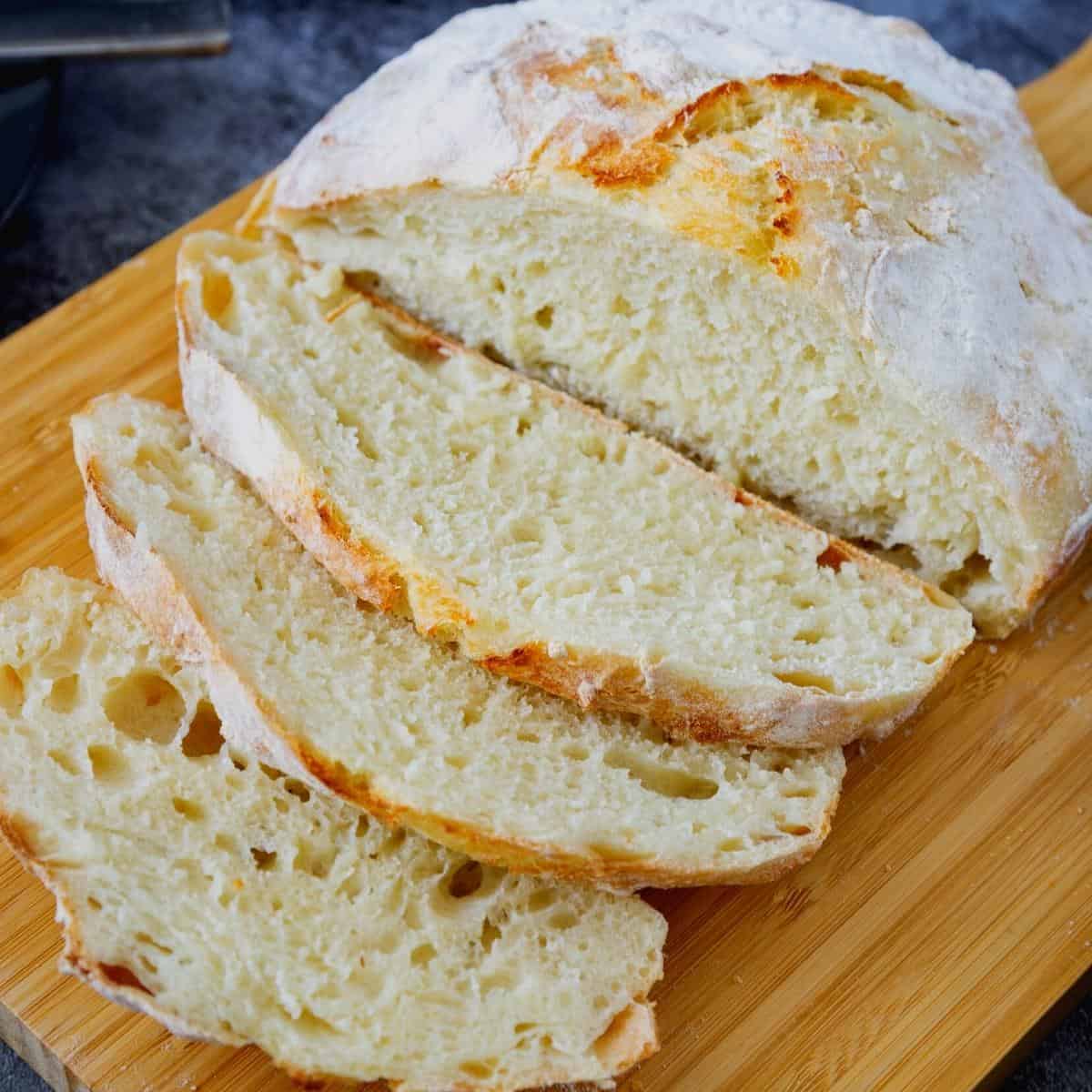
Troubleshooting for an easy no-knead bread recipe
| Problem | Possible Cause | Solution |
|---|---|---|
| The bread sank in the middle | The oven or pan is not hot enough before baking | Always preheat oven and baking pan for at least 30 minutes. Hot surfaces give better oven spring. |
| Bread too dense | Too much flour was added; the dough is not sticky enough | No-knead bread dough should be soft, wet, and sticky. Avoid extra flour—this bread develops gluten through resting, not kneading. |
| The dough didn’t rise | Yeast not activated, or water too hot/cold | Use warm water (110°F/43°C). Cold water slows yeast; hot water kills it. Always check yeast is fresh. |
| Pale crust, not crispy | Lack of steam in the oven without a Dutch oven | Place a tray of water in the oven while baking, or spritz dough with water before baking for a crusty artisan-style finish. |
| Bread stuck to the pan | Dough too wet, or the pan is not floured properly | Dust the pan generously with flour or line it with parchment paper before adding the dough. |
| Overbaked or dry bread | The oven temperature is too high or baked too long | Bake at 400°F/200°C for about 35 minutes, then check. Bread should sound hollow when tapped on the bottom. |
more no-knead bread recipes you may like
- No-Knead Olive Bread
- and No-Knead flatbread recipe
- Crusty No-Knead Bread
- Soft Flatbread Without Yeast (no-knead)
- No-Knead Beer Bread



Frequently asked questions
This no-knead bread will keep at room temperature for 2 to 3 days. Once cut, be sure to wrap the cut side of the bread well to prevent it from drying out.
Yes. You can use a Pyrex dish, a ceramic pot, an enamel dish, a cast-iron skillet, or even a regular cake pan.
A heavy pot with a lid, a Pyrex dish, a ceramic dish, or a large metal bowl to cover a baking sheet will all work.
Yes. No-knead bread is a type of artisan bread—the long rest creates that chewy crust and airy crumb.
Absolutely. Swap part of the all-purpose flour with whole wheat or multigrain for a heartier loaf.
Yes. Replace some of the water with beer for flavor, or swap a portion of the yeast with sourdough starter.
Absolutely. I cut the bread into slices. Place it into a reusable silicone storage bag in the freezer. When I need it, I just thaw slices in the microwave for 15 to 30 seconds.
You can use bread flour. Personally, I prefer the texture of the dough with all-purpose flour. Bread flour gives a softer, chewier bread with a tough crust.
Yes, you can let it rise for about 2 hours at room temperature, though overnight fermentation gives the best flavor.
The Dutch oven gives a wonderful crust and helps the bread rise. I shared that recipe with you previously. You can also bake it open on a baking tray, but the bread will spread more. The cake pan gives a better shape. You can, of course, also use a loaf pan as I have done previously in my no-knead sandwich bread. The texture and crumb of all these breads will be completely different from each other, but still delicious.
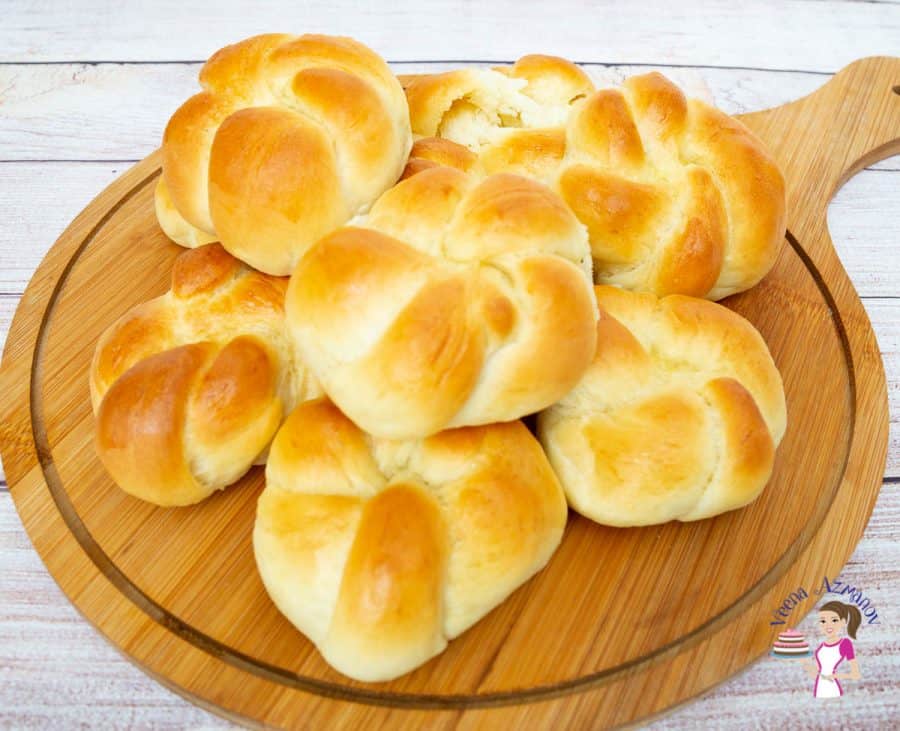
- No-Knead Knotted Rolls
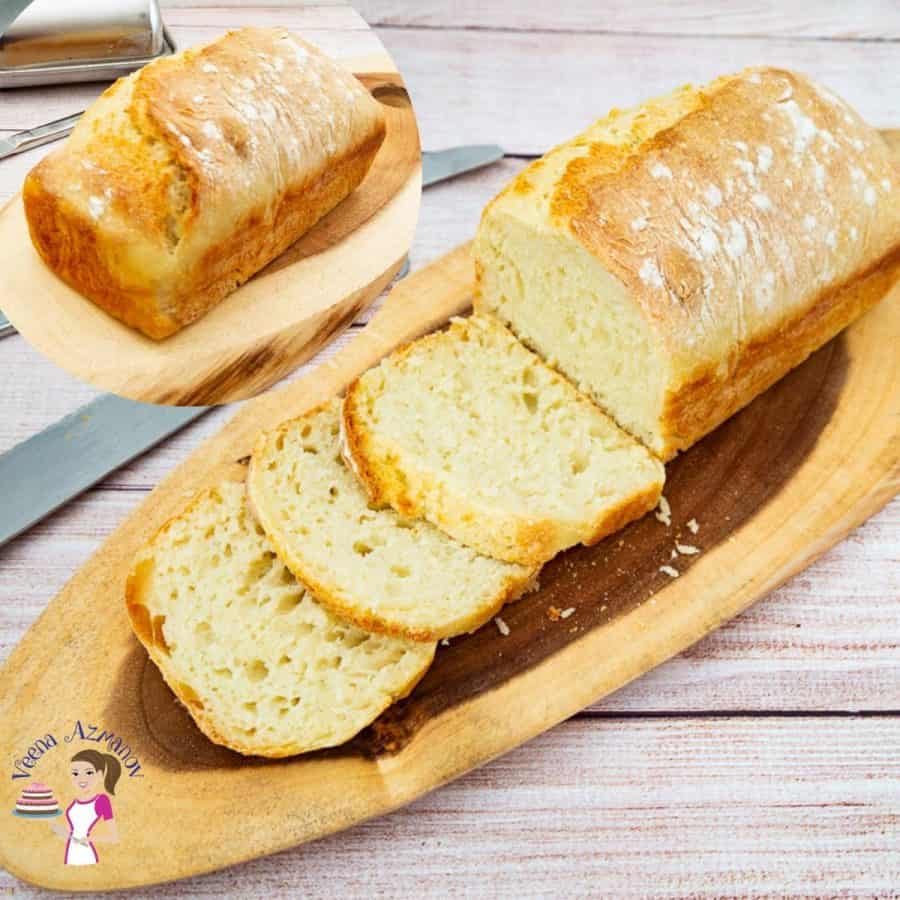
- and No-Knead Sandwich Bread
- Soft Flatbread Without Yeast (no-knead)
- No-Knead flatbread recipe
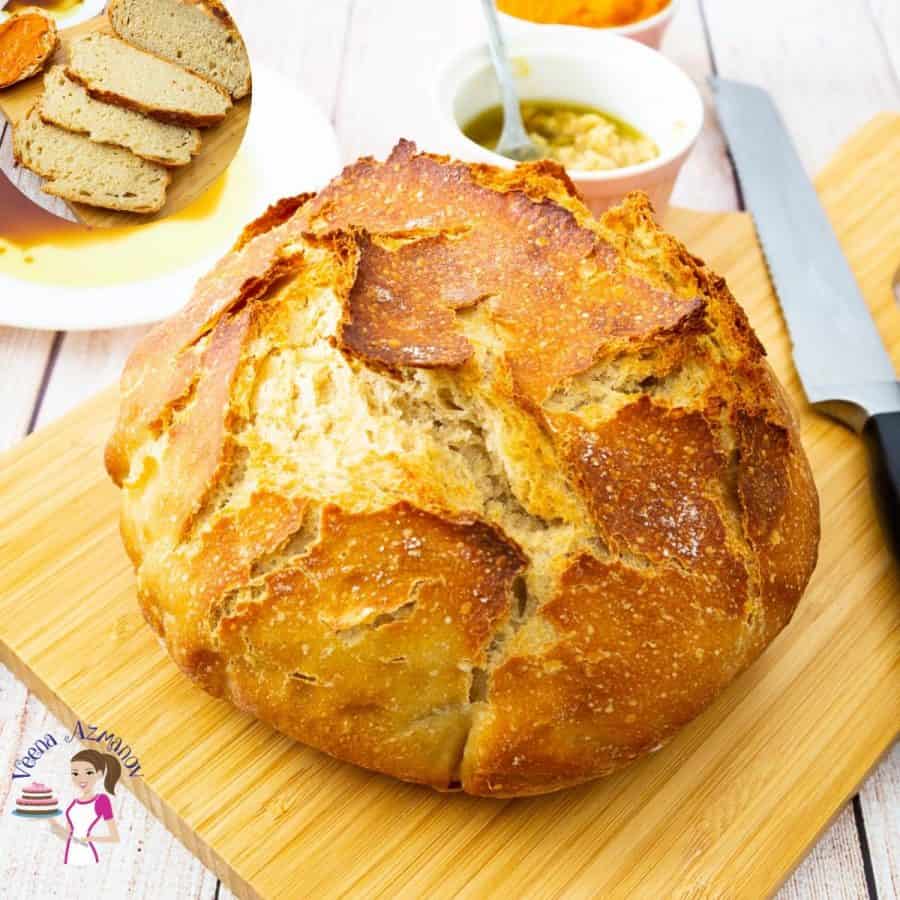

Don’t lose this recipe! Save it for Later!
📌 Save this Recipe for later on Pinterest so you can easily find it again.
⭐ Add Veena Azmanov Kitchen to your Google Preferred Sources.
It helps Google show you more of our recipes.
📧 Subscribe for new recipes delivered to your inbox.
🎥 Follow us for more recipes

Hi, I’m Veena
I’m the recipe developer, baker, and food photographer behind Veena Azmanov Kitchen.
I’ve spent years developing and testing recipes, from everyday meals and homemade breads to cakes and desserts.
I share the practical tips and little details I’ve learned along the way so you can get great results in your own kitchen.










Can I add some garlic to the dough and if so will it affect the yeast? Should I up the yeast if I try this?
Hey Nina. Garlic will not affect the yeast. You can add garlic to the dough. I recommend adding it at the final shaping.
Day 9 Done
I am looking forward to trying this recipe. It looks delicious! Do you think I can add cheese to it without messing up the recipe?
You can add 1 cup grated cheese and that would be fine – with this recipe.
I have a query, please. My oven will accommodate only own pan at a time, so can I put half the dough in the fridge and then bake it after the first one is done?
Yes, you can divide the dough into two. Proof one in the counter and one in the fridge. When the first one is baking, remove the second out on the counter to come to room temperature. That way, you can bake one at a time. I hope that makes sense.
Could I use this recipe with a bread loaf pan? I made it already without one and loved it so much that I wanted to make it again and now I bought a pan! I see you have a sandwich loaf that I will try next after this one. Could I frankenstein these two recipes into one?
Katie, I do have a no-knead sandwich bread – is that what you are looking for?
Day 9 Done
I want to try this recipe but I am wondering if I can let it rise in room temperature and for how long? I have seen many other no knead recipes that tell you to let it sit 18-24 hours outside of the fridge.
Also, do you have any ideas for how I could create and hold the round shape while baking even if I have zero round baking equipment?
Hey Charlotte. If you leave it out it to proof for 18 to 24 hours – I suggest reducing the yeast to half in the recipe so it will prove long and slow. Well, this is a soft dough so it is bound to spread unless you have something to block around the edges. Use oven-safe cooking if can – line the outside with foil if it is too thin coated. Hope this helps
YAS! I’m all about not having to use a Dutch oven and the no-knead part too. Slicing this up and using it to soak pasta sauce is just wonderful!
Yes, Connie.This is amazing to soak up sauces
I love bread when there is no need to knead! This recipe is perfect during these crazy times when bread is hard to find.
I hear you, Jacque
This bread looks so beautiful and delicious! Love that it doesn’t require a dutch oven and you provided so many useful tips.
Thank you, Lakita.
Wow. This bread looks so so perfect. Thanks for the recipe and inspiration. Time to bake some!
Thank you, Sophie