
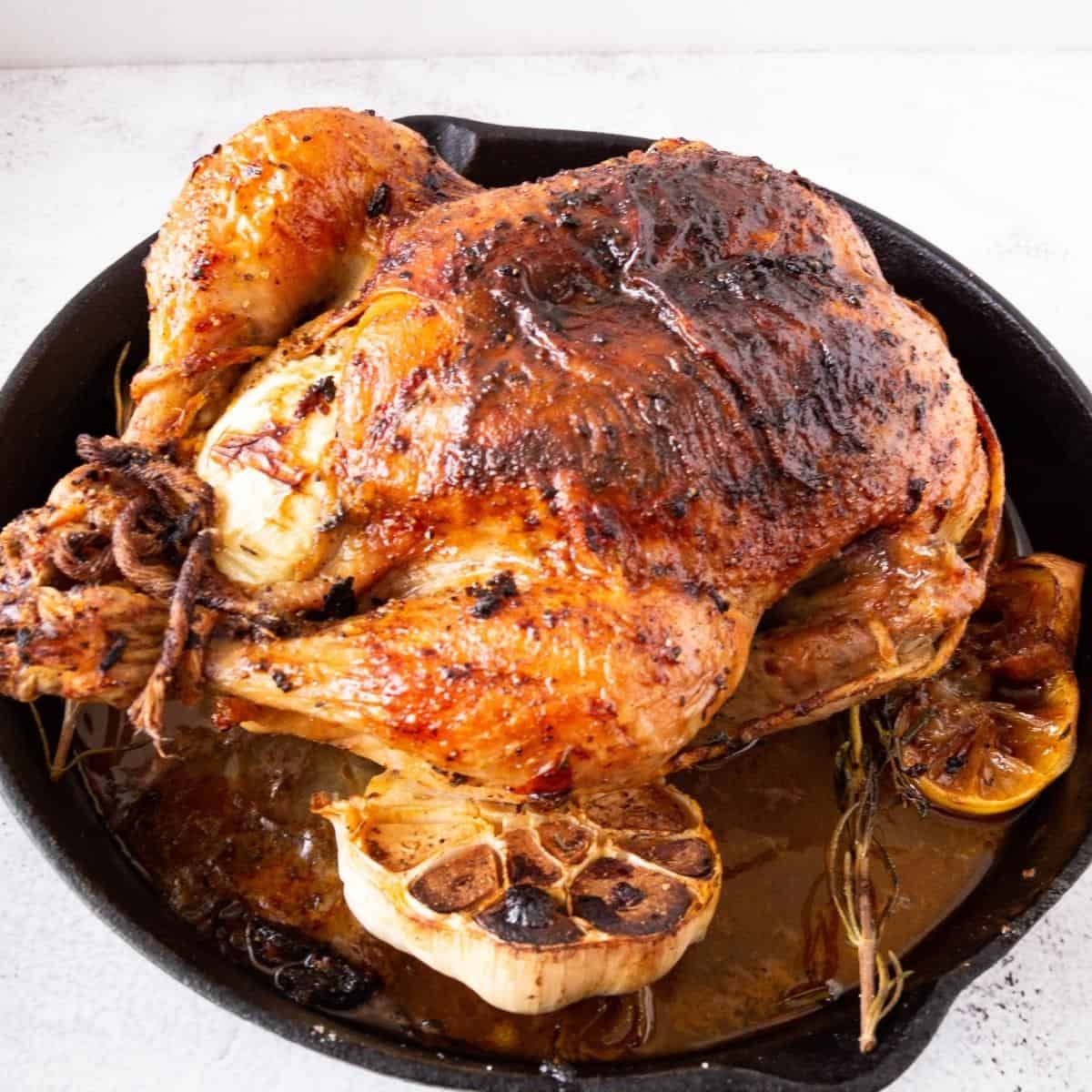


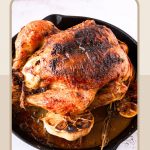
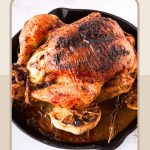
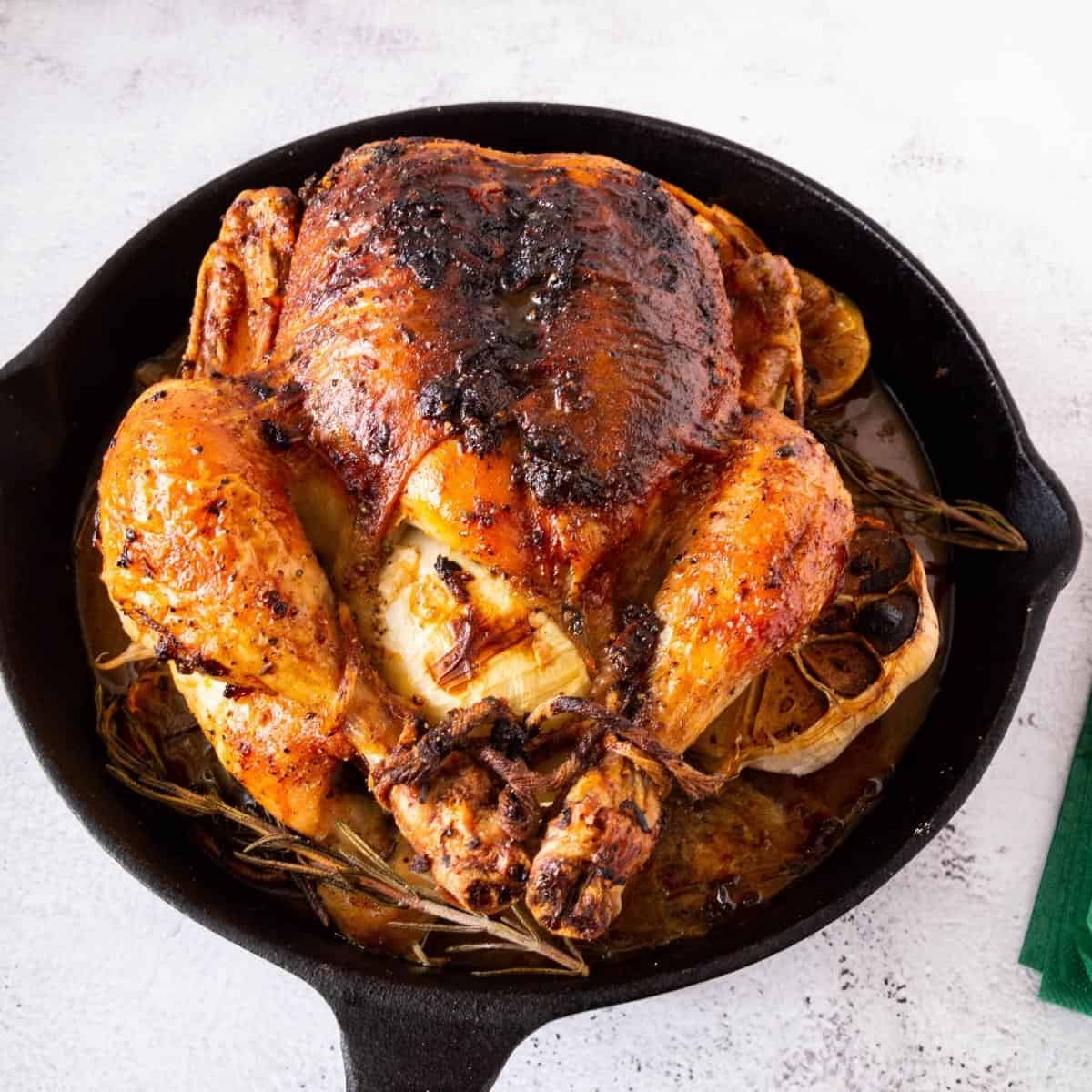
This cast-iron roast chicken is marinated with garlic butter and cooked on high until golden on the outside while still tender and juicy on the inside. Perfect when you want a simple, fuss-free dinner. Serve it with mashed potatoes or roast potatoes, along with a side of veggies. Leftovers make delicious sandwiches and wraps.
I love recipes that look impressive but don’t require hours in the kitchen, and this cast iron roast chicken is one of them. The cast iron skillet does most of the work, giving the chicken beautifully crisp, golden skin while keeping the meat tender and juicy. At the same time, the vegetables roast underneath, soaking up all those delicious pan juices.
This is the kind of meal I make when I want something comforting without a sink full of dishes. Everything cooks together in one pan, the house smells amazing while it roasts, and there’s always a fight over the crispy potatoes. Whether it’s a relaxed Sunday lunch or a simple family dinner, this recipe never disappoints.
Why make this roast chicken
- Rich and Flavorful Marinade: Combining garlic butter, olive oil, hot and sweet paprika, rosemary, and thyme creates a rich, aromatic marinade. This blend enhances the chicken’s flavor.
- Moist and Tender Meat: Rubbing the garlic butter mixture under the skin ensures the chicken remains moist and juicy throughout roasting. The butter melts into the meat, adding flavor and moisture, resulting in tender and succulent chicken bursting with flavor.
- Aromatic Stuffing: Stuffing the cavity with lemon halves, onions, garlic bulbs, rosemary, and thyme infuses the chicken with aromatic flavors as it roasts. The steam from these ingredients permeates the meat, providing a depth of flavor that elevates the dish’s overall taste.
- Perfectly Crispy Skin: Roasting the chicken in a preheated cast-iron skillet helps achieve a crispy, golden-brown skin. Basting with pan juices enhances this crispiness. It ensures the skin is flavorful and has a satisfying crunch, making the dish even more enjoyable.
Ingredients and substitutes
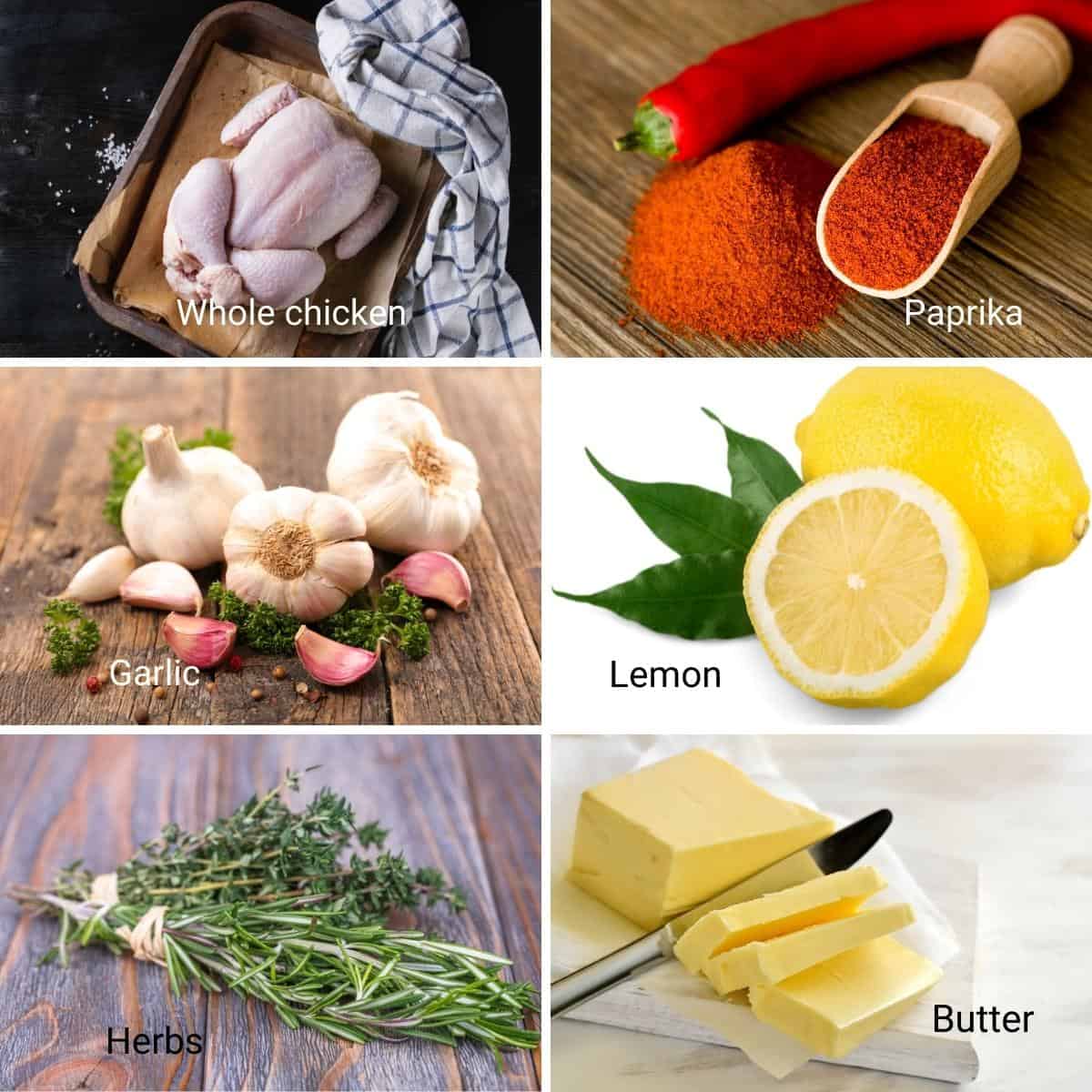
- Whole Chicken: A whole chicken is ideal for roasting as it cooks evenly and presents beautifully. You can also use bone-in, skin-on chicken parts like thighs, drumsticks, or breasts for a shorter cooking time and smaller portions. Adjust the cooking time accordingly.
- Garlic Butter: Combines the rich, creamy flavor of butter with the aromatic and savory taste of garlic. Spread it under and over the skin to keep the chicken moist and flavorful. If you don’t have garlic butter, mix softened butter with minced garlic, or use olive oil and minced garlic for a dairy-free option.
- Olive Oil: Adds moisture and helps achieve a crispy skin when roasting. It also enhances the marinade’s flavor and ensures even cooking. You can also use canola oil, vegetable oil, or melted coconut oil for a different flavor profile.
- Hot Paprika adds a mild heat and smoky flavor, complementing the savory notes of the garlic and herbs. Cayenne pepper can be used for more heat, or smoked paprika for a smokier flavor.
- Sweet Paprika: Provides a mild, sweet pepper flavor and vibrant color, balancing the heat from the hot paprika. You can also use regular paprika or a pinch of ground red pepper flakes for a slight variation in flavor.
- Rosemary and Thyme: Fresh herbs that provide an earthy, aromatic note, infusing the chicken with a deep herbal flavor that complements the richness of the garlic butter. You can use dried rosemary and thyme if fresh herbs are unavailable or fresh sage, oregano, or tarragon for different but complementary flavors.
- Lemon: Adds a bright, citrusy acidity that balances the richness of the garlic butter and herbs. Lemon helps to tenderize the meat and adds freshness. You can also use lime or orange halves for a different citrus flavor or omit it entirely.
- Onion: Provides a sweet, savory flavor as it roasts, infusing the chicken with a subtle depth and complexity. Shallots or leeks can be used for a milder flavor, or red onions for a slightly sweeter taste.
- Garlic Bulbs: Whole garlic bulbs add a robust, savory flavor that permeates the chicken as it roasts. Roasting garlic bulbs makes them soft and sweet, enhancing the overall dish. A few extra cloves of minced garlic can be added to the cavity, or you can use whole peeled garlic cloves if garlic bulbs are unavailable.
Step-by-step: Roast chicken in a cast-iron
- Preheat the Oven: Preheat your oven to 375°F (190°C) Gas mark 7. Place a cast-iron skillet or roasting pan inside the oven to preheat.
- Prepare the Chicken: Rinse the chicken under cold water and pat it dry with paper towels. Make sure the chicken is completely dry for the best results. Gently lift the skin of the chicken, being careful not to tear it, and rub half of the garlic butter mixture under the skin directly onto the meat. Rub the remaining garlic butter mixture over the entire surface of the chicken.
- Prepare the Garlic Butter Marinade: In a small bowl, mix the softened garlic butter with olive oil, hot paprika, sweet paprika, salt, pepper, chopped rosemary, and thyme until well combined.
- Stuff the Cavity: Stuff the cavity of the chicken with lemon halves, quartered onion, halved garlic bulbs, and whole sprigs of rosemary and thyme. This aromatic stuffing will infuse the chicken with flavor as it roasts.
- Prep the pan: In a cast-iron skillet, place the remaining slices of onion, lemon, half a garlic bulb, rosemary, and thyme—season with salt and pepper.

- Roast the Chicken: Carefully remove the hot cast-iron skillet or roasting pan from the oven and place the prepared chicken into the skillet, breast side up. Roast the chicken in the preheated oven for about 1.5 to 2 hours, or until the internal temperature reaches 165°F (74°C) on the thermometer in the thickest part of the thigh. Baste the chicken with the pan juices every 30 minutes for added flavor and to keep the skin crispy.
- Rest the Chicken: Once cooked, remove it from the oven and let it rest in the skillet for 15 minutes before carving. This redistributes the juices, keeping the meat tender and juicy.
- Serve: Carve the chicken and serve it hot, along with the roasted onions, garlic, and lemon from the cavity. Drizzle with the pan juices for extra flavor.
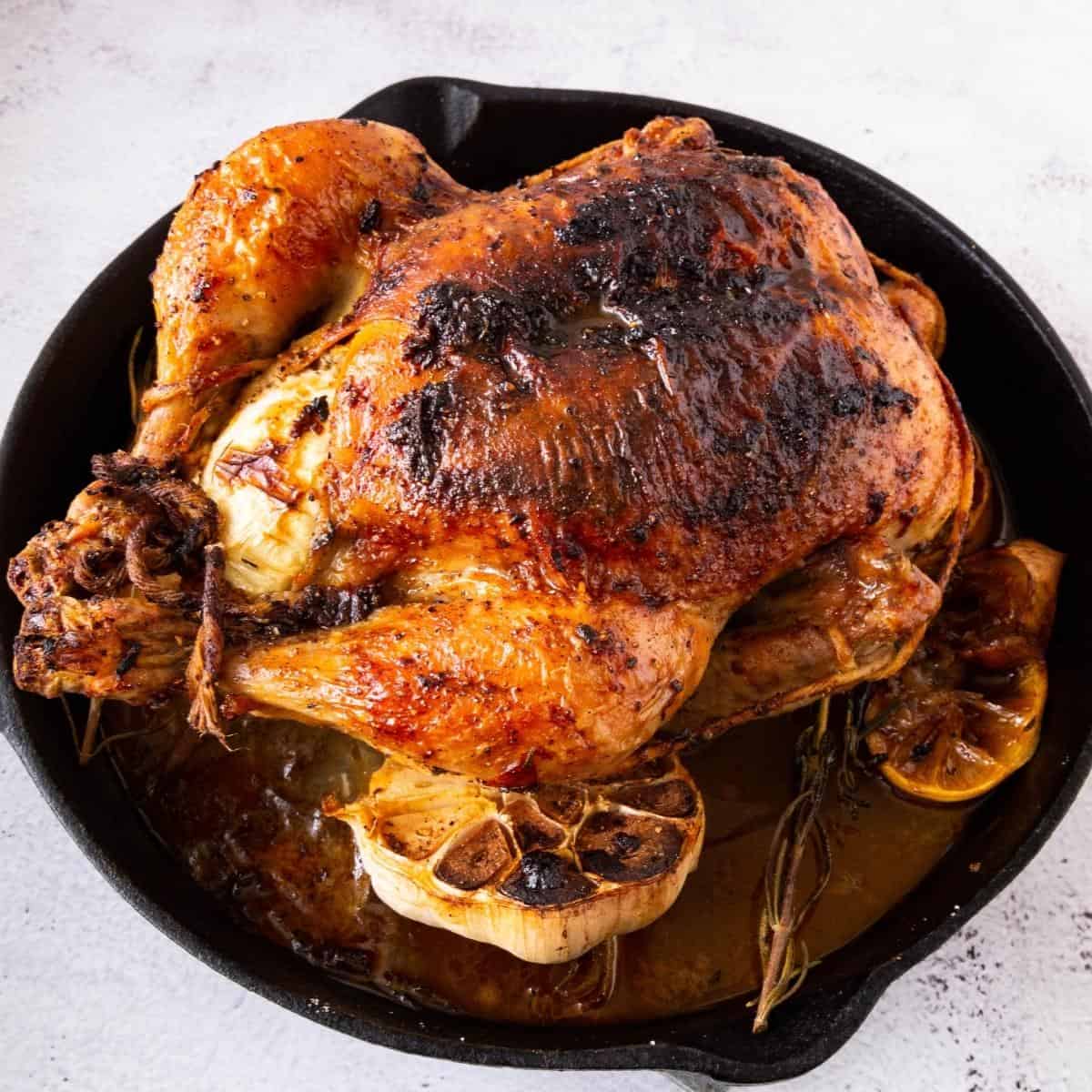
Cast-Iron Roast Chicken
This cast-iron roast chicken is marinated with garlic butter and cooked on high until golden on the outside while still tender and juicy on the inside. Perfect when you want a simple fuss-free dinner. Serve it with mashed potatoes or roast potatoes along with a side of veggies. Leftovers make delicious sandwiches and wraps.
Video
Ingredients
- 4 – 5 lbs (2 kg) Whole Chicken
- ½ tsp Salt
- ½ tsp Pepper
- 2 Onions large, one cut in half and the other sliced
- 1 large Garlic bulb cut in half
- 1 large Lemon half and slices
- 3 sprigs Rosemary
- 3 sprigs Thyme
- 4 tbsp (60 g) Butter soft, room temperature
- 2 tbsp Garlic minced
- ½ tsp Salt
- ½ tsp Pepper
- ½ tbsp Hot paprika
- ½ tbsp Smoked sweet paprika
- 2 tbsp Olive oil
- 1 tbsp Rosemary chopped finely
- 1 tbsp Thyme chopped finely
Method
- Preheat the Oven: Preheat your oven to 375°F (190°C) Gas mark 5. Place a cast iron skillet or roasting pan inside the oven to preheat.
- Prepare the Chicken: Rinse the chicken under cold water and pat it dry with paper towels. For the best results, make sure the chicken is completely dry. Gently lift the skin of the chicken, being careful not to tear it, and rub half of the garlic butter mixture under the skin directly onto the meat. Rub the remaining garlic butter mixture over the entire surface of the chicken.4 – 5 lbs Whole Chicken, ½ tsp Salt, ½ tsp Pepper
- Prepare the Garlic Butter Marinade: In a small bowl, mix the softened garlic butter with olive oil, hot paprika, sweet paprika, salt, pepper, chopped rosemary, and thyme until well combined.4 tbsp Butter, 2 tbsp Garlic, ½ tsp Salt, ½ tsp Pepper, ½ tbsp Hot paprika, ½ tbsp Smoked sweet paprika, 2 tbsp Olive oil, 1 tbsp Rosemary, 1 tbsp Thyme
- Stuff the Cavity: Stuff the cavity of the chicken with lemon halves, quartered onion, halved garlic bulbs, and whole sprigs of rosemary and thyme. This aromatic stuffing will infuse the chicken with flavor as it roasts.2 Onions, 1 large Garlic bulb, 1 large Lemon, 3 sprigs Rosemary, 3 sprigs Thyme
- Prep the pan: In a cast-iron skillet, place the remaining slices of onion, lemon, half a garlic bulb, rosemary, and thyme. Season with salt and pepper.
- Roast the Chicken: Carefully remove the hot cast-iron skillet or roasting pan from the oven and place the prepared chicken into the skillet, breast side up. Roast the chicken in the preheated oven for about 1.5 to 2 hours, or until the internal temperature reaches 165°F (74°C) in the thickest part of the thigh. Baste the chicken with the pan juices every 30 minutes for added flavor and to keep the skin crispy.
- Rest the Chicken: Once cooked, remove the chicken from the oven and let it rest in the skillet for 15 minutes before carving. This redistributes the juices, keeping the meat tender and juicy.
- Serve: Carve the chicken and serve it hot, along with the roasted onions, garlic, and lemon from the cavity. Drizzle with the pan juices for extra flavor.
Notes
- Baste the chicken with the pan juices once or twice during roasting for extra flavor and color.
- If the skin browns too quickly, loosely tent the chicken with foil for the remaining cooking time.
- Save the flavorful pan juices for serving or use them to make a simple gravy.
- Cooking time will vary depending on the size of your chicken, so always rely on the internal temperature rather than the clock.
- Leftover roast chicken is perfect for sandwiches, salads, soups, and casseroles.
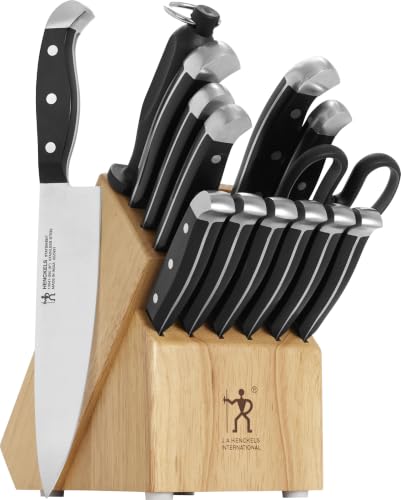
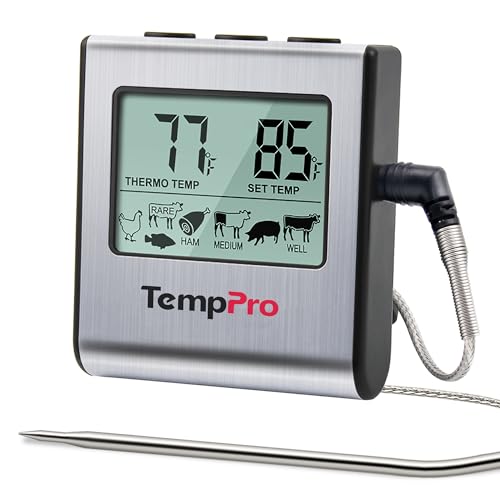
Equipment you will need


Nutrition
Tried this recipe?
Mention @veenaazmanov_kitchen or tag #veenaazmanovkitchen!Tips for the Best Cast Iron Roast Chicken
- Pat the chicken dry. Dry skin roasts up crispier and more golden.
- Season under the skin. Spread the garlic butter directly on the meat for maximum flavor and juicy chicken.
- Coat the chicken evenly. Cover the breast, legs, and wings with the remaining butter mixture.
- Loosely stuff the cavity. Lemons, onions, garlic, and fresh herbs add flavor while allowing air to circulate.
- Use a meat thermometer. Roast until the thickest part of the thigh reaches 165°F (74°C).
- Rest before carving. Let the chicken rest for 10–15 minutes so the juices redistribute.
more roast chicken recipes


Frequently asked questions
This chicken will keep in the fridge for at least 3 to 4 days. You can even freeze for a month if stored properly.
I buy organic free-range chicken when possible. And yet, you can buy a standard roast chicken at any supermarket. Also, it’s best to buy a medium-sized, not too small, and not too large.
A small chicken is about 1.2 kgs or 2.5 pounds and would feed 2 to 3 people. And a medium size is 1.75 to 2 kgs (3.5 to 4 pounds) and will feed about 4 to 6 people. Also, leftovers from a roast chicken are always a good thing to have. So, a slightly bigger chicken than you need is not a bad idea.
The most common method to check for doneness in roast chicken is when the chicken juices run clear with no traces of blood. The foolproof method would be to use a meat thermometer and insert it in the thickest part of the thigh. The temperature should reach 165°F or 75°C.
While we blast the chicken initially for a nice color, it also helps to reduce the heat and cook at a lower temperature.
Basting the chicken a few times during cooking helps keep the chicken moist (but don’t open the oven door too often, as the oven temperature reduces every time you open it).
Also, loosely tent the chicken after roasting. This will keep the chicken moist.
And do not cut the chicken for at least 15 minutes after you take it out of the oven – so the juices stay in, keeping the chicken moist.
As a guide, you roast for the first 15 minutes at 220°C / 425°F / Gas Mark 7, then reduce the temperature to 165°C / 325°F/Gas Mark 3. Allow 20 minutes per 1 lb (500 g) of chicken, until the juices run clear or the internal temperature reaches 165°F / 75°C. So, this 3 lbs / 1.5 kg chicken will take about 75 minutes
Using a meat thermometer is a great way to take the guesswork out and omit any calculating time. All you do is stick the thermometer and check the internal temperature. It should be 165°F or 75°C in the thickest part of the thigh or 145°F in the breast.
- Roasted Red Pepper Garlic Tapenade (3 ingredients)
- Goats Cheese Crostini or no-knead bread with roasted garlic
- Garlic Parmesan Asparagus or sesame green beans
- Easy Swiss Chard or spinach potato patties or Leek Potato Patties
- Roasted Lemon Dill Potatoes – or garlic roasted potatoes

Don’t lose this recipe! Save it for Later!
📌 Save this Recipe for later on Pinterest so you can easily find it again.
⭐ Add Veena Azmanov Kitchen to your Google Preferred Sources.
It helps Google show you more of our recipes.
📧 Subscribe for new recipes delivered to your inbox.
🎥 Follow us for more recipes


Hi, I’m Veena
I’m the recipe developer, baker, and food photographer behind Veena Azmanov Kitchen.
I’ve spent years developing and testing recipes, from everyday meals and homemade breads to cakes and desserts.
I share the practical tips and little details I’ve learned along the way so you can get great results in your own kitchen.










Made this for dinner last night and the family loved it. It had so much flavor and was so juicy.
Thank you, Shanna. I am so happy to hear that you enjoyed this recipe. Thanks for the feedback
Such a fabulous looking roasted chicken and so easy to make!
This chicken recipe sounds so so delicious! I can only imagine how many flavors are packed in this bird. Am always skeptical about roasting a whole bird, but I am surely going to try this one.
That marinade sounds absolutely incredible! You just can’t beat a juicy roast chicken like this.
Chicken in a cast iron? Oh wow, that’s a really GREAT idea! I love that garlic butter marinade too. Yum! I’m making this next weekend for my family. Can’t wait.
Anyone who makes whole roasted chicken at home knows how important the seasoning is and this combination is on point. A nice glass of wine and some roasted veggies and this is the perfect dinner meal to make the family!
This is such a beautiful and savory-sounding chicken. The tip about leaving the chicken uncovered in the refrigerator overnight is new to me, and I can’t wait to try this to get a crispy skin.
WOW, my husband and I have made this a few times and we would love to try this recipe out! I look amazing and super flavorsome. I need to make this, thank you for sharing!
I didn’t realize that this is why things brown so nicely in cast iron pans. Good to know! And what an awesome looking chicken. I need to try this!
I have never roasted a chicken in my Dutch oven but really want to try this. Yours looks so very good!