

Cake pricing is one of the most intimidating parts of starting a cake business—especially for beginners. It’s not just about adding up the cost of your ingredients and tacking on a little extra. There’s so much more to consider: your time, your skill, your tools, and the value you offer. In this post, I’m sharing the exact strategy I use to price my homemade cakes—based on real experience, real numbers, and yes, a few lessons learned the hard way.
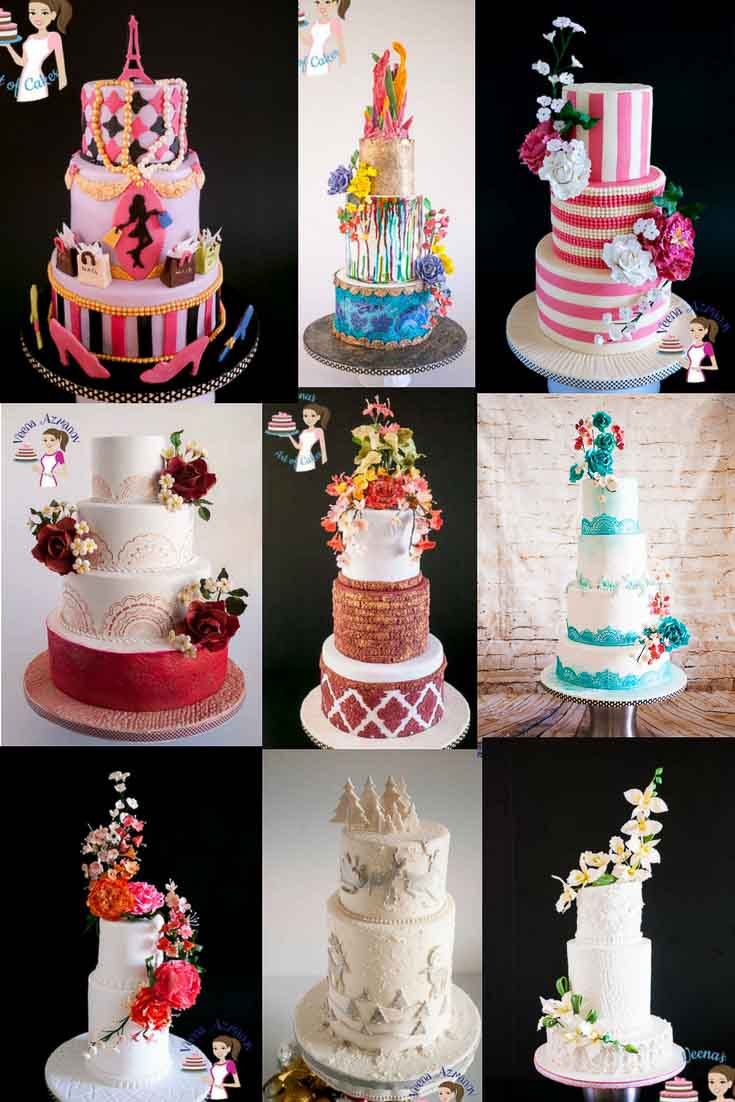
One of the scariest questions you’ll face as a cake decorator is: “How much would you charge for this cake?”
It feels like a trap, right?
If you price too high, the client might walk away.
If you go too low, you’re barely covering your costs—let alone making a profit.
And if you get it just wrong, you risk losing the order altogether.
I can’t tell you how many times I’ve recalculated the same cake, trying to make the price feel “right.” I’ve tried cutting my costs just so I could charge less and (hopefully) get more orders. And still, I’d look at the final number and think, “If I wouldn’t pay that for a cake, how can I expect a customer to?”
Sound familiar? You’re not alone.
? Don’t miss the free Cake Pricing Calculator I’m sharing at the end of this post — it’s the same tool I used to go from “should I even charge for this?” to running a real cake business. Scroll on!

Does that sound like you? Because believe me, I’ve been there too.
(Yep… cue the face-in-palms moment!)
These are exactly the kinds of questions I hear from beginner decorators all the time—and honestly, they were the same questions that swirled around in my own head when I was starting out:
- How do I price my cakes or cupcakes?
- What’s the right price for a beginner?
- Can you just send me your pricing chart?
- How much should I charge for this design?
- Do you have a cake pricing guide I can follow?
And as much as I’d love to say, “Here’s what I charge—just do the same!” … it doesn’t really work that way.
So instead, I decided to write this blog post. (Well, I meant to write just a little post—but you know me. Grab a cup of coffee because we’re going deep.)
So… How Much Should You Charge for Your Cakes?
That’s the million-dollar question, isn’t it?
In this post, I’m going to walk you through exactly how I price my cakes—and more importantly, how you can figure out what works for you.
Now full disclosure: I’ve got two degrees and an MBA, so my method might sound a little “geeky” at times (I’ll own it). But here’s the thing—those books aren’t wrong. The real magic happens when you apply that knowledge to everyday cake business decisions.
So hang in there with me. I promise to keep it simple, practical, and 100% doable. In fact, I’ll give you more than one way to price your cakes, so you can find the one that fits your style and your stage of business.
Grab that cuppa—we’re officially having a date with cake pricing. ☕?
Video on Facebook here – Video on YouTube
? The 4 Key Components of Cake Pricing
When it comes to pricing your cakes properly, there are four main things you need to account for. A cake costs is more than just batter and frosting. Let’s break them down:
1. Direct Costs
These are the obvious, tangible costs—the stuff that goes into the cake and what you need to deliver it:
- Ingredient costs: flour, butter, sugar, eggs, milk, flavorings, fondant, buttercream, etc.
- Supplies: cake boards, cake boxes, dowels, straws, and any decorative extras
- Delivery and setup materials: fuel, taxis, or any items you use specifically for transporting and setting up the cake
? Tip: You don’t need to calculate this from scratch every time. Just pick a few of your most common cake sizes and styles and create a reference sheet.
For example, a basic 8-inch cake might cost you around $20 in ingredients and packaging. Use that as your baseline and build from there.
2. Indirect Costs
These are the behind-the-scenes costs that still matter—even though they don’t go into the cake itself:
- Utilities: gas, electricity, water
- Equipment use: oven, mixer, refrigerator wear and tear
- Business tools: website hosting, domain, Canva Pro, business cards, advertising, etc.
These are trickier to assign per cake, so it’s best to estimate them monthly and divide by the number of cakes you made. For example:
- If 25% of your household utility bills relate to your business…
- And your business expenses (website, tools, etc.) total around $200/month…
- And you made 20 cakes that month…
Then your indirect cost per cake would be roughly $10.
It’s not precise down to the penny—but it gives you a solid foundation that’s way better than guessing.
3. Labor (Yes—your time counts!)
This is where a lot of decorators accidentally shortchange themselves. Your time has value, and you must include it in your pricing.
Labor includes:
- Designing the cake
- Messaging or emailing with the client
- Shopping for ingredients or supplies
- Baking, decorating, cleaning up
- Set-up and prep for delivery
? All of that time adds up. So give yourself an hourly wage—whatever feels fair to you based on your experience, skill level, and market.
? Real example: When I first started decorating cakes professionally, I paid myself 25 NIS/hour—which was minimum wage here in Israel. It felt fair at the time. As I gained confidence and improved my skills, I raised that to 50 NIS/hour. Still modest, but it reflected my growth.
Remember: your labor is not your profit—it’s your paycheck for the work you’ve done.
4. Delivery & Set-Up
Don’t forget to charge for delivery! It’s not just about the cost of gas or a taxi—your time matters too.
- How long does it take to get there?
- Will you need to set up a multi-tiered cake on-site?
- Will you need to wait around while the venue coordinates?
All of that needs to be factored in. Even if you offer “free delivery” as part of your service, that cost should still be baked into your pricing somewhere.
Just for an example, let’s price a cake (rough estimate)
| Price | 24 servings | |
| Direct Cost cake, frosting, cake board, delivery | 20 | |
| Indirect Cost Gas, oven, | 10 | |
| Labor ( $ 5 x 6 hours) | 30 | |
| Delivery | 5 | |
| Total cost | 65 | 2.7 per slice |
| Profit – % or a mark-up | ?? |
? Why You Must Add Profit to Your Cakes
Here’s something many cake decorators overlook: your labor is not your profit.
Look at the pricing breakdown we’ve discussed so far—you’ve covered your ingredients, tools, time, and delivery. That’s great… but where’s the profit?
You worked hard on that cake. You planned it, baked it, decorated it, boxed it, delivered it. You paid yourself a wage, yes—but that’s your compensation for the work. Profit is what your business earns beyond your wage.
Without profit, you don’t have a business. You have a paid hobby. And hobbies don’t pay for ovens, mixers, rent, or vacations. ?
? Percentage or Flat Markup?
This part is up to you—and it depends on your business model.
Some decorators prefer a percentage-based profit, like:
“I want to make 30% profit on every cake I sell.”
Others go for a flat amount, like:
“I want to earn $50 profit on every 24-serving cake.”
Both methods work. What matters is that you’re building in that extra amount so your business has room to grow, save, and sustain.
? How Do You Decide What to Pay Yourself?
Here’s a question I always ask cake decorators:
If someone else hired you to do what you’re doing—how much would they need to pay you for it to feel worth your time?
Would you say, “Sure, I’ll take the job for $40 an hour”?
Or would you say, “No thanks, I’d need at least $50 to make that worth it”?
That number—that’s your hourly rate. That’s how you determine your labor cost.
? For me? When I started out, I paid myself 25 shekels an hour, which was minimum wage in Israel at the time. It felt fair because I was still proving my skills—not just to my customers, but to myself.
As my experience and expertise grew, so did my rate. Today, I pay myself 50 shekels an hour—still modest, but it feels fair for the value I provide.
There’s no magic number. It’s up to you. What matters is that you choose a rate that respects your time and your talent.
? Cost vs. Value – The Pricing Shift That Changes Everything
Here’s one of the most important lessons I’ve learned in cake pricing:
You don’t price a cake based on what it costs you—you price it based on what it’s worth to your customer.
Custom-decorated cakes are not everyday grocery items. They’re luxury products, made with time, talent, creativity, and care. That means they should be priced according to the value they bring—not just the ingredients inside.
Think about it like this:
When you go to a top French restaurant, you’re not paying just for the flour, butter, or eggs in your meal.
You’re paying for:
- The ambiance
- The skill of the chef
- The experience of dining
- The story behind the dish
You don’t stop mid-dinner and ask, “Wait, how much did this salmon cost wholesale?”
You enjoy the moment. You trust the value. And you pay for the experience.
Decorated cakes are no different.
You’re creating memories. Centerpieces. Instagrammable, edible art. And that deserves a value-based price.
That said, if you’re running a cake business (not a hobby), your pricing must also make sense financially. You need to know:
- What it costs you to produce each cake
- What profit you’re building in
- Whether your pricing supports a sustainable business—or drains you
So yes, understanding your costs is absolutely essential. But knowing your value? That’s what turns your pricing into a powerful tool—not just a guessing game.
Now, let’s talk about what actually determines the value of your cakes.

? What Determines the Value of Your Cakes?
Once you understand that cake pricing should be based on value, not just cost, the next question is:
What actually affects that value?
There are several key factors that influence how much you can charge:
- Your Location
What people are willing to pay varies dramatically depending on where you live (cost of living). A cake that sells for $300 in New York might only go for $150 in a small town in Texas. The local economy, demand, and cultural expectations all matter. - Your Clientele
Are you serving parents looking for budget-friendly birthday cakes, multi-tiered cake, elegant wedding cakes? Brides seeking one-of-a-kind showpieces? Cake toppers? Designer cookies? Intricate designs?High-end clients who value exclusivity? Your ideal customer plays a huge role in how you position—and price—your work. - Your Expertise & Unique Value
What do you bring to the table (menu) that others don’t? Do you bake from scratch? Offer custom figure modeling? Use premium ingredients? Deliver personally? Your skills and approach help set you apart—and justify your pricing. - Your Reputation & Demand
Are people talking about your cakes? Are you consistently booked with repeat clients and referrals? A strong reputation allows you to charge more—because people trust your brand and are willing to pay for it.
Let’s Explore These Value Factors
1 & 2 – Where You’re Located & Who You’re Serving
Let me use myself as an example—just to make this feel a little less “textbook MBA” and a little more real. ?
When I moved from the U.S. to Israel back in 2005, I brought with me my love for cupcakes, cake pops, and custom-decorated cakes. But let me tell you—those things were practically unheard of here. To many, they were new, strange, or even unnecessary.
I grew up with a beautifully decorated cake for every birthday, holiday, or special event. But in Israel at the time, custom cakes were seen as a luxury—not a must-have. Some birthday parties didn’t even include a cake. And weddings? I actually went to weddings with no cake at all. And no one seemed to miss it!
Most of the birthday parties my son attended had a simple sponge cake in a foil tray—grandma would pour over some chocolate sauce, toss on a few sprinkles, and that was the cake. It was charming, yes—but worlds away from the fondant-covered, sculpted creations I was making.
So in 2005, there really wasn’t much awareness or demand for custom cakes in Israel. The concept of paying top dollar for a cake wasn’t even part of the cultural conversation. But this is where I chose to start my business—so I had to get creative.
Instead of trying to sell to everyone, I focused on the small pockets of people who already valued what I was offering: the expat community, and customers who had moved from places like the U.S. or the U.K.—people who understood the value of decorated cakes.
? You’ll need to do the same in your own location.
Ask yourself:
- What are the cake trends in your area?
- What styles or types of cakes are people asking for?
- What are they willing to pay for?
In some places, custom cakes are in high demand. In others, sheet cakes rule the party table. Pricing isn’t just about your time—it’s about what your market will bear.
3 – Your Expertise and What Makes You Different
Let’s be honest—every cake decorator will tell you they bring something “unique” to the table. And that’s great. But when it comes to pricing your cakes, you need to get really clear on what you do better or differently than the next baker.
Ask yourself:
- Do you bake from scratch?
- Are you known for your amazing flavors?
- Do you offer personalized design consultations?
- Are your fondant figures truly next-level?
- Are your designs distinctive or trend-forward?
It’s not just about being creative—it’s about identifying your competitive advantage.
For me, baking has always been my core skill. I’ve been baking for over 20 years, and I’ve always made my cakes completely from scratch. In Israel, that’s not common—many bakers here use cake mixes or premade bases. So I use that as one of my selling points.
Maybe for you, it’s your clean finish, your hand-painting, your delivery service, or your one-on-one client care. Whatever it is—lean into it. Because the more value you offer, the more confidently you can price your work.
? Supermarket Cakes vs. Homemade Cakes
When I was younger, one of my mom’s friends ran a small cake business. Her pricing strategy? She’d take the price list from a local bakery, mark everything up by 30%, and call it a day. As a kid, I thought, “Wow, pricing cakes is easy!”
But after doing my MBA? Let’s just say… I wasn’t quite so impressed. ?
Please, never compare your custom cakes to supermarket cakes.
Not even if you’re just starting out.
Why? Because their business model is completely different from ours.
Supermarkets run on:
- High volume
- Bulk purchasing
- Low profit margins
- Mass production
They can sell hundreds of cakes a week. They pay less for ingredients, buy in massive quantities, and often use pre-mixed or frozen products.
That same bag of flour that costs you $2 probably costs them $0.20.
They don’t customize. They don’t consult. They don’t deliver personally or model handmade figures.
You do.
You use quality ingredients. You bake to order. You design, decorate, and tailor every single cake. You offer not just a cake—but a service and an experience. YOU MAKE SPECIALITY CAKES!
There is no comparison. So don’t fall into the trap of pricing like them.
?? What About Other Home Bakers/Competitors/fellow bakers?
Yes, there’s probably another home baker near you. And it’s always tempting to peek at her prices.
But ask yourself:
- What value is she offering?
- What are her strengths?
- How do your skills compare?
You don’t want to be chosen because you’re the cheapest option.
You want to be chosen because you bring something special to the table. There’s no pride in being “the cheap cake lady.” That road leads to burnout and frustration.
Instead, focus on your unique expertise.
For me, decorating was new when I started—but baking? That was my superpower. I’d been baking from scratch for over 20 years. And in my local market, that alone was a unique selling point. Many decorators here use cake mixes—but I made cakes with real ingredients, full of flavor, and clients noticed.
So I leaned into that strength.
? Find your strength, and let that guide your value.
? 4. Your Reputation & Demand
Lastly, let’s talk about something that’s worth its weight in gold: your reputation.
If you want steady orders and higher pricing, people need to know who you are and trust your work.
- Do people talk about your cakes?
- Have they tasted them at events?
- Are your clients coming back or referring you to others?
For me, the majority of my orders came through word of mouth. I didn’t rely on paid ads. My cakes spoke for themselves. One client told another. And slowly but surely, the demand grew.
And here’s something I’ve seen time and time again:
When your work comes recommended by someone they trust, people no longer question the price.
Reputation builds demand. Demand raises value. And value earns you the freedom to price with confidence.

? Is Your Business Model Profitable?
Unless you’re doing this purely as a hobby (and there’s nothing wrong with that!), the goal of your cake business should be to generate profit—not just cover costs.
That means you need to understand both sides of the business:
- How to create demand for your product
- How to reach your customers, price your cakes fairly, and deliver a quality service
- And also—how much it really costs you to run the show
Your income must be more than your expenses. Otherwise, it’s not a business—it’s an expensive (and exhausting) side hustle.
So yes, knowing your costs is critical. But so is knowing your value—and having the confidence to charge for it.
? My Experience: Starting Below Market
When I first started selling cakes, I intentionally priced lower than the market—not to undercut anyone, but because I was still building my skills.
I knew I could bake a great cake. I had no doubt about that. But my decorating? That was still a work in progress. So I took a different approach.
I let friends and clients pay only for the cost of ingredients. And in return, I got what I really needed at that stage: practice, experience, and feedback. I saw those early orders as an investment in my learning—a kind of self-funded internship, if you will.
And as my decorating skills grew, so did my prices.
? Start Where You Are
We all start somewhere. And sometimes, especially in the beginning, you have to make a few compromises to get where you want to go. That’s okay.
But always keep your eyes on the goal:
- Who do you want to serve?
- What kind of work do you want to do?
- What are those customers willing to pay for the value you offer?
Let that guide your pricing decisions—not fear, not competition, and definitely not supermarket cakes.
?️ The Price Tag vs. The Name Tag
This is something I hold close to my heart:
It doesn’t matter if the cake is sold at full price or given as a gift for free—once it leaves my kitchen, it’s got my name on it.
People won’t ask what the cake cost.
They’ll ask: Who made this?
So I treat every cake—paid or unpaid—as a piece of edible art by Veena Azmanov. I take pride in that. And I want you to feel that same confidence and pride in the work you do.

? Want to Price Your Cakes with Confidence?
Grab my FREE Cake Pricing Calculator — the exact tool I use to price cakes for profit without guessing.
✅ Includes tabs for Basic, Wedding, and Custom Cakes
✅ Calculates costs, labor, delivery, and profit
✅ Final price + price-per-serving auto-calculated
? Just enter your email below and I’ll send it straight to your inbox:
Frequently asked questions
Just for the purpose of simple maths:
1. First, estimate how many hours is this cake going to take – 5 hours
2. Then, calculate the cost of ingredients – $20
3. Next, determine the labor cost – $20 x 5 = 100
4. Add utility cost – $5
5. Sundry cost (small cost) – $5
6. Then, calculate the total cost: 20 + 100 + 5 + 5 = $130
7. In addition, how much profit do you want to make – 30% = 130 x 30%
8. So, finally, the total cake price = $ 169
First, not all buyers are your customers. And, you are never going to be able to please everyone. In fact, there will be those who cannot afford your cakes and that’s ok.
Often, the problem with not getting cake orders is not the price but the marketing effort. You have to attract the right customers.
For example, luxury Swiss watches are sold at exclusive shops, not on Amazon.com.
When you are new to cake decorating it is normal to take longer to decorate the cakes. In fact, speed comes with time and practice.
This is where you need to decide how much to pay yourself.
Read – Timeline for decorating a cake.
This is an important decision and we have discussed this in detail here on the blog – How to start a cake business from home.
It depends on how much time and how much workload you can handle. Hence, there is no u0022rightu0022 number of cakes you need to do to be called a cake decorator. Please read – how many cake orders can I take?
Don’t lose this recipe! Save it for Later!
📌 Save this Recipe for later on Pinterest so you can easily find it again.
⭐ Add Veena Azmanov Kitchen to your Google Preferred Sources.
It helps Google show you more of our recipes.
📧 Subscribe for new recipes delivered to your inbox.
🎥 Follow us for more recipes
You may also like

see all cake decorating tutorials here
see all cake decorating recipes here

Hi, I’m Veena
I’m the recipe developer, baker, and food photographer behind Veena Azmanov Kitchen.
I’ve spent years developing and testing recipes, from everyday meals and homemade breads to cakes and desserts.
I share the practical tips and little details I’ve learned along the way so you can get great results in your own kitchen.



I believe you are correct in saying that many or most cake artists undercharge. It is my opinion that those who undercharge drive down the price of cakes in their area and thus do a disservice to all cake artists. I’ve also found that just by having a Facebook business page and posting lots of photos from my free Google Maps listing, I get as much business as I want for my home-based Cakery.
Thanks for all the info and tips!
Janet
The Sugar Art Cakery
Hi Veena
I always wanted to know how to price a cake. I had made cakes for colleagues n often didn’t reflect the cost of materials, labour or electricity n labour was never paid. My first one was a lime syrup Bundt cake for $20, the next one was a big choc slab, I used so much choc n only got given $20, the next one was mini individual cheesecakes n a lime syrup Bundt cake n was paid only $50 for both. Since then I had stopped doing priced baking. These 3 colleagues hadn’t been fair to me because I didn’t know how to cost the cakes
Hi Veena
This is the best and most in-depth article on cake pricing I have come across. Your tips are really valuable and I can see that it is based on years of experience. Thank you so much.
Regarding calculating the price for a recipe, we created a free app that makes it super easy to calculate the price for your recipe. You just need to enter the ingredients package costs and they get proportioned automatically for your recipe.
The app is called CakeCost and you can find it at cakecost.net or in the app store.
I would love if you could try it and give your feedback.
Thanks again for the great post. I will be recommending this to anyone starting out in the business.
Thank you for taking time out of your ‘clearly’ busy schedule. I appreciate all of it but especially the part towards the end – FAQ. The calculations. I can’t thank you enough. I was at a stand-still.
Thanks again!
Much Love
Thank you for the lovely feedback Bhongo Tukela. Happy to hear you found this article useful.
Hi Veena. Thank you for your wonderful post in breaking down the pricing.
I want to know how do you price things like colors used and sprinkles. Do you charge a fraction of what is used out of the bottle or for the whole thing.
Palak, I usually use that as a small surcharge under miscellaneous. Because it is hard to calculate those exactly unless you using a large amount like for a sprinkle cake.
Well arent you fabulous. Loved this article the principles are relevant with all food business. Thanks
Thank you, Aj. Happy you found this useful.
This was very very helpful as those close to me are upset with how low I charge for my work. My therapist himself is determined that if I go back to taking orders that I put value on it. I took a break for the summer as I. Red the mental and physical time off, a friend picked up the slack as another cake decorator shut down too and has since moved…she told me what she was charging abs she doesn’t basic decorating as her specialty is actually cookies. Well she was MAD when she found out what I was charging and then told me What those same customers were paying her and they didn’t batt an eyelash when she gave them the price.
She was charging double what I was lol
So yes, I appreciate your break down for charging, I most certainly was not valuing my time or my skills
I’m sorry to hear that, Wanda. Yes, it is the close ones that can drive us insane sometimes. But, as I said in this post this is labor of love and often people don’t realize the amount of work that goes into it. You must change what you think is fair otherwise, you will feel unappreciated.