
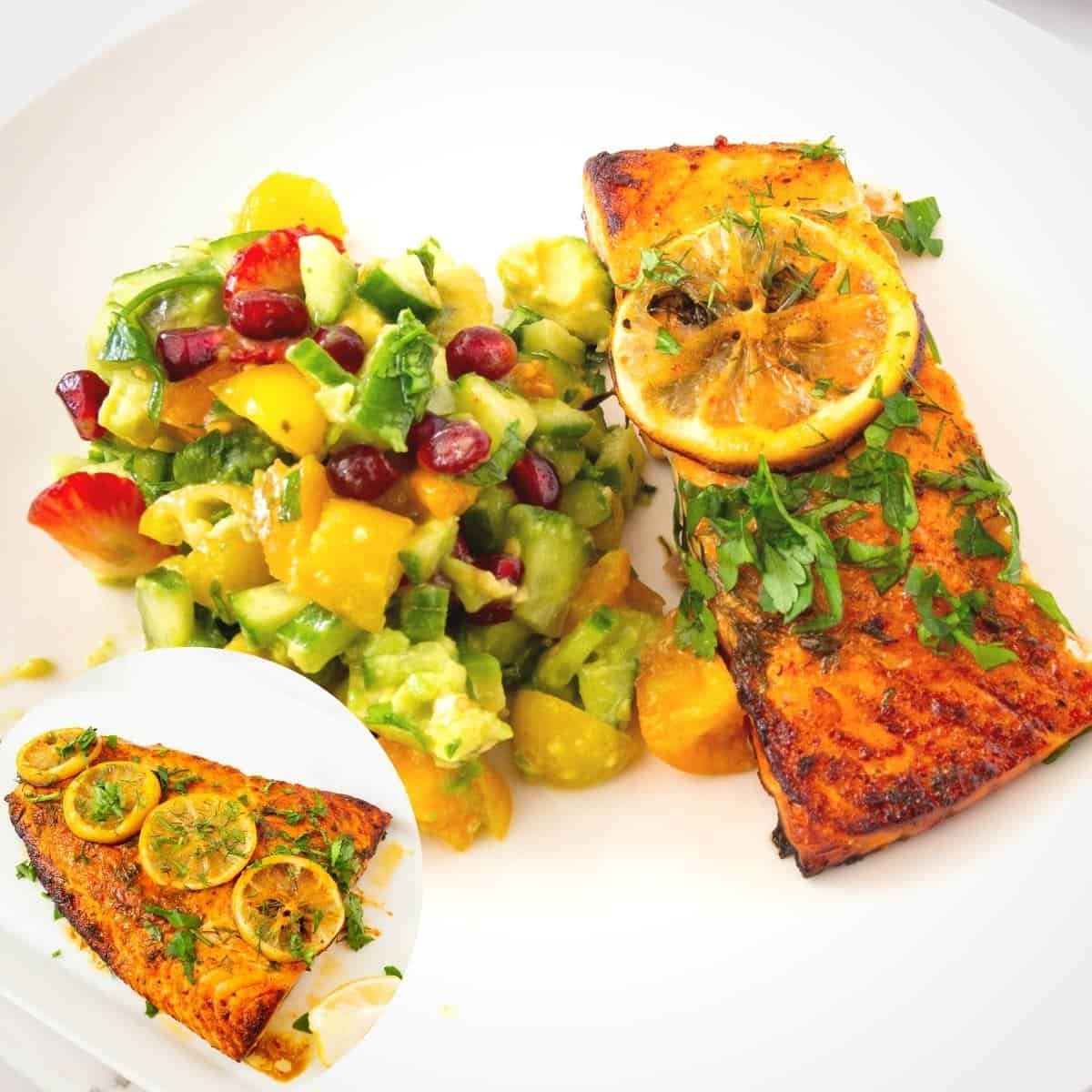



Brace yourself for the juiciest and most tender baked salmon you’ve ever tasted! Known for its rich flavor and delicate texture, salmon is a versatile fish that can be prepared in countless ways. However, baking is the cooking method that truly shines when it comes to ensuring a moist and tender result.
Baking salmon allows for a gentle and even heat distribution, ensuring the fish cooks perfectly from the inside out. This method also helps retain the salmon’s natural juices and flavors, resulting in a moist and succulent final product. Additionally, baking salmon allows you to infuse the fish with a variety of seasonings, herbs, and spices, creating a depth of flavor that truly elevates the dish.
Why is this the best recipe for baked salmon?
- Not only does this recipe highlight the salmon’s natural flavors, but it also combines a harmonious blend of ingredients that enhance its taste and texture.
- The choice of ingredients in this recipe is carefully curated to complement the salmon perfectly. The brown sugar adds a subtle sweetness that enhances the fish’s natural flavors without overpowering them. Meanwhile, the powdered garlic and onion add a savory depth that complements the delicate flavor of salmon.
- In addition to the enchanting flavor profile, these ingredients also offer numerous health benefits. Salmon, as we know, is an excellent source of omega-3 fatty acids, which promote heart health and reduce inflammation.
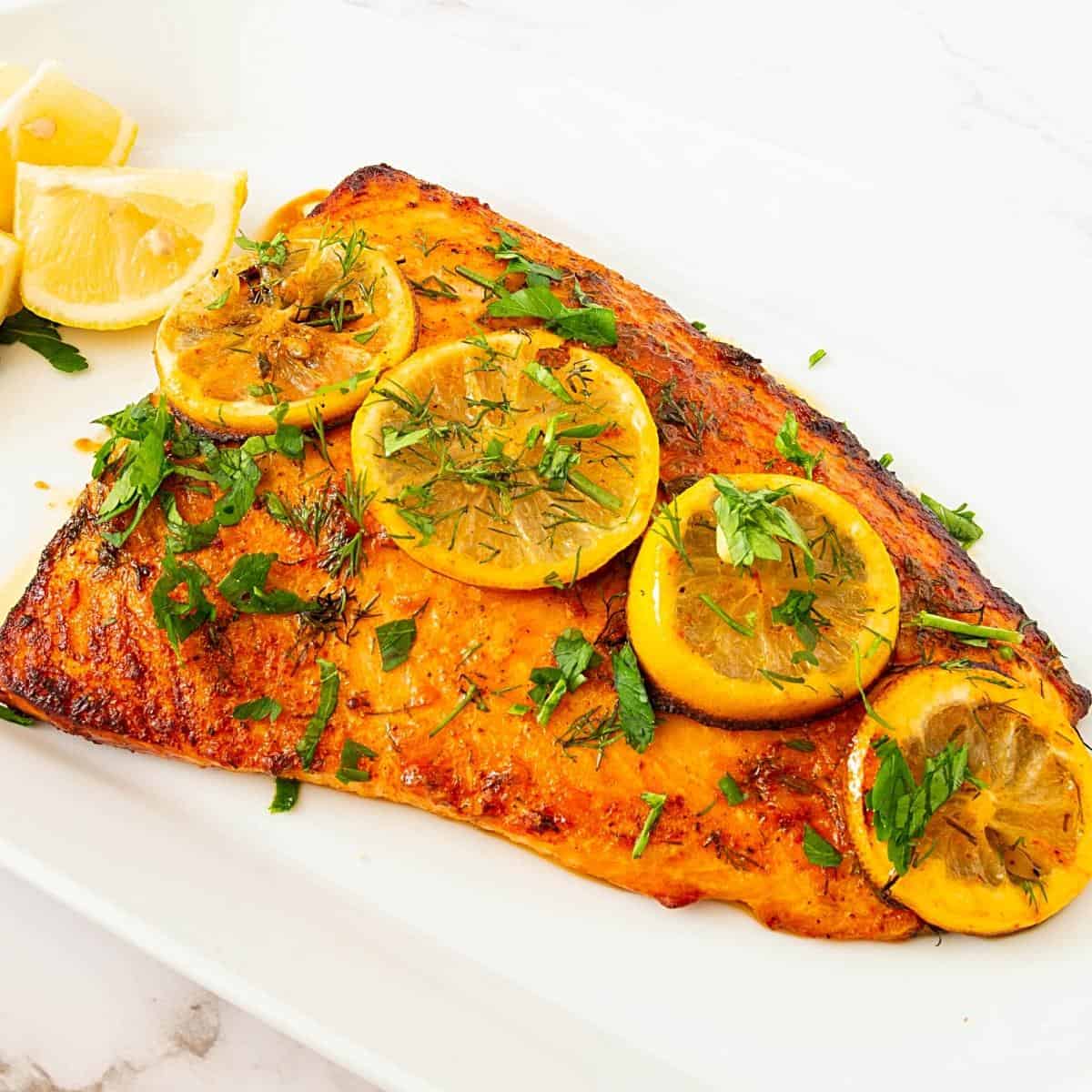
Ingredients and substitutes
- Salmon – Any type of salmon will work for baking – Atlantic salmon, chinook salmon, Coho salmon, Pink salmon, Sockeye salmon, and King salmon. Always buy your fish from a trusted store. Also, leave the skin on when you pan-sear it like this, as the skin prevents it from falling apart.
- Brown sugar – Adds a nice, sweet flavor and also gives the salmon a deeper color. You can also use 2 tbsp of honey instead.
- Olive oil – Use good-quality olive oil for flavor. Alternatively, substitute the oil with melted butter for a rich butter sauce marinade.
- Herbs – I am using fresh thyme and dill because I have those on hand. You can also use rosemary and parsley. Also, dill pairs well with fish.
- Chilly – I am using some sweet-and-spicy chili sauce today to add some spice. You can use all spicy or all sweet chili sauce.
- Garlic and onions – I highly recommend using powdered so they do not burn in the oven. They add a wonderful flavor.
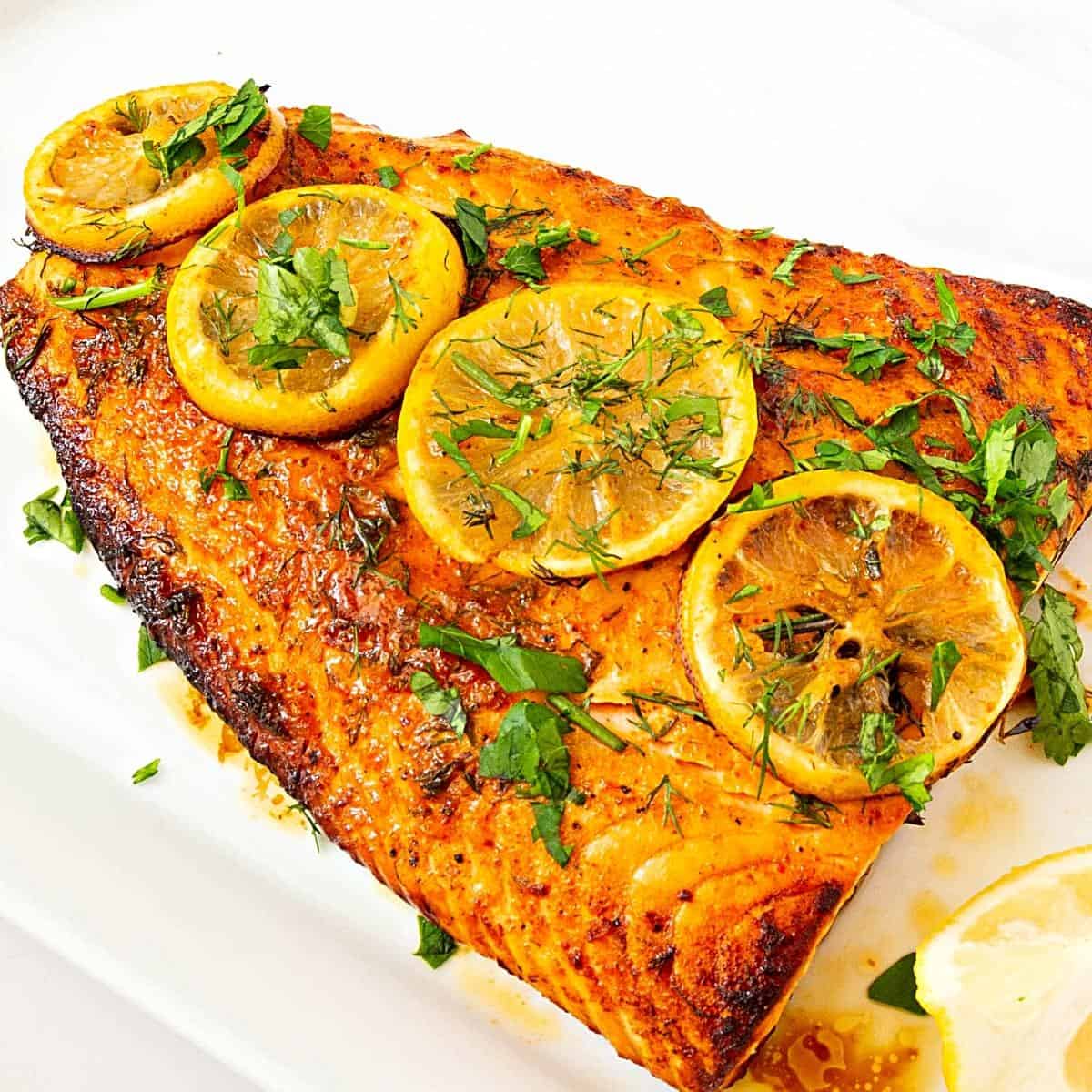
- Lemon – This is just what you want to take away that fishy smell. I have used both the juice and slices. The slices bake and add another level of flavor. Plus, they do taste delicious.

Step-by-step: Best baked salmon recipe
- Take the salmon out of the refrigerator and place it on a counter for at least 30 minutes to an hour. Cut it to size if necessary, and pat the salmon dry with a paper towel.
- Preheat your oven to 425°F / 220°C / Gas Mark 6.
- Next, combine all the marinade ingredients in a small bowl – starting with garlic and onion powder, salt and pepper, thyme, dill, mustard paste, chilly paste, paprika, olive oil, brown sugar, and lemon juice.
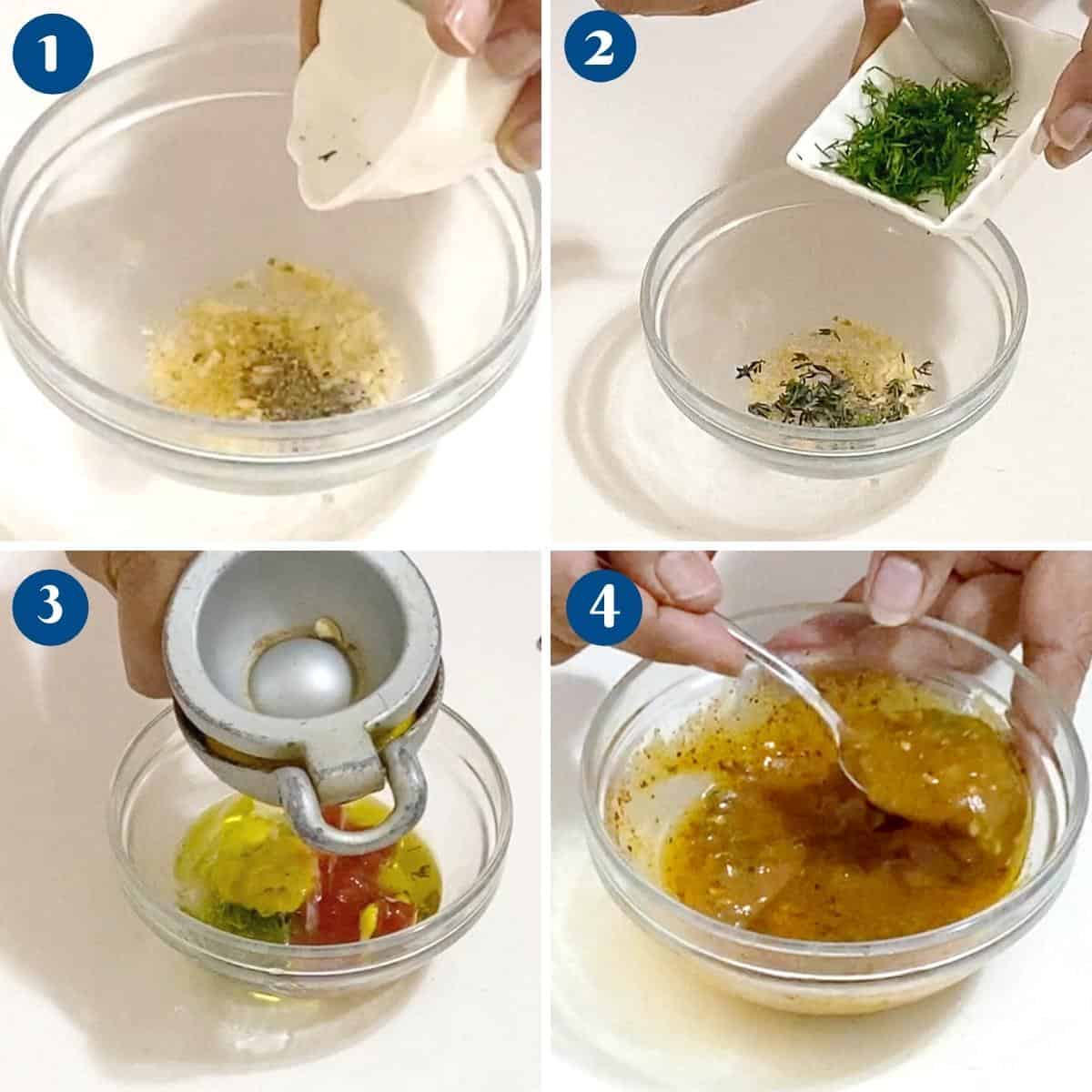
Marinate
- Line a baking tray with aluminum foil or parchment paper. Then, generously spray it with oil.
Pro tip – The oil prevents salmon skin from sticking to the foil. And if you don’t have an oil spray, use a pastry brush to smear some oil. - Place the salmon on the baking sheet and season both sides with salt and black pepper. Then, pour the marinade on both sides. Marinate for 15 minutes on the counter or up to 3 hours in the refrigerator.
Pro tip – Fold the foil close towards the salmon so the juices do not burn easily in the baking tray. Then, place the lemon slices and sprinkle more chopped dill (or parsley) on top.

Bake
- Transfer to the oven and bake for 20 to 25 minutes or until done.
- The recommended internal temperature for cooking salmon is medium, 145°F to 147°F (60 to 63 °C).
- However, it can also be served medium-rare, at 122 to 127°F (50 to 53 °C; this is how I served my salmon).
Pro tip – Resting after baking will allow the salmon to continue cooking further.
- When you remove it from the oven, let it cool for 5 to 10 minutes before serving.
Pro tip – I like to flip the lemon slices over, put the charred sides down, and garnish with fresh herbs such as chopped parsley and more lemon wedges. - Enjoy!

- Salmon cooking temperature
- The salmon is done when the fish flakes with a fork, and the flesh becomes pale and opaque.
- Salmon is recommended to be fully cooked at medium, with an internal temperature of about 145°F to 147°F (60 to 63°C) on an instant-read thermometer (measured at the thickest part of the fish).
- But salmon can be eaten medium-rare if you buy from a trusted source. The internal temperature for medium-rare should be about 122 to 127°F (50 to 53°C), which is what I like to serve my salmon.


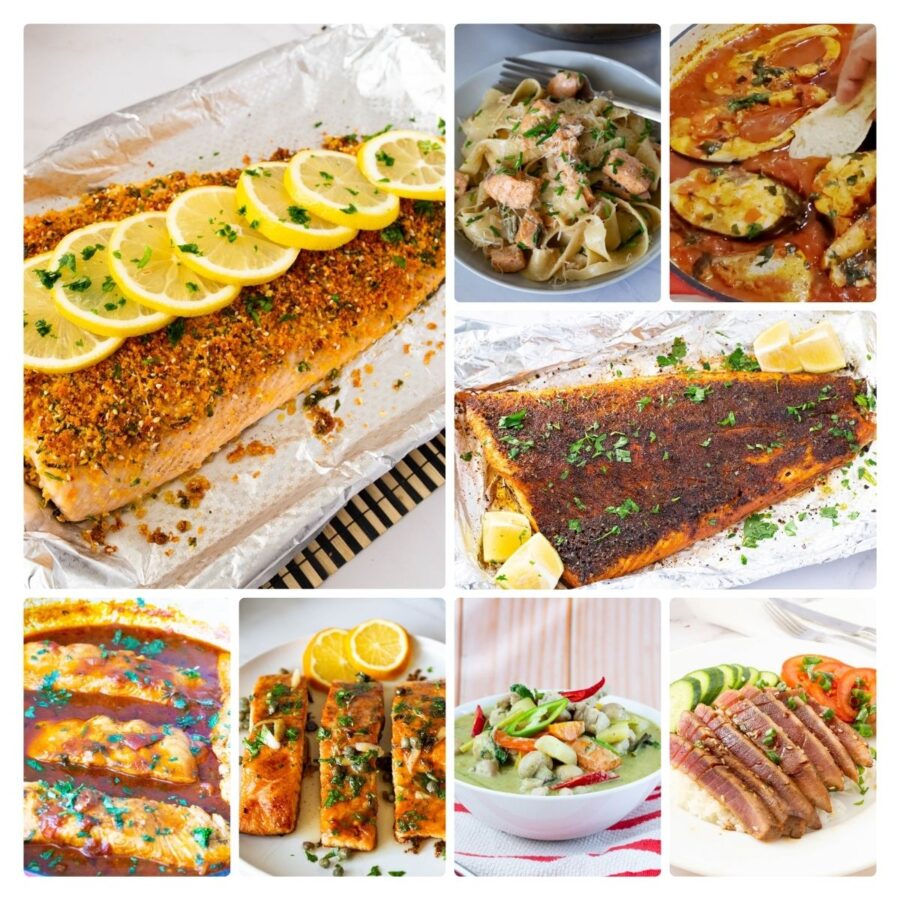
- Parmesan Breadcrumb Crusted Salmon
- Easy Honey Garlic Salmon (20 mins)
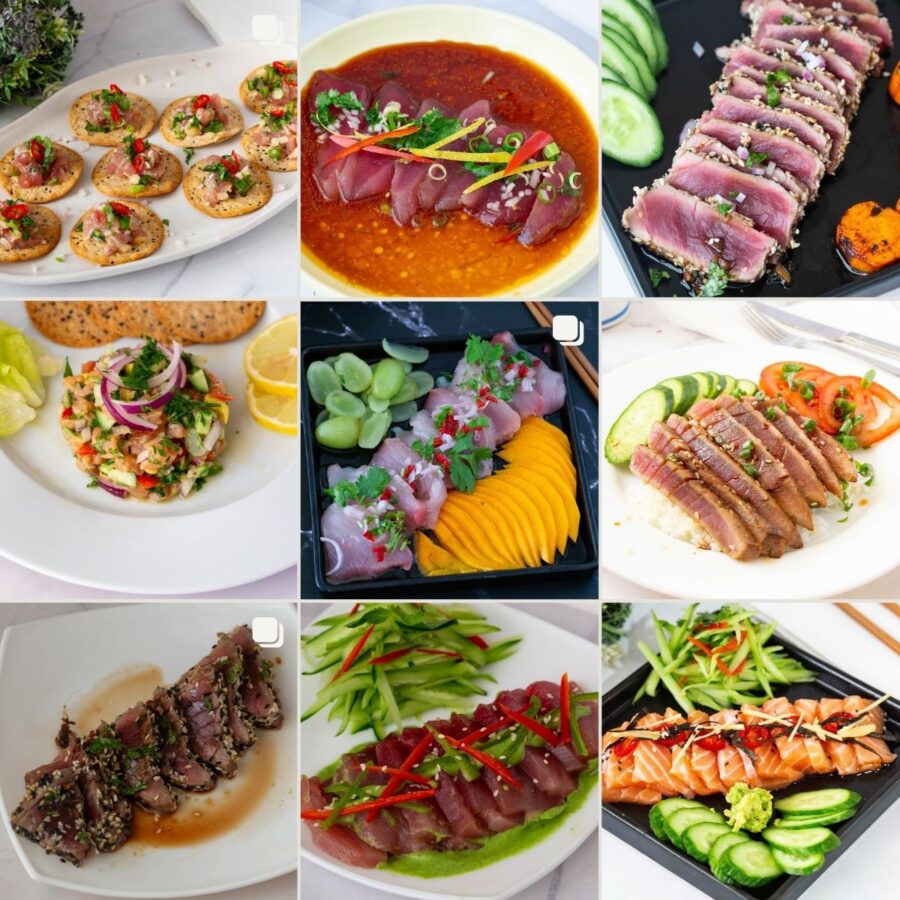
- Seared Ahi Tuna Steak
- Garlic Butter Salmon (20 mins)
- Ahi Tuna Poke Bowl
- Balsamic-Glazed Salmon
- See all salmon recipes or see more fish recipes
Frequently asked questions
This baked salmon will keep in the fridge for 3 to 4 days. You can reheat it in the microwave at 30-second intervals until warm for serving again.
There are a few things you can do.
1. Soak the fish in milk for 20 minutes.
2. Give the fish a squeeze of lemon, which can give the fish a lemon flavor. You can omit the lemon in the recipe, of course.
I prefer the first method.
Yes, you can use frozen salmon for baking. However, it is essential to properly thaw it before cooking. The best way to thaw frozen salmon is to transfer it to the refrigerator and let it defrost overnight. And if you’re in a hurry, you can also thaw it under cold running water. Just pat it dry with a paper towel before seasoning and baking.
Salmon is recommended to be fully cooked at an internal temperature of about 145°F (measured at the thickest part of the fish). That said, a good-quality salmon can be eaten medium-rare, which is what I do because I like to serve it at 135°F.
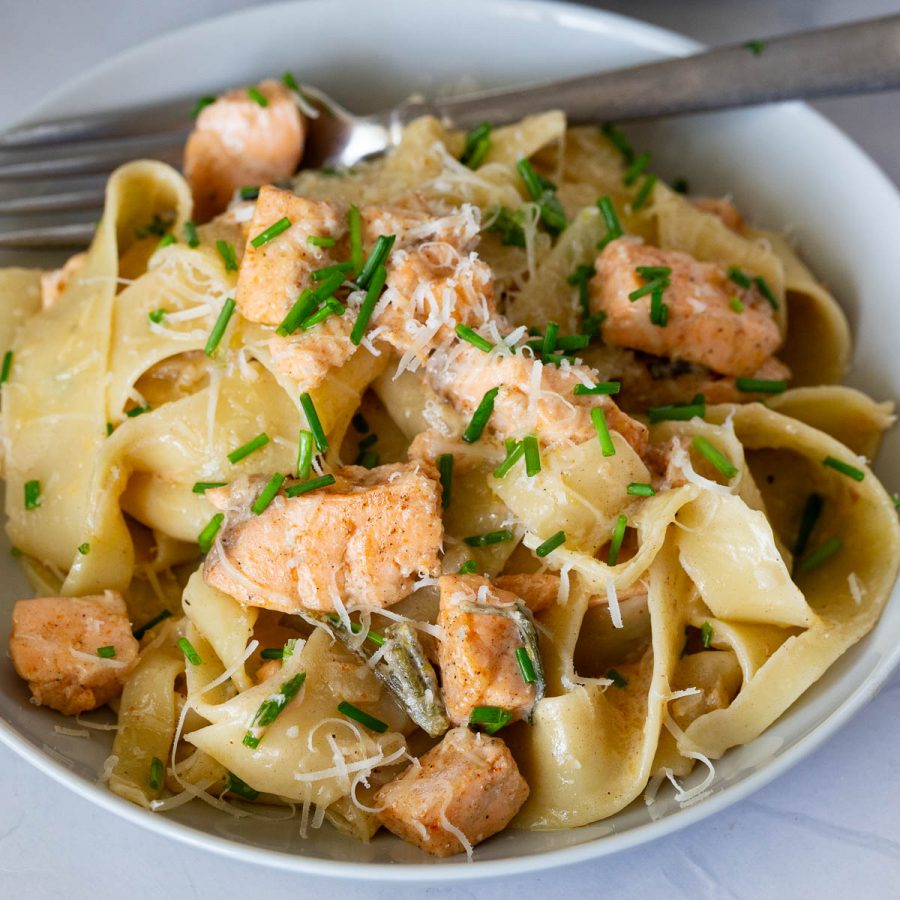
If you accidentally overcook your salmon and it turns out dry, don’t fret! You can still salvage it by adding a sauce or dressing to moisten it. A simple lemon-butter sauce or a tangy dill yogurt dressing can help revive the moisture and flavor. Alternatively, flake the overcooked salmon and use it in salads, sandwiches, or pasta dishes.
Absolutely! Baked salmon can be seasoned with various herbs, spices, and sauces to suit your preferences. For example, experiment with flavors like teriyaki, Cajun, or honey mustard. Or opt for a classic combination of garlic, lemon, and dill. The key is to be creative and have fun exploring different flavor profiles.
Easy Baked Salmon Recipe
Ingredients
- 2 lbs (0.9 kg) Salmon
- 1 tsp Salt
- ½ tsp Pepper
- ½ tsp Garlic powder
- 1 tsp Onion powder
- 1 tsp Fresh thyme (1/2 tsp dry)
- 1 tbsp Fresh dill
- 1 tsp Mustard paste
- 2 tsp Chilly paste (I used half sweet and half spicy)
- 2 tbsp (30 ml) Olive oil
- 2 tsp Brown sugar
- 2 tbsp (30 ml) Lemon juice
- ½ tsp Sweet paprika
Plus
- 2 tbsp Parsley (chopped for garnish)
- 1 Lemon sliced thinly
- 2 tbsp Dill (Chopped for garnish)
Instructions
- Take the salmon out of the refrigerator onto a counter for at least 30 minutes to an hour. Cut it to size if necessary, and pat dry with a paper towel.
- Preheat the oven to 400 F / 200 C/ Gas Mark 6.
- Combine all the marinade ingredients in a small bowl – starting with garlic and onion powder, salt and pepper, thyme, dill, mustard paste, chilly paste, paprika, olive oil, brown sugar, and lemon juice.
- Line a baking sheet with aluminum foil. Then, generously spray it with oil.
- Place the salmon on the baking tray and season with salt and black pepper on both sides. Then, pour the marinade and marinate on both sides as well.
- Fold the foil close to the salmon so the juices do not burn easily in the baking tray. Place the lemon slices and sprinkle more chopped dill (or parsley) on top.
- Bake for 20 to 25 minutes or until done. The recommended internal temperature for cooking salmon is – medium 145 F to 147 F or 60 to 63°C.But it can also be served at medium-rare, 122 to 127°F or 50 to 53 °C (this is how I served my salmon).
- When you remove it from the oven, let it cool for 5 to 10 minutes before serving. I like to flip the lemon slices over, put the chared sides down, and garnish with more fresh herbs, such as chopped parsley and lemon wedges.
- Enjoy!
Video
Notes
- First, let’s talk about the importance of choosing the right salmon. Opt for fresh, wild-caught salmon if possible. Look for vibrant, firm flesh with a mild, oceanic scent. Avoid any fish that smells overly fishy or has discolored patches.
- In addition, to elevate the flavors further, consider marinating your salmon before baking. Even a simple marinade of olive oil, lemon juice, garlic, and fresh herbs can work wonders. Let it sit for at least 30 minutes to allow the flavors to penetrate the fish.
- Regarding cooking time, remember that it’s better to err on the side of undercooking rather than overcooking. Salmon will continue to cook slightly after it’s removed from the oven. So, aim for a slightly translucent center. This will ensure a succulent and tender texture.
- Also, to prevent salmon from sticking to the baking dish, line it with parchment paper or lightly oil the surface. This will make clean-up a breeze and help the fish retain its shape.
- While baking, keep an eye on the salmon to avoid overcooking. Depending on the thickness of your fillets, your salmon may need more or less than the time mentioned in the recipe. However, cooking times may vary, so it’s best to rely on visual cues and the desired level of doneness.
- Lastly, resist the temptation to cut into the salmon immediately after taking it out of the oven. Allow it to rest for a few minutes to retain its juices and ensure optimal tenderness. This will give the flavors a chance to develop fully.
Salmon cooking temperature
- It is recommended that salmon be fully cooked at medium which is an internal temperature of about 145 F to 147 F or 60 to 63°C (measure at the thickest part of the fish).
- But, salmon can be eaten medium-rare if you buy from a trusted source. The internal temperature for medium-rare should be about 122 to 127°F or 50 to 53°C (this is what I like to serve my salmon)
Equipment

Made this recipe?
I’d love to see how yours turned out! Share a photo on Instagram and tag @veenaazmanov_kitchen or use #veenaazmanovkitchen. And don’t forget to leave a rating and review!


Don’t lose this recipe! Save it for Later!
📌 Save this Recipe for later on Pinterest so you can easily find it again.
⭐ Add Veena Azmanov Kitchen to your Google Preferred Sources.
It helps Google show you more of our recipes.
📧 Subscribe for new recipes delivered to your inbox.
🎥 Follow us for more recipes

- Garlic Parmesan Asparagus or sesame green beans
- Easy Swiss Chard Patties or spinach potato patties
- Roasted Lemon Dill Potatoes – or garlic roasted potatoes
- Sauteed broccoli, garlic mushrooms, Brussels sprouts
Hi, I’m Veena
I’m the recipe developer, baker, and food photographer behind Veena Azmanov Kitchen.
I’ve spent years developing and testing recipes, from everyday meals and homemade breads to cakes and desserts.
I share the practical tips and little details I’ve learned along the way so you can get great results in your own kitchen.










Hi Veena, I made this salmon and the sugar marinade takes it to another level! Thanks for the recipe. This is going to be a staple in my kitchen.
Thank you, Enriqueta. I am so happy to hear you enjoyed this. Thanks for coming back to write this feedback.
Wow, the brown sugar marinade was a gamechanger. We definitely had leftover and this was great over salads for the rest of the week!
Thank you, Julia. I am happy you enjoyed this.
Thanks a lot for sharing your very helpful recipe! Will surely make it again! Loved it!
Love salmon! But I always struggle with how to cook it. This was easy and delicious!!
I make salmon at least once a week, so I am always looking for different ways to do it. I’m going to have to try your version because this sounds so good 🙂
My daughter and I are definitely going to love this recipe! Salmon is a must in this house and always so delicious! Can’t wait to make this tonight for dinner! Excited!
That marinade sounds absolutely incredible! I love baked salmon but find a tasty marinade makes all the difference and can really elevate the dish!
Looks great. In my opinion, brown sugar and salmon are a match made in heaven!
This looks delicious – I do love baked salmon but this marinade is new to me and sounds so tasty.
very easy and tasty! Thank you so much for sharing this very helpful baked salmon recipe! Will make it again!