
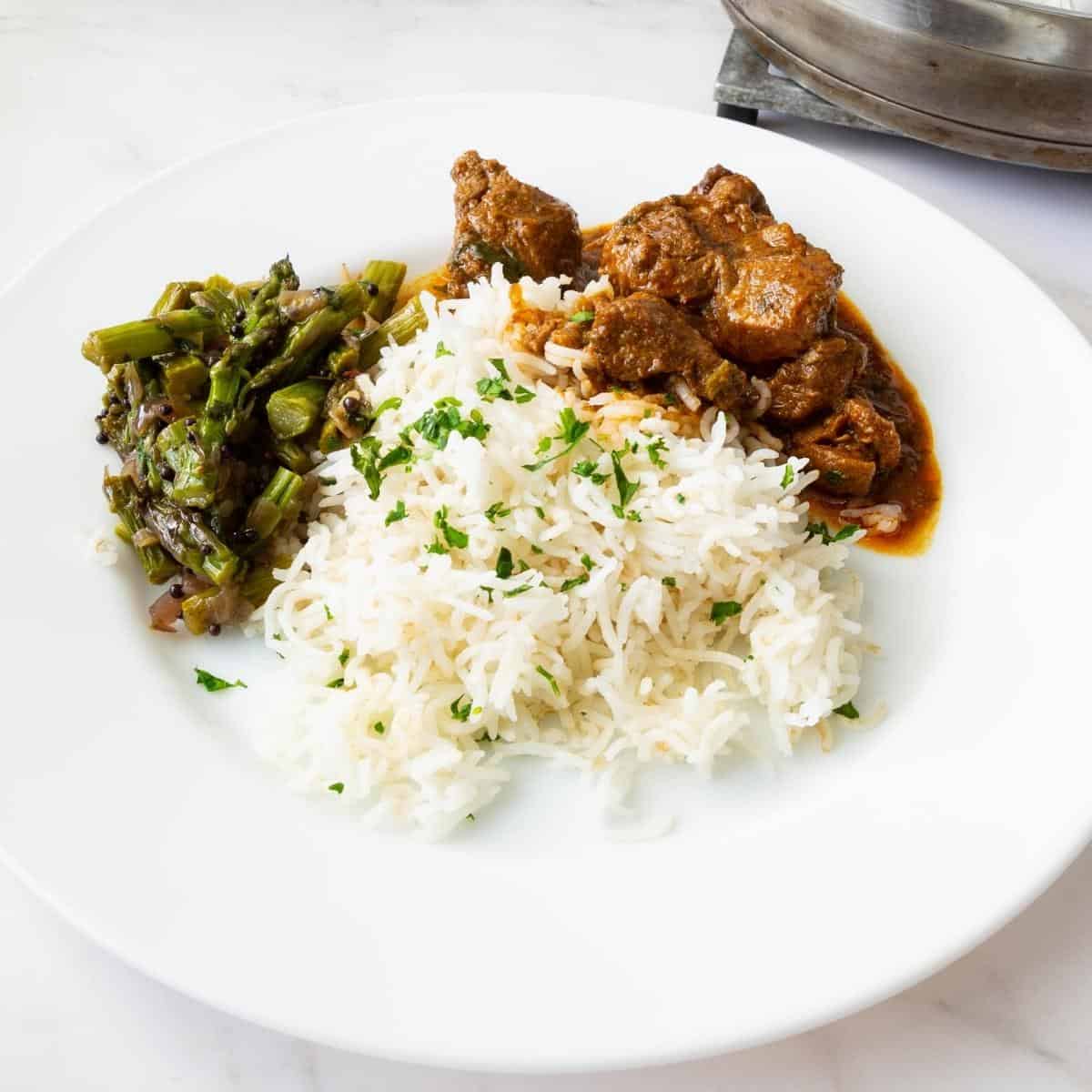
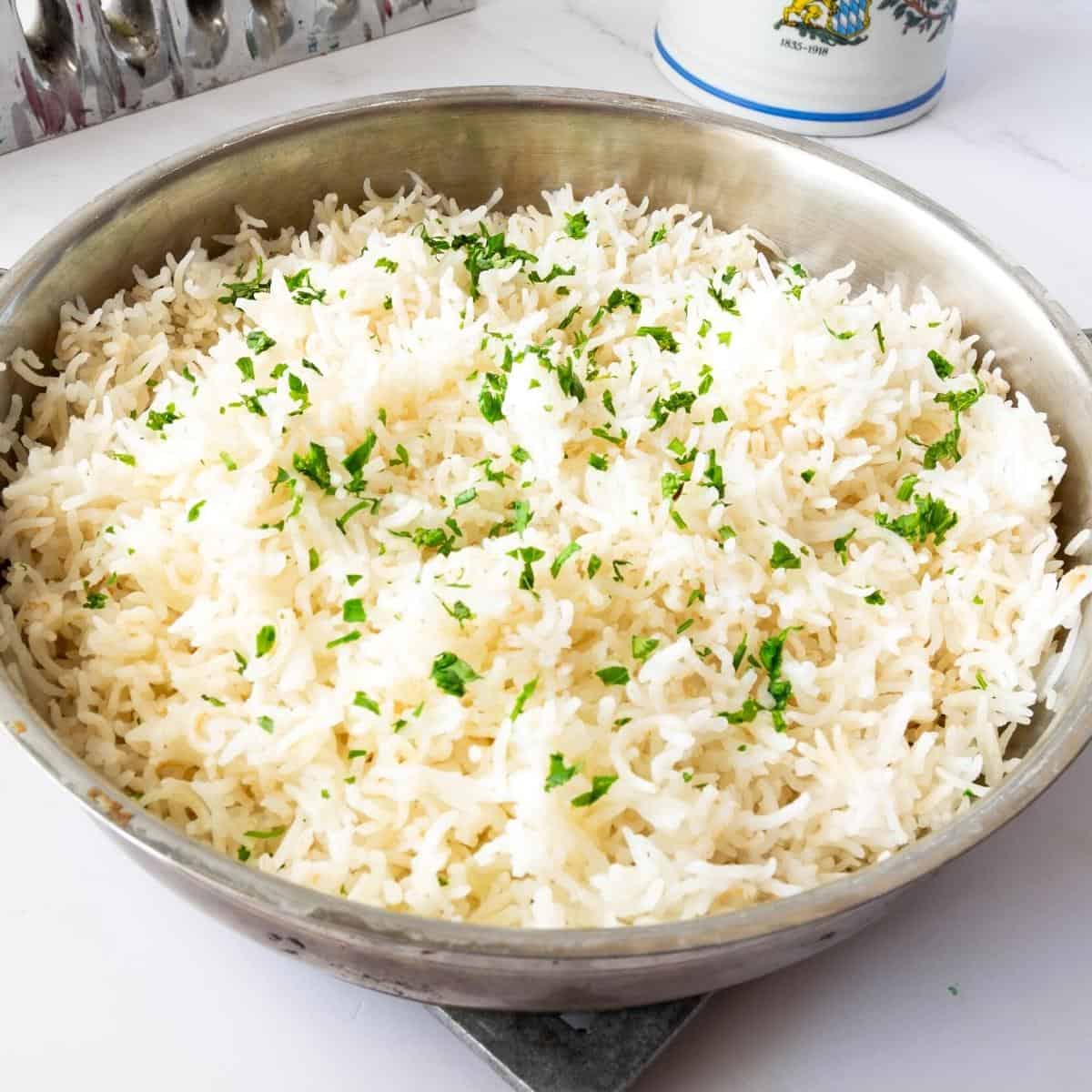
Basmati rice is a long-grain aromatic rice from India that’s similar to jasmine rice. This rice cooking technique is general knowledge for experienced cooks, but the majority of people are a little rusty on their rice cooking. So, here’s how to cook basmati rice with five tried and tested methods.
Growing up, rice was one of the first things I ever learned to cook. My mom, a single mother, was often working long hours and couldn’t always be home at mealtimes. So she taught me and my sister how to cook plain white rice—just so we’d always have something to eat. If she was running late, we’d eat it with chutney, pickles, or yogurt. Simple, comforting, and filling.
Back then, it was all about the stovetop—no fancy gadgets. I still remember my grandmother hovering over us as we cooked, ready to inspect the rice. And if it didn’t come out just right? Her iconic line would follow: “No one will marry you if you don’t even know how to cook rice properly!” (Thanks for the pressure, grandma!)
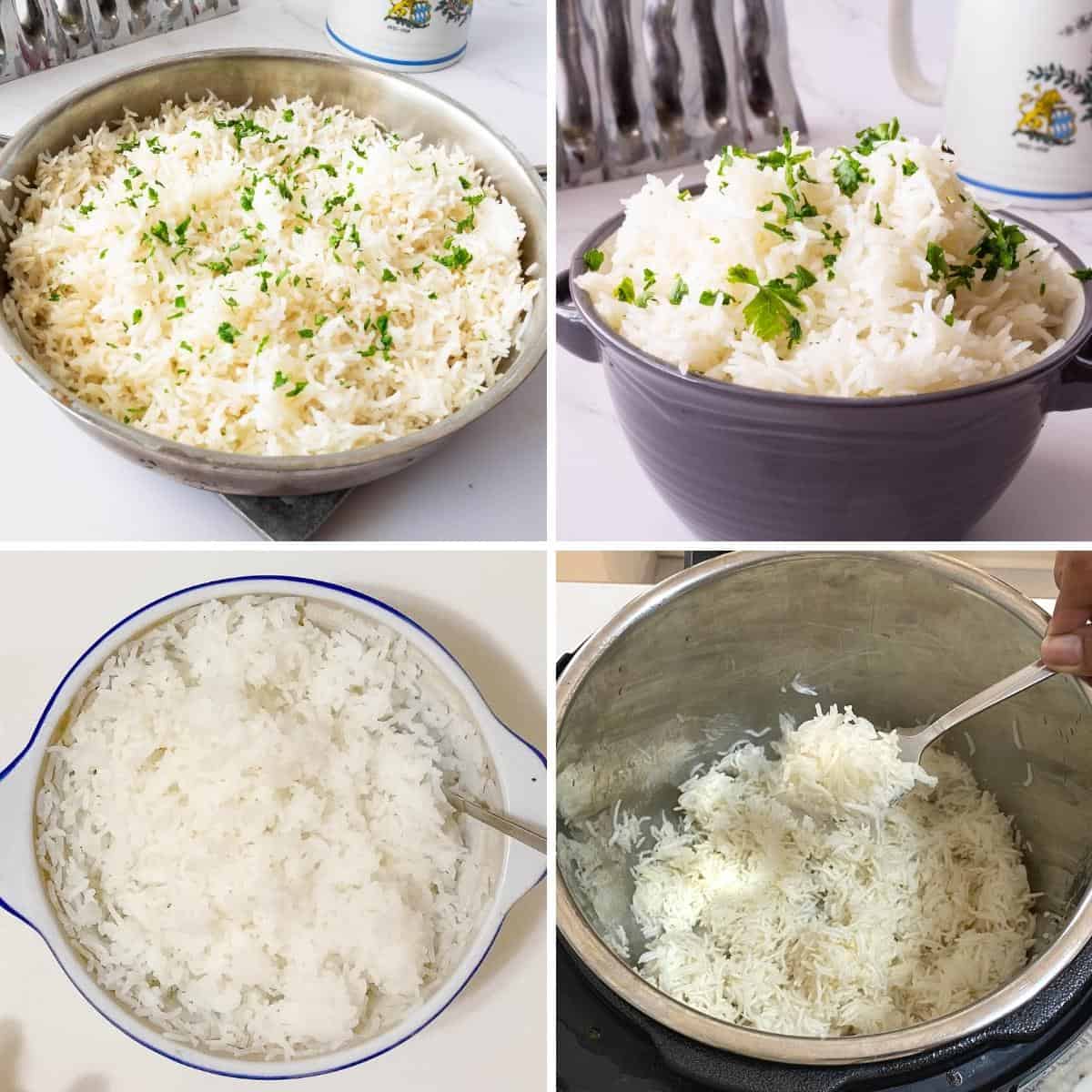
Well—fast forward a few decades—and not only do I make perfect stovetop rice, but I’ve also mastered a few other ways to get fluffy, fragrant basmati every single time. Whether you’re new to rice or just want some variety, here are five tried-and-true methods to cook basmati rice—each with its own little magic.
Basmati rice comes in both white and brown varieties. It has a delicate flavor and aroma. The name basmati means ‘full of aroma’ in Hindi. ‘Bas’ means ‘aroma’, and ‘mati’ means ‘full of’, hence the name basmati. It is grown in the north of India, mainly in the foothills of the Himalayas (often the reason why it’s called Indian basmati rice) and parts of Pakistan and Nepal.
Why choose basmati rice?
- Cooking rice should’t be complicated and basmati is the perfect rice to make if you are a novice or seasoned cook.
- The long grain rice is not just pretty and impressive to look at it is also less sticky, which means it can be used for many meals not just Indian food.
- A well cooked bowl of rice should be soft, fluffy and of course al dente. Basmati can give you that perfectly every single time.
- Below are the cooking time for white basmati (not brown rice).
- Stove – 15 mins with 10 mins rest
- Microwave – 25 mins with 5 mins rest
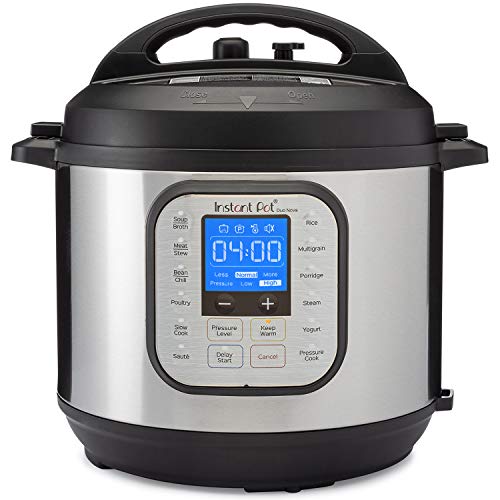
- Instant pot (electric pressure cooker) – 5 minutes with 5 mins rest
- Pressure cooker (traditional stovetop) – 2 whistles + 5 mins rest
- Slow cooker – 2 hours
- And any leftover rice will keep in the fridge for a few days. You can also keep rice in the freezer in airtight containers for up to a month.
Ingredients and substitutes
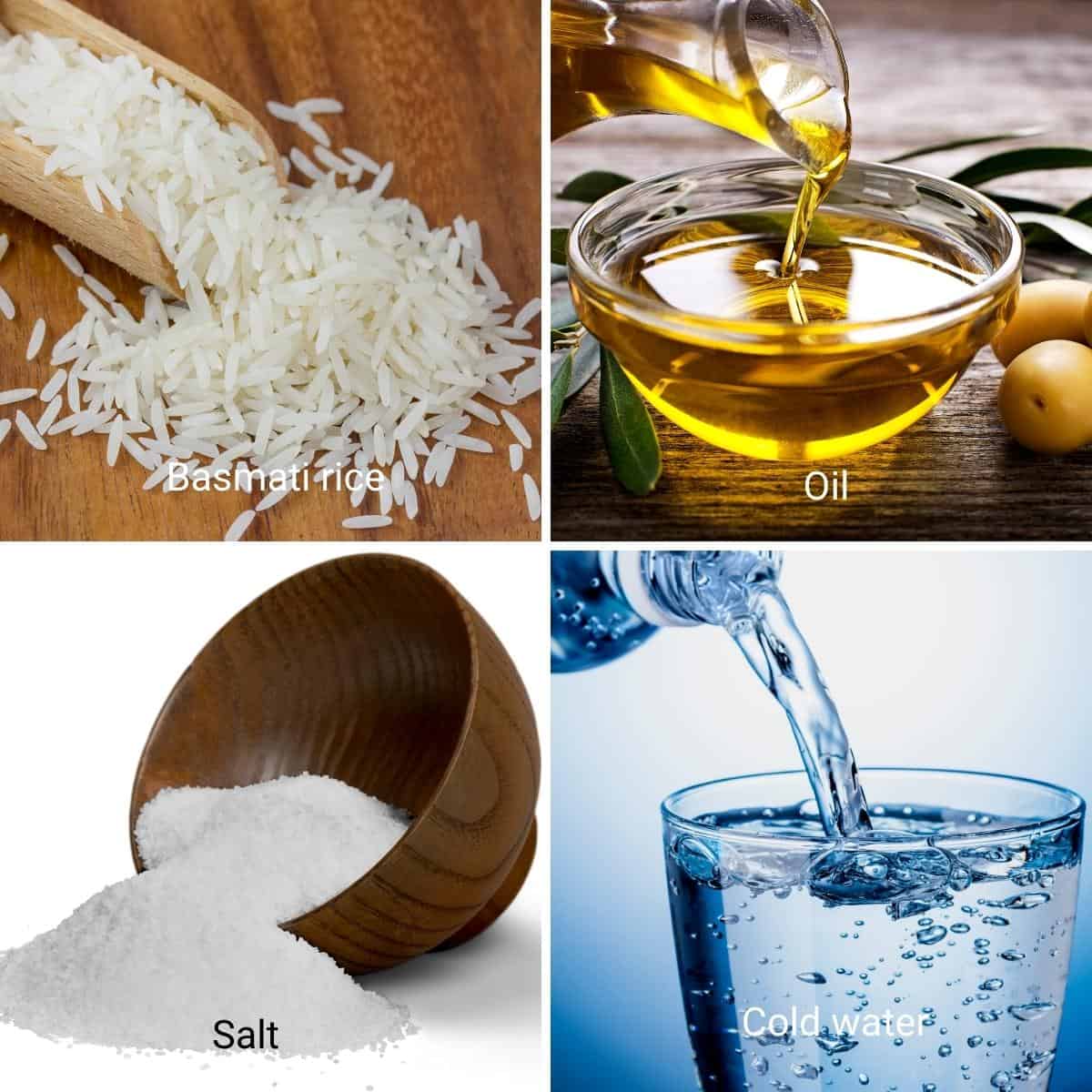
- Rice – Basmati is a long grain rice and this method should work for most long grain rice brands. Some brands may need a little more water and a few more minutes depending on if you soak them or not.
- Salt – Unless you are going to serve this rice with something salty, I do not see why you would not add salt. You can use coarse sea salt or kosher salt.
- Oil – a little oil goes a long way in coating each grain so it becomes nice a fluffy.
- Water – Cold water is all you need. Do not use hot or warm water as it can make the rice gummy.
How to cook basmati rice – 5 easy methods
Rinse and soak rice
- Rinse – Measure the rice in a large bowl. Fill with water at least 2 inches more than the rice. Swirl the water around and gently rub the rice with your hand. The water will become very cloudy. Drain the water and repeat the process at least 3 times more or until the water is clear. Drain well.
Pro tip – Rinsing the rice will wash away the starch and reduce stickiness. However, if you purchase pre-washed rice you can skip the rising process. - Soak – Place the rice in a large bowl and fill it with clean water, at least about 2 inches more than the rice. Leave to soak for 30 minutes. After 30 minutes, drain the rice and cook using your preferred method.
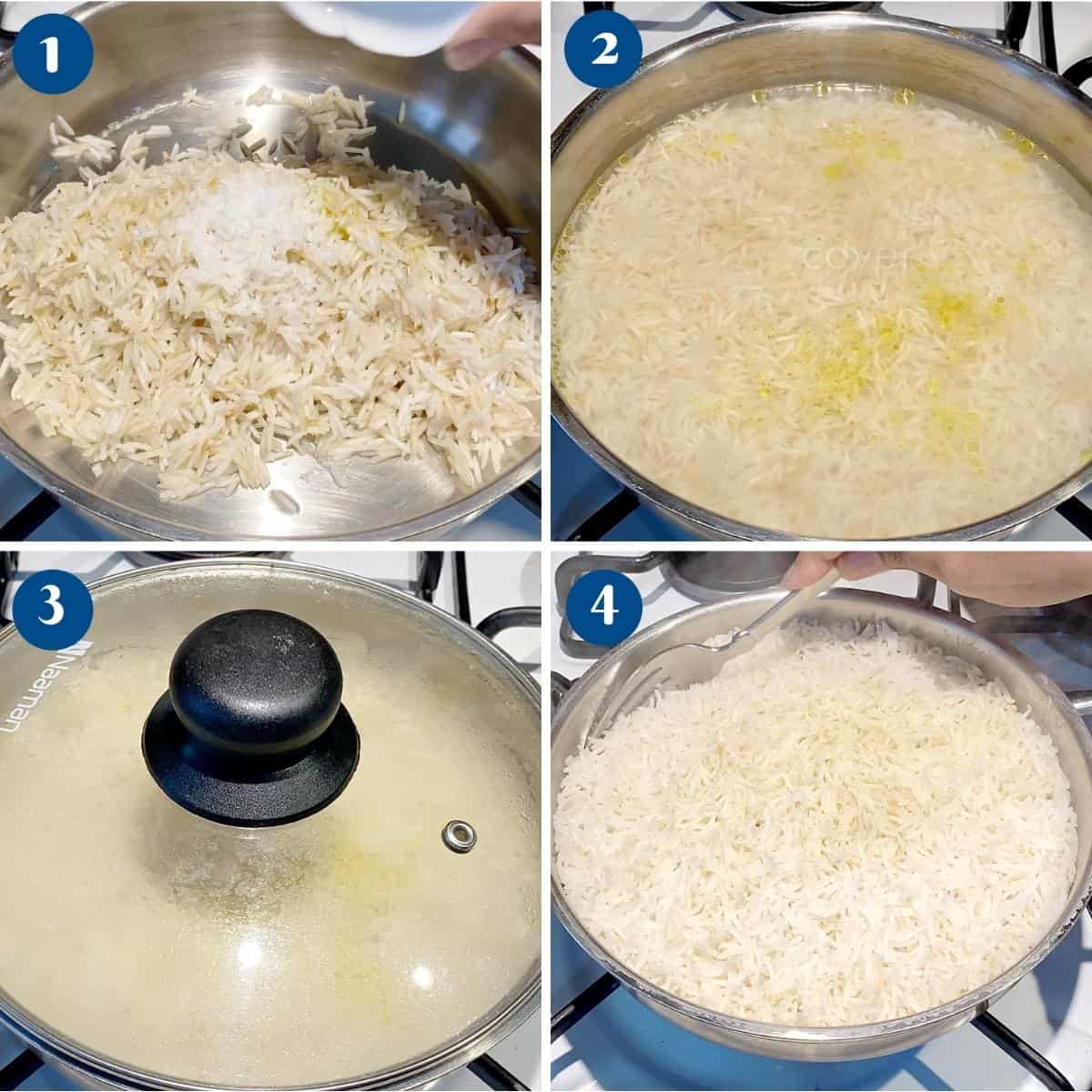
Stovetop
- In a saucepan over medium heat, add the soaked and drained rice, salt, oil, and water. Stir to combine.
- Bring to a boil. As soon as you see bubbles around the edges of the pan, turn the heat to a low simmer. Cover the pot and cook on low for 15 minutes.
Pro tip – You do not want the water to come to a rolling boil. Just as long as you see bubbles around the edges turn the heat to a low simmer. Otherwise, too much moisture will evaporate making the rice dry. - Once the 15 minutes are up, turn the heat off and leave the rice to rest for an additional 5 to 10 minutes. Open the lid and fluff the rice with a fork.
Pro tip – Letting the rice rest will help excess moisture evaporate and make the rice fluffier.
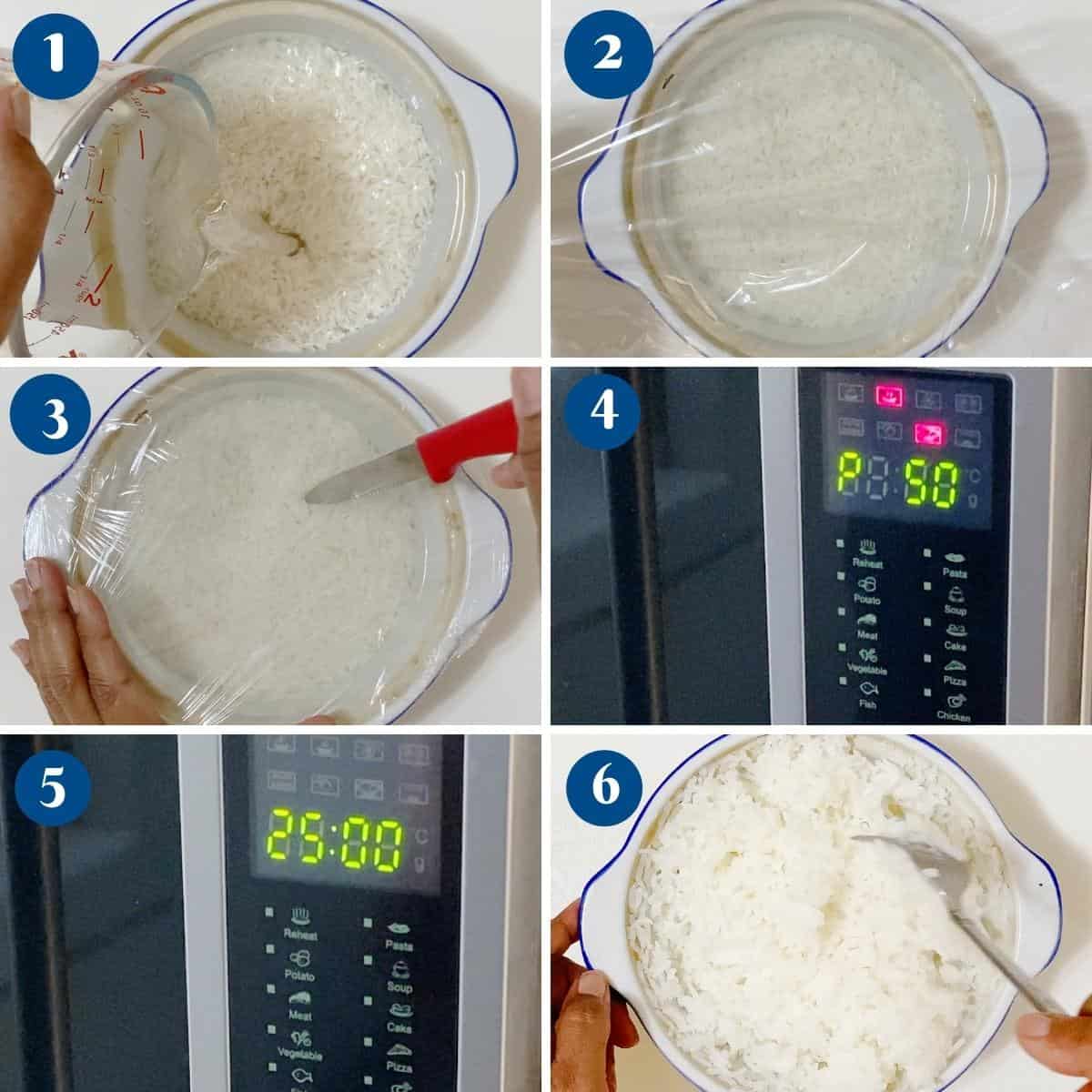
Microwave
- In a large microwave-safe bowl, add the soaked and drained rice, salt, oil, and water. Stir to combine.
- Cover the bowl with plastic wrap and make 3 to 4 holes with a knife. These will help steam escape during cooking.
Pro tip – The water in the rice will rise up so it is best to cover with plastic instead of a lid. - Cook in the microwave at 50% power for 25 minutes. When done, open and fluff the rice with a fork.
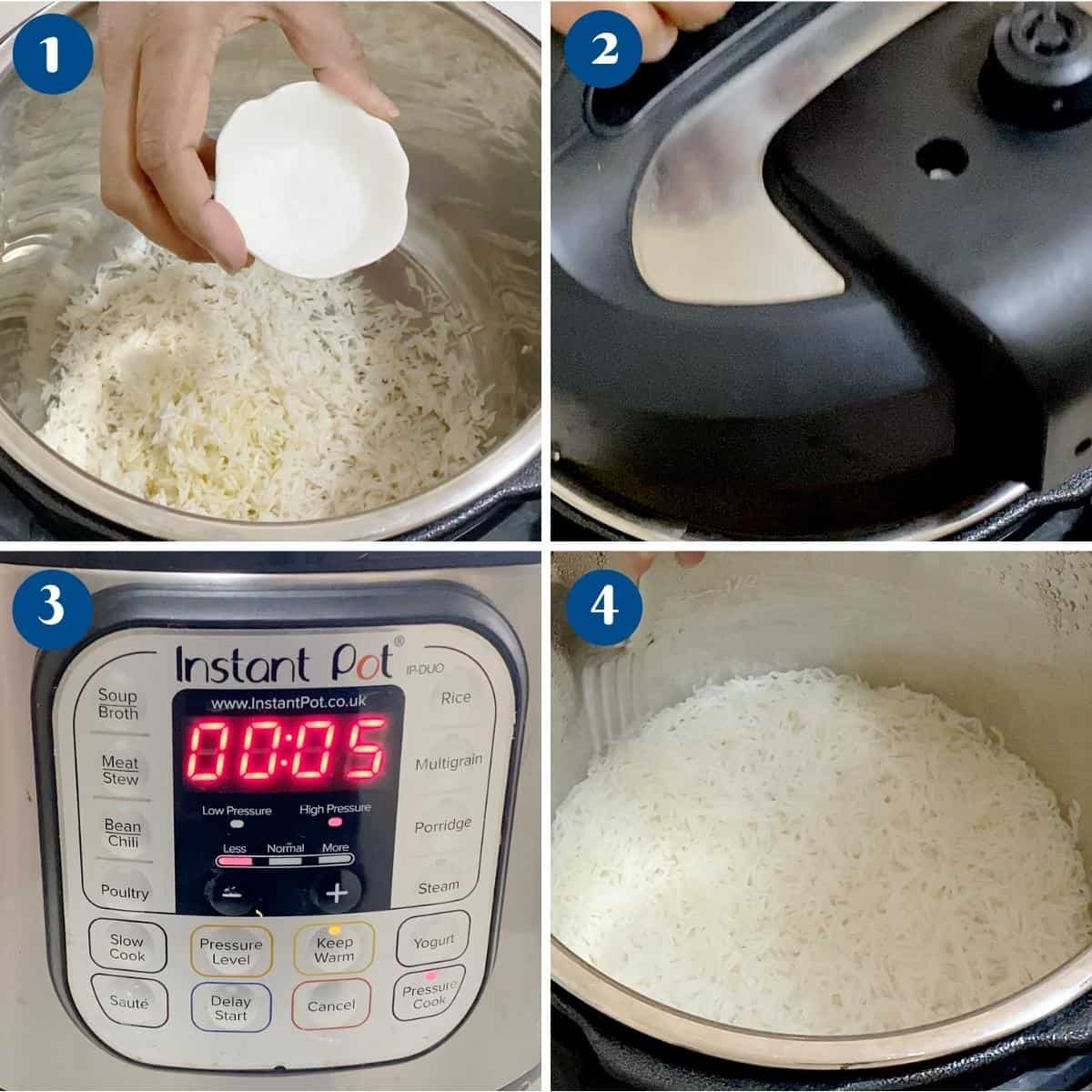
Instant pot (electric pressure cooker)
- In the inner bowl of an instant pot (IP), add the soaked and drained rice, salt, oil, and water. Stir to combine.
- Close the IP and seal the vent. Cook on high pressure for 5 minutes.
- When the beeper goes off, let the pressure naturally release for 5 minutes. After 5 minutes, release any remaining pressure manually. Open the IP and fluff the rice with a fork.
Pressure cooker (stovetop)
- Add the soaked and drained rice, salt, oil, and water to the pressure cooker pot. Stir to combine.
- Close the lid with the whistle. Cook on medium-high heat for two whistles.
- After the first two whistles, turn the heat off and let the pressure naturally release for 5 minutes. Then, open the cooker and fluff the rice with a fork.
Slow cooker
- Add the soaked and drained rice, salt, oil, and water to the slow cooker pot. Stir to combine.
- Cook on low for 2 hours until tender. When done, fluff the rice with a fork.
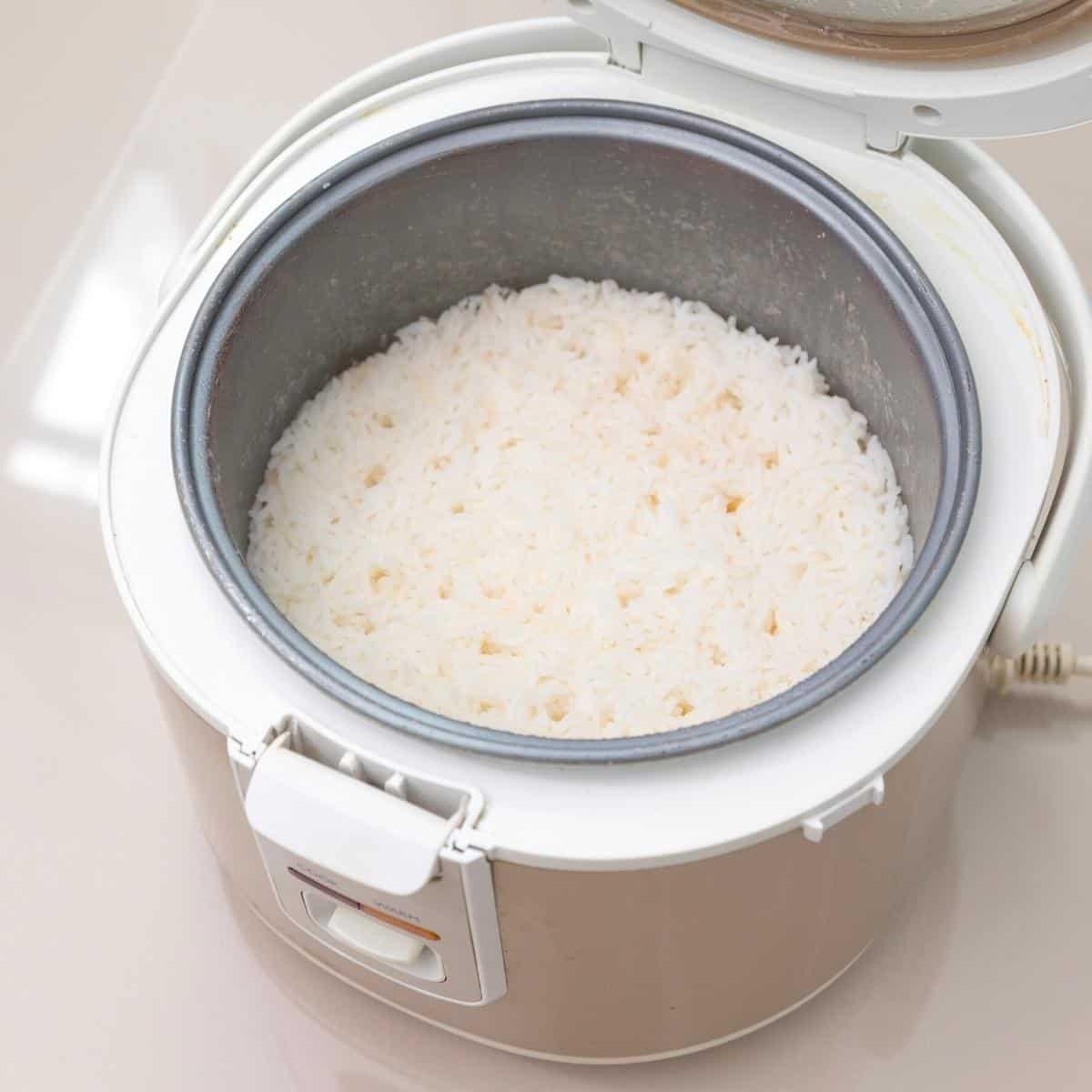
Rice cooker
- Add the soaked and drained rice, salt, oil, and water to the inner pot of the rice cooker. Stir to combine.
- Close the lid and turn the cooker on. The rice will start cooking automatically. When done, the cooker will switch from on to warm.
Pro tip – If your rice cooker has more than one settings, read the manual to choose the right program for cooking desired rice. - Rest the rice for 10 minutes. Then, fluff with a fork. Keep the lid closed so the rice will continue to keep warm.
Troubleshooting
- Burnt rice – Too little water or too high heat.
- Water overflowed during cooking – The best way to cook rice on the stovetop is on a low simmer. An overflowing pot means the heat is too high causing the water to overflow. This could result in undercooked, hard or even burnt rice.
- Undercooked rice – Not enough water and not enough time for cooking.
- Soggy or gummy rice – Too much water in the pot causing the rice to become sticky.

How to cook brown basmati rice
Strangely, cooking brown basmati is not the same as cooking other brands of brown rice. In fact, it’s much easier and the results are very similar to white basmati. Therefore, brown basmati rice can also be light and fluffy if cooked correctly.
While I have given you a few methods to make white basmati, the best way to make brown basmati is the stovetop. It makes the rice soft yet al dente, which is not sticky or gummy. I notice the microwave, as well as the instant pot, does have not produced the best results for me yet.
- Rise and soak the brown basmati for 30 minutes the same way as we did the white basmati rice.
- In a saucepan over medium heat, add the soaked and drained brown rice, salt, oil, and water. Stir to combine.
- Bring to a boil. As soon as you see bubbles around the edges of the pan, turn the heat to a low simmer. Cover the pot and cook on a low simmer for 25 minutes.
Pro tip – You do not want the water to come to a rolling boil. Just as long as you see bubbles around the edges turn the heat to a low simmer. Otherwise, too much moisture will evaporate making the rice dry. - Once the 25 minutes are up, turn the heat off and leave the rice to rest for an additional 10 minutes. Open the lid and fluff the rice with a fork.
Pro tip – Letting the rice rest will help excess moisture evaporate and make the rice fluffier.
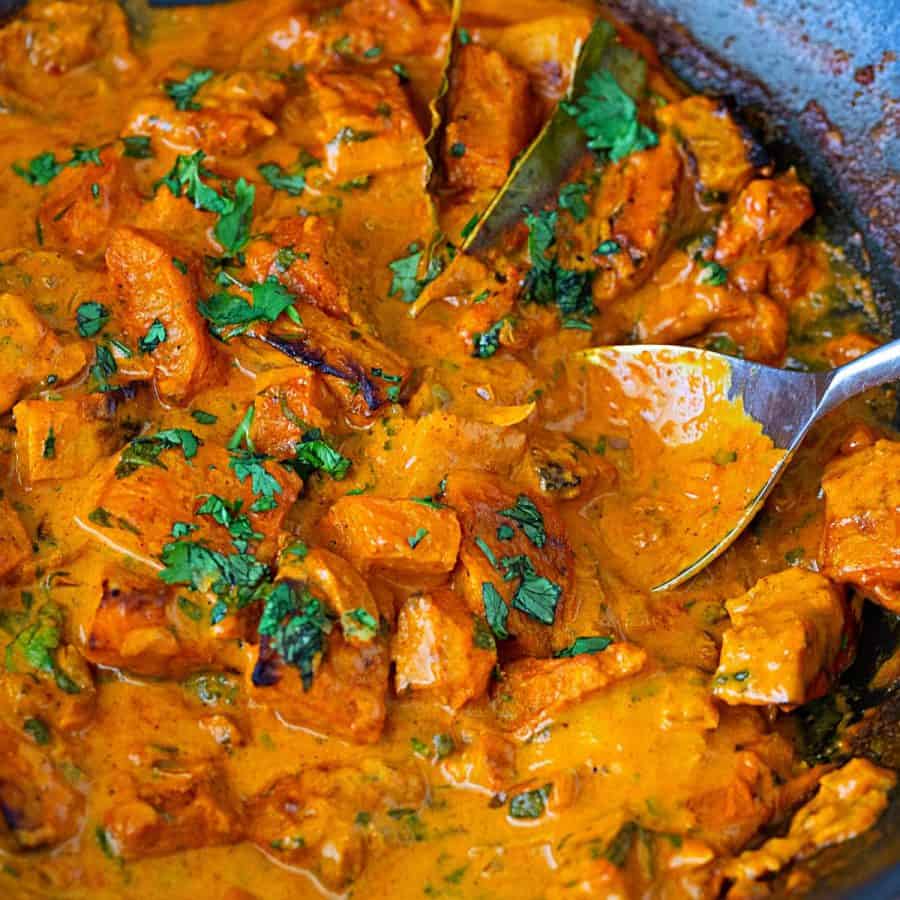
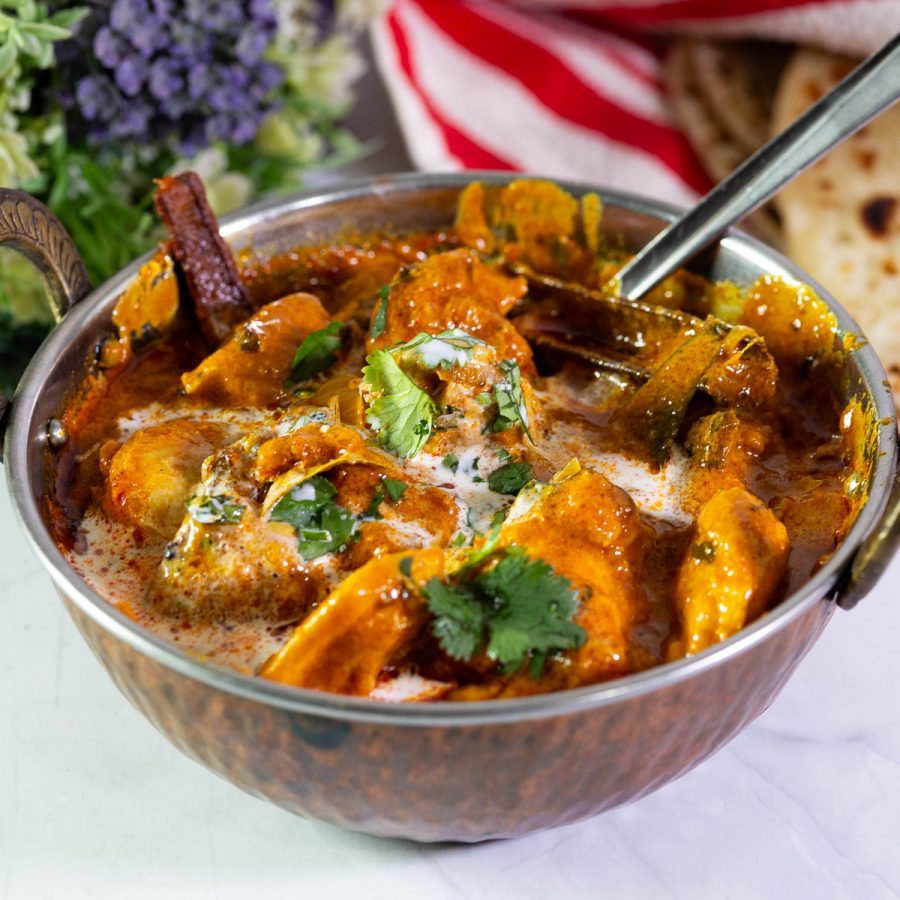
- Chicken Curry, Indian Lamb Curry, Slow Cooked Beef Curry
- Meatball Kofta Curry
- Chickpeas Curry – Channa Masala
- Easy Prawn Curry
- Lentil Chicken Curry or Spinach Tofu Curry
- Black Beans Curry, Kidney Bean Coconut Curry
- See all Indian recipes

Frequently asked questions
Basmati is a type of white rice. In fact, it is also a type of long-grain rice. You will find other white rice or long grain rice such as Jasmin, Carolina, Mogra, Red rice, Wild rice, etc.
Jasmine rice is grown in Thailand and is often accompanied by Asian dishes. Basmati rice grows in India, Pakistan, and some parts of Nepal and is often served with Indian dishes. Both are long-grain varieties of rice, that are soft, fluffy, and not sticky. Jasmine is thicker and softer than basmati. Basmati is thinner, firmer, chewier, and aromatic.
I believe there are four important things that help cook basmati rice perfectly every single time.
Rinse – Rinsing the rice washes away the starch so the rice is not sticky.
Soak – Soaking helps absorb water and softens the rice just enough that it cooks evenly during the process.
Water – Use the right ratio of rice to water for the right cooking method as this will affect the texture of the final rice.
Resting – Letting the rice rest will ensure excess moisture is evaporated and the right will become fluffier.
It really depends on the cooking method and whether or not you have soaked the rice. Below, I have given you the right amount of water for the right cooking method. However, if you chose to cook the rice without soaking add an additional 1/4 cup of water to every cup of rice.
How to cook basmati rice – 5 Easy Methods
Ingredients
White basmati rice
Stovetop
- 1 cup (185 g) Basmati rice (white)
- 1½ cup (355 ml) Water
- ½ tsp Kosher salt
- ½ tsp Oil (optional)
Instant pot
- 1 cup (185 g) Basmati rice (white)
- 1¼ cup (296 ml) Water
- ½ tsp Salt
- ½ tsp Olive oil (optional)
Pressure cooker (traditional)
- 1 cup (185 g) Basmati rice (white)
- 1½ cup (355 ml) Water
- ½ tsp Salt
- ½ tsp Olive oil (optional)
Slow cooker
- 1 cup (185 g) Basmati rice (white)
- 1½ cup (355 ml) Water
- ½ tsp Salt
- ½ tsp Oil (optional)
Rice cooker
- 1 cup (185 g) Basmati rice (white)
- 1 cup (240 ml) Water
- ½ tsp Salt
- ½ tsp oil (optional)
Brown basmati rice
- 1 cup Brown basmati rice
- 2 cups (480 ml) Water
- ½ tsp Kosher salt
- ½ tsp Oil (optional)
Instructions
Rinse and soak rice
- Rinse – Measure the rice in a large bowl. Fill with water at least 2 inches more than the rice. Swirl the water around and gently rub the rice with your hand. The water will become very cloudy. Drain the water and repeat the process at least 3 times more or until the water is clear. Drain well. Pro tip – Rinsing the rice will wash away the starch and reduce stickiness. However, if you purchase pre-washed rice you can skip the rising process.
- Soak – Place the rice in a large bowl and fill it with clean water, at least about 2 inches more than the rice. Leave to soak for 30 minutes. After 30 minutes, drain the rice and cook using your preferred method.
Stovetop
- In a saucepan over medium heat, add the soaked and drained rice, salt, oil, and water. Stir to combine.
- Bring to a boil. As soon as you see bubbles around the edges of the pan, turn the heat to a low simmer. Cover the pot and cook on low for 15 minutes. Pro tip – You do not want the water to come to a rolling boil. Just as long as you see bubbles around the edges turn the heat to a low simmer. Otherwise, too much moisture will evaporate making the rice dry.
- Once the 15 minutes are up, turn the heat off and leave the rice to rest for an additional 5 to 10 minutes. Open the lid and fluff the rice with a fork. Pro tip – Letting the rice rest will help excess moisture evaporate and make the rice fluffier.
Microwave
- In a large microwave-safe bowl, add the soaked and drained rice, salt, oil, and water. Stir to combine.
- Cover the bowl with plastic wrap and make 3 to 4 holes with a knife. These will help steam escape during cooking. Pro tip – The water in the rice will rise up, so it is best to cover with plastic instead of a lid.
- Cook in the microwave at 50% power for 25 minutes. When done, open and fluff the rice with a fork.
Instant pot (electric pressure cooker)
- In the inner bowl of an instant pot, add the soaked and drained rice, salt, oil, and water. Stir to combine.
- Close the IP and seal the vent. Cook on high pressure for 5 minutes.
- When the beeper goes off, let the pressure naturally release for 5 minutes. After 5 minutes, release any remaining pressure manually. Open the IP and fluff the rice with a fork.
Pressure cooker (stovetop)
- Add the soaked and drained rice, salt, oil, and water to the pressure cooker pot. Stir to combine.
- Close the lid with the whistle. Cook on medium-high heat for two whistles
- After the first two whistles, turn the heat off and let the pressure naturally release for 5 minutes. Then, open the cooker and fluff the rice with a fork.
Slow cooker
- Add the soaked and drained rice, salt, oil, and water to the slow cooker pot. Stir to combine.
- Cook on low for 2 hours until tender. When done, fluff the rice with a fork.
Rice cooker
- Add the soaked and drained rice, salt, oil, and water to the inner pot of the rice cooker. Stir to combine.
- Close the lid and turn the cooker on. The rice will start cooking automatically. When done, the cooker will switch from on to warm. Pro tip – If your rice cooker has more than one settings, read the manual to choose the right program for cooking desired rice.
- Rest the rice for 10 minutes then fluff with a fork. Keep the lid closed so the rice will continue to keep warm.
Brown basmati rice
- Rise and soak the brown basmati for 30 minutes the same way as we did the white basmati rice.
- In a saucepan over medium heat, add the soaked and drained brown rice, salt, oil, and water. Stir to combine.
- Bring to a boil. As soon as you see bubbles around the edges of the pan, turn the heat to a low simmer. Cover the pot and cook on a low simmer for 25 minutes. Pro tip – You do not want the water to come to a rolling boil. Just as long as you see bubbles around the edges turn the heat to a low simmer. Otherwise, too much moisture will evaporate making the rice dry.
- Once the 25 minutes are up, turn the heat off and leave the rice to rest for an additional 10 minutes. Open the lid and fluff the rice with a fork. Pro tip – Letting the rice rest will help excess moisture evaporate and make the rice fluffier.
Video
Notes
- While basmati is a type of rice, there are many different brands of basmati. Each grown in a different region or aged differently. This may result in a little less or more water. The ratios given above are what I have tested and tried successfully for a few years now.
- Most popular brands of basmati rice brands need to be rinsed. The washing is what helps remove the starchiness so don’t skip on the rising.
- Always store uncooked rice in an airtight container. Adding a few cloves (whole spice) to the container will prevent bugs.



Made this recipe?
I’d love to see how yours turned out! Share a photo on Instagram and tag @veenaazmanov_kitchen or use #veenaazmanovkitchen. And don’t forget to leave a rating and review!
- Rice Pilaf or Chicken with Rice Pilaf
- The BEST Fried Rice
- Turmeric Rice with Chicken and Peas
- Chicken and Rice Skillet
- Coconut Turmeric Rice
- Shrimp with Rice
- Quick One-Pot Vegetable Rice
- See all rice recipes
Don’t lose this recipe! Save it for Later!
📌 Save this Recipe for later on Pinterest so you can easily find it again.
⭐ Add Veena Azmanov Kitchen to your Google Preferred Sources.
It helps Google show you more of our recipes.
📧 Subscribe for new recipes delivered to your inbox.
🎥 Follow us for more recipes


Hi, I’m Veena
I’m the recipe developer, baker, and food photographer behind Veena Azmanov Kitchen.
I’ve spent years developing and testing recipes, from everyday meals and homemade breads to cakes and desserts.
I share the practical tips and little details I’ve learned along the way so you can get great results in your own kitchen.











I’ve always struggled with cooking basmati rice but I think I have finally just about mastered the art now. I will bookmark this post just in case I need any further tips a little later down the line!
Doesn’t get much better than perfect rice! So delicious, thanks for sharing!
Perfect and thoughtful guide! Thanks for sharing!
I love all the detail you put into this post, especially with the troubleshooting! So many different options for cooking the basmati rice.
Oh, what a comprehensive post; thanks so much for sharing. I never knew you could microwave basmati. Great to know all the options.