
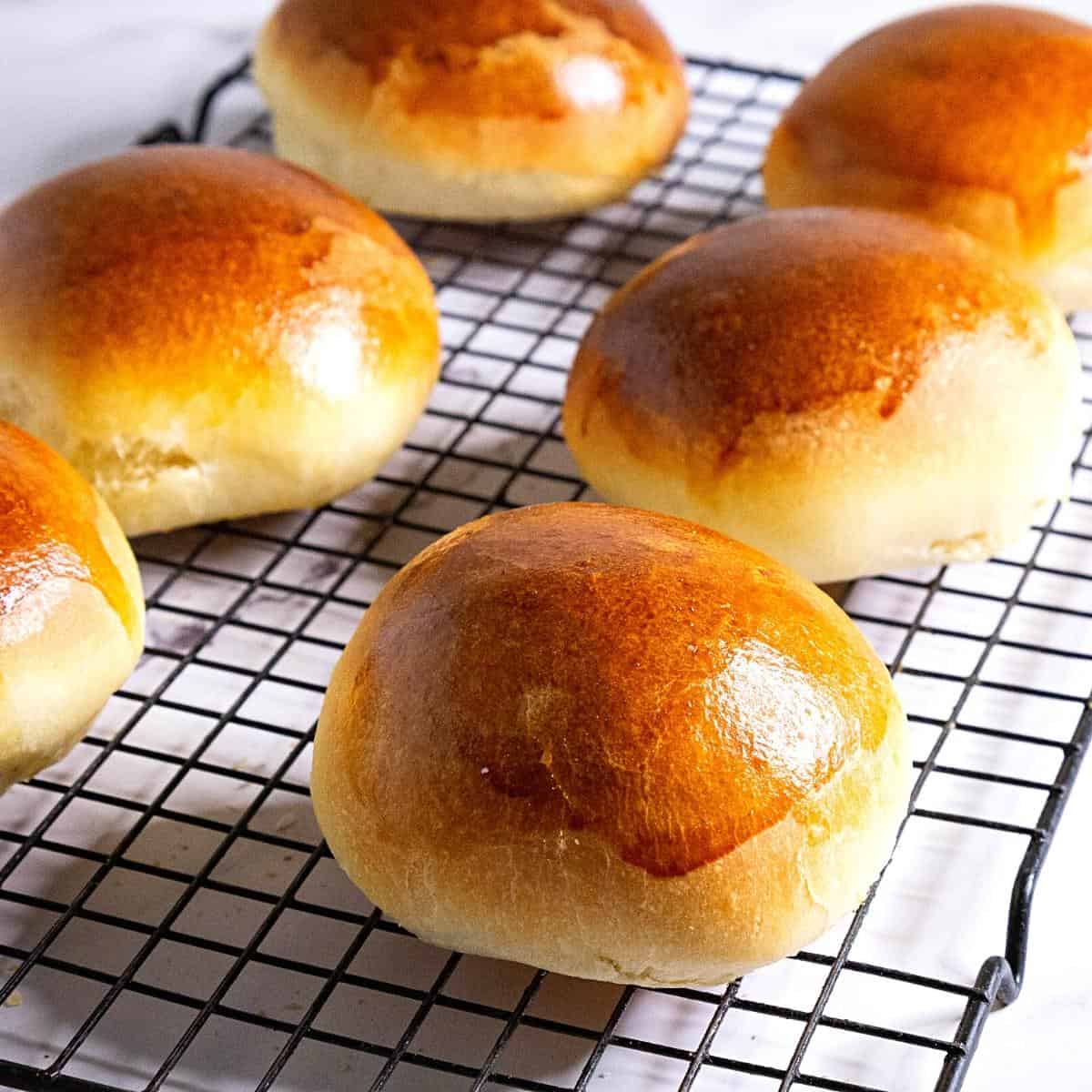



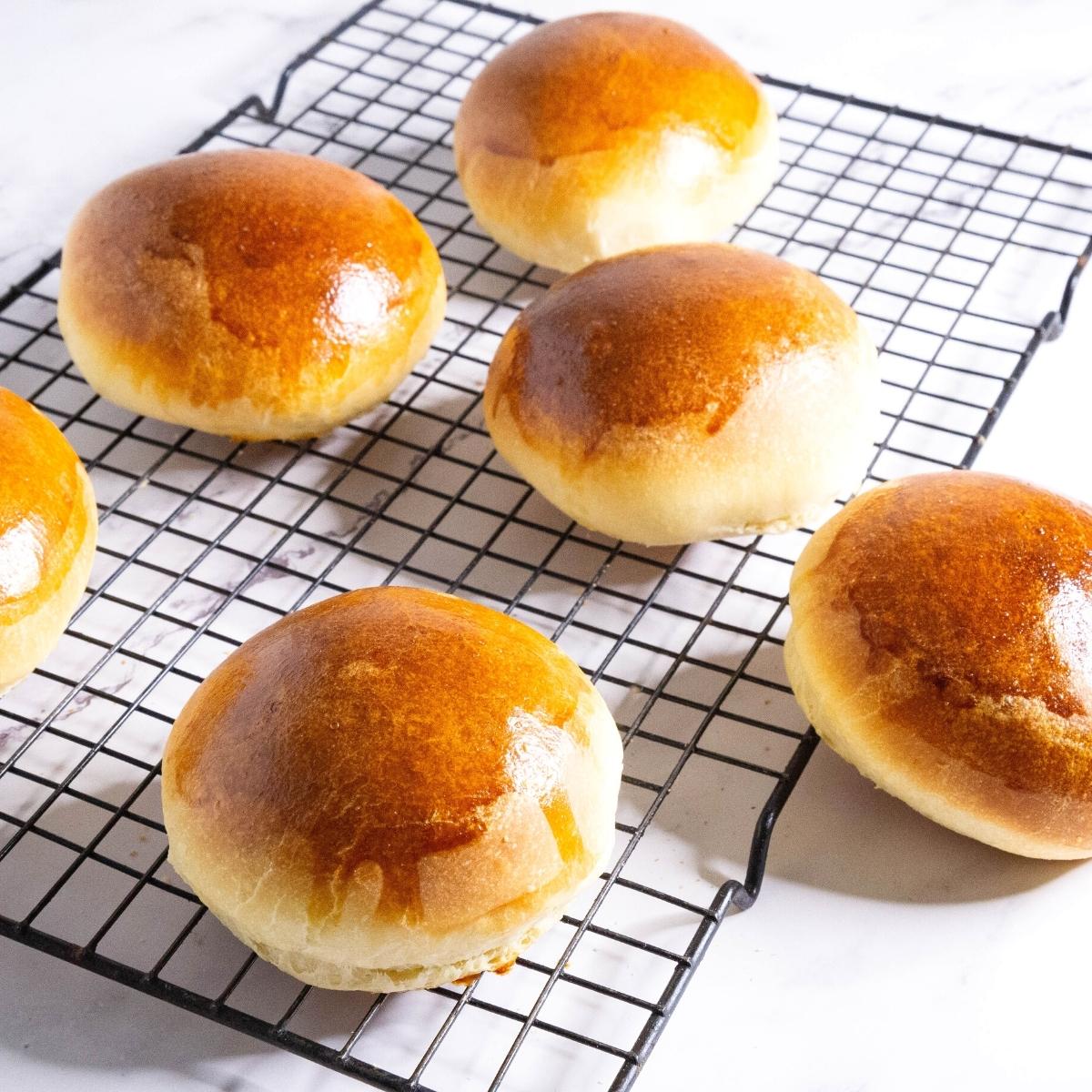
These sourdough brioche buns are rich, buttery, soft, and just slightly sweet. Made with an active sourdough starter, the dough ferments slowly overnight in the refrigerator, developing incredible flavor while fitting easily into your schedule. The result is light, fluffy brioche buns that are perfect for burgers, sandwiches, or served warm with butter.
I’ve been baking brioche for years, but using my sourdough starter completely changed the flavor. The slow fermentation gives these buns a deeper, richer taste while keeping them wonderfully soft and tender. Best of all, the overnight dough means you can prepare it ahead and bake fresh buns the next day.
Leva says – The recipe that really works! I have been baking with the sourdough starter for a few years now, but there’s still a lot to learn and I am amazed at how great these brioche buns turned out! Thanks for the recipe!
Jill says – I had never tried making a sourdough, and thanks to your helpful post, photos and video, these turned out wonderfully well. Thank you!
Why you’ll love this recipe
- Rich, buttery brioche with the flavor only sourdough can provide.
- Overnight fermentation fits easily into your schedule.
- Soft yet sturdy enough for burgers, sandwiches, or dinner rolls.
- Simple pantry ingredients with step-by-step photos to guide you.
How to Make Sourdough Brioche Buns at a glance
Making sourdough brioche buns is easier than you might think.
- Mix the dough with an active sourdough starter.
- Knead until smooth and elastic.
- Refrigerate overnight to develop flavor.
- Divide and shape the dough into buns.
- Proof until light and puffy.
- Brush with egg wash and bake until golden brown.
Ingredients and substitutes
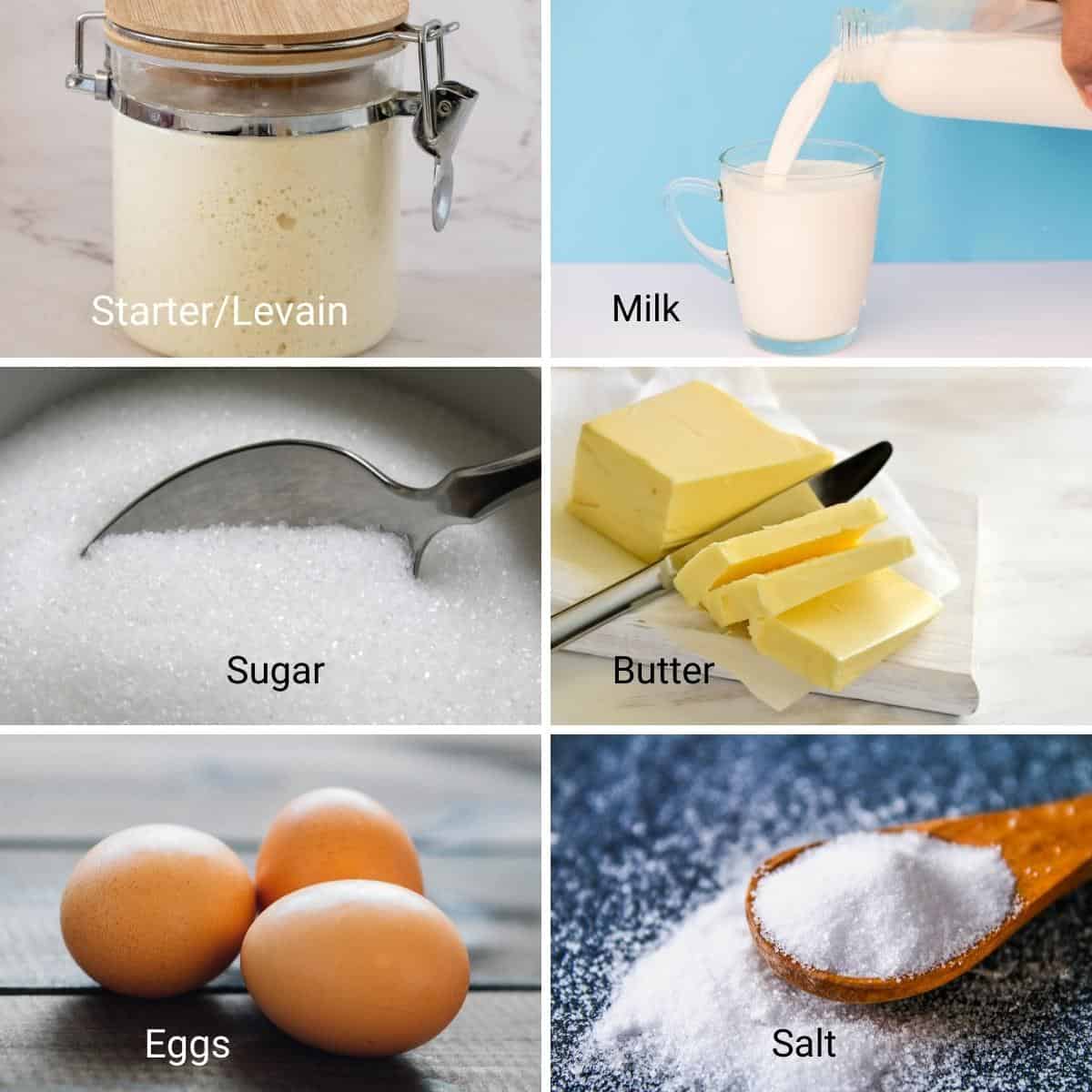
- Bread flour – Gives the dough structure and creates the light, fluffy texture brioche is known for. All-purpose flour can be used, but the buns will be slightly softer.
- Milk – Adds richness and keeps the crumb tender. Whole milk works best, but unsweetened dairy-free milk can be substituted.
- Eggs – Add richness, color, and structure while helping create a soft crumb.
- Butter – Gives brioche its signature buttery flavor and tender texture. Use softened butter for easier mixing.
- Sourdough starter – Use an active, bubbly starter for the best rise and flavor.
- Sugar – Adds just a touch of sweetness while feeding the starter during fermentation.
- Salt – Balances the sweetness and enhances the flavor.
Step-by-Step: Sourdough Brioche Buns
Refresh the starter
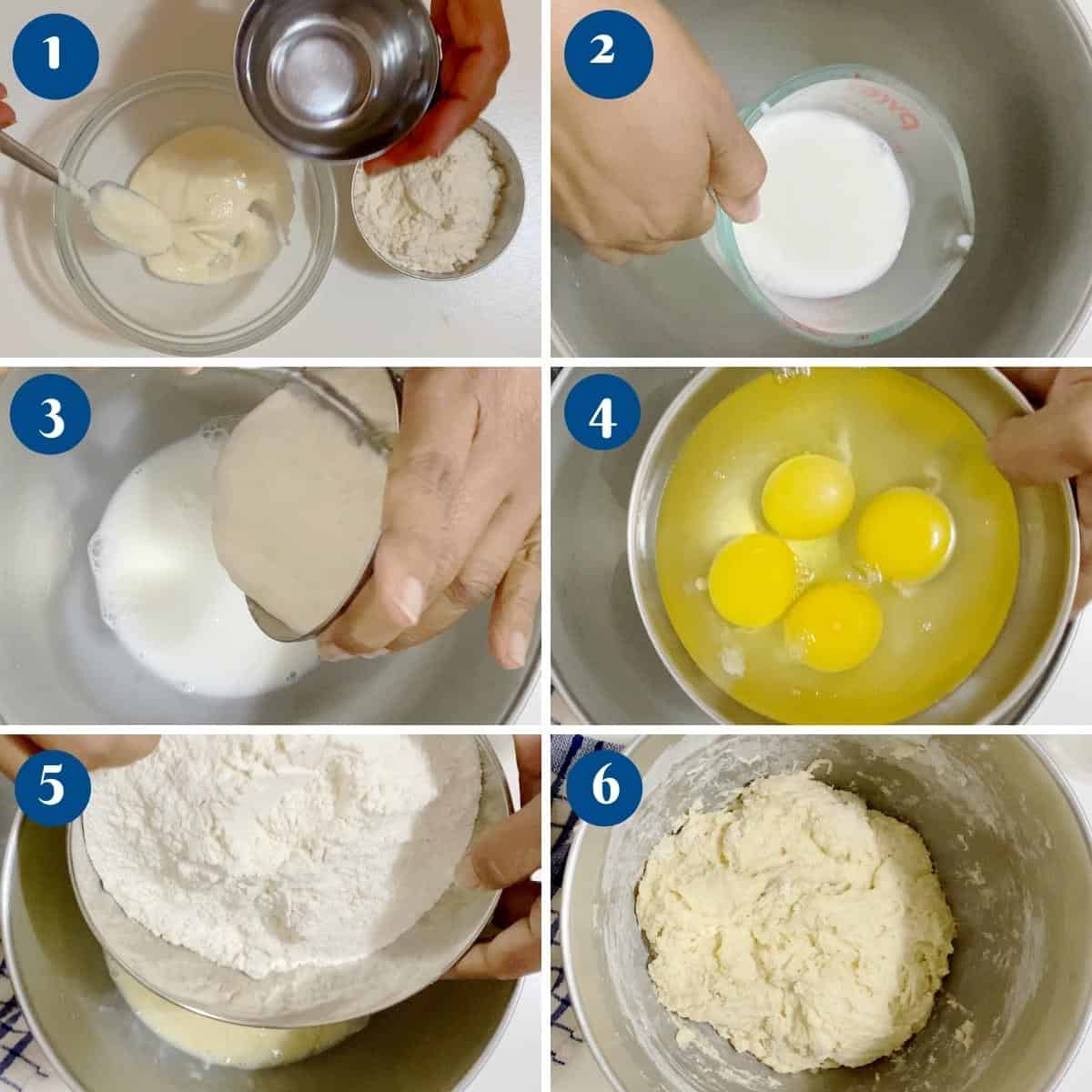
Feed your sourdough starter by combining 60 g starter, 60 g water, and 60 g bread flour. Cover and let it rise at room temperature for 3 to 5 hours, or until bubbly and doubled in size. This makes 180 grams of starter for the recipe below.
Pro Tip: You can prepare the starter up to 5 days ahead and refrigerate it until ready to use.
Autolyse
In the bowl of a stand mixer, combine the milk, eggs, active sourdough starter, and bread flour. Mix until no dry flour remains. Cover and let the dough rest for 1 hour.
Pro Tip: This rest allows the flour to fully hydrate and begins gluten development, making the dough easier to knead.
Knead the dough
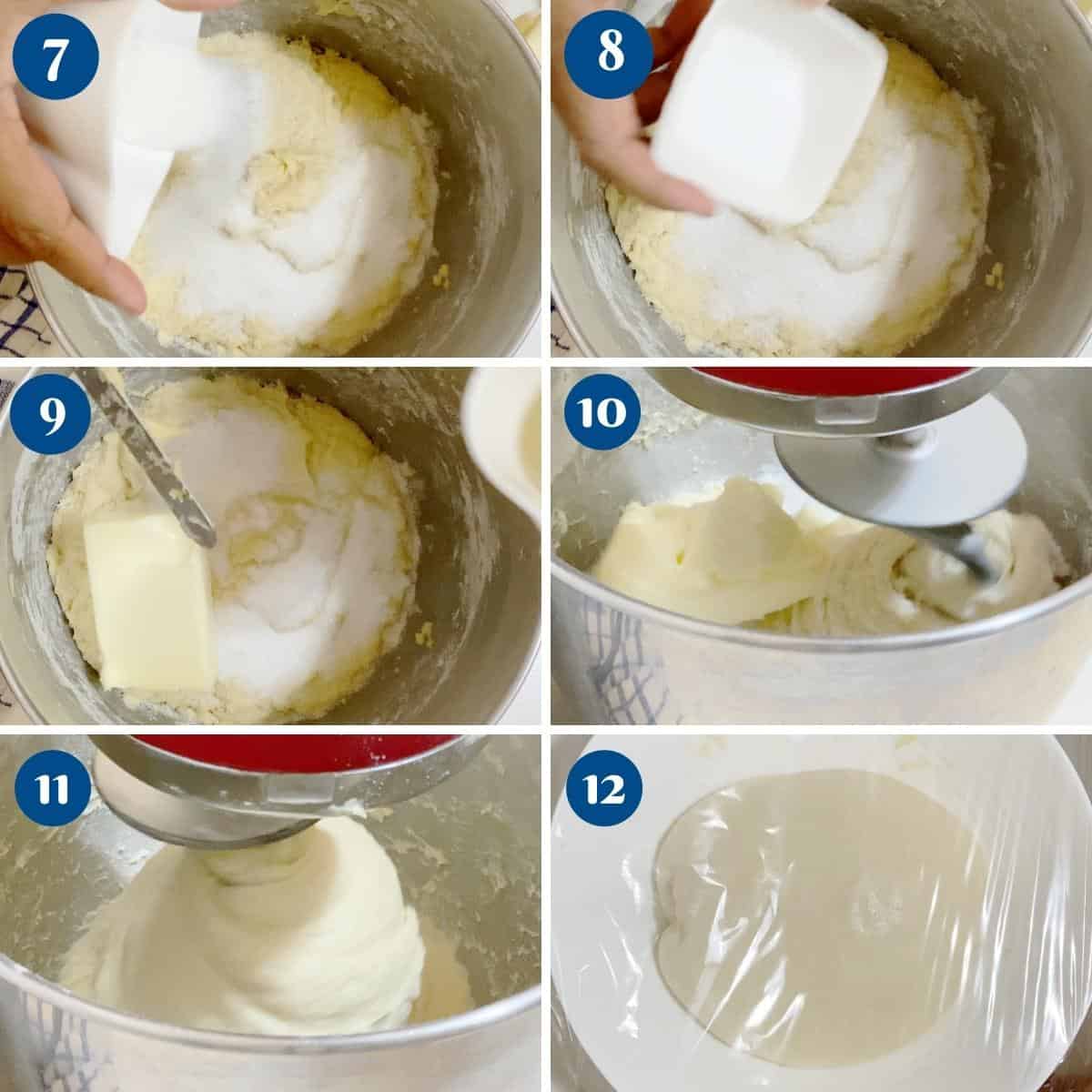
Add the sugar, salt, and softened butter. Knead with the dough hook on medium speed for 10 to 15 minutes, or until the dough is smooth, shiny, elastic, and passes the windowpane test.
Pro Tip: The dough will remain soft and slightly sticky. Resist adding extra flour unless it is still very wet after the full kneading time.
Cold ferment
Transfer the dough to a lightly oiled bowl and cover.
Refrigerate for 6 to 8 hours, or up to 24 hours. Because this is a rich dough, it will rise slowly in the refrigerator and may only increase slightly in volume.
Pro Tip: The overnight rest develops flavor and makes the dough much easier to shape.
Divide and shape
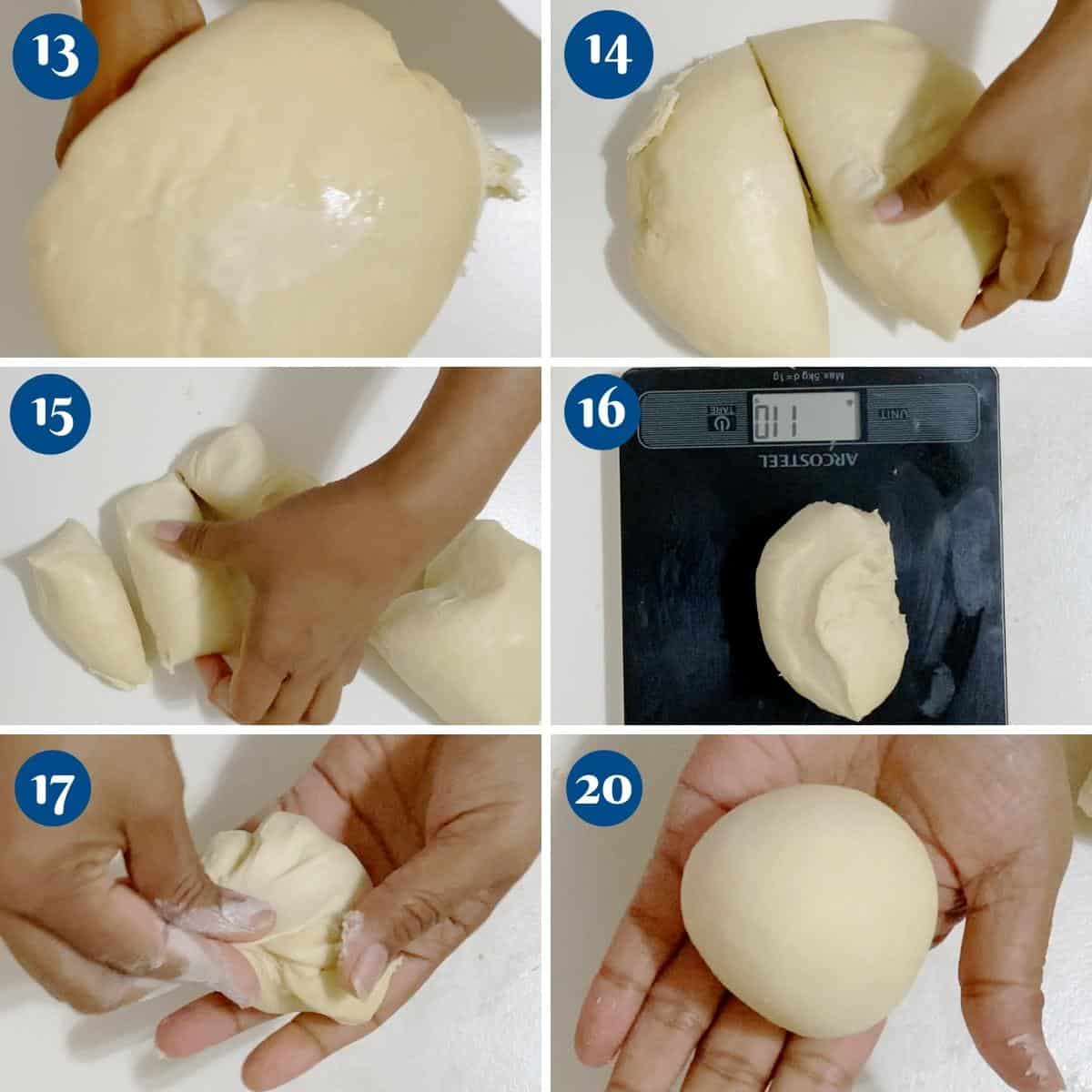
Turn the cold dough onto a clean work surface and divide it into 12 pieces (about 110 g each).
Shape each piece into a tight ball by tucking the edges underneath, then roll gently against an unfloured surface to create surface tension.
Pro Tip: Don’t over-roll the dough or you’ll tear the smooth outer surface.

Arrange and proof
Place the buns on parchment-lined baking trays, leaving space between each one. Gently flatten each ball slightly for a classic hamburger bun shape.
Cover loosely and proof for about 3 hours at room temperature, or 8 to 10 hours in the refrigerator, until the buns are noticeably puffy and nearly doubled in size. If proofed overnight in the refrigerator, let them finish rising at room temperature if needed before baking.
Pro Tip: Lightly spray the plastic wrap with oil so it doesn’t stick to the dough.
Storage
- Room Temperature: Store the cooled brioche buns in an airtight container or zip-top bag for up to 3 days. They stay softest if wrapped well to prevent them from drying out.
- Refrigerator: Refrigeration is not recommended, as it can dry out the bread and make it stale more quickly.
- Freezer: Freeze the cooled buns in a freezer-safe bag or airtight container for up to 3 months. Thaw at room temperature, then warm in a 300°F (150°C) oven for 5 to 10 minutes, or microwave for 15 to 20 seconds before serving.
Make Ahead
This recipe is ideal for making ahead because the enriched sourdough dough benefits from a slow, cold fermentation.
- Cold Ferment: After kneading, refrigerate the dough for 6 to 24 hours before shaping. The longer rest develops flavor and makes the dough easier to handle.
- Overnight Proof: After shaping, place the buns on the baking tray, cover, and refrigerate overnight. The next day, let them sit at room temperature until puffy and nearly doubled before baking if needed.
- Freeze Unbaked Buns: Shape the buns and freeze them on a baking tray until firm. Transfer to a freezer bag and freeze for up to 1 month. Thaw overnight in the refrigerator, then proof until puffy before baking.
- Freeze Baked Buns: Bake and cool the buns completely before freezing. They’re perfect for keeping on hand for burgers, sandwiches, or dinner rolls.
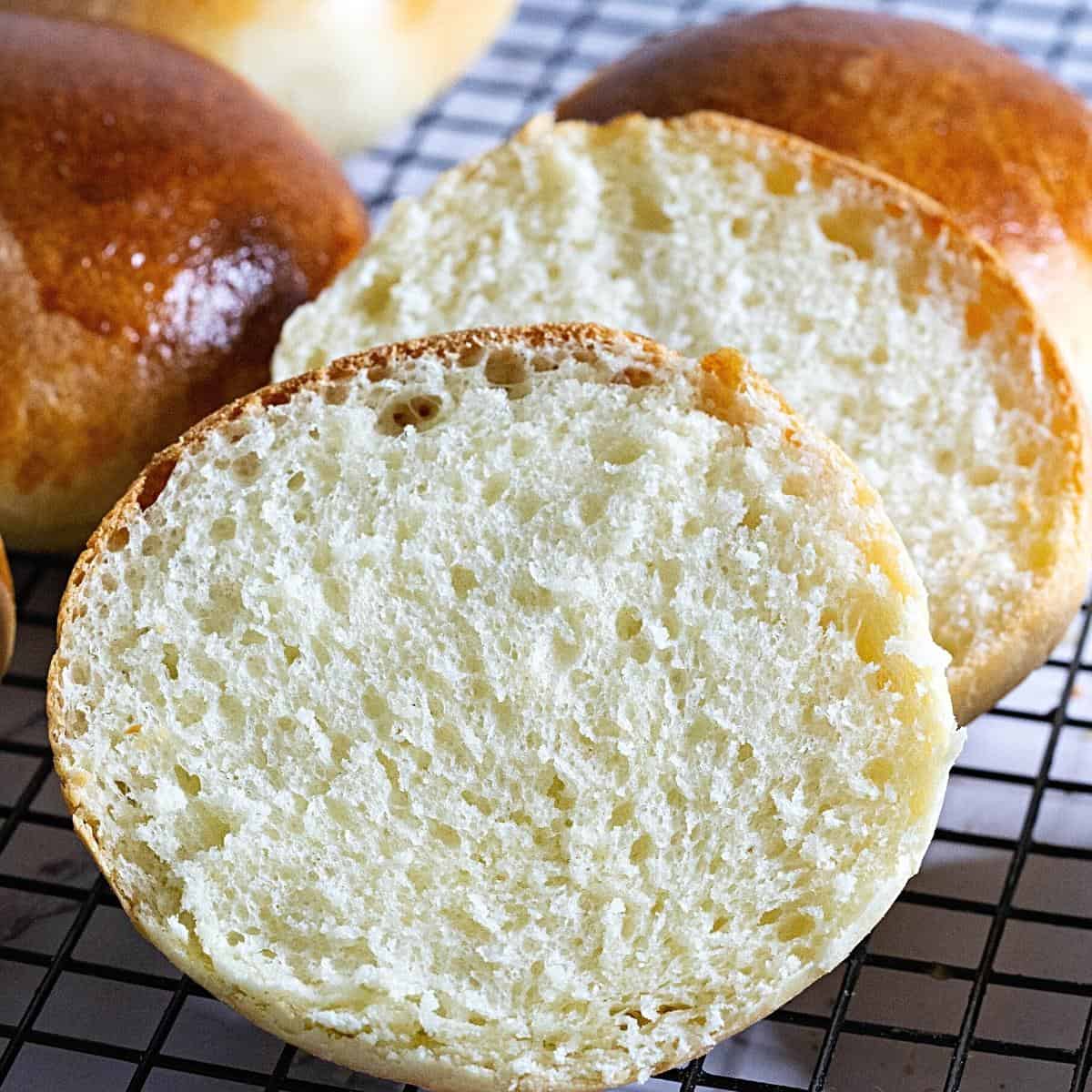
Sourdough Brioche Buns
These sourdough brioche buns are rich, buttery, soft, and just slightly sweet. The overnight sourdough fermentation creates incredible flavor while keeping the buns light, fluffy, and perfect for burgers or sandwiches.
Video
Ingredients
- 150 ml (⅔ cups) Whole milk room temperature
- 200 grams (4 large) Eggs room temperature
- 560 grams (4½ cups) Bread flour
- 180 grams (¾ cups) Sourdough Starter
- 50 grams (3 tbsp) Sugar
- 10 grams (1½ tsp) Kosher salt
- 170 grams (¾ cups) Unsalted butter
Method
- Refresh the starter – Feed your sourdough starter with 60 g starter, 60 g water, and 60 g flour. Let it rise at room temperature for 3 to 5 hours, or until bubbly and doubled. Use 180 g of the active starter for the dough. Note: If you already have bulk sourdough starter, you can use it; just make sure it is active.180 grams Sourdough Starter
- Autolyse – In the bowl of a stand mixer, combine the milk, eggs, active sourdough starter, and bread flour. Mix until no dry flour remains. Cover and let rest for 1 hour.150 ml Whole milk, 200 grams Eggs, 560 grams Bread flour
- Knead the dough – Add the sugar, salt, and softened butter. Knead with the dough hook for 10 to 15 minutes, until the dough is smooth, shiny, elastic, and passes the windowpane test.50 grams Sugar, 10 grams Kosher salt, 170 grams Unsalted butter
- Cold ferment – Transfer the dough to a lightly oiled bowl, cover, and refrigerate for 6 to 8 hours, or up to 24 hours.
- Divide & Shape – Turn the chilled dough onto a clean work surface and divide it into 12 equal pieces (about 110 g each). Shape each piece into a tight ball by tucking the seams underneath, then roll gently on an unfloured surface to create tension.
- Proof – Arrange the buns on parchment-lined baking trays, flatten them slightly, cover, and proof for about 3 hours at room temperature, or 8 to 10 hours in the refrigerator, until puffy and nearly doubled. If refrigerated overnight, allow them to finish proofing at room temperature if needed.
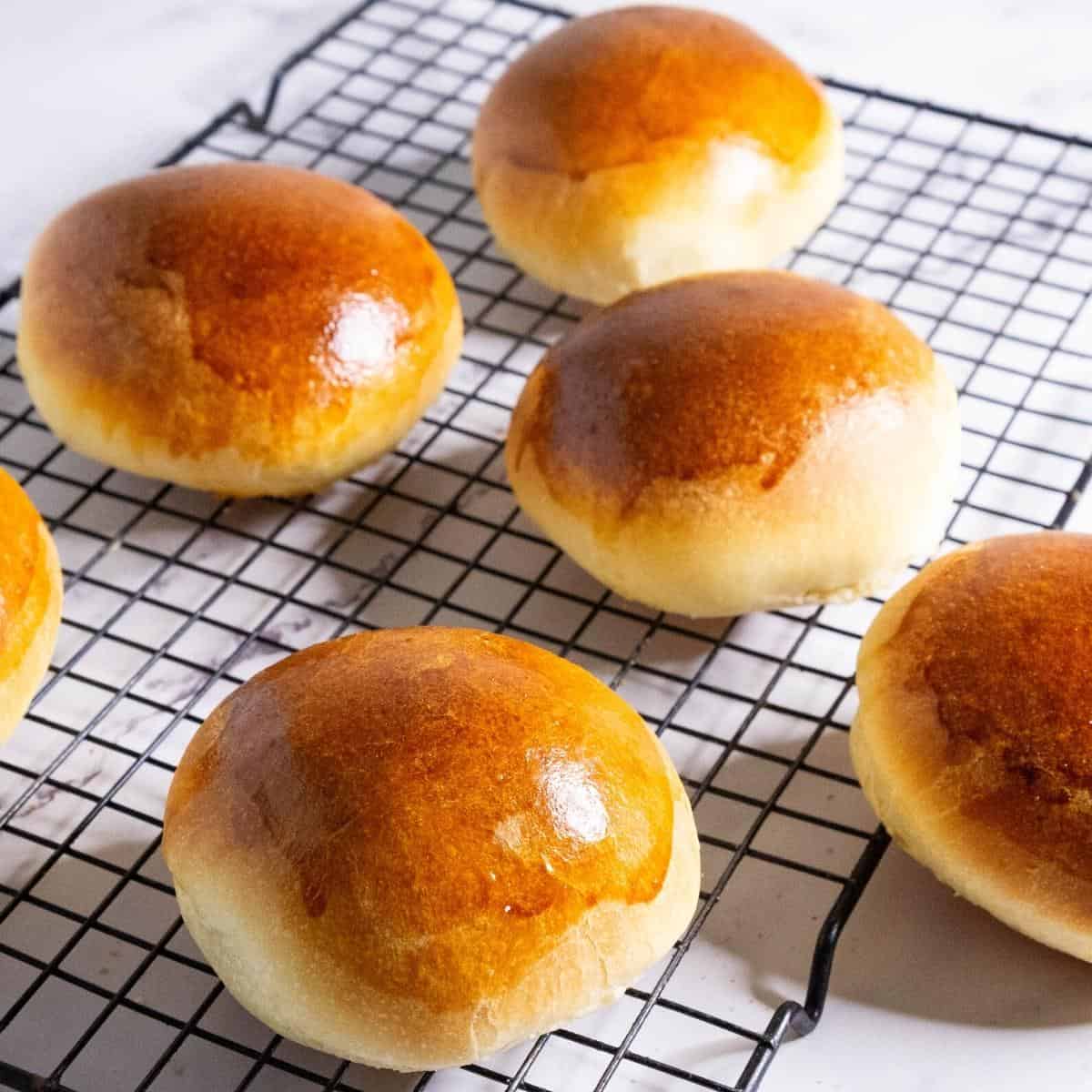
- Bake – Preheat the oven to 375°F (190°C). Brush the buns with egg wash and sprinkle with sesame seeds, if desired. Bake 15 to 20 minutes for small buns or 20 to 25 minutes for larger buns, until golden brown.
- Cool – Transfer the buns to a wire rack immediately after baking and cover loosely with a clean kitchen towel until cool to keep the crust soft.
Notes
- Use an active, bubbly sourdough starter for the best rise.
- The dough should remain soft and slightly sticky after kneading.
- Avoid adding extra flour unless absolutely necessary. Because this is an enriched dough, proofing times will vary.
- Bake when the buns are puffy and nearly doubled, not simply when the timer ends.
- The dough can be refrigerated for up to 24 hours, making it easy to prepare ahead.
- Store cooled buns in an airtight container for 2 to 3 days, or freeze for up to 3 months.
Equipment you will need


Nutrition
Tried this recipe?
Mention @veenaazmanov_kitchen or tag #veenaazmanovkitchen!Tips for Success
- Use an active starter. Your starter should be bubbly and at or near its peak before mixing the dough. A weak starter will slow fermentation and produce denser buns.
- Don’t rush the proofing. This enriched dough rises more slowly than lean sourdough bread because of the butter, eggs, and milk. Look for puffy, almost doubled buns rather than watching the clock.
- Resist adding extra flour. The dough should be soft and slightly sticky after kneading. Adding too much flour can make the buns dry and heavy.
- Shape with tension. Gently tighten each dough ball to create a smooth surface, but avoid over-rolling, which can tear the dough.
- Cool on a wire rack. Transfer the buns immediately after baking and cover loosely with a clean kitchen towel to keep the crust soft.
Troubleshooting
| Problem | Possible Cause | Solution |
|---|---|---|
| The dough didn’t rise much. | Your starter wasn’t active, or the dough needs more time. | Use a recently fed, bubbly starter and let the dough rise until puffy, regardless of the suggested time. |
| The buns are dense. | Too much flour was added, or the buns were under-proofed. | Keep the dough soft and slightly sticky, and let the shaped buns nearly double before baking. |
| The tops browned too quickly. | Your oven runs hot. | Tent the buns loosely with foil for the last few minutes or reduce the oven temperature by 10–15°C (25°F). |
| The bottoms became soggy. | The buns cooled on the baking tray. | Transfer them to a wire rack as soon as they come out of the oven to prevent trapped steam from softening the bottoms. |
more sourdough recipes


Frequently asked questions
These buns will keep at room temperature for 2 days. You can even freeze them for a month.
Yes, you can still make delicious brioche buns without a sourdough starter. However, keep in mind that the distinct tangy flavor and texture that sourdough brings will be missing. If you don’t have a sourdough starter, you can use commercial yeast instead to achieve a similar texture and rise. Here’s my classic brioche buns recipe. It uses instant yeast and has a video and tutorial.
Certainly! Sourdough brioche dough is incredibly versatile and can be used to create a variety of baked goods beyond buns. You can use it as a base for cinnamon rolls, coffee cake, or a stunning braided loaf. Let your creativity shine and explore the endless possibilities that sourdough brioche dough has to offer.
Absolutely! This dough is a basic sourdough brioche dough.
Sourdough brioche loaf – If you don’t want to make buns, you can also shape the dough into loaves and bake them in a loaf pan. This dough will make 2 x 8-inch sourdough loaves.
You can also make a classic sourdough brioche à tête by shaping the dough into a classic brioche, as shown in my classic brioche recipe.
more burger buns


Don’t lose this recipe! Save it for Later!
📌 Save this Recipe for later on Pinterest so you can easily find it again.
⭐ Add Veena Azmanov Kitchen to your Google Preferred Sources.
It helps Google show you more of our recipes.
📧 Subscribe for new recipes delivered to your inbox.
🎥 Follow us for more recipes


Hi, I’m Veena
I’m the recipe developer, baker, and food photographer behind Veena Azmanov Kitchen.
I’ve spent years developing and testing recipes, from everyday meals and homemade breads to cakes and desserts.
I share the practical tips and little details I’ve learned along the way so you can get great results in your own kitchen.










no water?!?
You can use water instead of milk, but milk makes it richer, which is what brioche is all about!
I have made this recipe twice now, love love love them
Thank you so much Lori
Made these twice in one week – the first time they got over before dinner… ah… so the second time I made double. We loved it.
Thank you so much, Christina, for the lovely feedback. I am so happy your family enjoyed these buns.
After the bulk ferment in the refrigerator, my dough looks the same as when I put it in. Is it supposed to double in size prior to shaping? Thanks for your time!
Yes, it should rise even in the fridge! But if it does not – leave it outside until it doubles in size. Then proceed
This dough was an absolute dream. I used my stand mixture, and then dumped it into a bulk container to ferment. Never refrigerated it. Doubled in 4 hours, shaped tge buns and let them rise for 2 1/2 hours. Gorgeous!
Thank you Shauna
Made these and they were so easy to make. So tasty too. Thanks Veena
Thank you Sever
You can’t beat homemade buns, and these sourdough buns are some of the best! I can’t wait to make them again for our Memorial Day picnic!
Thank you, Tayler
These are absolutely delicious! The whole family was impressed that I made my own buns. Pretty sure they ate them for dessert too, because there aren’t any left this morning.
Thank you for the lovely feedback, Lisa. So happy you enjoyed these.
These brioche buns look so soft and airy. I would love to try this soon. thanks for the recipe.
Great to know I can use my sourdough to make brioche! I had been using it only to make loaves. I really liked how my buns turned out!
Thank you, for the lovely feedback, Tavo.