






A rich shortcrust pastry, or Pâte Sabée as they say in French, is a buttery shortbread-like crust, the perfect base for making sweet tarts and pies, such as fruit tarts. Today, I will show you three methods of rolling this pastry from scratch.
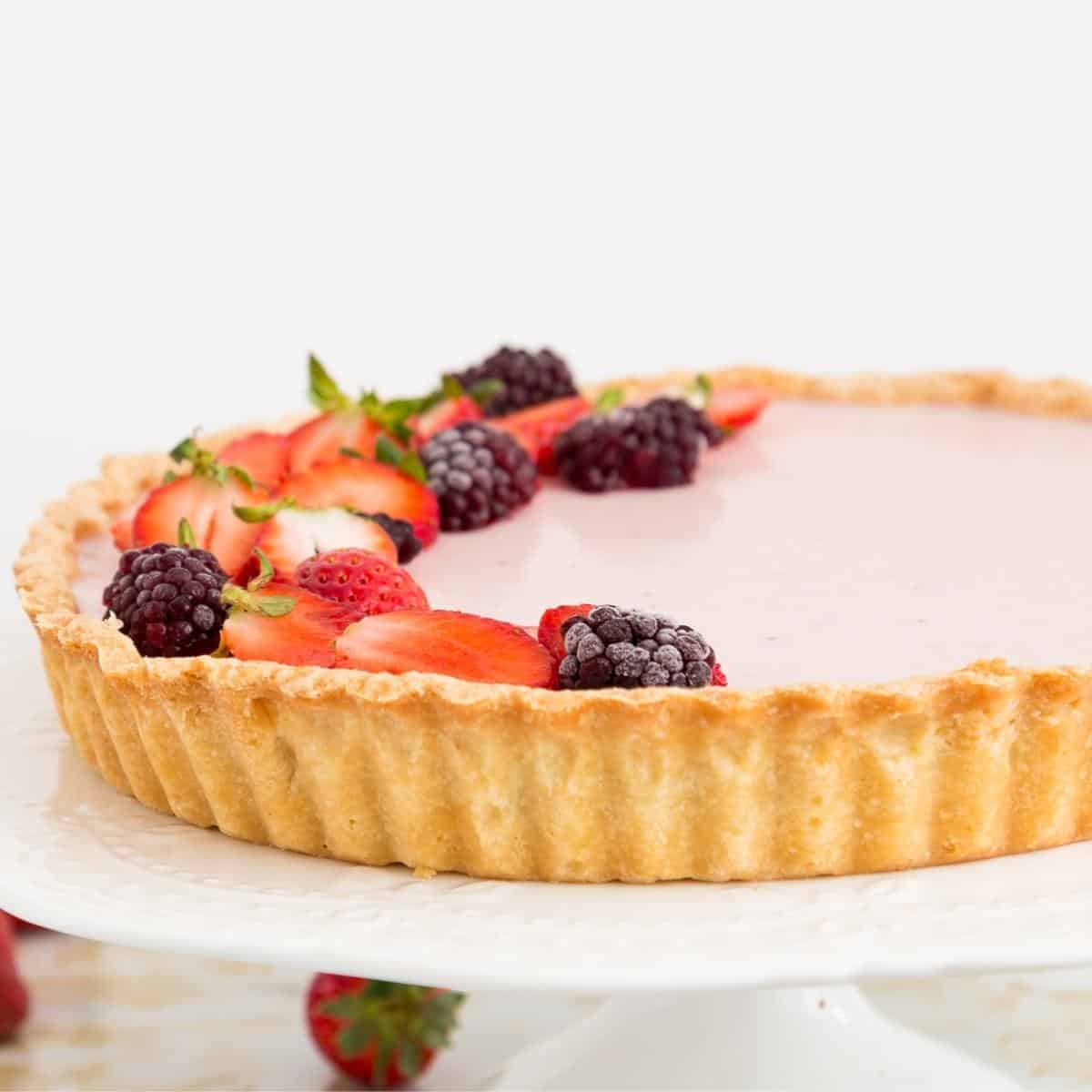
Remember that delicious fruit tart you ordered at a fancy restaurant? A buttery crust that crumbled as soon as you dug in with a fork. Perhaps filled with a mixture of sweet vanilla pastry cream and berries. That wonderful shortbread-like crust underneath is yours truly… rich shortcrust pastry or Pâte sablée in French.
Shortcrust pastry, a cornerstone of baking, is prized for its versatility and delicate texture. Composed of simple ingredients—flour, butter, sugar, and sometimes egg yolks—it achieves its characteristic crumbly yet tender consistency through precise techniques such as creaming.
Mastering the art of shortcrust pastry made using the creaming method requires attention to detail and patience.
Why make homemade shortcrust?
- Versatility: Shortcrust pastry is incredibly versatile and suitable for both sweet and savory dishes. You can use it to make pies, tarts, quiches, and even savory pastries like empanadas or hand pies.
- Texture: When made correctly, shortcrust pastry is tender, crumbly, and has a melt-in-your-mouth texture due to its high fat content (from butter or other fats) and the minimal gluten development.
- Presentation: Shortcrust pastry enhances the visual appeal of dishes with its golden-brown color and flaky texture, making it an excellent choice for both everyday meals and special occasions.
Ingredients and substitutes
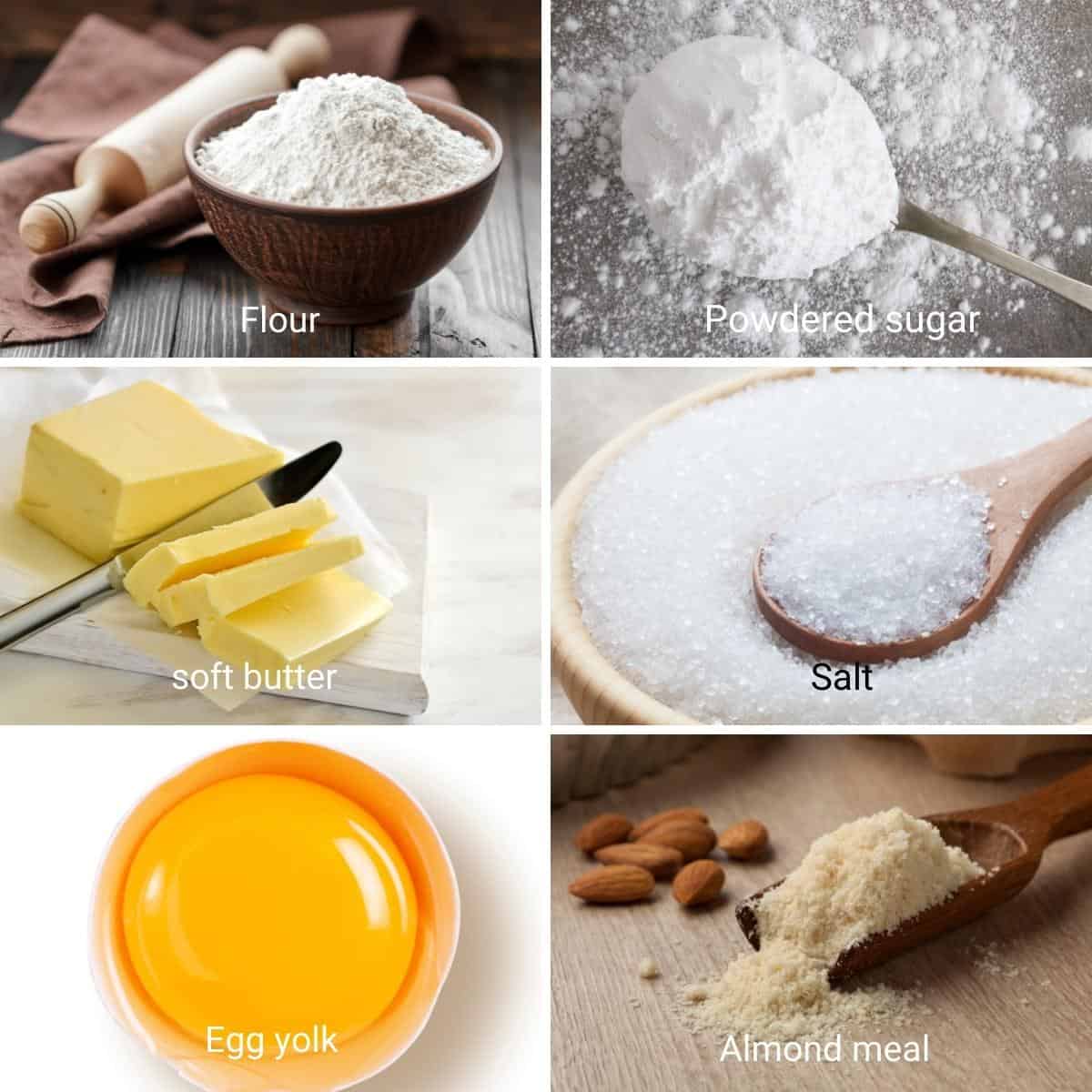
- Flour: Provides structure and bulk to the pastry. You can substitute all-purpose flour with pastry flour for a finer texture, or use gluten-free flour blends for a gluten-free version. You can also use almond flour partially for added flavor and texture.
- Butter: Adds richness, flavor, and helps create a tender, flaky texture. You can also use margarine or vegetable shortening as substitutes. However, the flavor and texture may slightly differ. For a dairy-free option, use plant-based butter.
- Sugar: Adds sweetness and helps tenderize the pastry. You can use granulated sugar, caster sugar, or powdered sugar (adjusting quantities for sweetness and texture preferences). For a healthier option, consider using coconut sugar or a sugar substitute like erythritol.
- Egg (or Egg Yolk): Provides moisture, binds the ingredients together, and adds richness. If you prefer not to use eggs, you can substitute with a mixture of water and cornstarch (for binding) or a commercial egg replacer. For a vegan option, use a flaxseed or chia seed egg (1 tablespoon ground flaxseed or chia seeds mixed with three tablespoons water per egg).
- Water (or Cold Liquid): Adjusts the consistency of the dough to make it easier to work with and roll out. You can also use milk or cream instead of water for a richer pastry. For savory pastry, you can use broth or even chilled white wine for added flavor.
- Salt: Enhances flavor and balances the sweetness in sweet pastries. You can use sea salt or kosher salt interchangeably. You can also omit salt if you prefer a low-sodium option, though it may slightly affect the overall flavor.
Step-by-step: Rich shortcrust pastry recipe
Dough
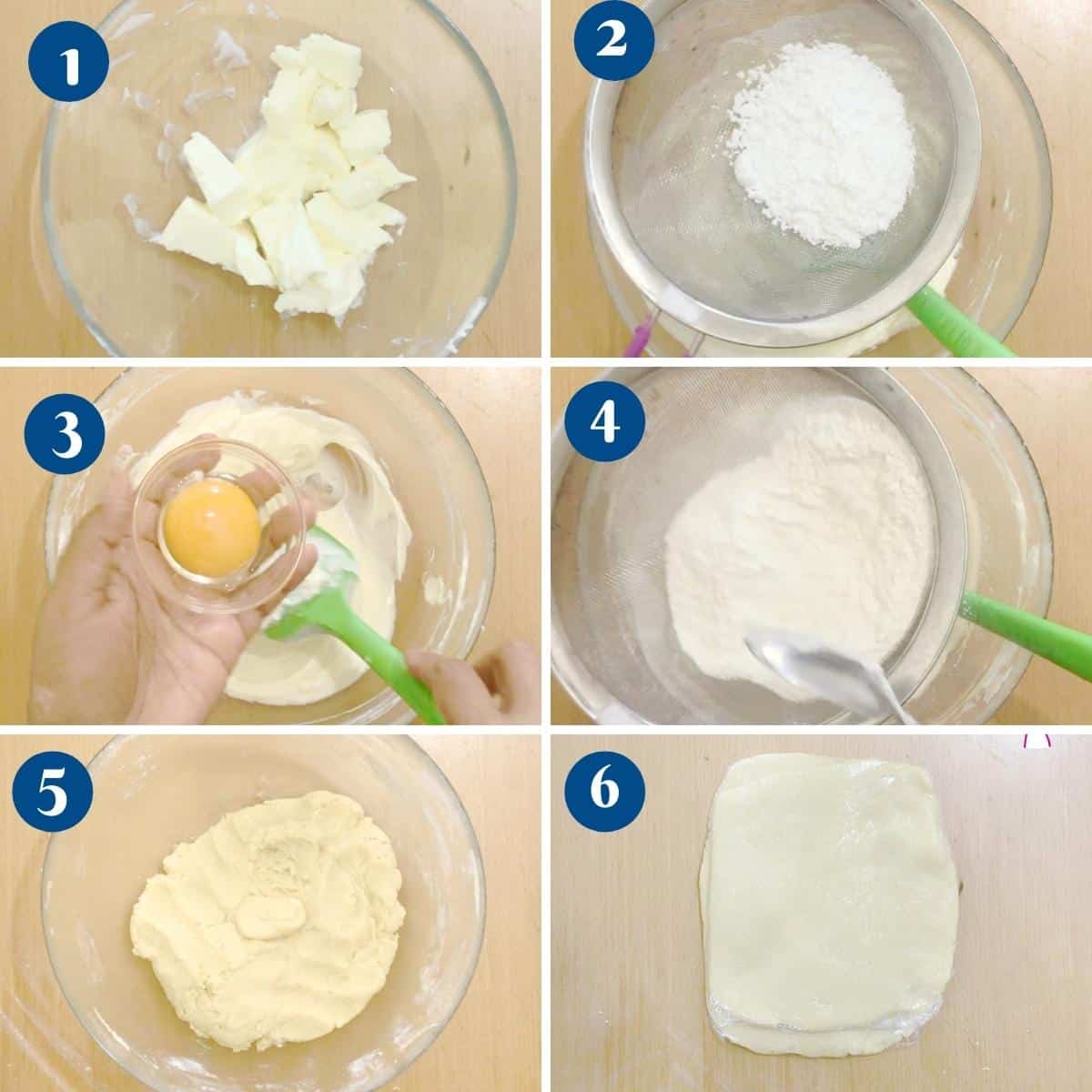
- Wet ingredients: In a mixing bowl, cream the softened butter and sugar until smooth and creamy. For this step, you can use a hand mixer or stand mixer fitted with the paddle attachment. Add the egg yolk, vanilla, and almond extract and mix well. Scrape down the sides of the bowl to ensure everything is evenly mixed.
- Dry ingredients: Sift the flour, almond flour, and salt into the bowl with the butter mixture. Mix on low speed or by hand until the dough comes together. If the dough seems dry or crumbly, add 1-2 tablespoons of cold water, a little at a time, until the dough forms a cohesive ball. Only add as much water as needed to bring the dough together.
- Chilling the Dough: Shape the dough into a disc, wrap it tightly in plastic wrap, and refrigerate for at least 30 minutes to 1 hour. Chilling helps relax the gluten and makes the dough easier to roll out.
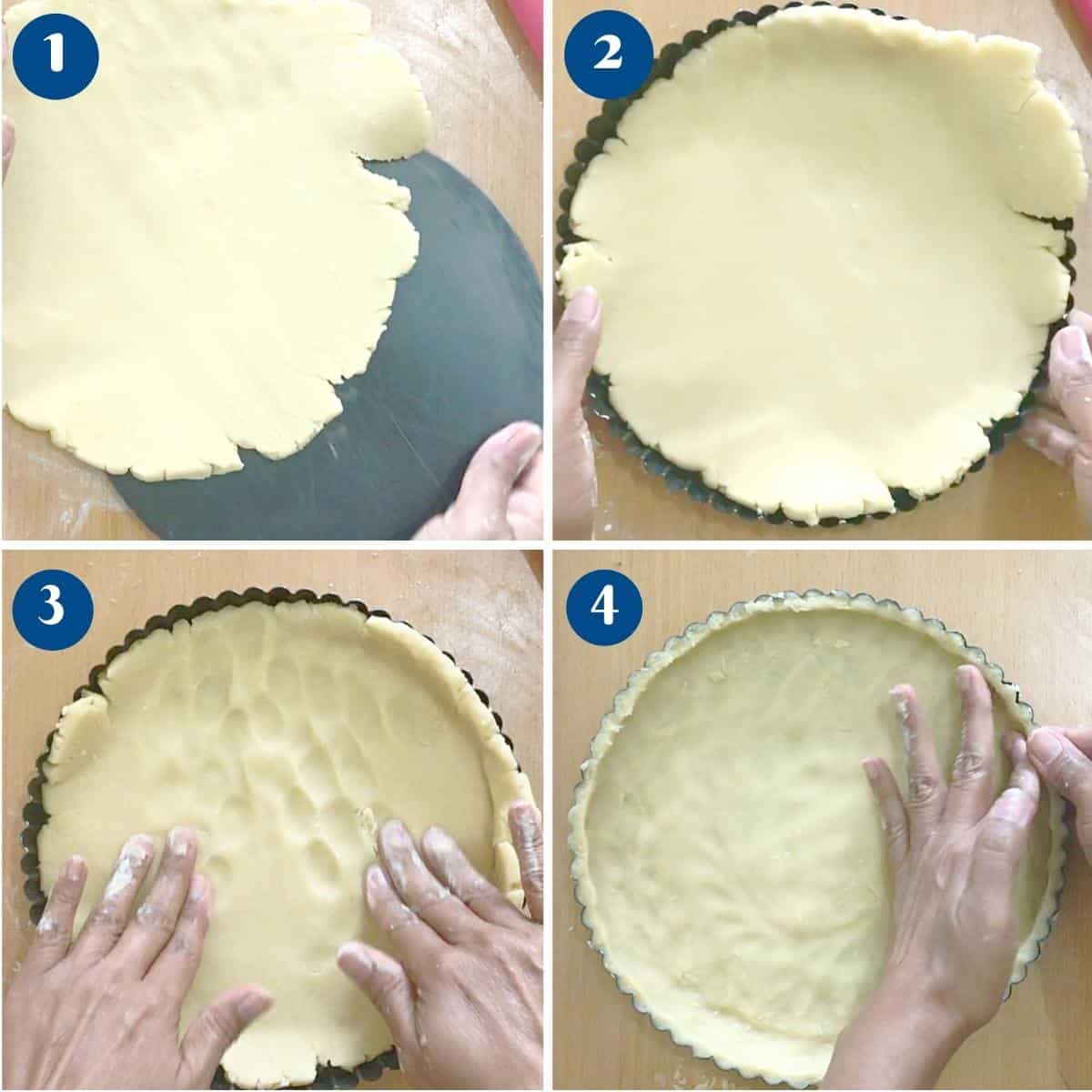
Rolling Method 1 (with a rolling pin)
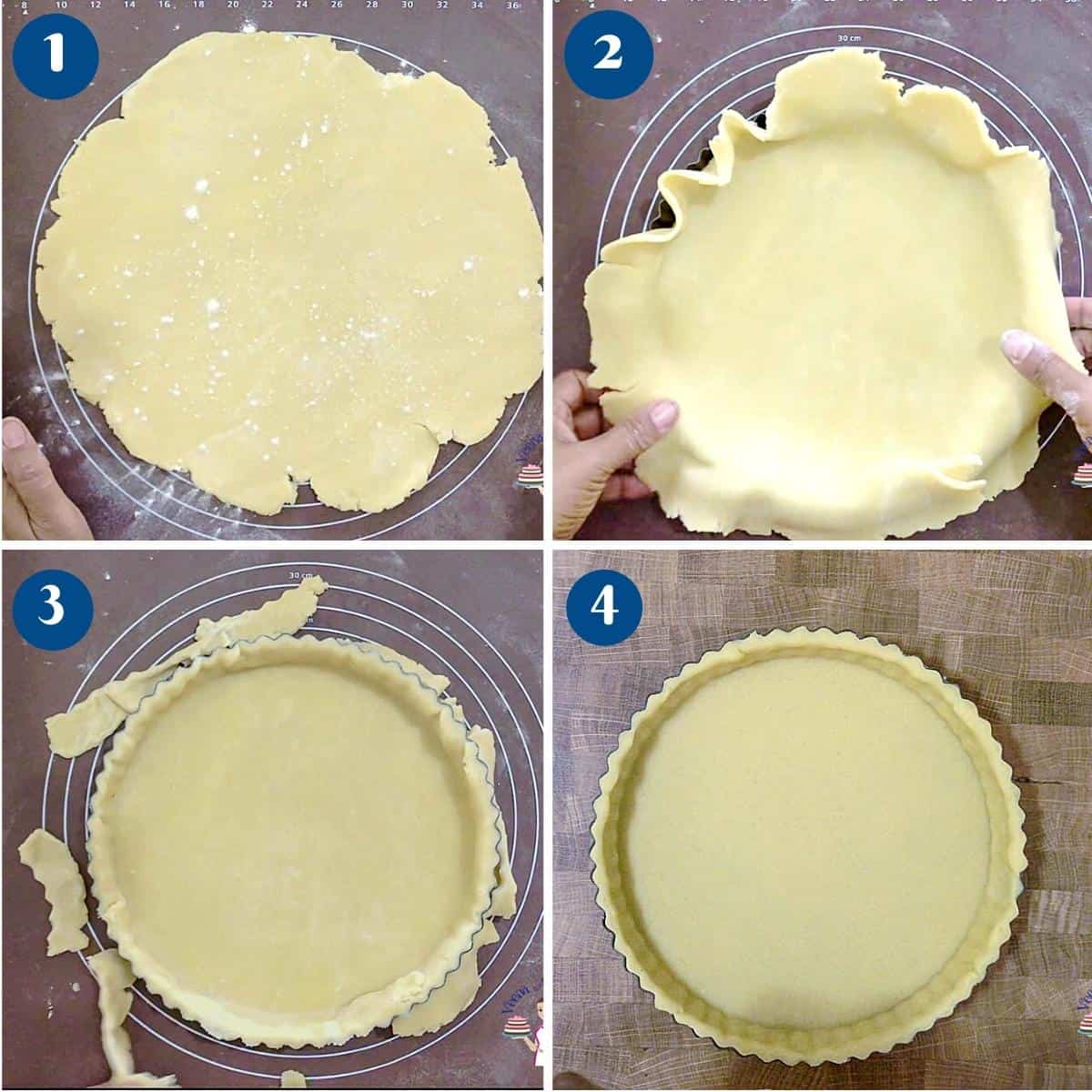
- Chilled Dough with Rolling Pin: Lightly flour your work surface and rolling pin. Place the chilled dough disc on the floured surface.
- Start rolling from the center outwards, turning the dough 90 degrees after each roll to ensure even thickness.
- Roll the dough to the desired size and thickness.
- Use a pastry cutter or sharp knife to trim any excess dough for a neat edge.
- Carefully lift the rolled dough using a rolling pin or by folding it gently over the pin, then unfurl it onto your pie dish or tart pan.
- Press it gently into the pan.
Rolling Method 2 (parchment paper)
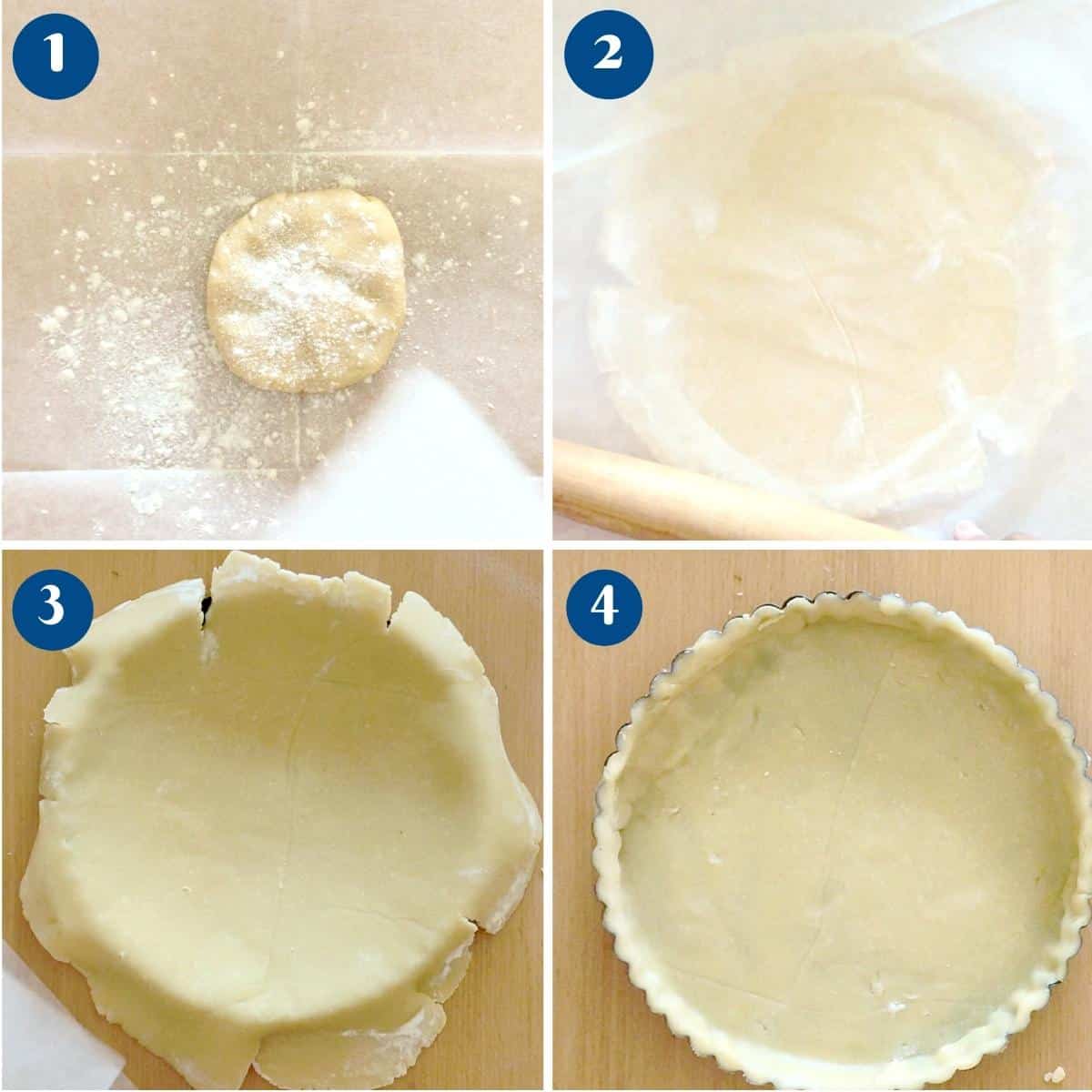
- Between Two Parchment Papers: Place a sheet of parchment paper on your work surface and dust lightly with flour to prevent sticking.
- Place the chilled dough disc on the parchment paper and dust the top lightly with flour.
- Place another sheet of parchment paper on top. Roll out the dough gently and evenly into a circle or rectangle, about 1/8 to 1/4 inch thick, depending on your recipe’s requirements.
- Remove the top parchment paper.
- Carefully flip the dough over onto your pie dish or tart pan.
- Gently peel off the parchment paper from the other side and press the dough into the pan.
Rolling Method 3 (finger spread)
- Press-In: Divide the chilled dough into smaller portions according to your tart or mini pie pans.
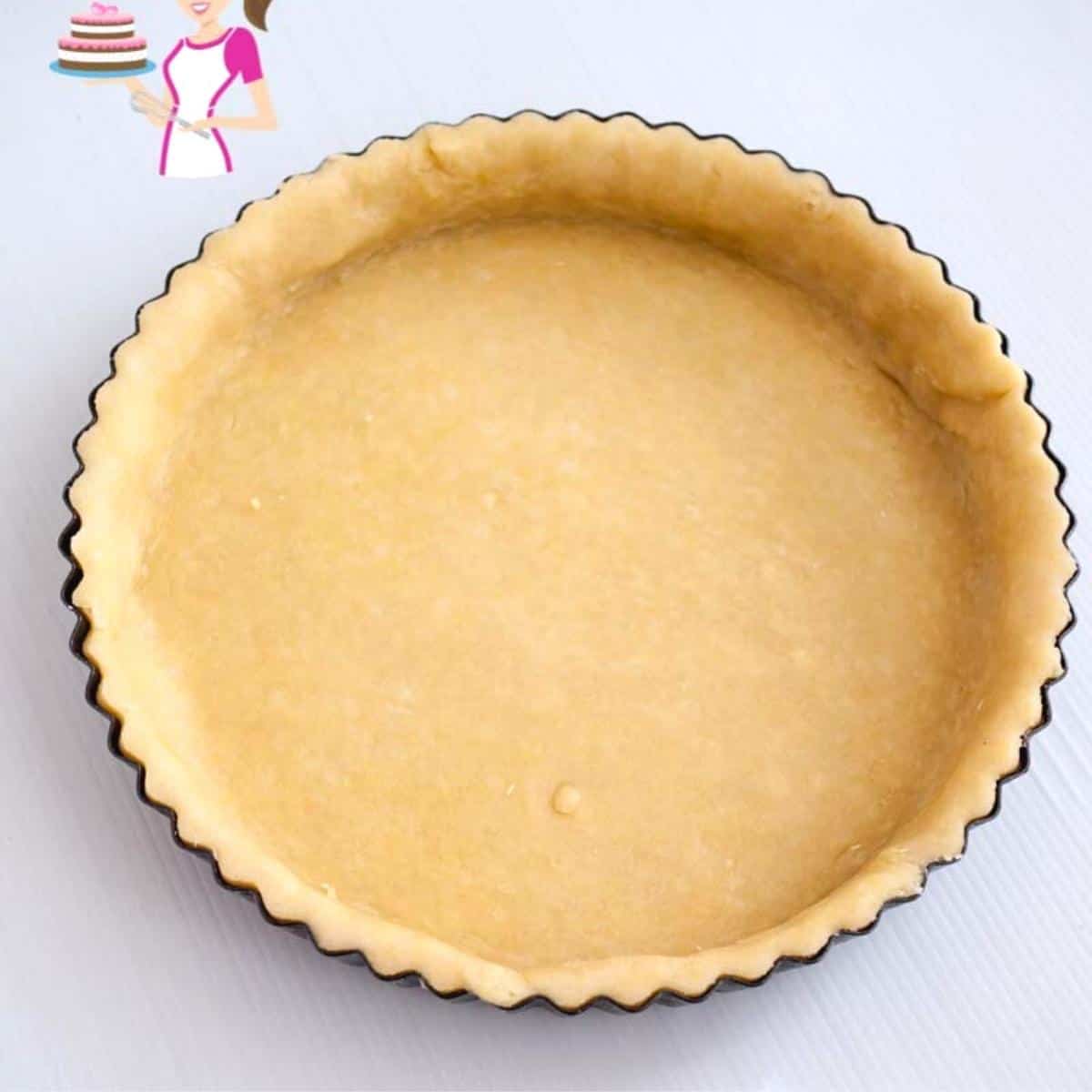
- Take a portion of the dough and press it evenly into the bottom and up the sides of the pan using your fingers.
- Distribute it evenly and press firmly. Use the back of a spoon or a small measuring cup to smooth out the surface and create an even layer of dough.
- Once the dough is pressed into the pan, you can chill it again for about 15-30 minutes before filling and baking, especially if your recipe requires a pre-baked crust.
Prepare for baking
- Chilling: Chill the lined tart or pie pan in the refrigerator for about 15-30 minutes. This helps prevent shrinkage during baking.
- Preheat your oven to 375°F (190°C) or as specified in your recipe.
- Docking: Once the pastry is fitted into the pan, prick the base all over with a fork. This prevents the pastry from puffing up during baking.
- Line and Weigh Down: Line the chilled pastry with parchment paper or aluminum foil, covering the bottom and sides completely. To weigh it down, fill the lined pastry with baking weights, dried beans, or rice.
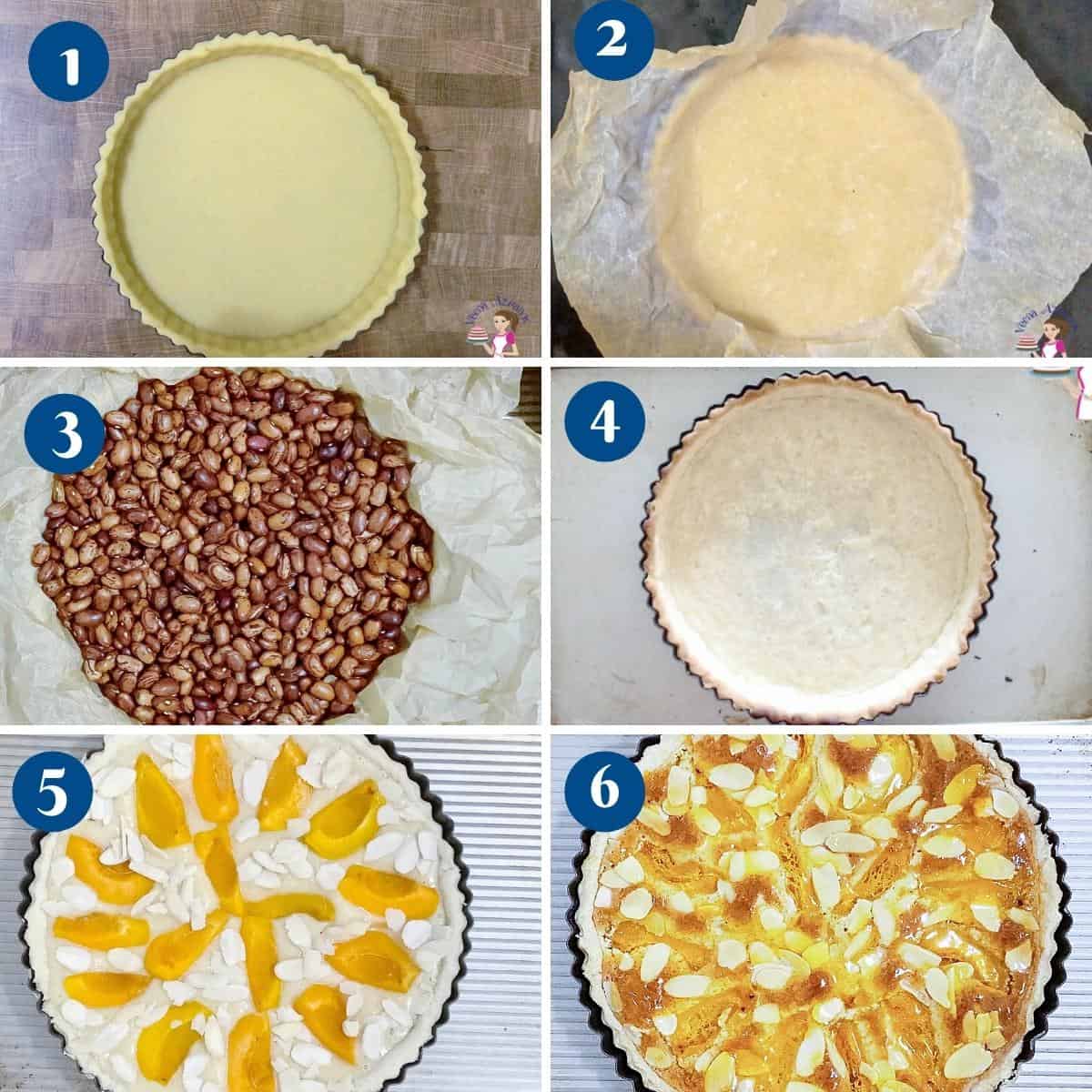
- Blind Bake: Place the weighted pastry in the oven and bake for about 15-20 minutes, or until the edges are set and starting to lightly brown. Carefully remove the parchment paper and weights from the partially baked crust. Add the filling, then return to the pan and continue baking for as long as your recipe calls for.

- Fully baked crust: Return the crust to the oven without filling for another 10 -15 minutes or until the base is dry and golden brown. This step ensures a fully cooked crust, especially if your filling doesn’t require additional baking.
- Cooling: Allow the baked crust to cool completely on a wire rack before filling as per your recipe’s instructions.
What rolling method do I choose?
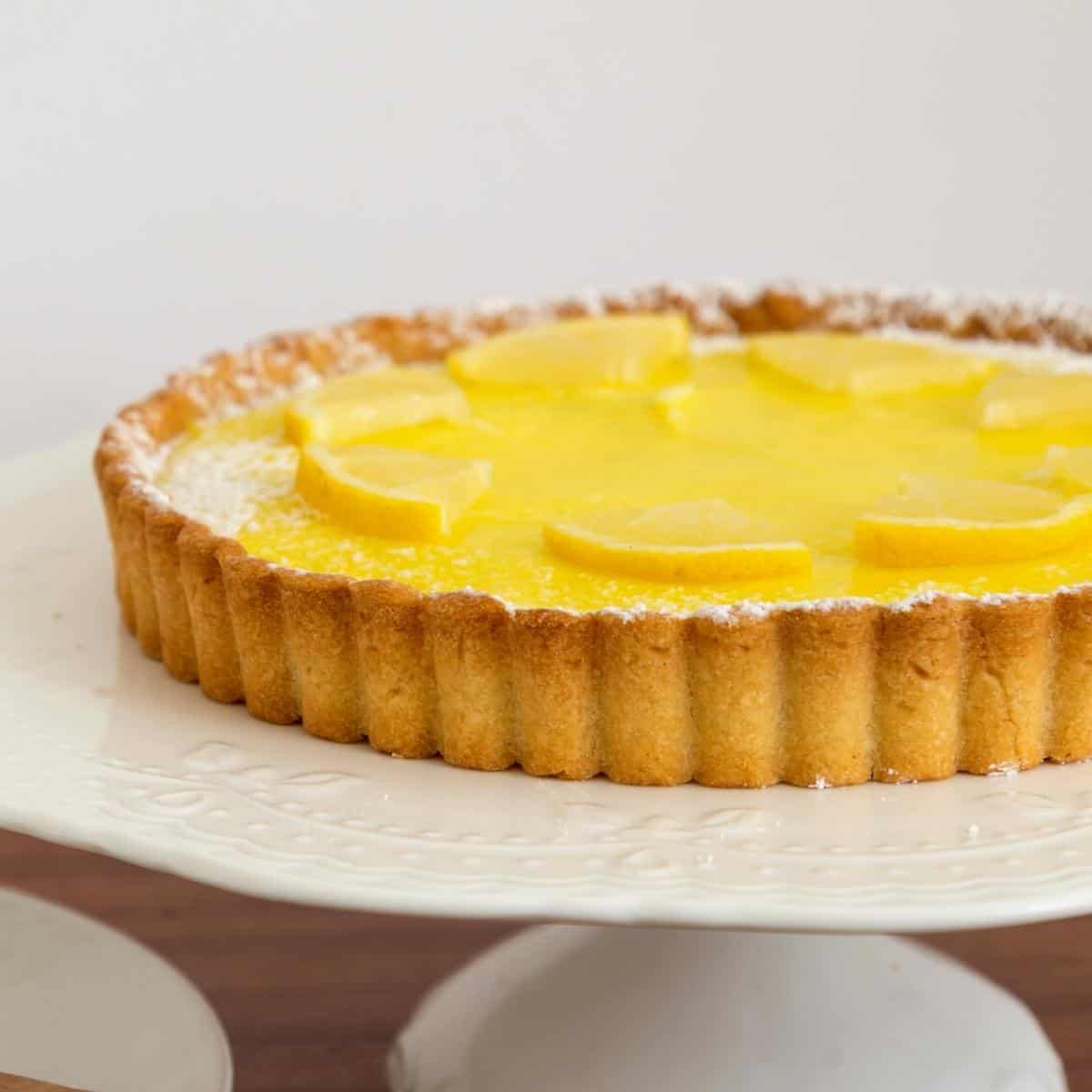
The choice of rolling method for shortcrust pastry can depend on the specific recipe, the type of baking dish you’re using, and personal preference for handling the dough.
Some recipes may specify a preferred method based on the intended texture or appearance of the pastry. For example, a delicate dessert tart might benefit from the parchment paper method to preserve its shape. At the same time, a rustic galette might be a better fit for the press-in method for a more casual appearance.
Alternatively, your comfort level with handling pastry dough can also influence your choice of rolling method. Experiment with different methods to find which one you find easiest and most effective for your baking style. Here’s a guideline on when each rolling method might be most suitable:
- With a Rolling Pin: Rolling out the dough directly on a lightly floured surface with a rolling pin gives you more control over the thickness and shape of the pastry. It’s suitable for most standard tart or pie recipes where you need to achieve a uniform thickness throughout. Use this method when making a classic fruit pie or a quiche where you need a consistent thickness for the base and sides of the pastry.
- Between Two Sheets of Parchment Paper: This method is ideal when you want to prevent the dough from sticking to the rolling pin or work surface. It’s particularly useful for delicate or sticky doughs, or when you need to transfer the rolled-out dough intact into a tart or pie pan without stretching or tearing. Use this method when making a delicate fruit tart to ensure the pastry remains intact and easy to handle.
- Press-In Method: This method is convenient for tart pans with removable bottoms or shallow pie dishes. It allows you to quickly and evenly distribute the pastry dough into the pan without the need for rolling. Use this method when making a quick savory tart or one you want to look rustic with slightly uneven edges.


Troubleshooting
- Why is my pastry hard when cooked?
There are a few reasons for this.- Pastry dough needs to be high in fat, which gives it a crumbly, flaky, and buttery texture. If you reduce the fat content, your tart will be more doughy than buttery, which means harder.
- Also, pastry dough is made with flour, which must be handled lightly, keeping the activity to a minimum. If you knead the dough too much, the resulting pastry will be hard.
- When stored in the fridge, a pastry dough will be hard because the fat is chilled and hard to roll. Don’t worry, just let it rest outside until it’s firm but good enough to roll.
- How do you keep the pastry from shrinking?
Nothing is worse than finding your tart has shrunk after baking. Here are a few tips that might help.- Do not overwork the dough. Remember, flour contains gluten, and if you overwork the dough, you will activate it. You cannot entirely omit gluten formation, but you can control it by handling it carefully so it does not contract in the oven.
- Never add too much water to the dough. Keep it flaky by adding only enough water to bring it together. This is harder in the beginning, but gather the dough lightly and use a cling/plastic wrap to help form a disc.
- Let the dough rest before rolling and before baking. This will help the dough relax, so it is easier to roll, and help the butter chill so it doesn’t melt as quickly when baking.
- Bake at a higher temperature. This will melt the butter while cooking the dough instantly, which means the cooked dough immediately soaks up all that melted butter.
- Easy Strawberry Tart Recipe
- Blueberry Tart (custard-filled)
- Blueberry Cream Cheese Tartlets
- Lemon Cheesecake Tartlets
- Simple Ways to Make Mini Tart Shells for Delicious Treats

Frequently asked questions
You can keep a partially baked crust in the fridge for 2 days or frozen for up to a month. Thaw to room temperature, add the filling, and then bake as directed in the recipe.
A fully baked pastry will keep at room temperature for 2 to 3 days or in the fridge for 5 days. You can even freeze it in the tart pan for up to a month. Thaw overnight in the fridge for best results.
It depends on the tart you are making. If you need to cook the filling, then you partially bake the crust before adding the filling. This way, when you continue to bake the crust, it does not get soggy and is guaranteed to be fully cooked. If the filling does not need to be cooked, then we fully bake the crust. Cool it completely, then add the filling.
The pastry is baked when the bottom is cooked, not when the edges are brown. Always make sure the bottom of the crust is cooked, or any filling will soak into the crust and make the tart soggy.
Both Pâte Sablée and Pâte Sucrée use similar methods involving blending butter, flour, sugar, and sometimes egg yolks. However, the ratios of these ingredients and the mixing techniques may vary slightly to achieve their distinct textures and flavors.
Pâte Sablée: Known for its sandy or crumbly texture (sablé means sandy in French), Pâte Sablée typically contains a higher ratio of butter to flour compared to Pâte Sucrée. This results in a richer, more tender pastry that melts in the mouth. It often includes egg yolks for added richness and texture. Due to its higher butter content, Pâte Sablée is more fragile and crumbly, making it ideal for delicate tart crusts and desserts that call for a tender, melt-in-your-mouth texture. It pairs well with fruit fillings, custards, and creams.
Pâte Sucrée: Literally meaning sweet pastry in French, Pâte Sucrée is sweeter and more cookie-like than Pâte Sablée. It has a higher sugar-to-flour ratio, giving it a slightly crispier texture when baked. Pâte Sucrée is often used for sweet tart shells and desserts that require a firmer, sweeter base. With its sweeter and firmer texture, Pâte Sucrée holds its shape well when baked, making it suitable for tart shells that need to be filled and sliced without crumbling. It is commonly used for classic fruit tarts, tartlets, and other desserts that require a sturdy yet sweet pastry base.
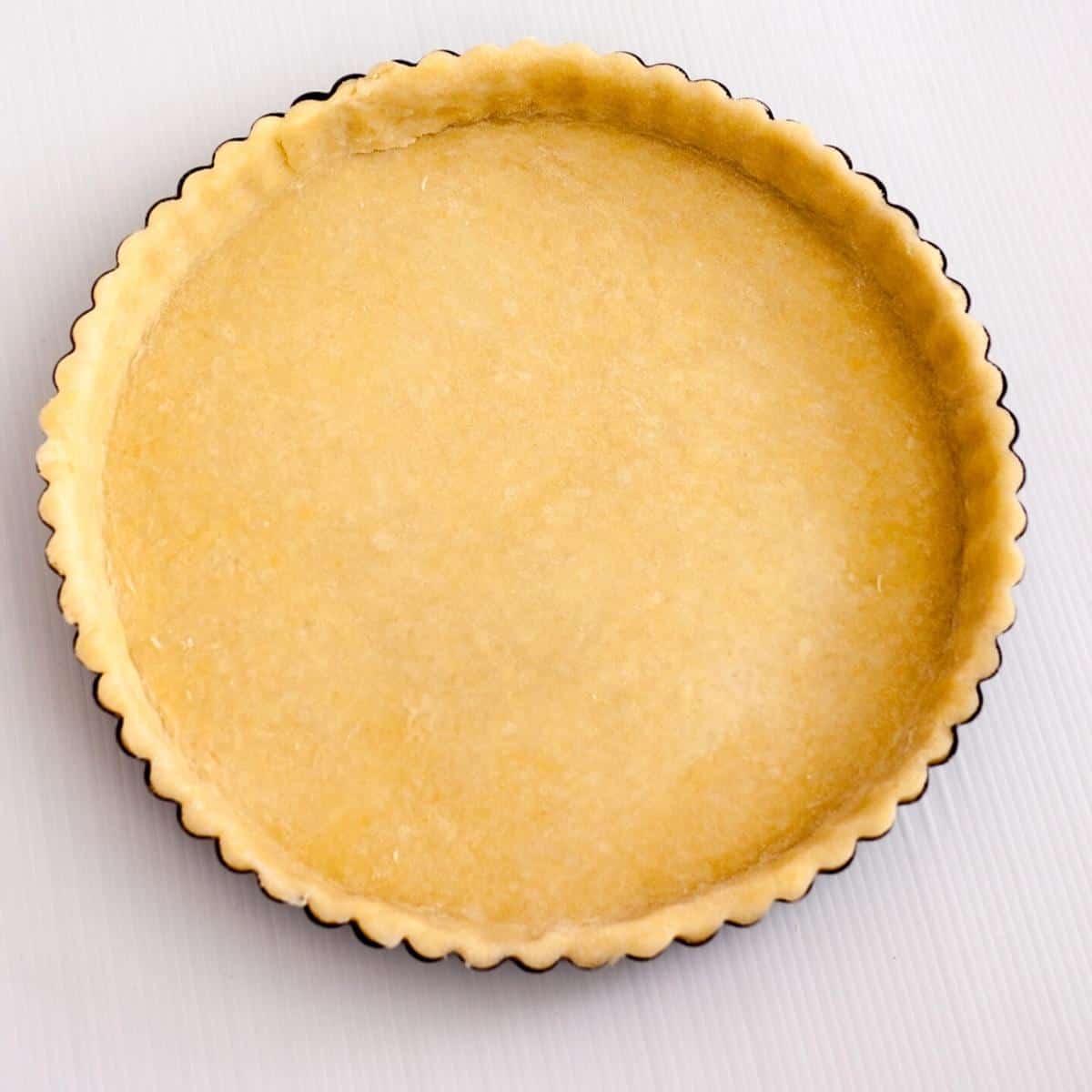
Rich Shortcrust Pastry (Pate Sablee)
A rich shortcrust pastry or Pâte Sabée, as they say in French, is a buttery shortbread-like crust, a perfect base for making sweet tarts such as fruit tarts. Today, I will show you three methods to roll this pastry from scratch.
Video
Ingredients
- 1¾ cup (220 g) All-purpose flour
- ½ cup (55 g) Almond flour
- ¼ tsp Salt
- ½ cup (113 g) Butter unsalted, room temperature
- ¼ cup (30 g) Powdered sugar or granulated sugar
- 1 large Egg yolk or whole egg instead of water
- 1 tsp Vanilla extract optional
- 2 tbsp Chilled water (only if needed)
Method
- Wet ingredients: In a mixing bowl, cream the softened butter and sugar until smooth and creamy. For this step, you can use a hand mixer or stand mixer fitted with the paddle attachment. Add the egg yolk, vanilla, and almond extract and mix well. Scrape down the sides of the bowl to ensure everything is evenly mixed.½ cup Butter, ¼ cup Powdered sugar, 1 large Egg yolk, 1 tsp Vanilla extract
- Dry ingredients: Sift the flour, almond flour, and salt into the bowl with the butter mixture. Mix on low speed or by hand until the dough comes together. If the dough seems dry or crumbly, add 1-2 tablespoons of cold water, a little at a time, until the dough forms a cohesive ball. Only add as much water as needed to bring the dough together.1¾ cup All-purpose flour, ½ cup Almond flour, ¼ tsp Salt, 2 tbsp Chilled water
- Chilling the Dough: Shape the dough into a disc, wrap it tightly in plastic wrap, and refrigerate for at least 30 minutes to 1 hour. Chilling helps relax the gluten and makes the dough easier to roll out.
- Chilled Dough with Rolling Pin: Lightly flour your work surface and rolling pin. Place the chilled dough disc on the floured surface. Start rolling from the center outwards, turning the dough 90 degrees after each roll to ensure even thickness. Roll the dough to the desired size and thickness. Use a pastry cutter or sharp knife to trim any excess dough for a neat edge. Carefully lift the rolled dough using a rolling pin or by folding it gently over the pin, then unfurl it onto your pie dish or tart pan. Press it gently into the pan.
- Between Two Parchment Papers: Place a sheet of parchment paper on your work surface and dust lightly with flour to prevent sticking. Place the chilled dough disc on the parchment paper and dust the top lightly with flour. Place another sheet of parchment paper on top. Roll out the dough gently and evenly into a circle or rectangle, about 1/8 to 1/4 inch thick, depending on your recipe's requirements. Remove the top parchment paper. Carefully flip the dough over onto your pie dish or tart pan. Gently peel off the parchment paper from the other side and press the dough into the pan.
- Press-In: Divide the chilled dough into smaller portions according to your tart or mini pie pans. Take a portion of the dough and press it evenly into the bottom and up the sides of the pan using your fingers. Ensure it's evenly distributed and pressed firmly. Use the back of a spoon or a small measuring cup to smooth out the surface and create an even layer of dough. Once the dough is pressed into the pan, you can chill it again for about 15-30 minutes before filling and baking, especially if your recipe requires a pre-baked crust.
- Chilling: Chill the lined tart or pie pan in the refrigerator for about 15-30 minutes. This helps prevent shrinkage during baking.
- Oven: Preheat your oven to 375°F (190°C) or as specified in your recipe.
- Docking: Once the pastry is fitted into the pan, prick the base all over with a fork. This prevents the pastry from puffing up during baking.
- Line and Weigh Down: Line the chilled pastry with parchment paper or aluminum foil, covering the bottom and sides completely. Fill the lined pastry with baking weights, dried beans, or rice to weigh it down.
- Blind Bake: Place the weighted pastry in the preheated oven and bake for about 15-20 minutes, or until the edges are set and starting to brown lightly. Carefully remove the parchment paper and weights from the partially baked crust. Add the filling and return to the pan to continue baking for as long as described in your recipe.
- Fully baked crust: Return the crust to the oven without filling for another 10 -15 minutes or until the base is dry and golden brown. This step ensures a fully cooked crust, especially if your filling doesn't require additional baking.
- Cooling: Allow the baked crust to cool completely on a wire rack before filling per your recipe's instructions.
Notes
-
- Temperature of ingredients: Use softened butter at room temperature for the creaming method. This allows the butter to mix evenly with the sugar and egg yolks, creating a smooth and creamy texture in the pastry dough.
-
- Handle Gently: Overworking the dough can lead to a tough pastry. Mix and knead the dough only until it comes together. Use a light touch when rolling out the dough to avoid overstretching it.
-
- Resting Time: Allow the dough to rest in the refrigerator before rolling it out. This helps relax the gluten and prevents shrinkage during baking.
-
- Proper Rolling Technique: Roll the dough evenly and to the desired thickness. Rotate the dough regularly while rolling to maintain a round shape and prevent sticking.
-
- Docking and Weighing Down: For blind baking, dock (prick) the pastry with a fork to prevent it from puffing up. Use parchment paper and pie weights, or dried beans, to weigh down the pastry while blind baking.
-
- Baking Temperature: Preheat your oven adequately. A hot oven ensures that the pastry cooks quickly and evenly, resulting in a crisp and golden crust.
-
- Ventilation: Ensure proper ventilation during baking, especially for filled pastries like quiches. This helps steam escape and prevents a soggy bottom.
-
- Cooling: Allow baked pastry to cool completely on a wire rack before filling. This prevents condensation and keeps the crust crisp.
-
- Experiment with Flavors: Don’t hesitate to experiment with different flours, sugars, and flavorings (like vanilla or spices) to customize your pastry for sweet or savory recipes.
-
- Practice Makes Perfect: Like any baking skill, practice improves technique. Don’t be discouraged if your first attempt isn’t perfect; learn from each experience to refine your pastry-making skills.
Equipment you will need
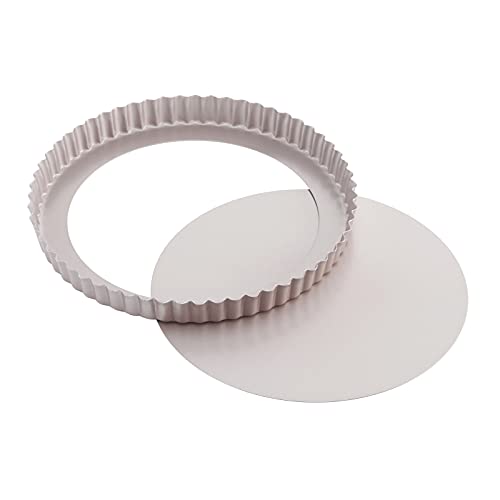


Nutrition
Tried this recipe?
Mention @veenaazmanov_kitchen or tag #veenaazmanovkitchen!- Apricot Tart
- Mango Tart, Parisian Flan
- Parisian Flan French Custard Tart
- Apple Crumble Tart
- Mango Panna Cotta Tart
- Sweet Shortcrust Pastry – Pate Sucree’
- See all tart recipes



Don’t lose this recipe! Save it for Later!
📌 Save this Recipe for later on Pinterest so you can easily find it again.
⭐ Add Veena Azmanov Kitchen to your Google Preferred Sources.
It helps Google show you more of our recipes.
📧 Subscribe for new recipes delivered to your inbox.
🎥 Follow us for more recipes

Hi, I’m Veena
I’m the recipe developer, baker, and food photographer behind Veena Azmanov Kitchen.
I’ve spent years developing and testing recipes, from everyday meals and homemade breads to cakes and desserts.
I share the practical tips and little details I’ve learned along the way so you can get great results in your own kitchen.




Pastry – done – Day 9
Pastry Day 9 – DONE
Pastry day 9 done
Pastry Day 8 Done – Can I please ask what does the addition of the optional almond meal do to the pastry and what happens if you leave it out? What is the benefit of adding it other than for some texture? Thanks
Marie. Almond flour adds to that crumble gritty texture that gives a biscuity mouthfeel. But, yes, you can omit it and add just all purpose flour as well.
Thanks Veena. Thought it might be something to do with texture. Love your work. Greetings from Australia.
Pastry day 9done.
Pastry Day 9 Done
“Pastry Day 9 DONE”
Done
Pastry day 9 done
Day ?? Rich Shortcrust Pastry – DONE
Thank you Veena