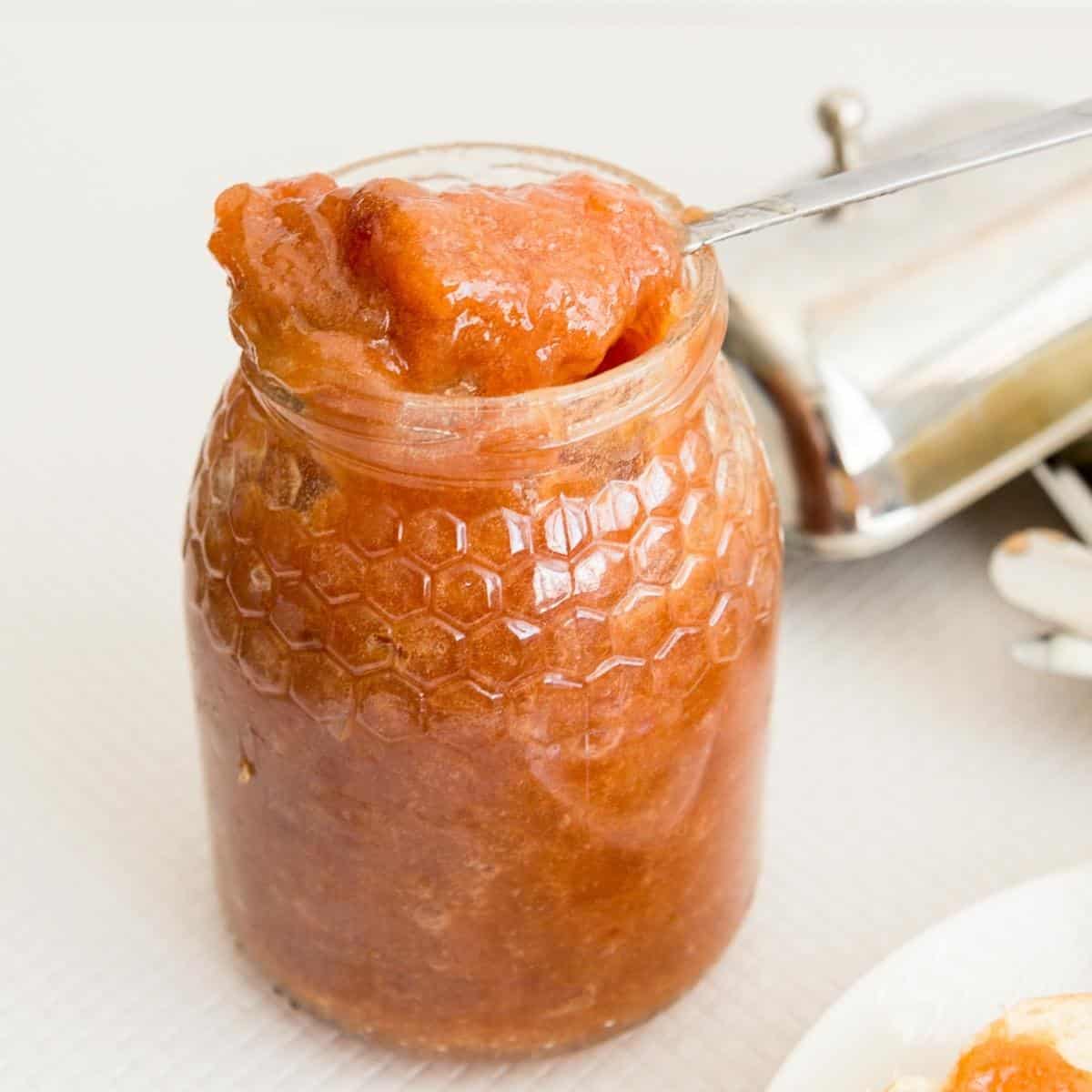



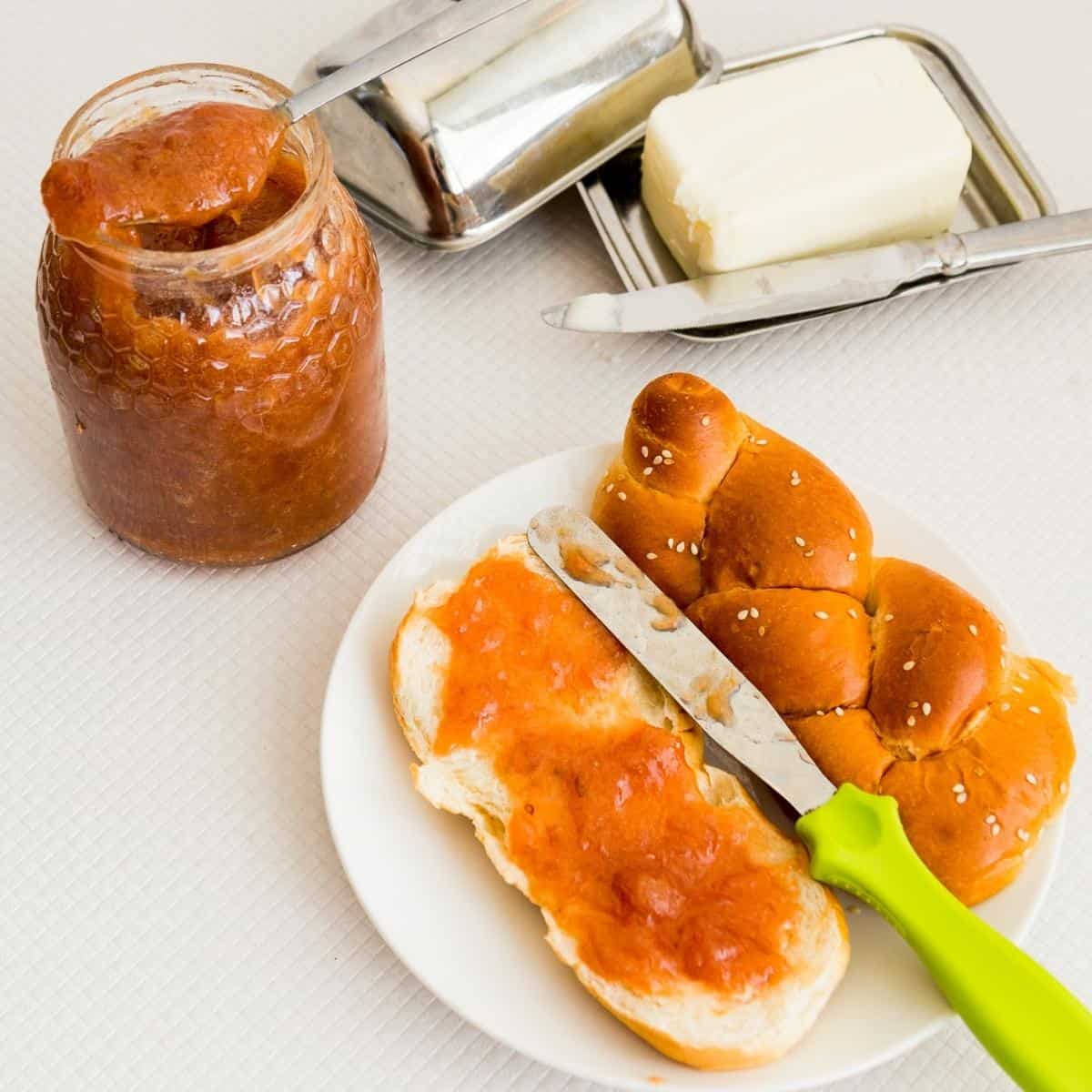
Summer brings an abundance of stone fruits such as plums, peaches, and apricots. This plum peach jam is a delicious way to make the most of them. It’s low in sugar and made using the old-fashioned method without added pectin.
Every year when plums and peaches come into season, I can’t help but think back to those sunny days at the market, picking out the juiciest fruits. My mom would take them home, and in no time, they turned into the most amazing plum-peach jam. I’d sneak spoonfuls straight from the jar—it was such a treat! Now, I make my own version with extra fruit, low sugar, and no pectin. It’s fresh, simple, and totally delicious.
Every time I spoon it over toast or mix it into my yogurt, I’m taken back to those relaxed market mornings. It’s a little reminder of how the simplest moments can inspire something delicious. Give it a try and see if it doesn’t become your new favorite, too! Try it on toast, swirl it into yogurt, or even drizzle it on pancakes—trust me, you’ll be hooked.
Why you’ll love this plum peach jam
- Simple to make – Just peaches, plums, sugar, and lemon juice cooked on the stovetop until thick and jammy.
- No added pectin – The fruit’s natural pectin, acidity, sugar, and cooking time work together to give the jam its consistency.
- Less sugar – This version uses less sugar than traditional jam, so the flavor of the peaches and plums really comes through.
- Great for small batches – Keep it in the refrigerator or freeze it for longer storage.
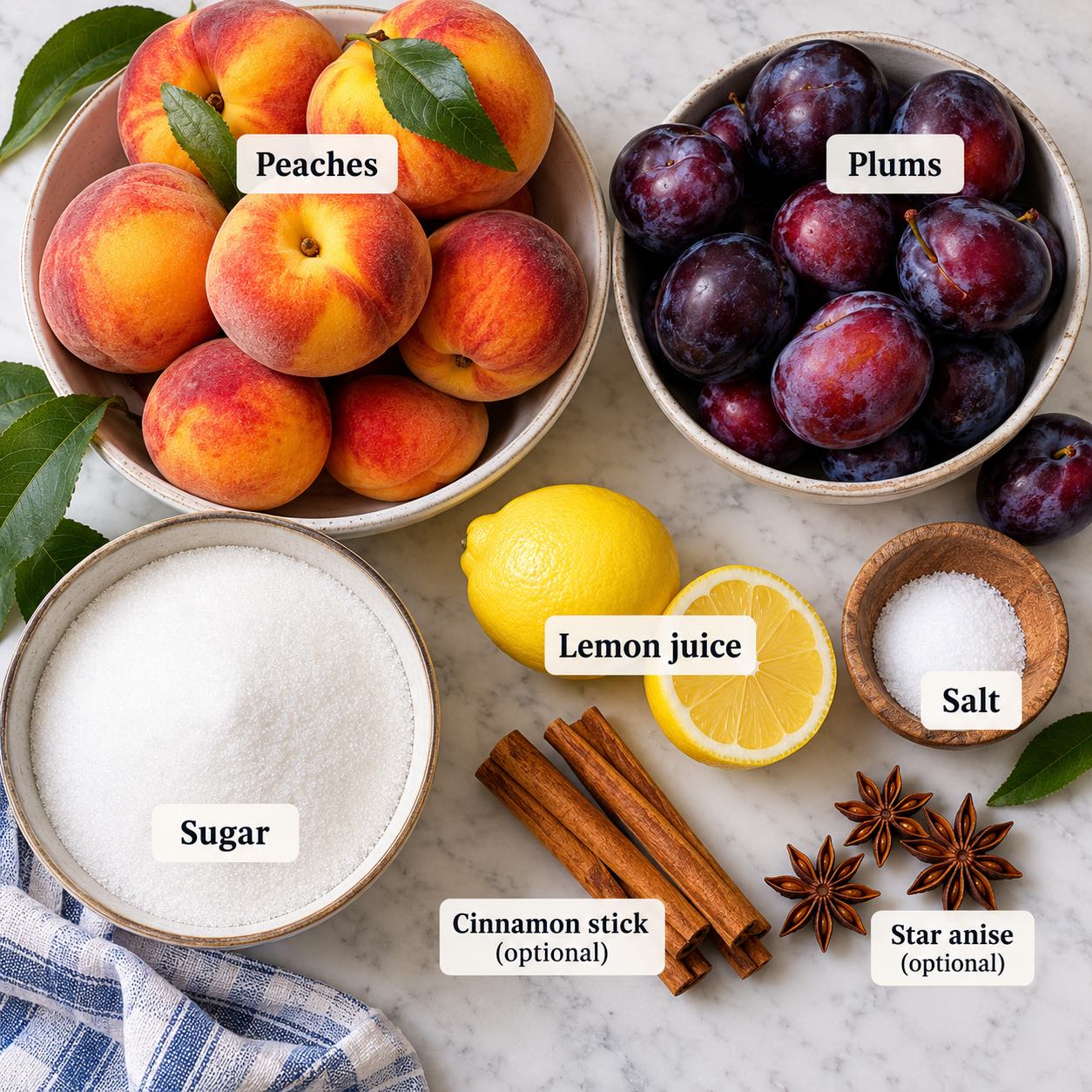
Ingredients and substitutes
- Peaches – Use fresh peaches when they are in season. Choose ripe but firm peaches for the best flavor and texture.
- Plums – Plums pair beautifully with peaches and add both tartness and a deeper color to the jam.
- Sugar – I prefer my jams fruity rather than overly sweet, so this recipe uses less sugar than a traditional jam. You can add more sugar if you prefer a sweeter jam.
- Lemon juice – Adds acidity, balances the sweetness of the fruit, and helps the jam set.
- Star anise and cinnamon – These are optional, but I love the subtle warmth they add to stone fruits. I use them whole so they gently infuse the jam without overpowering the peach and plum flavor.
Step-by-step: Plum Peach Jam Recipe
Place two small ceramic plates in the freezer. You’ll use these later to test whether the jam has reached its setting point.
Score a small X on the bottom of the peaches and plums. Blanch them in boiling water for about 3 minutes, then transfer them to a bowl and let them cool enough to handle. Peel, pit, and roughly chop the fruit.
Pro tip: If the skins are stubborn, cover the warm fruit for 5 to 10 minutes. The trapped steam helps loosen the skins.
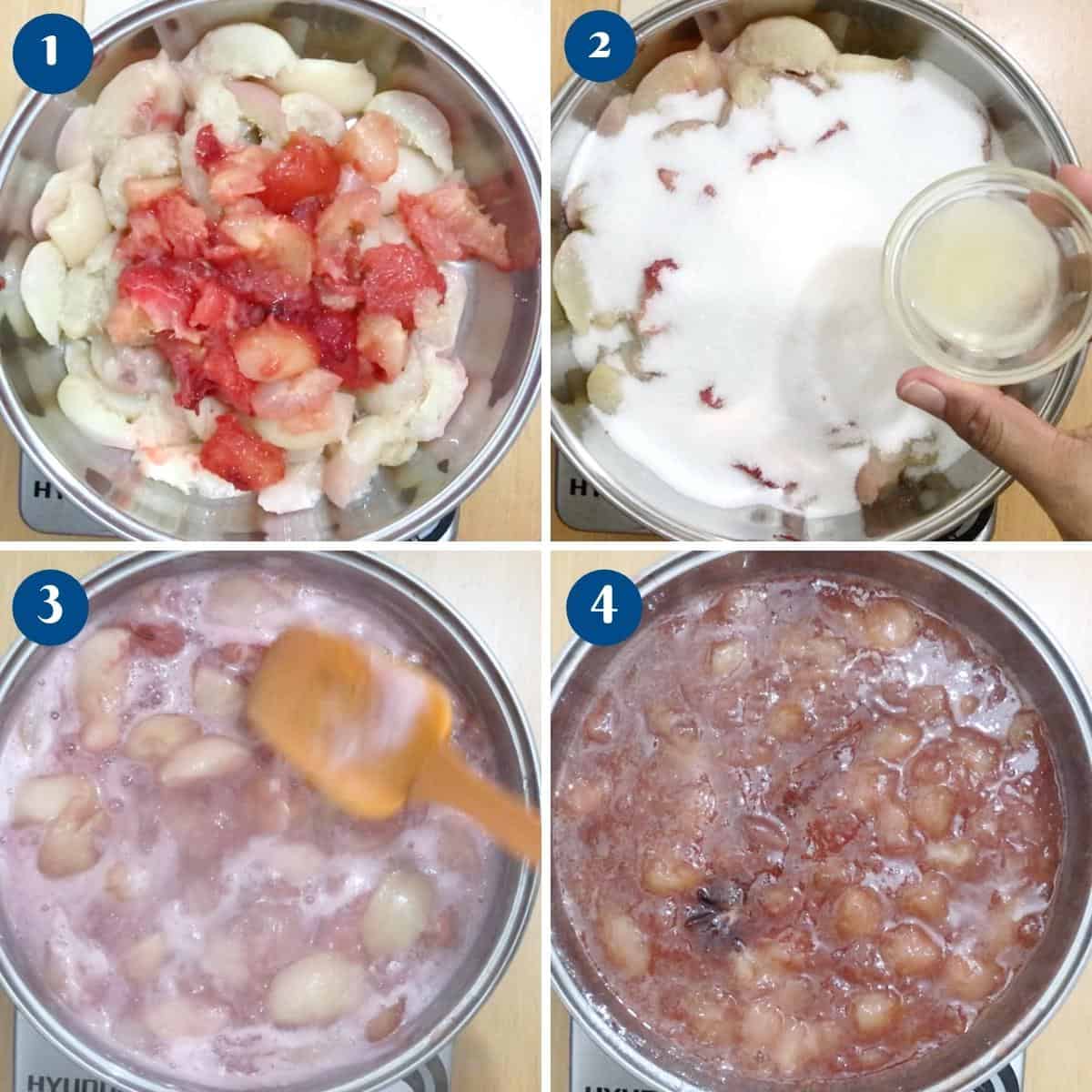
Add the chopped peaches and plums to a heavy-bottomed saucepan with the sugar, lemon juice, and salt. Add the cinnamon stick or star anise, if using.
Cook over medium heat, stirring until the sugar has completely dissolved. Increase the heat and bring the mixture to a boil for about 2 minutes.
Reduce the heat to maintain a steady simmer. Mash the fruit with a potato masher until you have the texture you prefer — smooth or slightly chunky.
Continue cooking for about 20 to 30 minutes, stirring frequently, especially as the jam begins to thicken.
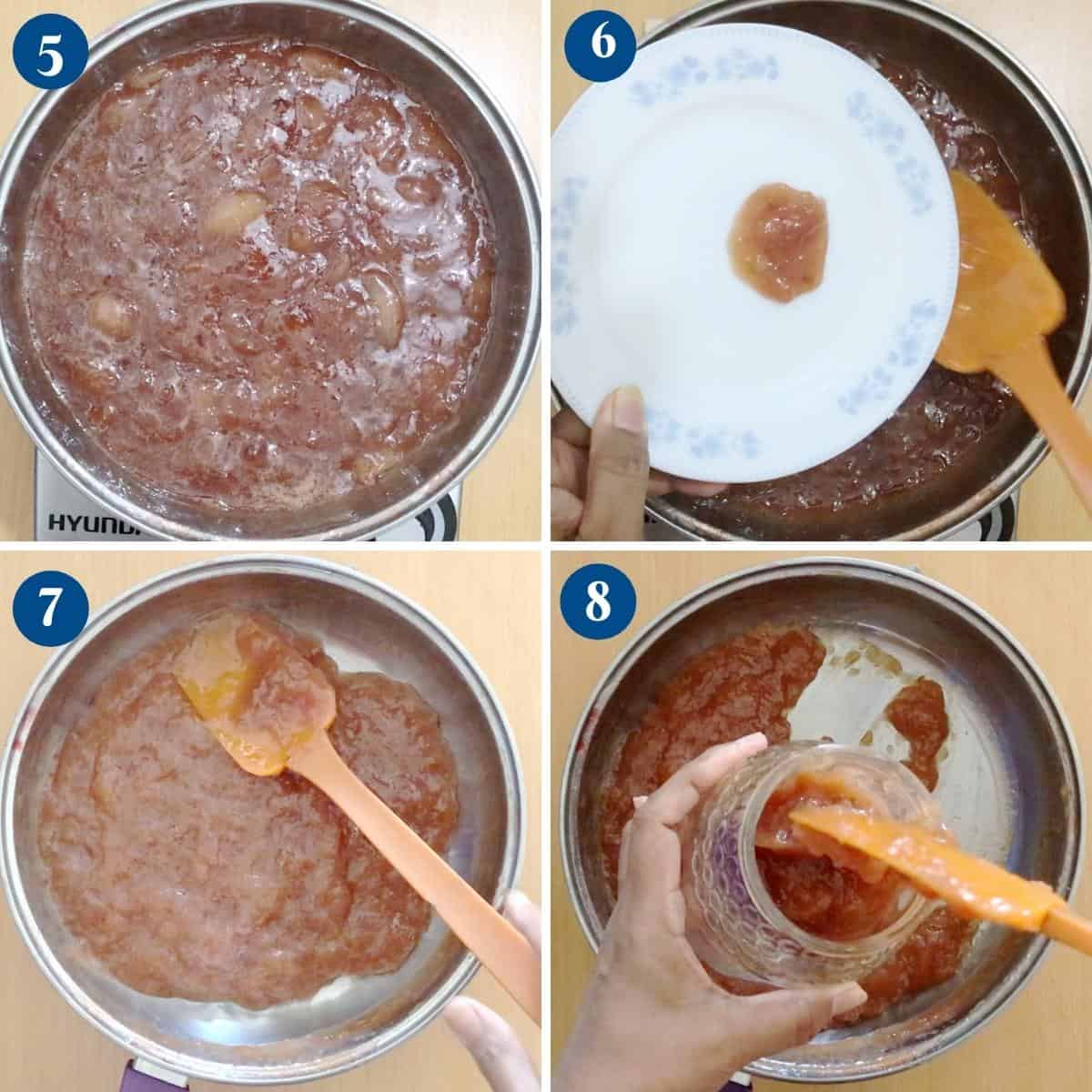
Testing the Jam
Spoon a small amount of jam onto one of the chilled plates. Let it sit for 1 to 2 minutes, then push it gently with your finger. If the surface wrinkles and the jam doesn’t immediately run back together, it’s ready.
Alternatively, check with a thermometer. The jam should reach approximately 105°C / 221°F.
Pro tip: Start testing a little early. You can always cook the jam for another few minutes, but an overcooked jam is much harder to fix.
Remove the cinnamon stick or star anise, if used. If there is foam on the surface, skim it off. You can also stir in 1 teaspoon of butter to help disperse the foam.
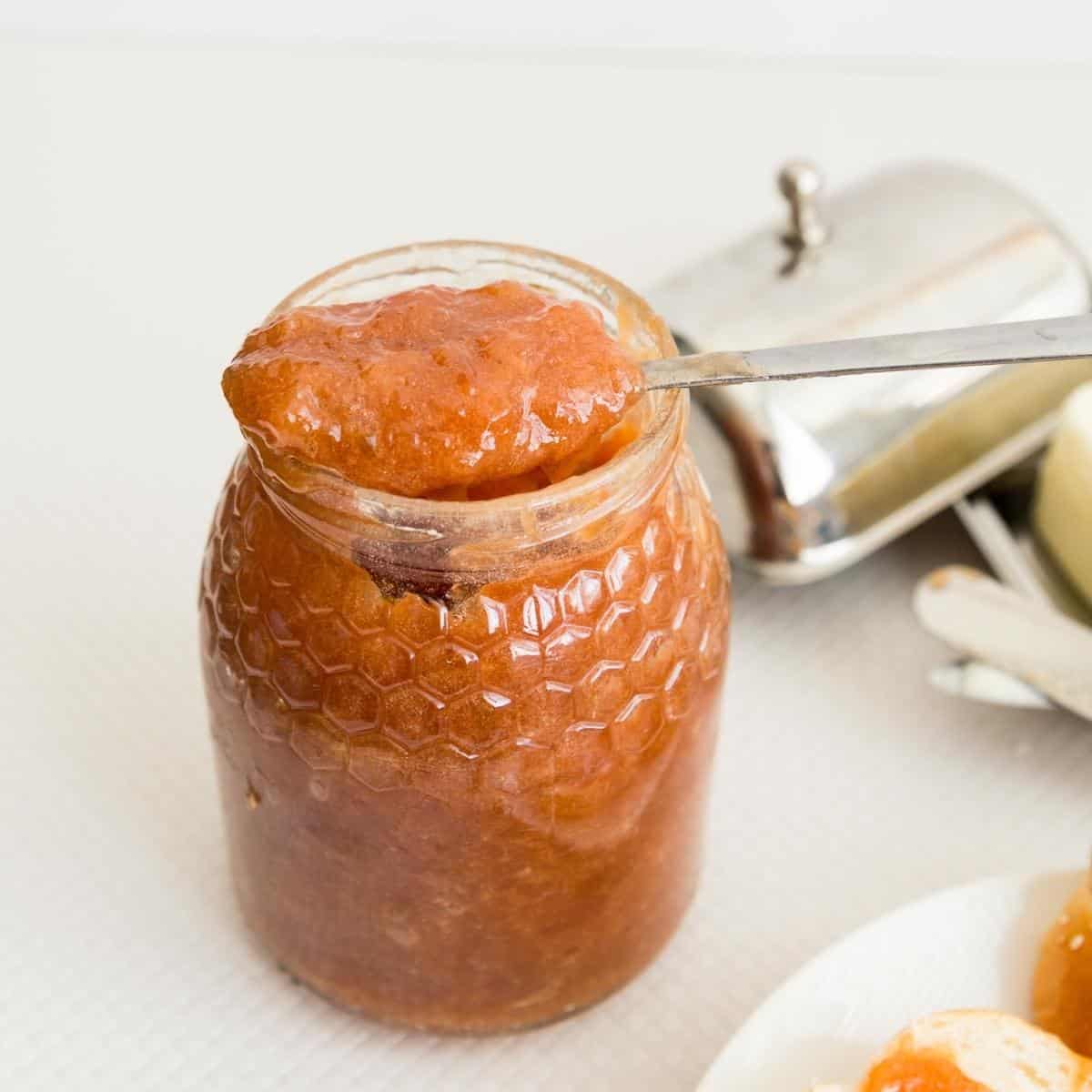
For this lower-sugar version, transfer the hot jam to clean jars, cool, cover, and store in the refrigerator or freezer.
Storage and Make Ahead
- Refrigerator: Store the plum peach jam in clean, airtight jars in the refrigerator. For best quality, use within 3 to 4 weeks and always use a clean spoon when serving.
- Freezer: For longer storage, freeze the jam in freezer-safe jars or containers for up to 6 months. Leave some space at the top for expansion. Thaw overnight in the refrigerator before using.
- Make ahead: This jam is ideal for making ahead. In fact, the texture improves after chilling as the jam continues to thicken and set.
- Shelf-stable storage: The lower-sugar recipe should be refrigerated or frozen. If you want shelf-stable jam, use the higher-sugar canning version and water-bath process described in the canning section above.
No-Sugar Plum Peach Jam & Chia Jam
You can make plum peach jam without added sugar, but you can’t simply leave the sugar out of this recipe. Sugar helps the traditional jam set and contributes to preservation.
For a no-sugar plum peach jam, use a pectin specifically labeled “no sugar needed” or “low sugar” and follow the quantities and cooking instructions on the package. Sweeten to taste with your preferred alternative sweetener, if desired.
For chia plum peach jam, cook the peaches and plums until soft, mash to your preferred consistency, then stir in chia seeds and sweetener to taste. Let it cool until thickened.
Important: Chia jam and other untested no-sugar fruit spreads should be treated as refrigerator or freezer jam, not shelf-stable canned jam.

Plum Peach Jam No-Pectin
Ingredients
- 700 g (1½ lb) Peaches
- 500 g (1.1 lb) Plums
- 500 g (1.1 lb) Sugar
- 1 tbsp Lemon Juice
- ½ tsp Salt
Optional
- 1 Star Anis optional
- 1 Cinnamon stick optional
Instructions
- Prepare the fruit – Place two small plates in the freezer for testing the jam later. Score a small X on the bottom of the peaches and plums. Blanch in boiling water for about 3 minutes, then cool until easy to handle. Peel, pit, and roughly chop the fruit.700 g Peaches, 500 g Plums
- Combine – Add the peaches, plums, sugar, lemon juice, and salt to a heavy-bottomed saucepan. Add the cinnamon stick or star anise, if using. Cook over medium heat, stirring until the sugar has completely dissolved.500 g Sugar , 1 tbsp Lemon Juice, ½ tsp Salt, 1 Star Anis , 1 Cinnamon stick
- Simmer – Bring the mixture to a boil and cook for about 2 minutes. Reduce the heat to a steady simmer and mash the fruit to your preferred consistency. Continue cooking for 20 to 30 minutes, stirring frequently as the jam thickens.
- Test the jam – Spoon a small amount onto a chilled plate and let it sit for 1 to 2 minutes. Push the jam gently with your finger. If it wrinkles and doesn't immediately flow back together, it is ready.
- Check the temperature – For a more accurate test, use a candy or instant-read thermometer. The jam should reach approximately 105°C / 221°F. Remove the cinnamon stick or star anise and skim off any foam.
- Jar and store – Pour the hot jam into clean, sterilized jars, leaving a little space at the top. Let cool completely, cover, and refrigerate. Note: This lower-sugar jam is intended for refrigerator or freezer storage. For shelf-stable canning, follow the canning instructions in the post.
Video
Notes
- The jam will continue to thicken as it cools, so don’t overcook it trying to achieve the final consistency in the pan.
- If the fruit skins don’t peel easily after blanching, cover the warm fruit for 5 to 10 minutes to help loosen them.
- For a chunkier jam, mash the fruit lightly; for a smoother consistency, mash it more thoroughly.
- This is a lower-sugar refrigerator jam. For shelf-stable storage, use the canning version described in the post.
- The cooking time is a guide. The ripeness and water content of your fruit will affect how quickly the jam reaches its setting point.


Made this recipe?
I’d love to see how yours turned out! Share a photo on Instagram and tag @veenaazmanov_kitchen or use #veenaazmanovkitchen. And don’t forget to leave a rating and review!
How to Can Plum Peach Jam
- The recipe above is my lower-sugar plum peach jam, which I prefer because you can really taste the fruit. For refrigerator or freezer storage, make it exactly as written.
- For shelf-stable canning, use a higher-sugar version. A tested plum-peach jam uses approximately equal amounts of fruit and sugar, so for 1.2 kg prepared peaches and plums, use about 1.2 kg sugar rather than the 500 g in my regular recipe. Keep the lemon juice in the recipe.
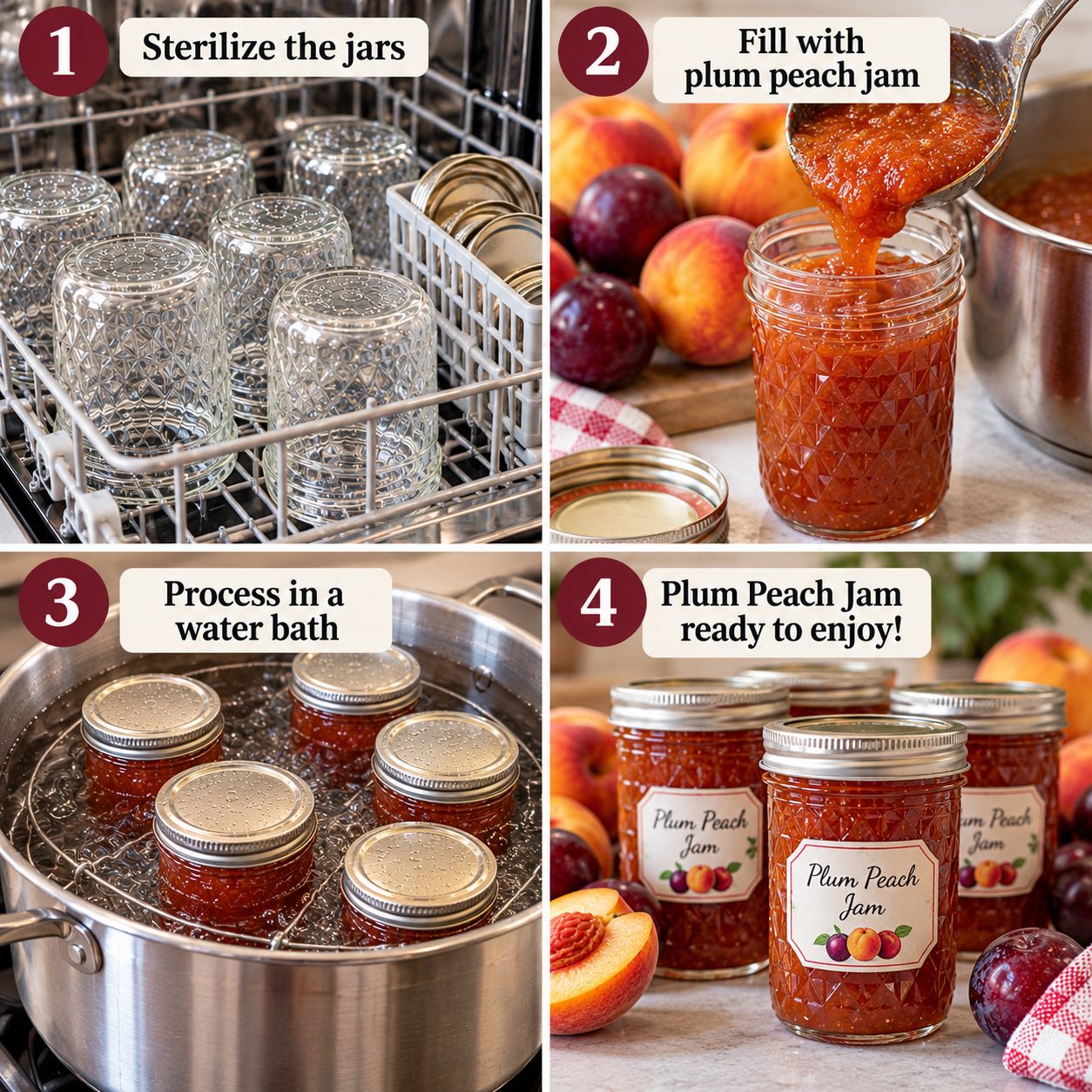
- Canning process
- Prepare the jam as directed using the higher sugar quantity. Ladle the hot jam into hot, sterilized jars, leaving ¼-inch headspace. Wipe the rims, apply the lids and bands, and process in a boiling-water canner.
- Process half-pint or pint jars for 5 minutes at 0–1,000 ft, 10 minutes at 1,001–6,000 ft, or 15 minutes above 6,000 ft. Let the jars cool undisturbed and check the seals before storing.
- Important: Don’t use the lower-sugar version for shelf-stable canning. Keep that version refrigerated or frozen.
Tips for Success
- Use ripe but firm fruit. Very soft peaches and plums contain more water and can take longer to thicken.
- Use a wide, heavy-bottomed pan. The larger surface area helps moisture evaporate faster and reduces the chance of scorching.
- Don’t rush the cooking. Keep the jam at a steady simmer and stir more frequently as it thickens.
- Start testing early. Use the chilled-plate test rather than relying only on cooking time, since every batch of fruit contains a different amount of moisture.
- Remember that jam thickens as it cools. Stop cooking once it reaches the setting point rather than trying to achieve the final jam consistency while it’s still hot.
Easy jam recipes
- Strawberry Jam – No Pectin (3 ingredients)
- Mixed Berry Jam – No Pectin (low-sugar)
- Apricot Jam – No Pectin (3 ingredients)
- Cherry Jam – No Pectin (3 ingredients)


Troubleshooting Plum Peach Jam
| Problem | Possible cause | Solution |
|---|---|---|
| Jam is too runny | It hasn’t cooked long enough or the fruit contained more moisture | Return it to the pan and cook a little longer, then test again on a chilled plate. |
| Jam is too thick | It was cooked too long | Gently warm it with a small splash of water or lemon juice until it reaches the consistency you prefer. |
| Jam tastes too sweet | The fruit was particularly sweet | Add a little extra lemon juice to balance the sweetness. |
| Jam is sticking or burning | Heat is too high or it isn’t being stirred often enough | Lower the heat and stir frequently, especially toward the end of cooking. |
| Jam has lots of foam | Foam naturally forms as fruit and sugar boil | Skim it from the surface, or stir in a small amount of butter at the end to help disperse it. |
| Jam didn’t set after cooling | It may have been undercooked | Refrigerate it overnight first. If it is still too loose, return it to the pan and cook until it passes the chilled-plate test. |
Frequently asked questions
Pectin is a natural substance found in fruits that helps jams and jellies set. Some fruits contain more pectin than others, and commercial pectin can be added to help jam thicken more quickly.
This plum peach jam is made without added pectin. Instead, the fruit is cooked with sugar and lemon juice until it naturally thickens and reaches its setting point.
Store this lower-sugar jam in the refrigerator in a clean, airtight jar. For longer storage, freeze it in freezer-safe containers, leaving some room for expansion. Once opened, always keep the jam refrigerated.
Yes. This recipe is made without added commercial pectin. Peaches and plums contain natural pectin, and cooking the fruit with sugar and lemon juice helps the jam thicken and set.
Lemon juice adds acidity, balances the sweetness, and helps the natural pectin form a better set. It also brightens the flavor of the peaches and plums.
Yes. If you don’t mind a more rustic texture, you can leave the skins on. Chop the fruit small and cook until the skins soften. For a smoother jam, peel the fruit first.
Use the chilled-plate test. Place a small spoonful on a cold plate, wait a minute or two, then push it gently with your finger. If it wrinkles and doesn’t immediately flow back together, the jam is ready. Remember that it will continue to thicken as it cools.
Yes. Thaw the fruit first and include the juices released during thawing. The jam may take a little longer to reach the setting point because frozen fruit can release more liquid.
I don’t recommend simply reducing the sugar further in this recipe because it affects both the set and storage life. For a much lower-sugar or sugar-free version, use a pectin designed specifically for low- or no-sugar jam, or make the chia jam variation.
More Jam recipes
- Apricot Peach Jam – No-Pectin (just 3 ingredients)
- Fresh Fig Jam – No Pectin (just 3 ingredients)
- Microwave Strawberry Jam – No Pectin
- Blueberry Jam – No Pectin (3 ingredients)
- See all jam recipes


Don’t lose this recipe! Save it for Later!
📌 Save this Recipe for later on Pinterest so you can easily find it again.
⭐ Add Veena Azmanov Kitchen to your Google Preferred Sources.
It helps Google show you more of our recipes.
📧 Subscribe for new recipes delivered to your inbox.
🎥 Follow us for more recipes
Hi, I’m Veena
I’m the recipe developer, baker, and food photographer behind Veena Azmanov Kitchen.
I’ve spent years developing and testing recipes, from everyday meals and homemade breads to cakes and desserts.
I share the practical tips and little details I’ve learned along the way so you can get great results in your own kitchen.
You may also like
- 4th of July | Healthy | Labor Day | Salad | September | Summer | Vegetarian
Carrot Salad Recipe








I’ve got some peaches left over from canning and plums from a coworker. So I thought to do a batch of jam. We are also processing hot peppers and it got me to thinking…. What if I put some hot peppers in? Not too much, but just a bit. What do you think?
Jeromy
Hey Jeromy, It’s up to you. If you like spicy plum and peach jam then add some peppers. I make peach chutney which is absolutely delicious if you want to try it.
What a great recipe! I love that this is so easy to make and only uses a few ingredients. Such a great flavor combination.. this is absolutely lovely!
Thank you, Heather. Yes, very easy to make and tons of flavor.
I love homemade jam but haven’t found a good stove Truit recipe. Looking forward to trying this one. Thank you.
Thank you Alexis. yes, this is a good one I do hope you try it. Let me know what you think.
My two favorite fruits in one jam! Love this!
Thanks Lauren.
It’s been years since I’ve made any homemade jams — I surely do miss having it on hand. I really like the idea of adding the star anise or cinnamon to the jams – they would enhance the flavor. I’ll have to keep my eyes open for fruit on sale.
Thank you, Marisa. I love adding star anise and cinnamon with stone fruits especially peaches and nectarines. Such a wonderful combination.
How lovely this is and perfect to preserve the freshness of the peaches which are not at peak of the season. Nothing like homemade jams and jellies to enjoy with toast. Yummy!
Absolutely, Adriana. Great way to keep fresh fruits last the whole year.
I’ve really gotten into the habit of making my own jams and preserves the last few years…it’s also a great way to keep from fruit going to waste! Your jam looks wonderful! 🙂
Thanks Tammy, yeah making jam can be an addiction. Once you start it’s fun and you keep adding new flavors every year.
Peach jam is my absolute favorite type of jam. I’ve been buying it a lot recently, but I’m sure it’s better homemade. I’ve never made homemade jam before, so I can’t wait to try this one!
I agree. I love that you have to use less sugar because its naturally sweet.
this looks like a recipe that my whole family will love. I am so happy to see how simple it is to make s must try!
Yeah, so simple to make.
As always, I love your recipe! There are so many ways to use jam … and I love that you make this w/o pectin!!
Thank you Noel. I make all my jams no pectin..