



This homemade vegetarian fondant recipe is without gelatin. This simple, easy recipe uses plant-based agar-agar. I adapted this recipe from my most popular homemade fondant recipe. This fondant is also vegan, eggless, dairy-free, and Parve, and you can use it to cover cakes, cookies, or cupcakes.

While my homemade Fondant recipe is very popular, it also contains gelatin. Thus, it’s unsuitable for people who are vegetarian. And, I also have tons of people requesting how to change or substitute it to vegetarian fondant. So, of course, I had to go and figure out how it would work out without gelatin.
So, finally I did test my recipe and am happy to say this is what works best for the vegetarian version of the fondant. In fact, this recipe is basically adapted from my homemade fondant recipe. And, as you can see, most of the ingredients are the same with changes only made to the amounts. So, try and keep the amounts mentioned in this recipe accurate.
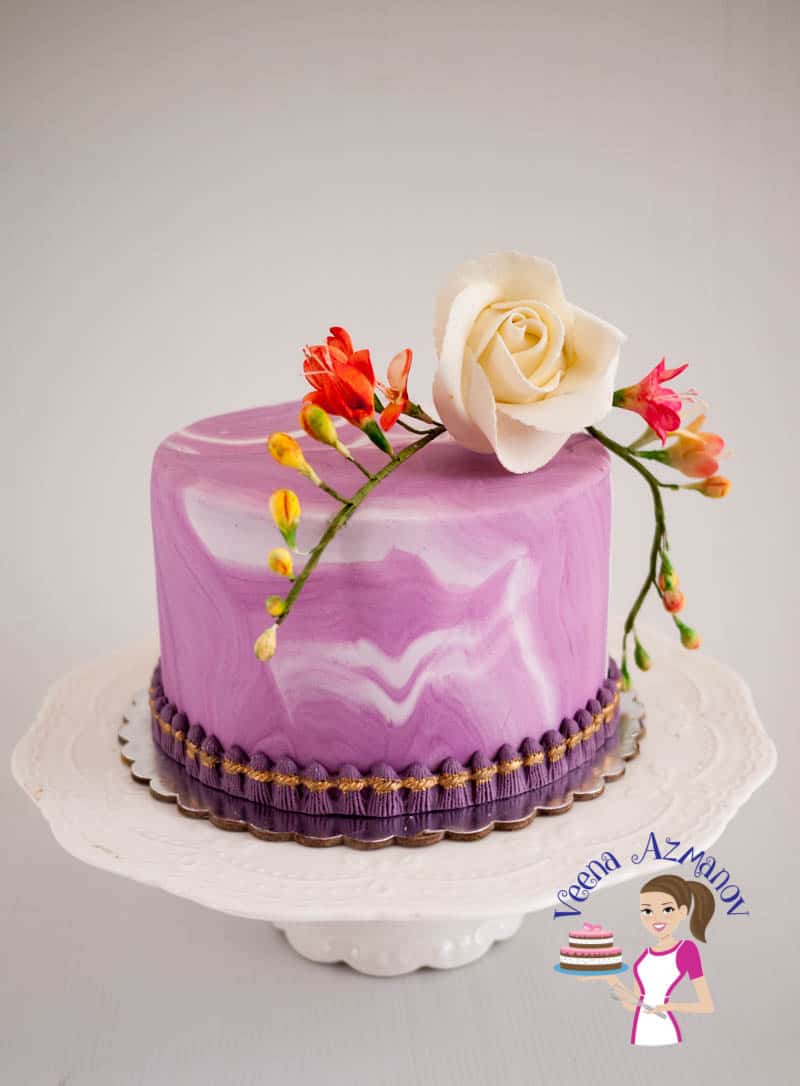
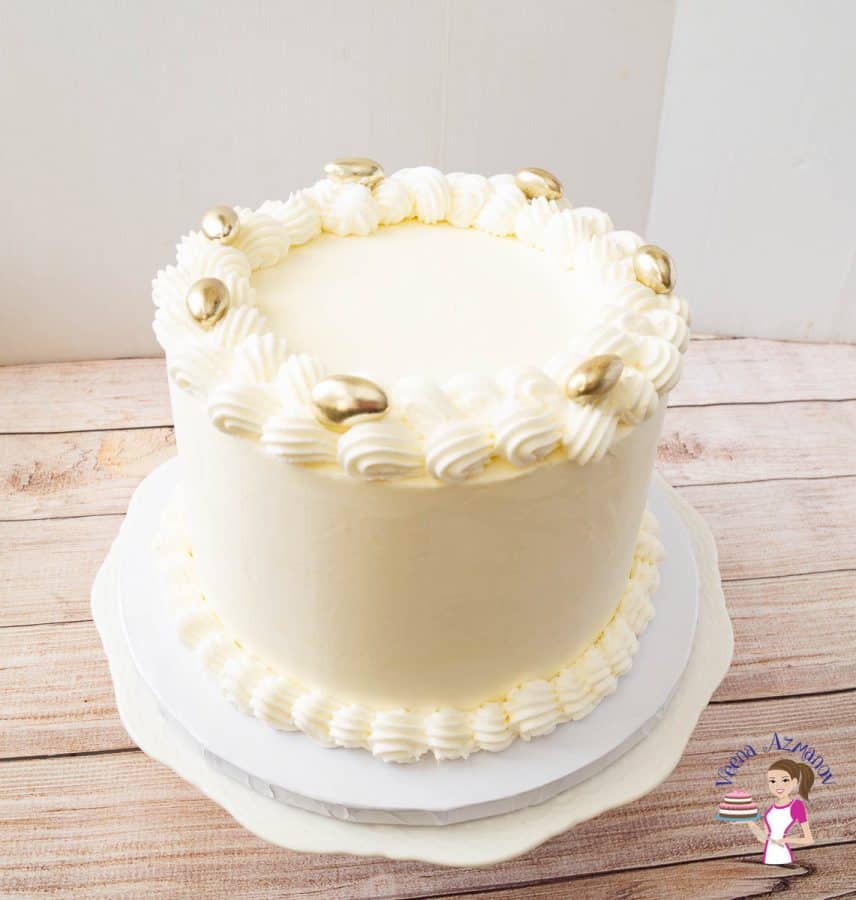
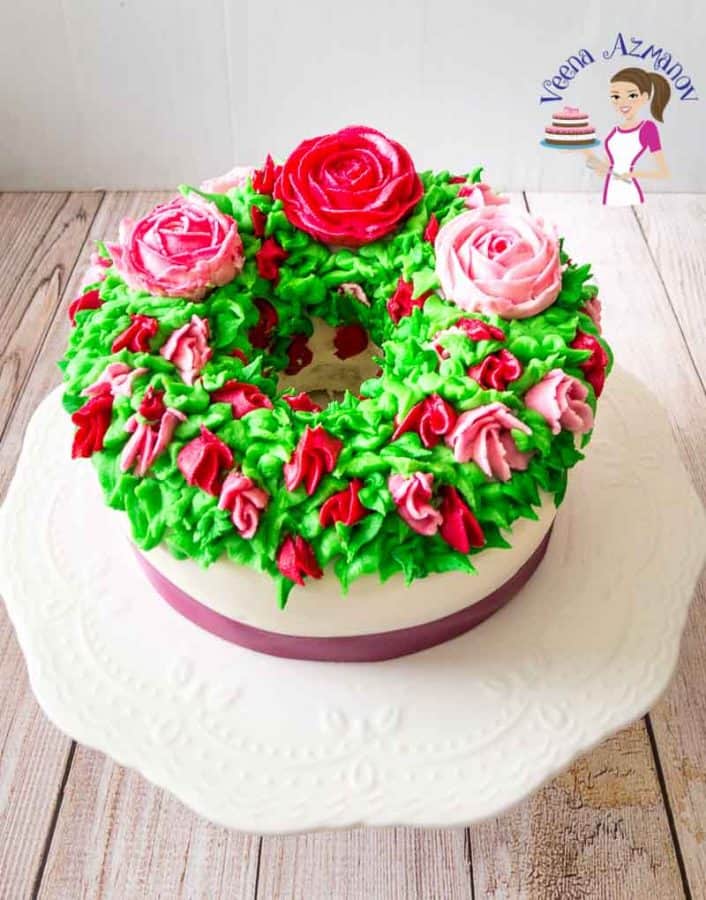
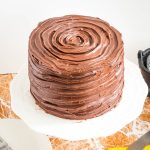
Below, is the cake I made with this vegetarian fondant. I did not take any progress pictures because the method is exactly the same as my Homemade Fondant recipe.
This is vegetarian seaweed-based gelatin that comes in powder form. And, it works quite the same as gelatin. However, there are different qualities in the market, some better than others. So keep that in mind.
And, those of you in India, can also get agar-agar in the form of China grass. I think that’s what the term is. In fact, it is agar-agar but very diluted and does not set in the same manner. So, if you use it you may find that the fondant is less stretch or elastic.
Ingredients and substitutes
- Water – Water is the easiest to dissolve agar-agar. Having said that, I often use fresh cream (just like my homemade fondant recipe). And yet, not everyone seems to have success using fresh cream to dissolve agar agar. So, to keep things easy – let’s just do water.
- Light corn syrup – Can be found in any cake decorating store. And, if you cannot find light corn syrup, you can also use glucose. Use the same quantity the only difference is glucose is thicker than light corn syrup. That’s ok.
- Agar Agar – You can also use 1 tbsp of vegetarian gelatin instead. I made a special note about agar-agar – please read above.
- Glycerin – Please use only edible glycerin found at most cake decorating stores or pharmacy.
- Clear vanilla – The purpose of clear vanilla is to maintain the white color of the fondant. And, if you cannot find clear vanilla, you can also use rose extract or almond extract.
- Powdered sugar – Also called confectioners sugar or icing sugar. I highly recommend using powdered sugar made with cane sugar, not beet sugar. Since, beet sugar has a tendency to be very grainy.
So, make sure you do not have lumps in your powder sugar. And, if necessary sift the sugar.
Step-by-step: Vegetarian fondant recipe
- Wet ingredients: Dissolve Agar Agar in water and let it sit for 5 minutes. Add light corn syrup to the soaked agar-agar. Place on the stovetop on medium-low heat (it takes time but will dissolve). Stir continuously until well dissolved. Add the glycerin.
Note: Keep the heat to medium-low, or the water will evaporate. If the mixture becomes too thick, add a few tablespoons of water. - Combine: Prepare a large bowl and add half the powdered sugar. Make a hollow in the center, ready for our agar-agar mixture. While still warm and liquid, immediately pour the mixture into the bowl with powdered sugar.
Pro tip – if the agar-agar is not entirely dissolved – pour the mixture through a sieve so you won’t have grains in the finished product - Knead: Use a wooden spoon to combine the powdered sugar and liquid. Then knead with your hand, adding powdered sugar to make a pliable dough. Also, add the tylose powder and knead it in. You want it to be pliable but not sticky and stiff. You can also add more powdered sugar later.
Pro tip: Do not add too much powdered sugar; the fondant will firm as it rests in the fridge. Use vegetable shortening to knead. - Rest: Divide the mixture into two portions and place them in a Ziploc bag. Place these Ziploc bags in a plastic container to prevent drying. Let rest in the fridge for a couple of hours or overnight.
- Usage: Leave the fondant for a few hours to bring it to room temperature. Once set, it can be stored at room temperature (see storage). If the fondant is too stiff – a 5-second burst in the microwave works great.
Tips for Success
- Choose the Right Ingredients: Use plant-based alternatives such as agar-agar or carrageenan instead of gelatin. These ingredients will help achieve the right texture without compromising your vegetarian principles.
- Use Quality Glycerin: Ensure that the glycerin you use is vegetable-derived. This helps in making the fondant smooth and pliable.
- Incorporate Colors Early: If you’re adding color to your fondant, incorporate the food coloring early in the mixing process to ensure even distribution and a vibrant hue.
- Adjust Consistency Carefully: If the fondant is too soft, gradually add more powdered sugar. If it’s too stiff, add a small amount of water or vegetable shortening to achieve the perfect consistency.
- Knead Thoroughly: Properly kneading the fondant helps in developing a smooth texture. Knead until the fondant is pliable and free from lumps.
- Rest the Fondant: Allow the fondant to rest overnight. This helps the flavors meld and the texture to stabilize, making it easier to work with.
- Use Cornstarch or Powdered Sugar for Rolling: Prevent sticking by using cornstarch or powdered sugar on your work surface and rolling pin. This helps in rolling out the fondant smoothly.
- Store Properly: Wrap the fondant tightly in plastic wrap and store it in an airtight container at room temperature. This prevents it from drying out and ensures it stays pliable.
- Avoid Overworking: Don’t overwork the fondant, as it can become dry and cracked. Handle it just enough to get it smooth and ready to use.
- Test Before Application: Before covering a cake, test a small piece of fondant to ensure it rolls out smoothly and covers well without tearing.
Troubleshooting
- My rolled fondant is cracking when rolled? Often the issue here is that too much-powdered sugar has been added.
- Why is my rolled fondant tearing on the cake? Fondant needs to be rolled between 1/4″ to 1/8″ thick. In fact, 1/4″ is too thick. And, it can cause the fondant to break with its own weight. And, 1/8″ is thin and can cause the fondant to tear as you stretch it. However, finding that right thickness that works for you comes with practice, so don’t give up.
- My homemade fondant is too sticky? If you are making homemade fondant and the fondant is still too sticky – you probably need more fondant. And, if you live in a hot humid place and over-knead the fondant it can also become sticky. In this case, you need to let the fondant rest and then roll again later. Or place in the fridge until it cools off a bit.
- My fondant is too hard what can I do? First, thaw the fondant in the fridge for 10 seconds so you can knead it. Then, add a teaspoon or two of glycerin to help soften it. Next, add vegetable shortening and knead it some more.
And, if this still does not work, its best to use this fondant for decorative purposes and decorations. Then, make a fresh batch for covering the cake.
Storage
- Regular fondant can last for months if kept properly.
- In fact, the high quantity of powdered sugar works as a preservative.
- Also, this fondant can stay at room temperature for about a month on the counter. I usually portion mine into 1 kg / 2-pound bags.
Having said that, in the interest of safety If you are not using your fondant it’s best to keep it in the fridge rather than on the counter especially in summer months. If you have hot and humid weather it’s best to keep the fondant in the fridge if not using for a few days just to be safe and ensure good preservation. - You can also place them in the fridge for up to 3 months. If you need to keep it longer store it in the freezer. Thaw it in the fridge Just take it out a couple of hours or the night before you need it.
- Being a cake decorator my fondant doesn’t usually stay long. I make a couple of batches in one month. So if you do have any information to share please put a comment at the bottom of this post so it will help the other users.
How do you color homemade rolled fondant
Being a cake decorator, I have tons of posts related to fondant, including tutorials. So I won’t bore you by repeating myself. Therefore, I shared two detailed posts one was 14 must-know tips for working with fondant and the other being How to color fondant. In addition, I’ll also give you a few important tips here.
- Always use edible food color gels for coloring fondant. Because they will not make your fondant softer in consistency since they are very concentrated in color.
- And if you don’t have food color gels – you can also use liquid color at the beginning of the recipe while reducing the original quantity of liquid in the recipe.
- Food color gels will intensify over time. So if you color it ahead of time – make it one shade lighter and keep it for a few days. That way you won’t have to add more white or use too much color gel.
- Also, color gels can dye your hands. So it’s best to use gloves when coloring fondant. In addition, rubbing veg shortening on your gloved hands also helps. Personally, I find that working with gloves is not easy, especially with sticky fondant. So, I work with fondant by just rubbing my hand with vegetable shortening, and then washing them clean with a cream-based detergent.


How much fondant do I need for my cake?
The chart below is based on 4 inch tall cakes. For shorter height you will need less and tall cakes will obviously need more.
Having said that, this presumes rolling fondant closer to 1/8″ thickness. If you roll fondant too thick closer to 1/4″ inch thick you will need more.
| Round | Square | Metric | lbs | OZ |
| 6-inch | 5-inch | 600 g | 1.3 lbs | 18 oz |
| 7-inch | 6-inch | 750 g | 1.6 lbs | 20 oz |
| 8-inch | 7-inch | 900 g | 2 lbs | 24 oz |
| 9-inch | 8-inch | 1 kg | 2.2 lbs | 30 oz |
| 10-inch | 9-inch | 1.2 kg | 2.6 lbs | 36 oz |
| 11-inch | 10-inch | 1.5 kg | 3.4 lbs | 40 oz |
| 12-inch | 11-inch | 1.7 kg | 3.7 lbs | 48 oz |
| 14″inch | 12-inch | 2.5 kg | 5.5 lbs | 72 oz |
| 14-inch | 2.7 kg | 6 lbs | 108 oz | |

Homemade Vegetarian Fondant from Scratch
This homemade vegetarian fondant recipe is a fondant recipe without gelatin. This simple easy and effortless recipe uses agar-agar which is plant-based. The recipe is adapted from my most popular recipe homemade fondant recipe from scratch. This vegetarian fondant is also vegan, eggless, dairy-free and Parve and can be used to cover cakes, cookies or cupcakes.
Ingredients
- ¼ cup (60 ml) Water
- 2 tbsp Agar-agar powder
- ½ cup (120 ml) Light corn syrup
- 1 ½ tbsp Glycerin
- 3 tbsp Veg shortening
- 1 tsp Salt
- 6 cups (700 g) Powdered sugar, confectioners, or icing sugar plus more for kneading
- 1 tsp Clear vanilla extract
- 1 tsp Tylose powder
Method
- Wet ingredients: Dissolve Agar Agar in water and let it sit for 5 minutes. Add light corn syrup to the soaked agar-agar. Place on the stovetop on medium-low heat (it takes time but will dissolve). Stir continuously until well dissolved. Add the glycerin. Note: Keep the heat to medium-low, or the water will evaporate. If the mixture becomes too thick, add a few tablespoons of water.¼ cup Water, 2 tbsp Agar-agar powder, ½ cup Light corn syrup, 1 ½ tbsp Glycerin, 1 tsp Clear vanilla extract
- Combine: Prepare a large bowl and add half the powdered sugar. Make a hollow in the center, ready for our agar-agar mixture. While still warm and liquid, immediately pour the mixture into the bowl with powdered sugar.Pro tip – if the agar-agar is not entirely dissolved – pour the mixture through a sieve so you won't have grains in the finished product6 cups Powdered sugar, confectioners, or icing sugar, 1 tsp Salt
- Knead: Use a wooden spoon to combine the powdered sugar and liquid. Then knead with your hand, adding powdered sugar to make a pliable dough. Also, add the tylose powder and knead with the vegetable shortening. You want it to be pliable but not sticky and stiff. You can also add more powdered sugar later.Pro tip: Do not add too much powdered sugar; the fondant will firm as it rests in the fridge. Use vegetable shortening to knead.1 tsp Tylose powder , 3 tbsp Veg shortening
- Rest: Divide the mixture into two portions and place them in a Ziploc bag. Place these Ziploc bags in a plastic container to prevent drying. Let rest in the fridge for a couple of hours or overnight.
- Usage: Leave the fondant for a few hours to bring it to room temperature. Once set, it can be stored at room temperature (see storage). If the fondant is too stiff – a 5-second burst in the microwave works great.
Notes
- Choose the Right Ingredients: Use plant-based alternatives such as agar-agar or carrageenan instead of gelatin. These ingredients will help achieve the right texture without compromising your vegetarian principles.
- Use Quality Glycerin: Ensure that the glycerin you use is vegetable-derived. This helps in making the fondant smooth and pliable.
- Incorporate Colors Early: If you’re adding color to your fondant, incorporate the food coloring early in the mixing process to ensure even distribution and a vibrant hue.
- Adjust Consistency Carefully: If the fondant is too soft, gradually add more powdered sugar. If it’s too stiff, add a small amount of water or vegetable shortening to achieve the perfect consistency.
- Knead Thoroughly: Properly kneading the fondant helps in developing a smooth texture. Knead until the fondant is pliable and free from lumps.
- Rest the Fondant: Allow the fondant to rest overnight. This helps the flavors meld and the texture to stabilize, making it easier to work with.
- Use Cornstarch or Powdered Sugar for Rolling: Prevent sticking by using cornstarch or powdered sugar on your work surface and rolling pin. This helps in rolling out the fondant smoothly.
- Store Properly: Wrap the fondant tightly in plastic wrap and store it in an airtight container at room temperature. This prevents it from drying out and ensures it stays pliable.
- Avoid Overworking: Don’t overwork the fondant, as it can become dry and cracked. Handle it just enough to get it smooth and ready to use.
- Test Before Application: Before covering a cake, test a small piece of fondant to ensure it rolls out smoothly and covers well without tearing.
Equipment you will need


Nutrition
Tried this recipe?
Mention @veenaazmanov_kitchen or tag #veenaazmanovkitchen!- See all Fondant recipes
- Best EVER Homemade Fondant
- Homemade Chocolate Fondant from Scratch
- Perfect Homemade Black Fondant Recipe
- Chocolate Marshmallow Fondant
- Best Homemade Marshmallow Fondant




Frequently asked questions
Yes, fondant contains all edible ingredients and is definitely edible. Also, it is sweeter than most other frostings.
However, often fondant is used for just decorative purposes. So, if a cake decorator says the fondant is not edible she has probably used some ingredients that are not edible like metallic silver or gold dust.
Absolutely! One issue when using a stand mixer is that we tend to add too much-powdered sugar. In fact, it’s best to add just until the mixture is coming together. Then, finishing it off by hand on a counter so you get a better understanding of how much-powdered sugar you need.
Homemade fondant can last for up to 2 years if stored properly. Moreover, fondant is a sugar paste that is high in sugar and works as a natural preservative. And, the storage instructions for this fondant recipe are detailed above.
Fondant can be stored in a cool dry place away from heat and sunlight for up to 4 weeks at room temperature. In addition, you can also keep it for up to six months in the fridge and up to 2 years in the freezer.
And, make sure to always wrap the fondant well in cling wrap first, then place it in a ziplock bag, then in an airtight container to ensure it does not dry out.
First, use a measuring tape and measure the top and height of the two sides of the cake and add a few more inches for a hangover.
For example, an 8-inch cake will be 8 inches on top and 4 inches tall so I will need to roll 8 + 4 + 4 = 16 inches and a few extra inches.
I have given a detailed chart above that gives you an approximate amount of fondant needed for your cake.
At room temperature! Leave a fondant-covered cake in a cool dry place at room temperature away from open windows or wind. And, if the cake contains perishable frosting, you can even store it in the fridge.
The shelf life of a cake depends on the cake recipe as well as the fillings and frostings used. And, fondant does do a good job of locking in moisture which automatically extends the life of the cake.
Yes, you can put fondant-covered cakes in the fridge. And, when you take it out of the fridge there will be some condensation depending on the weather. So, just leave it alone and the condensation should dry off on its own as the cake comes to room temperature.
The fondant needs to be rolled between 1/4 to 18 inches. Too thick will crack the fondant around the edges and too thin will tear the fondant around the edges. In addition, no one wants to eat a thick layer of sugar on top of a cake.
A basic chocolate or vanilla cake with buttercream or ganache can be covered in fondant 2 to 3 days ahead and left at room temperature. And, if the cake has any perishable filling or frosting it must be kept in the fridge.
Water! Fondant is sugar so water melts the sugar and when dried it stick together. But you can also use Tylose glue, sugar glue, and vegetable shortening.
I believe you can. However, I have never had to freeze a cake with fondant. And, if you wrap the cake well in plastic and then parchment paper you should be able to freeze the cake. Then, thaw it in the fridge overnight, not on the countertop. This will keep the condensation on the wrappers, not the cake.
First, clean the work surface well then dust with powdered sugar or cornstarch. Then, rotate and keep moving the fondant around when rolling to ensure it does not stick. And, if necessary, add a little more dusting on the work surface.
Don’t lose this recipe! Save it for Later!
📌 Save this Recipe for later on Pinterest so you can easily find it again.
⭐ Add Veena Azmanov Kitchen to your Google Preferred Sources.
It helps Google show you more of our recipes.
📧 Subscribe for new recipes delivered to your inbox.
🎥 Follow us for more recipes

Hi, I’m Veena
I’m the recipe developer, baker, and food photographer behind Veena Azmanov Kitchen.
I’ve spent years developing and testing recipes, from everyday meals and homemade breads to cakes and desserts.
I share the practical tips and little details I’ve learned along the way so you can get great results in your own kitchen.








Hii veena, I’m from india. Thank u so much for ur all receipes nd tutorials. I want to make veg fondant. I got all the material. My question is in first step agar agar powder is dissolve in luke warm water Or cold water. And what should I use instead of shortening??
Hey Janhavi, yes, soak the agar-agar powder in cold water, then heat it until it dissolves. You can use ghee or dalda.
Hi thank t for reply.
Make this fondant but it will turn grainy ( I used fine powder sugar) nd sticky. What went wrong??
I want to make paper topper with it, so how it will remain stif as folded papr. And i make the toppers one day before, so how can store the fondant toppers in fridge or in room temp.
Thanks in advance
Janhavi. You need to use 10 x powdered sugar not homemade. Some beet sugars are grainy. If it is stick you can add more powdered sugar. To make it stiff you will need to condition the fondant with CMC or tylose. You can store the fondant at room temperature.
Hi! Did you discover the problem with the agar agar issues people have been having? The recipe states agar agar powder in the ingredient list, but then agar agar flakes in the directions. These are not interchangeable. Two tablespoons of flakes should be two teaspoons of powder. I suspect some have bought the powder but you used flakes?? Can you please confirm which agar agar you used in the recipe? I’d love to try this fondant out but want to be sure of the ingredient list. Thank you!
Valerie. I always use agar-agar powder. And I don’t have the issues that some people have had with this recipe so I could not troubleshoot those.
Hi Veena,
I’m going to make this fondant this weekend to use on my son’s birthday cake. I’m wondering if I have to use the Tylose powder called for in the recipe? If so, could I use meringue powder instead? Thanks!
Yes, Amber in this recipe you can use meringue powder instead. Same quantity.
Dea Veena,
It is my understanding that agar-agar needs to boil to activate. Maybe that is the reason for various outcomes. Also, I don’t seem to find at what stage do you add the vegetable fat and tylose which are listed in the ingredients. I have tried the fondant with gelatine using 8 sheets, but I think it was too much. It was very nice to work with. Thank you for the recipe.
Hey Darina. I don’t bring agar-agar to a boil – as it overworks the mixture. I make it very hot until it’s all completely dissolved.
The tylose is added to the powder sugar on the first line and the veg shortening is used to knead the fondant.
Thanks
This cake looks so delicious and festive! I love it that it’s veg!
Thanks Ashley
Hey, I’ve noticed you’re based in Israel so I wanted to ask – the veg shortening for this recipe – where the heck do I get it here?? 😛
Thanks in advance
Hey Adi. My son’s name is Aadi. I get my Criso from Meatland on Ahuza/Bar Ilan street – I think even Tasa near the mall keeps it. Thanks
Great! Thank you for the answer 🙂
Can I use coconut oil in place of the vegetable shortening? Thank you.
I think it should be fine. if it not liquid but the same consistency of veg shortening. I have not tried it though but don’t see why not. Let me know how it goes.
Hi, I am trying to make fondant using powder agar(2tb) and water (1/4 cup). The water is not enough and the mix is just a crumble.. Should I be adding more water? What am I doing wrong here
Nam, are you using agar-agar powder? not china grass! They are not the same. Agar-agar powder should have worked in this amount of water, you can add a few tbsp more and see if it helps.
Hi, thank you for the amazing recipe. However, I’m facing the same crumbly problem as some of the decorators here, My fondant was soft as stretchy when it is still warm, then it turned solid and crumbly as it cooled. In Japan, there are 2 types of jelling agent derived from seaweed: agar and kanten. Kanten even has a stronger setting ability than agar and the final product tend to be firm and brittle. And in the west, both agar and kanten are being sold under the name agar agar and there is no indication of which type of seaweed it is made from. I wonder if this can be a contributor of the crumbly fondant.
Hi Berry, Sorry to hear that. Not sure about the different agar-agar found. Perhaps because I have never encountered any problems with my agar-agar so far. But it’s kinda weird that some have this problem with the agar agar while there are those of us that make this successfully over and over again. Is it possible that you can add a bit of tylose and see if it helps? Sorry not sure what else to say.
Hi Veena,
Could you please clarify the following:
The agar agar I bought is made from seaweed. The instructions mention to boil the water for 5 min to to make the contents completely dissolved. It also mentions to use 1 GM to prepare 100ml solution. I am confused as to what is the exact amount of agar agar to be used. Also I read in certain places that agar agar is more stronger than gelatin.
Should I simply follow the exact measure of agar agar (2 table spoons) and heat in microwave and not boil the water. Kind regards Sneh
Hey Sneh, I think we use the same agar-agar and I think most agar-agar packages say the same. Not sure though. I highly recommend you use the same amount I have used. To prevent waste perhaps you can half the recipe to see how it works. I think you can use the stovetop method too! As long as you do not use too much liquid. Hope this helps.
Hi Veena, Thank you very much for replying to my query. I will half the qty, use the exact amount of agar in your recipe and use the microwave to heat the agar to dissolve. If I understand, please correct me, the goal is to completely dissolve the agar and not boil it. As boiling the agar dries up the water and requires additional water. I have my fingers crossed. I will come back with the outcome. Kind regards Sneh
Let me know how it goes. Yes, the idea is to make sure your agar-agar is properly dissolved whether you use a microwave or stove top. The liquid measure is important so you don’t use too much powdered sugar.