
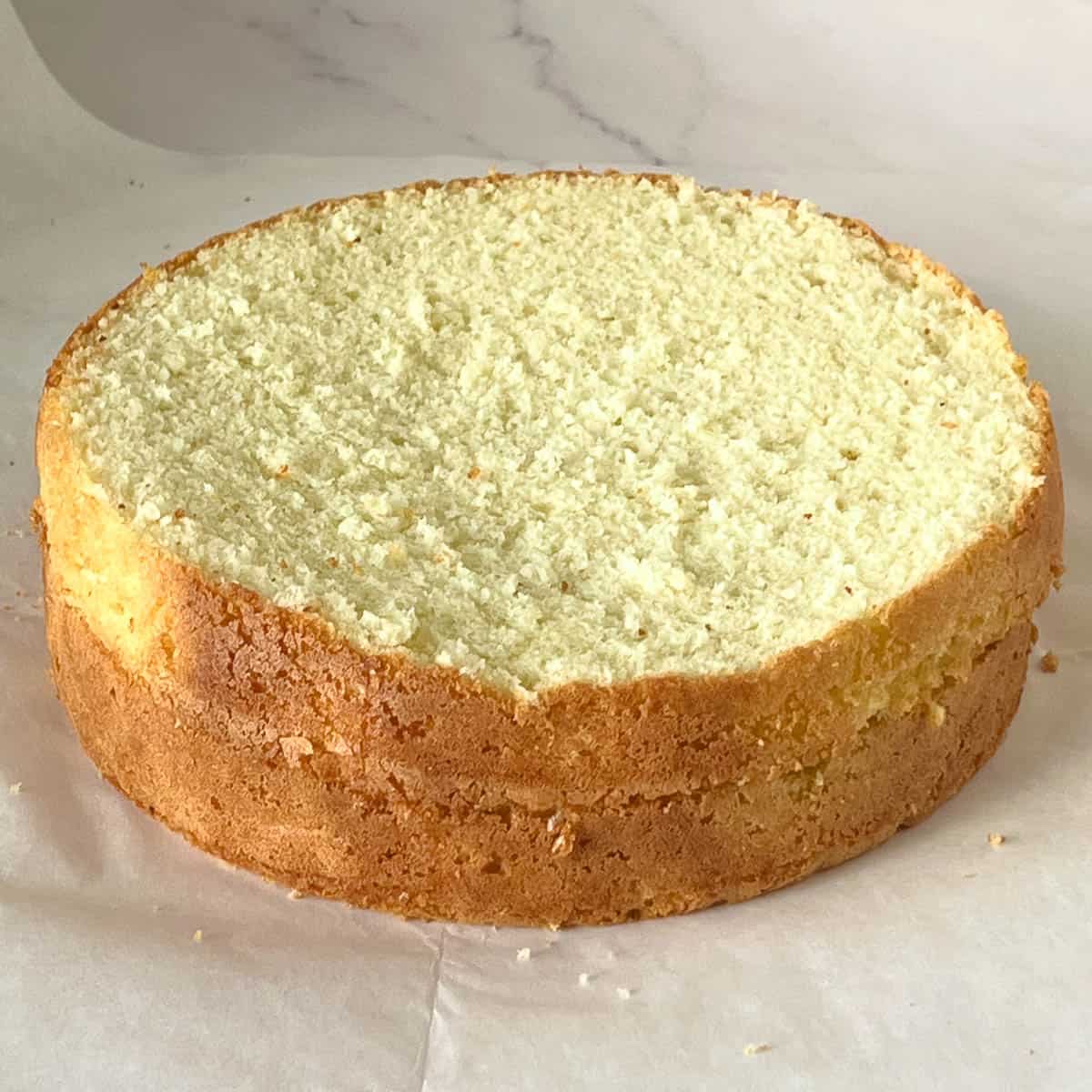





If you want a truly light sponge cake, this is the one to learn. A genoise sponge cake rises entirely from whipped eggs — no baking powder, no creaming method — which means technique matters.
This is the method I relied on when running my cake business, and it has never failed me. Today, I’m sharing that same failproof method with you.
When I ran my cake business, lighter fruit-and-cream cakes were always requested. Butter cakes were often too heavy for those designs, so I relied on a well-made genoise sponge as the base. It needed to be strong enough to hold layers, yet light enough to feel elegant.
That’s when I realized something important: genoise isn’t difficult — it’s precise. Once I refined the whipping and folding method, it became one of the most reliable sponges in my kitchen.
What Is a Genoise Sponge Cake?
A genoise sponge cake is a classic foam cake made by whipping whole eggs and sugar until thick and airy. Unlike butter cakes, it does not depend on creaming or chemical leavening for rise. The structure comes entirely from the air incorporated into the eggs.
Traditional versions often include melted butter folded into the batter. This variation follows the same foam technique but incorporates warm milk and oil, which creates a slightly softer crumb while maintaining that light, airy structure.
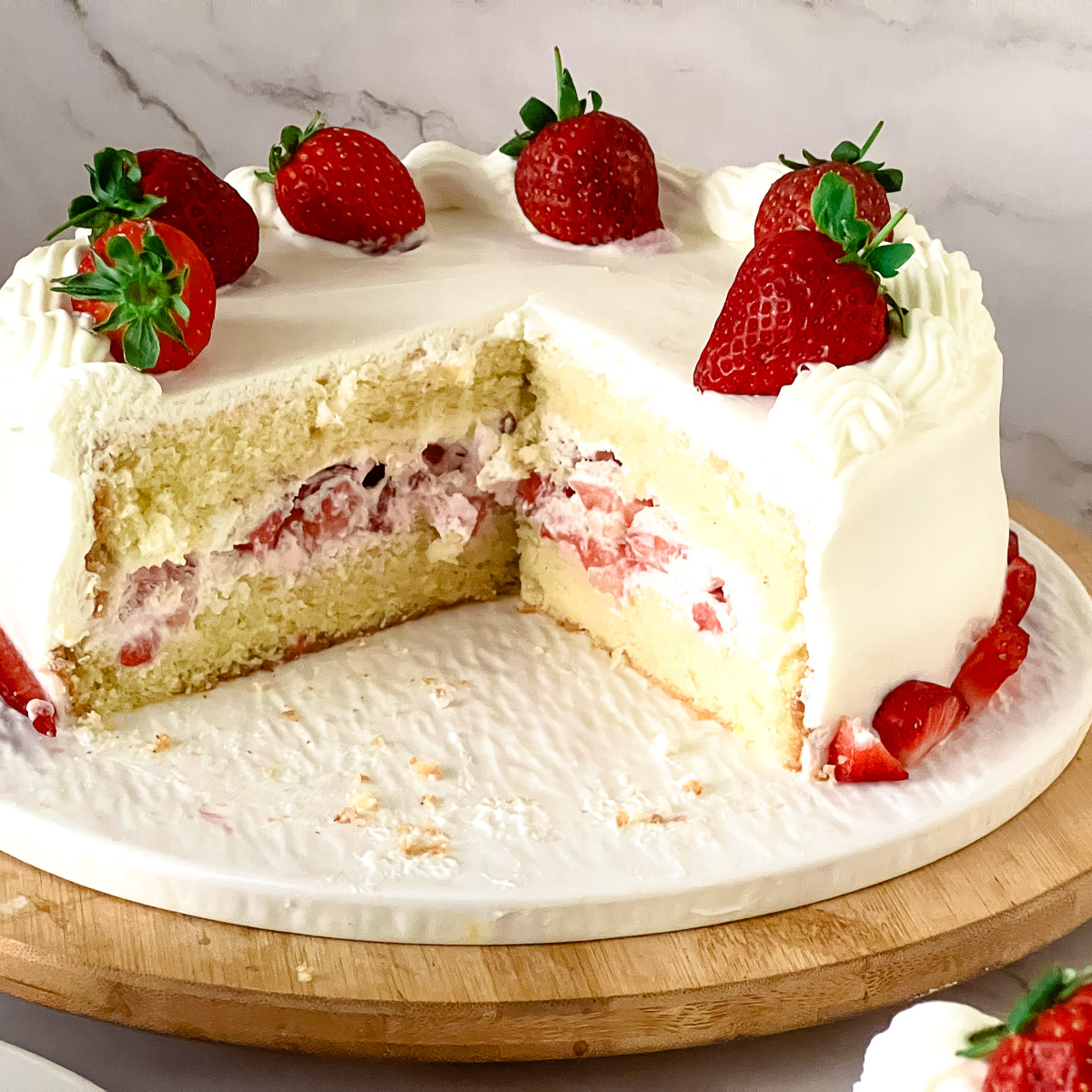
Genoise is most commonly used for layered cakes filled with whipped cream, fruit, mousse, or pastry cream because it absorbs moisture beautifully without becoming heavy.
Why This Recipe Works
- This sponge works because every step protects the air you build at the beginning.
- The sugar is added gradually to stabilize the eggs as they whip. The mixture is beaten to ribbon stage, then finished on low speed to refine large air bubbles. That final low-speed whip is what helps create a finer crumb and prevents a thick, dark crust on top.
- The flour is folded in gently in three additions so the batter doesn’t deflate. Finally, the warm milk and oil are incorporated carefully to keep the structure intact while adding softness.
- Each step has a purpose — and skipping one usually shows in the final texture.
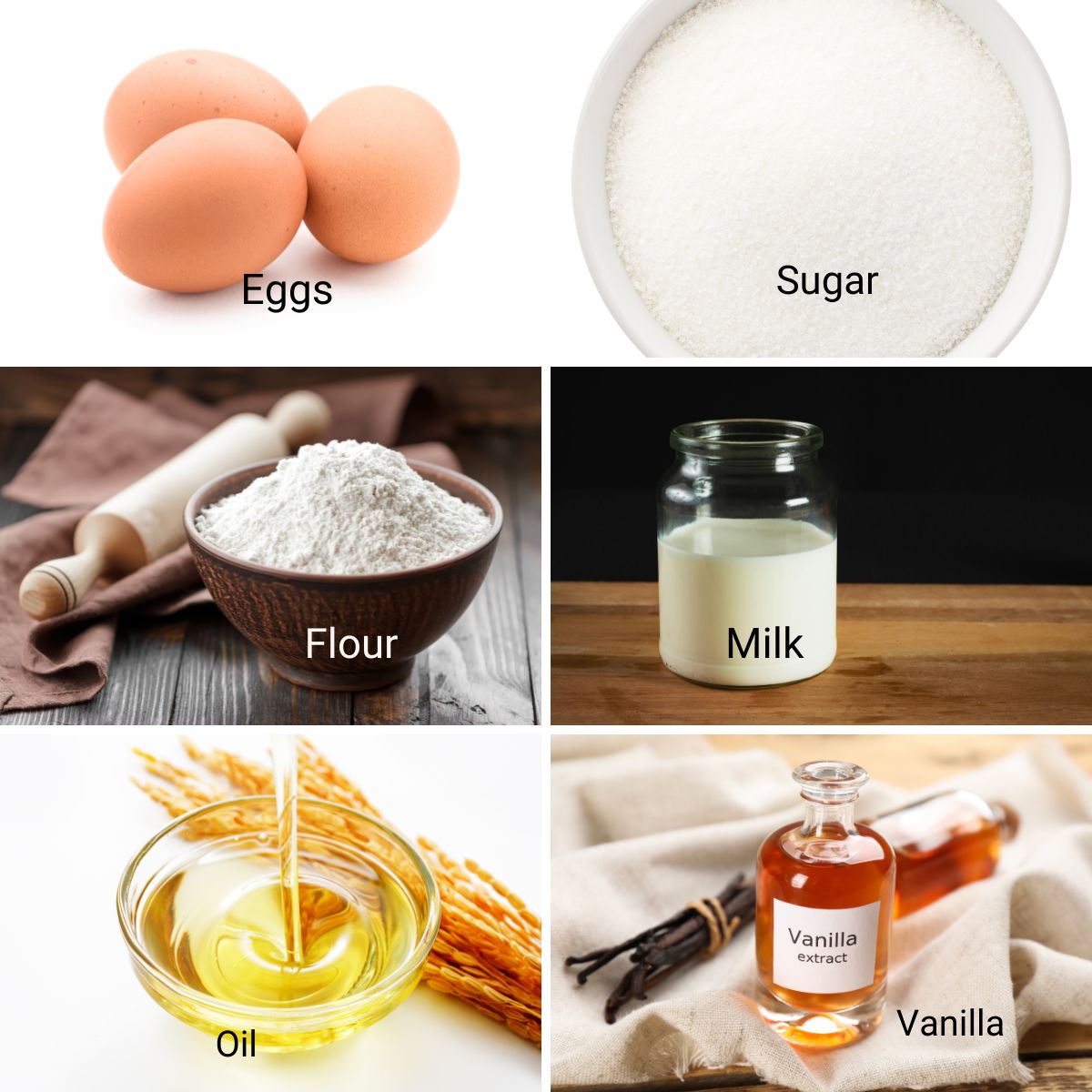
Just 6 Ingredients for Light Sponge Cake
This recipe uses simple ingredients, but each one plays a specific role. There are no extra leavening agents here and this is not a mistake— the rise comes entirely from the whipped eggs.
- Eggs are the foundation. They provide both lift and structure, so room-temperature eggs whip more effectively.
- Sugar stabilizes the foam and creates tenderness.
- Cake flour keeps the crumb delicate and prevents toughness.
- Warm milk and oil add moisture and flexibility, which makes this sponge ideal for layering and chilling.
- Vanilla adds subtle flavor without overwhelming the cake.
Step-by-Step: How to Make Genoise Sponge Cake
1) Prepare the oven and pan
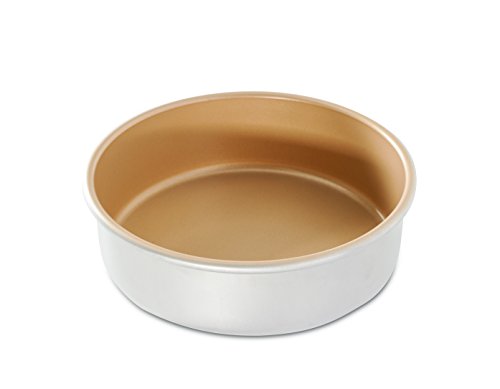
Preheat the oven to 350°F (177°C) before whipping the eggs. Line the bottom of one 8-inch, 3-inch deep cake pan or two 7-inch round cake pans with parchment paper. If you like, add a parchment strip around the sides as well. Set the pan aside and keep it ready — once the batter is mixed, you want it in the oven immediately.
2) Whip the eggs and sugar to ribbon stage
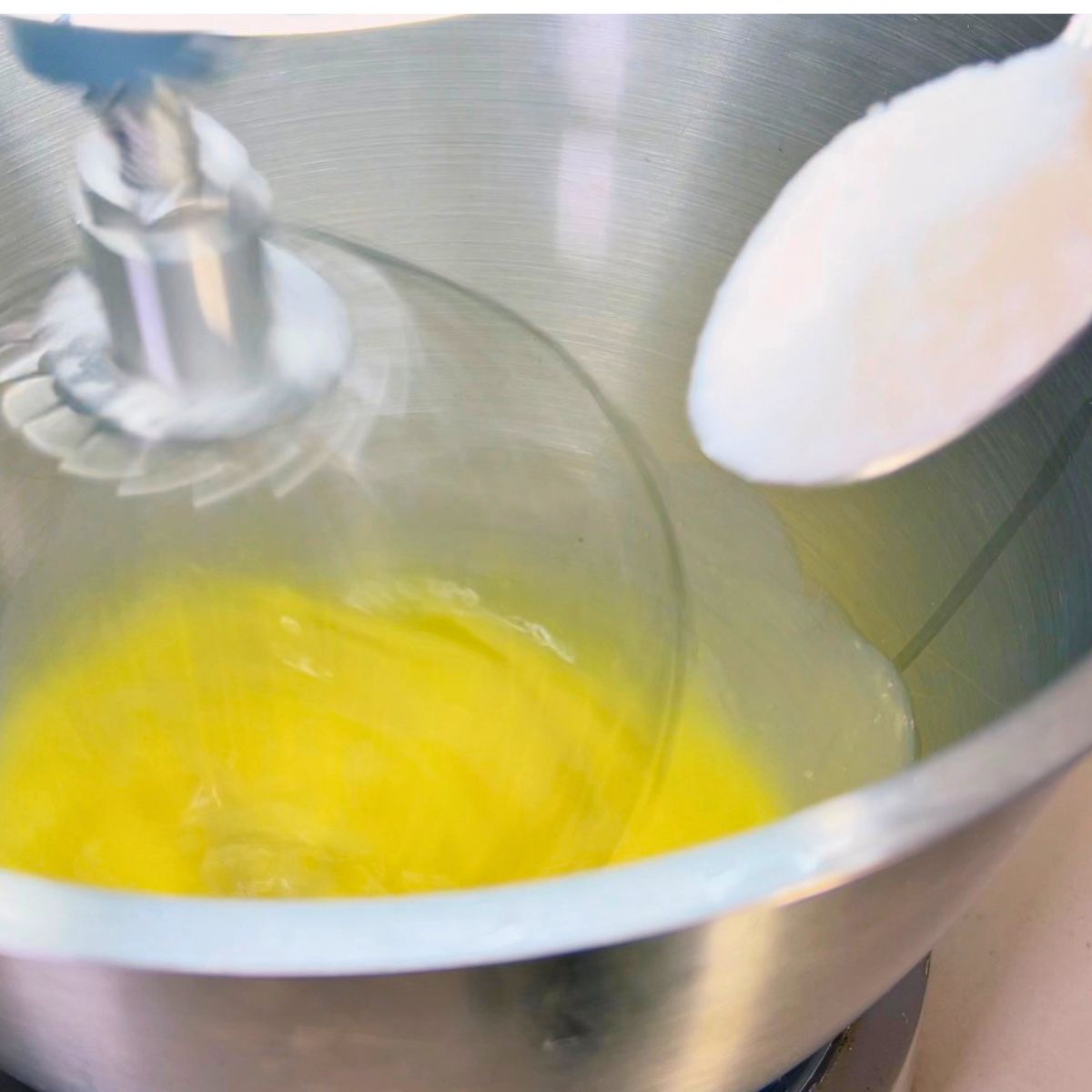
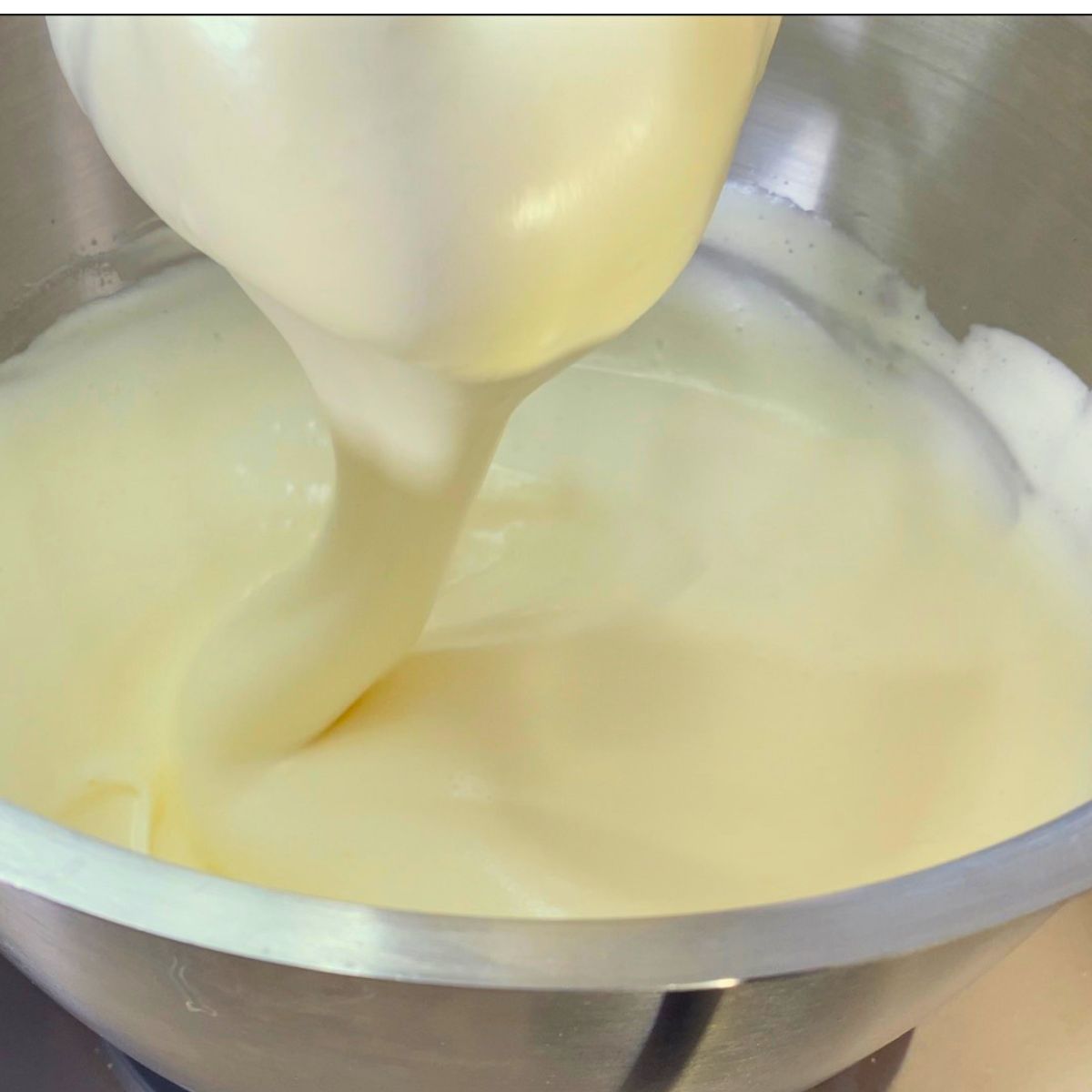
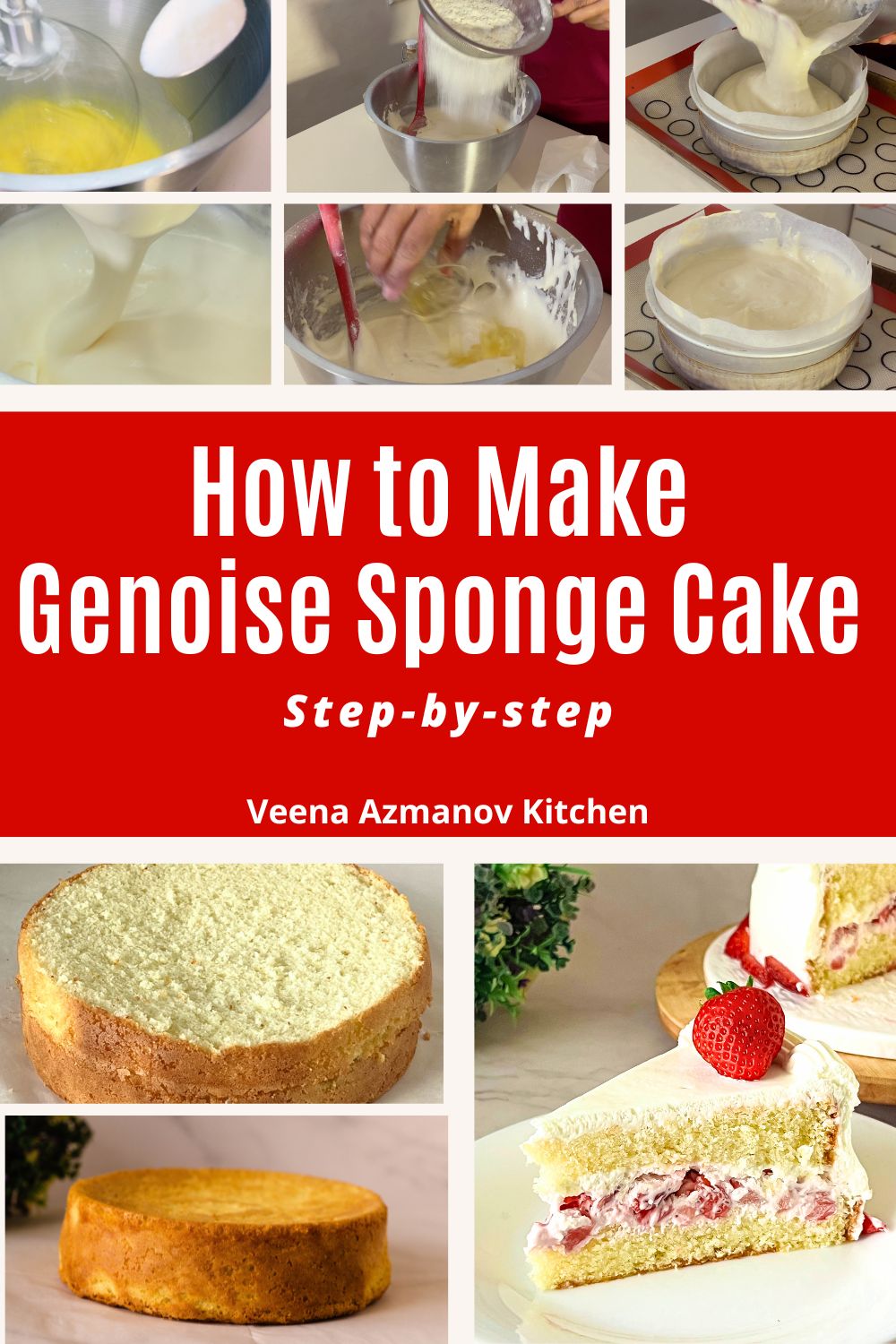
Place the eggs in your stand mixer bowl with the whisk attachment and begin whipping. Gradually add the sugar during the first 2 minutes, then increase to high speed and whip for 4 to 5 minutes, until the mixture becomes pale, thick, and noticeably increased in volume.
You’ll know it’s ready when the batter falls from the whisk in thick ribbons and the ribbon sits on the surface for a few seconds before sinking back in.
3) Finish on low speed to refine the bubbles
Reduce the mixer to low speed and whip for 2 minutes. This step helps break down large bubbles, giving you a finer crumb and helping prevent a thick, dark crust on top as the cake bakes.
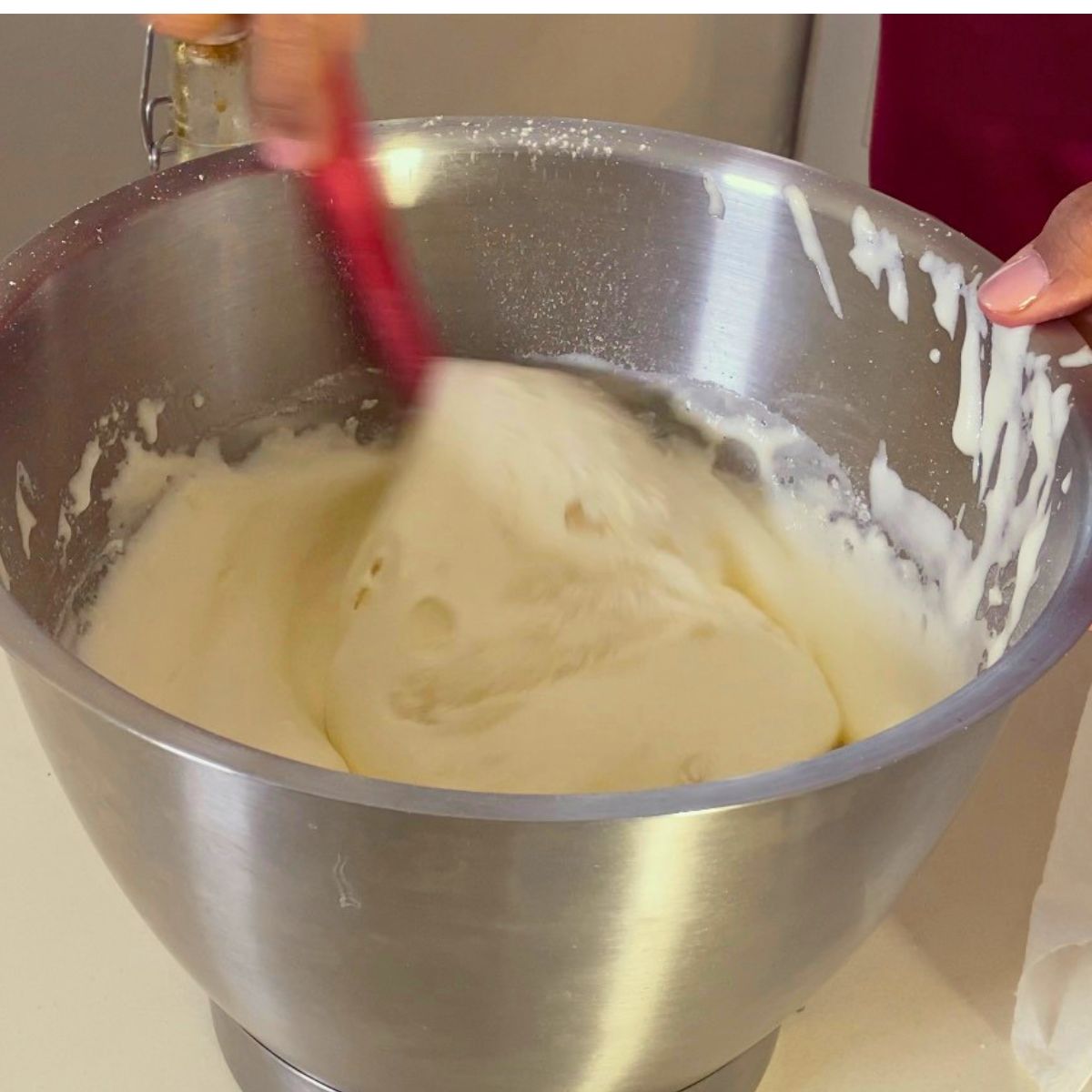
4) Fold in the flour in three additions
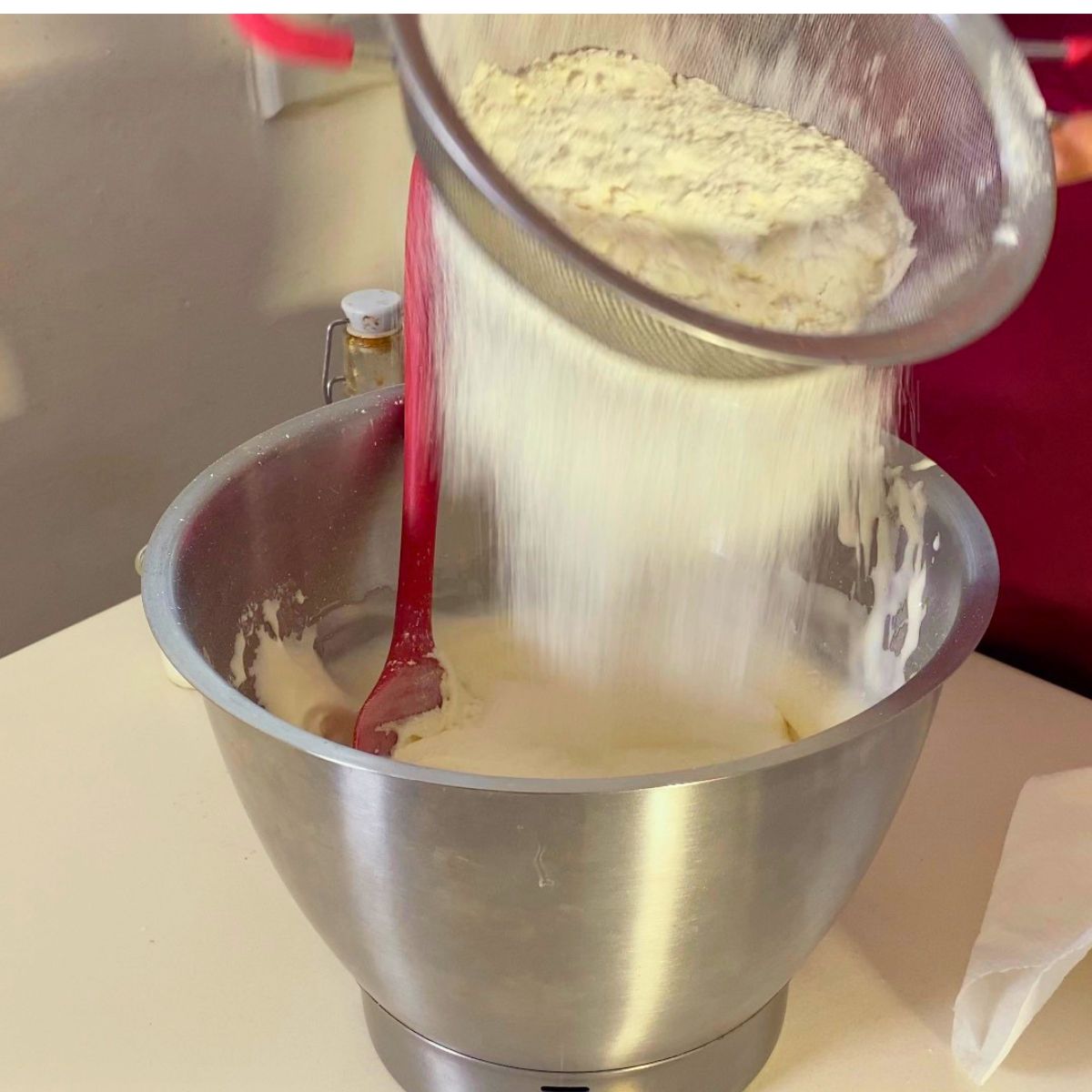
Sift the cake flour, then sift it into the egg mixture in three batches. Fold gently using a cut-and-fold motion, rotating the bowl as you go. Work carefully, but don’t baby it — you want the flour incorporated without knocking out the air you just built.
Make sure you scrape the bottom of the bowl, because that’s where flour likes to hide.
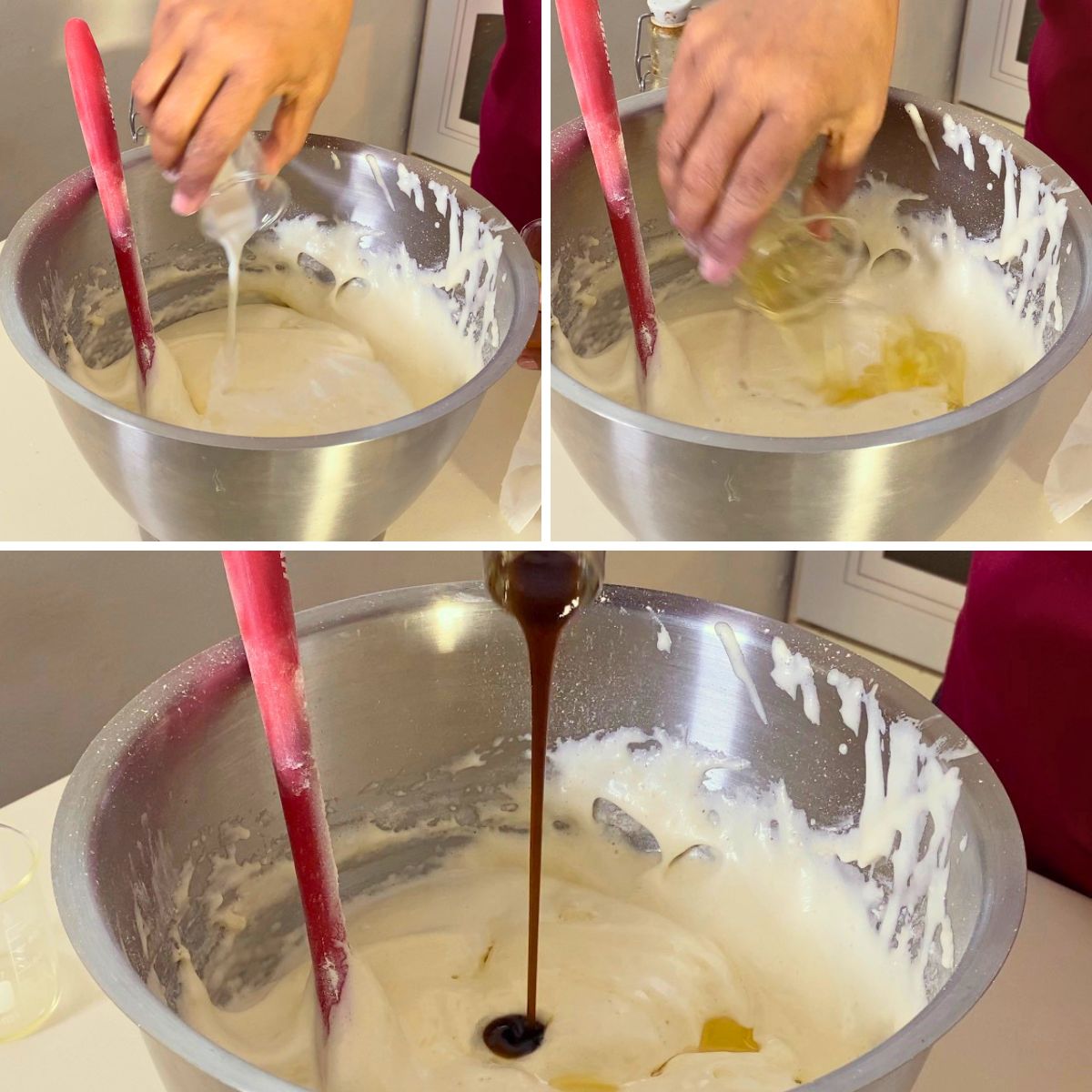
5) Add warm milk, oil, and vanilla
Combine the warm milk, oil, and vanilla, then drizzle it into the batter. Fold gently just until the batter looks even and glossy. Stop as soon as it’s incorporated — overmixing at this stage is one of the fastest ways to lose volume.
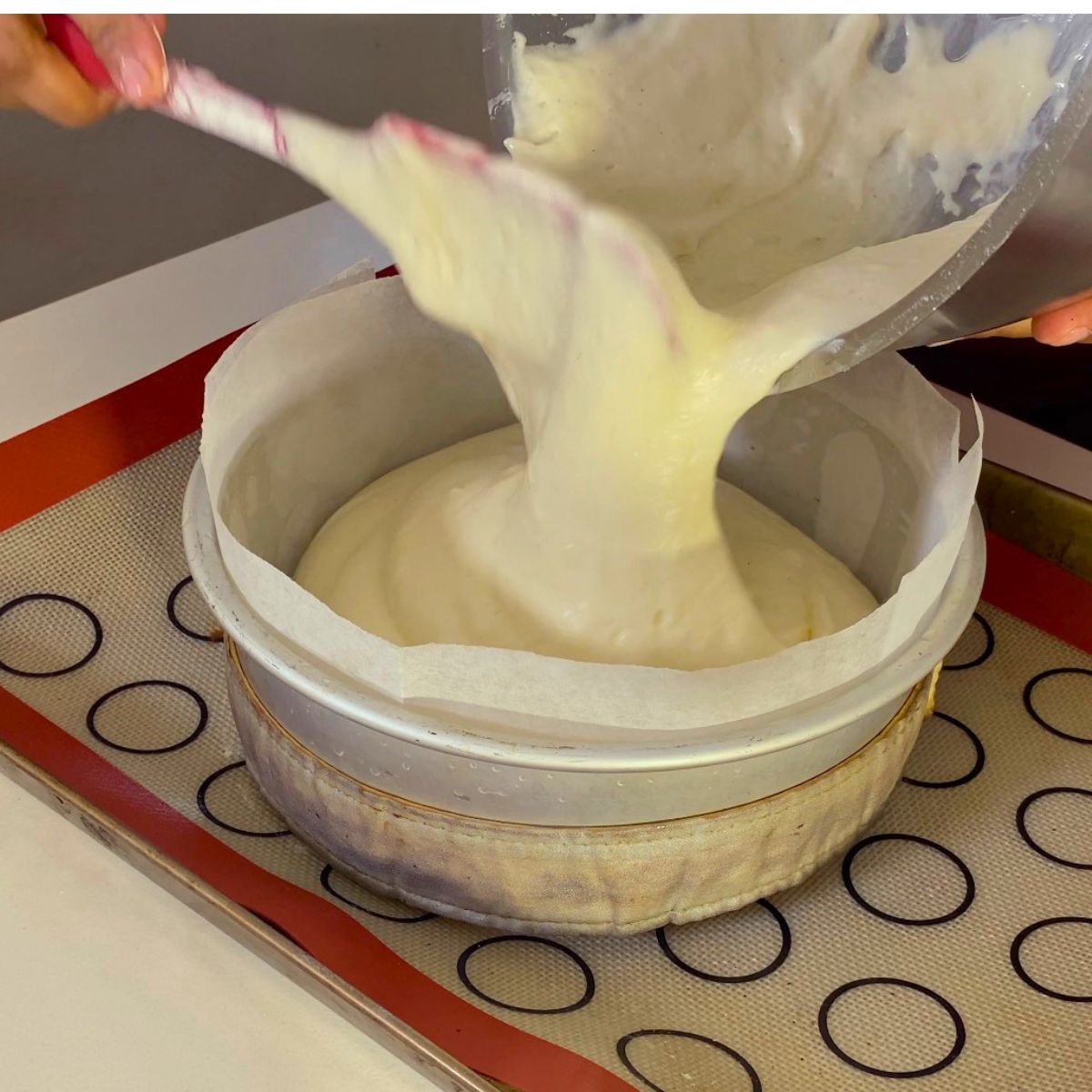
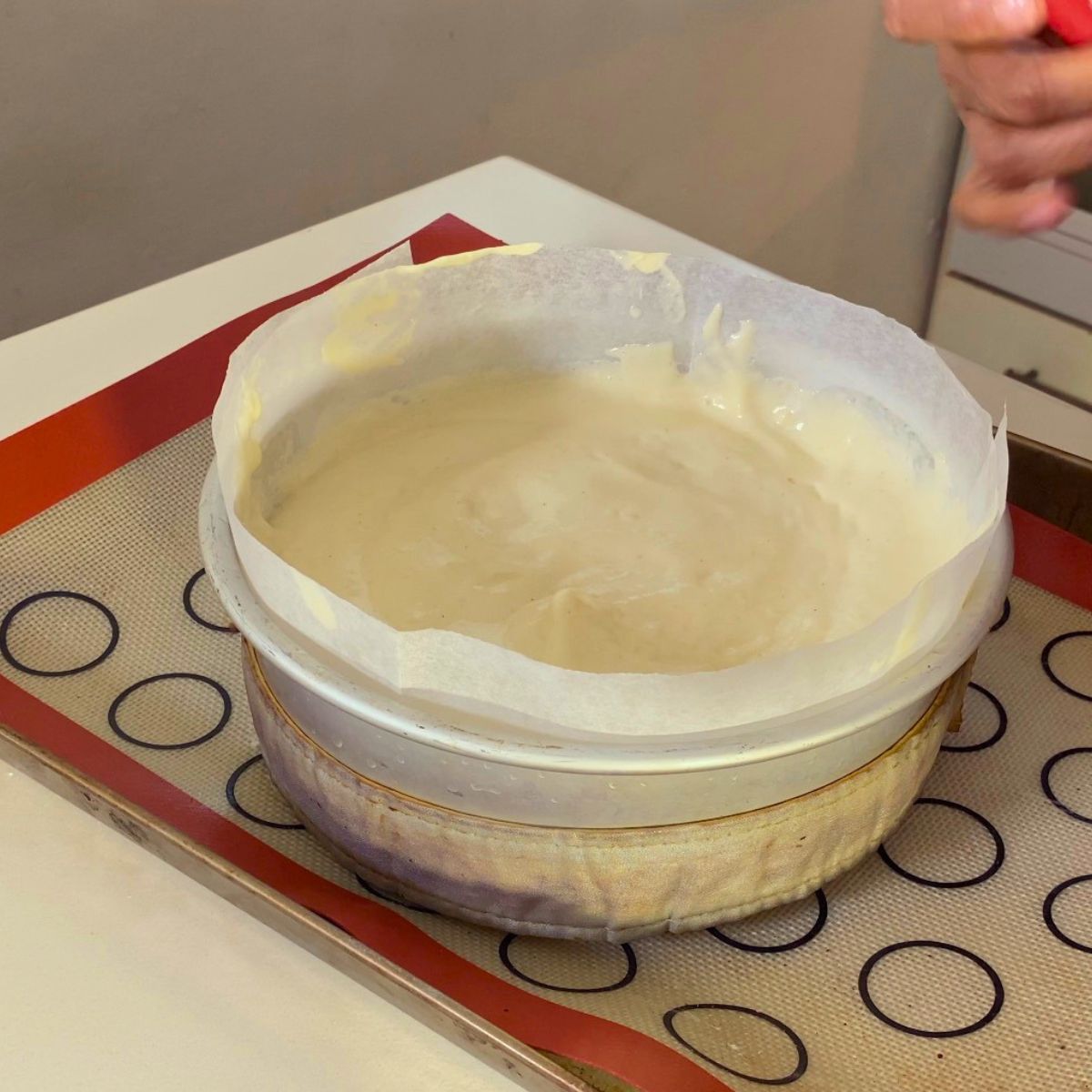
6) Bake without disturbing
Pour the batter into the prepared 8-inch cake pan and bake immediately for 30 to 35 minutes. The 7-inch cake pans will take about 20 to 25 minutes. Do not open the oven door for the first 20 minutes, because the sudden drop in heat can cause the sponge to sink.
The cake is done when the top springs back lightly and a skewer inserted in the center comes out clean.
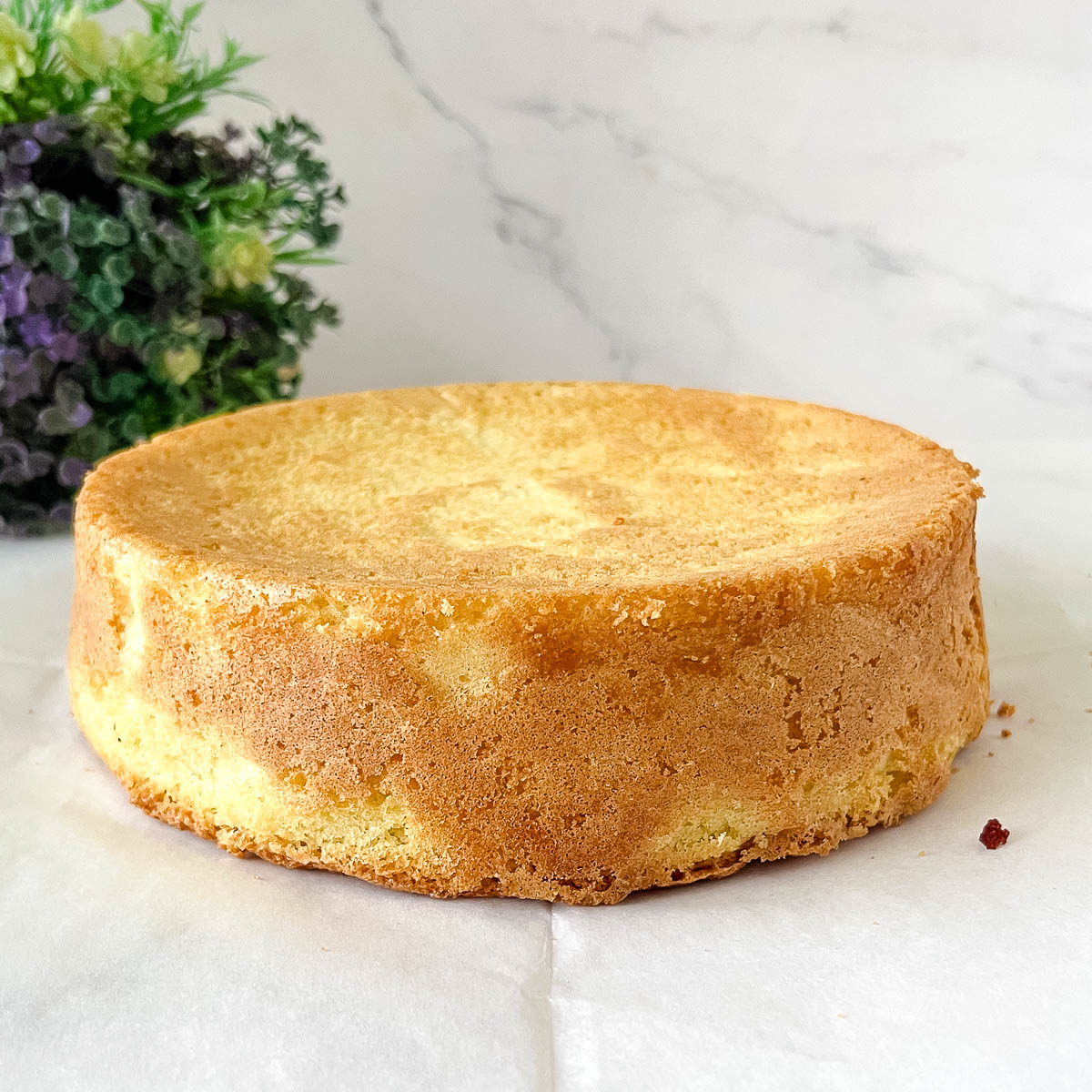
7) Cool
Cool the cake on a wire rack until completely cooled before slicing or layering.
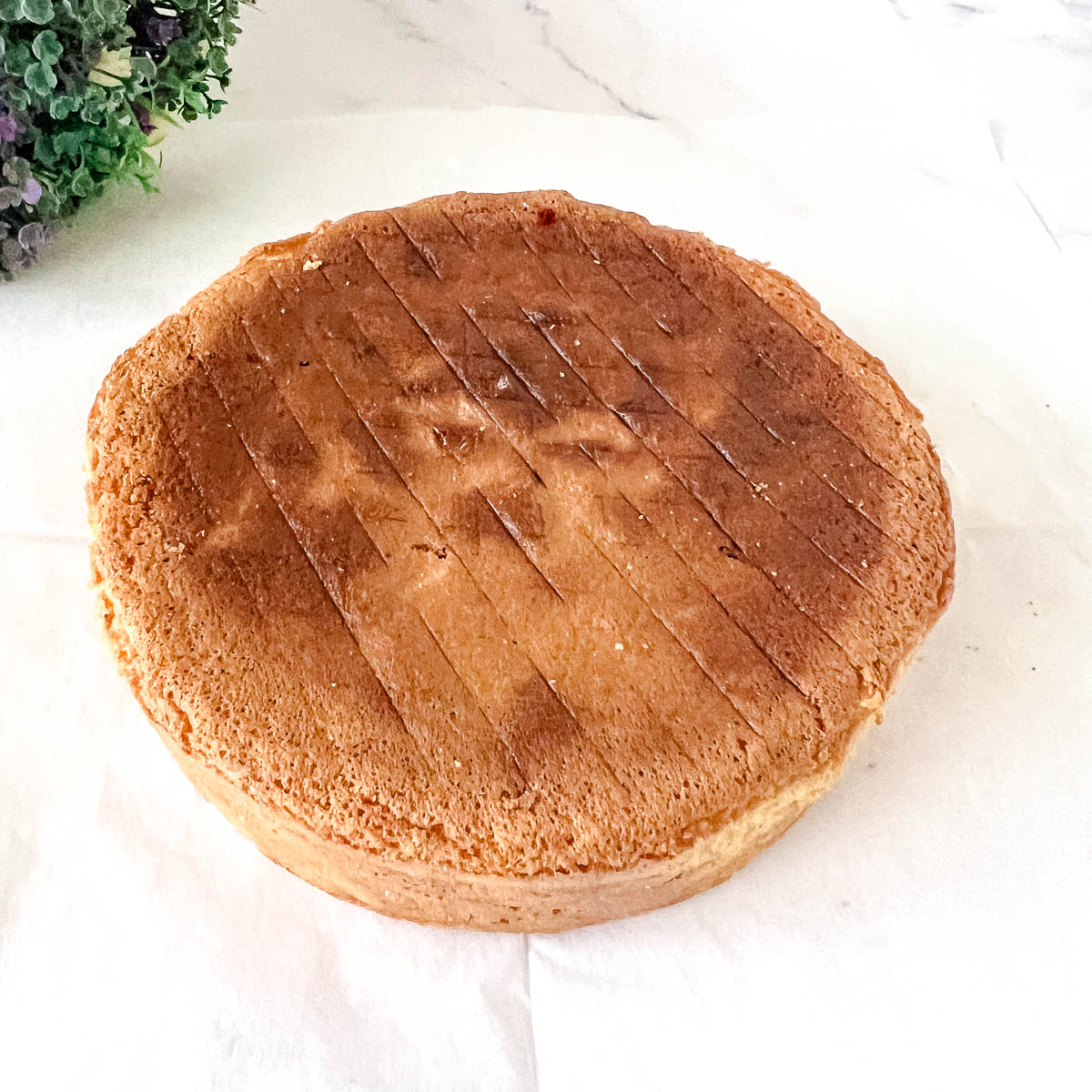
How to Use Genoise Sponge
This sponge is designed to be layered.
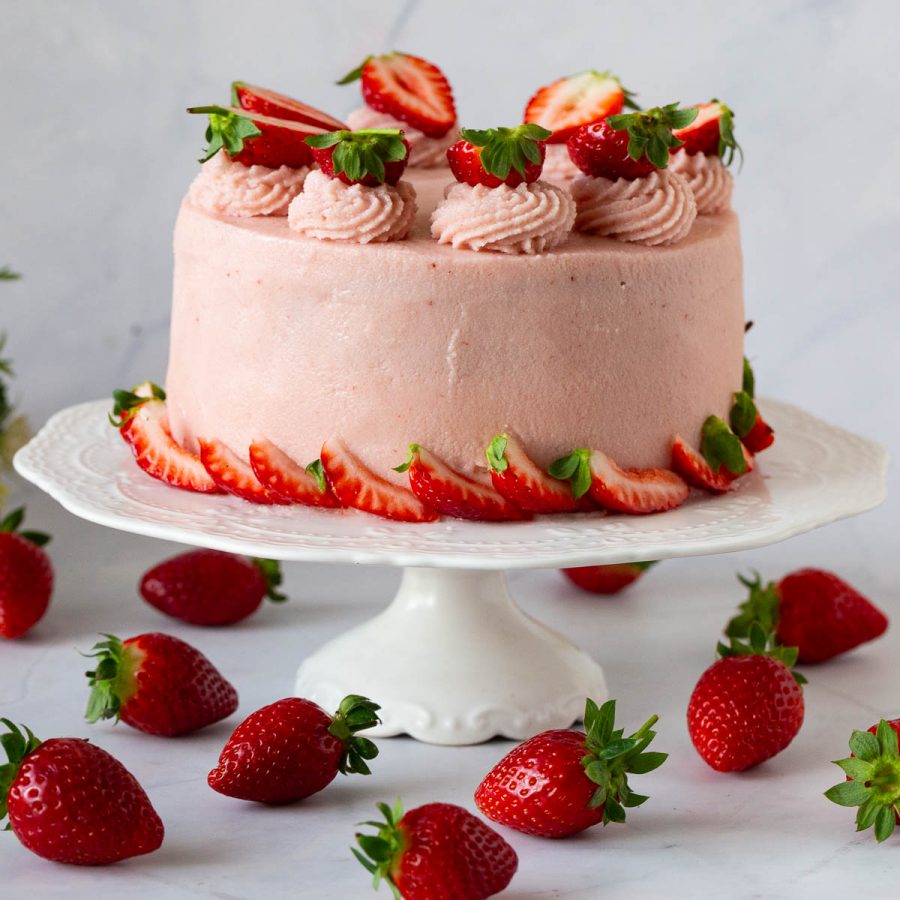
It pairs beautifully with lightly sweetened whipped cream and fresh strawberries for a classic strawberry cream cake. It also works well in a mixed berry Chantilly cake, where the soft crumb absorbs flavor without becoming dense.
Because the texture is light and flexible, it can also be brushed with simple syrup if additional moisture is desired.


Genoise Light Sponge Cake Recipe
Ingredients
- 4 large Eggs
- 150 g (¾ cup) Sugar fine-grain
- 125 g (1 cup) Cake flour
- 60 ml (¼ cup) Cooking oil or melted butter
- 1 tsp Vanilla extract
- 2 tbsp Warm milk almost room temperature
- ½ tsp Salt
Instructions
- Prepare the oven and pan Preheat the oven to 350°F (177°C) before whipping the eggs. Line the bottom of one 8-inch, 3-inch deep round cake pan or two 7-inch round cake pans with parchment paper. If you like, add a parchment strip around the sides as well. Set the pan aside and keep it ready — once the batter is mixed, you want it in the oven immediately.
- Whip the eggs and sugar to ribbon stagePlace the eggs in your stand mixer bowl with the whisk attachment and begin whipping. Gradually add the sugar during the first 2 minutes, then increase to high speed and whip for 4 to 5 minutes, until the mixture becomes pale, thick, and noticeably increased in volume.You’ll know it’s ready when the batter falls from the whisk in thick ribbons and the ribbon sits on the surface for a few seconds before sinking back in.4 large Eggs, 150 g Sugar, ½ tsp Salt
- Finish on low speed to refine the bubblesReduce the mixer to low speed and whip for 2 minutes. This step helps break down large bubbles, giving you a finer crumb and helping prevent a thick, dark crust on top as the cake bakes.
- Fold in the flour in three additionsSift the cake flour, then add it to the egg mixture in 3 batches. Fold gently using a cut-and-fold motion, rotating the bowl as you go. Work carefully, but don’t baby it — you want the flour incorporated without knocking out the air you just built.Make sure you scrape the bottom of the bowl, because that’s where flour likes to hide.125 g Cake flour
- Add warm milk, oil, and vanillaCombine the warm milk, oil, and vanilla, then drizzle the mixture into the batter. Fold just until incorporated. Overmixing at this stage can deflate the foam.
- Bake without disturbingPour the batter into a lined 8-inch pan and bake for 30 to 35 minutes without opening the oven for the first 20 minutes. The 7-inch cakes will take about 20 to 25 minutes. The cake is ready when the top springs back lightly and a skewer inserted into the center comes out clean.60 ml Cooking oil or melted butter, 2 tbsp Warm milk , 1 tsp Vanilla extract
- CoolCool the cake on a wire rack until completely cooled before slicing or layering.
Video
Notes
- Preheat the oven and prepare the pan before whipping the eggs. Foam batters should go into the oven immediately.
- Whip the eggs and sugar to proper ribbon stage. The batter should fall in thick ribbons that sit briefly on the surface.
- Finish whipping on low speed for 2 minutes to refine large air bubbles and prevent a thick, dark crust.
- Sift and fold the flour in three additions using a gentle cut-and-fold motion. Avoid overmixing.
- Add the warm milk and oil last, folding just until incorporated.
- Do not open the oven during the first 25 minutes of baking.
- Cool completely before slicing.

Made this recipe?
I’d love to see how yours turned out! Share a photo on Instagram and tag @veenaazmanov_kitchen or use #veenaazmanovkitchen. And don’t forget to leave a rating and review!
Storage
Once cooled, wrap the sponge tightly to prevent it from drying out. It can be kept at room temperature for up to a day or refrigerated if needed.
For longer storage, wrap well and freeze. Thaw while still wrapped to preserve moisture.
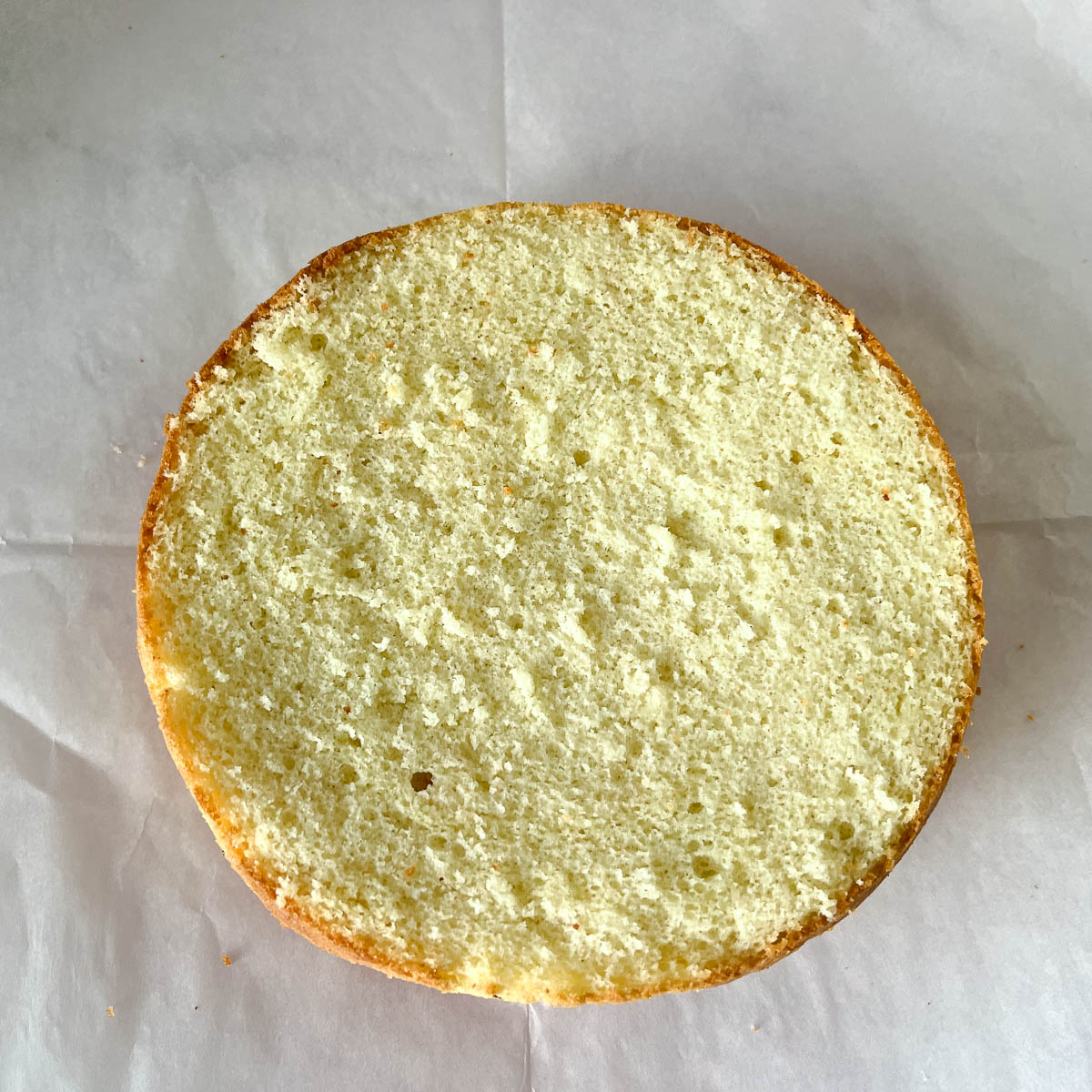
Tips for Success
- Have all ingredients measured before you begin whipping. Foam cakes do not tolerate delays once the batter is ready.
- Avoid opening the oven early, as sudden temperature changes can cause sinking.
- Fold gently and stop as soon as the batter is evenly combined.
Troubleshooting Genoise Sponge
| Problem | Likely Cause | Solution |
|---|---|---|
| Flat sponge | Eggs under-whipped | Whip to true ribbon stage |
| Dense texture | Overmixed after flour | Fold gently and stop early |
| Thick dark crust | Large air bubbles | Finish whipping on low speed |
| Cake sinks | Oven opened too early | Keep oven closed first 25 minutes |
- Best Strawberry Mousse
- Strawberry Cake with Swiss Meringue Buttercream
- Strawberry Cheesecake – Baked
- and Strawberry Cake Recipe
- Strawberry Bundt Cake
- Strawberry Jelly or Strawberry Jam – No Pectin
- See all strawberry cake

Frequently asked questions
Once completely cooled, this sponge will keep well for up to 1 day at room temperature if tightly wrapped. If refrigerated, it will stay fresh for about 3 days, though the texture is best within the first 24–48 hours.
For longer storage, the sponge can be frozen for up to 1 month without losing structure.
Allow the cake to cool completely before storing. Wrap it tightly in plastic wrap to prevent it from drying out. For short-term storage, keep it at room temperature in a cool place. If refrigerating, keep it well wrapped and bring it to room temperature before using.
If freezing, wrap the cake in plastic wrap and then in foil or place it in an airtight container. Thaw while still wrapped to retain moisture.
A genoise is a type of sponge cake made by whipping whole eggs and sugar for structure. Traditional sponge cakes may use separated eggs or even baking powder. Genoise relies entirely on the air incorporated during whipping, which gives it a light yet stable texture ideal for layering.
No. A classic genoise does not use baking powder. The rise comes from properly whipped eggs. If the eggs are not beaten to ribbon stage, the cake will not rise properly.
The most common cause is under-whipped eggs or overmixing after adding flour. The egg mixture must reach ribbon stage before folding in the dry ingredients. Folding too aggressively can deflate the batter and result in a dense or flat sponge.
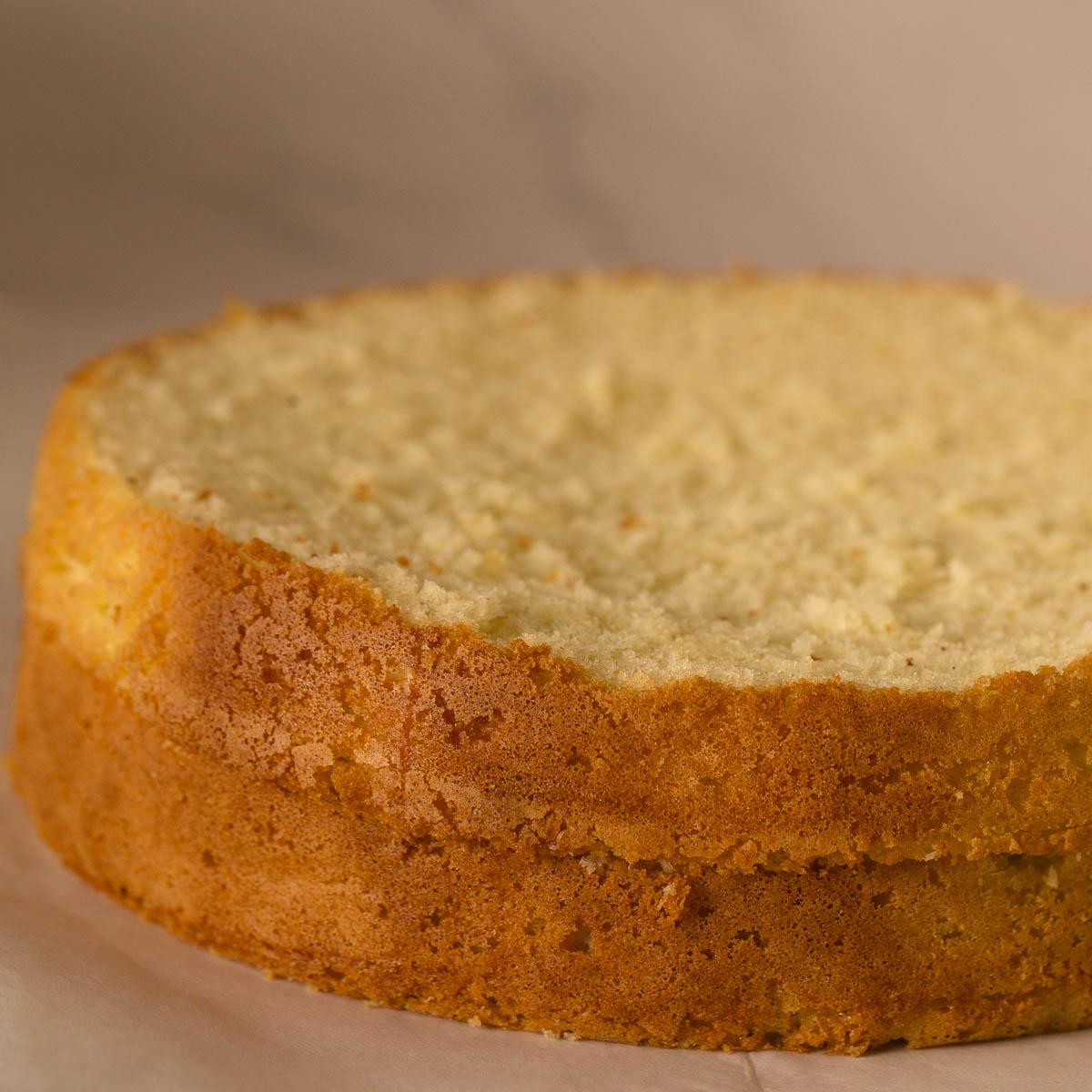
Large air bubbles in the batter can rise and create a thicker crust during baking. Finishing the whipping on low speed for a couple of minutes helps refine the bubbles and creates a more even surface.
Yes. Once completely cooled, wrap the sponge tightly and store at room temperature for up to a day, refrigerate if needed, or freeze for longer storage. Thaw while wrapped to prevent drying out.
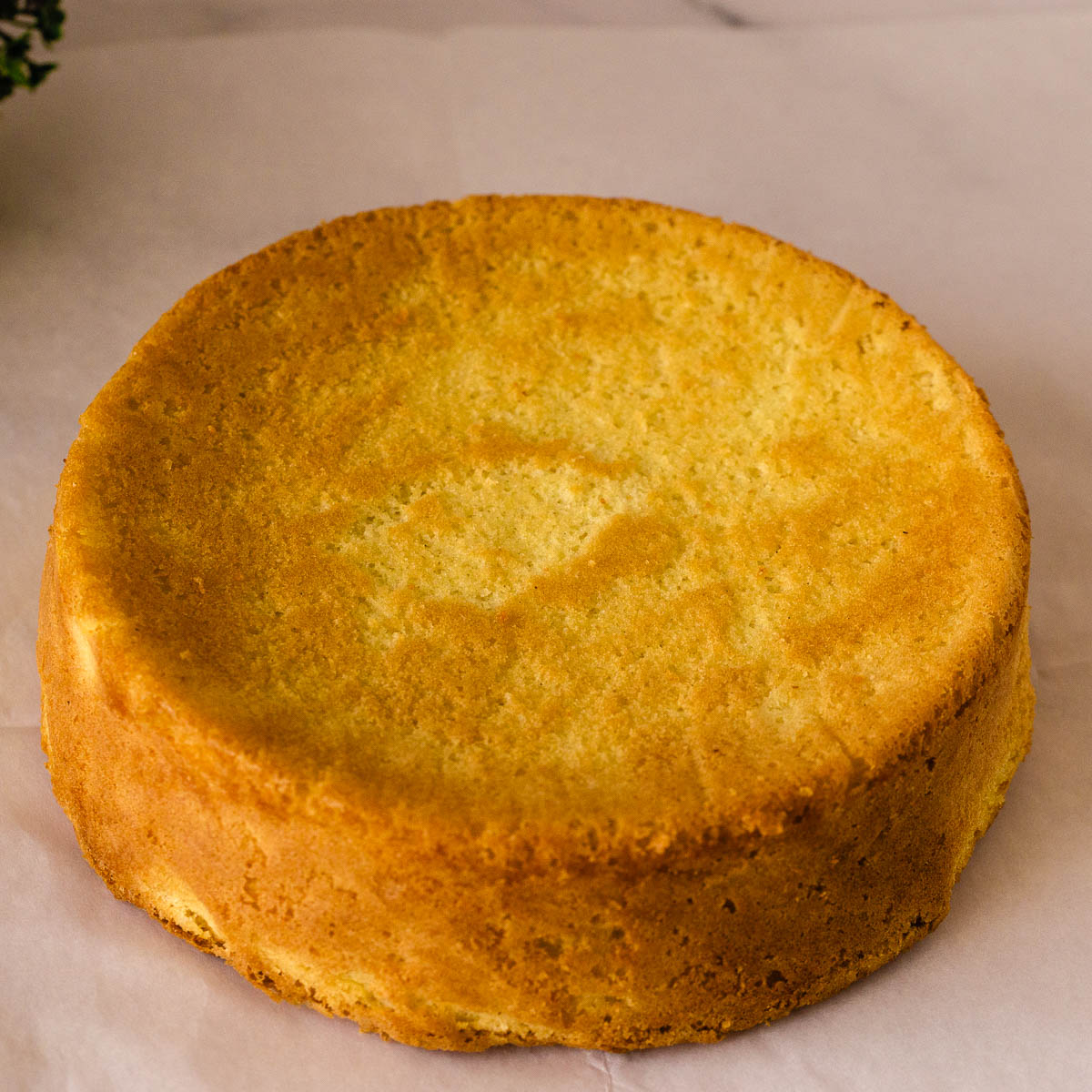
A genoise when cooked will leave the sides of the pan. A skewer inserted in the center comes out clean. And of course, it will be a nice golden brown on the top.
Don’t lose this recipe! Save it for Later!
📌 Save this Recipe for later on Pinterest so you can easily find it again.
⭐ Add Veena Azmanov Kitchen to your Google Preferred Sources.
It helps Google show you more of our recipes.
📧 Subscribe for new recipes delivered to your inbox.
🎥 Follow us for more recipes

Hi, I’m Veena
I’m the recipe developer, baker, and food photographer behind Veena Azmanov Kitchen.
I’ve spent years developing and testing recipes, from everyday meals and homemade breads to cakes and desserts.
I share the practical tips and little details I’ve learned along the way so you can get great results in your own kitchen.









hello there! if half of the recipe, can i use a 6-inch round pan? and can i reduce the sugar? thanks!
Hi Toni 😊
Yes, you can use a 6-inch round pan if you’re making half the recipe. Just keep an eye on the baking time, as a smaller pan may bake slightly faster. Start checking a few minutes earlier and remove it once the top springs back lightly.
As for reducing the sugar, I wouldn’t recommend cutting it too much. In a genoise sponge, sugar doesn’t just sweeten — it also stabilizes the whipped eggs and helps create structure. Reducing it significantly can result in a flatter or denser cake. If you prefer it less sweet, it’s better to keep the sponge as is and adjust the sweetness in the filling instead.
Hope that helps! 😊
Can i use regular butter, melted in this recipe?
Yes, you can use regular butter.