
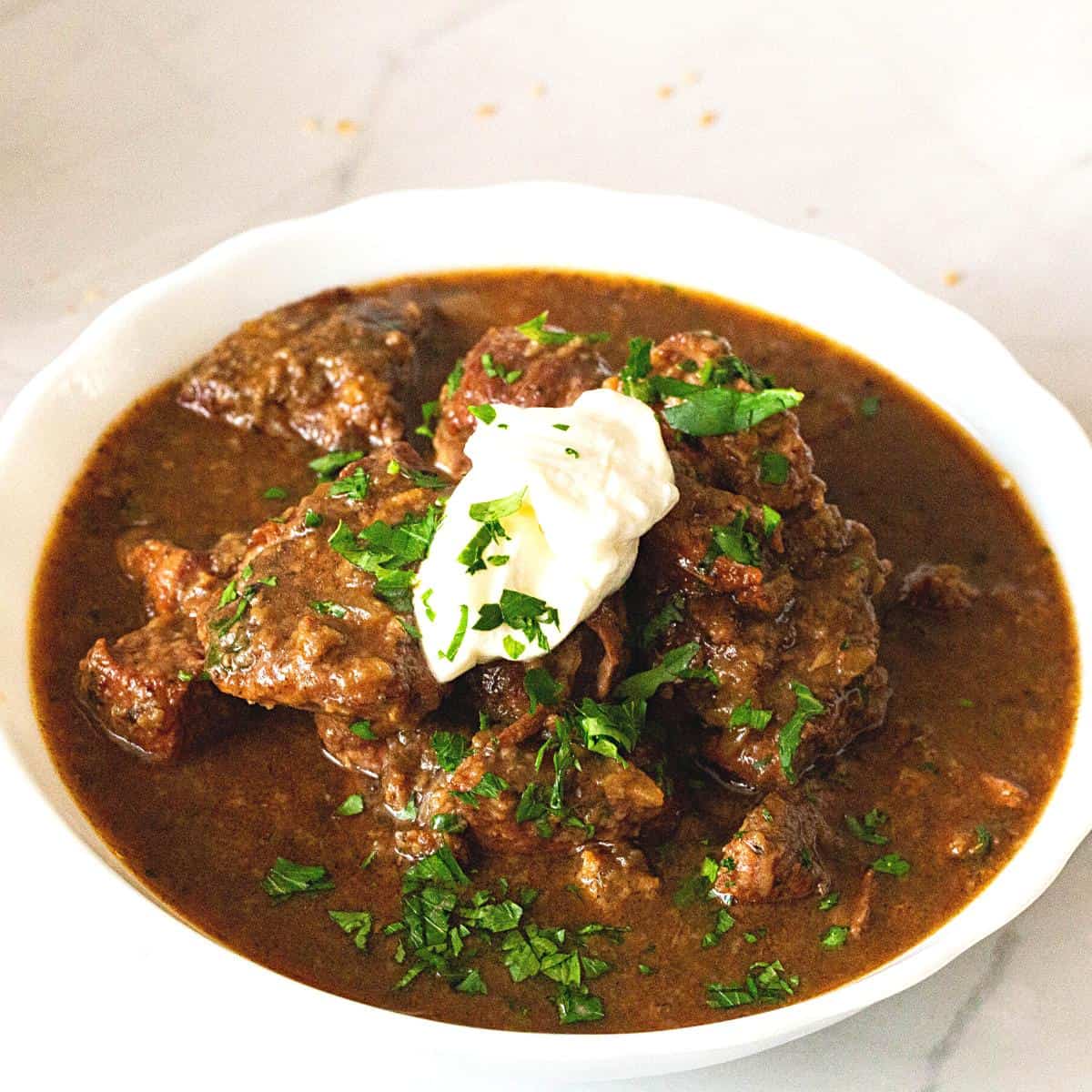


This beef goulash is a flavorful Hungarian stew. It is flavored with goulash spice mix, tomatoes, and herbs. You can make this in the slow cooker, on the stovetop, or in the oven. Traditionally served with noodles, but goes equally well with mashed potatoes or steamed rice, too.
Beef goulash is originally a Hungarian beef and vegetable stew slow-cooked by herdsmen, aka Hungarian shepherds. The word goulash originates from the Hungarian word ‘guliyas’, which means herdsmen. Over the years, this dish has come to be known as goulash.
The best way to cook a goulash is to slow-cook it braised over the stovetop or oven, but the slow cooker works great, too. Meat falling off the bones, soaking up all those aromatic spices and juices. How can you not like such melt-in-the-mouth meat?
Why make this goulash
- You don’t have to be a fan of Hungarian food to appreciate this slow-cooked goulash. In the video, I made it in a slow cooker today, but I have given other cooking methods. You can see the stovetop version in process pictures using a Dutch oven below, too.
- The beef is very delicately spiced with garlic, cloves, caraway, rosemary, thyme, and balsamic vinegar. However, when combined, these spices make a wonderful dish packed with flavor.
- The recipe is simple and easy, with a few minutes of preparation while the stove, oven, or slow cooker does the rest.
- Most of the ingredients are easy to find or pantry staples.

Ingredients and substitutes
- Beef – I like to use chuck or round. But ask the butcher for meat for slow cooking, and he will give you something that is not necessarily expensive.
- Flour – This helps not just sear the meat but also makes the sauce thicker. But if you want to keep it gluten-free, just substitute the flour with cornstarch.
- Spices – Today, I am using cloves, caraway seeds, and rosemary as my main flavors. And yet, if you prefer, you can omit any of these. I love the depth of flavor the beef gets from the cloves and caraway seeds.
- Balsamic Vinegar – This isn’t just any vinegar! It gives a distinct flavor and color to the beef goulash that matures even more with slow cooking. While I think you should stick to balsamic vinegar, if you must substitute, I’d rather you use apple cider vinegar instead of lemon.
- Stock – Beef is full of flavor, so adding stock only adds more depth of flavor. You can use any stock of chicken, beef, or vegetables. If you want, you can even add water instead of stock.

Step-by-step: Beef Goulash
- Spice mix – Combine the whole spices with a mortar and pestle and crush until fairly ground but still quite coarse, and set aside.
Pro tip – You can also use a food processor, but do not make a fine powder.

- Season – Cut the beef into 2-inch pieces. Season with salt and pepper. Then add flour and toss well to coat all the pieces. Dust off the excess.
Pro tip – The flour will help thicken the gravy, but dusting off excess flour will prevent it from burning during searing. - Sear – Heat a tablespoon of oil in a skillet. Sear the floured beef pieces on all sides. Remove from the pan – keep warm.
Pro tip – Do not crowd the pan; do this in batches, so you sear, not stew, the meat. - Sauté – In the same skillet over medium heat, add the remaining oil and saute the onions and garlic until the onions are translucent.
- Sauce – Add the vinegar, Worcestershire sauce, and tomato paste, followed by the broth. Deglaze the pan and bring it to a boil.

- Slow cook – Transfer everything to the slow cooker. Add the meat, followed by the sauce, spices, and remaining ingredients. Cover and cook until fork-tender. This will take about 4 to 5 hours on high or 6 to 8 hours on low.
Pro tip – If you want a thicker sauce, add a cornstarch slurry (1 tsp of cornstarch with 1/4 cup water) in the final hour of cooking.

- Stovetop – Use a Dutch oven to sear the meat and saute the veggies. Then, return the beef pieces to the pan along with any remaining ingredients. Cover and cook on low for 1 ½ to 2 hours, stirring every 20 minutes.
Pro tip – You may need to add water if the braising liquid is reduced. - Oven – Instead of cooking on the stovetop, cover the pan with aluminum foil and transfer to a preheated oven at 325℉/160℃/Gas Mark 3 for 2½ to 3 hours.
Pro tip – Cover the pan tightly to keep all the steam in; otherwise, you will lose the braising liquid.



Frequently asked questions
This slow cooker beef goulash will keep in the fridge for 5 to 6 days. It can also be frozen for up to a month.
While we do need liquid to cook the meat, the excess liquid does not evaporate when slow-cooking. You can serve the extra liquid like soup with bread or rice. Alternatively, remove the meat from the slow cooker and transfer the liquid to a saucepan. Reduce it over medium heat on the stovetop until it’s a thicker consistency. Then add the meat back to the liquid.
Balsamic vinegar isn’t just any vinegar! It gives the beef goulash a very special flavor and color that matures even more with slow cooking. While I do think you should stick to balsamic vinegar if you must substitute, I’d rather you use apple cider vinegar instead of lemon.
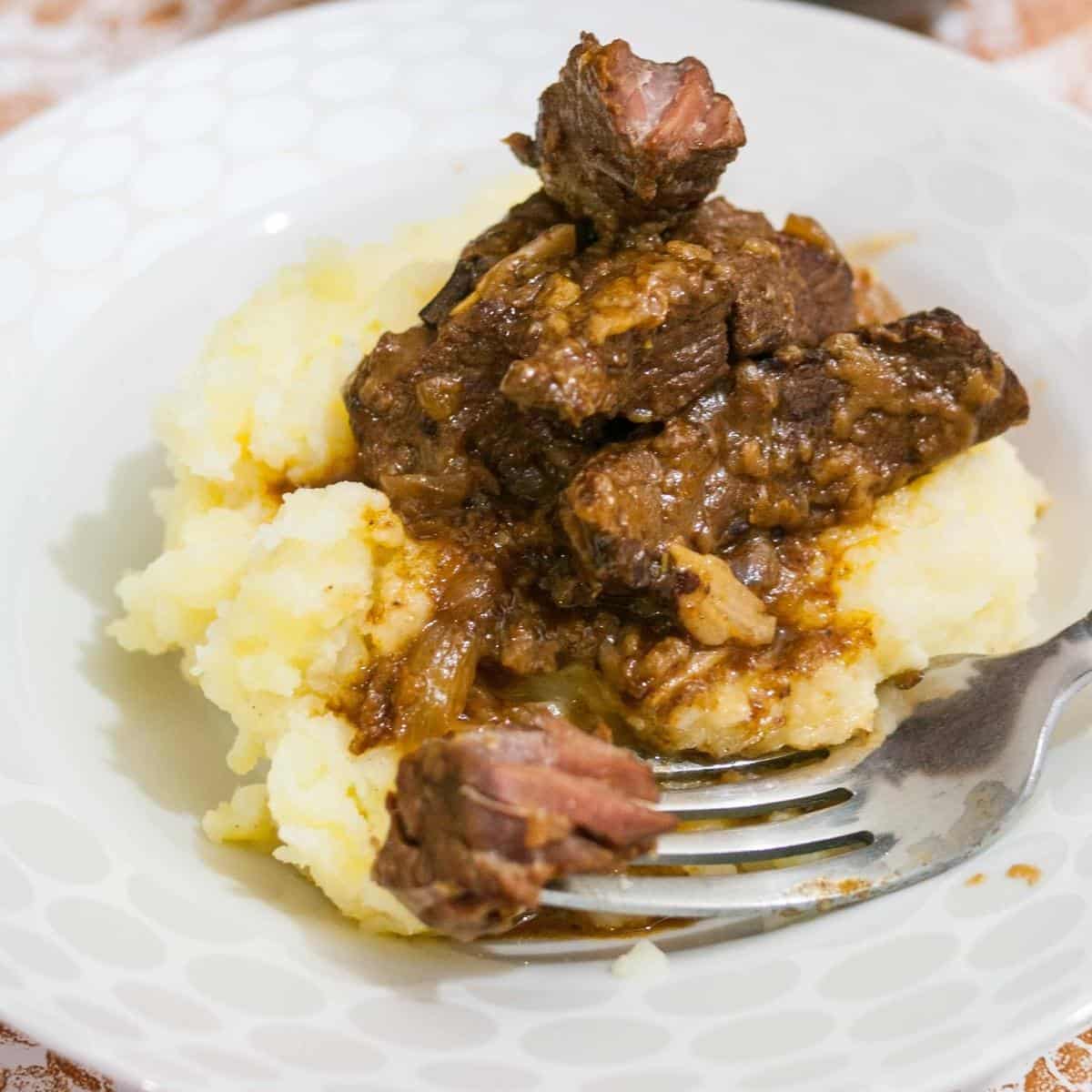
Traditionally, goulash is served with cooked pasta such as pappardelle, tagliatelle, or penne. Today, I served it with my kids’ favorite mashed potatoes. When I’m in a low-carb mood, I usually serve it with cauliflower rice. You can, of course, serve veggies on the side, such as garlic-sesame asparagus, parmesan asparagus, sesame green beans, cheesy baked eggplant slices, lemon-rosemary potatoes, or roasted dill potatoes.

Beef Goulash Recipe
This beef goulash is a flavorful Hungarian stew. It is flavored with goulash spice mix, tomatoes, and herbs. You can make this in the slow cooker, on the stovetop, or in the oven. Traditionally served with noodles, but goes equally well with mashed potatoes or steamed rice too.
Video
Ingredients
- 2 lbs (1 kg) Beef
- 1 tsp Salt
- 1 tsp Pepper
- 4 tbsp (30 g) Flour
- 3 tbsp Cooking oil divided
- 1 large Onion chopped finely
- 3 large Garlic cloves minced
- 2 tbsp Worcestershire sauce
- 3 tbsp (45 ml) Balsamic vinegar
- 4 tbsp (60 g) Tomato paste
- 2 cup (500 ml) Stock
- 2 large Bay leaves
- 1 tsp Rock salt
- 1 tsp Hot smoked Paprika
- 1 tsp Sweet smoked paprika
- 10 tsp Black peppercorns or 1 tsp pepper powder
- 10 pieces Cloves or 1/2 tsp ground cloves
- 1 tbsp Caraway seeds or 1/2 tsp ground seeds
- 1 tbsp Dried rosemary or 2 fresh sprigs
- 1 tbsp Dried thyme or 4 fresh sprigs
Method
- Spice mix – Combine the whole spices with a mortar and pestle and crush until fairly ground but still quite coarse and set aside.Pro tip – You can also use a food processor, but do not make a fine powder.1 tsp Rock salt, 1 tsp Hot smoked Paprika, 10 tsp Black peppercorns, 10 pieces Cloves, 1 tbsp Caraway seeds, 1 tbsp Dried rosemary, 1 tbsp Dried thyme, 1 tsp Sweet smoked paprika
- Season – Cut the beef into 2-inch pieces—season with salt and pepper. Then, add flour and toss well to coat all the pieces well. Dust off the excess.Pro tip – The flour will help thicken the gravy, but dusting off the excess will prevent it from burning during searing.2 lbs Beef , 1 tsp Salt, 1 tsp Pepper, 4 tbsp Flour
- Sear – Heat a tablespoon of oil in a skillet. Sear the floured beef pieces on all sides. Remove from the pan – keep warm.Pro tip – Do not crowd the pan; do this in batches so you sear, not stew, the meat.
- Saute – In the same skillet over medium heat, add the remaining oil and saute the onions and garlic until the onions are translucent.3 tbsp Cooking oil , 1 large Onion, 3 large Garlic cloves
- Sauce – Add the vinegar, Worcestershire sauce, and tomato paste, followed by the broth. Deglaze the pan and bring it to a boil.2 tbsp Worcestershire sauce, 3 tbsp Balsamic vinegar, 4 tbsp Tomato paste, 2 cup Stock
- Slow cook – Transfer everything to the slow cooker. Add the meat, followed by the sauce, spices, and remaining ingredients. Cover and cook until fork tender. This will take about 4 to 5 hours on high or 6 to 8 hours on low. Pro tip – If you want a thicker sauce, add a cornstarch slurry (1 tsp of cornstarch with 1/4 cup water) in the final hour of cooking.2 large Bay leaves
- Stovetop – Return the beef pieces to the pan and any remaining ingredients. Cover and cook on low for 1 ½ to 2 hours, stirring every 20 minutes. Pro tip – You may need to add water if the braising liquid is reduced.
- Oven – Instead of cooking on the stovetop, cover the pan with aluminum foil and transfer to a preheated oven at 325℉/160℃/Gas Mark 3 for 2½ to 3 hours. Pro tip – Cover the pan tightly to keep all the steam in; otherwise, you will lose the braising liquid.
Notes
- Choose the right cut of beef – Use a tough cut of beef such as chuck roast or brisket. These have connective tissue that breaks down and becomes tender during long, slow cooking.
- Before adding the meat to the slow cooker or crockpot, brown it in a hot pan. This caramelization adds wonderful flavor and locks in all the juices.
- Cook the onions until translucent or at least caramelized; this adds a wonderful flavor.
- This dish benefits from long, slow cooking in a slow cooker or a Dutch oven.
- You can also make goulash with veggies such as carrots, potatoes, and bell peppers. Add them a few hours later so you do not overcook them.
- Goulash is served with potatoes, egg noodles, or bread to help soak up all the delicious sauce.
Equipment you will need


Nutrition
Tried this recipe?
Mention @veenaazmanov_kitchen or tag #veenaazmanovkitchen!

Don’t lose this recipe! Save it for Later!
📌 Save this Recipe for later on Pinterest so you can easily find it again.
⭐ Add Veena Azmanov Kitchen to your Google Preferred Sources.
It helps Google show you more of our recipes.
📧 Subscribe for new recipes delivered to your inbox.
🎥 Follow us for more recipes


Hi, I’m Veena
I’m the recipe developer, baker, and food photographer behind Veena Azmanov Kitchen.
I’ve spent years developing and testing recipes, from everyday meals and homemade breads to cakes and desserts.
I share the practical tips and little details I’ve learned along the way so you can get great results in your own kitchen.










The one essential ingredient of Goulash is paprika, which is sadly missing in this recipe. That aside, I’m sure the dish tastes as delicious as it looks.
Looks like a yummy recipe, Veena; I will try it out this weekend. And the page is very well organized.
One note as for the side dishes- to my experience (of what my Mom used to make)- there was no need really for any side dish. The Goulash itself had all the “sides” in it, such as potatoes, carrots, yams, and the like, all cooked within that Goulash, which was a complete meal by itself. (only needed that Cabernet Sauvignon along to complete the feast … Better use Gamla :))) Shalom from Haifa.
BEST beef goulash I ever made. Thanks
Thank you, Taylah. So happy that this recipe worked well for you and you enjoyed it. Thank you so much for coming back to write this feedback. Love to hear from those who tried my recipe.