
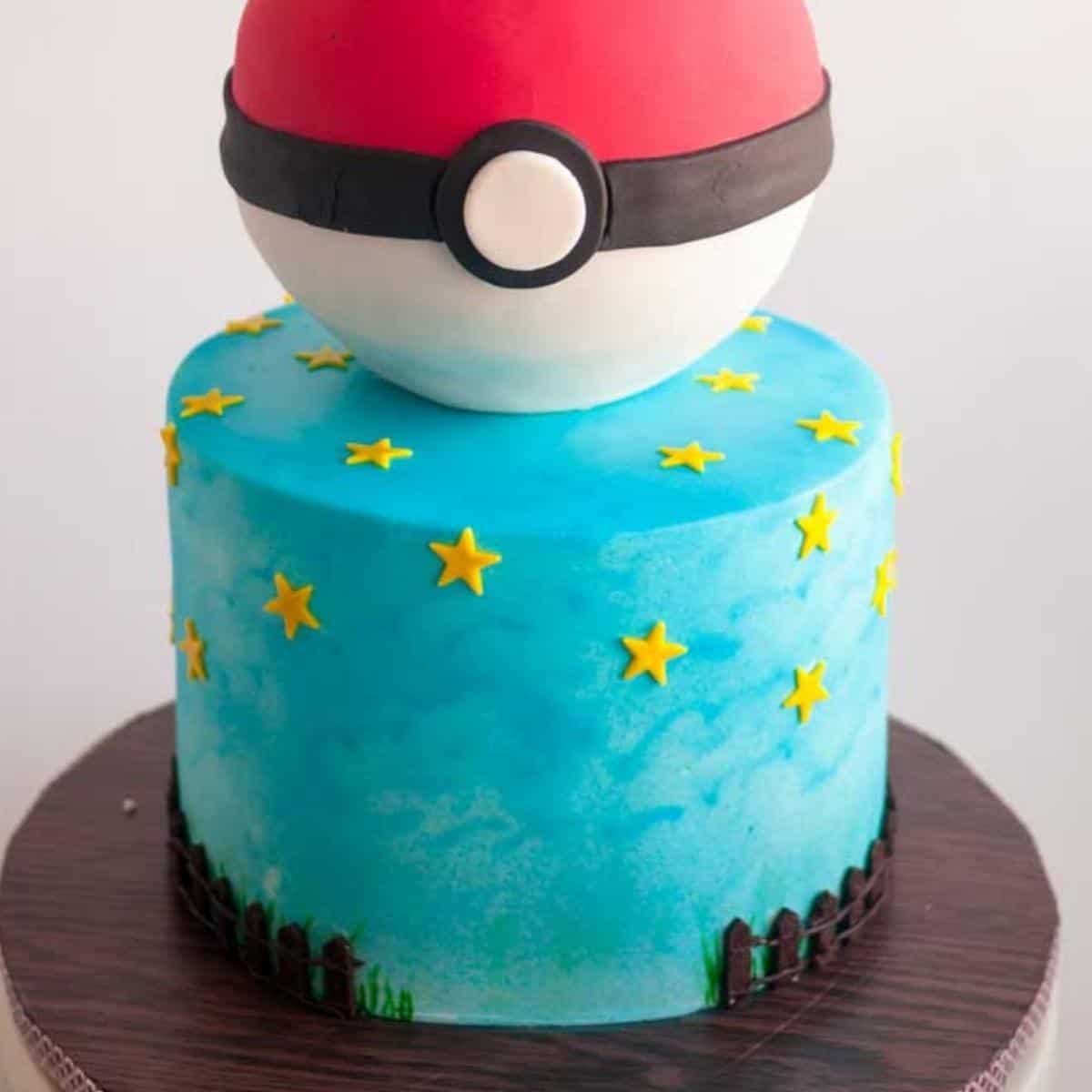



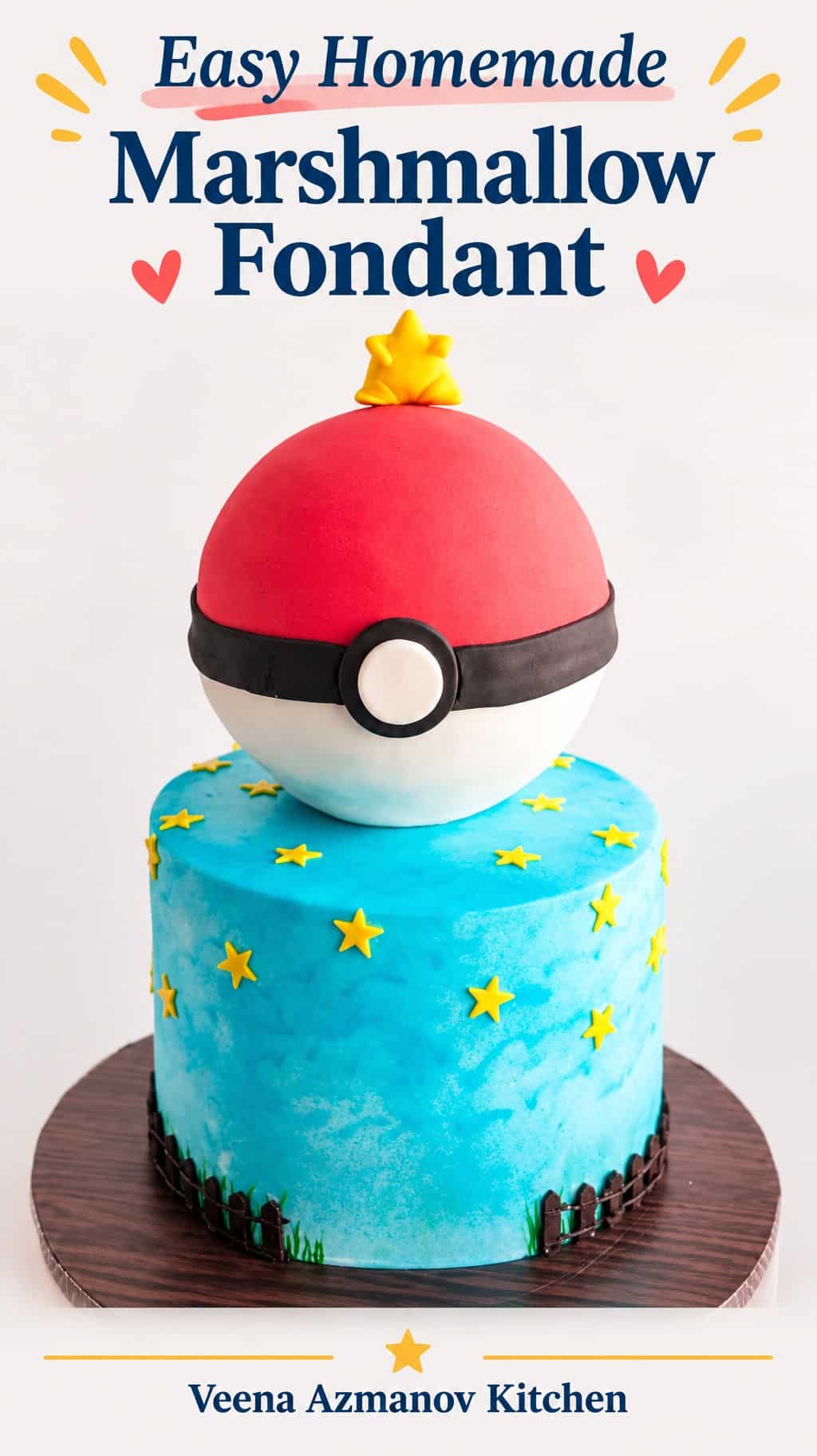
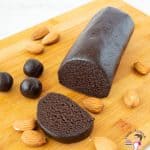
What could be better than a fondant that tastes like candy and smells of marshmallows? This homemade marshmallow fondant recipe is a must-have for kids’ cakes. It’s easy to make, has great elasticity, and rolls out beautifully, making it perfect for covering cakes and creating decorations.
You are probably wondering why I use another fondant recipe when I already have my favorite homemade fondant recipe. Well, I do love that recipe, along with my homemade vegetarian fondant.
But when you’re in the cake decorating business, you want to give your customers more options. The first time I made marshmallow fondant was for a customer who told me, “I only like marshmallow fondant and nothing else.”
I had no problem making it, and I actually liked the smell. The kids loved the taste, too. But I felt the recipe needed a little work.
After several trials, I came up with this version that works for me every time. It’s all about getting the right balance of marshmallows, powdered sugar, water, and vegetable shortening.
Why you’ll love this recipe
- Easy to make – You don’t need any special equipment or complicated techniques. Just melt the marshmallows and work in the powdered sugar.
- Great elasticity – This fondant rolls out smoothly and stretches beautifully, making it easier to cover cakes without tearing.
- Tastes better than traditional fondant – It has a sweet marshmallow flavor that kids especially love.
- Perfect for decorating – Use it to cover cakes, make simple decorations, or add CMC powder when you need a firmer fondant for modeling.

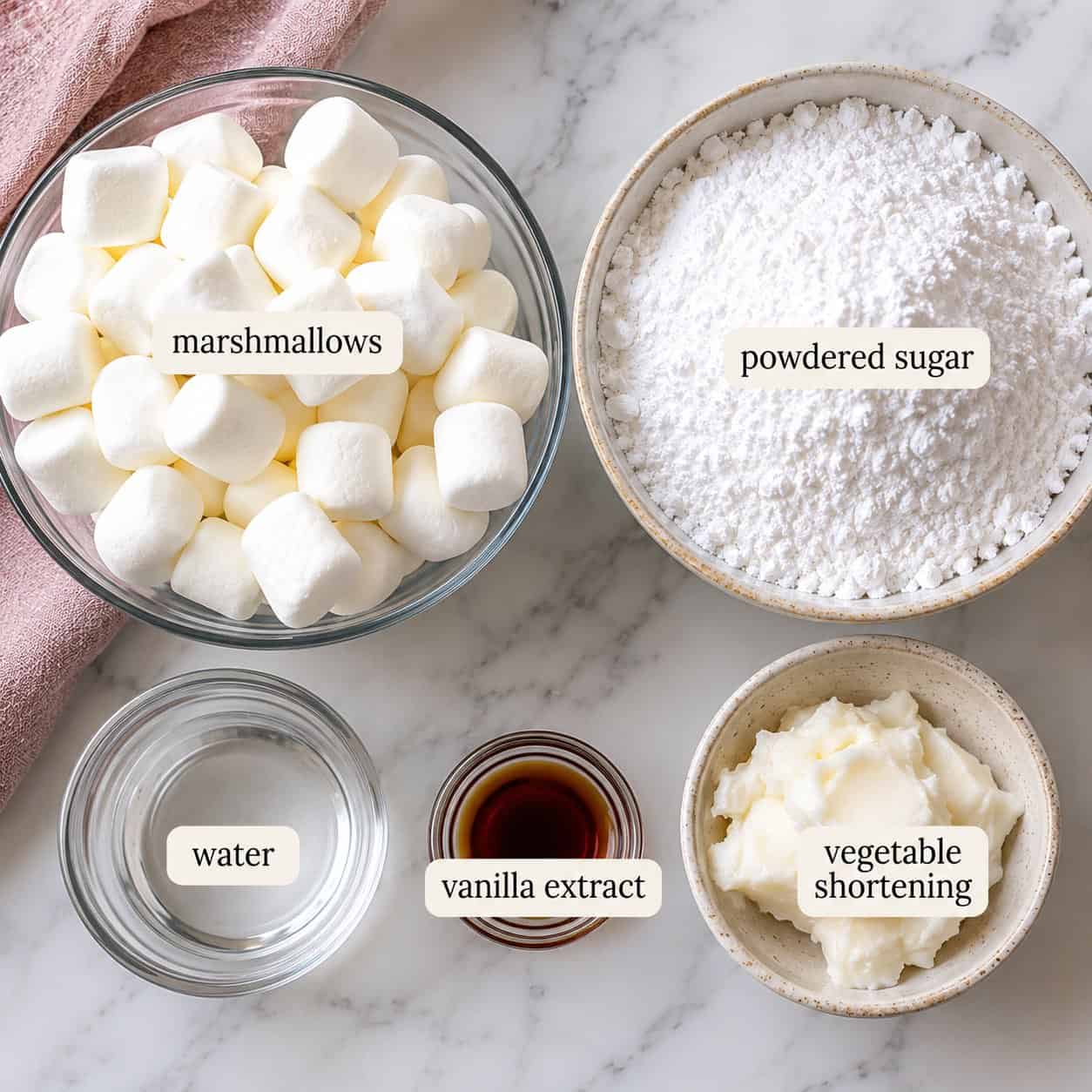
Ingredients and substitutions
- Marshmallows – Use fresh, good-quality white marshmallows for the best results. Mini marshmallows melt faster, but regular marshmallows work just as well. Most regular marshmallows already contain gelatin, so there’s no need to add any extra gelatin. White marshmallows also give you a cleaner base for coloring.
- Powdered sugar – Also called icing sugar or confectioners’ sugar. Use finely powdered sugar and sift it if there are lumps. Add it gradually because you may not need the entire amount. Too much powdered sugar can make the fondant dry and prone to cracking.
- Vegetable shortening – Helps keep the fondant soft and pliable while preventing it from sticking to your hands and work surface. Use a neutral-flavored shortening.
- Water – Just a small amount helps melt the marshmallows smoothly. Avoid adding too much, as this can make the fondant sticky and require more powdered sugar.
- Vanilla extract – Optional, but it adds flavor. Use clear vanilla if you want to keep the fondant as white as possible.
Step-by-step: Marshmallow fondant recipe
1. Melt the marshmallows
Place the marshmallows and water in a microwave-safe bowl. Microwave in short intervals, stirring between each, until the marshmallows are completely melted and smooth.
Alternatively, melt the marshmallows over a double boiler, stirring until smooth. Avoid overheating them.

2. Add the powdered sugar
Add the powdered sugar gradually, mixing until the mixture becomes too thick to stir. Don’t add all the sugar at once because you may not need the full amount.
3. Knead the fondant
Grease your hands and work surface lightly with vegetable shortening. Transfer the mixture to the work surface and knead, adding more powdered sugar as needed, until the fondant is smooth, soft, and pliable.
The fondant should hold its shape without being excessively sticky. Avoid adding too much powdered sugar, which can make it dry and difficult to roll.

4. Wrap and rest
Shape the fondant into a ball, coat it lightly with vegetable shortening, and wrap it tightly in plastic wrap. Place it in an airtight container and let it rest for at least 4 hours, preferably overnight.
5. Before using
Bring the fondant to room temperature if necessary, then knead it until smooth and pliable before rolling it out to cover your cake.

How to use marshmallow fondant
Once the fondant has rested, it’s ready to use for covering cakes, cupcakes, and making decorations.
- Knead before using – Knead the fondant until it’s smooth, soft, and pliable. If it feels a little firm, work in a small amount of vegetable shortening.
- Prepare your cake – Cover the cake with a smooth layer of buttercream or ganache and let it firm up before applying the fondant.
- Roll the fondant – Lightly dust your work surface with powdered sugar or cornstarch. Roll the fondant evenly to about ⅛ inch (3 mm) thick, making sure it’s large enough to cover the top and sides of the cake.
- Cover the cake – Carefully lift the fondant over the cake. Smooth the top first, then gently lift and smooth the sides to prevent folds and air bubbles. Trim the excess around the base.
- Make decorations – Use the fondant for cutouts, cupcake toppers, and simple decorations. For flowers or figurines that need to hold their shape, knead in a little CMC powder to make it firmer.
Tip: Keep unused fondant tightly wrapped while working. It dries out quickly when exposed to air.

How to store marshmallow fondant
- Room temperature – Coat the fondant lightly with vegetable shortening, wrap it tightly in plastic wrap, and place it in an airtight container. Store in a cool, dry place for up to 2 weeks. Avoid heat, humidity, and direct sunlight.
- Refrigerator – Refrigeration is generally unnecessary and can cause condensation, making the fondant sticky. If you need to refrigerate it, keep it tightly wrapped in an airtight container and allow it to return to room temperature before unwrapping.
- Freezer – For longer storage, wrap the fondant well and freeze for up to 3 months for best quality. Thaw it completely while still wrapped to prevent condensation from forming directly on the fondant.
- Before using – Knead the fondant until soft and pliable. If it feels firm, work in a little vegetable shortening. If necessary, microwave it for a few seconds at a time to soften it.
Always use clean hands and utensils when handling fondant. Discard it if you notice mold, an unusual smell, or other signs of spoilage.

The Best Homemade Marshmallow Fondant
Ingredients
- 450 g (16 oz) Marshmallow
- 4 tbsp Vegetable shortening
- 900 g (2 lb) Powdered sugar (more or less)
- 60 ml (¼ cup) Water
- ½ tsp Vanilla extract or Rose or Almond
Instructions
- Grease a large microwave-safe bowl with a little vegetable shortening. Add the marshmallows.450 g Marshmallow, 4 tbsp Vegetable shortening
- Pour the water over the marshmallows. Microwave on high for 60 to 90 seconds, stirring every 30 seconds, until melted and smooth. Avoid overheating.60 ml Water
- Add the vanilla extract and about three-quarters of the powdered sugar. Mix with a wooden spoon until the mixture becomes thick and sticky.900 g Powdered sugar, ½ tsp Vanilla extract
- Transfer the mixture to a lightly greased work surface. Grease your hands with some of the remaining shortening and knead, adding powdered sugar gradually as needed.
- Continue kneading until the fondant forms a smooth, soft, pliable dough. It may still feel slightly sticky. Avoid adding too much powdered sugar because the fondant will firm up as it rests.
- Divide the fondant into two portions. Lightly coat with the remaining shortening, wrap each portion tightly in plastic wrap, and place in an airtight container.
- Let the fondant rest for at least 4 hours, preferably overnight, before using.
- When ready to use, knead the fondant until smooth and pliable. If it feels firm, work in a little shortening before rolling.
Video
Notes
- Powdered sugar: You may not need the entire 900 g. Add gradually and stop when the fondant is smooth and pliable.
- Resting: Allow the fondant to rest for at least 4 hours, preferably overnight, before using.
- Storage: Wrap tightly in plastic wrap and store in an airtight container in a cool, dry place for up to 2 weeks. For longer storage, freeze for up to 3 months for best quality.
- Coloring: Use gel food coloring. For a large batch of one color, add the color to the melted marshmallows before incorporating the powdered sugar.
- Modeling: For firmer decorations, knead in approximately 1 tsp CMC or tylose powder per 250 g fondant, adjusting as needed.


Made this recipe?
I’d love to see how yours turned out! Share a photo on Instagram and tag @veenaazmanov_kitchen or use #veenaazmanovkitchen. And don’t forget to leave a rating and review!
Tips for making marshmallow fondant
- Use fresh marshmallows – Older marshmallows can be dry and may not melt as smoothly. Fresh marshmallows give you a better starting texture.
- Don’t add all the powdered sugar at once – The amount you need can vary. Add it gradually and stop when the fondant is smooth, soft, and pliable.
- Use shortening instead of extra powdered sugar – If the fondant is sticking slightly to your hands or work surface, a little shortening can help without making it dry.
- Let the fondant rest – Resting allows the moisture to distribute evenly and makes the fondant easier to knead and roll.
- Keep it covered – Fondant dries quickly when exposed to air. Keep any portions you’re not using tightly wrapped.
- Color it carefully – Gel food colors work best because they add concentrated color without too much additional liquid.
- Adjust the consistency for decorations – For simple decorations, you can use the fondant as it is. For firmer decorations or modeling, knead in a little CMC powder as needed.
Troubleshooting marshmallow fondant
| Problem | Possible cause | How to fix it |
|---|---|---|
| Fondant is too sticky | Too much moisture or not enough powdered sugar | Knead in a little powdered sugar at a time until manageable. |
| Fondant is dry or cracking | Too much powdered sugar or exposure to air | Knead in a little vegetable shortening. If necessary, add a few drops of water and knead again. |
| Fondant tears when covering a cake | Rolled too thin, too dry, or not kneaded enough | Knead until pliable and roll to an even thickness of about ⅛ inch (3 mm). |
| Fondant is too hard after storage | Cold temperature or moisture loss | Allow it to reach room temperature, then knead with a little shortening. If needed, microwave for just 5 seconds at a time, provided there’s no foil or metallic wrapping. |
| Fondant has air bubbles | Air trapped during kneading or rolling | Prick the bubble with a clean pin and gently smooth out the air. |
| Fondant becomes too soft | Excess moisture or a warm working environment | Let it rest covered in a cool room, then adjust with a little powdered sugar if necessary. |
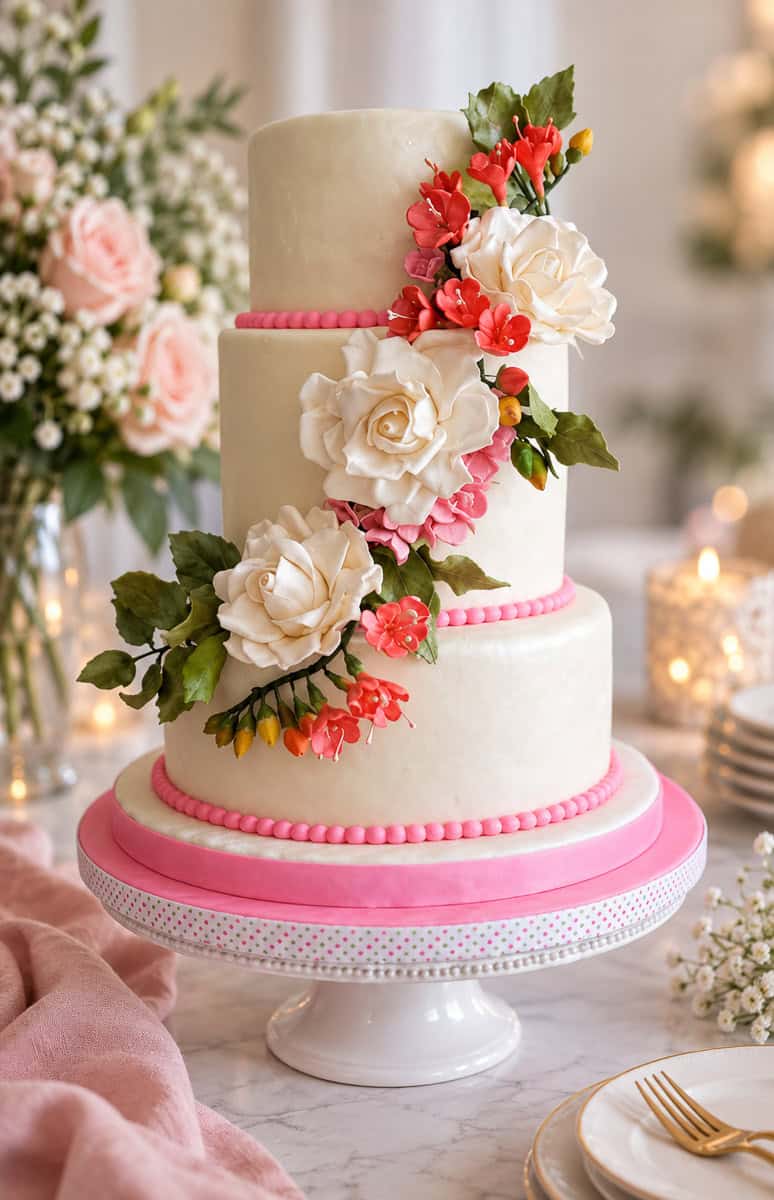
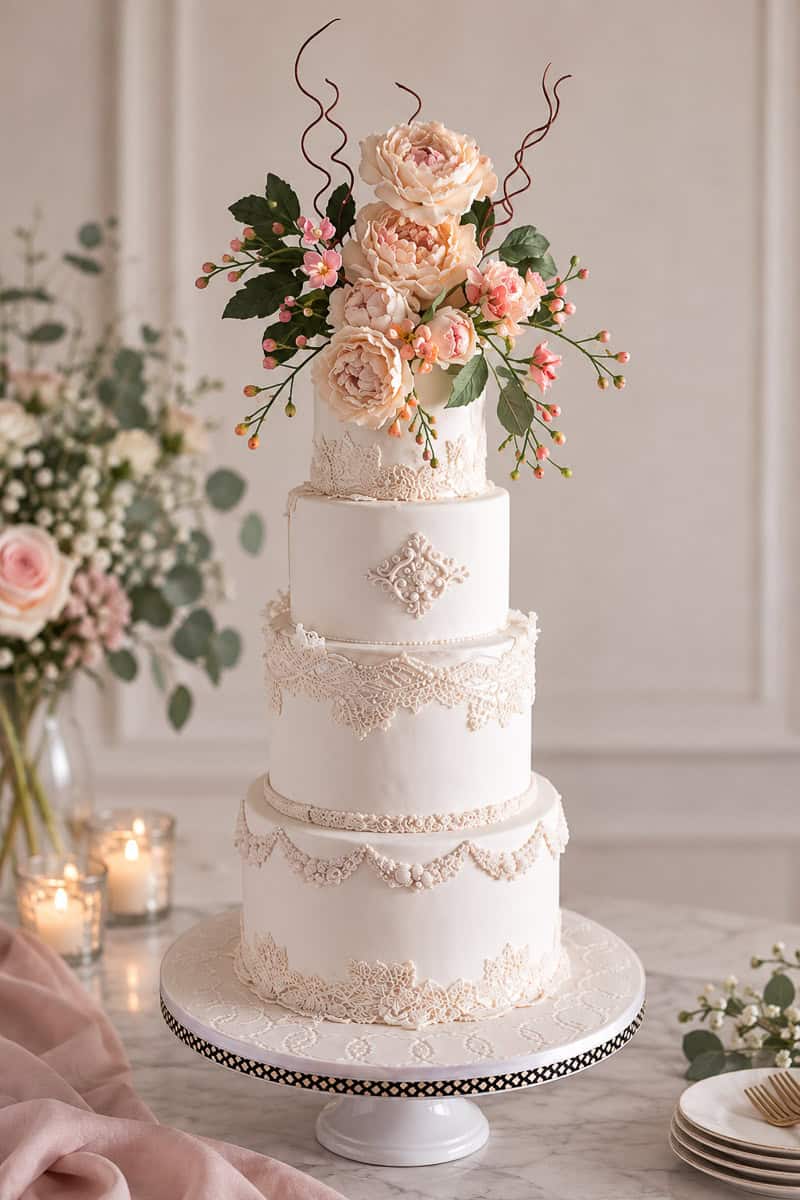
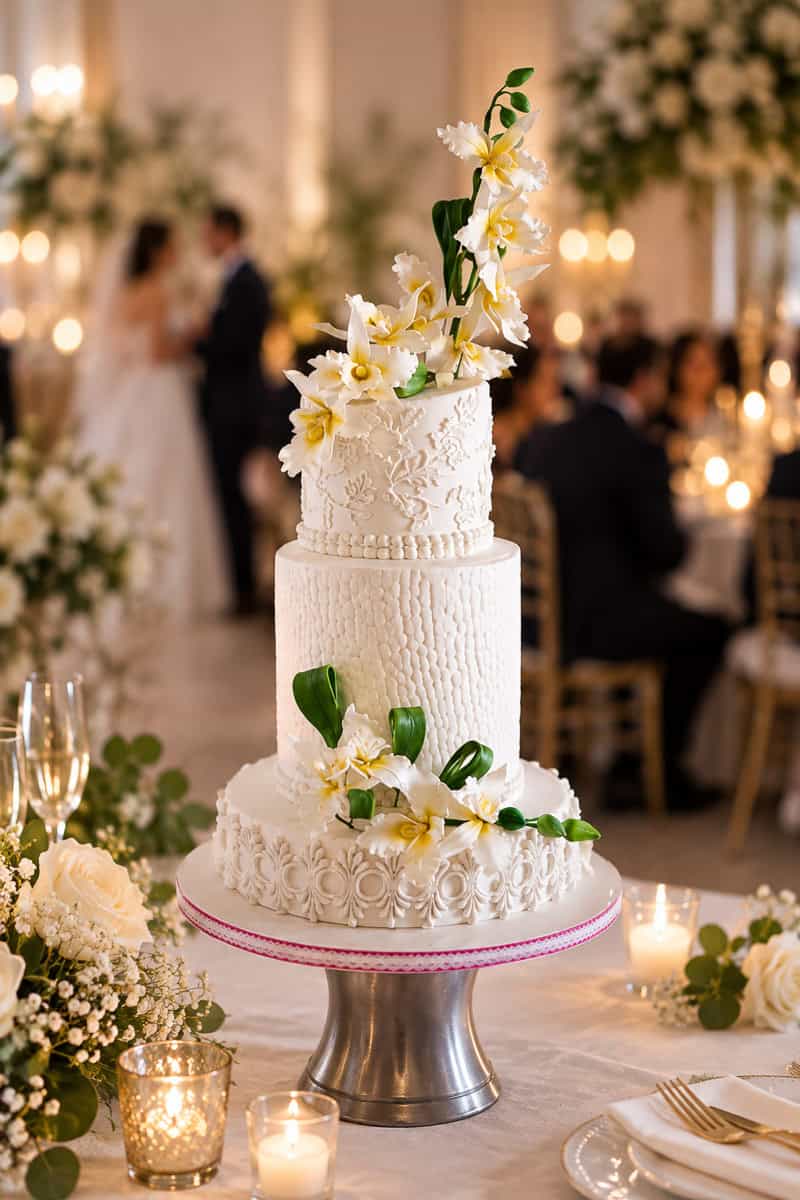
How much fondant do I need for my cake?
Approximate amount needed for cakes 4 inches tall, with fondant rolled to ⅛ inch (3 mm) thick.
| Round cake | Square cake | Grams | Pounds |
|---|---|---|---|
| 6-inch | 5-inch | 600 g | 1.3 lb |
| 7-inch | 6-inch | 750 g | 1.7 lb |
| 8-inch | 7-inch | 900 g | 2.0 lb |
| 9-inch | 8-inch | 1 kg | 2.2 lb |
| 10-inch | 9-inch | 1.2 kg | 2.6 lb |
| 11-inch | 10-inch | 1.5 kg | 3.3 lb |
| 12-inch | 11-inch | 1.7 kg | 3.7 lb |
| 14-inch | 12-inch | 2.5 kg | 5.5 lb |
| — | 14-inch | 2.7 kg | 6.0 lb |
Note: These are approximate quantities and include extra fondant for rolling, covering, and trimming. Taller cakes may require more.
Frequently asked questions
Any excess fondant can be stored in an airtight container for up to 2 months at room temperature. Also, you can keep it in the fridge for up to 5 months or in the freezer for up to a year. And, if frozen, thaw in the fridge for a day before thawing on the counter for 2 to 3 days.
Yes. Both work well. Mini marshmallows melt a little faster, but regular marshmallows give the same result. Just weigh them rather than measuring by volume.
Vegan marshmallows use different gelling ingredients, so they may melt and behave differently. I haven’t tested this particular recipe with vegan marshmallows, so I can’t guarantee the same results.
No. Regular marshmallows already contain gelatin, so you don’t need to add any extra gelatin to this recipe.
Vegetable shortening helps prevent sticking and keeps the fondant pliable. You can use a little neutral-flavored oil in a pinch, but the texture may be slightly different.
Yes. Gel food coloring works best because it adds concentrated color without too much liquid. You can knead the color into finished fondant or add it to the melted marshmallows when making a large batch of one color.
Yes, but marshmallow fondant is naturally softer than gum paste. For decorations that need to hold their shape, knead in a little CMC powder and allow the decorations to dry thoroughly.
About ⅛ inch (3 mm) is a good starting point. Roll it evenly so it stretches over the cake without becoming too thin and tearing.
Yes, fondant contains all edible ingredients and is definitely edible. And, it is sweeter than most other frostings.
However, often fondant is used for just decorative purposes. So, if a cake decorator says the fondant is not edible she has probably used some non-edible ingredients like metallic silver or gold dust.
I recommend using gel food coloring rather than liquid colors because gels are concentrated and won’t add too much moisture to the fondant.
For small amounts, add a little gel color to the finished fondant and knead until the color is evenly distributed. Start with a small amount and add more as needed.
If you’re making a large batch in one color, you can add the food coloring to the melted marshmallows before mixing in the powdered sugar. This makes it easier to achieve an even color without all the extra kneading.
For deep colors like red, black, or navy, make the fondant ahead of time. The color often deepens as it rests, so you may need less coloring than you think.
I recommend covering a cake with fondant 1 to 2 days before serving. This gives you plenty of time to decorate without rushing. Make sure the cake is properly filled and frosted before covering it with fondant.
Store fondant-covered cakes in a cool, dry room, away from direct sunlight and humidity, provided the filling and frosting are safe at room temperature.
If your cake contains perishable fillings or frostings, such as whipped cream, cream cheese, or custard, it must be refrigerated. Place it in a cake box to help protect it from moisture. When removing it from the refrigerator, allow it to come to room temperature in the closed box to minimize condensation.
For the best taste and texture, I recommend serving fondant-covered cakes within 2 to 3 days of decorating, provided the cake and filling are suitable for that storage period.
Fondant helps protect the cake from drying out, but it doesn’t extend the food-safe shelf life of the cake or its fillings. Always follow the storage requirements of the most perishable ingredient.
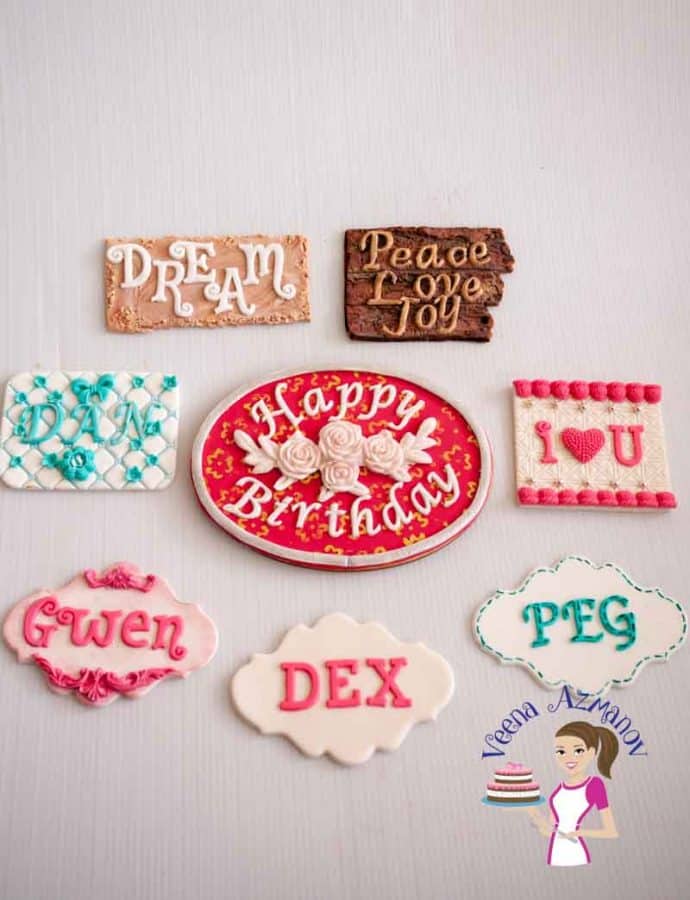
More cake decorating recipes



Don’t lose this recipe! Save it for Later!
📌 Save this Recipe for later on Pinterest so you can easily find it again.
⭐ Add Veena Azmanov Kitchen to your Google Preferred Sources.
It helps Google show you more of our recipes.
📧 Subscribe for new recipes delivered to your inbox.
🎥 Follow us for more recipes

Hi, I’m Veena
I’m the recipe developer, baker, and food photographer behind Veena Azmanov Kitchen.
I’ve spent years developing and testing recipes, from everyday meals and homemade breads to cakes and desserts.
I share the practical tips and little details I’ve learned along the way so you can get great results in your own kitchen.






Dear Veena, I really appreciate yours explanations and advices. They are the best.
I need a light blue color of fondant so I wanted to ask can I put a small amount of liquid blue color in melted marshmallow, before I add sugar. It seems to me that it will be easier to adjust the consistency if I add color at the beginning. (I couldn’t find blue gel color).
Hey Maki, Yes, you can add color to the melted marshmallow to make it your desired color. If necessary you can add more later too. Just knead it in
Week 2. Day 2. Done
Hi Veena,
Love your baking and inputs on them.
I wanted to ask you regarding fondant if I can achieve black fondant through this recipe or any other less elaborate /ingredients recipe as I will be making may be just one or two time cake with fondant.
Please guide me with.
Thanks
Choti
Hey Choti – I have a black fondant recipes on this blog – Classic Black fondant recipe. and you can also add black color to my chocolate marshmallow fondant recipe I hope this helps
I’ve made this twice and both times I’ve had to add 2lb or more of powdered sugar. It’s still so soft it’s sticking to my fondant mat even with cornstarch. I followed the recipe and watched the video. I’m using mini marshmallows but it’s still the same amount in grams. Any ideas what I could be doing wrong?
Hey Amanda. That sounds like a lot of powdered sugar.
Are you overheat the marshmallows making them too hot? They need to only melt.
Or are you adding the powdered sugar when the marshmallows are too hot? That will melt the sugar.
Make sure to let the fondant rest in the fridge for a few hours – then knead it and check the consistency.
I microwave for 30 sec on high and then stir. If not completely melted I give it another 30 secs. Then i add about half of the powdered sugar while stirring. Both times it was still pretty runny even after pouring it on my mat. I end up having to add the rest of the bag so it will finish taking shape. I put in fridge overnight and it looks good the next day, but super soft and still sticky. When I roll it out it sticks to the mat as I’m trying to lift it to put on my cake. Could it be that I’m just heating it up to much?
Not sure Amanda as I cannot see but usually if it’s too hot the sugar will melt making it very soupy. This then will use extra powdered sugar. In any case, use just enough powdered sugar to make it pliable and easy to roll. So if still sticky add a little more powdered sugar and knead with vegetable shortening. Thanks
Can I use marshmallow fluff?
Ni, Nicole. I have not tried it with marshmallow fluff so not sure if or how it will turn out. Thanks
I’ve used fluff and it works the same as marshmallows. It won’t need as long in the microwave so watch it closely. It’s also vegetarian friendly since there’s no gelatin.
Ah thank you, Amanda. I have not tried fluff yet. Good to know it’s a good vegetarian option. Thank you so much for sharing.
Hi there,
I was wondering what the biggest difference between this recipe and your original fondant recipe are in terms of working with it/modeling it. I have no issue buying all the extra ingredients for the other recipe but was wondering if it really makes that much of an impact.
Thanks!
Both are completely different fondants Coutney. Most importantly it depends on how successfully your batch of fondant turns out. I love both these and often I have to make my homemade fondant because my customers prefer the taste.
I think you will have to make a small batch of both for yourself and find out for your self.
If sourcing the ingredients is a hassle or extra cost then I highly recommend using the simplest and easiest Marshmallow fondant.
Both are very good fondants. Hope this helpf.
HI VEENA
I LOVE THE WAY YOU EXPLAIN EVERYTHING SO WELL…DOWN TO THE SMALL DETAILS!
I LIVE IN ISRAEL -WHAT IS VEGETABLE SHORTENING HERE? COULD I USE MARGERINE?
THANKS IN ADVANCE..
Hey Chana. Thank you so much. Veg shortening is fat made from vegetables. I buy a US brand here in Ra’anana. The international brands you can use are Crisco, Trex or Shortbright. And yes you can use margarine. Have a lovely day.
Hi, I’m going to be using ur marshmallow fondant receipt on October,20th for my one year breast cancer survivor/Halloween party. Now can I use the marshmallow fondant on cake sucker’s? I’m asking because I will make a cake but cute it into the pink ribbon n put a stick in it then put the pink fondant on it. Will it work for that.
Hey Theresa. I know people use fondant on cake pops – I do not make as many so I have not tried it. If made correctly, this fondant has a nice stretch and can be used to do whatever fondant is supposed to do. Sorry, I don’t have a definite answer because I do cake pops much.
Dear Veena,
First of all, thank you for responding to all my questions so quickly, a few more for you. I need to make two small dinosaur figures. Would this fondant be good for that? Also, should I color the fondant while kneading it or can I wait until the day of to color?
If I make the dinosaur in advance will they lose shape and consistency?
Thanks so much in advance. Love your website!
yes, you can use this fondant for figures but you have to add CMC to fondant to stabilize so it becomes firm and dries hard. You can color fondant later in small batches. If you use CMC and let it dry it will not lose shape. Thanks
Hi Veena, am a great admirer of your work. Your detailed tutorials are a life saver! It would be a huge help if you could please clarify a few doubts that i have regarding this fondant. The fondant without any colour works just fine. However after adding gel colours it becomes very sticky. It doesn’t dry out even after leaving it outside for a long time. In fact, it becomes even more stickier than when taken out of the fridge/freezer. I would really appreciate your insights. Thanks!
Hey Sugi, Sounds like you are in a hot and humid place. Usually, if the weather is hot it tends to get soft and sticky and condensation combined with humidity does not do well with any fondant.
Fondant is sugar so it melts easily even in warm hands.
First, unless you need to don’t put the cake in the fridge. And if you do, let the condensation settle on its own
Use only cornstarch when rolling no powdered sugar as that makes it more sticky.
Use gel food colors or powdered colors and let the fondant rest well until firm again after kneading the color.
I hope this helps.
Thank you so much for the prompt reply Veena! I will try as per your instructions and see how it turns out. Thanks again for the help 🙂
Thank you for this recipe. Turned out perfect. My last attempt was a disaster so happy I found this recipe.
Thank you, Abe. So happy you had success with this recipe and enjoyed it too. Thanks for coming back to write this comment. Appreciate feedback. Have a great day.