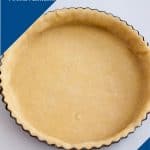

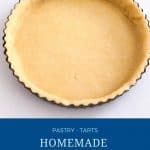
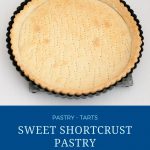
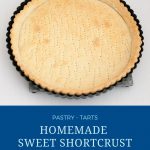
A Pâte Sucrée, aka shortcrust pastry, is the perfect base for many desserts, such as tarts, pies, and desserts. It’s a buttery, sweet pastry with a biscuit-like crumb that just melts in your mouth. And, it is surprisingly easy to make it yourself.
Sweet shortcrust pastry, known as Pâte Sucrée, is a versatile and essential component in every baker’s repertoire. This delicate pastry is characterized by its crisp yet tender texture and subtle sweetness, making it perfect for a variety of desserts and savory dishes alike. Whether used as a base for fruit tarts, custard pies, or savory quiches, Pâte Sucrée provides a stable foundation that enhances the flavors of any filling.
Every baker needs to master sweet shortcrust pastry because it offers unparalleled flexibility and flavor. Its buttery richness and ability to hold its shape during baking ensure a professional finish to any tart or pie. Whether you’re a seasoned pastry chef or an enthusiastic home baker, mastering Pâte Sucrée opens up endless possibilities for creating stunning and delicious baked treats that will delight family and friends alike. Read about different types of crust for baking or different types of pastry.
Why make homemade shortcrust?
- Ease of Preparation: This recipe uses the food processor method, making it quick and straightforward to prepare the dough. The food processor helps achieve a uniform texture without overworking the dough, ensuring a tender, flaky crust.
- Delicate and Flavourful Texture: The combination of chilled butter, icing sugar, and a touch of vanilla extract gives this pastry a delicate sweetness and a rich, buttery flavor. It bakes into a crisp yet tender crust that complements both sweet and savory fillings.
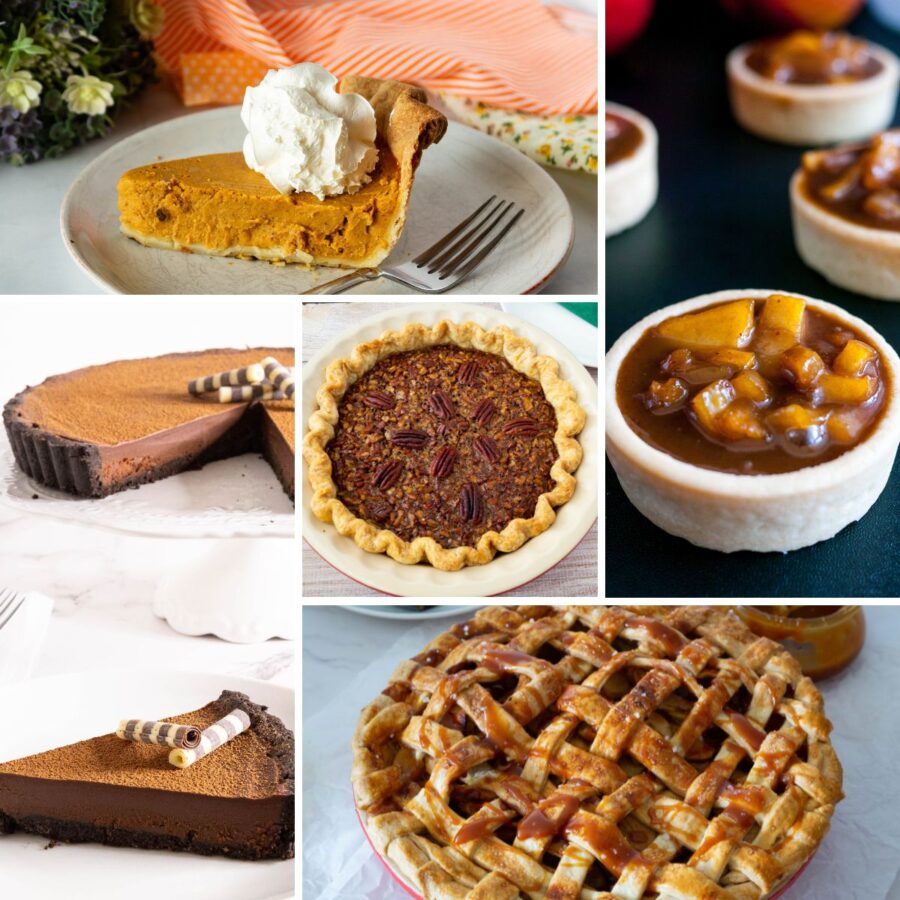
- Versatility: This pastry is versatile, and you can use it for various tart and pie recipes. Whether you’re making fruit tarts, custard pies, or savory quiches, this Pâte Sucrée provides a stable base that holds up well during baking and enhances the filling’s flavors.
- Baking Precision: The instructions for blind baking ensure that the crust retains its shape and doesn’t shrink during baking, providing a professional-looking finish to your tart. It also includes optional instructions for fully baking the crust, depending on your recipe needs, ensuring a perfectly cooked base every time.
Ingredients and substitutes
- Flour: Provides structure and bulk to the pastry. You can also substitute pastry flour for all-purpose flour for a finer texture, or use a gluten-free flour blend for a gluten-free version. You can also use almond flour partially for added flavor and texture.
- Butter: Adds richness, flavor, and helps create a tender, flaky texture. You can also use margarine or vegetable shortening as substitutes. However, the flavor and texture may slightly differ. For a dairy-free option, use plant-based butter.
- Sugar: Adds sweetness and helps tenderize the pastry. You can use granulated sugar, caster sugar, or powdered sugar (adjusting quantities for sweetness and texture preferences). For a healthier option, consider using coconut sugar or a sugar substitute like erythritol.
- Egg (or Egg Yolk): Provides moisture, binds the ingredients together, and adds richness. If you prefer not to use eggs, you can substitute with a mixture of water and cornstarch (for binding) or a commercial egg replacer. For a vegan option, use a flaxseed or chia seed egg (1 tablespoon ground flaxseed or chia seeds mixed with three tablespoons water per egg).
- Water (or Cold Liquid): Adjusts the dough’s consistency, making it easier to work with and roll out. You can also use milk or cream instead of water for a richer pastry. For savory pastry, you can use broth or even chilled white wine for added flavor.
- Salt: Enhances flavor and balances the sweetness in sweet pastries. Sea salt or kosher salt can be used interchangeably. You can also omit salt if you prefer a low-sodium option, though it may slightly affect the overall flavor.

Step-by-step: Shortcrust Pastry – Pâte Sucrée
- Prepare the Dough: In the bowl of a food processor, combine the flour, icing sugar, and salt. Pulse a few times to mix. Add the chilled butter cubes and pulse until the mixture resembles coarse breadcrumbs.
- Add Wet Ingredients: In a small bowl, whisk together the egg and vanilla extract. Add the egg mixture to the food processor bowl. Pulse until the dough starts to come together. Avoid overmixing.
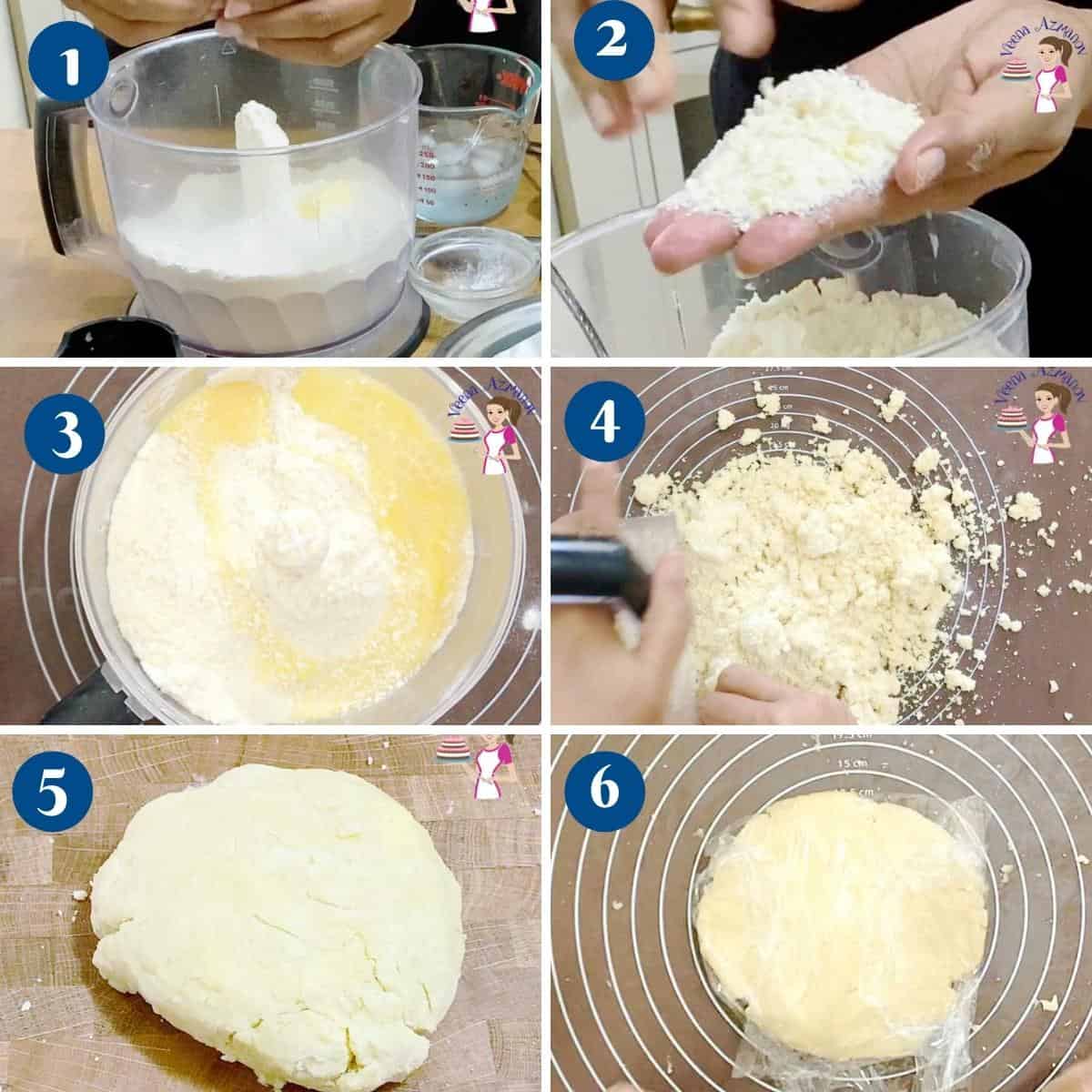
- Form the Dough: Turn the dough out onto a clean work surface. Gather it into a ball and flatten it into a disk. Wrap the dough in plastic wrap and refrigerate for at least 1 hour or until firm.
- Roll Out the Dough: Preheat your oven to 180°C (350°F). On a lightly floured surface, roll out the chilled dough into a circle about 12 inches (30 cm) in diameter and about 1/8 inch (3 mm) thick.

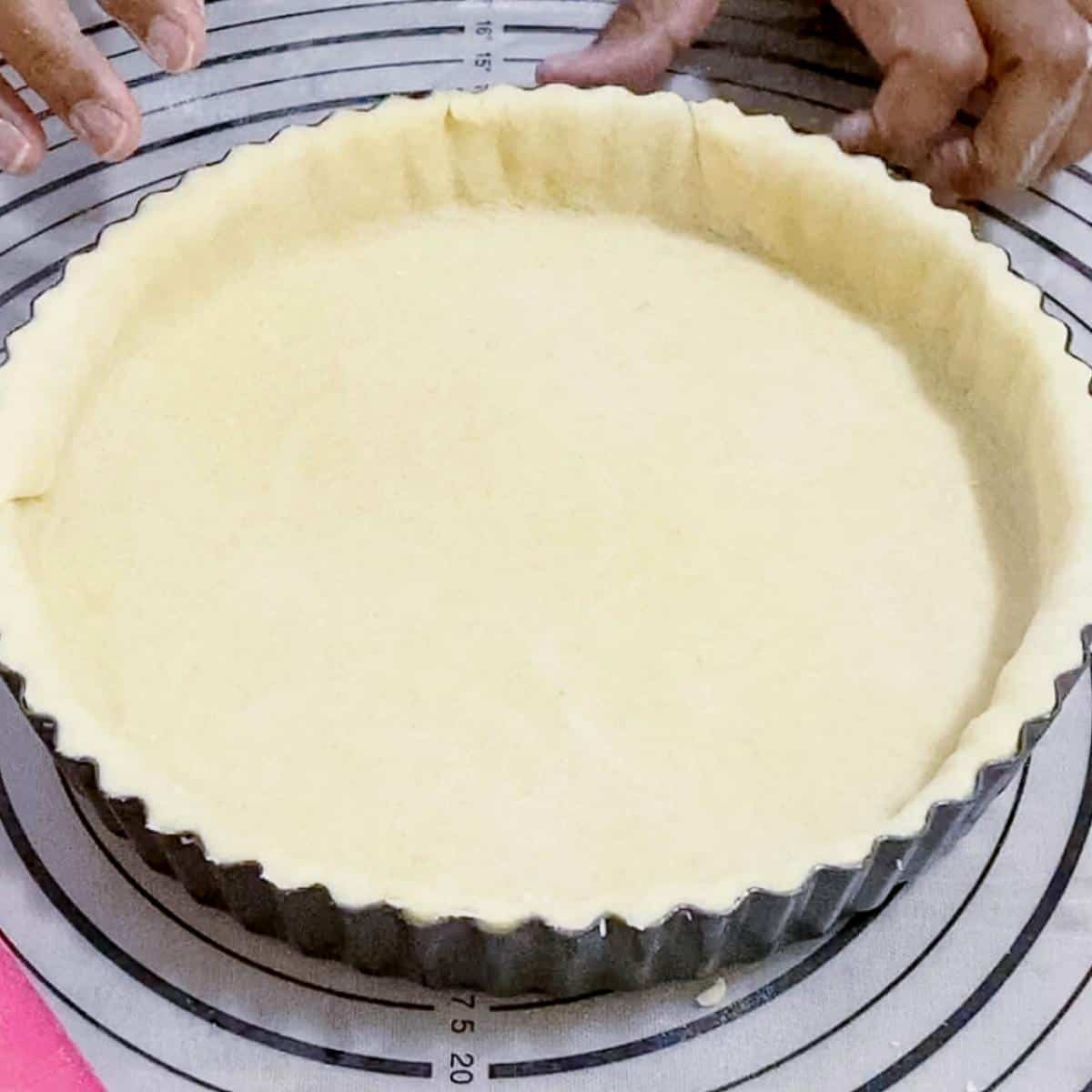
- Line the Tart Pan: Carefully transfer the rolled-out dough to a 9-inch tart pan with a removable bottom. Press the dough gently into the corners and sides of the pan. Trim off any excess dough hanging over the edges of the tart pan.
- Oven: Preheat the oven to 375°F / 190°C / Gas Mark 5.
- Chilling: Chill the lined tart or pie pan in the refrigerator for about 15-30 minutes. This helps prevent shrinkage during baking.

- Blind Bake the Crust: Line the pastry shell with parchment paper or foil, then fill it with pie weights, dried beans, or rice. Bake in the preheated oven for about 15 minutes. This helps the crust keep its shape during baking. Remove the weights and parchment/foil, add the filling, then return the crust to the oven for another 15 to 20 minutes, or until the crust is lightly golden brown and cooked through.
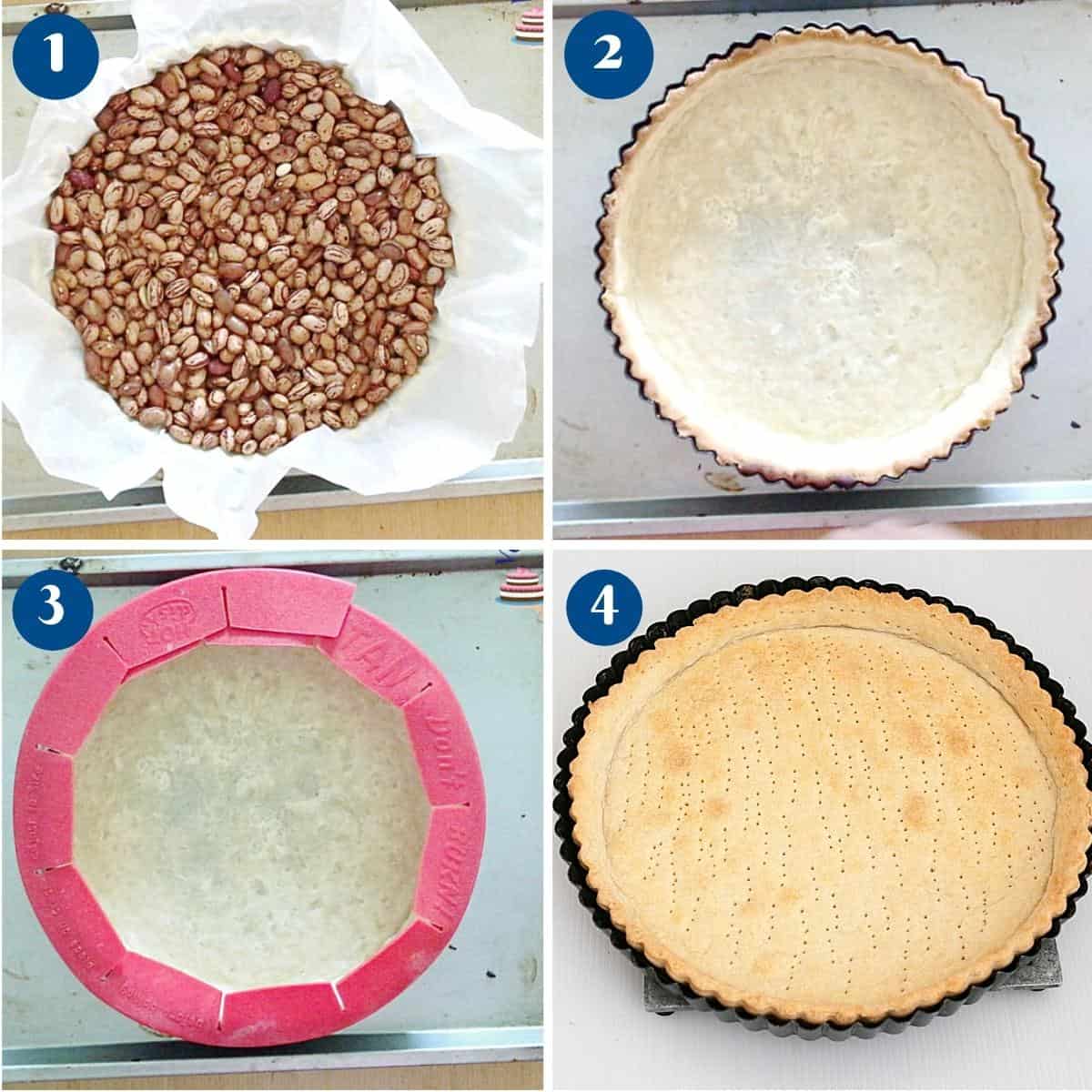
- Fully Bake the Tart Crust: If you need a fully baked crust for a recipe that won’t be baked further (like a no-bake tart), remove the parchment and pie weight and continue baking the crust until it is golden brown all over, about 15- 20 minutes more after blind baking. Remove from the oven and let the crust cool completely in the tart pan before removing.
- Cooling: Allow the baked crust to cool completely on a wire rack before filling as per your recipe’s instructions.
Troubleshooting
- Pastry is Too Tough or Dense: Overworking the dough or using warm ingredients can develop too much gluten, resulting in a tough texture. Handle the dough gently and avoid over-mixing. Ensure all ingredients are chilled before mixing. Let the dough rest in the refrigerator before rolling to relax the gluten.
- Pastry Shrinks During Baking: The pastry was stretched when fitting it into the tart pan, or inadequate chilling before baking. Roll the pastry out evenly and avoid stretching it when placing it in the pan. Chill the lined tart pan in the refrigerator for at least 15-30 minutes before blind baking to help the pastry hold its shape.
- Soggy Bottom Crust: Insufficient blind baking or a wet filling. Blind-bake the crust for the appropriate amount of time as per the recipe instructions. Ensure the filling is not too wet before adding it to the crust. You can also brush the bottom of the crust with a beaten egg white before baking to create a moisture barrier.
- Pastry Sticks to Tart Pan: Not greasing or flouring the tart pan sufficiently. Ensure the tart pan is well-greased and lightly floured before fitting the pastry into it. Alternatively, consider using a tart pan with a removable bottom for easier removal after baking.
- Uneven Baking or Browning: Oven temperature fluctuations or uneven distribution of pie weights during blind baking. Use an oven thermometer to ensure accurate temperature. Rotate the tart pan halfway through baking to promote even browning. Ensure the pie weights or beans are evenly distributed over the parchment/foil to prevent uneven baking.
- Cracked or Overbaked Crust: Baking the crust for too long, especially during blind baking. Follow the recommended baking times closely. Monitor the crust during baking to ensure it reaches a light golden brown color without overbaking. Adjust the blind-baking time as needed to prevent excessive browning or cracking.


Frequently asked questions
Blind baking, also known as pre-baking, is baking a pie or tart crust without the filling. Often, this is done because the filling needs much less time to cook than the crust. Pre-baking or blind baking makes sure the crust does not stay undercooked in the finished tart.
This sweet shortcrust is the same as pie crust, just with added sugar in the dough. The method and process are exactly the same as well. The main difference is that pie crust can be used for both sweet and savory, while sweet shortcrust is used only for sweet treats.
A partially baked crust can be kept in the fridge for 2 days or frozen for up to a month. Thaw to room temperature, add the filling, and then bake as directed in the recipe.
A fully baked pastry will keep at room temperature for 2 to 3 days or in the fridge for 5 days. You can even freeze it in the tart pan for up to a month. Thaw overnight in the fridge for best results.
Baking beans are a DIY pie weight. These are any uncooked, dehydrated beans, such as kidney beans/black beans/ chick peas, etc., that can be used over and over again to blind-bake pies and shortcrust pastries. If kept properly, these will last for years.
Pro tip – Make sure to cool the beans completely before you store them in an airtight container for next use.
Sweet Shortcrust Pastry aka Pate Sucree
Ingredients
- 190 g (1½ cups) All-purpose flour
- 113 g (½ cup) Unsalted butter unsalted butter, chilled and cut into cubes
- 2 tbsp Powdered sugar or granulated sugar
- ¼ tsp Salt
- 1 large Egg yolk
- 2 tbsp Chilled water or use the whole egg instead of water
Instructions
- Prepare the Dough: In the bowl of a food processor, combine the flour, icing sugar, and salt. Pulse a few times to mix. Add the chilled butter cubes and pulse until the mixture resembles coarse breadcrumbs.190 g All-purpose flour, 113 g Unsalted butter, 2 tbsp Powdered sugar, ¼ tsp Salt
- Add Wet Ingredients: In a small bowl, whisk together the egg and vanilla extract. Add the egg mixture to the food processor bowl. Pulse until the dough starts to come together. Avoid overmixing.1 large Egg yolk , 2 tbsp Chilled water
- Form the Dough: Turn the dough out onto a clean work surface. Gather it into a ball and flatten it into a disk. Wrap the dough in plastic wrap and refrigerate for at least 1 hour or until firm.
- Roll Out the Dough: Preheat your oven to 180°C (350°F). On a lightly floured surface, roll out the chilled dough into a circle about 12 inches (30 cm) in diameter and about 1/8 inch (3 mm) thick.
- Line the Tart Pan: Carefully transfer the rolled-out dough to a 9-inch tart pan with a removable bottom. Press the dough gently into the corners and sides of the pan. Trim off any excess dough hanging over the edges of the tart pan.
- Oven: Preheat the oven to 375°F / 190°C / Gas Mark 5.
- Chilling: Chill the lined tart or pie pan in the refrigerator for about 15-30 minutes. This helps prevent shrinkage during baking.
- Blind Bake the Crust: Line the pastry shell with parchment paper or foil, then fill it with pie weights, dried beans, or rice. Bake in the preheated oven for about 15 minutes. This helps the crust keep its shape during baking. Remove the weights and parchment/foil, add the filling, then return the crust to the oven for another 15 to 20 minutes, or until the crust is lightly golden brown and cooked through.
- Fully Bake the Tart Crust: If you need a fully baked crust for a recipe that won't be baked further (like a no-bake tart), remove the parchment and pie weight and continue baking the crust until it is golden brown all over, about 15- 20 minutes more after blind baking. Remove from the oven and let the crust cool completely in the tart pan before removing.
- Cooling: Allow the baked crust to cool completely on a wire rack before filling per your recipe's instructions.
Video
Notes
-
- Keep Ingredients Cold: Ensure that the butter and any liquid ingredients like eggs are well-chilled before starting. Cold ingredients help maintain the pastry’s flakiness and prevent the butter from melting too quickly into the flour mixture.
-
- Use the Food Processor Wisely: Pulse the butter into the flour mixture until it resembles coarse breadcrumbs. Be careful not to over-process; the goal is to maintain small, pea-sized pieces of butter in the dough, which will result in a flaky texture once baked.
-
- Resting Time: After preparing the dough, wrap it in plastic wrap and refrigerate it for at least an hour, or even overnight if possible. This resting period allows the gluten to relax and the flour to fully hydrate, resulting in a more tender pastry.
-
- Proper Rolling Technique: When rolling out the chilled dough, use a lightly floured surface and rolling pin. Roll the dough evenly and gently from the center outward, rotating it occasionally to maintain a circular shape and prevent sticking. Aim for a thickness of about 1/8 inch (3 mm) for optimal baking results.
-
- Blind Baking Technique: For blind baking, line the pastry shell with parchment paper or foil and fill it with pie weights, dried beans, or rice. This prevents the pastry from puffing up or shrinking during baking. Remove the weights and parchment/foil halfway through baking to allow the crust to cook evenly.
-
- Cooling and Storage: Once baked, allow the tart crust to cool completely in the tart pan before removing it. This prevents the crust from breaking apart. If not using immediately, store the cooled crust in an airtight container at room temperature for up to 2 days, or freeze it for longer storage.
Equipment


Made this recipe?
I’d love to see how yours turned out! Share a photo on Instagram and tag @veenaazmanov_kitchen or use #veenaazmanovkitchen. And don’t forget to leave a rating and review!
- Rich Shortcrust Pastry – Pâte Sablée
- Easy Strawberry Tart Recipe
- Blueberry Tart (custard-filled)
- Blueberry Cream Cheese Tartlets
- Lemon Cheesecake Tartlets



Don’t lose this recipe! Save it for Later!
📌 Save this Recipe for later on Pinterest so you can easily find it again.
⭐ Add Veena Azmanov Kitchen to your Google Preferred Sources.
It helps Google show you more of our recipes.
📧 Subscribe for new recipes delivered to your inbox.
🎥 Follow us for more recipes

Hi, I’m Veena
I’m the recipe developer, baker, and food photographer behind Veena Azmanov Kitchen.
I’ve spent years developing and testing recipes, from everyday meals and homemade breads to cakes and desserts.
I share the practical tips and little details I’ve learned along the way so you can get great results in your own kitchen.




Pastry Day 8 DONE” i
Pastry day 8 Done
Pastry Class – Day 8 – Done
Pastry Day 8 – DONE
PASTRY DAY 8 DONE
Pastry Day 8 Done
“Pastry Day 8 DONE”
Pastry day8done
If I don’t have butter but have pastry margarine available can that be used for these recipes.
As explained in the post – margarine has more water content so it may or may not work for some pastries.
Day 8 done!!
Pastry Day 8 DONE