
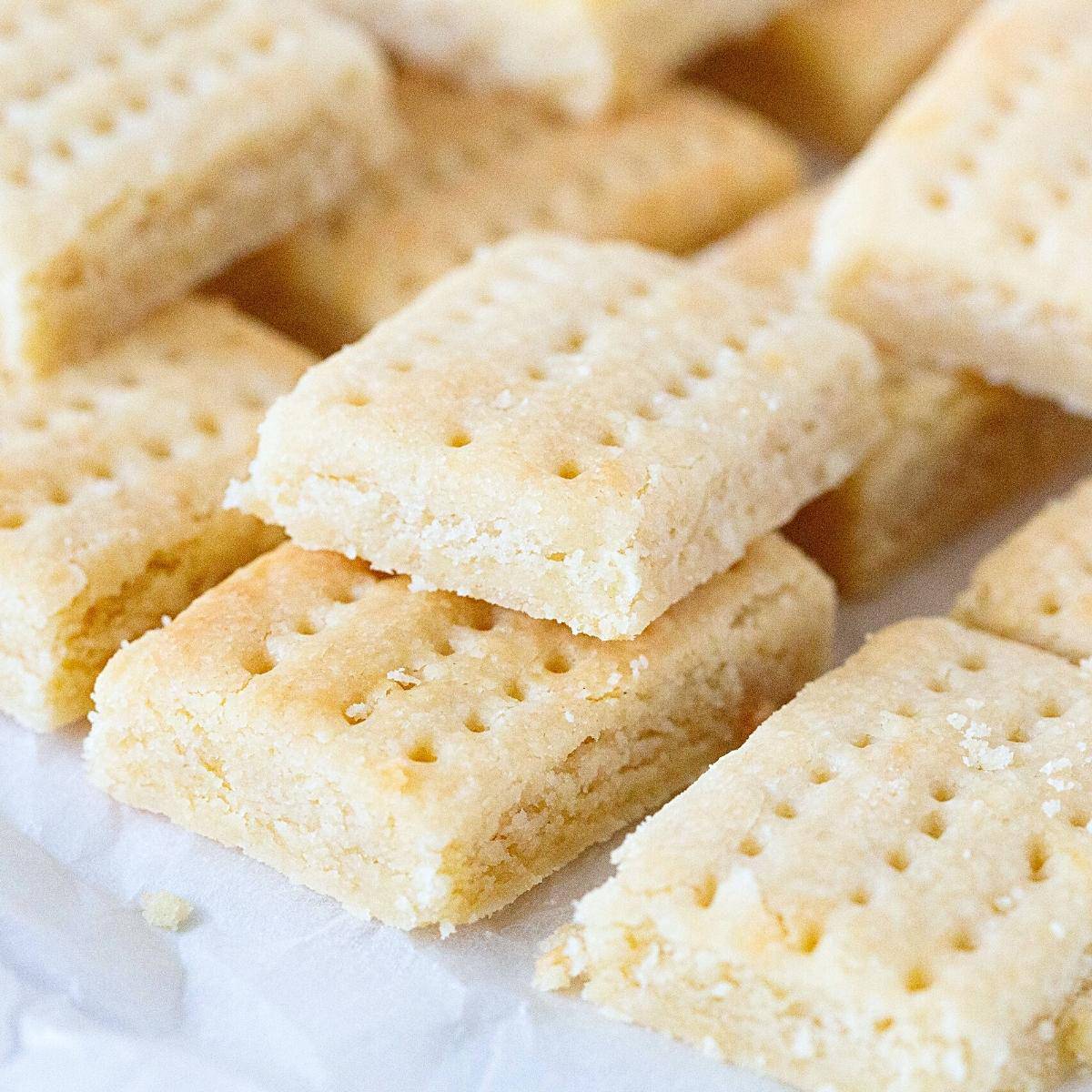
Have you ever bitten into a Scottish shortbread and been transported to a realm of buttery bliss? The delicate crumb, the melt-in-your-mouth texture, and the flaky layers that seem to crumble at just the right moment are truly irresistible. But achieving that perfect texture and flakiness can be a challenge.

Every time I travelled to England — usually Manchester — there was one thing I looked forward to almost as much as room service: the little Scottish shortbread tucked into my hotel room. Honestly, those buttery rectangles were my downfall. I’d enjoy the complimentary ones, then shamelessly ask for more at the front desk… and then, of course, make a stop at the supermarket so I could take a whole stash back with me to Singapore. They became my in-flight snack, my jet-lag snack, my “just because” snack. So naturally, I had to learn to make them at home — because no one should depend on hotel housekeeping for their shortbread supply. Right?
Why you’ll love this Scottish shortbread recipe
- It’s the classic crumbly, buttery shortbread — but without any complicated steps.
- Uses pantry ingredients you already have, and the dough comes together in minutes.
- Rolling between parchment keeps the dough smooth and easy to handle — no messy counters.
- The method gives you clean edges, even shapes, and that perfect melt-in-the-mouth bite.
- Great make-ahead cookie for the holidays or edible gifts — it stays fresh for days.
- Fool-proof enough for beginners, but precise enough for picky bakers (yes, us).
Ingredients and substitutes
- Unsalted butter – the heart of this recipe. Use good butter for the best flavor. Salted works too, just reduce the added salt.
- Sugar – regular white sugar keeps it classic and crisp. Castor sugar works; brown sugar will change the texture.
- Vanilla – optional in traditional Scottish shortbread, but I like the warmth it adds. You can skip it.
- Flour – simple all-purpose flour. Replace up to ¼ cup with rice flour or cornstarch for a more delicate crumb if you prefer.
- Salt – just a touch to balance all that butter and sugar. Don’t skip it.

Step-by-step Scottish shortbread
Shortbread dough
- Prep: Preheat your oven to 325°F /160°C/Gas Mark 3. Line a baking pan with parchment paper.
- Cream the Butter and Sugar: Cream the softened butter and granulated sugar in a large mixing bowl until the mixture becomes light and fluffy. You can use an electric mixer or a wooden spoon for this step. Mix in the vanilla extract and salt until well incorporated into the butter-sugar mixture.
- Gradually Add Flour: Add the all-purpose flour to the butter mixture, a little at a time, and mix until a crumbly dough forms. You can use your hands or a spatula to help combine the ingredients.
- Knead the Dough: Turn the dough onto a lightly floured surface and gently knead it until it comes together into a smooth ball. Be careful not to overwork the dough; knead until it’s no longer crumbly.
- Chill – Wrap the dough in plastic and transfer it to the refrigerator to chill for 15 to 30 minutes.

Roll & score
- Roll the dough: Roll the dough between two sheets of parchment paper to about 1/4 inch thickness. Try to maintain its rectangular shape so you minimize trimmings.
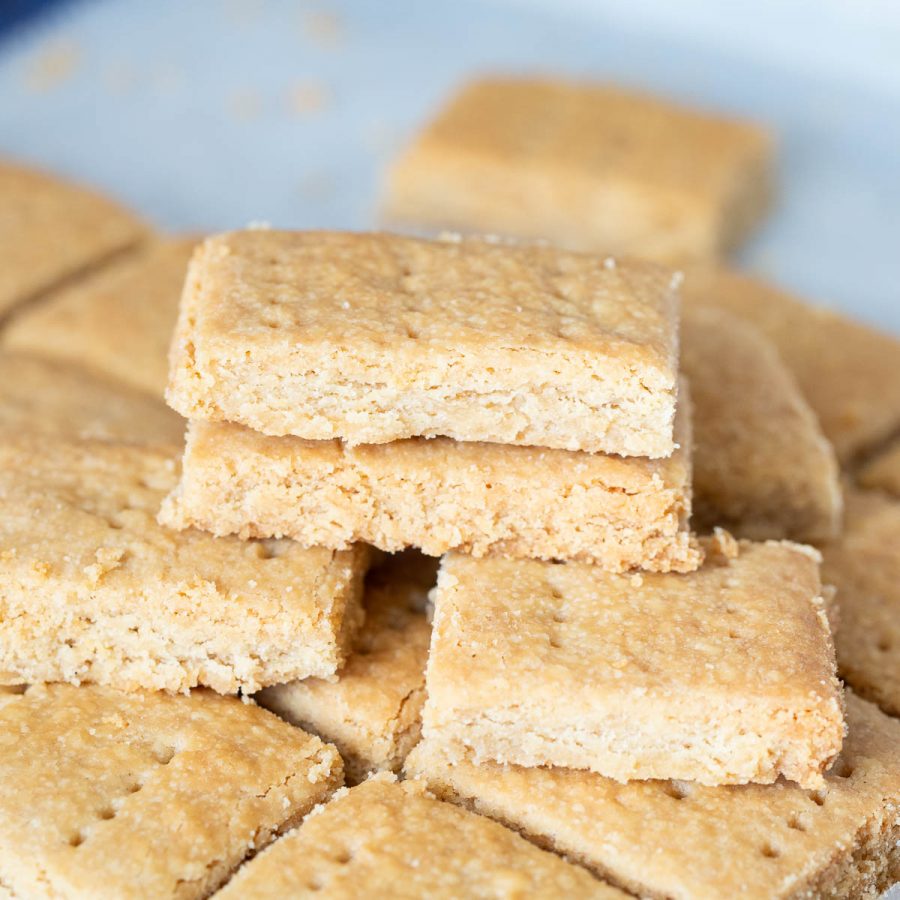
- Score and Prick the Dough: Use a sharp knife to score the dough into rectangular shapes. You can make minor marks to create individual cookies. Prick each cookie with a fork to create tiny holes, which will help prevent the shortbread from puffing up too much during baking.

Bake and cool
- Bake: Place the baking sheet in the oven for 20-25 minutes or until the shortbread turns golden brown around the edges.
- Cool and Cut: Remove the pan from the oven and let it cool in the pan for no more than 5 minutes. While the shortbread is still warm, carefully cut along the scored lines to separate the cookies into rectangles. Allow them to cool completely in the pan.
- Serve: Once the shortbread cookies have cooled completely, they are ready to be served. Enjoy the buttery, crumbly goodness of Scottish shortbread!

Tips for success
- Cream the butter well before adding sugar — it makes the shortbread light, not dense.
- Add flour gently and stop as soon as the dough comes together.
- Chill the dough 10–15 minutes so it rolls cleanly and doesn’t spread.
- Roll between parchment to ¼ inch — no sticking, no extra flour.
- Score into rectangles before baking and poke the holes for that classic look.
- Cut again while still warm so the pieces separate neatly.
- Cool completely for the crumb to set — the texture gets better as it rests.

Troubleshooting
| Problem | Why it Happens | How to Fix It |
|---|---|---|
| Shortbread spreads | Butter was too soft or dough wasn’t chilled long enough. | Chill the cut dough on the tray for 10–15 minutes before baking. |
| Dough cracks while rolling | Dough is too cold or slightly dry. | Let it rest 2–3 minutes, then roll again between parchment. |
| Shortbread turns tough | Flour was overmixed, developing gluten. | Mix only until the dough comes together; no kneading. |
| Edges brown too fast | Oven runs hot or tray is too close to the heating element. | Reduce oven temp by 10°C or move the tray to the center. |
| Cookies crumble too much after baking | Cut them after they cooled completely. | Re-cut along the score lines while still warm so they separate cleanly. |
| Uneven texture | Butter not creamed properly before adding sugar. | Cream butter well first, then add sugar and beat until light. |



Frequently asked questions
To keep your Scottish shortbread fresh and maintain its flaky texture, it’s best to store it in an airtight container. This will prevent moisture from getting to the shortbread, which could make it go stale or lose its crispness. Additionally, store the container in a cool, dry place, away from direct sunlight and heat sources, as these can also affect the quality of the shortbread.
Absolutely! Scottish shortbread freezes well, making it a convenient treat to have on hand whenever cravings strike. Before freezing, ensure the shortbread is completely cooled. Wrap it tightly in plastic wrap or place it in an airtight freezer bag to prevent freezer burn. When you’re ready to enjoy it, let it thaw at room temperature for a couple of hours before serving.
Certainly! While traditional Scottish shortbread is made with just a few simple ingredients, there is room for flavor experimentation. Add a teaspoon of vanilla extract, some grated lemon zest, or a sprinkle of cinnamon to the dough to give it a unique twist. You can also try incorporating other ingredients like chopped nuts, chocolate chips, or dried fruits to add a delightful surprise to every bite.
Scottish shortbread can stay fresh for up to two weeks when stored properly. However, the texture may change slightly over time, going from crispy to softer. To restore the original crispy texture, gently heat the shortbread in the oven at a low temperature for a few minutes.
While Scottish shortbread is traditionally made with butter, sugar, and flour, there is room for ingredient substitutions. For example, you can use a combination of butter and margarine instead of all butter. However, remember that substitutions may alter the flavor and texture of the shortbread. It’s always best to experiment and find the combination that suits your taste preferences.
Scottish Shortbread Recipe
Ingredients
- 1 cup (227 g) Unsalted butter at room temperature
- ½ cup (100 g) Castor sugar super fine sugar (if necessary pulse granulated sugar in a food processor)
- 1 tsp Pure vanilla extract
- ¼ tsp Salt
- 2 cups (250 g) All-purpose flour
Instructions
- Prep: Preheat your oven to 325°F /160°C/Gas Mark 3. Line a baking pan with parchment paper.
- Cream the Butter and Sugar: Cream the softened butter and granulated sugar in a large mixing bowl until the mixture becomes light and fluffy. You can use an electric mixer or a wooden spoon for this step. Mix in the vanilla extract and salt until well incorporated into the butter-sugar mixture.1 cup Unsalted butter, ½ cup Castor sugar, 1 tsp Pure vanilla extract, ¼ tsp Salt
- Gradually Add Flour: Add the all-purpose flour to the butter mixture, a little at a time, and mix until a crumbly dough forms. You can use your hands or a spatula to help combine the ingredients.2 cups All-purpose flour
- Knead the Dough: Turn the dough onto a lightly floured surface and gently knead it until it comes together into a smooth ball. Be careful not to overwork the dough; knead until it's no longer crumbly.
- Chill – Wrap the dough in plastic and transfer it to the refrigerator to chill for 15 to 30 minutes.
- Roll the dough: Roll the dough between two sheets of parchment paper to about 1/4 inch thickness. Try to maintain its rectangular shape so you minimize trimmings.
- Score and Prick the Dough: Use a sharp knife to score the dough into rectangular shapes. You can make minor marks to create individual cookies. Prick each cookie with a fork to create tiny holes, which will help prevent the shortbread from puffing up too much during baking.
- Bake: Place the baking sheet in the oven for 20-25 minutes or until the shortbread turns golden brown around the edges.
- Cool and Cut: Remove the pan from the oven and let it cool in the pan for no more than 5 minutes. While the shortbread is still warm, carefully cut along the scored lines to separate the cookies into rectangles. Allow them to cool completely in the pan.
- Serve: Once the shortbread cookies have cooled completely, they are ready to be served. Enjoy the buttery, crumbly goodness of Scottish shortbread!
Video
Notes
- Cream the butter well before adding sugar — it makes the shortbread light, not dense.
- Add flour gently and stop as soon as the dough comes together.
- Chill the dough 10–15 minutes so it rolls cleanly and doesn’t spread.
- Roll between parchment to ¼ inch — no sticking, no extra flour.
- Score into rectangles before baking and poke the holes for that classic look.
- Cut again while still warm so the pieces separate neatly.
- Cool completely for the crumb to set — the texture gets better as it rests.
Made this recipe?
I’d love to see how yours turned out! Share a photo on Instagram and tag @veenaazmanov_kitchen or use #veenaazmanovkitchen. And don’t forget to leave a rating and review!



Don’t lose this recipe! Save it for Later!
📌 Save this Recipe for later on Pinterest so you can easily find it again.
⭐ Add Veena Azmanov Kitchen to your Google Preferred Sources.
It helps Google show you more of our recipes.
📧 Subscribe for new recipes delivered to your inbox.
🎥 Follow us for more recipes


Hi, I’m Veena
I’m the recipe developer, baker, and food photographer behind Veena Azmanov Kitchen.
I’ve spent years developing and testing recipes, from everyday meals and homemade breads to cakes and desserts.
I share the practical tips and little details I’ve learned along the way so you can get great results in your own kitchen.









I really want to try these shortbread cookies. But you list in the narrative roll a half an inch thick but in the recipe itself you have a quarter of an inch thick. Could you please let me know which is correct?
It is a quarter (1/4) inch thick Donna. Half an inch will be too thick.
Your recipe does not make Scottish Shortbread. We never use vanilla in a Scottish Shortbread.
Your recipe if for a butter cookie, and it likely is delicious but it isn’t our traditional specialty.
I know… you don’t add vanilla in traditional Scottish shortbread, but there is no harm in taking the basic to the next level, is it?
Trust me, these are so much better when you add a dash of vanilla to them.
This shortbread was so buttery and crumbly – just like my auntie used to make!
Everyone at my house loved it! Thanks so much for the recipe!
Shortbread cookies are the best- especially homemade ones! 😉 Can’t wait to try your recipe soon.
This is one of my favorite biscuits since childhood, and reading your recipe took be back to a special place. I’ve actually never made them from scratch and with the holidays coming up, I have more time to tinker in the kitchen. Thanks for this simple recipe, I can’t wait to make the Scottish shortbread cookies next week.
The buttery, melt-in-your-mouth texture combined with the perfect balance of sweetness is just heavenly. I can’t wait to make this again and again!