



These coconut almond cookies are a must-try for anyone looking for a gluten-free treat that will satisfy their sweet tooth. These cookies will impress with the perfect balance of coconut and almond flavors. Your friends and family will beg for the recipe.
These are not just any gluten-free treat; they are culinary masterpieces that will make your taste buds dance with delight.
For those with gluten sensitivities or celiac disease, gluten-free cookies provide a delicious alternative that won’t leave you feeling bloated or uncomfortable. By substituting traditional wheat flour with gluten-free options like almond or coconut flour, you can still enjoy the taste and texture of your favorite treats while staying true to your dietary needs.
And let’s not forget about the health benefits. Coconut flour is not only gluten-free but also high in fiber and low in carbohydrates. Almond flour, another key component, adds a nutty flavor and boosts the nutritional value with its high protein and healthy fat content. By incorporating these wholesome ingredients, you’re satisfying your sweet tooth and nourishing your body.
Why is this the best cookie recipe
- These cookies are delicately crispy on the outside, with a tender and chewy center. The combination of coconut and almond creates a harmonious blend that will transport your taste buds to paradise. But what truly sets this recipe apart is the attention to detail and the thoughtful combination of ingredients that create an unforgettable cookie experience.
- The secret to these cookies’incredible taste lies in the high-quality ingredients used. Each element has been carefully selected to complement the others, resulting in a truly exceptional treat. Every ingredient plays a crucial role in the overall flavor profile, from the rich and nutty almond flour to the sweet coconut flakes. The addition of coconut oil not only enhances the coconut flavor but also contributes to the cookies’ wonderful texture.
- Moreover, this recipe caters to those with specific dietary needs, offering a gluten-free option without compromising taste or texture. Made with almond flour instead of wheat flour, these cookies suit gluten-sensitive individuals and offer a unique and enjoyable alternative to traditional cookies.
- But it’s not just the ingredients that make these cookies stand out. The process and care put into making them are equally important. From mixing the dough to shaping each cookie, every step is crafted with precision and love. This attention to detail ensures that each bite delivers an explosion of flavor and a perfectly crisp texture on the outside, yet irresistibly chewy on the inside.

Ingredients and substitutes
- Starting with the butter provides richness and adds a smoothness to the dough essential for achieving that melt-in-your-mouth experience. The sugar not only sweetens the cookies but also helps create a crispy exterior. The egg acts as a binding agent, ensuring the dough holds together during baking.
- The egg binds the ingredients together and contributes to a soft and chewy texture. The desiccated coconut and almond flour duo brings a nutty and tropical essence, making every bite flavorful. Finally, the almond and vanilla extracts bring everything together, infusing the cookies with a subtle yet irresistible aroma.
- Next, we have desiccated coconut, which adds a tropical twist and a pleasant chewiness to each bite. Almond flour from finely ground almonds contributes to the distinct nutty flavor. It also helps achieve a soft and delicate texture. The combination of almond and vanilla extract heightens the overall taste. It infuses the cookies with a delightful aroma and a subtle sweetness.
- The meticulous selection of these ingredients ensures that each component harmonizes seamlessly, resulting in an indulgent and satisfying cookie.

Step-by-step coconut almond cookies
- Preheat your oven to 350°F /175°C/Gas Mark 4 and line a baking sheet with parchment paper.
Pro tip – This will ensure the cookies don’t stick and make cleanup easy afterward. - Combine the softened unsalted butter and granulated sugar in a large mixing bowl. Using an electric mixer or a whisk, beat the two together until they are light and fluffy.
Pro tip – This step is essential because it incorporates air into the mixture, resulting in lighter, more tender cookies. - Next, add in the eggs and continue to mix until well combined.
Pro tip – The eggs act as a binding agent and provide moisture to the dough, ensuring the cookies hold their shape and stay moist. - Once the wet ingredients are thoroughly mixed, it’s time to add in the dry ingredients. Start by adding in the almond flour, ensuring there are no lumps. Mix well, making sure the flour is evenly distributed throughout the dough.
- It’s time to incorporate the coconut flour, followed by the almond and vanilla extracts. Mix until all the ingredients are evenly combined.
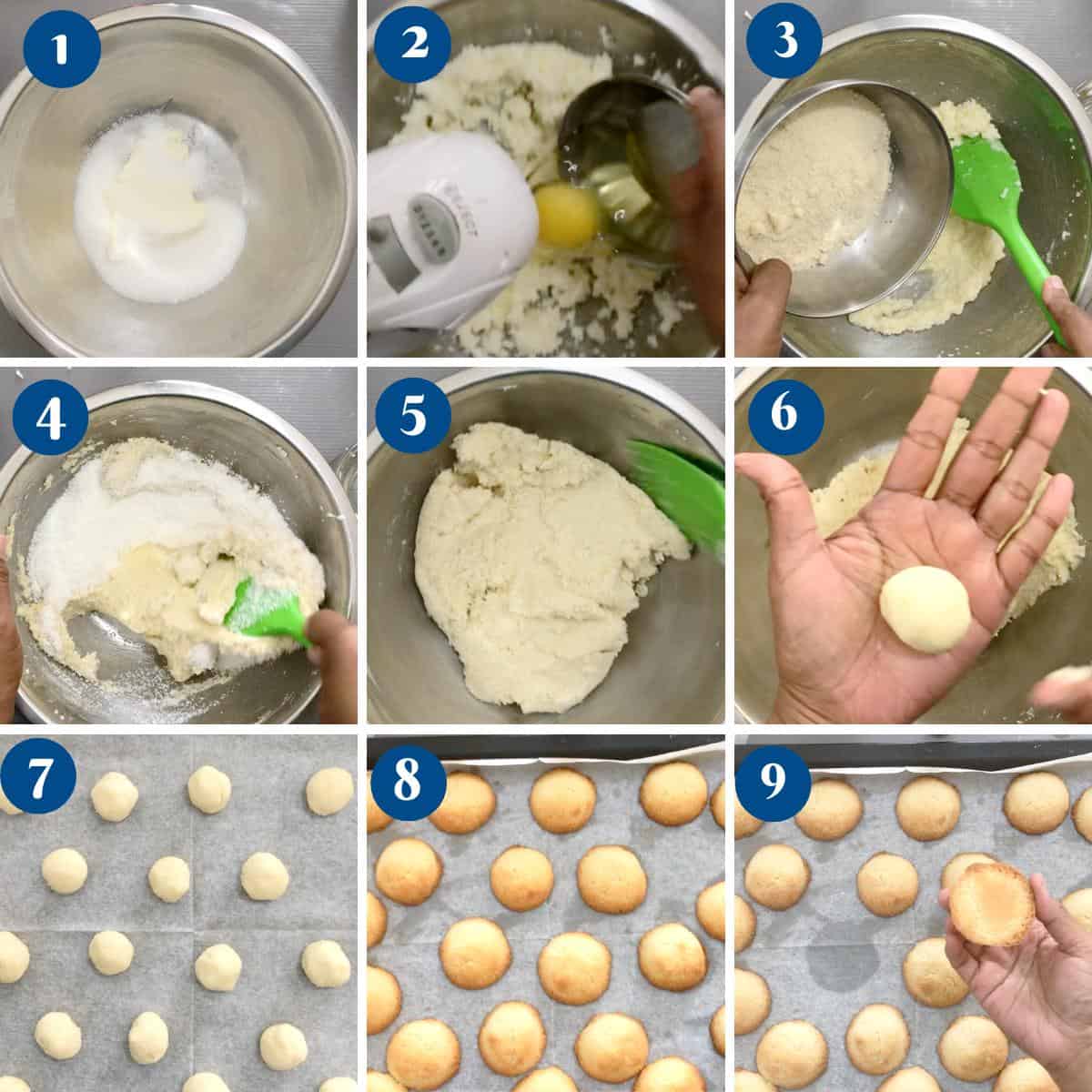
- Using a cookie scoop or a spoon, drop rounded tablespoons of dough onto the prepared baking sheet, spacing them about 2 inches apart. This will give the cookies room to spread and bake evenly.
- If you prefer flat cookies, gently press down on each dough ball with the back of a spoon or the palm of your hand to flatten them slightly. This will ensure that the cookies have a uniform thickness and will bake consistently.
- Place the baking sheet in the preheated oven and bake for 10-12 minutes or until the edges are golden brown. Keep a close eye on them, as the cooking time may vary depending on your oven.
- Once the cookies are done, remove them from the oven and let them cool on the baking sheet for a few minutes. This will allow them to set and firm up before being transferred to a wire rack to cool completely.

Tips for success
- First and foremost, it’s crucial to use high-quality ingredients. Opt for fresh, finely shredded coconut and blanched almond flour for the best results. These ingredients will not only enhance the flavor but also contribute to the overall texture of the cookies.
- Speaking of texture, if you prefer cookies that are chewy in the middle and crispy around the edges, make sure to underbake them slightly. Keep a close eye on the oven during the last few minutes of baking to achieve that perfect balance.
- Temperature also plays a significant role in cookie baking. Ensure your butter and eggs are at room temperature before incorporating them into the dough. This step will ensure proper emulsification and produce a more uniform texture in the cookies.
- While the recipe calls for a specific amount of coconut and almond, feel free to experiment with different proportions to suit your taste preferences. Adding extra coconut or almond flour can give your cookies more “oomph” and intensify their flavor.
- Furthermore, feel free to get creative with add-ins. Consider tossing in dark chocolate chips, dried cranberries, or even a sprinkle of sea salt to take your cookies to the next level. These variations can provide a delightful twist to the classic Coconut Almond Cookies.
- Lastly, make sure to store your cookies properly to maintain their freshness. Store them in an airtight container at room temperature to prevent them from going stale. If you make too many cookies, they can also be frozen for later enjoyment. Place them in a resealable bag and pop them in the freezer—they will stay fresh for up to three months.

- Soft Almond Sugar Cookies
- Rice Flour Sugar Cookies – Gluten-Free
- Chocolate Chip Coconut Bars
- No Chill Sugar Cookies (No-Spread)
- No-Spread Sugar Cookies

Frequently asked questions
While these cookies contain almonds, which are technically a type of nut, they are generally safe for those with nut allergies. This is because almonds are considered a tree nut, and most people with nut allergies are allergic to peanuts, which are legumes. However, if you or your guests have a severe nut allergy, it’s always best to consult a healthcare professional or allergist before consuming almond-based products.
It’s possible to substitute coconut flour for almond flour in this recipe, but remember that the texture and taste may differ slightly. Coconut flour is more absorbent than almond flour, so you’ll typically need to use less. Start by replacing half of the almond flour with coconut flour and adjust the recipe accordingly. Remember that coconut flour can make baked goods denser, so you may want to add a bit more liquid to ensure the cookies turn out light and fluffy.
When stored in an airtight container at room temperature, these coconut almond cookies will stay fresh for up to a week. However, if you prefer a softer cookie, you can store them in the refrigerator. Let them come to room temperature before serving to bring out their full flavor.
Absolutely! These cookies freeze exceptionally well. To freeze, place them in a freezer-safe container or bag, separating the layers with parchment paper or wax paper to prevent sticking. When you’re ready to enjoy them, just let them thaw at room temperature for about 30 minutes or pop them in the microwave for a few seconds to warm them up.
Coconut Almond Cookies GF
Ingredients
- 1 ½ cups (170 g) Almond flour
- ½ cup (40 g) Desiccated coconut or almond flour
- ½ tsp Baking powder
- ¼ tsp Kosher salt
- ½ cup (113 g) Unsalted butter softened
- ½ cup (100 g) Granulated sugar
- 1 large Egg
- ½ tsp Almond extract
- ½ tsp Vanilla extract
Instructions
- Preheat your oven to 350°F (175°C) and line a baking sheet with parchment paper.
- Dry ingredients – Whisk the almond flour, desiccated coconut, baking powder, and salt in a separate bowl.1 ½ cups Almond flour, ½ cup Desiccated coconut, ½ tsp Baking powder, ¼ tsp Kosher salt
- Wet ingredients – In a medium-sized mixing bowl, cream the softened butter and granulated sugar until light and fluffy, which should take about 2 minutes. Add the egg to the butter and sugar mixture and beat until well combined.1/2 cup Unsalted butter, 1/2 cup Granulated sugar, 1 large Egg
- Combine – Gradually add the dry and wet ingredients to the mixing bowl. Mix until a dough forms. Pro tip – If the dough is too sticky to handle, you can refrigerate it for 15-30 minutes to make it easier to work with.
- Flavor – Stir in the almond and vanilla extract to the dough, ensuring they are evenly distributed.½ tsp Almond extract, ½ tsp Vanilla extract
- Ball – Scoop portions of the cookie dough and roll them into balls using a spoon or your hands. Place them on the prepared baking sheet, spacing them about 2 inches apart.Pro tip – If you want flat cookies, flatten each cookie slightly with the back of a fork, creating a crisscross pattern on top.
- Bake in the preheated oven for 12-15 minutes or until the cookies turn golden brown around the edges.
- Cool – Remove the cookies from the oven and let them cool on the baking sheet for a few minutes. Then, transfer them to a wire rack to cool completely.
- Store – Once the cookies have cooled, they will be enjoyed! Store any leftovers in an airtight container.
Video
Notes
- First and foremost, it’s crucial to use high-quality ingredients. Opt for fresh, finely shredded coconut and blanched almond flour for the best results. These ingredients will not only enhance the flavor but also contribute to the overall texture of the cookies.
- Speaking of texture, if you prefer cookies that are chewy in the middle and crispy around the edges, make sure to slightly underbake them. Keep a close eye on the oven during the last few minutes of baking to achieve that perfect balance.
- Temperature also plays a significant role in cookie baking. Ensure your butter and eggs are at room temperature before incorporating them into the dough. This step will ensure proper emulsification and result in a more uniform texture in the cookies.
- While the recipe calls for a specific amount of coconut and almond, feel free to experiment with different proportions to suit your personal taste preferences. Adding a little extra coconut or almond flour can add more “oomph” to your cookies and intensify their flavor.
- Furthermore, feel free to get creative with add-ins. Consider tossing in some dark chocolate chips, dried cranberries, or even a sprinkle of sea salt to take your cookies to the next level. These variations can provide a delightful twist to the classic Coconut Almond Cookies.
- Lastly, make sure to store your cookies properly to maintain their freshness. To prevent them from going stale, store them in an airtight container at room temperature. If you happen to make too many cookies, they can also be frozen for later enjoyment. Simply place them in a resealable bag and pop them in the freezer—they will stay fresh for up to three months.
Made this recipe?
I’d love to see how yours turned out! Share a photo on Instagram and tag @veenaazmanov_kitchen or use #veenaazmanovkitchen. And don’t forget to leave a rating and review!



Don’t lose this recipe! Save it for Later!
📌 Save this Recipe for later on Pinterest so you can easily find it again.
⭐ Add Veena Azmanov Kitchen to your Google Preferred Sources.
It helps Google show you more of our recipes.
📧 Subscribe for new recipes delivered to your inbox.
🎥 Follow us for more recipes


Hi, I’m Veena
I’m the recipe developer, baker, and food photographer behind Veena Azmanov Kitchen.
I’ve spent years developing and testing recipes, from everyday meals and homemade breads to cakes and desserts.
I share the practical tips and little details I’ve learned along the way so you can get great results in your own kitchen.











These look amazing. Would they work if I used a calorie free sweetener, like stevia?