
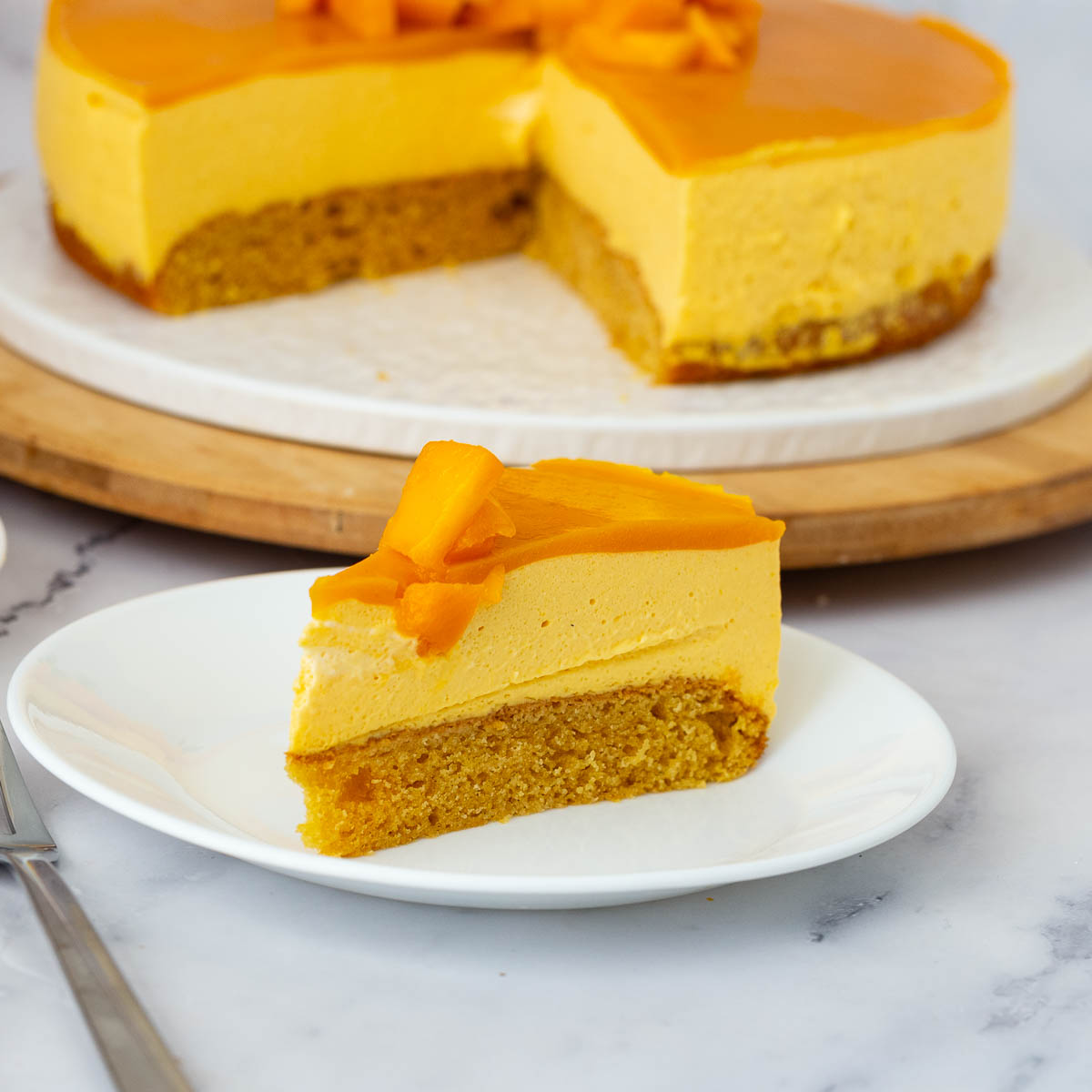





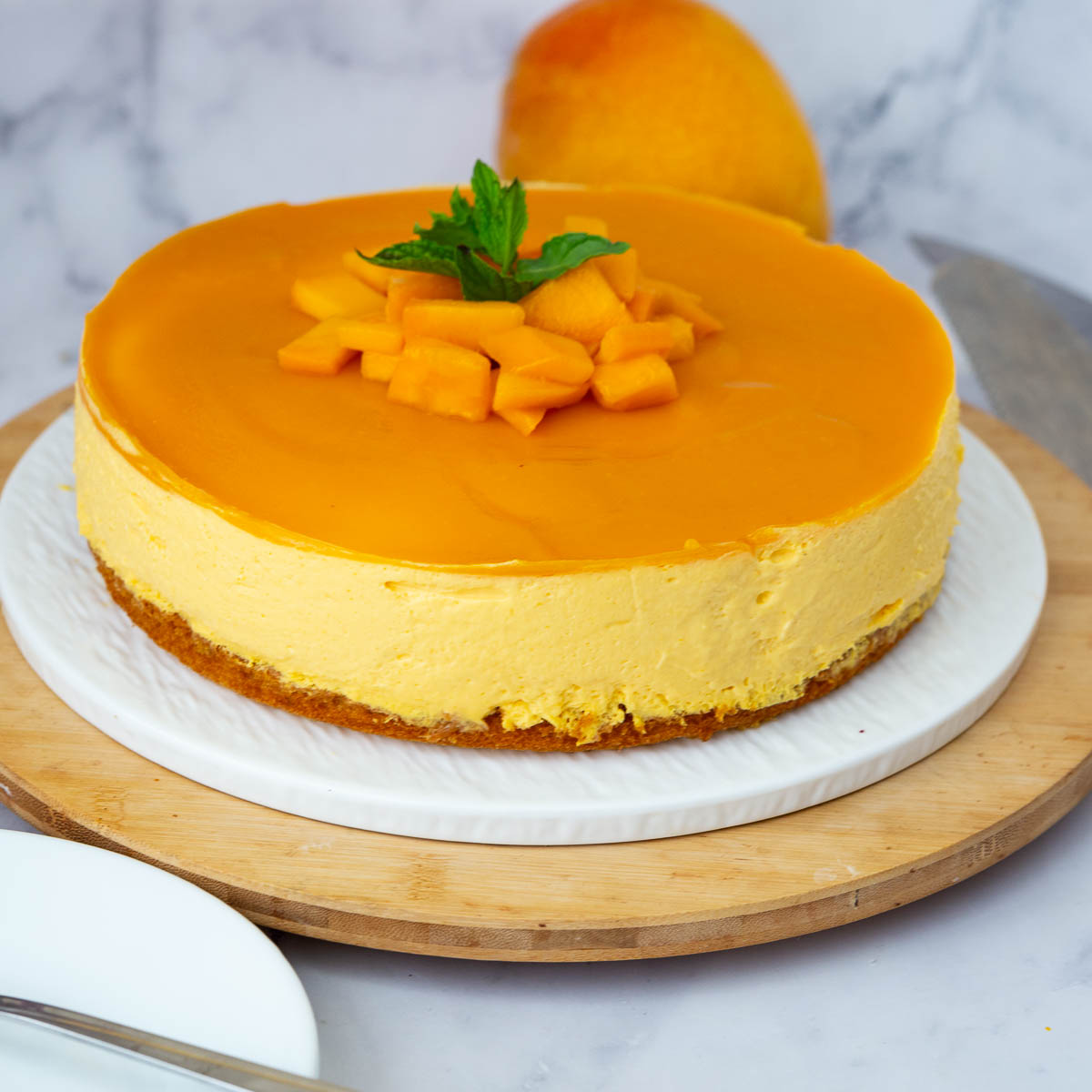
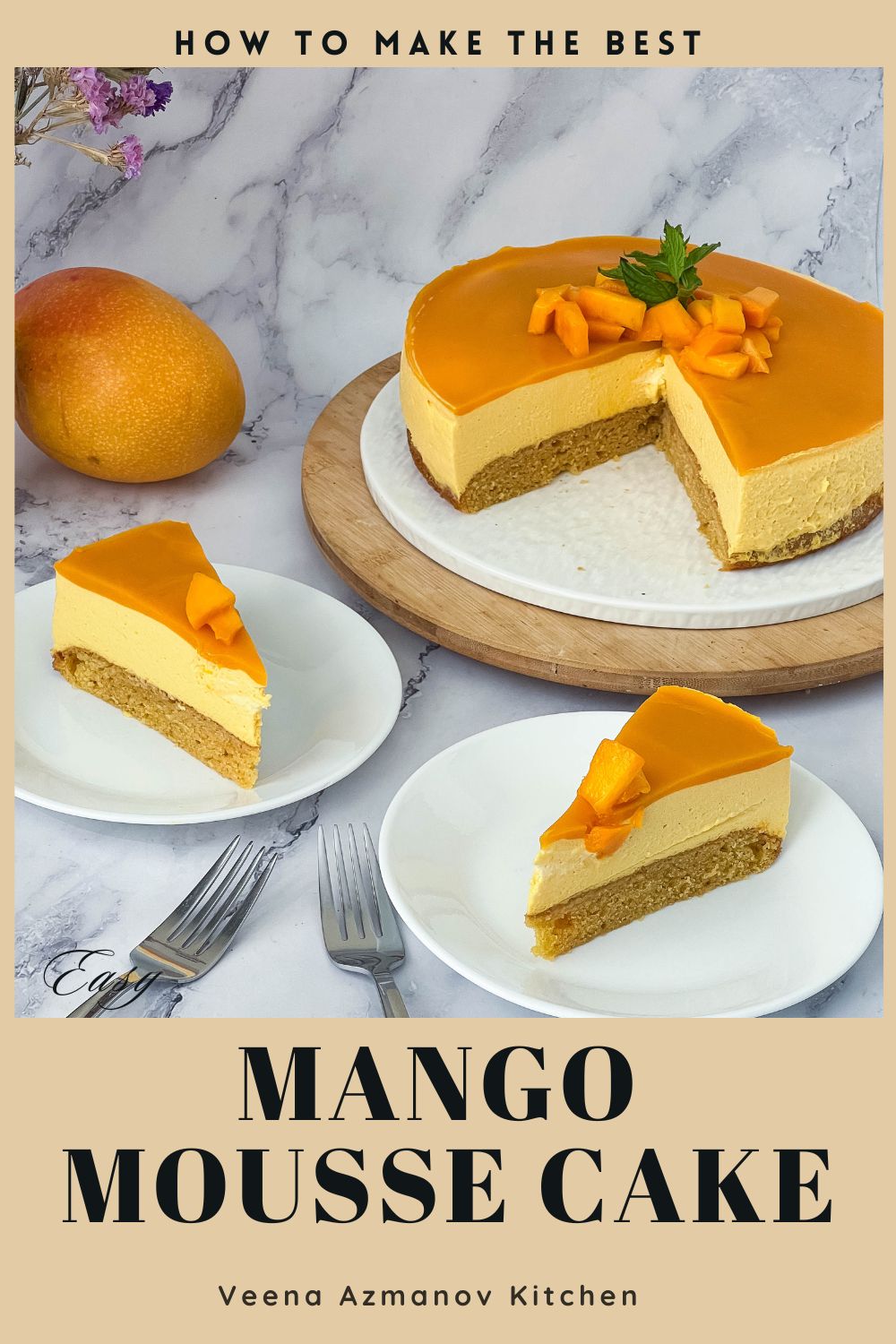
This mango mousse cake has a soft mango cake base topped with a light and creamy mango mousse and a thin layer of fresh mango topping. It has plenty of real mango flavor in every bite, yet it is surprisingly easy to make.
The cake base is a simple whisk-and-bake recipe—no whipping eggs or complicated sponge technique. The mousse is made with mango puree, whipped cream, powdered sugar, vanilla, and gelatin, while the soft mango topping adds another burst of fresh fruit flavor.
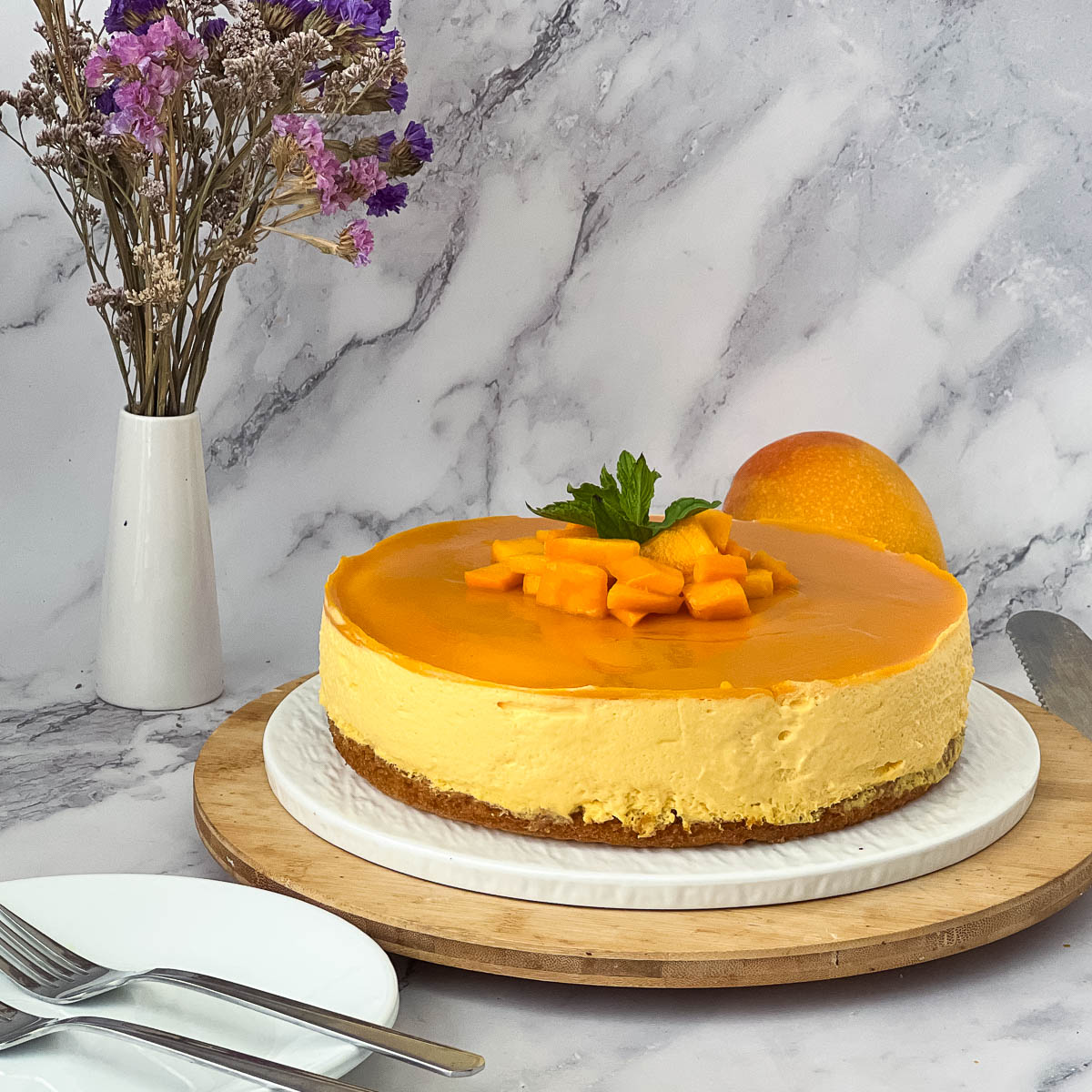
Mango desserts have always been a favorite of mine, especially when mangoes are sweet and plentiful during the summer. I have made more elaborate mango mousse cakes over the years, but these days I find myself coming back to simpler desserts that look impressive without requiring lots of separate components.
For this cake, I wanted the mango to be the star. So I added a little mango puree to the cake itself, made a generous layer of my simple mango mousse, and finished it with a very thin layer of mango puree on top.
I especially like the topping soft rather than firm like jello. There is just enough gelatin to help it stay in place, but when you eat it, it almost melts into the mousse.
Why you’ll love this mango mousse cake
- Plenty of mango flavor – Mango puree goes into the cake, mousse, and topping.
- Simple cake base – No creaming butter or whipping eggs. Just combine the ingredients and bake.
- Light and creamy mousse – Whipped cream keeps the mango mousse airy rather than dense.
- Make-ahead dessert – The cake needs time to set in the refrigerator, making it perfect for preparing the day before serving.
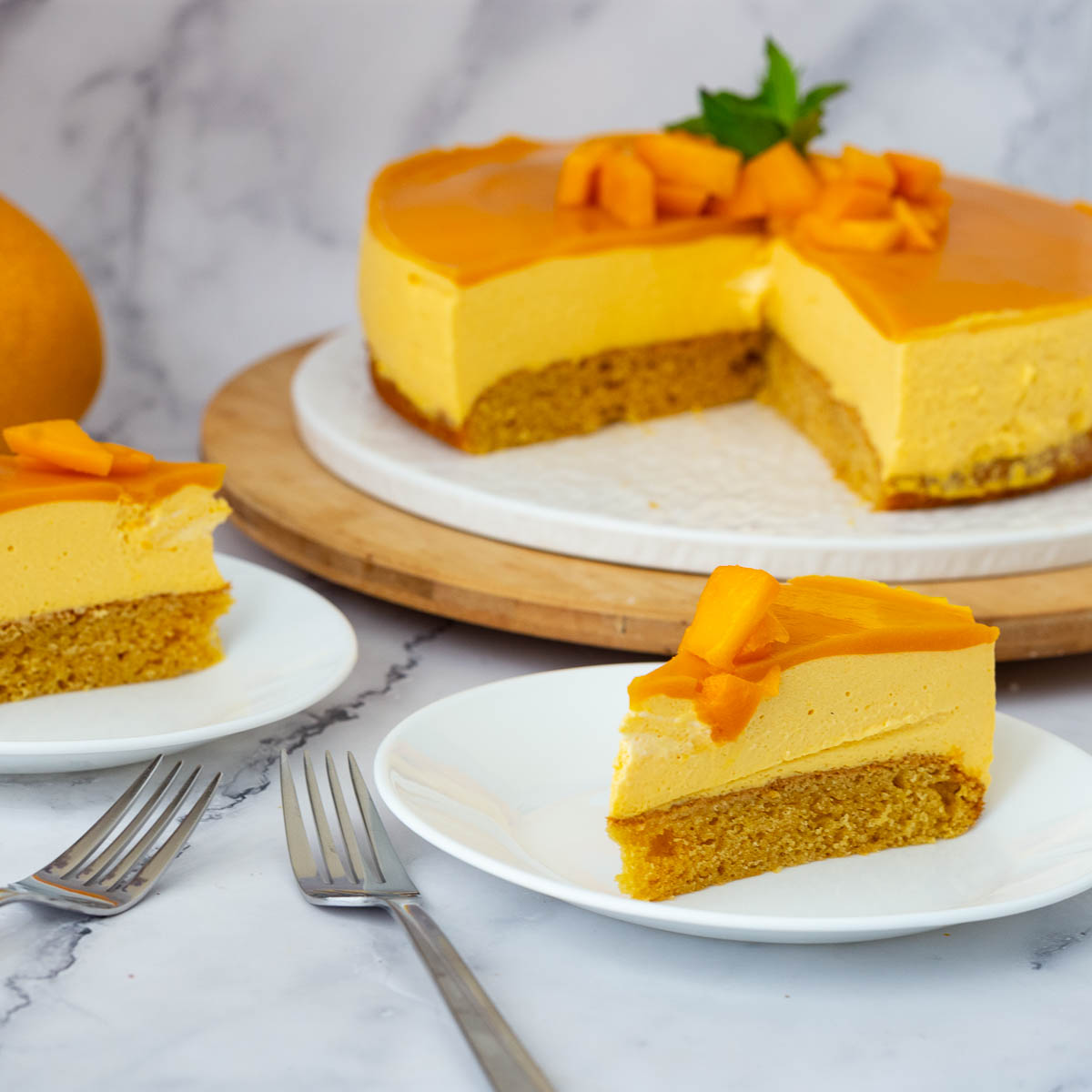
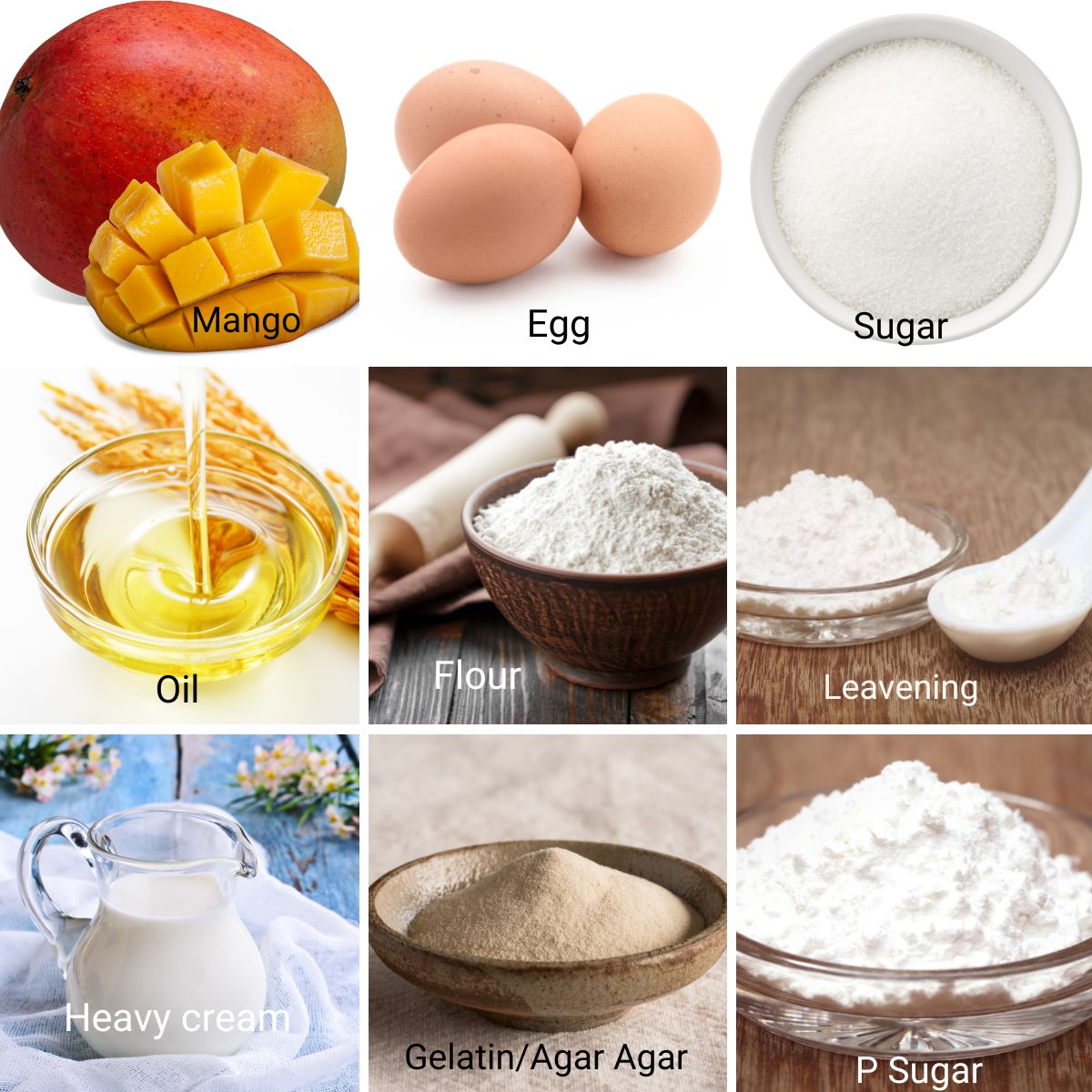
Ingredients and substitutes
- For the mango cake
- All-purpose flour – Gives the thin cake layer enough structure to support the mousse. I use 1¼ cups; with less flour, I found the center took much longer to bake because of the additional moisture from the mango puree.
- Sugar – You don’t need much because ripe mango adds natural sweetness.
- Baking powder and baking soda – Give this simple cake enough lift without requiring whipped eggs.
- Salt – A small amount balances the sweetness.
- Egg – Adds structure and richness.
- Neutral oil – Keeps the cake soft even after refrigeration. Canola, sunflower, or another neutral-flavored oil works well.
- Milk – Adds moisture to the cake batter.
- Mango puree – Just a couple of tablespoons gives the base a subtle mango flavor without making the cake heavy or wet.
- Vanilla extract – Complements the mango without overpowering it.
- For the mango mousse
- Mango puree – Use ripe, flavorful mangoes for the best color and flavor. Blend until smooth and strain if your mangoes are particularly fibrous. Frozen or canned mango puree can also be used.
- Heavy whipping cream – Use cold, full-fat whipping cream so it whips well and gives the mousse its light texture.
- Powdered sugar – Sweeten according to your mangoes. Very ripe mangoes may need very little additional sugar.
- Gelatin – Gives the mousse enough stability to hold its shape when the cake is unmolded and sliced without making it rubbery.
- Vanilla – A small amount rounds out the mango flavor.
- For the soft mango topping
- Mango puree – This is the main ingredient, so use a ripe, flavorful mango.
- Gelatin – I deliberately use only a small amount. The topping should be soft and almost spoonable rather than a firm mango jelly.
- Sugar – Optional. Add it only if your mango needs additional sweetness.
Step-by-step: How to make mango mousse cake
1. Make the mango cake
Preheat the oven to 170°C/340°F. Grease and line the bottom of a 9-inch (23 cm) springform pan with parchment paper.
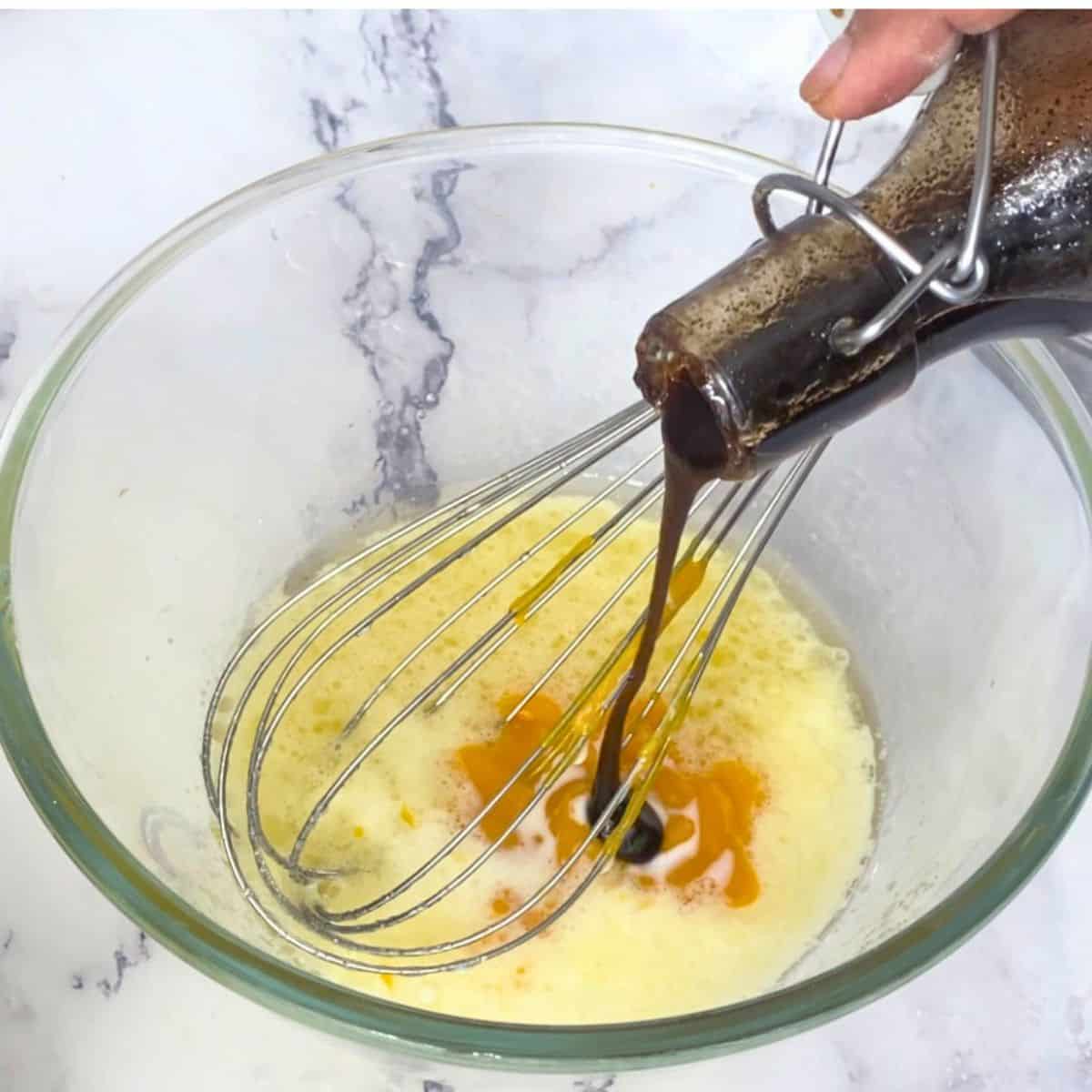
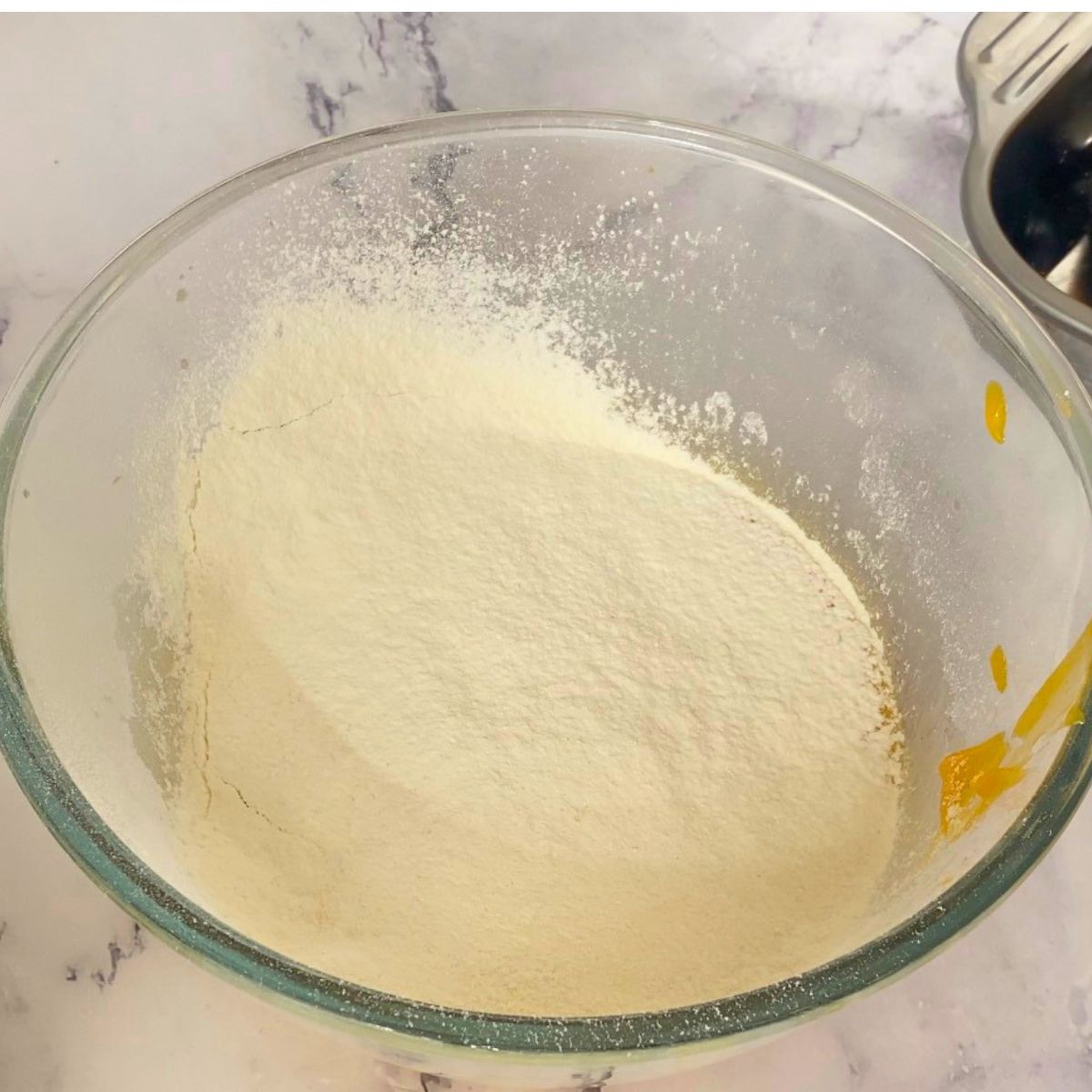
In a bowl, whisk together the egg, sugar, milk, oil, mango puree, and vanilla until smooth.
Add the flour, baking powder, baking soda, and salt. Mix just until you no longer see dry flour. Do not overmix.
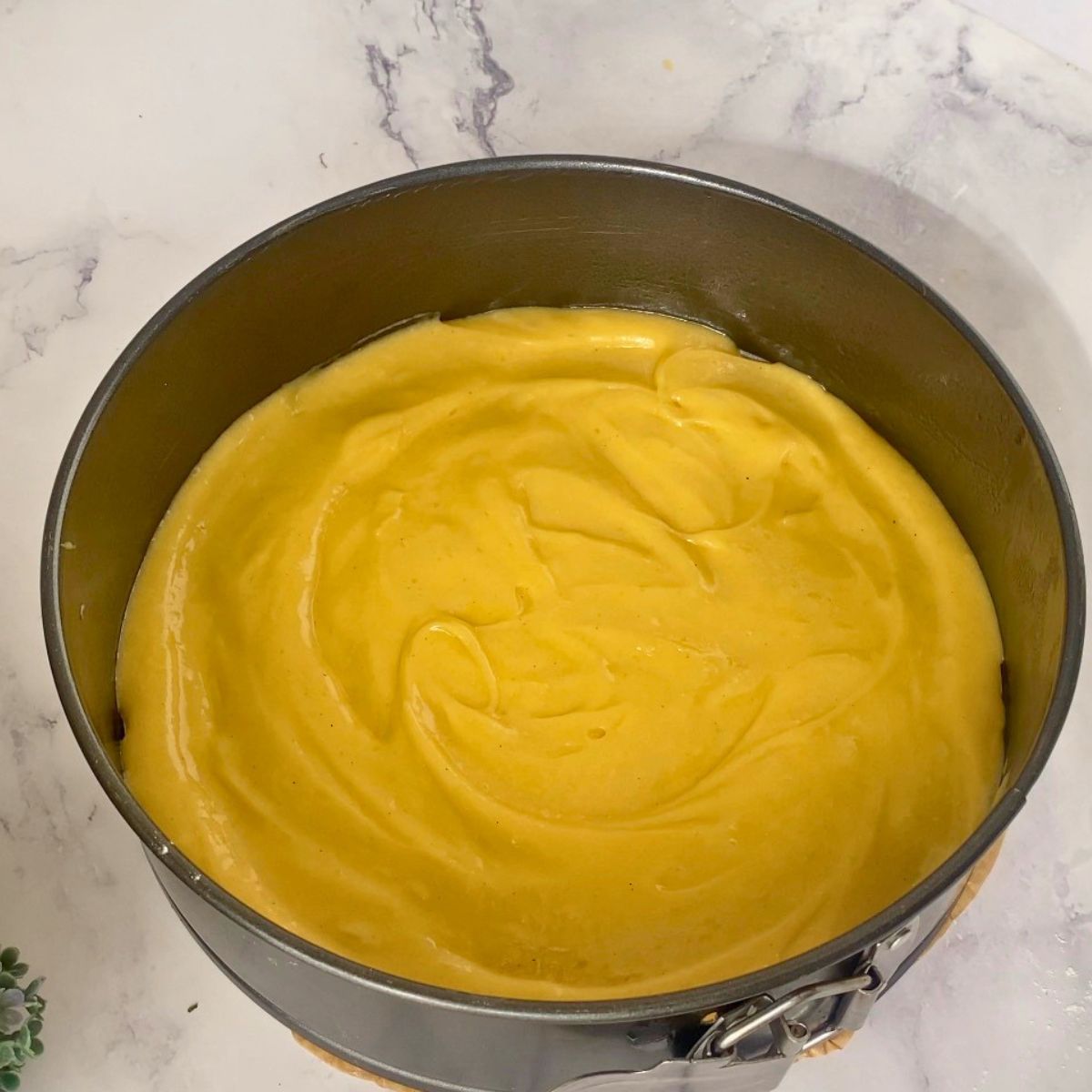
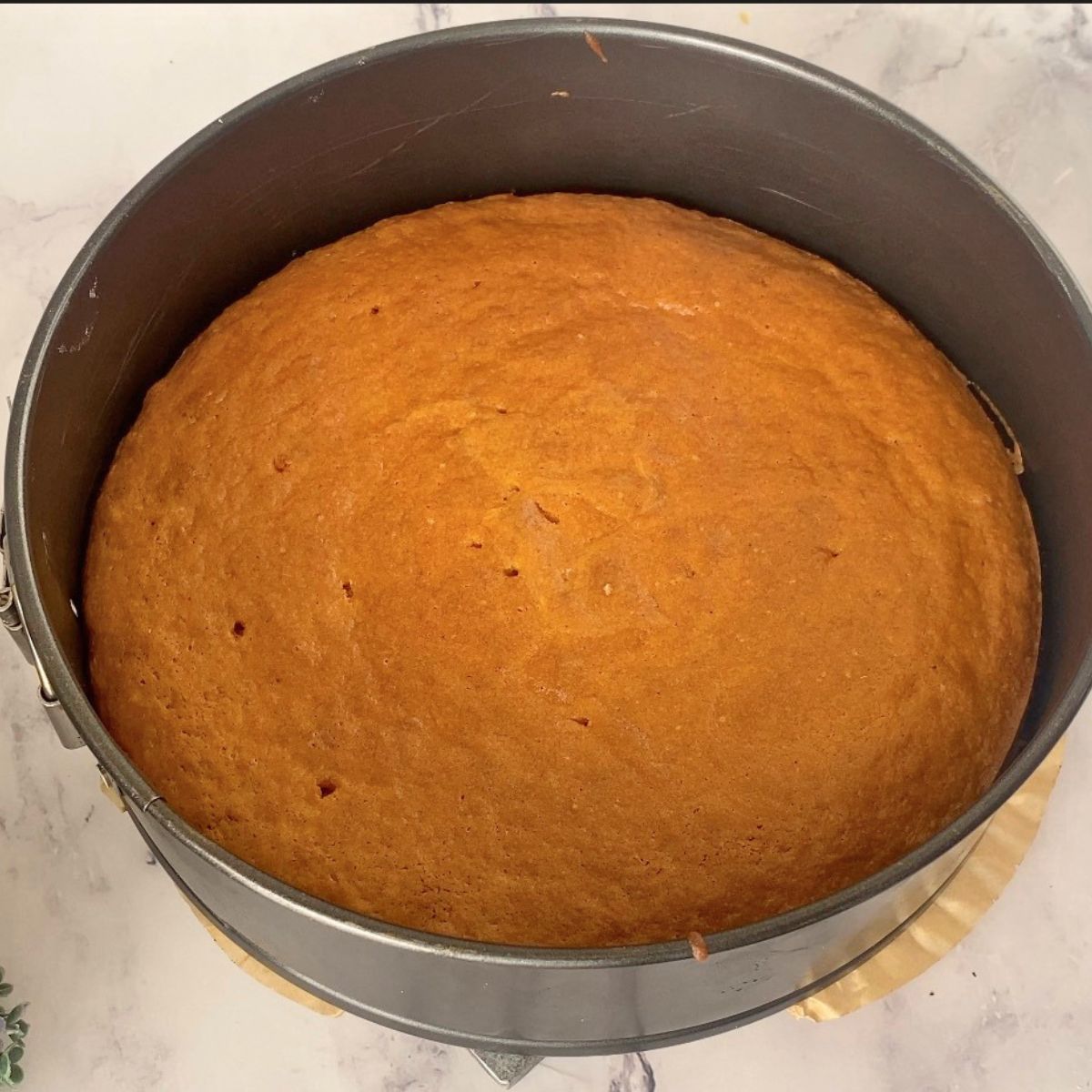
Pour the batter into the prepared pan and spread it evenly. Bake for 25 to 30 minutes, or until a skewer inserted into the center comes out clean.
Cool in the pan for about 10 minutes, then cool completely before adding the mousse.
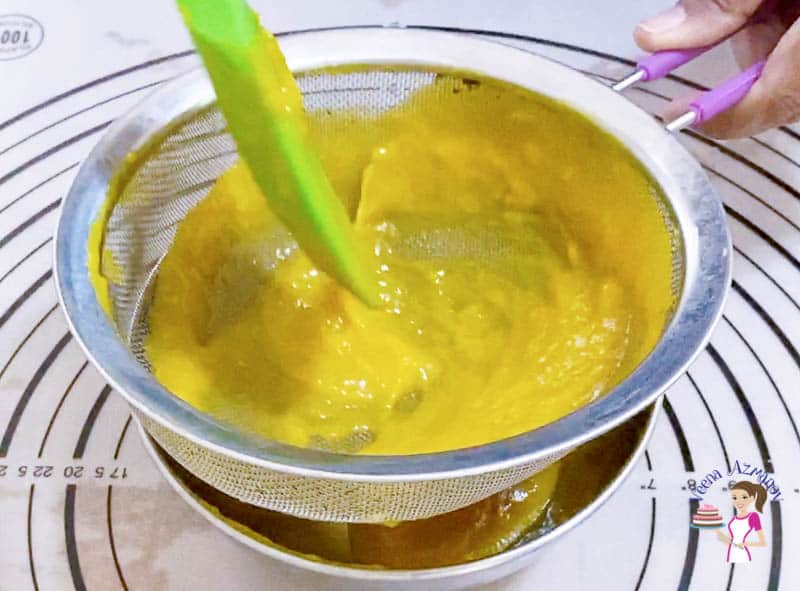
2. Prepare the mango mousse
Sprinkle the gelatin over the cold water and let it stand for about 5 minutes to bloom. Heat it gently for a few seconds until completely dissolved. Do not boil the gelatin.
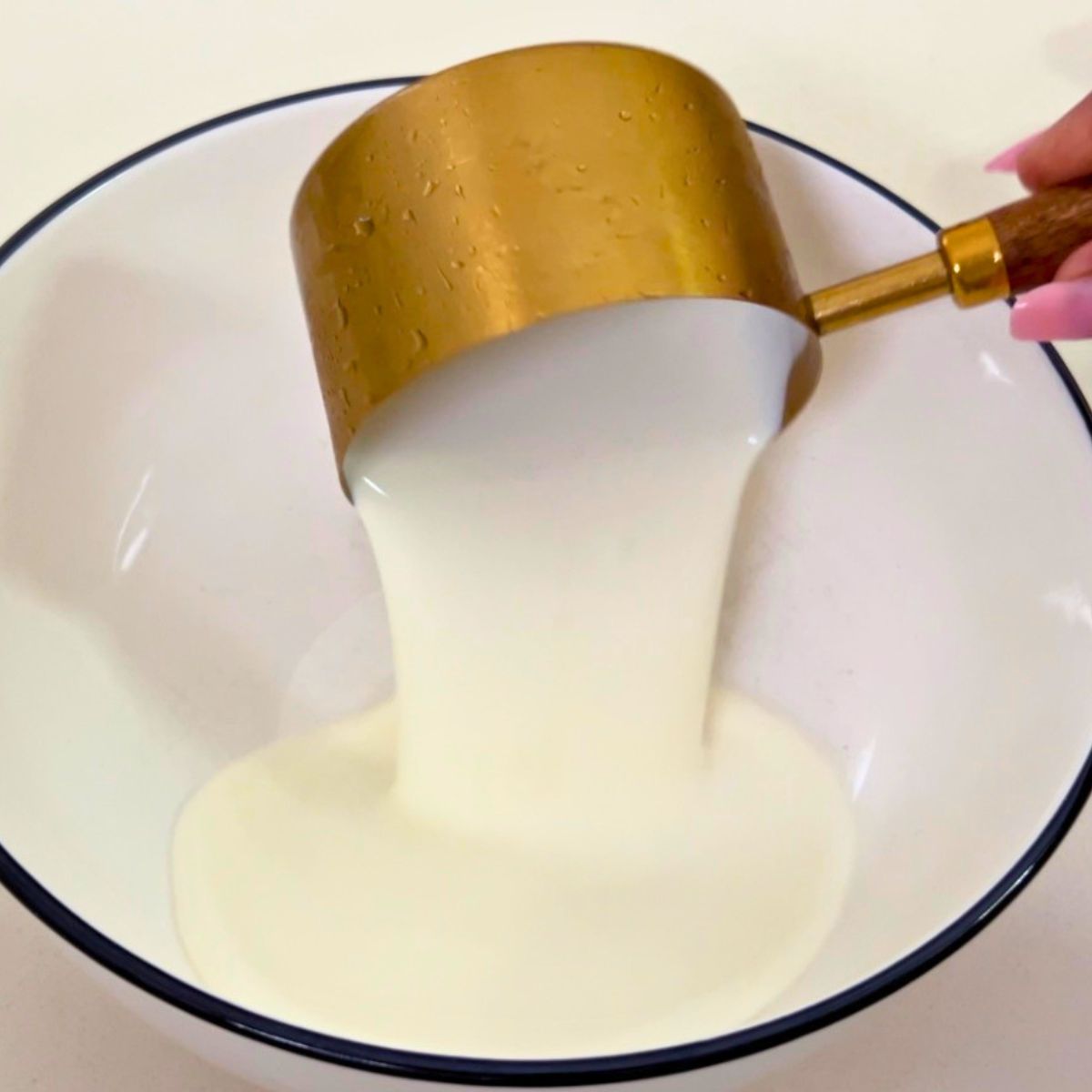
Blend the mango until smooth and strain if necessary to remove any fibers.
Whip the cold heavy cream with the powdered sugar and vanilla until soft to medium peaks form.
Mix a few tablespoons of mango puree into the dissolved gelatin first. This helps temper the gelatin and prevents it from forming little strands when it meets the colder ingredients.
Combine the gelatin mixture with the remaining mango puree.
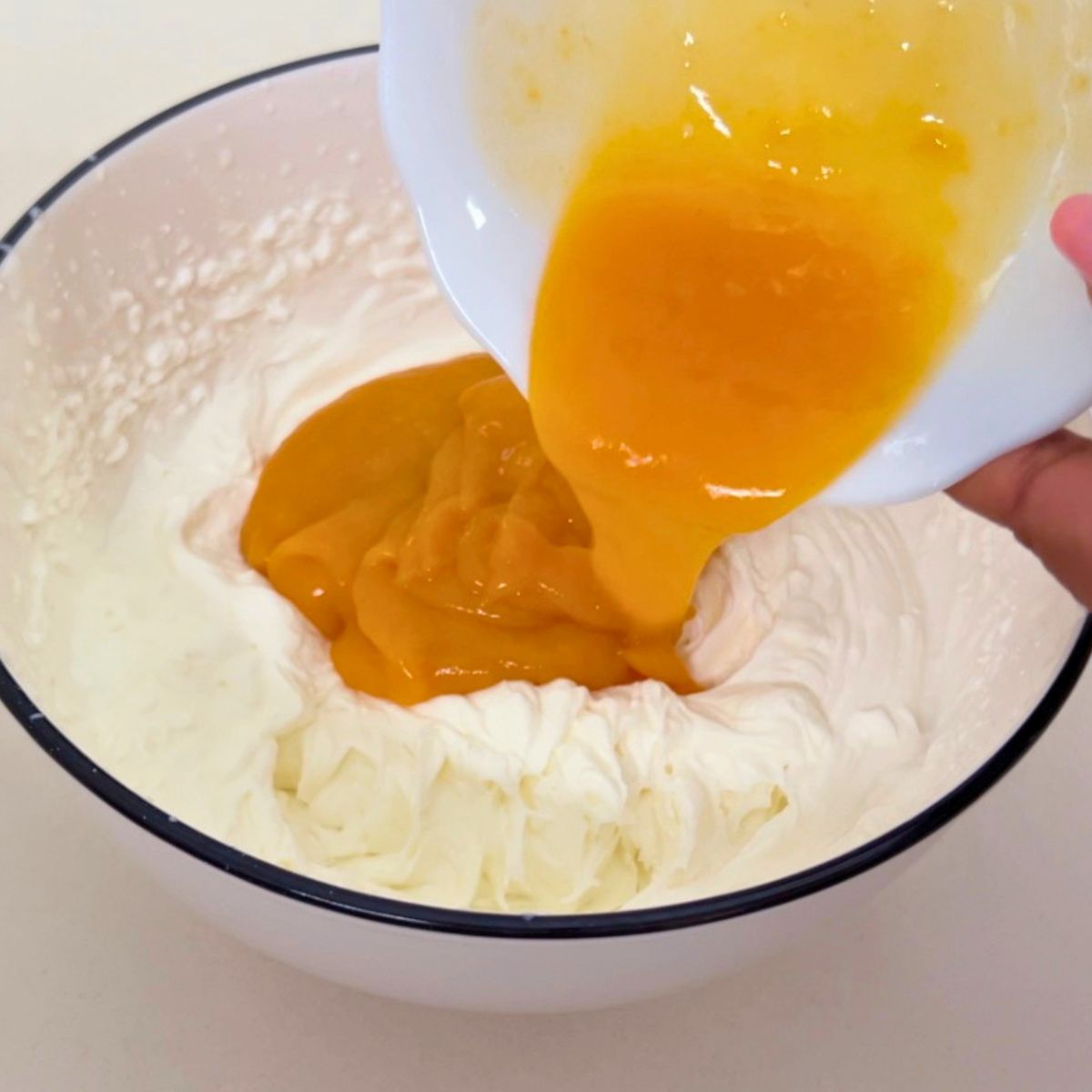
Add the mango mixture to the whipped cream in batches, folding gently until evenly combined and no streaks remain.
3. Assemble the mango mousse cake
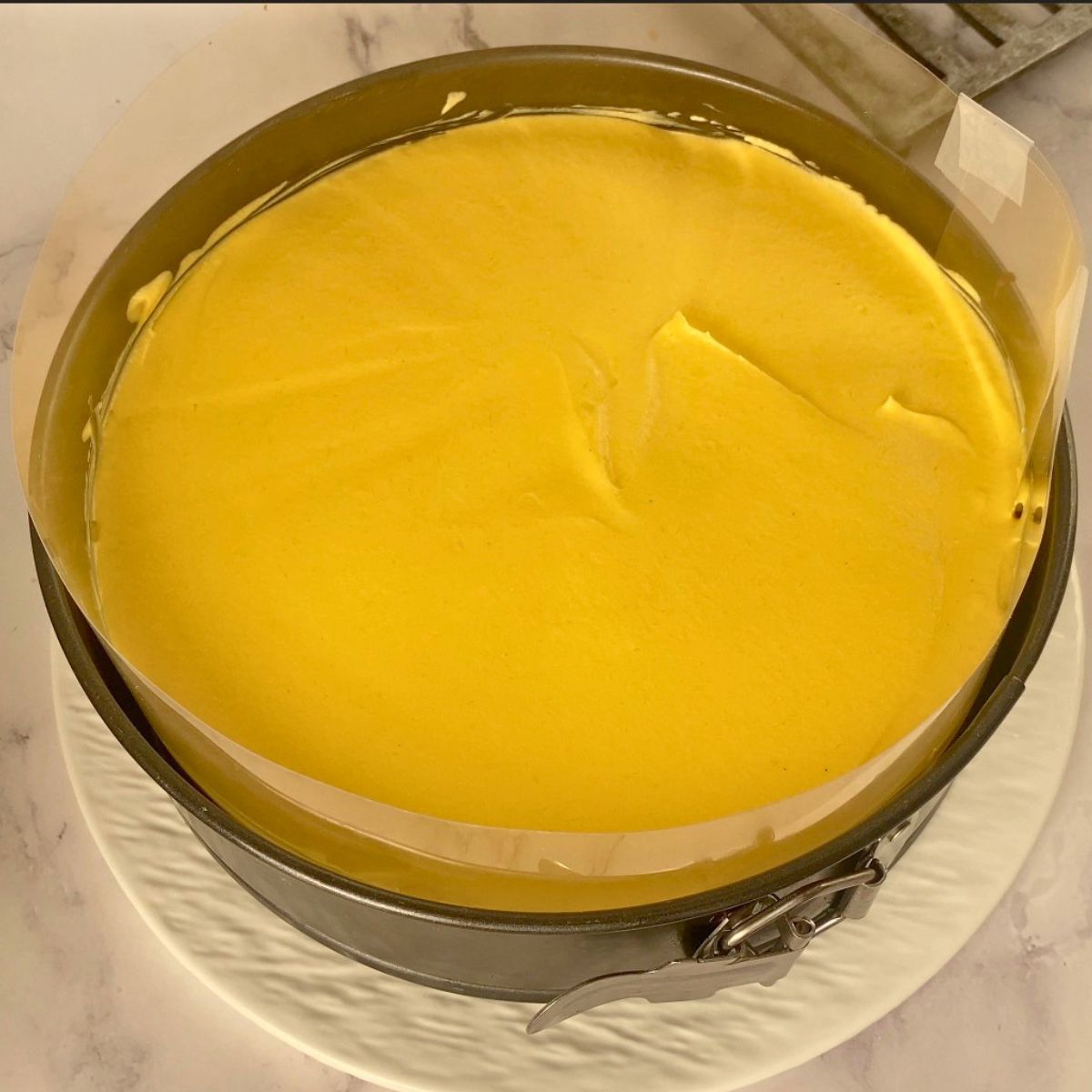
Place the completely cooled cake in a clean 9-inch springform pan or mousse ring. For especially clean sides, line the inside of the pan with acetate.
Pour the mango mousse over the cake and smooth the top with an offset spatula.
Refrigerate for at least 4 to 6 hours, or until the mousse is completely set. I prefer to let it chill overnight whenever possible.
4. Make the soft mango topping
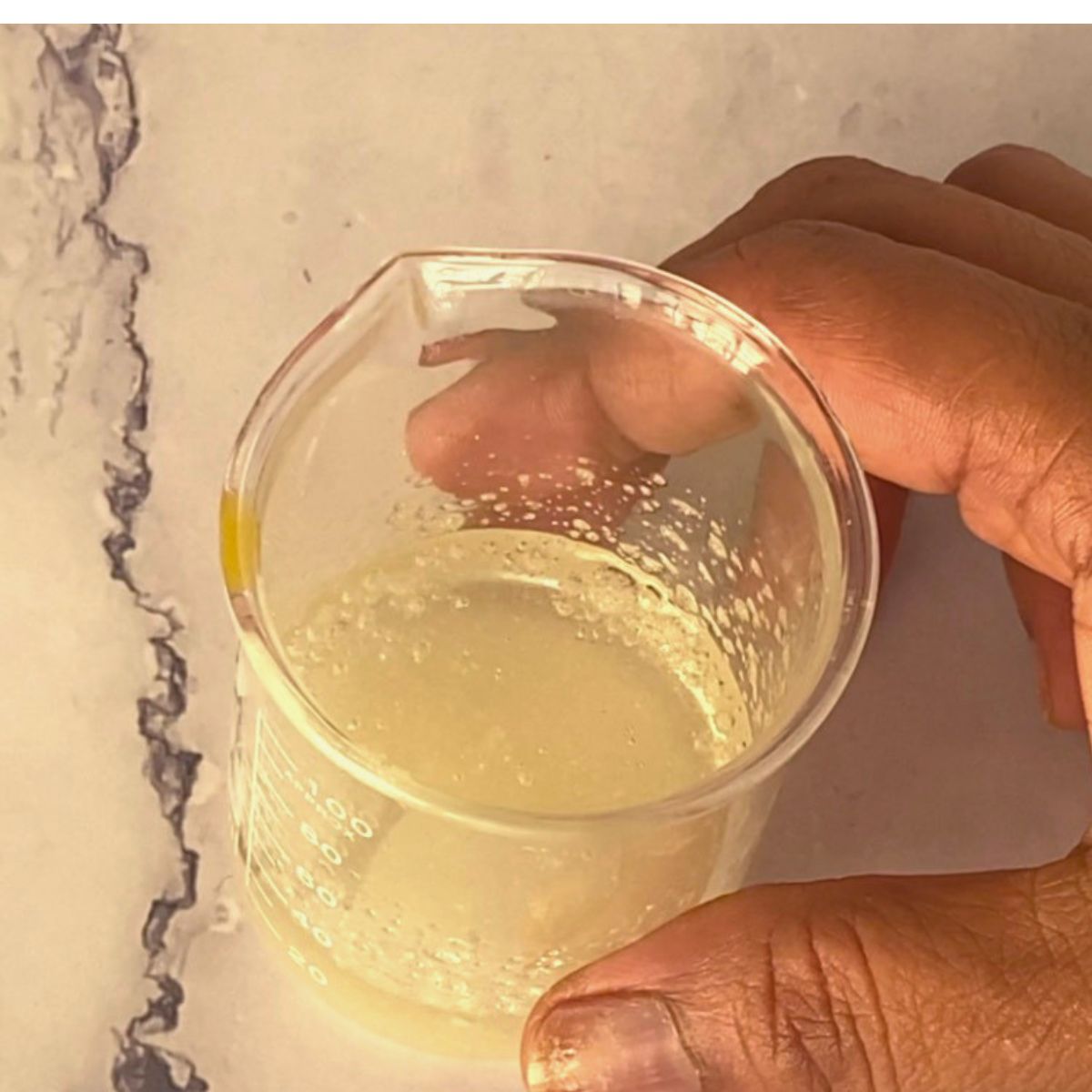
Bloom the gelatin in cold water for about 5 minutes, then warm gently just until dissolved.
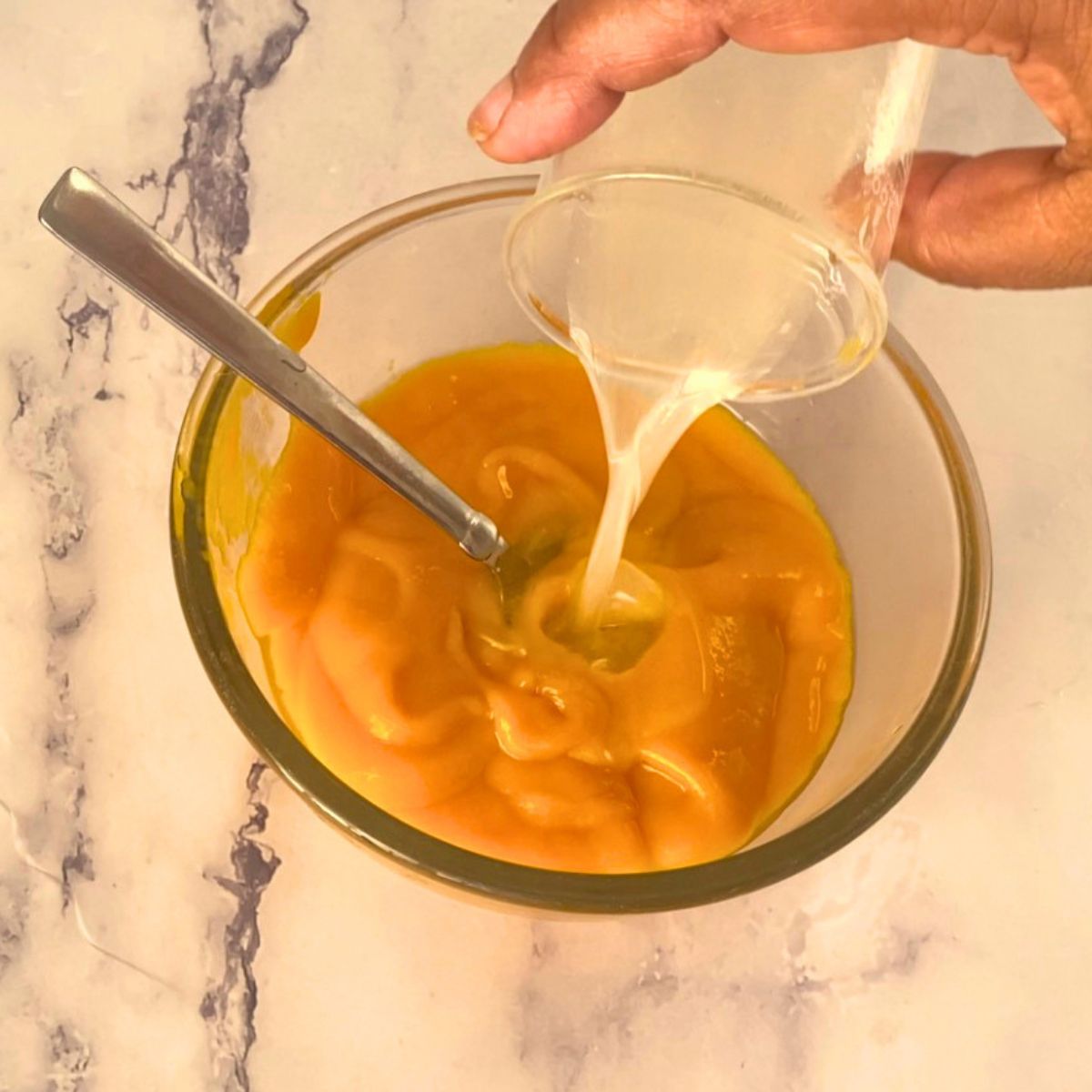
Stir a few tablespoons of mango puree into the gelatin, then combine it with the remaining puree. Taste and add sugar only if necessary.
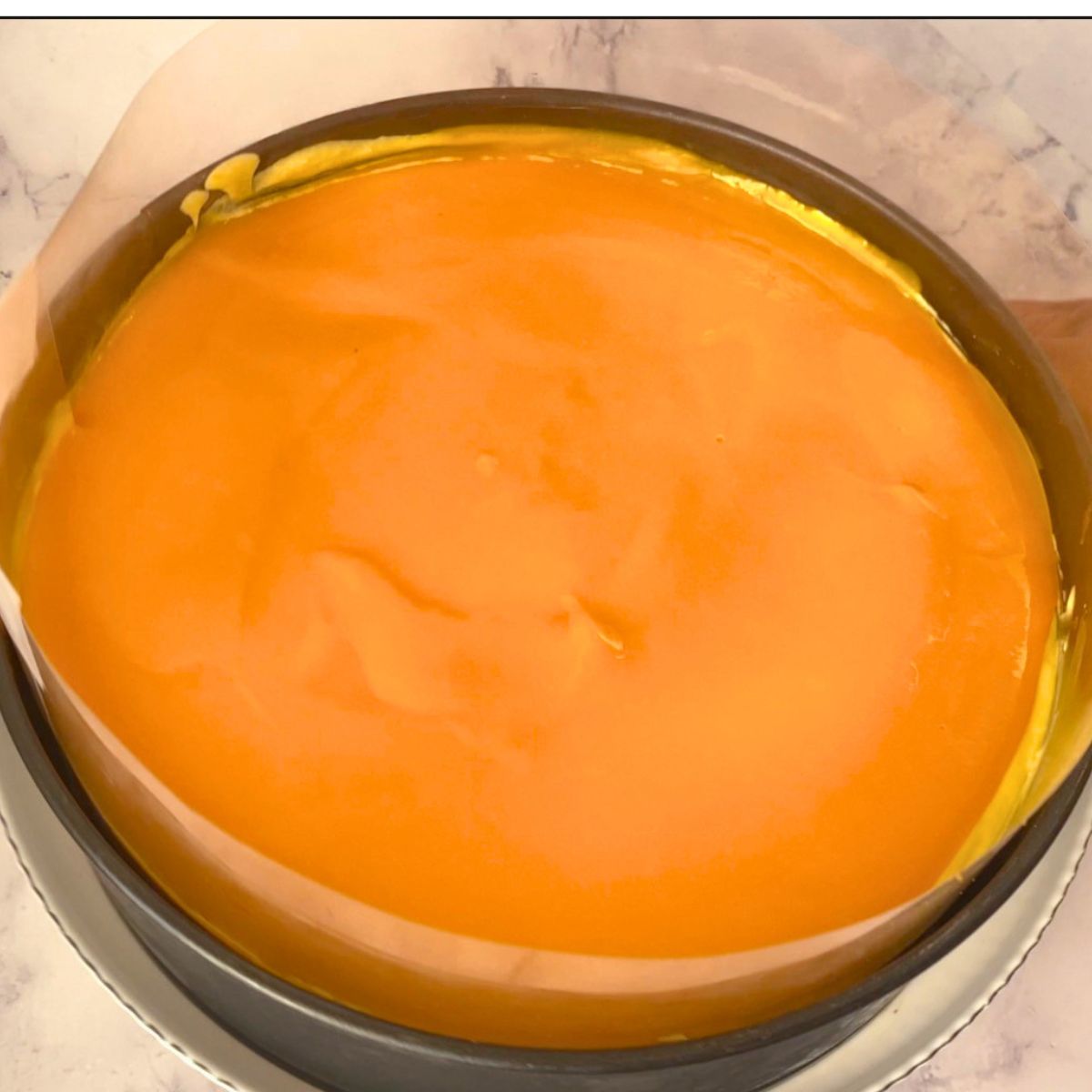
Let the mixture cool before pouring it over the chilled mousse.
Pour a thin layer over the top of the cake and gently tilt the pan if necessary to spread it evenly.
Refrigerate until the topping is softly set.
5. Unmold and decorate
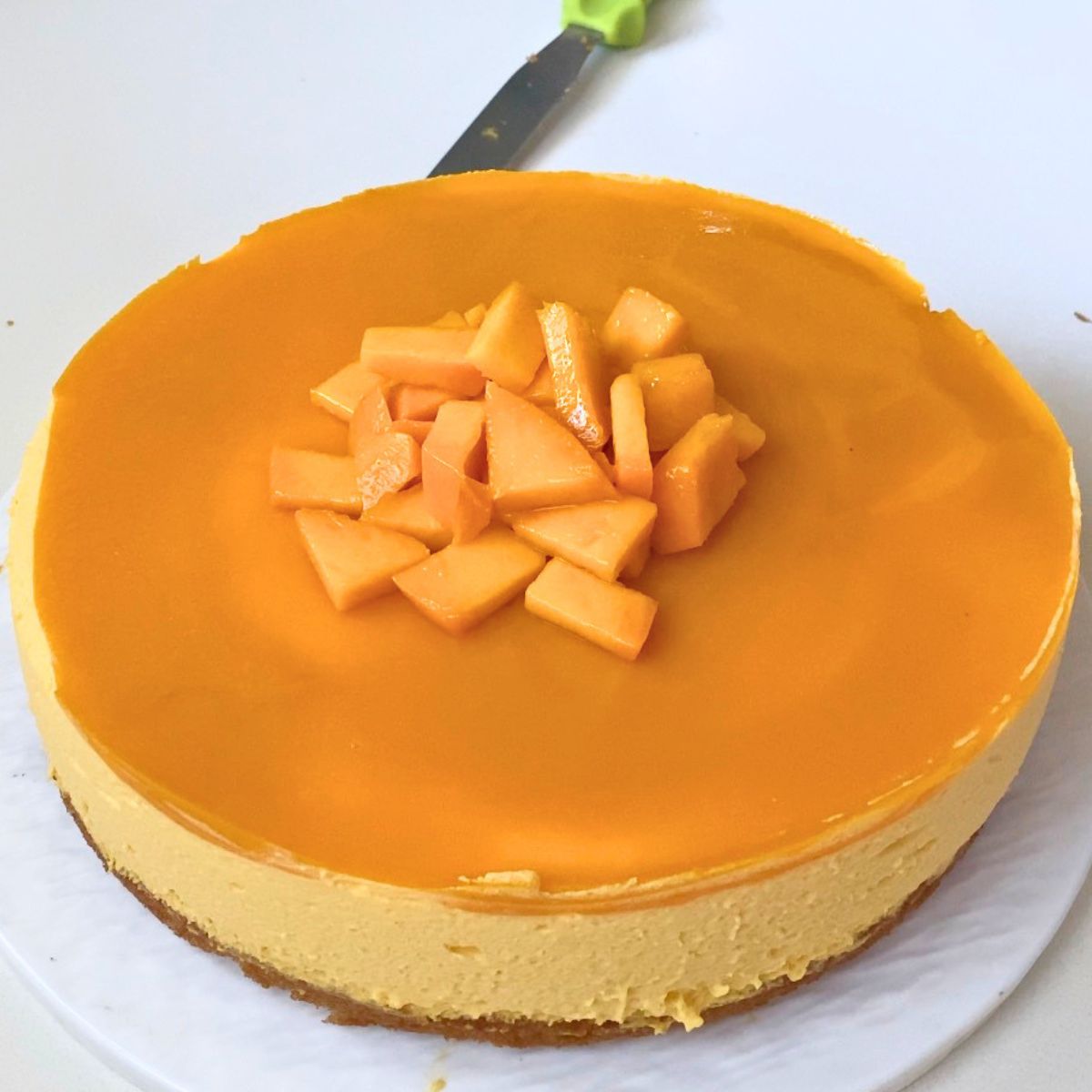
Carefully remove the springform pan or mousse ring. If using acetate, gently peel it away from the mousse.
Decorate the cake with fresh diced or sliced mango. I like to keep the decoration simple because the glossy mango top is beautiful on its own.
Keep refrigerated until ready to serve.
Mango Mousse Cake Recipe
Ingredients
Mango Cake
- 150 g (1¼ cups) All-purpose flour
- 75 g (⅓ cup) Granulated sugar
- ½ tsp Baking powder
- ½ tsp Baking soda
- ¼ tsp Salt
- 1 large Egg
- 2 tbsp (0.3 cup) Whole milk
- 60 ml Neutral oil
- 2 tbsp Mango puree
- 1 tsp Vanilla extract
Mango Mousse
- 400 g (1⅔ cups) Mango puree
- 375 ml (1½ cups) Heavy whipping cream cold
- 2 – 3 tbsp Powdered sugar or to taste
- 7 g (1½ tsp) Powdered gelatin
- 3 tbsp Cold water
- 1 tsp Vanilla extract
Mango topping
- 200 g (¾ cup) Mango puree
- 2 g (¾ tsp) Powdered gelatin
- 2 tbsp Cold water
- 1 – 2 Sugar optional and to taste
Garnish
- Fresh mango diced or sliced
- Fresh mint optional
Instructions
- Prepare the pan and oven: Preheat the oven to 170°C/340°F. Grease and line the bottom of a 9-inch springform pan with parchment paper.
- Make the cake batter: Whisk together the egg, sugar, milk, oil, mango puree, and vanilla. Add the flour, baking powder, baking soda, and salt. Mix just until combined.150 g All-purpose flour, 75 g Granulated sugar, ½ tsp Baking powder, ½ tsp Baking soda, ¼ tsp Salt, 1 large Egg, 2 tbsp Whole milk, 60 ml Neutral oil, 2 tbsp Mango puree, 1 tsp Vanilla extract
- Bake: Pour the batter into the prepared pan and spread evenly. Bake for 25–30 minutes, or until a skewer inserted into the center comes out clean. Cool for 10 minutes in the pan, then cool completely.
- Bloom the gelatin: Sprinkle the gelatin over the cold water and let it stand for about 5 minutes. Heat gently for a few seconds until completely dissolved. Do not boil.7 g Powdered gelatin, 3 tbsp Cold water
- Prepare the mango: Blend the mango into a smooth puree and strain if necessary. Stir a few tablespoons of mango puree into the dissolved gelatin, then combine it with the remaining puree.400 g Mango puree
- Whip the cream: Whip the cold heavy cream with powdered sugar and vanilla until soft-medium peaks form.375 ml Heavy whipping cream, 2 – 3 tbsp Powdered sugar, 1 tsp Vanilla extract
- Make the mousse: Fold the mango mixture into the whipped cream in two or three additions until smooth and evenly combined.
- Assemble: Place the cooled cake in a clean springform pan or mousse ring lined with acetate. Pour the mousse over the cake and smooth the top. Refrigerate for 4–6 hours or overnight, until completely set.
- Make the mango topping: Bloom the gelatin in cold water for 5 minutes, then gently melt it. Temper with a little mango puree before combining with the remaining puree. Add sugar if needed. Let cool.200 g Mango puree, 2 g Powdered gelatin, 2 tbsp Cold water, 1 – 2 Sugar
- Finish the cake: Pour a thin layer of mango topping over the set mousse. Refrigerate again until softly set.
- Unmold and serve: Carefully remove the pan and acetate. Decorate with fresh mango and mint. Keep refrigerated until ready to serve.Fresh mango, Fresh mint
Video
Notes
- Choose ripe, flavorful mangoes. The sweetness of mangoes varies considerably, so adjust the sugar to taste.
- You can use fresh, frozen, or canned mango puree. If using sweetened canned mango pulp, reduce or omit the added sugar.
- Do not add warm mango or gelatin mixture directly to the whipped cream.
- The mango topping is intentionally soft-set, not firm like jello.
- The topping is optional; the cake can be served with just the mango mousse and fresh mango.
- For the cleanest slices, chill the cake overnight and cut it with a sharp knife, wiping the blade between slices.
Equipment

Made this recipe?
I’d love to see how yours turned out! Share a photo on Instagram and tag @veenaazmanov_kitchen or use #veenaazmanovkitchen. And don’t forget to leave a rating and review!
Tips for the best mango mousse cake
- Use flavorful mangoes. The color and flavor of the mousse depend heavily on the fruit. If the puree tastes bland before you add it to the mousse, the finished mousse will taste bland too.
- Let the cake cool completely. Even a slightly warm cake can begin melting the whipped-cream mousse.
- Don’t overwhip the cream. Stop at soft to medium peaks. Very stiff whipped cream is harder to fold with the mango puree and can give the mousse a less creamy texture.
- Temper the gelatin. Mixing a little mango puree into the dissolved gelatin before combining everything helps prevent gelatin threads or lumps.
- Don’t rush the chilling time. The mousse may look set on the surface before the center is firm enough to unmold.
- Keep the mango topping thin. This isn’t meant to be a thick layer of jello. A thin, softly set layer gives you fresh mango flavor without overpowering the mousse.
more mousse recipes

Troubleshooting
| Problem | Possible cause | Solution |
|---|---|---|
| Mousse is too soft | Cake hasn’t chilled long enough | Refrigerate for at least 4–6 hours, preferably overnight |
| Mousse has gelatin strands | Hot gelatin was added directly to cold ingredients | Temper the dissolved gelatin with a little mango puree first |
| Mango mousse tastes weak | Mangoes were mild or too much cream diluted the flavor | Use ripe, strongly flavored mangoes and taste the puree before making the mousse |
| Cake is wet in the center | It needs more baking time | Bake until a skewer inserted in the center comes out clean; mine takes about 25–30 minutes |
| Mango topping is too firm | Too much gelatin | Use only enough gelatin to give the puree a soft set |
| Mousse looks grainy | Cream was whipped too stiffly or mousse was overmixed | Whip only to soft-medium peaks and fold gently |
Frequently asked questions
Store the cake covered in the refrigerator for up to 3 days. For the best appearance and texture, add fresh mango garnish shortly before serving.
Yes. The assembled cake can be frozen without the fresh mango decoration. Thaw it slowly in the refrigerator before serving. The soft mango topping may release a little moisture after freezing, so for the best finish, I prefer to add the topping after thawing.
The best you can find! You want to use sweet mango, whether they are fresh, frozen, or canned.
Yes. In fact, I recommend it. Make and assemble the cake the day before you plan to serve it and let it set overnight in the refrigerator. Decorate with fresh mango shortly before serving.
Yes. Canned mango puree or mango pulp works well, but check whether it has added sugar. Reduce the powdered sugar in the mousse if necessary.
Yes. Thaw the mango completely, drain any excess liquid, then puree until smooth.
Gelatin stabilizes the whipped cream and mango puree so the mousse holds its shape when you remove the cake from the pan and cut it into slices. The goal isn’t to make the mousse firm like gelatin—it should still be creamy.
Absolutely. The mango topping is optional. Once the mousse is set, you can simply decorate the cake with fresh mango and serve.
Yes. For the mango mousse, replace the 7 g gelatin with about 2 to 2½ g (about 1 teaspoon) agar-agar powder. Unlike gelatin, agar must be boiled to activate it, so combine it with some of the mango puree and boil for 1–2 minutes before adding it to the remaining puree. Work quickly when folding it into the whipped cream because agar begins to set as it cools. Keep in mind that agar will give the mousse a slightly firmer texture than gelatin.
more mango recipes
- Moist Mango Cake with Mango Frosting
- Baked Mango Cheesecake
- No-Bake Mango Cheesecake
- Mango Cheesecake Slice
- Baked Mini Mango Cheesecakes

Don’t lose this recipe! Save it for Later!
📌 Save this Recipe for later on Pinterest so you can easily find it again.
⭐ Add Veena Azmanov Kitchen to your Google Preferred Sources.
It helps Google show you more of our recipes.
📧 Subscribe for new recipes delivered to your inbox.
🎥 Follow us for more recipes

Hi, I’m Veena
I’m the recipe developer, baker, and food photographer behind Veena Azmanov Kitchen.
I’ve spent years developing and testing recipes, from everyday meals and homemade breads to cakes and desserts.
I share the practical tips and little details I’ve learned along the way so you can get great results in your own kitchen.









Made this recipe and it was delicious. Thanks Veena
Thank you so much, Alouette.
Hi Veena,
This is a very delicious cake. The whole thing came together quickly. Thanks for the tip on tempering the gelatin – I hate using gelatin cause it always seizes – I will use this tip in future too. Thanks
Thank you Juliana. Yes, tempering gelatin is the best way to prevent it from seizing. You can use it in many other recipes too.
I love that the base is a cake and you used mango in it too. The whole thing came together beautifully!!
Thank you so much Judy