
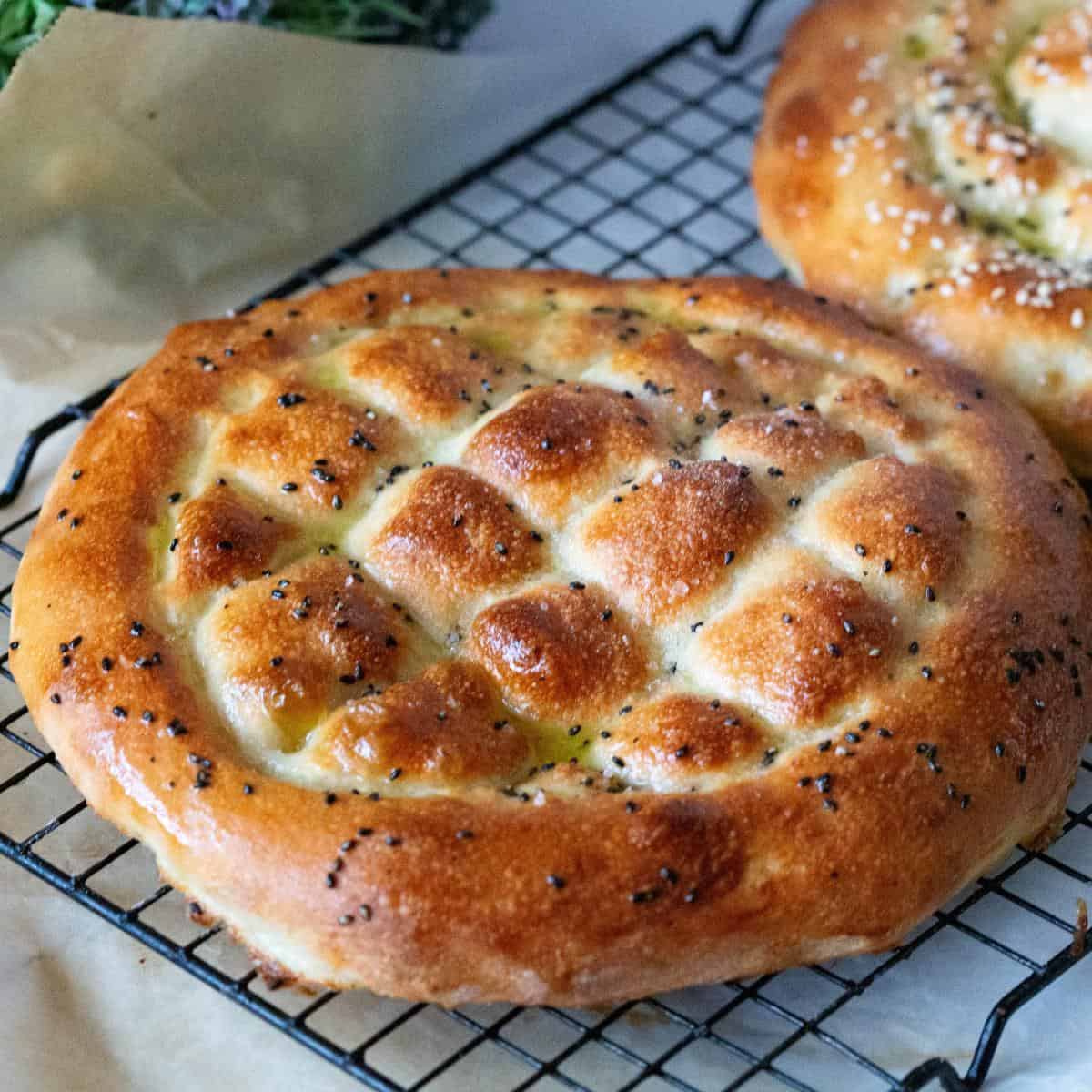

This fluffy Turkish bread, also called Ramazan Pidesi, is traditional. It is known for its soft, fluffy texture and slightly chewy crust, making it a perfect accompaniment to meals or enjoyed on its own. The bread is often topped with nigella or sesame seeds, symbolizing sharing and community during Ramadan.

I first had this fluffy Turkish bread called Ramazan Pidesi growing up with my Muslim friends during Ramadan. Their families would bring it home fresh from the bakery before iftar, and I remember thinking it was the softest, fluffiest bread ever.
Years later I missed it so much I had to try making it myself. And guess what? It’s surprisingly easy!
It’s light, fluffy, and has that beautiful crisscross pattern on top with sesame seeds. Honestly, the hardest part is not tearing into it while it’s still warm. 😄
Why you’ll love this recipe?
- Authenticity: The recipe stays true to the traditional flavors and techniques used to make Ramazan Pidesi, providing an authentic taste of Turkish cuisine.
- Flavorful: The combination of ingredients, including warm milk, olive oil, and sesame seeds, creates a rich and delicious bread that is perfect for enjoying on its own or with accompaniments.
- Texture: Using instant yeast and the kneading process, produce a soft and fluffy bread with a slightly crispy crust, providing a delightful texture contrast.
- Presentation: The scoring and egg wash make the bread attractive, making it a visually appealing dish for guests or family.

Ingredients and substitutes
- All-purpose flour: forms the base of the dough and provides structure. For a chewier texture, you can also use bread flour.
- Instant yeast: Leavens the dough and helps it rise. You can also use active dry yeast, but you’ll need to activate it in warm water first.
- Sugar: Feeds the yeast, helping it activate and ferment the dough. You can also use honey or maple syrup as substitutes.
- Salt: Enhances the flavor of the bread and strengthens the dough structure. You can also use sea salt or kosher salt.
- Warm milk: Adds moisture and richness to the dough. You can also use water or plant-based milk as a substitute.
- Olive oil: Adds flavor and helps keep the bread moist. You can also substitute with vegetable oil or melted butter.
- Egg: Used for brushing the bread before baking, giving it a shiny, golden crust. You can omit the egg for a vegan version or brush with milk for a similar effect.
- Nigella seeds or sesame seeds: Used as a garnish, adding flavor and texture. Poppy seeds or sunflower seeds can be substitutes.

Step-by-step: Fluffy Turkish bread Pide
- Yeast – In a medium bowl, combine water, yeast, honey, and oil.
- Combine – In a large mixing bowl, combine the flour and salt. Add the yeast mixture and mix to form a soft dough. Then, knead on a floured surface for about 10 minutes until smooth and elastic.
- Rise – Place the dough in a greased bowl, cover it with a damp cloth, and let it rise in a warm place for about 1 hour or until doubled in size.

- Oven – Preheat your oven to 425°F/220 °C/ Gas Mark 6 and line a baking sheet with parchment paper.
- Shape – Punch down the dough and divide it into two equal portions. Roll each portion into a round or oval shape about 1/2 inch thick.
- Pattern – Use your fingers to make indentations all over the surface of the dough, creating a dimpled effect. Place the shaped dough onto the prepared baking sheet.

- Eggwash – In a small bowl, combine the water, flour, yogurt, and beaten egg. Brush the egg mixture over the surface of each bread. Sprinkle nigella seeds or sesame seeds over the top for garnish.
- Bake in the oven for 35 – 40 minutes or until the bread is golden brown and cooked through.
- Serve – Remove the bread from the oven and let it cool slightly before serving. Ramazan Pidesi is traditionally served warm, sliced, and enjoyed with butter, cheese, olives, and other accompaniments.

Tips for Success
- Use warm liquid, not hot – The water should be warm to the touch (about 105–110°F / 40–43°C). Hot liquid can kill the yeast, while cold liquid will slow down the rise.
- Knead until smooth and elastic – The dough should feel soft and slightly tacky but not sticky. Proper kneading helps create the fluffy texture this bread is known for.
- Let the dough rise fully– Don’t rush the first rise. The dough should double in size for the lightest texture.
- Shape gently – Handle the dough gently when shaping so you don’t deflate all the air you worked to create during proofing.
- Use the egg wash generously – The egg wash helps create that signature golden color and makes the sesame and nigella seeds stick.
- Press the pattern before baking – Use your fingers to create the classic crisscross pattern just before baking. This gives the bread its traditional look.

Troubleshooting
| Problem | Possible Cause | Solution |
|---|---|---|
| Bread dense instead of fluffy | Dough did not rise enough | Let the dough double in size before shaping |
| Dough not rising | Yeast inactive or liquid too hot | Use fresh yeast and warm (not hot) liquid |
| Bread spreading too much | Dough too soft | Add 1–2 tbsp flour while kneading |
| Seeds falling off | No egg wash or too little | Brush generously with egg wash before sprinkling seeds |
| Pattern disappearing while baking | Not pressed deeply enough | Press the pattern firmly just before baking |
| Bread too dry | Overbaked | Bake just until golden and cooked through |
- Baking with Yeast – Beginners Guide
- The Best Fluffy Vanilla Cake Recipe for Delicate Flavors
- No-Knead Bread Without a Dutch Oven
- No-Knead Olive Bread
- No Yeast Bread: Soda Bread: No Kneading Required


Frequently asked questions
Fluffy Turkish bread, such as Ramazan Pidesi, is a type of soft and airy bread that is traditionally made in Turkey. It is often enjoyed during the Islamic holy month of Ramadan and is known for its fluffy texture and slightly chewy crust.
Fluffy Turkish bread is typically softer and airier than other types of bread, with a texture similar to a light and fluffy dinner roll. It is often made with flour, yeast, water, and sometimes milk or olive oil, giving it its soft and fluffy texture.
Fluffy Turkish bread, especially varieties like Ramazan Pidesi, holds cultural and religious significance in Turkish cuisine. It is often enjoyed during Ramadan as a meal to break the fast (iftar) and is considered a symbol of sharing and community during this holy month.
Yes, you can make fluffy Turkish bread at home. Many recipes are available online that provide step-by-step instructions for making traditional Turkish bread, like Ramazan Pidesi. Perfecting the technique may require some practice, but homemade fluffy Turkish bread can be a delicious and rewarding addition to your meals.
Fluffy Turkish Bread – Ramazan Pidesi
Ingredients
Turkish Pide dough
- 240 g (1 cups) Warm water
- 9 grams (2¼ tsp) Instant dry yeast
- 15 grams (1 tbsp) Sugar or honey
- 60 ml (¼ cup) Olive oil
- 500 g (4 cups) All-purpose flour
- 6 grams (1 tsp) Salt
For brushing
- ¼ cup (60 ml) Water
- 1 tbsp All-purpose flour
- 1 tbsp Greek yogurt
- ½ med Egg beaten
- Nigella seeds or sesame seeds for garnish
Instructions
- Yeast – In a medium bowl, combine water, yeast, honey, and oil.240 g Warm water, 9 grams Instant dry yeast, 15 grams Sugar or honey, 60 ml Olive oil
- Combine – In a large mixing bowl, combine the flour and salt. Add the yeast mixture and mix to form a soft dough. Then, knead on a floured surface for about 10 minutes until smooth and elastic.500 g All-purpose flour, 6 grams Salt
- Rise – Place the dough in a greased bowl, cover it with a damp cloth, and let it rise in a warm place for about 1 hour or until doubled in size.
- Oven – Preheat your oven to 425°F/220 °C/ Gas Mark 6 and line a baking sheet with parchment paper.
- Shape – Punch down the dough and divide it into two equal portions. Roll each portion into a round or oval shape about 1/2 inch thick.
- Pattern – Use your fingers to make indentations all over the surface of the dough, creating a dimpled effect. Place the shaped dough onto the prepared baking sheet.
- Eggwash – In a small bowl, combine the water, flour, yogurt, and beaten egg. Brush the egg mixture over the surface of each bread. Sprinkle nigella seeds or sesame seeds over the top for garnish.¼ cup Water, 1 tbsp All-purpose flour, 1 tbsp Greek yogurt, ½ med Egg, Nigella seeds or sesame seeds
- Bake in the oven for 35-40 minutes or until the bread is golden brown and cooked through.
- Serve – Remove the bread from the oven and let it cool slightly before serving. Ramazan Pidesi is traditionally served warm, sliced, and enjoyed with butter, cheese, olives, and other accompaniments.
Video
Notes
Equipment


Made this recipe?
I’d love to see how yours turned out! Share a photo on Instagram and tag @veenaazmanov_kitchen or use #veenaazmanovkitchen. And don’t forget to leave a rating and review!
- Lahmacun – Turkish Meat Pizza
- Naan Recipe: Classic or Garlic Butter
- Pide: Turkish Flatbread Recipe
- Cottage Cheese Flatbread
- Potato Stuffed Pita

Don’t lose this recipe! Save it for Later!
📌 Save this Recipe for later on Pinterest so you can easily find it again.
⭐ Add Veena Azmanov Kitchen to your Google Preferred Sources.
It helps Google show you more of our recipes.
📧 Subscribe for new recipes delivered to your inbox.
🎥 Follow us for more recipes


Hi, I’m Veena
I’m the recipe developer, baker, and food photographer behind Veena Azmanov Kitchen.
I’ve spent years developing and testing recipes, from everyday meals and homemade breads to cakes and desserts.
I share the practical tips and little details I’ve learned along the way so you can get great results in your own kitchen.









Yeast measurement – ??? – in teaspoons? or per envelope of yeast which is 2 1/4 teaspoons of yeast?
It’s 2 1/4 tsp of yeast, which is 1 packet as well.