



Alfajores are tender, buttery sandwich cookies filled with dulce de leche and finished with coconut around the edges. Cornstarch gives the cookies their delicate texture, while the dulce de leche adds that rich caramel filling that makes these South American cookies so distinctive.
My version uses slightly more flour than cornstarch. I find this gives the cookies enough structure for rolling and filling while still keeping that soft, tender alfajores texture.
Alfajores were actually one of the more difficult cookies for me when I was learning to bake. I could never get the texture quite right. They were either too soft and crumbly or so delicate that they would fall apart as soon as you picked them up. Then I realized that even many store-bought alfajores crumble very easily.
That became more important when I started my cake decorating business. I wanted alfajores that I could confidently give to a client without worrying that they would arrive broken or fall apart the moment someone picked one up.
So, over the years, I kept adjusting the recipe until I found the balance I wanted — tender and crumbly, but sturdy enough to hold its shape and sandwich with dulce de leche. And, of course, they still had to taste good and look pretty.
That’s why my recipe uses slightly more flour than cornstarch. The cornstarch gives the cookies that delicate alfajores texture, while the flour gives them just enough structure to hold together.
What are alfajores?
Alfajores are sandwich cookies popular throughout Latin America, particularly in Argentina. There are many regional variations, but this version pairs tender butter and cornstarch cookies with a generous dulce de leche filling and coconut around the edges.
The cornstarch is important because it reduces the amount of gluten in the dough, giving the cookies a softer, more delicate texture. Some alfajores recipes use more cornstarch than flour; I use slightly more flour for a cookie that is tender but easier to roll, cut, and assemble.
Why you’ll love this recipe
- Tender but easy to handle – The combination of flour and cornstarch gives the cookies a delicate texture without making them overly fragile.
- Rich dulce de leche filling – Use a thick dulce de leche so you can generously fill the cookies without it running out.
- Great for making ahead – The assembled cookies become even softer as they sit with the filling.
- Simple to customize – Keep them classic with coconut around the edges, dust with powdered sugar, or drizzle with chocolate.

Ingredients and substitutions
- Butter – Use unsalted butter, softened to room temperature. This gives the cookies their rich flavor and tender texture.
- Sugar – Regular granulated sugar works best. I wouldn’t substitute brown sugar here because the extra moisture will change the texture of the cookies.
- Egg yolks – Three egg yolks add richness and tenderness without adding too much moisture to the dough.
- All-purpose flour – I use slightly more flour than cornstarch in this recipe. It gives the cookies enough structure to roll, cut, and sandwich without making them too fragile.
- Cornstarch – This is what gives alfajores their characteristic soft, delicate texture. I use 1¼ cups cornstarch to 1¾ cups flour, so the cookies stay tender but are still easy to handle.
- Baking powder – A small amount gives the cookies a lighter texture.
- Vanilla extract – Adds a warm background flavor that works beautifully with the dulce de leche.
- Rose extract – Optional, but I like adding a small amount for a subtle floral note. A little goes a long way.
- Dulce de leche – Use a thick dulce de leche so it stays between the cookies rather than running out when you sandwich them.
- Desiccated coconut – For rolling the exposed dulce de leche around the edges. You can leave it off if you prefer.
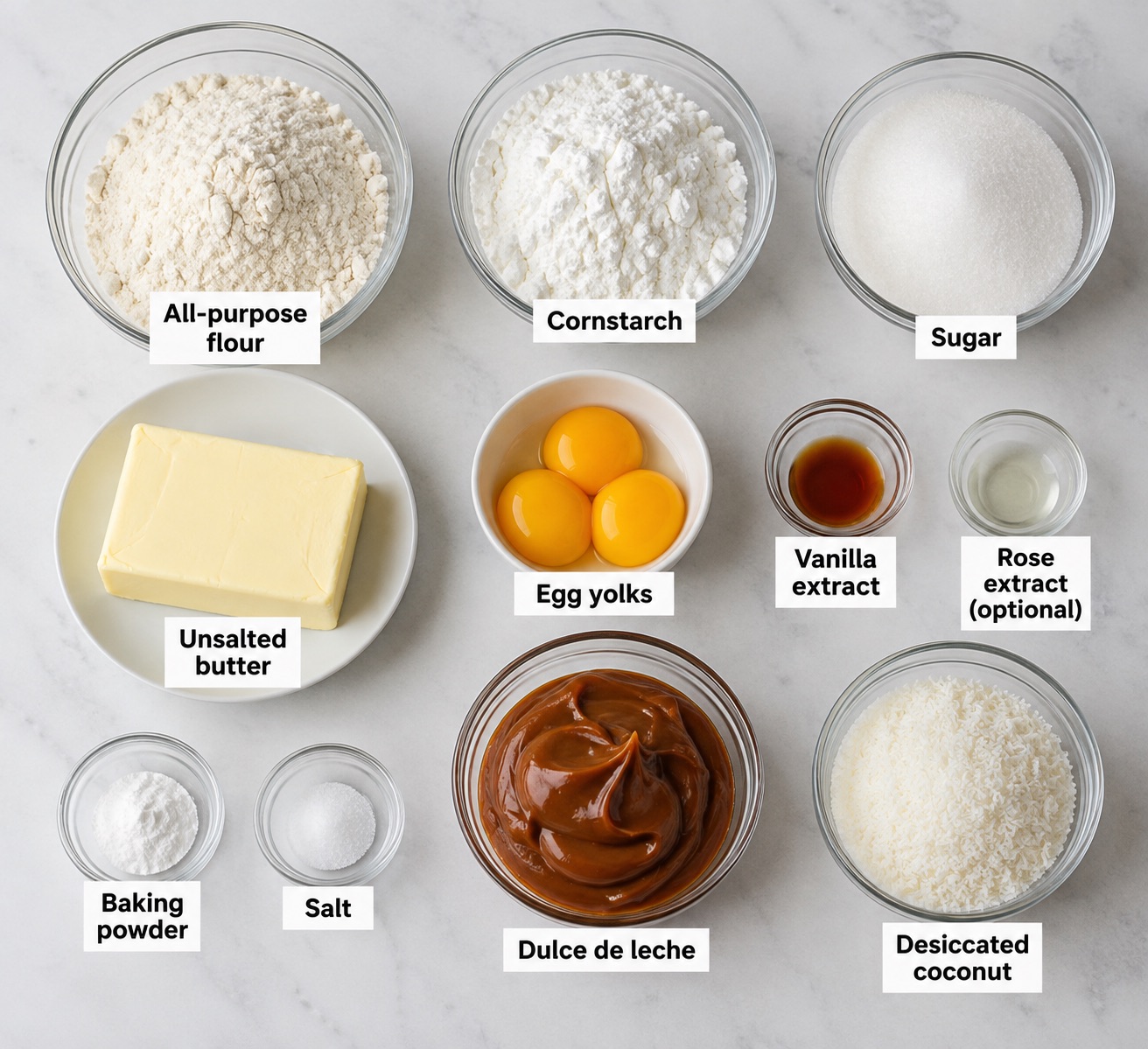
Step-by-step: Alfajores – Dulce de leche sandwich cookies
Make the cookie dough
- Cream the butter and sugar – In the bowl of a stand mixer with the paddle attachment, beat the softened butter and sugar until light and creamy, about 2 to 3 minutes.
- Add the egg yolks and flavoring – Add the egg yolks one at a time, mixing well after each addition. Add the vanilla and rose extract, if using.
- Combine the dry ingredients – In a separate bowl, whisk together the flour, cornstarch, baking powder, and salt.
- Make the dough – Add the dry ingredients to the butter mixture in two or three additions. Mix just until the dough comes together. Do not overmix.
- Chill – Shape the dough into a disc, wrap it in plastic, and chill for about 30 minutes. This makes the dough easier to roll and helps the cookies hold their shape.

Roll and bake
- Preheat the oven to 325°F / 160°C. Line baking trays with parchment paper.
- Roll the dough – Lightly flour the work surface and roll the dough to about ¼ inch / 6 mm thick.
- Cut the cookies – Use a round cookie cutter to cut the dough. Transfer the rounds to the prepared baking trays. Gather and reroll the scraps gently.
- Bake for about 8 to 10 minutes, or until the cookies are set but still pale. They should not become deeply golden.
- Cool completely – Leave the cookies on the tray for a few minutes before transferring them to a wire rack. They are delicate while warm.

Fill the alfajores
- Add the dulce de leche – Turn half the cookies over and pipe or spoon a generous amount of thick dulce de leche onto the center.
- Sandwich – Top with another cookie and press very gently until the filling reaches the edges.
- Finish with coconut – Roll the exposed dulce de leche around the sides in desiccated coconut.
- Let them rest – The alfajores are delicious straight away, but they become even softer and more tender after sitting for a few hours.
Make ahead and storage
- Make ahead – The cookie dough can be made up to 2 days ahead and kept wrapped in the refrigerator. Let it soften slightly at room temperature before rolling if it becomes too firm.
- Baked cookies – Unfilled cookies can be stored in an airtight container at room temperature for up to 5 days.
- Assembled alfajores – Store filled alfajores in an airtight container at room temperature for 2 to 3 days, or in the refrigerator for up to a week. Bring refrigerated cookies to room temperature before serving for the best texture.
- Freezing – Freeze the unfilled cookies for up to 2 months. Thaw at room temperature, then fill with dulce de leche and finish with coconut before serving.
- Best texture – Alfajores are actually wonderful made ahead. Once filled, the dulce de leche gradually softens the cookies, so I like to assemble them several hours or a day before serving.

Alfajores Cookies with Dulce de Leche
Tender, buttery alfajores filled with dulce de leche and rolled in coconut. My version uses slightly more flour than cornstarch for cookies that are delicate and crumbly but sturdy enough to fill and sandwich without falling apart.
Video
Ingredients
- 227 g (1 cup) Unsalted butter softened
- 150 g (¾ cup) Granulated sugar
- 3 large Egg yolks
- 1 tsp Vanilla extract
- ¼ tsp Rose extract optional
- 220 g (1¾ cup) All-purpose flour
- 150 g (1¼ cup) Cornstarch
- 1½ tsp Baking powder
- ½ tsp Salt
- 340 g (1 cup) Thick dulce de leche
- 40 g (½ cup) Desiccated or finely shredded coconut
Method
- Cream butter and sugar – In the bowl of a stand mixer with the paddle attachment, beat the softened butter and sugar for 2 to 3 minutes until light and creamy.227 g Unsalted butter, 150 g Granulated sugar
- Add yolks – Add the egg yolks one at a time, mixing well after each addition. Add the vanilla and rose extract, if using.3 large Egg yolks, 1 tsp Vanilla extract, ¼ tsp Rose extract
- Combine dry ingredients – In a separate bowl, whisk together the flour, cornstarch, baking powder, and salt.220 g All-purpose flour, 150 g Cornstarch, 1½ tsp Baking powder, ½ tsp Salt
- Make the dough – Add the dry ingredients to the butter mixture in two or three additions. Mix just until the dough comes together. Do not overmix.
- Chill – Shape the dough into a disc, wrap, and refrigerate for about 30 minutes.
- Preheat – Preheat the oven to 325°F / 160°C. Line two baking sheets with parchment paper.
- Roll and cut – On a lightly floured surface, roll the dough to about ¼ inch (6 mm) thick (If necessary, use cookie spacers or a cookie rolling pin to ensure you roll evenly). Cut into rounds and transfer to the prepared baking sheets.
- Bake – Bake for 8 to 10 minutes, or until the cookies are set but still pale. Cool on the baking sheet for 5 minutes, then transfer to a wire rack to cool completely.
- Fill – Pipe or spoon dulce de leche onto the flat side of half the cookies. Top with the remaining cookies and press gently until the filling reaches the edges.340 g Thick dulce de leche
- Finish – Roll the exposed dulce de leche around the edges in coconut.40 g Desiccated or finely shredded coconut
Notes
- Keep the cookies pale. Browning them will make them drier and less tender.
- If the dough becomes too soft while rolling, chill it for 10 to 15 minutes.
- Use thick dulce de leche so the filling stays in place.
- The cookies are delicate while warm, so let them cool before handling and filling.
- Once assembled, the alfajores become softer as they sit. For the best texture, I like to fill them several hours or a day ahead.
- Store filled alfajores in an airtight container at room temperature for 2 to 3 days or refrigerate for up to a week.
Equipment you will need


Nutrition
Tried this recipe?
Mention @veenaazmanov_kitchen or tag #veenaazmanovkitchen!Tips for success
- Use room-temperature butter – Soft, not melted. It should cream easily with the sugar without looking greasy.
- Measure the flour and cornstarch carefully – Too much of either can make this delicate dough dry and crumbly.
- Don’t overmix – Once you add the dry ingredients, mix only until the dough comes together.
- Chill before rolling – About 30 minutes makes the dough easier to handle and helps the cookies hold their shape.
- Don’t roll too thin – About ¼ inch (6 mm) gives you cookies sturdy enough to sandwich while still staying tender.
- Keep them pale – Alfajores should be set but not browned. Overbaking will make them dry instead of soft and tender.
- Use thick dulce de leche – A firm filling is much easier to pipe and won’t squeeze out when you sandwich the cookies.
More Sandwich Cookies
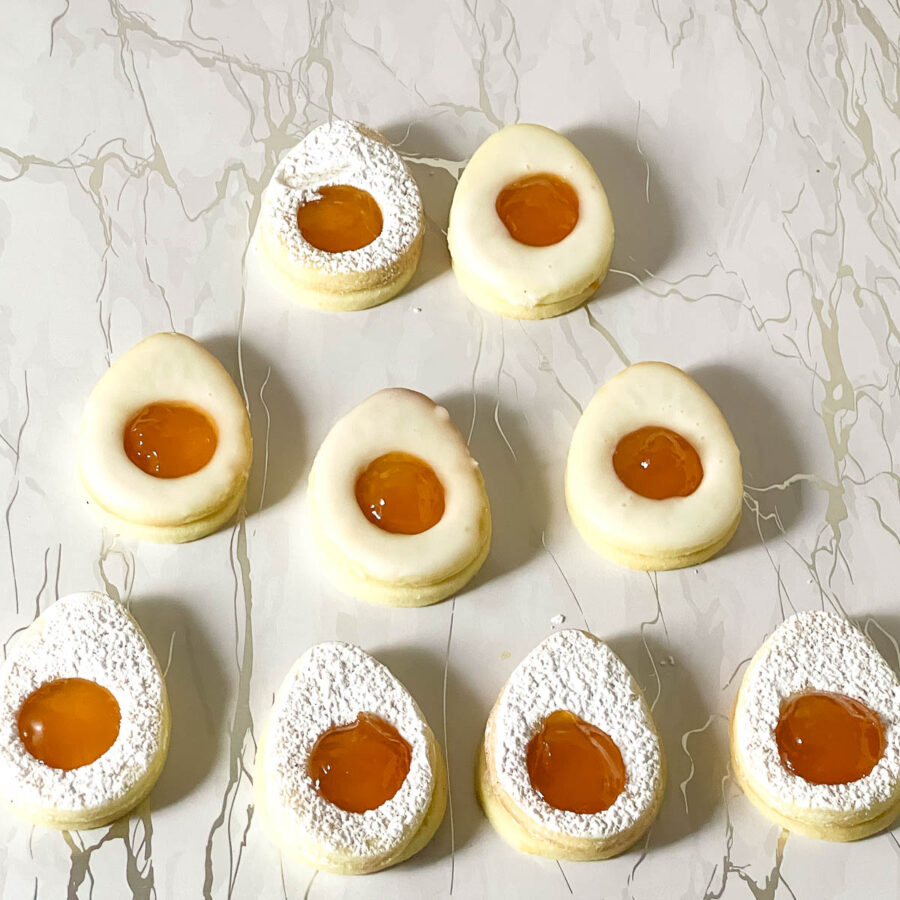
- Heart Alfajores Recipe for Valentines or Mothers Day
- Austrian Linzer Cookies
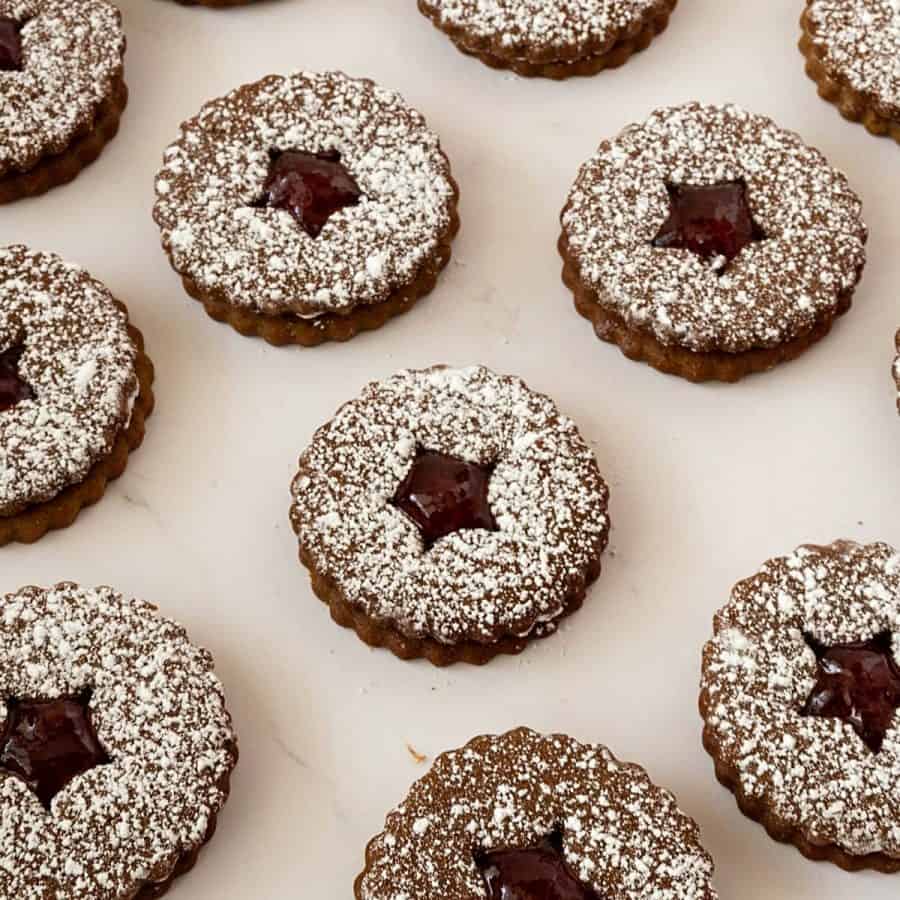
- Raspberry Linzer Cookies
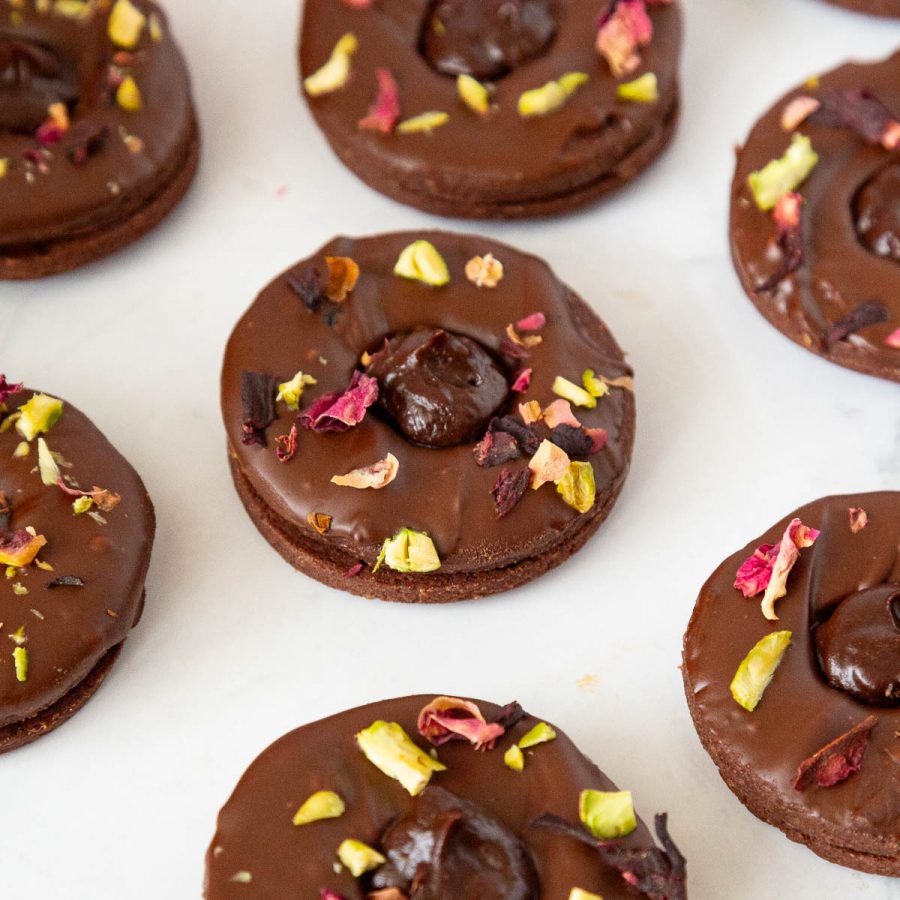
- Chocolate Heart Cookies with Ganache
- Brown Sugar Sandwich Cookies
- Gingerbread Sandwich Cookies
- Gingerbread Sandwich Cookies

Troubleshooting
| Problem | Possible cause & fix |
|---|---|
| Dough is dry and crumbly | The flour or cornstarch may have been overmeasured. Let the dough sit for a few minutes or gently knead it just until it comes together. |
| Dough is too soft or sticky | The butter may be too warm. Chill the dough for another 15 to 20 minutes before rolling. |
| Cookies spread while baking | The dough was likely too warm. Chill the cut cookies for 10 to 15 minutes before baking. |
| Cookies are hard or dry | They were probably overbaked. Take them out when set but still pale; they will firm up as they cool. |
| Cookies break when assembling | They may still be warm, or you may be pressing too firmly. Cool completely and gently twist the top cookie as you sandwich it. |
| Dulce de leche squeezes out | Use a thicker dulce de leche and don’t overfill. If it is very soft, chill it briefly before assembling. |
Frequently asked questions
Alfajores are naturally delicate, but they shouldn’t crumble the moment you pick them up. Measure the flour and cornstarch carefully, don’t roll the dough too thin, and let the cookies cool completely before filling. They are especially fragile while still warm.
Cornstarch gives alfajores their characteristic delicate, crumbly texture. I use slightly more flour than cornstarch in my recipe so the cookies remain tender but have enough structure to hold their shape when filled.
Use a thick dulce de leche, preferably one intended for baking or pastry filling. A runny dulce de leche can squeeze out of the cookies and make them difficult to handle.
They should be tender and crumbly rather than crisp or crunchy. Once filled, the dulce de leche also softens the cookies slightly as they sit.
No. Coconut is a classic finish for this style of alfajores, but you can leave it off. You can also dust the tops lightly with powdered sugar or drizzle them with melted chocolate.
I wouldn’t recommend it for this recipe. Cornstarch is an important part of the texture. Replacing it entirely with flour will give you a firmer cookie and it won’t have the same delicate alfajores texture.
The dough was probably too warm. Chill the dough before rolling, and if the cut cookies have softened while you work, place the tray in the refrigerator for 10 to 15 minutes before baking.
More recipes with Dulce de Leche
- Dulce De Leche Donuts
- Dulce De Leche Ice Cream
- Homemade Dulce De Leche (5 ways)
- Soft Moist Dulce de Leche Cupcakes


Don’t lose this recipe! Save it for Later!
📌 Save this Recipe for later on Pinterest so you can easily find it again.
⭐ Add Veena Azmanov Kitchen to your Google Preferred Sources.
It helps Google show you more of our recipes.
📧 Subscribe for new recipes delivered to your inbox.
🎥 Follow us for more recipes


Hi, I’m Veena
I’m the recipe developer, baker, and food photographer behind Veena Azmanov Kitchen.
I’ve spent years developing and testing recipes, from everyday meals and homemade breads to cakes and desserts.
I share the practical tips and little details I’ve learned along the way so you can get great results in your own kitchen.









This one is amazing, I love to have this in the weekend. thanks for sharing
The classic dulce de leche filling is so good but I love all the variation ideas, too! I also enjoyed learning a bit about their history. Thanks for sharing!
Alfajores are one of my favorite cookies and I cannot wait to try these – they look amazing!
I was in at melt-in-your-mouth buttery goodness and then you added dulce de leche. I can’t wait to try these totally drool worthy alfajores.