
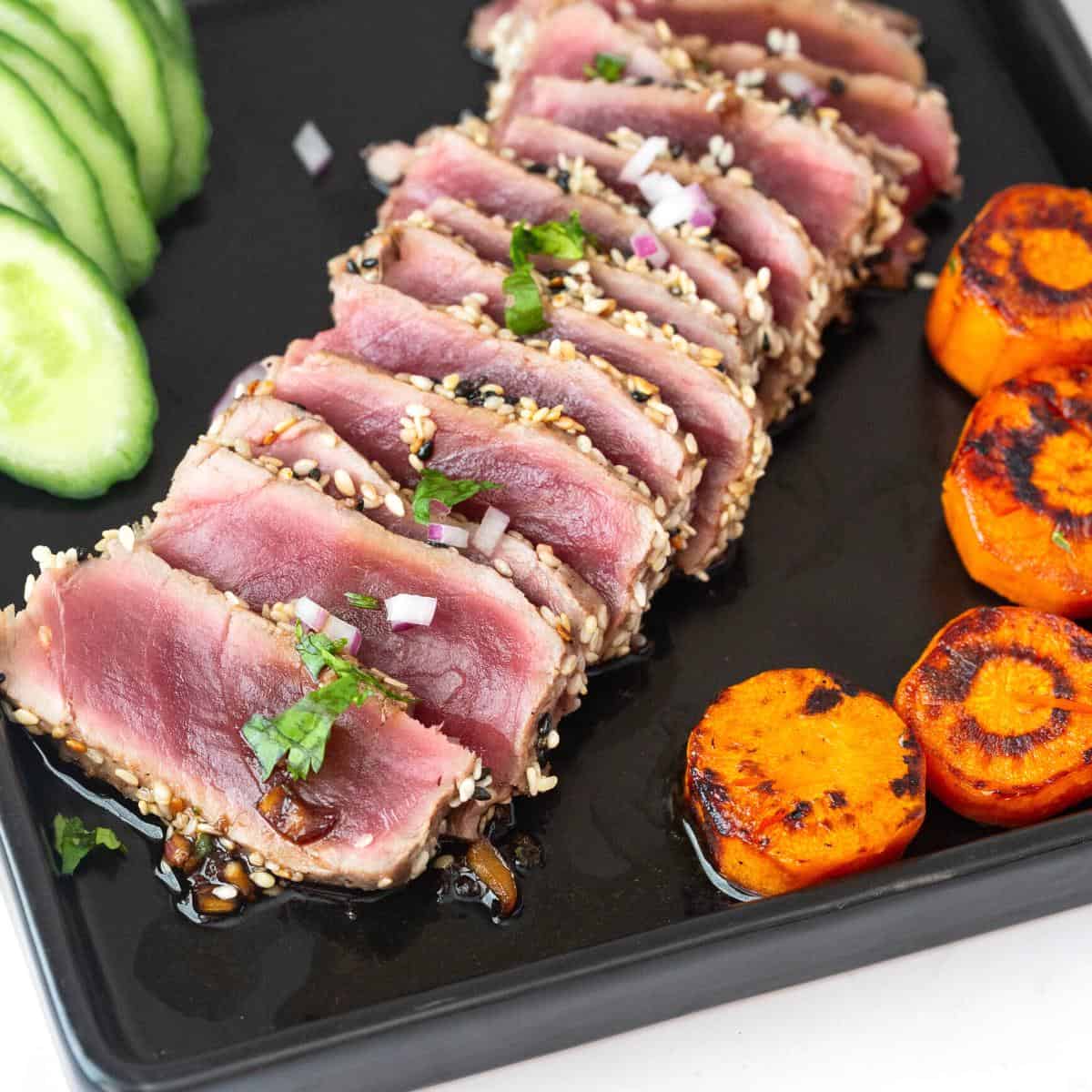

Tuna tataki is a classic Japanese dish made by quickly searing sushi-grade tuna over high heat while leaving the center rare. It’s sliced thin and served with a flavorful soy-based sauce for a light, fresh appetizer or main course.
This easy tuna tataki recipe comes together in about 15 minutes with just a handful of ingredients. It’s restaurant-quality, surprisingly simple to make at home, and perfect served with rice, salad, or as part of a Japanese-inspired meal.
Whenever I order tuna tataki at a restaurant, I’m reminded how incredibly simple it is to make at home. Once you realize the tuna only needs a quick sear, it becomes one of those recipes you can pull together in minutes. The hardest part is finding good-quality sushi-grade tuna—the rest is as easy as mixing the sauce and giving the fish a quick sear.
Why You’ll Love This Recipe
- Ready in about 15 minutes.
- Crispy sesame-coated exterior with a tender, rare center.
- Fresh soy-ginger sauce adds bold Japanese flavors.
- Perfect as an appetizer, light dinner, or rice bowl topping.
- Restaurant-quality results with very little effort.

Ingredients & Substitutes
- Sushi-grade tuna – The star of the recipe. Buy the freshest, highest-quality tuna you can find.
- Sesame seeds – White, black, or a combination for extra flavor and texture.
- Soy sauce – Use regular soy sauce or tamari for a gluten-free option.
- Mirin – Adds sweetness and balance. Substitute a little rice vinegar with a pinch of sugar if needed.
- Rice vinegar – Brightens the sauce.
- Sesame oil – Adds a nutty finish.
- Fresh ginger and garlic – Essential for fresh flavor.
- Green onions – Add freshness and color.
- Red pepper flakes – Optional for a little heat.

Step-by-step: Easy tuna tataki recipe
- Sauce – In a small bowl, combine all the sauce ingredients. Set aside to let the flavors meld.
- Prepare tuna – Pat the tuna pieces dry with paper towels and season them with a pinch of salt and pepper. Coat the tuna with white and black sesame seeds for added texture and flavor.

- Sear tuna – Heat the vegetable oil in a skillet or a grill pan over high heat until it’s almost smoking. Then, carefully place the tuna in the pan and sear it for about 30-60 seconds on each side, depending on your desired level of doneness.

- Rest – Remove the tuna from the heat and let it rest for a few minutes. This will help the flavors settle and make it easier to slice.
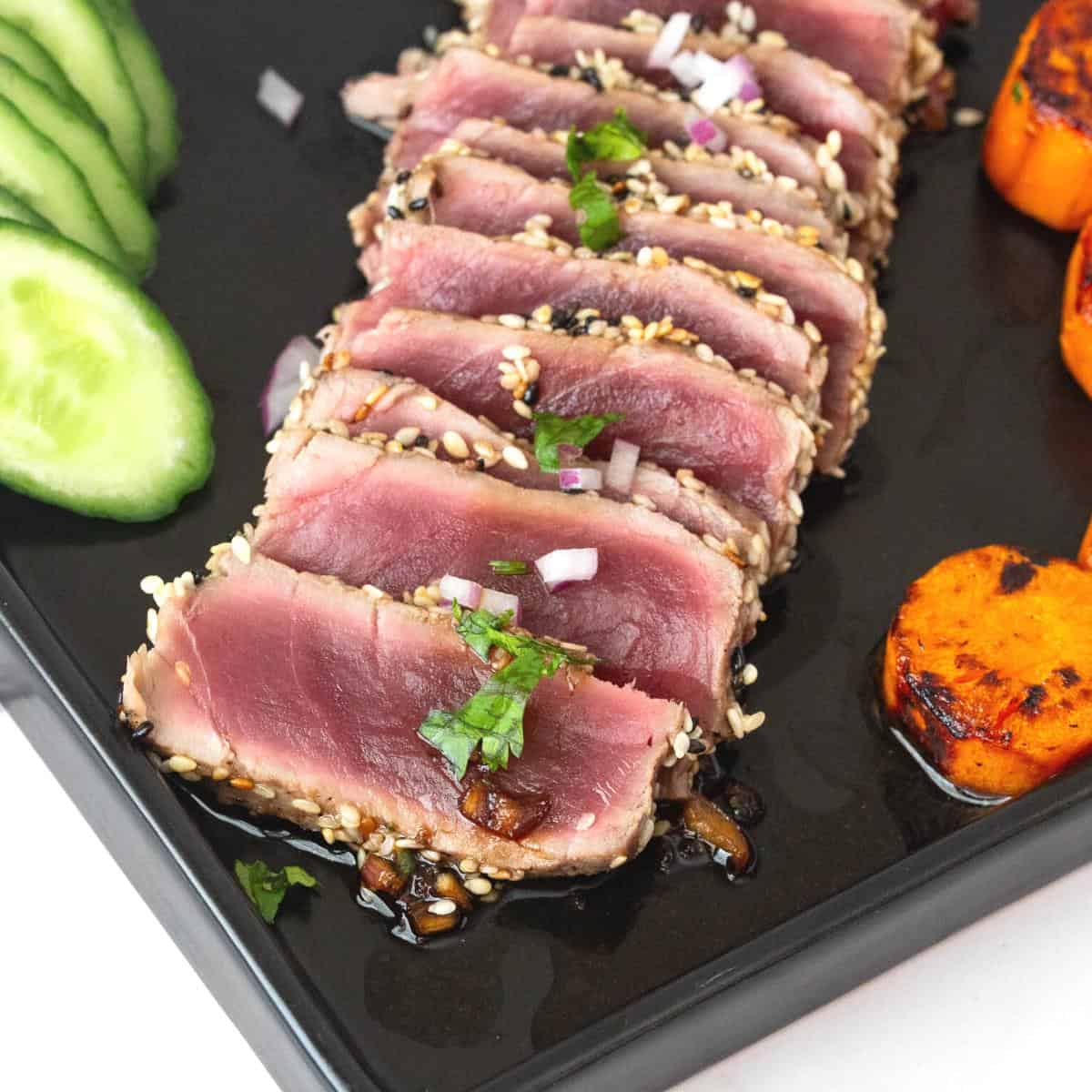
- Slice and serve – Using a sharp knife, slice the seared tuna into thin, even slices. Arrange the slices on a serving platter.
- Garnish – Drizzle the prepared sauce over the sliced tuna. For a pop of color and freshness, garnish with thinly sliced green onions and other greens.
Storage
- Tuna tataki is best enjoyed the day it’s is made.
- Refrigerate leftovers in an airtight container for up to 24 hours.
- Do not freeze after searing, as the texture changes significantly.
- Leftover sliced tuna is delicious over rice or added to a salad.
What do I serve with tuna tataki?
Steamed rice, cucumber salad, seaweed salad, edamame, pickled vegetables, or a simple green salad all pair well.

Tuna Tataki Recipe
Ingredients
Fro the tuna
- 1 lb (500 g) Sushi-grade tuna loin about 1 inch thick
- 1 tbsp Cooking oil
- ¼ tsp Kosher salt
- ¼ tsp Black pepper powder
- ½ cup (75 g) Sesame seeds for coating (optional)
For the sauce
- ¼ cup (60 ml) Soy sauce
- 2 tbsp Mirin (Japanese sweet rice wine)
- 1 tbsp Rice vinegar
- 1 tbsp Sesame oil
- 1 tbsp Fresh ginger grated
- 1 small Garlic cloves minced
- 2 tbsp Green onions thinly sliced
- 1 teaspoon Sesame seeds (black or white) toasted
- Pinch Red pepper flakes optional for a bit of heat
For garnish
- 1 tbsp Thinly sliced green onions optional
- 1 tbsp Sliced radishes optional
Instructions
- Sauce – In a small bowl, combine all the sauce ingredients. Set aside to let the flavors meld.¼ cup Soy sauce, 2 tbsp Mirin , 1 tbsp Rice vinegar, 1 tbsp Sesame oil, 1 tbsp Fresh ginger, 1 small Garlic cloves, 2 tbsp Green onions, 1 teaspoon Sesame seeds
- Prepare tuna – Pat the tuna pieces dry with paper towels and season them with a pinch of salt and pepper. Coat the tuna with white and black sesame seeds for added texture and flavor.1 lb Sushi-grade tuna loin, ¼ tsp Kosher salt , ¼ tsp Black pepper powder, ½ cup Sesame seeds
- Sear tuna – Heat the vegetable oil in a skillet or a grill pan over high heat until it's almost smoking. Then, carefully place the tuna in the pan and sear it for about 30-60 seconds on each side, depending on your desired level of doneness.1 tbsp Cooking oil
- Rest – Remove the tuna from the heat and let it rest for a few minutes. This will help the flavors settle and make it easier to slice.
- Slice and serve – Using a sharp knife, slice the seared tuna into thin, even slices. Arrange the slices on a serving platter.
- Garnish – Drizzle the prepared sauce over the sliced tuna. For a pop of color and freshness, garnish with thinly sliced green onions and other greens.1 tbsp Thinly sliced green onions, 1 tbsp Sliced radishes
Video
Notes
- Consider incorporating fresh herbs like cilantro or basil to add a fragrant and vibrant touch. Squeeze some fresh lime or lemon juice over the tuna to provide a refreshing acidity that balances the richness of the fish.
- In addition to herbs and citrus, you can explore the world of umami by incorporating ingredients such as soy sauce or ponzu into your Tataki Tuna dish. These savory flavors will amplify the taste and create a harmonious balance with the fish’s natural sweetness. Don’t be afraid to experiment with different seasonings and spices as well, like sesame seeds, crushed red pepper flakes, or even a drizzle of truffle oil for an indulgent twist.
Made this recipe?
I’d love to see how yours turned out! Share a photo on Instagram and tag @veenaazmanov_kitchen or use #veenaazmanovkitchen. And don’t forget to leave a rating and review!
Tips for Success
- Buy sushi-grade tuna from a trusted fishmonger.
- Pat the tuna completely dry before searing so it browns properly.
- Heat the pan until it’s very hot before adding the tuna.
- Sear only 30–60 seconds per side to keep the center rare.
- Use a very sharp knife to slice the tuna thinly.
- Let the tuna rest for a few minutes before slicing.
- Serve immediately for the best flavor and texture.
more tuna recipes
- Tuna Potato Patties
- Sesame Tuna Steak Recipe
- Best Tuna Patties
- Seared Ahi Tuna Steak Recipe
- Ahi Tuna Poke Bowl


Frequently asked questions
While any type of tuna can be used for tataki, it is highly recommended to choose a fresher, higher-grade tuna such as yellowfin or bluefin. These varieties tend to have a more delicate texture and flavor, which pairs perfectly with the searing technique used in tataki.
The ideal thickness for tataki tuna slices is about half an inch to an inch. This thickness allows for a nice sear on the surface while maintaining a rare to medium-rare center. When it comes to size, aim for bite-sized pieces that can be easily picked up with chopsticks or a fork.
When working with raw fish, it is crucial to ensure its freshness and handle it properly to prevent any risk of foodborne illness. Always purchase your tuna from a reputable source and make sure it smells fresh and has a vibrant color. Additionally, it is recommended to freeze the tuna for at least 24 hours before using it for tataki to kill any potential parasites.
Yes. Sear each side a little longer if you prefer medium or well-done tuna.
Absolutely. The sauce can be made up to 3 days in advance and stored in the refrigerator.
more raw tuna recipes
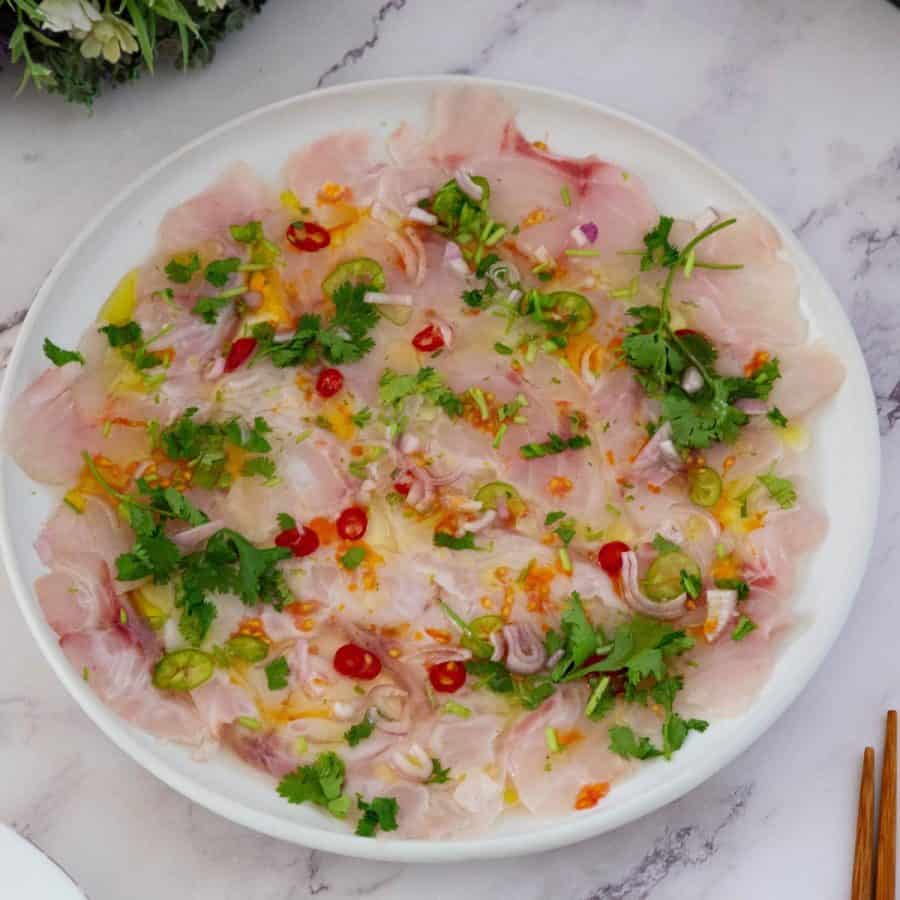
- Tuna Crudo
- Tataki Tuna
- Nobu Tuna Sashimi
- Ultimate Tuna Poke Bowl Recipe
- Sesame Tuna Steak Recipe • Pan Seared



Don’t lose this recipe! Save it for Later!
📌 Save this Recipe for later on Pinterest so you can easily find it again.
⭐ Add Veena Azmanov Kitchen to your Google Preferred Sources.
It helps Google show you more of our recipes.
📧 Subscribe for new recipes delivered to your inbox.
🎥 Follow us for more recipes


Hi, I’m Veena
I’m the recipe developer, baker, and food photographer behind Veena Azmanov Kitchen.
I’ve spent years developing and testing recipes, from everyday meals and homemade breads to cakes and desserts.
I share the practical tips and little details I’ve learned along the way so you can get great results in your own kitchen.









Wonderful recipe for tuna..the sauce was amazing. I served it with plain white rice and steam vegetables to make a really healthy dinner. Great!
I’ve been trying to eat more tuna this way but have never cooked it myself so I gave this a try and it was absolutely wonderful! If you’re on the fence about tuna, give this recipe a try!
I am drooling over here!! I am planning on making something nice for my in-laws this weekend, and I think this is it! Thank you so much for sharing this recipe 🙂
Thanks for the easy to follow instructions, we prepped this and laid it on a bed of Jasmine rice with some fresh steamed carrots. Perfection!
I love tuna and your recipe looks amazing!! I can’t wait to try it.
This tuna looks amazingly delicious. Thanks for the recipe.
What a delightful post on Tataki Tuna! The vivid descriptions and clear instructions truly captured the essence of the dish, making it easy to envision and attempt in my own kitchen. The photography was top-notch as well, offering a perfect visual accompaniment to the well-structured recipe. Your content continues to be a resource I rely on for practical, delicious recipes – this one’s definitely a keeper!
Delicious! I’ve always been a little hesitant about preparing tuna this way, but your post laid it all out really well, the instructions were wonderful, and I was left with a gorgeous dish that tasted amazing – thank you!
Enjoyed this for dinner last night and it was a savory success! Light yet hearty and delicious; easily, a new favorite recipe!
Thank you Sarah
One of my favorites. Thanks for all the tips to actually make tuna tataki like a restaurant would serve. Will be making this again soon!